Qwen App is exploring a monetization model that charges for some of its features. Can Doubao make this model work successfully if it follows suit?
The wave of AI-powered office tools has arrived, and the Qwen App is no longer content with being just an AI assistant.
On August 7, the Qwen App and its PC counterpart received a major version update, rolling out a batch of new features including office assistant, thinking and research module, and scheduled tasks, while also granting access permissions to its flagship model Qwen3.8-MAX.
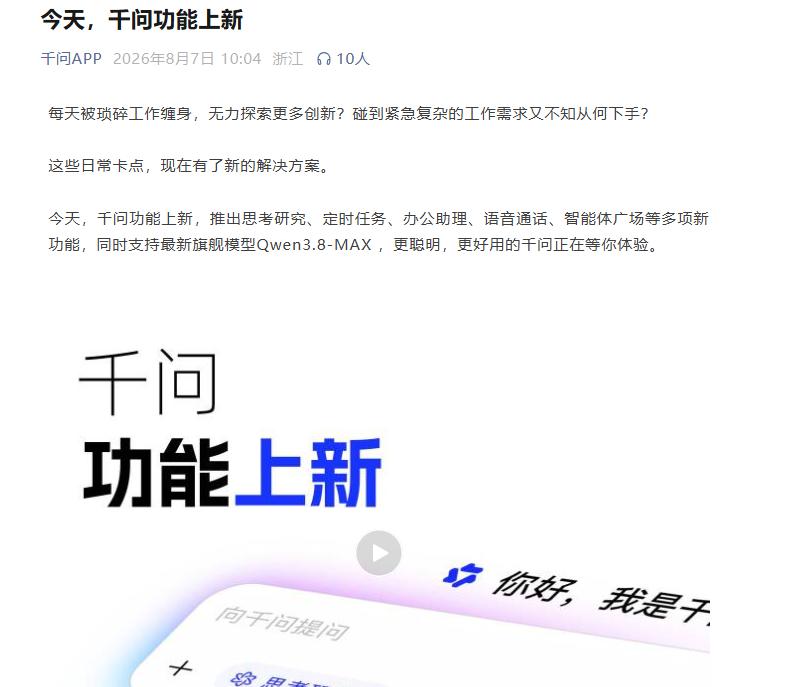
Source: Official WeChat public account of Qwen App
Unlike the previous all-free strategy, this update clearly sends out a signal of paid services: basic features are open to all users for free, while the office assistant function will be set with a usage quota, and users can pay to obtain more usage limits.
This model of free basic features and charging for complex office and productivity scenarios is seemingly benchmarking against Doubao Professional Edition.
This move of the Qwen App appears highly meaningful when placed in the coordinate system of the 2026 AI industry. Over the past six months, the AI industry has undergone a collective shift: Doubao took the lead in launching three tiers of professional subscriptions ranging from 68 yuan to 500 yuan in June; Tencent's WorkBuddy followed closely, and its personal version has formed a three-tier payment system from 99 yuan to 999 yuan; Alibaba's own Qwen Office entered public beta on August 3, with the personal standard version priced at 98 yuan per month.
It can be said that all players have focused their attention on the office scenario, for the simple reason that this is a scenario where users are more willing to pay.
Inside Alibaba, the timing of this paid trial of the Qwen App is even more delicate.
The Qwen App is the vanguard of Alibaba's AI-to-C strategy. Last November, Alibaba officially announced the "Qwen" project, and in December, it established the Qwen C-end Business Group, bringing all core businesses including the Qwen App, Quark, and AI hardware under its umbrella. This January, the Qwen App was fully integrated into Alibaba's ecosystem such as Taobao, Alipay, Fliggy, and Amap, trying to build an AI assistant that penetrates all aspects of daily life, and even spent a whopping 3 billion yuan on user acquisition during the Spring Festival.
However, this big bet did not bring the expected returns, and user enthusiasm faded after the marketing campaign.
A bigger variable comes from the inside. Recently, Qwen Office officially entered public beta, integrating three products QoderWork, Wukong, and MuleRun, and positioning itself as an enterprise-level AI productivity platform.
With DingTalk cooperating with Qwen Office, the Qwen App has to advance into the office scenario alone. When the B-end scenario is occupied by sibling products and C-end users are reluctant to pay for AI assistants, the paid exploration of the Qwen App becomes a difficult battle.
Qwen App explores paid services, aiming to follow Doubao's path?
Insight Web conducted a real-time test on the core feature of this Qwen update - the office assistant, and the most intuitive feeling is that the Qwen App has finally moved from "talking the talk" to "walking the walk".
As a content creator, manuscripts, financial reports, and industry reports accumulated from daily interviews are scattered on the desktop. According to past habits, it would take at least more than ten minutes to classify and file them. After granting local deployment access to the Qwen office assistant, just enter the sentence "Help me organize the desktop and summarize files by type", and the office assistant will automatically identify the file content and create corresponding folders, without any manual operation throughout the process.
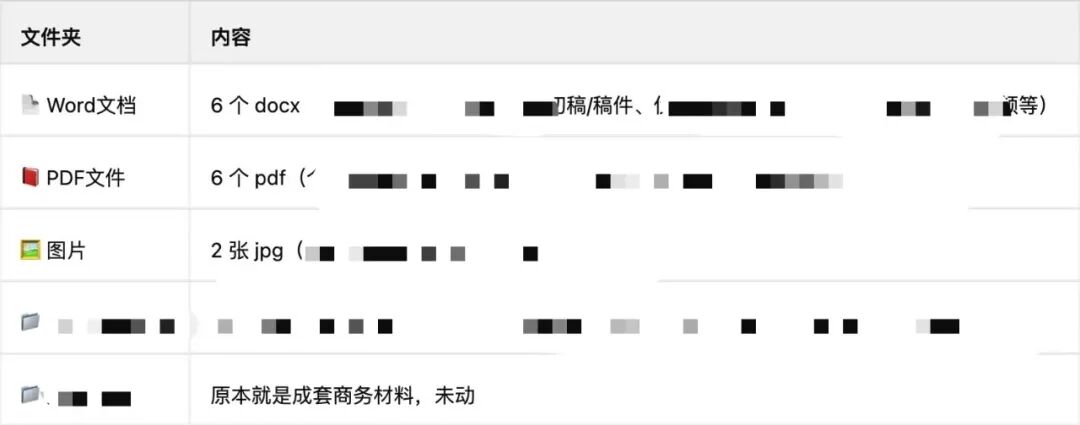
Source: Task test of Qwen App office assistant
We also tested the free usage quota of the office assistant. After 13 free uses, the interface shows: "Today's experience quota has reached the upper limit, come back tomorrow!" There is no clear prompt to users that they need to pay to continue using after exceeding the limit, so the specific charging rules may not be known until later.
After the experience, we also want to discuss a fundamental question: Why did the Qwen App launch the office assistant at this time? And why explore the possibility of charging on this product?
Over the past year, the Qwen App has been telling a story of "getting things done".
Ordering takeout, hailing a ride, booking air tickets, train tickets, and attraction tickets all rely on the integration advantages of Alibaba's ecosystem. In January 2026, the Qwen App announced that it was fully connected to Alibaba's ecosystem businesses such as Taobao, Alipay, Fliggy, and Amap, launching more than 400 AI service functions, claiming to be "the world's first AI assistant that can complete complex real-life tasks".
Apart from Alibaba's ecosystem, the Qwen App has also fully opened up access for third-party Agents, attracting merchants such as SF Express, Swan Home, and FlashEx to join. It can be seen that all along, the Qwen App has been telling stories about entrance and ecosystem.
But this story seems to be less and less attractive.
The so-called "service" ecosystem is not unique to Qwen. Alipay can do it, and WeChat can do it too. What the Qwen App does is essentially just adding an AI entrance for these brands.
Without providing new user experiences, it is difficult to maintain users' motivation to use Qwen to handle affairs unless continuous red envelope incentives are provided. At the same time, the commercial monetization path of this story is also difficult to explore.
Under such circumstances, the Qwen App is now telling the story of office scenarios.
However, these capabilities of the office assistant are being developed by Qwen Office inside Alibaba, and face strong competitors such as ByteDance and Tencent outside.
The previous ecosystem play of the Qwen App is also difficult to apply to the office scenario.
That's why there is the "wanting both" design in this update. A new "Daily" and "Office" scenario switch has been added to the sidebar of the PC end. The "Daily" mode focuses on basic AI creation and is positioned as an AI assistant, while the "Office" mode acts as an office assistant and is positioned as an AI productivity tool.
This positioning shows the shadow of Doubao, and perhaps the Qwen App wants to follow Doubao's path of moving from the C-end to a professional route.
However, this path is not easy to take, and exploring paid services immediately after launching new features is inherently somewhat risky, but the Qwen App really has no choice but to act urgently.
If it doesn't start charging soon, the Qwen App will be in a more passive position
For the Qwen App, this paid feature is not so much an active commercial exploration as an imminent battle for survival.
This Spring Festival, China's AI industry experienced an unprecedented carnival of spending money. The DataEye Research Institute estimates that all AI products including Yuanbao, Doubao, and Qwen spent a total of more than 10 billion yuan on marketing campaigns around the Spring Festival to acquire new users for their respective AI applications.
The Qwen App spent lavishly, refreshing the record of Spring Festival activity investment with 3 billion yuan, expanding the free order scenarios from milk tea and fresh produce to grain, oil and daily necessities. 9 hours after the activity was launched, the number of milk tea orders exceeded 10 million, and the daily active users of the Qwen App skyrocketed from the usual 7.06 million to a peak of 73.52 million.
Shortly afterwards, during the college entrance examination season, the Qwen App took free AI college application filling services as the starting point to attract another wave of users. According to Qwen's data, as of July 8, more than 40 million users had consulted Qwen on issues such as college application for the national college entrance examination, and a total of 23 million free AI application reports were claimed.

Source: Qwen official website
But the reality is far from Qwen's expectations. The two "national marketing campaigns" only seem to bring a short-lived boom.
According to the Morgan Stanley post-spring festival AI application market review report released in March, during the 2026 Spring Festival AI red envelope war, the average daily usage duration of the Qwen App before the activity was 6.3 minutes. After the Spring Festival peak, as user behaviors were mainly focused on receiving coupons and placing orders, the per capita duration dropped to a minimum of 3 minutes, a decrease of 51%; the peak DAU of the Qwen App was 73.5 million, which almost halved when the subsidies ended.
What's more cruel is the financial statement. The DataEye Research Institute estimates that the total cost of Qwen in the Spring Festival marketing war reached 6 billion yuan, which translates to a customer acquisition cost of about 144 yuan per daily active user. In comparison, Doubao's customer acquisition cost is between 84.6 yuan and 112.8 yuan, and Yuanbao's is 69 yuan.
This strategy of focusing heavily on new user acquisition while neglecting retention is not cost-effective. Users who only chase discounts cannot generate revenue, but continuously consume computing power costs. The reasoning cost of large models is extremely high, and every free call means real money investment, trapping the Qwen App in a vicious circle where more activity leads to more money burning.
Half a year later, the report card handed over by the Qwen App shows that it has gained public attention and user scale, but user churn and money burning are also following closely, and the commercial monetization path is almost blank.
A bigger crisis comes from the inside.
On August 3, Alibaba's Qwen Office officially entered public beta. This product brought together the three previously internally competing Agent products QoderWork, Wukong, and MuleRun into one entrance, under the unified management of Chen Yusen, the new CEO of DingTalk. The emergence of Qwen Office means that Alibaba's exploration of AI productivity scenarios has a clearer bearing entity.
Qwen Office is inherently born with enterprise-level genes, cutting into productivity scenarios with higher willingness to pay and higher commercial value from programming, documents to workflows.
In contrast, the Qwen App focuses on C-end general conversations, with low user willingness to pay, scattered scenarios, and inherent difficulties in commercialization.
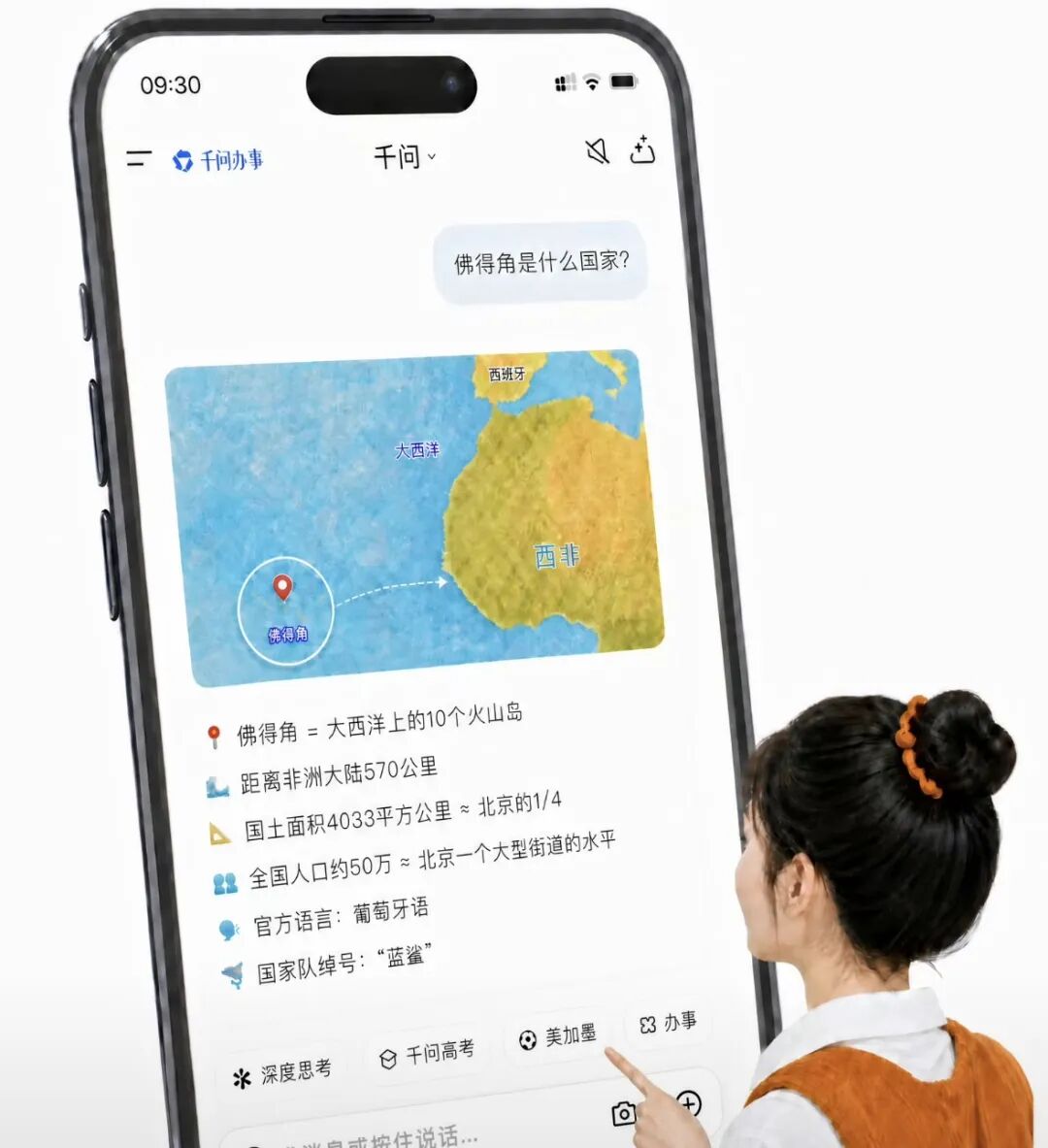
Source: Qwen official Weibo
More critically, the internal resource status of the two is vastly different. Qwen Office has the enterprise customer base of DingTalk, Alibaba Cloud's To B sales system, and a complete organizational structure for support; while the Qwen App seemingly relies on Alibaba's ecosystem, but in fact it is fighting alone when it comes to charging for office scenarios.
When group resources begin to tilt towards the more certain To B scenarios, if the Qwen App cannot explore a paid scenario, its status within Alibaba will become more and more passive.
Qwen's choice to explore paid services at this time is essentially a self-rescue, to prove its own value and maintain its internal status. It is reasonable to speculate that Qwen has seen Doubao's path, but Qwen will face far more practical difficulties if it wants to replicate this route.
For the Qwen App, charging is no longer a multiple-choice question of earning more or less, but a required question to prove its own value. Billions of yuan have been burned, the traffic boom has faded, and internal competitors are emerging. If even the business model cannot be established, what awaits it may be the fate of being marginalized in internal competition.
With Qwen Office in place, who will pay for the Qwen App?
In fact, the first opponent the Qwen App faces when it wants to charge in the office scenario is Qwen Office itself.
Qwen Office integrates three Agent products QoderWork, Wukong, and MuleRun. According to the information released on its official website, this product has capabilities including full integration with enterprise IM, Office document generation and editing, multi-modal understanding and generation.
Although the full integration with enterprise IM is listed as the first of its capabilities, making Qwen Office look like a tool charged for enterprise users.
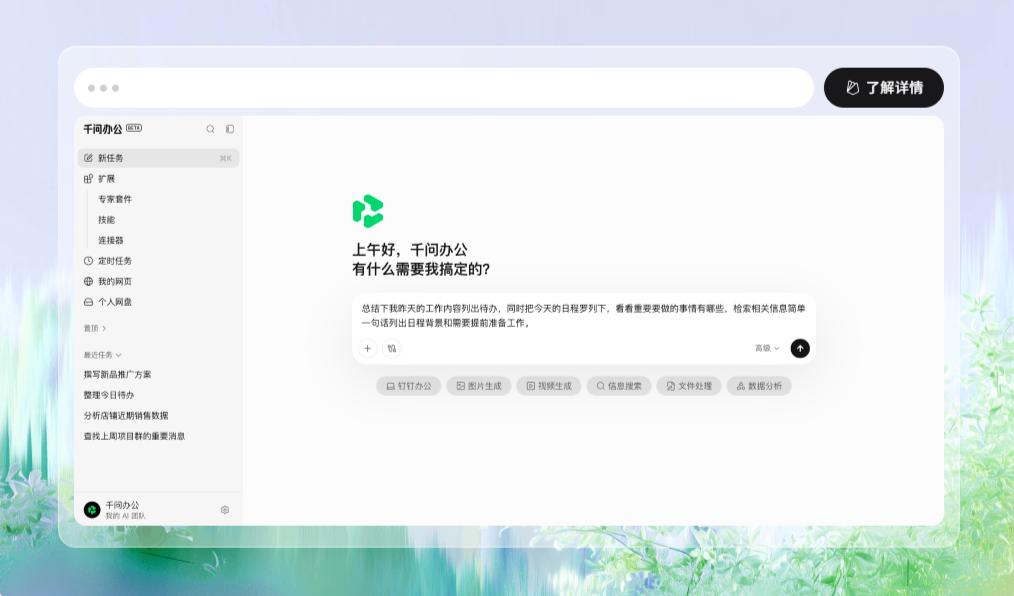
Source: Qwen Office official website
But other capabilities are more attractive to individual users. For example, the Office document generation and editing capability supports multi-format output such as Word, PPT, and Excel, as well as online preview and real-time editing of the native Office suite, which meets the needs of individual users when working in offices.
In the version and pricing section, Qwen Office places the personal version button on the far left, setting subscription fees of 78 yuan/month and 158 yuan/month for medium-frequency and heavy individual users respectively. It is a more professional and targeted productivity tool compared to the Qwen App.
However, the previous positioning of the Qwen App is an all-round AI assistant, focusing on Q&A, problem scanning, and image generation, leaving users the impression that it is a product that can order takeout and find shopping links.
In terms of monthly active user data and user quality, the Qwen App does not have outstanding advantages: QuestMobile data shows that although Qwen had 167 million monthly active users in June 2026, higher than DeepSeek, the per capita usage times were only 17.4 times, and the per capita usage duration was only 22.9 minutes.
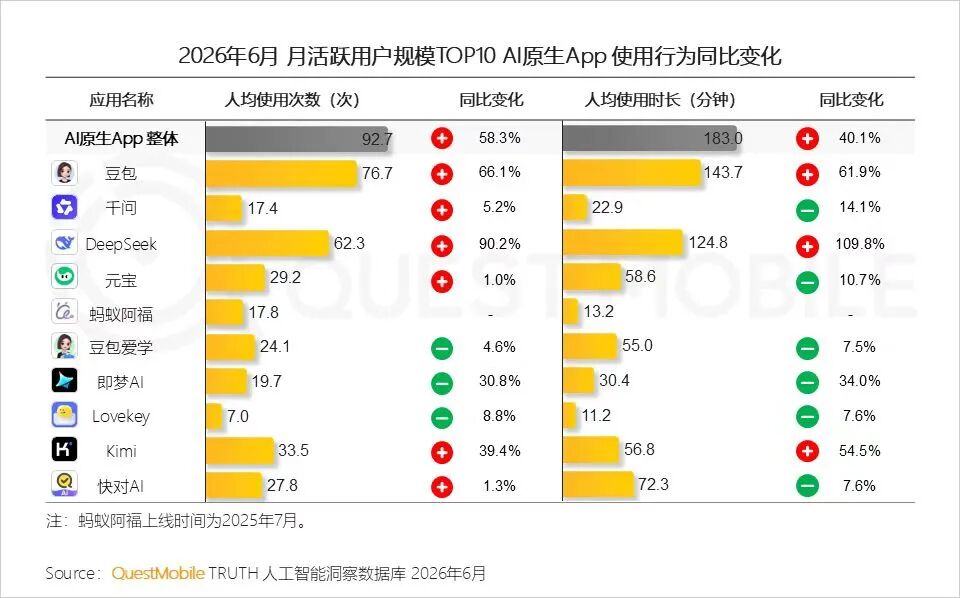
Source: QuestMobile official WeChat public account
It is imaginably difficult for Qwen to convert these "use and leave" users into paying users.
In addition, how Alibaba's management balances the organizational structure of the Qwen App and Qwen Office is also a problem.
The Qwen Office Division is a first-level division under the ATH Business Group, and is also responsible for DingTalk. The Qwen App team is another independent team. The two products belong to different organizational systems and have different assessment goals - Qwen Office does not assess the number of users and monthly active