This year's college freshmen can barely afford to buy computers.
In 1997, when Steve Jobs pulled out Apple's first product in his garage, it was a purely hand-built computer —
Only 200 units were mass-produced, with no complete casing, minimal functions, and a price tag of $666.66. Though expensive, it allowed ordinary people to get their first taste of personal computers.
In the decades that followed, personal computers matured into commoditized products, and a relatively stable system was formed.
On the supply side, the standardization of CPUs, motherboards, memory, hard drives, and system software has formed a horizontally divided industrial chain with interoperable components and relatively transparent specifications;
On the demand side, each type of product has formed a market-recognized price range, and consumers, brands and channels share unified expectations and perceptions of "what performance and positioning correspond to what price".
This means that even with supply chain fluctuations, the large price stratification structure will not be broken in the long run.
But a paradoxical phenomenon is that for more and more consumers today, computers have become more expensive, and have even been reduced to financial investment products and luxury goods.
At the end of July this year, a young consumer named Nai Cha planned to buy a gaming laptop for her younger brother, who had just been admitted to university and enrolled in the mechanical engineering program, with a budget of no more than 7,000 yuan. However, due to the excessively high price, she chose to wait and see.
But by August, Nai Cha soon found that the prices of gaming laptops were becoming more and more outrageous. The exact same model she had taken a fancy to had risen by nearly 2,000 yuan in just one month.
Nai Cha's experience is not an isolated case. The summer vacation is traditionally the peak season for PC manufacturers, but this year many PC channel vendors and system builders seem to have ushered in "the coldest summer ever".
"Prices of memory, graphics cards, and even some power supplies, motherboards, and monitors have all gone up."
Li Mo is the owner of a DIY computer store with 7 years of experience in building PCs. He is very pessimistic about the current PC building market. The first thing he does every morning is not to take new orders, but to snap up components for customers on the second-hand market. When users inquire about prices, he also advises them not to buy: "If you don't have an urgent need, I suggest you don't buy one right now."
Some prospective college students who cannot afford new computers due to high prices have also started to find new alternatives, such as buying second-hand devices or renting computers, and some even plan to travel to Macau to bring back graphics cards in person.
According to data from Runto Technology, in the first quarter of 2026 alone, the average retail price of laptops on mainstream traditional e-commerce platforms online was 6,431 yuan, up about 2.5% from the same period in 2025.
Why has a market with a mature price system and stable supply chain entered the "era of massive price hikes"?
1. PCs Have Entered the Era of Massive Price Hikes
"More than a decade ago, you could get free memory when you bought a motherboard, or you could pay an extra 10 or 20 yuan to get a 1GB memory stick in addition to the motherboard. I really can't understand the current trend," said Li Mo.
Today, more than a decade later, for people like Li Mo, what they can't understand is not only the rising prices of memory and graphics cards, but the across-the-board price increase of the entire PC industry.
According to previous forecasts from IDC, the average PC price will rise by 4% to 8% in 2026. As early as the beginning of the year, manufacturers such as Lenovo and Dell had already announced "one-off price hikes", with product prices generally increasing by 15% to 20%.

Looking at the longer timeline, in just over half a year, the PC industry has already experienced three rounds of price hikes —
The first round started in the middle of last year, when storage prices rose first. Micron, Samsung, and SanDisk successively issued price increase notices, raising the quotes of some storage products by 20% to 30%,
The second round started at the end of last year. Affected by the rising storage prices, complete machines soon followed, and PC manufacturers including Dell and Lenovo announced price adjustments;
The third round has been the continuously rising prices of graphics cards and processors.
At the beginning of 2026, Intel had already implemented two consecutive rounds of price hikes for consumer-grade CPUs, and previously confirmed in its latest financial report that prices for all CPU product lines would be raised.
NVIDIA raised its chip supply prices for three consecutive rounds in early 2026, May, and late July, and AMD followed suit.
Graphics card brands such as ASUS, MSI, Colorful, and Sapphire can only follow the upstream chip manufacturers to raise their retail prices. The continuously rising costs have even led to terminal graphics card prices that "change every day".
Multiple system builders confessed to us: "The prices of brand new graphics cards have skyrocketed. We suggest customers consider refurbished graphics cards with a two-year warranty, wait for two years for the prices to drop before making a purchase."
According to our offline surveys, the prices of office laptops have generally risen by 100 to 1,000 yuan, some gaming laptops have increased by 3,000 to 4,000 yuan, and the price of some popular gaming laptops has even risen by more than 4,000 yuan within half a year.
"What you buy is not a computer, but a stock," commented one consumer.
Three forces are driving the PC industry into this "era of massive price hikes":
The first force is storage manufacturers that hold the master switch of price hikes.
With long-term locked orders from industry giants and profit margins 3 to 5 times higher than those of consumer-grade storage, original storage manufacturers not only prioritize allocating production capacity to AI, but also tilt 70% of their new production capacity to enterprise-level storage and HBM.
The second force comes from players like NVIDIA, which have gradually turned graphics cards into a "side business".
Ten years ago, NVIDIA's graphics card upgrade cycle followed the rule of "one major architecture iteration every two years, one minor iteration under the same architecture every year". But in the past five years, the graphics card upgrade cycle has been delayed to nearly five years.
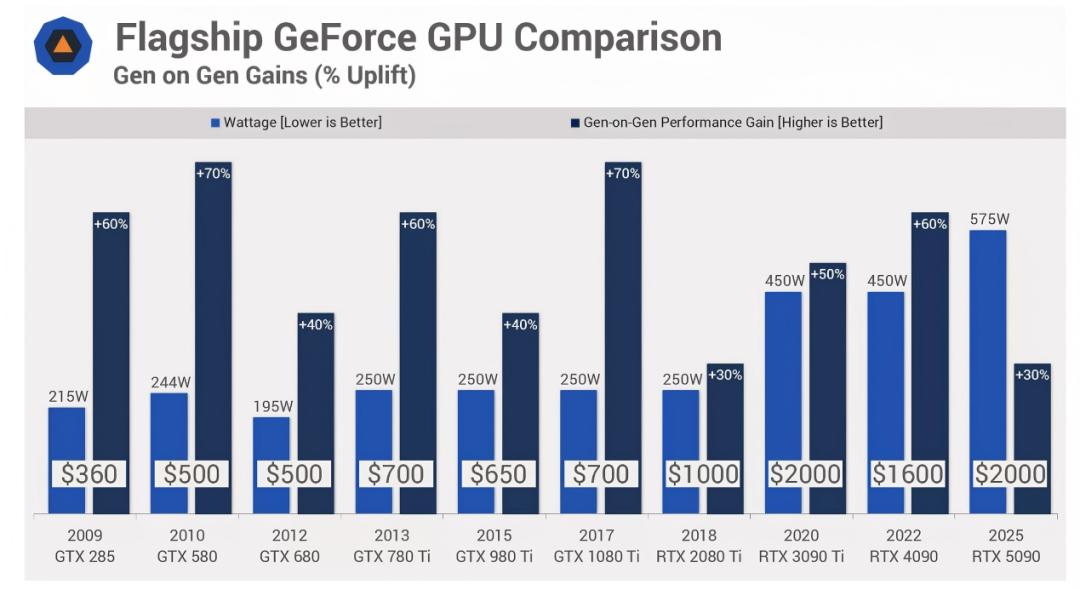
In the early days, gamers could usually see significant performance improvements in graphics cards at relatively stable and predictable prices. NVIDIA's mid-range flagship GTX 1060 is still called the "dessert god card" by a generation of users.
But as NVIDIA focuses more of its energy on AI infrastructure, relying on longer R&D cycles and advanced manufacturing processes, its gaming business has not only been merged into the edge computing segment. For the PC gaming market, graphics card prices keep rising, but the intervals between major performance improvements are getting longer and longer.
The third force comes from the inherent characteristics of the PC industry itself.
A key question is why the PC industry has become the epicenter of this wave of price hikes?
The first reason is that the PC industry has weak profit buffer capacity
Different from the high concentration of the mobile phone industry and centralized large orders for new products, the PC industry, in addition to first-tier brands such as Lenovo, Dell and HP, also has a large number of second-tier brands, white-label products and DIY players. The channel side also includes large commercial orders, massive scattered retail sales, etc., and there are numerous SKUs for complete machines.
First-tier brands can still lock in storage purchases through long-term contracts, but small and medium-sized brands can hardly obtain stable production capacity.
It is difficult to lock in production capacity in advance, while storage costs continue to climb. According to HP executives, memory currently accounts for about 35% of the bill of materials cost of a complete PC, while this proportion was only about 15% to 18% in the previous quarter. The company expects this proportion to continue to rise within this year.
Under the weight of these two major pressures, PC manufacturers have weak profit buffer capacity. After their short-term low-cost inventory is consumed, in order to maintain profits, they have no choice but to raise prices and pass the costs on to consumers.
The second reason is that the demand elasticity of the PC market is very high.
The PC industry is already in a downward cycle. After the global PC industry shipment volume peaked at 365 million units in 2011, there has never been another peak. Not only has the replacement cycle been extended to 5 or 6 years, but all price-sensitive users are concentrated in the entry-level segment.
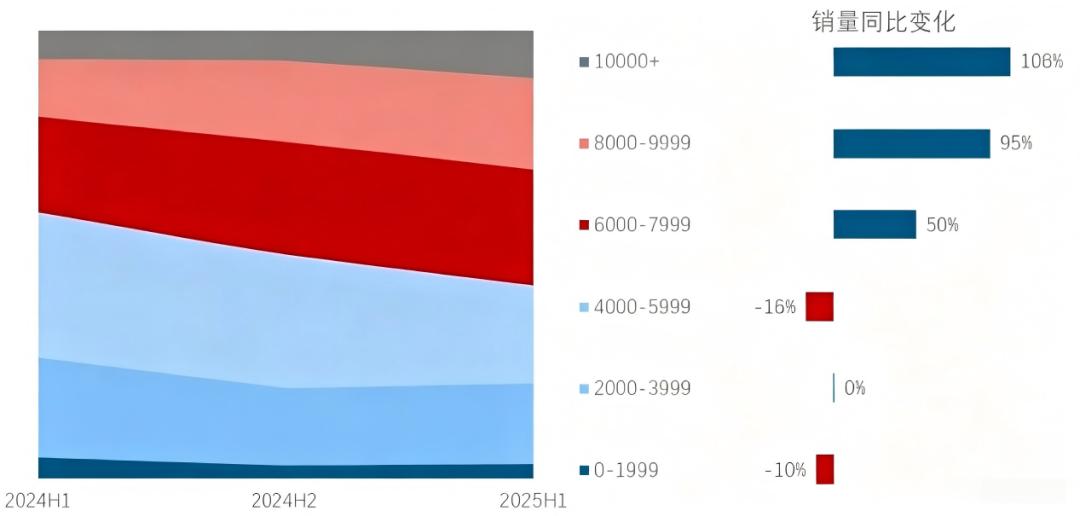
Once the price hike starts, the market share of the mid-to-low-end traditional main segment will shrink, and demand will further weaken. Research from Runto Technology shows that in the first quarter of this year, the selling prices of some mainstream complete PCs were forced to rise by as much as 20%, which directly drove away price-sensitive students and household consumers.
As early as the first half of last year, the market share of laptops priced from 6,000 yuan to 7,999 yuan had exceeded the traditional main segment of 4,000 to 5,999 yuan. Gartner previously directly judged that entry-level PCs priced below $500 may disappear by 2028.
The superposition of the three forces, plus the possibility of hoarding and speculation by some channel vendors in the short term, every link seems to be making rational choices, but it has amplified the anxiety of price hikes across the entire industry.
2. Struggling to Survive and Self-Rescue
System builders including Li Mo are very pessimistic about this round of massive PC price hikes, and they expect it will not end in one or two years.
The more prices rise, the weaker demand becomes. Li Mo joked that many system builders are now doing "charity": "It's hard to close even one single deal now."
For consumers who want to replace their PCs, they have also started their own self-rescue efforts.
Some teach themselves how to build PCs, some wait for second-hand complete machines, some can only lower their expectations and buy second-tier brands, and some even take the risk of buying demo units or inventory units.
The lives of channel vendors and system builders have been split into two parts by the price hikes: One part is the uncertain prices, where "prices change every day" amplifies risks. Even some upstream manufacturers do not hesitate to break contracts, and dynamic prices make stable orders impossible.
The other part is consumers who are increasingly reluctant to spend money. Li Mo said he only advises people with urgent needs to buy PCs, and those who do not have urgent needs should wait. "There are so many better things you can do with the money."
In the same wave of price hikes, PC manufacturers also have different attitudes.
Some remain confident in the industry, such as Lenovo.
Previously, Yang Yuanqing, Chairman and CEO of Lenovo Group, said: "Adversity reveals true character. In this situation, it depends on who can get more supply and better costs, and we are confident about this."
But some manufacturers are relatively pessimistic under pressure, such as ASUS.
Liao Yixiang, General Manager of ASUS System Business Unit, previously mentioned that the supply of upstream components is tight and the quotation cycle is shortened. Contracts that were considered profitable 2 months ago may become loss-making when delivered 2 months later, which makes ASUS unmotivated to take long-term orders now.
At present, the only thing PC manufacturers are doing to stay alive is: Raise average selling prices to survive.
One approach is a short-term strategy — continue to use low-cost inventory to sustain operations, cut low-end product lines after the inventory is consumed, and then adjust the product structure; the other is a long-term move, which is to directly deploy AI and tell a new high-end story with AI PCs.
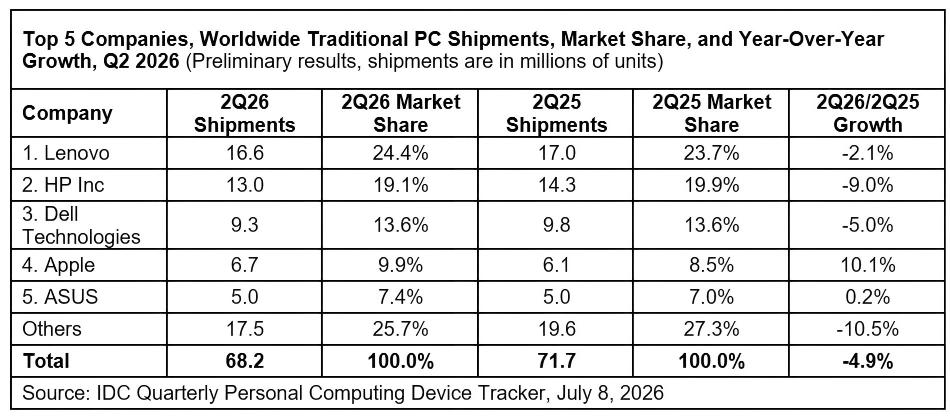
However, these stories about the future belong only to leading manufacturers. The self-rescue brought by price hikes has accelerated the reshuffling of the PC market, which is a differentiated world where "the strong will always get stronger".
According to data from IDC, in the second quarter of this year, the market share of leading brands including Apple, Dell and Lenovo is rising, while the market share of "others" has dropped by 10.5% year-on-year. Some netizens shared that the same gaming laptop they bought two years ago can now be sold second-hand for a small profit.
3. Don't Blame Price Hikes Entirely for Poor PC Sales
But it is actually unfair to attribute all the poor PC sales to price hikes.
Since the large model set off the AI wave, PC manufacturers have also started to tell the story of AI PCs, hoping to drive a new PC replacement wave in the industry.
But the story of AI PCs has not been fully told yet. Instead, AI has first driven up costs, and shipment volume has started to decline.
According to IDC data, global PC shipments in the second quarter of 2026 fell 4.9% year-on-year to 68.2 million units, which is the first decline after nine consecutive quarters of growth.
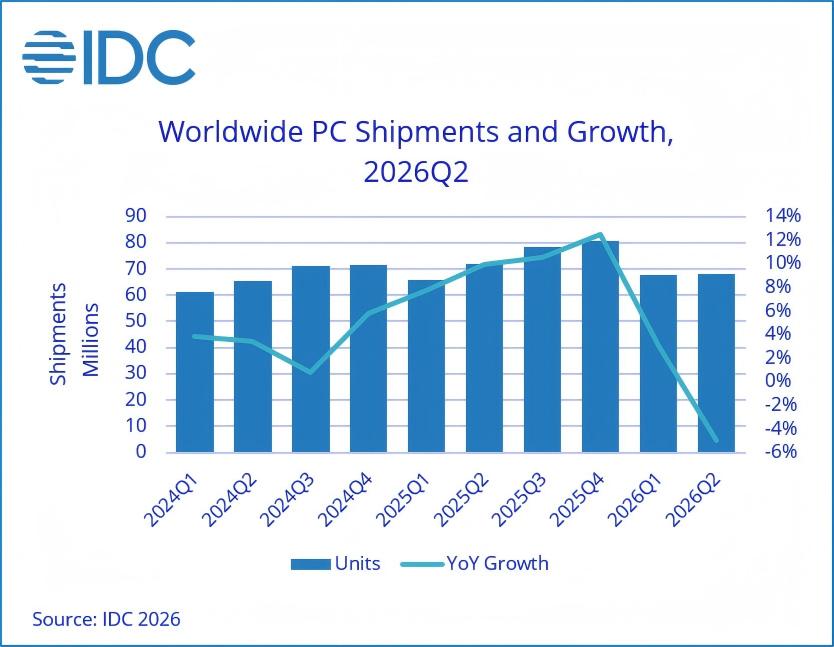
This rather ironic story essentially points out the problems of PC manufacturers:
On the one hand, AI has not completely changed the product form of PCs, but has further amplified the problems of high homogeneity and weak innovation among manufacturers.
On the other hand, AI has not completely changed the position of PC manufacturers in the downstream of the smile curve, and the profit distribution still follows a positive pyramid structure —
A large amount of profits flow to the chip layer. Although users are starting to pay for intelligence, model companies do not have much net profit margin after deducting costs such as computing power, let alone PC manufacturers that are just hardware assemblers.
Furthermore, looking back at the growth trend of the PC industry over the past decade, every sales pulse of the industry has come from external events: the COVID-19 pandemic spawned a wave of PC purchases for remote work, the end of Windows 10 support forced a wave of device replacement, government subsidy policies drove a round of concentrated consumption, and game content such as Black Myth: Wukong also drove a device replacement boom.