He's hit the jackpot again! This investment made by Joe Tsai has generated a floating profit of approximately 160 million yuan.
Joe Tsai recently hit the trending list, which most people may have heard of, all because of a divorce statement. The onlooking public is mostly concerned about "how the property will be divided", but in fact the commercial asset structures of both parties have already had certain independence, and the core assets are expected to suffer no material impact.
What draws my attention even more are two matters: first, his commercial capital operation has ushered in another highlight moment, and one project invested by Blue Pool Capital under his banner has reaped returns; second, a fraud gang posing as Blue Pool Capital has been filed for investigation by the police on the charge of illegally absorbing public deposits, with the involved amount reaching hundreds of millions of yuan. (A reminder: the focus of this article remains on the first matter)
On June 10, two months ago, Parabilis Medicines (stock code: PBLS), a clinical-stage biotechnology company backed by Blue Pool Capital, the family office of Joe Tsai and Jack Ma, was listed on NASDAQ. With a total fundraising amount of 770 million U.S. dollars, it set the record for the largest IPO in the history of VC-backed biotechnology industry.
Calculated based on the stock price of around 35.9 U.S. dollars at the close of August 4, the paper return on this Blue Pool Capital investment is 2.6 times, with a floating profit of about 24 million U.S. dollars (equivalent to around 160 million RMB, based on neutral assumptions, the complete calculation process is shown below).
However, this floating profit is still "paper wealth" for now — in accordance with the prospectus agreement, shares held by old shareholders are subject to a 180-day lock-up period, and cannot be sold before early December 2026. The actual exit return depends on the stock price performance after the end of the lock-up period.
It set the record for the largest biotechnology IPO across the globe
Let's get to know Parabilis first.
Its former name was FogPharma. According to reports from BioSpace, it was spun off from Harvard University and became independent in 2016, founded by Gregory Verdine, tenured professor at Harvard University and serial entrepreneur, and renamed Parabilis in October 2024. Headquartered in Cambridge, Boston, the company reportedly now has 145 full-time employees and 31 medical specialists/consultants. Its current CEO is Mathai Mammen, former global head of R&D of Johnson & Johnson, who joined and led the company after 2021.
What it does can be summarized in one sentence: developing drugs for disease-causing proteins that are "undrugged".
A large number of disease-driving proteins in the human body have smooth surfaces, with no "pockets" available for small-molecule drugs to attach to, while antibodies cannot enter cells — the pharmaceutical industry calls this type of target "undruggable".
The core technology of Parabilis is called Helicon (stabilized helical peptide), which is a mini protein drug that can penetrate into cells, precisely attach to and regulate these smooth proteins.
Its leading pipeline zolucatetide is the world's first investigational drug directly targeting the β-catenin:TCF interaction (the core node of the Wnt signaling pathway), targeting rare tumors such as desmoid tumors. It has obtained FDA Fast Track designation, and plans to launch Phase III clinical trials in the first half of 2027.
The pharmaceutical industry across the globe has spent 30 years failing to make a breakthrough on this target.
The capital market gave a very positive response: on June 9, 2026, the IPO was priced at 20 U.S. dollars per share, higher than the prospectus range of 17-19 U.S. dollars. The issuance size was raised twice, and finally 33.5 million shares were issued to raise 670 million U.S. dollars; after the underwriting syndicate fully exercised the over-allotment option, the total fundraising reached 770.5 million U.S. dollars, making it the largest VC-backed biotechnology IPO on record.
In addition, Regeneron, a pharmaceutical giant, signed an R&D cooperation deal worth up to 2.3 billion U.S. dollars with it one month before its listing, and simultaneously made a private equity investment of 75 million U.S. dollars at 18 U.S. dollars per share (10% off the IPO price).
On the first trading day after listing, Parabilis opened at 33.35 U.S. dollars (+66.75%) and closed at 31.60 U.S. dollars (+58%); as of August 4 Eastern Time, its stock price stood at around 35.9 U.S. dollars, with a market value of about 4.2 billion U.S. dollars, up about 79% cumulatively from the issuance price.
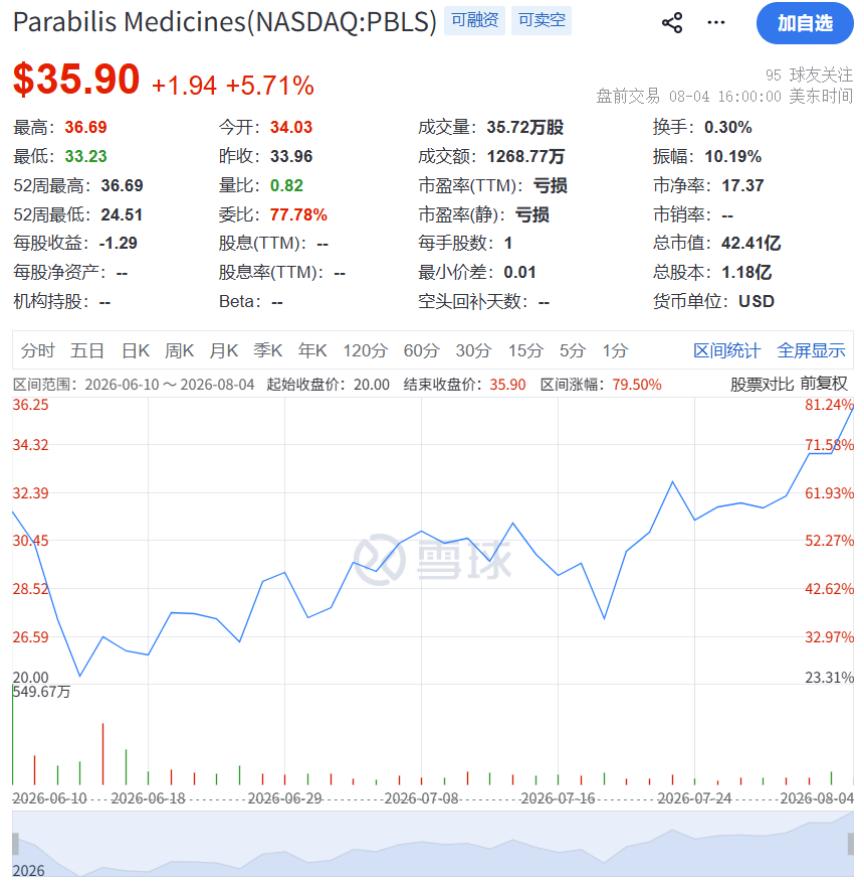
And Blue Pool Capital was exactly one of the early institutional shareholders of this company.
Blue Pool Capital placed two bets separately in 2018 and 2021
Blue Pool Capital entered the market in two steps.
The first investment was made in May 2018, when FogPharma completed a 66 million U.S. dollar Series B financing, led by Tonghe Yucheng Capital, with GV (Google Ventures), Blue Pool Capital, Horizons Ventures under Li Ka-shing, Nan Fung Group, Leerink Partners and others participating in the follow-on investment.
The second investment was made in March 2021, when FogPharma completed a 107 million U.S. dollar Series C financing, led by venBio Partners, and Blue Pool Capital continued to participate in the follow-on investment as an existing shareholder.
After that, Blue Pool did not make additional investments, but Parabilis continued to push forward its financing. From 2022 to early 2026, Parabilis completed three more rounds of financing.
These three rounds showed a counter-intuitive phenomenon — the cost per share dropped all the way from 14.49 U.S. dollars to 6.16 U.S. dollars, but the total valuation of the company rose all the way from 300 million U.S. dollars to 681 million U.S. dollars. It only made a small compromise on valuation and lowered expectations in the E-round of 2024, which was a down-round.
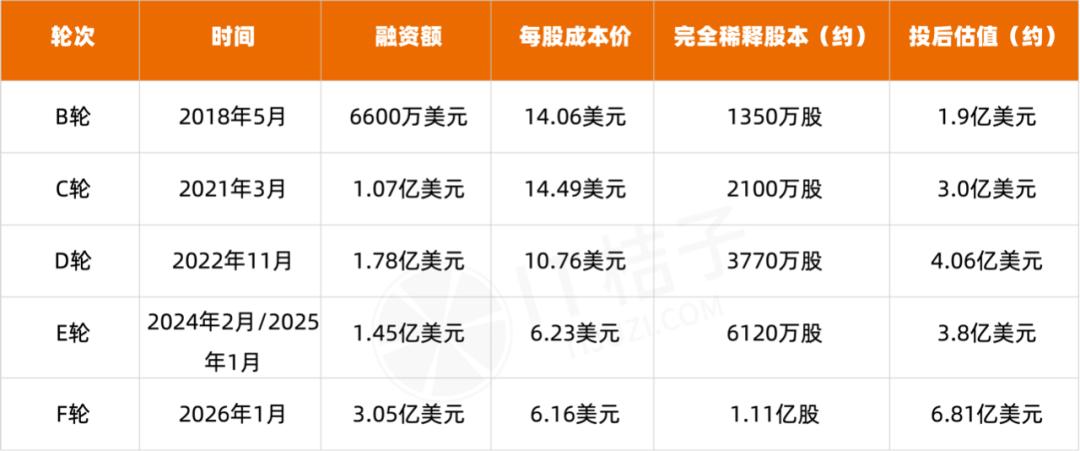
Source of per share price: Financial notes to Parabilis prospectus [Source: SEC EDGAR — Parabilis Medicines 424B4 Prospectus, as of June 9, 2026]; Post-Series D valuation of 406 million U.S. dollars and post-Series F valuation of 681 million U.S. dollars come from Forge Global financing database [Source: Forge Global — Parabilis Medicines IPO Timeline & Financing Details, as of 2026]; Post-Series B/C/E valuations are calculated based on the number of preferred shares, common shares and option pool disclosed in the prospectus.
How was this achieved? Through share capital expansion.
The total share capital after Series C was about 21 million shares, and it expanded to 111 million shares after Series F, increasing by more than 5 times in five years. New investors entered the market in the way of "a little more shares at a lower unit price", making the total size of the company larger and larger.
But this caused real harm to existing shareholders: their shareholding ratio was heavily diluted.
However, thanks to the existence of anti-dilution provisions, the actual cost of Blue Pool's two rounds of shareholding was also diluted. It should be noted that although Blue Pool's shareholding cost is protected to a certain extent by anti-dilution provisions, the dilution of its shareholding ratio is inevitable. In biotech investment, a down-round not only affects the paper value of shareholding, but may also trigger more complex clause games.
Although Blue Pool Capital has never publicly disclosed its specific capital contribution in the two rounds of FogPharma's financing, its name does not appear in the list of major shareholders (holding more than 5% of shares) in the prospectus — indicating that its shareholding is less than 5%.
Therefore, we can adopt the following calculation method, with reference to the official disclosure of HBM Healthcare, a Swiss-listed medical investment institution: it has invested a total of 13.6 million U.S. dollars in Parabilis since 2021, holding about 1% of shares after IPO, equivalent to about 1.22 million shares.
Although Blue Pool Capital entered earlier than HBM in the Series B round, both of them participated in the Series C round at the same time, with the same cost in the same round; under the neutral assumption that Blue Pool contributed a total of about 15 million U.S. dollars in Series B and C (6 million U.S. dollars in Series B + 9 million U.S. dollars in Series C), it obtained about 443,000 shares in Series B (6 million U.S. dollars ÷ 14.06 U.S. dollars × anti-dilution coefficient 1.0389 ≈ 443,000 shares), and about 657,000 shares in Series C (9 million U.S. dollars ÷ 14.49 U.S. dollars × anti-dilution coefficient 1.0578 ≈ 657,000 shares); the total is about 1.1 million shares, accounting for about 0.9% of the total share capital.
Next, calculate the paper return:
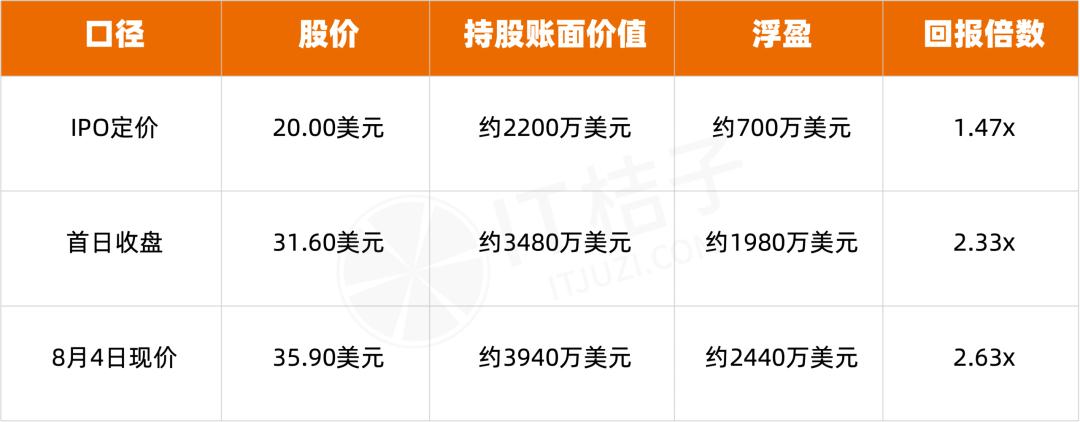
Data cutoff time: August 4, 2026 Data sources: SEC EDGAR (Parabilis 424B4 Prospectus), Forge Global, Yahoo Finance
Under this assumption, the paper floating profit can reach 24.4 million U.S. dollars, with a return multiple of about 2.6 times. From the first investment in 2018 to now, it has been about 8 years, corresponding to an annualized IRR of about 13%. If calculated based on the weighted average holding period of the two investments of about 7 years, the annualized rate of return is about 15%.
In eight years, Blue Pool Capital quietly obtained considerable paper returns from this small Boston-based company with 145 employees.
Note: The entire calculation process above is based on public disclosures and neutral assumptions, for reference only, and may differ from the actual situation.
Looking at the territory of the top Asian family office, it "made the right bet" again this time
Blue Pool Capital was founded in Hong Kong in 2014. As reported by Chinese media Investment, as of 2022, the assets under management of Blue Pool Capital exceeded 500 billion U.S. dollars (about 3.6 trillion RMB, this AUM caliber includes Joe Tsai's family wealth and personal assets of some Alibaba executives), which can be regarded as a top family office in Asia.
According to PitchBook data, Blue Pool Capital's private equity strategy has achieved a gross internal rate of return of about 55% in the past ten years, and its post-fee performance can rank in the top 10% of vintage funds of 2016.
From 2016 to 2018, Blue Pool Capital bet on a number of healthcare projects, including Hua Medicine (listed on the Hong Kong Stock Exchange in September 2018), Brii Biosciences (listed on the Hong Kong Stock Exchange in July 2021), Grail, and FogPharma/Parabilis was also one of the projects it bet on in the same period.
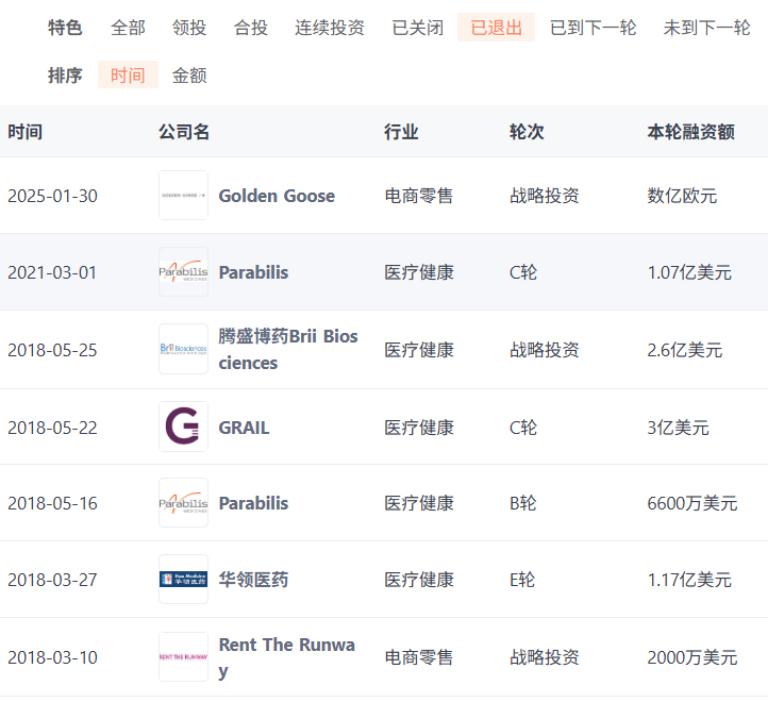
Projects that Blue Pool Capital has achieved exit (acquired, IPO) Source: IT Juzi
Looking back at these four pharmaceutical projects, apart from Parabilis which currently has paper floating profits, what about the returns of the rest?
Grail achieved a "real" profitable exit. Blue Pool Capital participated in its 300 million U.S. dollar Series C round in May 2018, with a post-investment valuation of about 3.3 billion U.S. dollars. In 2021, Illumina acquired it for 8 billion U.S. dollars, with an investment return of more than 2 times, and the profit was realized immediately after the M&A closing.
As for Brii Biosciences and Hua Medicine, the key depends on the exit timing of Blue Pool Capital. If it exited in the early stage after the share ban was lifted, it most likely achieved a profitable exit; if it still holds the shares to this day, the probability of loss on the paper return is higher.
It is worth noting that in January 2025, Blue Pool acquired about 12% strategic minority stake in Golden Goose for 264 million euros. This transaction was negotiated after Golden Goose postponed its Milan IPO in June 2024. By December 2025, HSG announced the acquisition of controlling stake in Golden Goose, with a valuation of more than 2.5 billion euros, which was 13.6% higher than the 2.2 billion euros valuation when Blue Pool Capital entered. This investment realized a paper appreciation of about 36 million euros in just one year.
The nature of the Golden Goose deal is completely different from that of Parabilis. It belongs to the minority stake PE transaction of mature consumer brands, with low multiple, short holding period, and making money by relying on the certainty of performance growth, which also corresponds to the subsequent transformation of Blue Pool Capital.
In March 2026, Blue Pool Capital completed an identity upgrade, and raised its first 1 billion U.S. dollar PE fund Riverside Fund externally. Sovereign funds and pension funds appeared in the LP list — this is one of the largest U.S. dollar fundraising by Chinese family office-backed institutions since 2026.
Summary
Blue Pool first discovered and invested in Parabilis in 2018, and then in 2021, when the biomedical financing market was booming, Parabilis' Series C round was oversubscribed. The $14.49 per share price should be the most expensive per share cost in its financing history. Blue Pool followed up the investment again, and this round of investment may be made at the high point. In several subsequent down-rounds, Blue Pool did not follow up the investment again. Fortunately, the anti-dilution provisions covered its downside protection by the F round.
8 years after the first investment, Parabilis finally ushered in its IPO, and its stock price soared on the first trading day after listing and in early August. Up to now, the paper return of Blue Pool Capital on this investment is still very impressive.
The enlightenment of this investment may lie in: knowing when to place a bet, and even more knowing when not to place a bet; knowing which terms in the contract to stick to and which terms can be compromised. Behind this is the superposition of information, connections and experience.
In accordance with the prospectus agreement, shares held by old shareholders are subject to a 180-day lock-up period, and cannot be sold before early December 2026. So it is still "paper wealth" for now. As of today, PBLS has been listed for only two months, and its stock price has fluctuated between