With an annual revenue of 2.1 billion yuan, a Shenzhen-based couple born in the 1970s who sell key components for AI chips and rank first in the global market are now sprinting for a Hong Kong IPO.
Two English majors, who make fiber optic connectors, are sprinting for a Hong Kong stock IPO.
The company is called Adtek, ranking first in the world. Its founders are a married couple who have been in this industry for 18 years, holding a total of 99.09% of the shares.
Now, three top-tier investment institutions, namely Temasek, Morgan Stanley, and CPE, are competing for a Pre-IPO share with a maximum investment of 2 billion RMB at the same time.
The Key Product Catapulted by AI
In 2007, the couple Bai Chang'an and Zhu Meihua founded Adtek in Shenzhen. Both of them graduated with English majors, and initially engaged in the export trade of fiber optic products.
After 18 years of development, the company has taken the top spot globally in the fiber optic connector sector: in 2025, Adtek accounted for 9.7% of the global market share. In the segmented track of high-density fiber optic connectors, its share reached 12.6%, also ranking first in the world.
Both ends of each optical fiber in the data center need a connector to achieve precise docking. In AI data centers, the higher the optical fiber density, the greater the usage of connectors. Optical connectors are evolving from low-value standard parts to core precision components that determine link insertion loss, reliability and deployment efficiency.
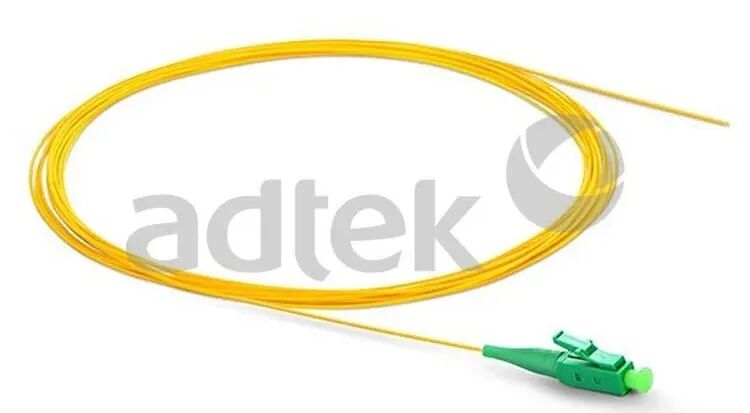
Adtek's fiber optic patch cord products. Source: Adtek official website
Adtek generates revenue from three business segments.
The first segment, fiber optic connectors, is its absolute mainstay, contributing 1.972 billion yuan in 2025, accounting for 93.7% of the total revenue. Its core products MTP/MPO and VSFF connectors directly serve 800G and 1.6T optical modules, with a gross profit margin of 39.5% and a net profit margin of 29.6%.
The second segment, optical connection infrastructure, accounts for 6.1% of revenue, covering fiber optic distribution systems and full-link cabling solutions.
The third segment, micro-optical connectors, accounts for 0.2% of revenue, with an income of about 3.43 million yuan in 2025, a year-on-year increase of about 6.6 times compared with 523,000 yuan in 2024, targeting the micro-optical interconnection inside CPO optical engines.
In 2023, the company's revenue was 500 million yuan, with a profit of 121 million yuan; in 2024, revenue reached 889 million yuan, with a profit of 268 million yuan; in 2025, revenue hit 2.105 billion yuan, with a profit of 624 million yuan. In three years, the revenue increased from 500 million yuan to 2.105 billion yuan, up by about 3.2 times, and the profit rose from 121 million yuan to 624 million yuan, up by about 4.2 times.
So why does it choose to raise funds and go public all of a sudden now? The real driving force is not a lack of capital, but that the timing is ripe.
In the past two years, the capital market has been focusing on GPUs and optical modules. Around May 13, 2026, the A-share market value of Innolight once exceeded 1.15 trillion yuan. The market value of TFC has once exceeded 300 billion yuan. Even after a subsequent pullback, its valuation level remains high. Capital has begun to look for incremental opportunities deeper in the industrial chain, and connectors are the next target. 86.2% of Adtek's revenue comes from the United States, which puts it right at the center of the world's largest market.
If it doesn't go public now, it may not get such a favorable valuation when it tries to do so later.
Why Are Temasek, Morgan Stanley and CPE Competing for This Deal at the Same Time?
It is no coincidence that this Pre-IPO financing can attract three well-known institutions at the same time. They have different investment logics, but all lead to the same conclusion.
First, Adtek has secured the key node of "from optical modules to connectors" on the AI computing power chain.
There is a popular saying in the industry — don't just focus on optical modules, the golden era of MPO is coming. MPO fiber optic connector, in simple terms, is a "large plug" that can insert multiple optical fibers at the same time. A common connector can only connect one optical fiber at a time, while an MPO can connect 12, 24 or even more fibers at once. AI data centers are densely packed with optical fibers, and using MPO can save space and time, greatly improving deployment efficiency.
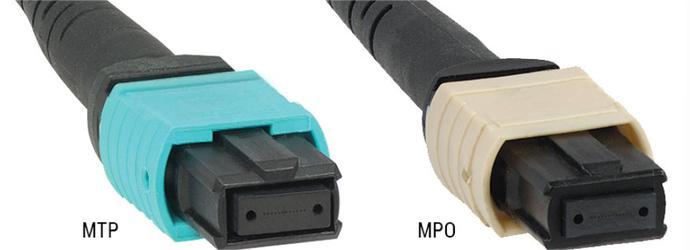
Comparison between MTP and MPO connectors. Source: FOCC
The demand for bandwidth driven by AI computing power is pushing MPO to evolve from 12-core to 16-core, 24-core and even 48-core — the more cores a connector has, the more data it can transmit simultaneously, which is equivalent to widening a narrow road into a highway.
According to data from Frost & Sullivan, the global fiber optic connector market size reached about 203 billion yuan in 2025, and is expected to hit 1.528 trillion yuan in 2030, with a compound annual growth rate of 49.8%. The high-density fiber optic connector market will expand from 129 billion yuan to 1.49 trillion yuan, representing a CAGR of 63.1%.
The most staggering figure belongs to the CPO fiber optic connector segment — CPO (co-packaged optics) is a new technology that packages optical devices and chips together, eliminating the intermediate conversion link to achieve faster speed and lower power consumption. This new architecture has created a previously non-existent demand for connectors to connect external lasers and chips. This segment was only worth 100 million yuan in 2025, and is expected to reach 804 billion yuan in 2030, with a CAGR of 296.2%.
The optical connection industry is relatively scattered on the whole, with the top five manufacturers accounting for a total market share of only 33.9%. Adtek holds a 9.7% global market share, and is the fastest-growing player among the top five — its fiber optic connector revenue recorded a CAGR of 115.3% from 2023 to 2025. Adtek has taken a different path: it does not spread its resources across too many sectors, but digs deeper and deeper into the single track of high-density connectors, holding a 12.6% market share, about 4.1 percentage points higher than the second-ranked player.
Adtek has also developed a set of RFID intelligent operation and maintenance system, which is equivalent to attaching an "electronic ID card" to each optical fiber. Once data center administrators scan it with a device, they can know where the optical fiber is connected and what its status is, so they no longer need to manually check records to manage hundreds of thousands of optical fibers. Once a data center adopts this system, it is very unlikely to replace it.
Connectors are evolving from "niche accessories" to core components of AI infrastructure, and Adtek is exactly in this key position.
Second, the optical connection track itself is being revalued.
In 2025, the North American optical connection market size has reached 788 billion yuan, accounting for 38.38% of the global total, mainly driven by the rapid expansion of AI computing power clusters. 86.2% of Adtek's revenue comes from the United States, making it a core beneficiary.
The valuation of TFC on the A-share market is several times that of Adtek on the Hong Kong stock market — for the same type of assets, the pricing logic of the two markets is completely different. Adtek's valuation model on the Hong Kong stock market is still based on the "manufacturing industry" standard, while TFC on the A-share market has been priced as a "core AI asset". Once this cognitive gap is bridged, Adtek's valuation logic will be completely reshaped.
According to people familiar with the matter, Temasek, Morgan Stanley Private Equity, and CPE are expected to participate in this round of financing. The three institutions have different backgrounds but consistent actions: they are all seizing the window period where the company is valued as a manufacturing enterprise in Hong Kong, but will be priced as an AI asset in the A-share market. However, all parties are still in the evaluation stage and have not made a final decision.
Risks Behind the Glamorous Figures
However, this company is not without hidden dangers.
Overly concentrated customers. In 2025, the top five customers contributed 90.6% of the revenue, with the largest single customer accounting for 63.2%. 86.2% of the company's revenue comes from the United States, of which the US market alone contributed 1.815 billion yuan. Once core customers adjust their supply chains, the company's performance will decline sharply. Adtek also admitted in its prospectus that such dependency limits the company's bargaining power over product pricing.
Overly single product structure. The fiber optic connector category alone contributes 93.7% of the revenue. The micro-optical connector segment only generated 3.43 million yuan in 2025, accounting for 0.2% of the total revenue. The company is laying out emerging connectors related to CPO, but their revenue proportion is negligible.
After 18 years of development in the connector industry, it has become the world's number one, but the top position does not mean absolute safety. Its customers are too concentrated, so it may be constrained by large customers at any time. Its product portfolio is too single, with almost no revenue outside the connector sector. Geopolitical risks are also prominent, as 86% of its revenue comes from the United States.
It chooses to go public at this node in 2026, betting that optical connections will be revalued as core AI assets. Whether this judgment is correct will be answered by the order volume from data centers.
The content of this article is for reference only and does not constitute investment advice.
This article is from the WeChat official account Pencil News (ID: pencilnews), written by Songge, authorized for release by 36Kr.