Google's AI Brain is no longer in charge, is Gemini really going to step up to the plate this time?
After being mocked as the "North American Soybean Packet" for more than half a year, Google finally could not hold back any longer.
Just today, a string of high-profile personnel changes broke out in Google's AI division:
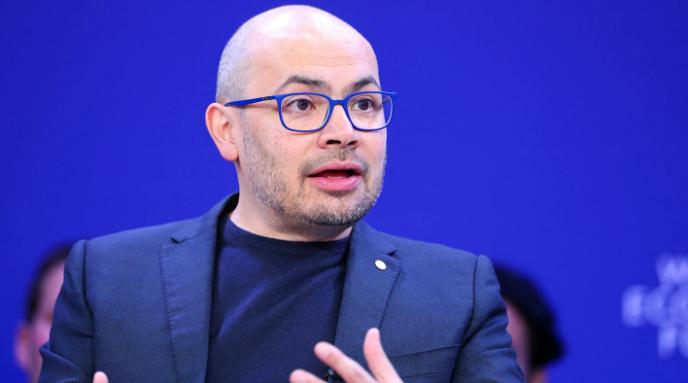
Demis Hassabis, co-founder and CEO of DeepMind (Demis Hassabis) steps down from his position;
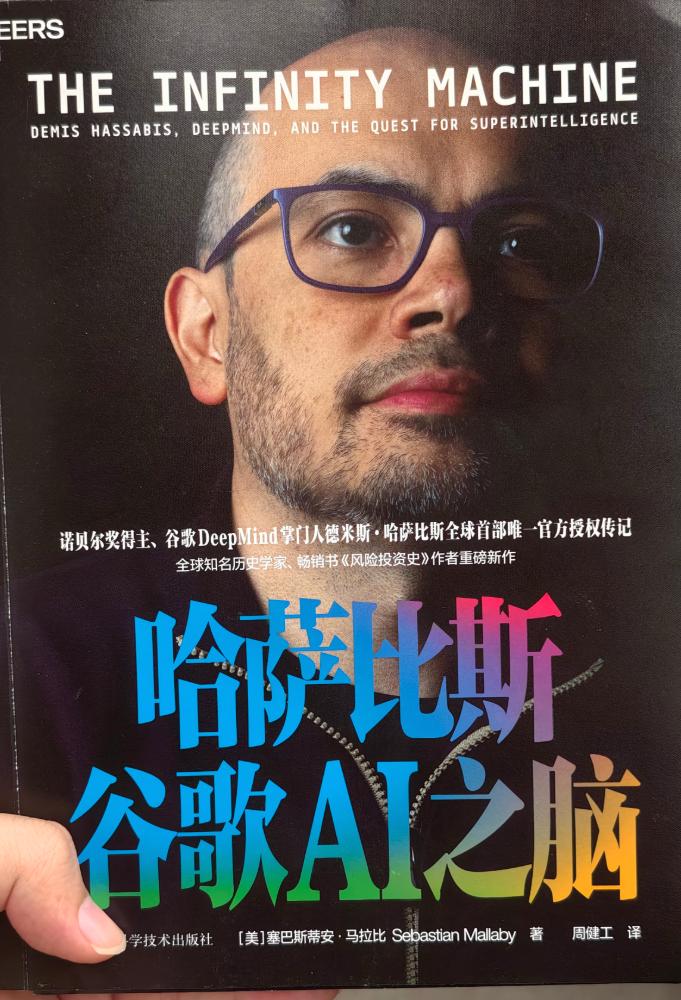
I really don't want to say this, but the biography of Demis Hassabis that I bought before hasn't even been finished reading, yet the brain behind Google AI has now been reduced to the "back of the head" of Google AI...
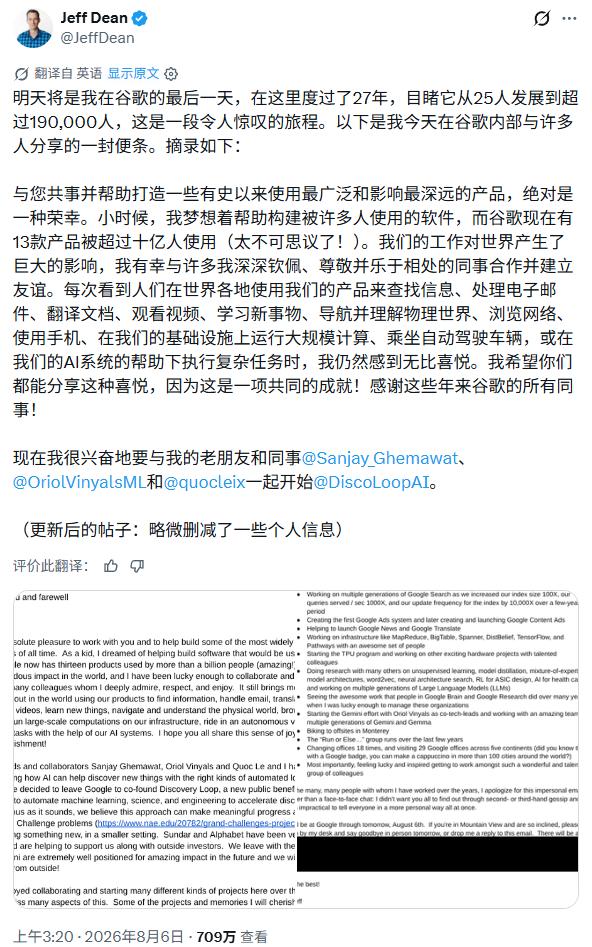
On the other side, Jeff Dean, the core scientist of the patriarch level who has worked at Google for nearly 27 years, is leaving the company, taking a group of core team members with him to found a new company called Discovery Loop.
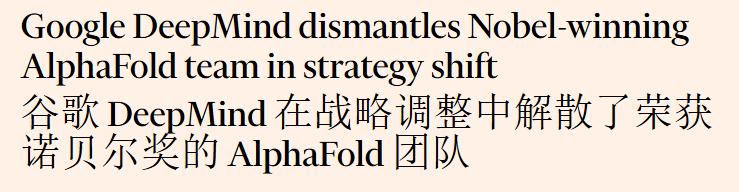
Only a week ago, the media just broke the explosive news that the core AlphaFold team that helped Google win the Nobel Prize in Chemistry in 2024 had its original team structure split and reorganized less than two years after winning the award, most of the members were reassigned to other projects, and nearly a quarter of the full-time authors of the original paper left Google.
Many readers who follow our content will definitely be full of questions seeing this series of three consecutive moves:
Wait, has Google gone crazy? Disbanding the Nobel Prize-winning team, pushing out all the technical veterans and AI founders, is this even something a normal human would do?
But in our opinion, on the surface, these moves look like a massive purge of Google's AI division, but things are far more complicated than that.
First of all, Demis Hassabis did not leave Google directly. He handed over the daily operation and administrative jurisdiction of DeepMind as CEO, but transitioned to the position of Chairman of DeepMind and the newly created "Chief Scientist of Alphabet".
In this new role, he will no longer be directly responsible for the daily advancement of models and products, and will focus primarily on the long-term strategy, global issues and social impact of AGI, while continuing to lead Isomorphic Labs to advance AI drug R&D.
Compared with Demis Hassabis, who is more idealistic and more of a pure scientist, the person taking over the daily operations is Koray Kavukcuoglu, former CTO of Google DeepMind and Google's Chief AI Architect, who fits the public's typical impression of a corporate executive far better.

Kavukcuoglu is also a 13-year veteran of DeepMind. He built Google's deep learning team from scratch and led the breakthroughs of key technologies including WaveNet (generative raw audio model) and DQN (Deep Q-Network).
Moreover, according to reports, he not only has a deep understanding of engineering and products, but is also far better than Demis Hassabis at coordinating resources across a large number of complex business departments. In other words, he is probably the most suitable person to lead Gemini to continue competing fiercely in the current red-hot AI market.
Not only that, Hassabis really has to take part of the blame for Google's disjointed product pace over the past year.
Because for this "resignation" announcement, Hassabis himself had been secretly planning for more than a year.
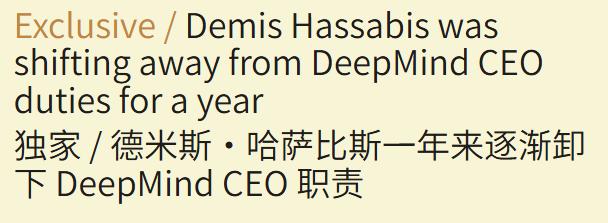
According to reports, Hassabis started to take the initiative to delegate power a long time ago.
He paid less and less attention to daily trivial matters that require KPI assessment, such as the Gemini AI model and consumer strategy, and gradually handed over these responsibilities to Kavukcuoglu.
Strictly speaking, Demis Hassabis has been trying to separate DeepMind from Google for many years, and even in 2017, he once went so far as to seek investment from Joseph Tsai, which eventually helped DeepMind secure a special "British-style scientific research concession" status within Google.
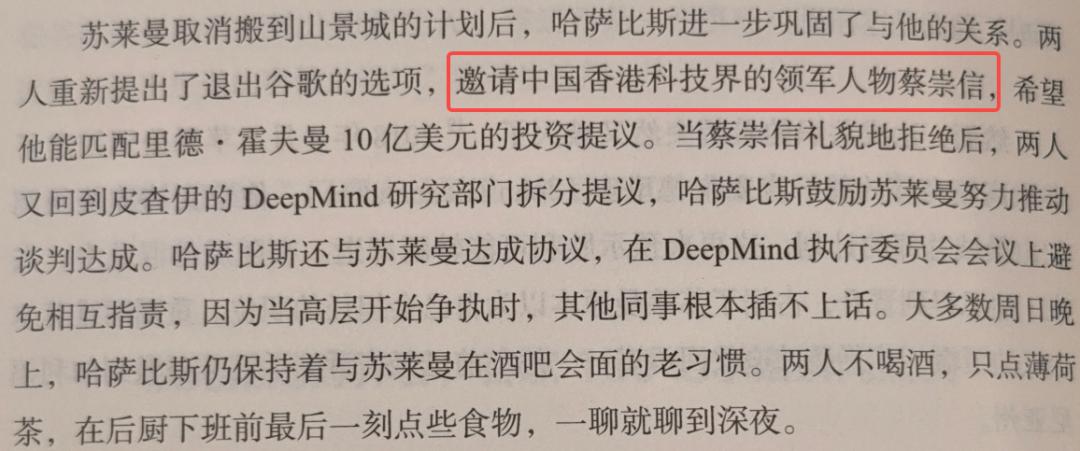
In the biography of Demis Hassabis, you can clearly feel that Hassabis is far more like Ilya Sutskever, who recently left OpenAI, than Sam Altman.
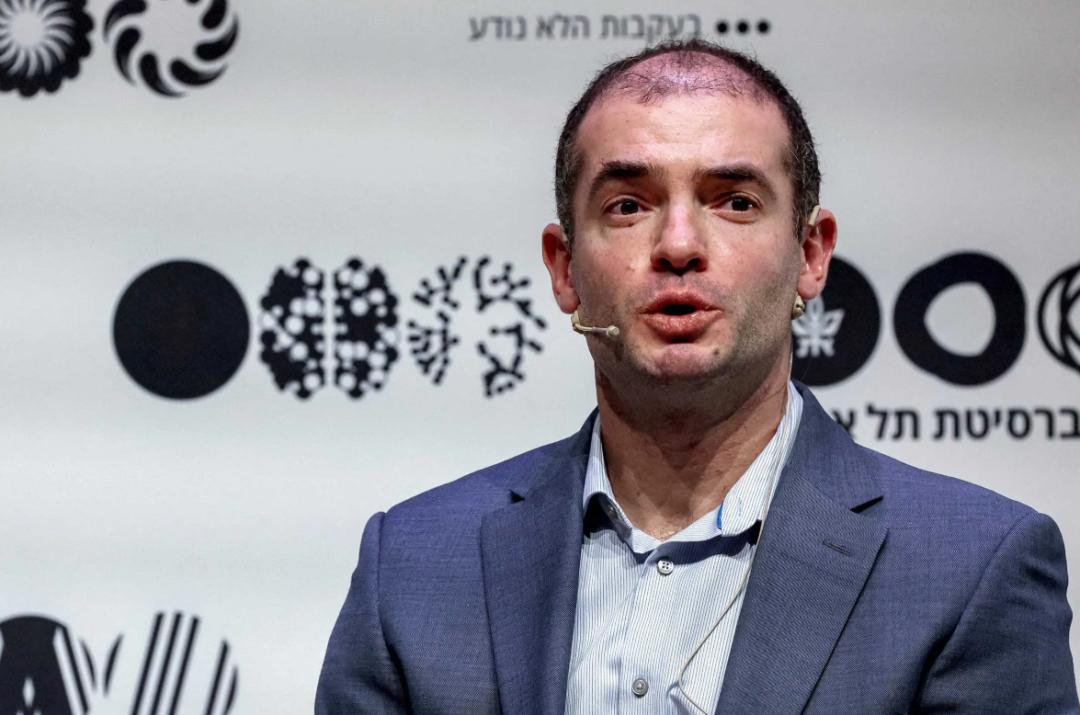
During the three years since DeepMind merged with Google Brain, I have barely seen any report mentioning that Hassabis enjoyed integrating with the Google Brain team.
Unlike Sam Altman, a master of internal corporate politics, he never enjoys the pleasure of holding power, and cannot get satisfaction from things like the sharp increase in Gemini's daily active users or managing all kinds of trivial company affairs. What excites him far more is the prospect that AI can hopefully solve scientific problems that humans cannot handle, such as curing diseases and discovering new materials.
So this brilliant career transition of his is not necessarily a bad thing.
The situation of AlphaFold is similar. The claim hyped by some media that "AlphaFold is gone" is not entirely true.
Many of its members have been transferred to more general internal projects such as Gemini, enzyme design, genomics and even nuclear fusion, some have moved to Isomorphic Labs, the Alphabet-owned AI pharmaceutical company, and nearly a quarter of the full-time authors of the original paper have left Google.
But AlphaFold itself has not been shut down. Its public database and existing research resources are still operating, and related research is continuing to evolve within the system including DeepMind and Isomorphic Labs.

The situation of Jeff Dean is more delicate. It is true to say that he has left Google.
If you open Google's address book, you will most likely not find Jeff Dean anymore, because officially, Jeff Dean led a small team to leave and set up a new company.
But in reality, you may still spot Jeff Dean or his new company's employees in Google's server rooms, canteens, and annual meetings, because Google is the founding investor and cloud partner of Discovery Loop. Even in the first year after the new company is established, its computing resources and core computing power will be fully guaranteed by Google Cloud.
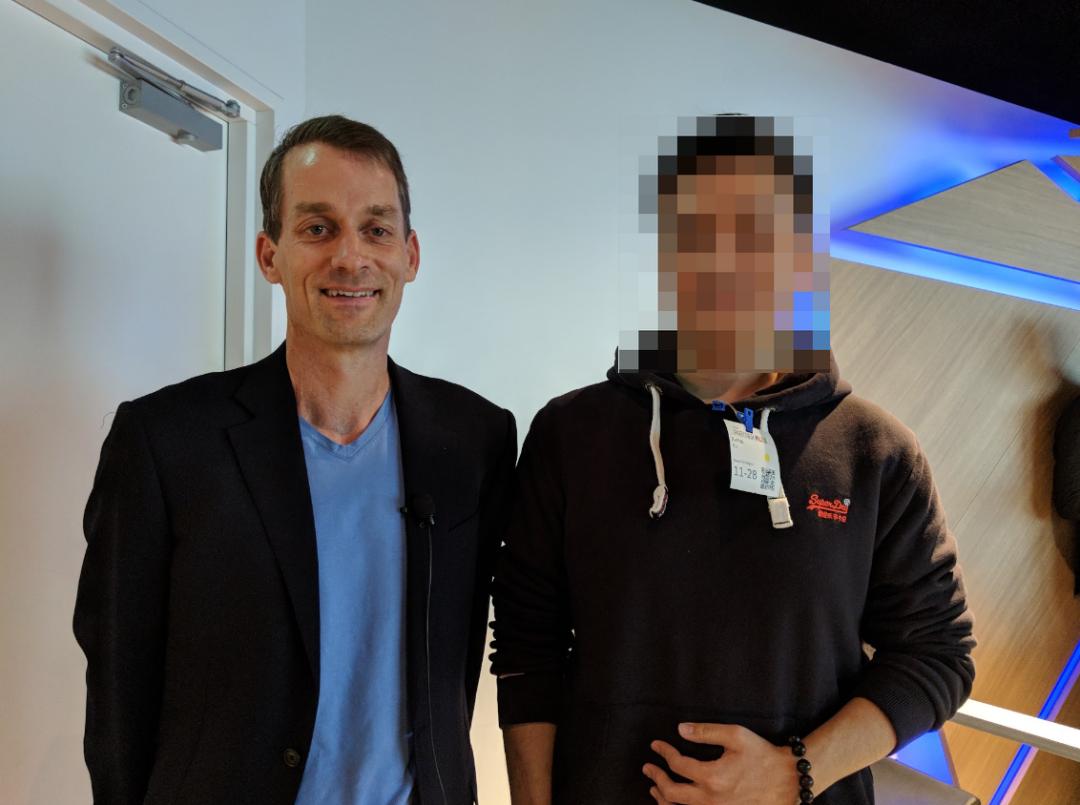
I was fortunate enough to take a photo with Jeff Dean back in the day
We can't help but think that this kind of arrangement, in our usual context, is most likely called external incubation.
Therefore, putting all these events together, it is Google's version of "let the heroes go where their abilities are needed most", putting the right people in the right positions.
As for why this timing was chosen, as we mentioned at the beginning, Gemini's performance over the past year has been far less than satisfactory.
Google has been unable to launch Gemini 3.5 Pro/Gemini 4 for a long time. For the several Flash versions it released, don't even talk about how capable they are, just ask yourself if they are fast enough to deserve the "Flash" name.
You know, Google has changed a lot already.
For a very long time in the past, Google was a paradise for geeks and idealists, where people could pick a problem that humanity had not solved for decades, gather a group of mathematicians, biologists and computer scientists, and work behind closed doors on it for several years.
Even today, many scholars still highly appreciate this model of Google. Under this model, Google has indeed produced a lot of outstanding achievements, including Transformer and AlphaFold.
But the rapid development of the AI industry in recent years has left Google facing a lot of setbacks.
Therefore, in order to seek changes, Google voluntarily merged DeepMind and Google Brain two years ago, which was once regarded as a key turning point for Google's AI division to stage a comeback.
After all, Gemini kept rising strongly after that, and after the release of version 3.0, it even faintly overshadowed the performance of OpenAI and Anthropic's products.
But the subsequent one-year lag in development is something that no one can tolerate.
Even if we ignore the lagging model capabilities, Google has spent an enormous amount of money on AI.
During the earnings call for the second quarter, Alphabet raised its full-year 2026 capital expenditure guidance to a staggering range of $195 billion to $205 billion. The high-intensity investment in infrastructure has caused Alphabet, which has always had extremely strong cash reserves, to record negative free cash flow for the first time in the second quarter.
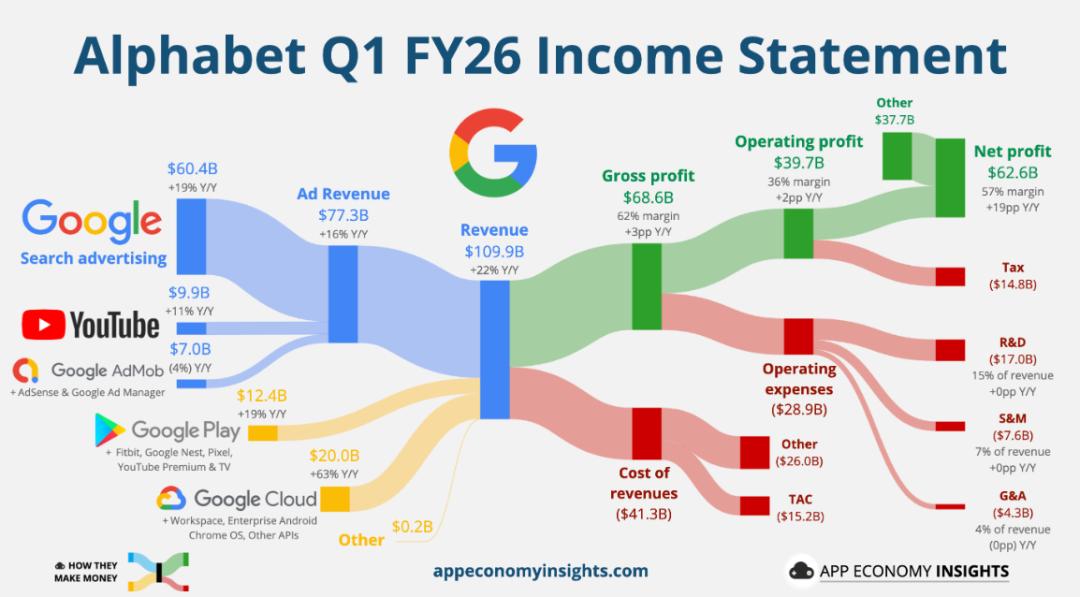
This makes the direction of this adjustment much easier to understand. Google is investing unprecedented amounts of capital, but has failed to form a stable leading position in key models for a long time.
It is probably this kind of pressure that pushes Google to further integrate resources and manpower, "improve Gemini's capabilities in coding and other aspects" and "prove to the market that it can generate profits".
And for those who want to continue to pursue unrestrained, imaginative cutting-edge research, they can go start their own ventures, and Google will invest in them.
This might be the best path Google can come up with right now, but the cost is also obvious.
After all, the departure and reassignment of these top experts does not only mean the loss of a few fancy job titles; the amazing Nobel Prize-winning AlphaFold team is really gone; concentrating resources on Gemini can improve short-term execution efficiency, but is it really a good thing in the long run?
Therefore, after the personnel changes were announced, Alphabet's stock price once fell by about 4%.
But don't easily conclude that Google is doomed to fail. In our opinion, Google still has TPU, data centers, Cloud, search, Android, a huge user base, and one of the strongest AI research accumulations in the world.
Its problem is not that it has no cards in hand, but that it has too many cards and the cost of holding them is too high, so it must quickly launch a profitable combination