Repair costs for electric vehicles are 1.7 times those of gasoline cars, but that is far from the only thing that pushes vehicle owners over the edge.
The debate between gasoline-powered vehicles and electric vehicles is one of the most classic disputes in the current automotive market. Discussions on this topic have gone deep into all dimensions, from parameters to prices, and further to full-scenario vehicle usage experiences, pushing the debate to an unprecedentedly high level of popularity.
Some people are obsessed with the intelligent experience and lower operating costs of electric vehicles, believing that this is the future direction of the automotive industry; others insist that gasoline-powered vehicles have more convenient energy replenishment, more mature and reliable technologies, and hold that the advantages of electric vehicles still have limitations. The two sides stick to their own arguments and bicker endlessly. This divergence did not arise in the short term, nor will it stop immediately. The dispute between gasoline and electric vehicles will exist for a long time in the future.
Against this confrontational backdrop, consumers' vehicle usage experience, especially the performance in the after-sales link, is becoming a key factor affecting their purchase choices.
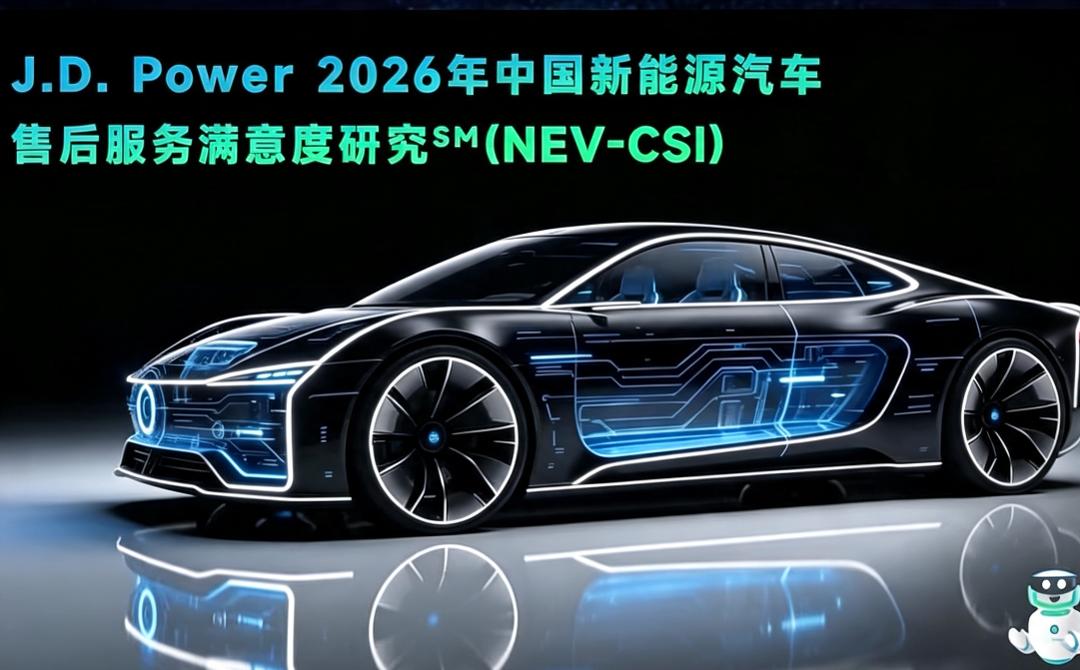
A few days ago, J.D.Power, a consumer insight and market research institution, released the "2026 China New Energy Vehicle After-sales Satisfaction Study", which shows that the current domestic new energy vehicle after-sales market is indeed facing structural challenges and experience differentiation.
The report shows that although domestic new energy vehicle sales continue to rise and technological iteration keeps accelerating, there are still many problems in the after-sales field that need to be urgently improved. These problems not only affect users' vehicle usage experience, but also become a barrier to the high-quality development of the industry.
After all, for consumers, car purchase is only the beginning of their car-using life. The convenience, cost-effectiveness and professionalism of after-sales services will directly determine their sense of well-being during vehicle use.
While gasoline-powered vehicles occupy advantages with their accumulated after-sales systems over many years, and the after-sales shortcomings of electric vehicles are gradually highlighted, more people are beginning to view the gasoline-electric dispute rationally.
After-sales problems need urgent solutions
The latest research data from J.D.Power shows that in 2026, the incidence of vehicle usage problems among new energy vehicle users reached 46.1%, a year-on-year increase of 12%, which means that almost one in every two new energy vehicles will encounter usage problems.
It is worth noting that the negative impact of vehicle usage problems on user experience has expanded to 1.8 times that of 2025, and users' dissatisfaction has been further amplified.
Among these vehicle usage problems, 85.5% are not hardware failures of the vehicle itself, but non-failure problems such as "unable to operate" and "difficult to use". For example, some car owners cannot skillfully operate the intelligent infotainment system, have a vague understanding of the usage scenarios of assisted driving functions, and even find it difficult to master the charging process and battery maintenance skills.
Many car owners reported that after picking up the car, they were at a loss when facing the complex infotainment settings, and could only repeatedly consult customer service when encountering small problems, but could not get timely and effective responses. This "inconvenience brought by intelligence" makes many new energy vehicle owners feel helpless.
In addition to the troubles at the usage level, the problem of "high cost and low closed-loop" in the new energy accident vehicle business is more prominent. Reports show that the maintenance cost of new energy accident vehicles is 1.7 times that of gasoline-powered vehicles, and the high maintenance cost makes car owners complain that "they cannot afford the repair".
It is not difficult to understand why these problems exist.
Many new energy vehicles are keen on integrated die-casting, which turns dozens of parts into a whole. Even a slight scratch and deformation during vehicle use will require the whole part to be replaced; in addition, a single precision sensor such as a lidar costs tens of thousands of yuan, and a scratch may require replacing the entire radar assembly; the zero-to-whole ratio of the battery pack is also surprisingly high, and the battery replacement cost of some models even exceeds half of the vehicle price.
However, when the vehicle needs maintenance, many car companies hold the monopoly of spare parts and diagnostic data, and third-party repair shops cannot obtain original spare parts and fault code parsing permissions. Going to 4S shops to "only replace but not repair" further increases maintenance costs and reduces after-sales experience.
At the same time, user service satisfaction after insurance claims has dropped sharply by 67 points. Problems such as cumbersome maintenance processes, long waiting periods for spare parts, and inconsistent damage assessment standards make car owners suffer a lot in the after-sales link. In addition, the unit customer price of new energy vehicle after-sales services has increased by 23.3%, which is also an important incentive for the generally high insurance premiums of new energy vehicles, further increasing the vehicle usage cost for car owners.
It should be noted that these problems are not isolated cases, but widespread phenomena in the industry.
Judging from the real feedback from car owners, from small problems such as infotainment system lag and complex function operation, to big problems such as high accident maintenance cost and untimely after-sales response, every pain point is consuming users' trust in new energy vehicles. When the after-sales experience cannot keep up with the speed of product development, no matter how outstanding the product parameters are, it is difficult to really impress consumers.
Benign competition between gasoline and electric vehicles promotes mutual progress
However, the problems existing in the after-sales of new energy vehicles are not just the shortcomings of the industry, but can also be regarded as a phenomenon at a specific stage of the development of the automotive industry.
Because in the development history of gasoline-powered vehicles, similar dilemmas were also experienced.
Early gasoline-powered vehicles also faced problems such as high maintenance costs, imperfect after-sales systems, and non-standard user usage. For example, the initial fuel vehicles had high failure rates, uneven distribution of maintenance outlets, and insufficient spare parts supply, which brought a lot of troubles to car owners.
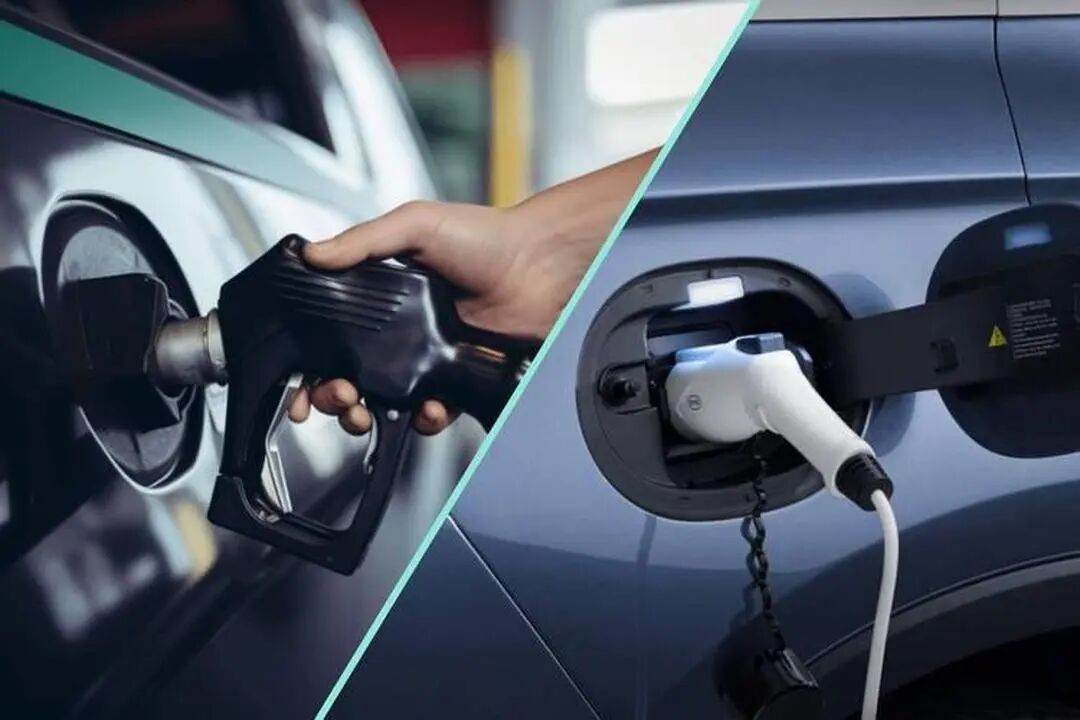
But with the development of the industry, gasoline vehicle companies have continuously optimized their after-sales systems, established standardized maintenance processes, improved the spare parts supply chain, and strengthened user vehicle usage training, gradually solving these problems and forming today's mature after-sales ecosystem.
Therefore, for the new energy vehicle industry, the current after-sales problems are both challenges and opportunities.
On the one hand, this is an inevitable stage in the rapid development of the industry. With the maturity of technology and the improvement of the market, these problems will be gradually solved; on the other hand, the concentrated emergence of problems also allows the industry to see its own shortcomings more intuitively, pointing out the direction for subsequent optimization and upgrading.
To break through the after-sales dilemma, new energy vehicle enterprises need to make efforts from multiple aspects.
First of all, it is necessary to simplify the product operation logic, optimize the infotainment system and functional design, lower the user's usage threshold, and strengthen user vehicle usage training at the same time, helping car owners master vehicle usage skills proficiently through offline explanations and online tutorials, so as to reduce the occurrence of non-failure problems.
Secondly, it is necessary to improve the after-sales system, accelerate the construction of the spare parts supply chain, shorten the maintenance waiting period, formulate unified damage assessment and maintenance standards, reduce the maintenance cost of accident vehicles, and improve the after-sales response speed and service quality.
In addition, it can also learn from the mature experience of gasoline vehicle after-sales, combine the characteristics of new energy vehicles, and create an after-sales model that is more in line with user needs, such as launching exclusive battery maintenance plans and on-site maintenance services.
The "gasoline-electric dispute" will not have an end, because the development of the automotive industry is essentially a process of continuous progress — the accumulation of gasoline vehicles in the after-sales field provides experience for electric vehicles; the technological innovation breakthroughs of electric vehicles can also promote the upgrading of gasoline vehicles.
This kind of benign "confrontation" is not a life-and-death competition, but a process of mutual promotion and common progress.
Only by facing up to the current problems and actively optimizing the after-sales system can new energy vehicles truly achieve high-quality development, jointly promote the automotive industry to a new height with gasoline vehicles, and bring consumers better vehicle usage experiences.
This article is from the WeChat official account "Auto Community" (ID: iAUTO2010), written by Li Sijia, and authorized for release by 36Kr.