The viral AI drama that was handcrafted by a secondary vocational school student and sparked a Hollywood-wide manhunt is about to launch an interactive video game. Are games the ultimate destination for AI dramas?
Recently, a 3-minute promotional video for Zombie Scavenger, an AI interactive video game derived from the hit AI short film of the same name, has been officially released.
The release of the promotional video immediately drew high attention from the AI drama and gaming industries. As AI content creation sees a full-scale explosion in production capacity, AI dramas have completely moved out of the experimental stage and become the core growth driver of the internet content track.
However, beneath the prosperous appearance, structural crises in the industry such as scarcity of hit works, dismal data performance and short life cycles continue to become prominent. To put it simply, the AI short film industry seems bustling, but it is extremely difficult to make profits.
Nowadays, the official launch of the game built based on the hit AI short film marks the implementation of a new trend in the industry. At the same time, it also triggers people to think — will the ultimate form of AI dramas be games?
Based on this, DataEye Research Institute will discuss this topic today.
From Hit AI Dramas to Interactive Video Games
The AI short film Zombie Scavenger was independently produced by the creator "MxShell", who claims to be a non-professional amateur with a technical secondary school diploma. The film was initially uploaded and released on domestic platforms such as Bilibili and Douyin in early May, but the total view count was low when it was first launched and did not become a massive hit. Later, some netizens reposted this AI short film to overseas social platforms, where it was discovered by Hollywood AI producer PJ Ace, who shared it on his personal social media. While praising this short film highly, he also publicly recruited the creator in the comment section.
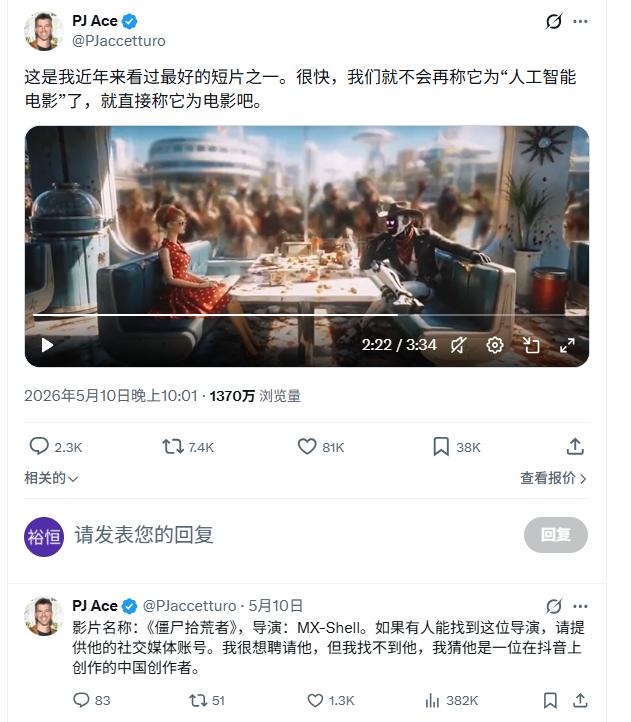
Since then, Zombie Scavenger has become a smash hit on overseas networks, and subsequently spread to overseas social platforms such as Reddit, YouTube and TikTok. According to the data, the view count of PJ Ace's reposted tweet of Zombie Scavenger has exceeded 13.7 million; currently, the view count of Zombie Scavenger on domestic Bilibili platform is also close to 4 million.
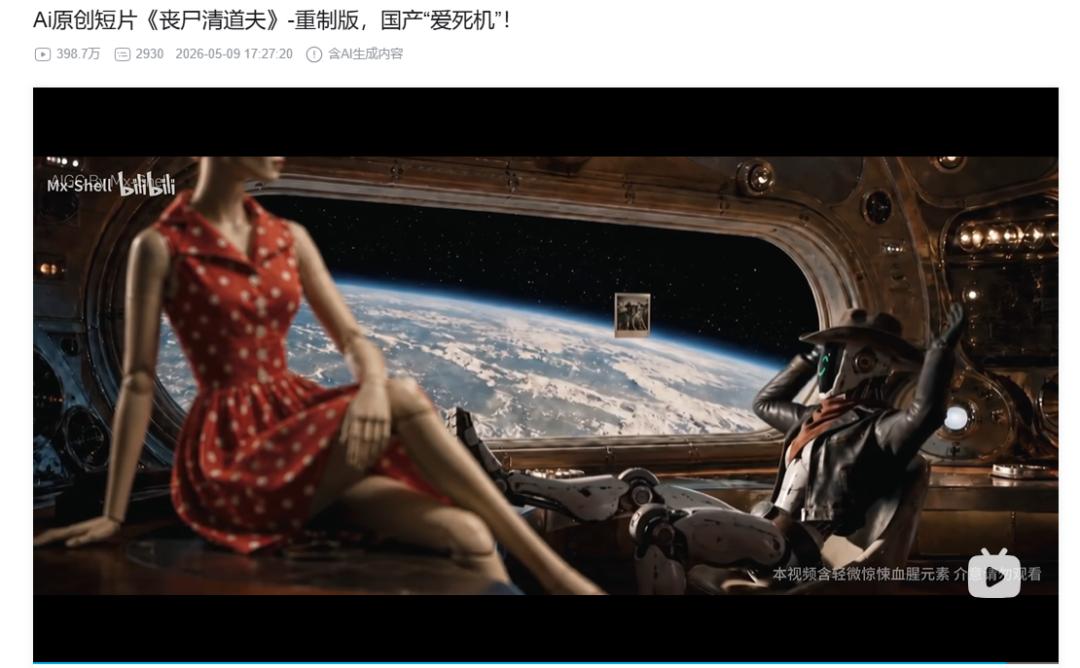
In terms of the content of the short film, Zombie Scavenger is produced with technologies such as AI image generation, intelligent editing and AI dubbing, allowing a single person to create a doomsday zombie plot with a full immersive atmosphere. In terms of character design, the work adopts a robot shape instead of the hyper-realistic human route commonly seen in domestic AI dramas. On the one hand, the theme is novel, and on the other hand, it avoids the "uncanny valley" effect.
Although Zombie Scavenger quickly harvested public domain traffic with its compact rhythm, plot checkpoints suitable for short video dissemination and unified realistic visual style, it is essentially the same as all AI dramas, belonging to a pure one-way viewing mode where users are only passive recipients. Traffic can only bring short-term exposure, and it is very difficult for creators to complete user retention and continuous monetization, with the heat fading at an extremely fast speed.
Therefore, the launch of the game Zombie Scavenger derived from the short film seems to bring new development ideas to the industry. At present, the relevant display page of Zombie Scavenger has been launched on the Steam platform, and the released promotional video retains the core visual memory points of the IP. According to the product introduction, Zombie Scavenger is a first-person interactive narrative game that upgrades the fixed short video plot into immersive content that players can independently participate in, with multiple endings to expand.
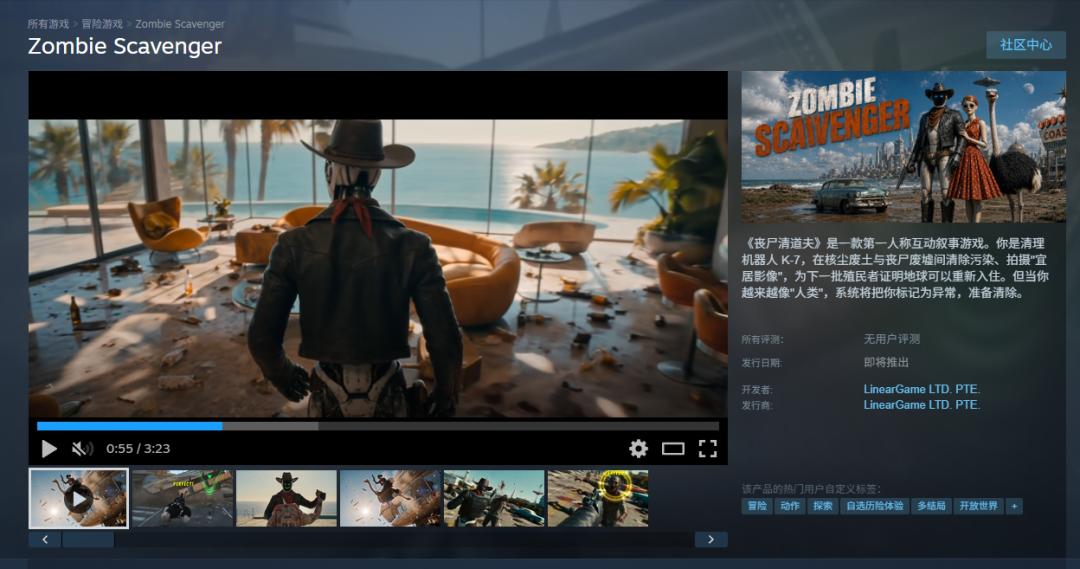
Although the release date of Zombie Scavenger has not been announced yet, and its subsequent market performance remains to be seen, DataEye Research Institute believes that this cross-border attempt of AI drama IP is exactly the epitome of the industry trend.
At a time when the market size of AI dramas is expanding rapidly, leading hit AI creators are no longer satisfied with shallow monetization methods such as short video revenue sharing and in-video advertising. Judging from the current status of industry integration, games, which are also content products, may be an important foothold to carry the traffic heat of AI dramas and tap the secondary value of IP. It can be inferred that the "short drama + game" model has become one of the main advanced paths for current hit AI IPs.
Observation on the Dilemma of the AI Drama Industry
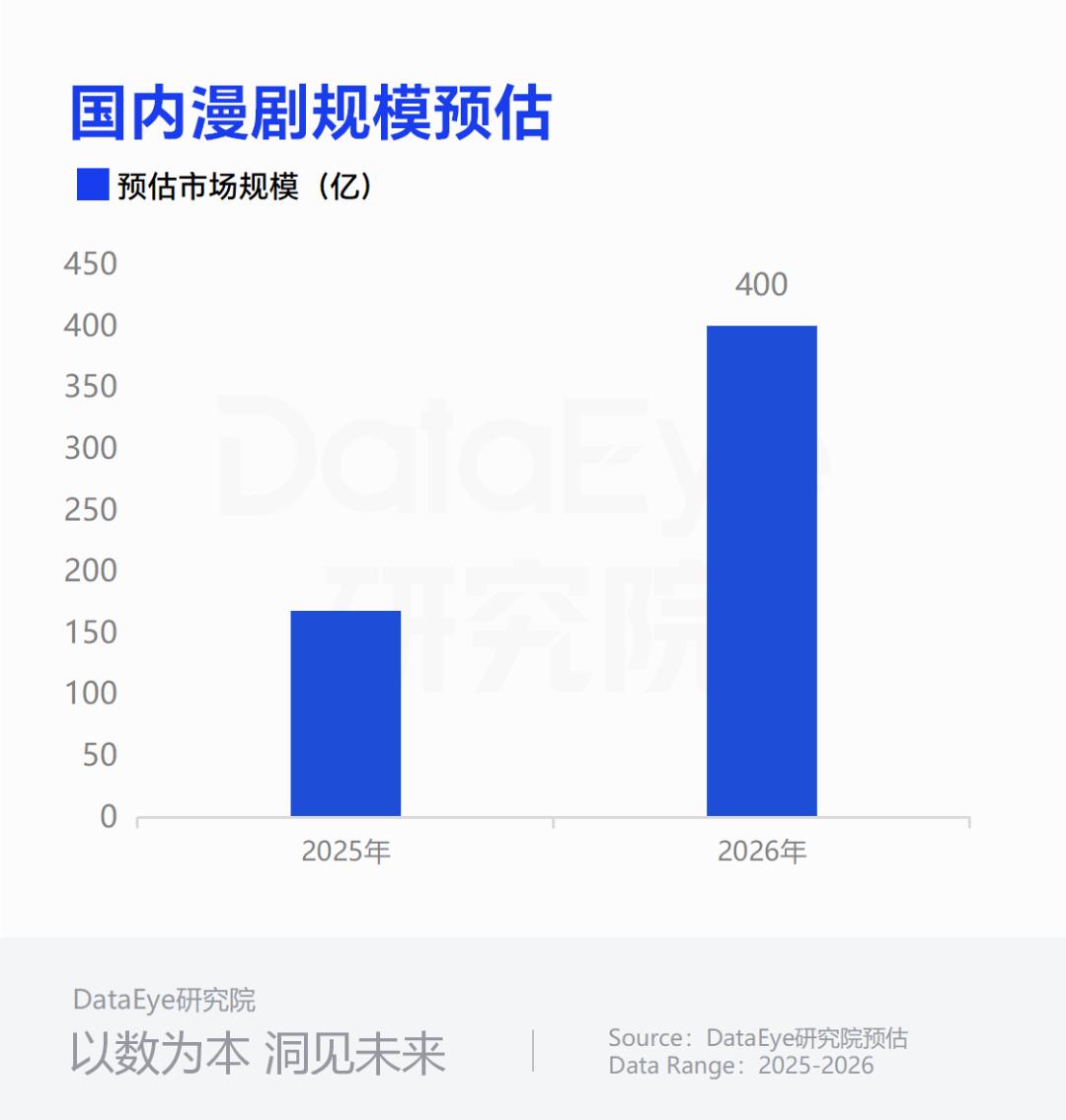
Data from DataEye Research Institute points out that the market size of comic dramas in 2026 is estimated to be 40 billion RMB, a year-on-year increase of about 138%. As mentioned above, the market size of AI dramas is expanding rapidly, and the industry is booming, which has become the core growth driver of the cultural and entertainment track.
In fact, the innovation of production tools has lowered the creation threshold, coupled with the bonus of traffic dividends, driving the AI drama industry to boom and witness a concentrated explosion in production capacity. However, behind the prosperity of the industry, the underlying dilemmas cannot be ignored.
DataEye Research Institute believes that the current dilemmas of the AI drama industry are mainly concentrated in two aspects:
First, users have low dependence on AI dramas, making it difficult to retain users. AI dramas are one-way output content, and most users receive information passively; in addition, there are generally obvious flaws in the plot, and most users only pursue "mindless pleasure", which is basically a one-time consumption. At the same time, the supply of high-quality creative content in AI dramas is in short supply, and the themes are highly homogeneous, resulting in serious user aesthetic fatigue; in addition, AI-generated characters are likely to trigger the "uncanny valley effect", so the duration of users' stay on AI drama content is generally very short, and it is normal for users to swipe away immediately after watching, making it impossible to achieve user retention.
Second, the revenue from the paid end of AI dramas is unsustainable, while the advertising sharing revenue from the free end is low. At present, business models such as ad placement, platform revenue sharing and customized dramas for AI dramas have been gradually verified. However, the vast majority of creative teams still rely on platform traffic revenue sharing as their main profit source, and the advertising sharing revenue from the free end continues to decline.
In the first half of 2026, more than 220,000 new dramas were launched, of which less than 0.5% had a view count exceeding 100 million, which means that more than 90% of the teams are in a loss state. In this environment, producers can only compress costs to bet on hit works, and eventually fall into a vicious circle of "low quality - low price - low profit".
From a macro perspective, the involution in the AI drama industry is intensifying, and the Matthew effect is prominent, with leading manufacturers taking the vast majority of revenue; but this industry model is difficult to support the long-term and stable development of small and medium-sized manufacturers. More importantly, only by optimizing creativity and improving content homogeneity is not enough to fundamentally solve the above problems.
Is the Ultimate Form of AI Dramas Games?
Combined with the landing case of the interactive video game derived from Zombie Scavenger, DataEye Research Institute believes that games are currently a relatively suitable carrier to carry AI drama traffic, and also an important direction for the iteration of the AI drama industry in the future, which can be interpreted from three dimensions:
First, the game experience is more complete, which effectively extends the user stay time. AI drama is a content form of "creating heat quickly at low cost", with short user stay time, but it is very suitable for the cold start of public domain traffic. Games rely on strong interactivity and high immersion to retain users, convert short-term traffic heat into continuous user activity, and to a certain extent solve the pain point of extremely low user retention rate of AI dramas.
Second, it helps IP construction and realizes long-term content operation. AI dramas can complete the initial exposure of IP, while games can derive content on the basis of the original IP, and improve the IP worldview and content system. This allows AI drama works to get rid of the dilemma of one-time consumption of hit IPs, extend the content life cycle, and achieve user retention relying on IP.
Third, the mature business model of games broadens the monetization channels for AI dramas. At present, AI dramas are highly dependent on platform advertising sharing, with meager and fluctuating returns, and it is normal for creators to suffer losses. The game industry has a mature business model, huge market volume and more stable monetization. The derivation path of AI dramas has thus become diversified. In addition to interactive video games, lightweight mini-games also have successful cases, for example, the AI drama mini-game Don't Break Your Character once ranked second on the WeChat mini-game popularity list, with outstanding market performance.
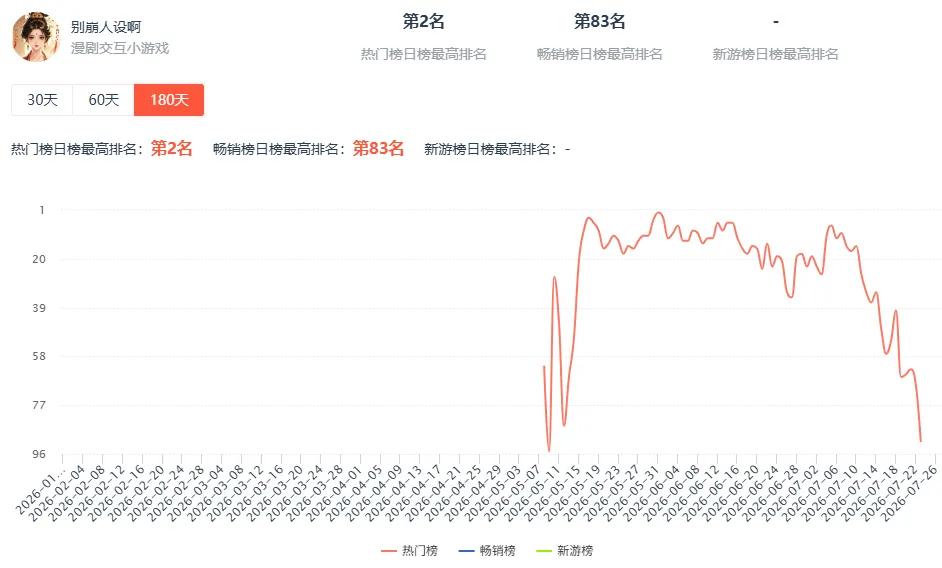
In general, the gamification of AI dramas essentially reconstructs the originally limited business model of AI dramas, which is expected to raise the profit ceiling. However, even if the integration trend is clear, calling games the "ultimate form" of AI dramas still has obvious limitations.
DataEye Research Institute believes that there are core differences between "dramas" and "games". At this stage, most games derived from AI dramas tend to be interactive narratives, with the core being the script narrative experience, lacking the "gameplay" of traditional games. The two meet different user needs and cannot simply replace each other.
However, the statement that "the ultimate form of AI dramas is games" reflects the overall "gamification" development trend of the content industry driven by AI technology. DataEye Research Institute judges that in the future, not all AI dramas need to be turned into games, and a large number of mixed forms will emerge in the middle; but it is undeniable that AI technology breaks the boundary between dramas and games, giving birth to a new format of "interactive entertainment".
With the continuous iteration and maturity of AI content technology, it can be predicted that new models of "AI dramas attract users, games carry the implementation" will continue to emerge in the industry, and the industry vision of IP symbiosis and long-term monetization will also be gradually realized.
This article is from the WeChat official account "DataEye" (ID: DataEye), author: ohzyh, published by 36Kr with authorization.