Does selling beer in the same way as selling milk tea work?
To get beer to consumers faster, retailers have spared no effort.
Under the instant retail strategy, beer has become a key category. Delivery riders who originally mainly deliver takeout may now carry ice-cold beer; Mixue Bingcheng, which has opened tens of thousands of milk tea and coffee shops, has also set its sights on this market, selling beer the same way it sells milk tea. Its draft beer brand Fulu Jia has expanded to more than 3,000 stores in a year and a half.
The change in consumer groups has rewritten the operating rules of the beer market. Young people aged 18 to 30 account for two-thirds of total consumers, and women account for more than 30%. As a result, in addition to products, there has been a fundamental shift in channels: Instant retail and e-commerce have ushered in new opportunities, and traditional offline channels are no longer the core of the market.
This seemingly insignificant change has unexpectedly affected the power structure of China's five major beer giants.
Channel Shifts and Ebb and Flow
A super differentiation of China's beer market is taking place.
Since 2025, the overall alcoholic beverage market has been under pressure, but beer has maintained an independent growth trend. Last year, the total output of beer enterprises above designated size reached 35.36 million kiloliters, down 1.1% year on year; the total market revenue is estimated at about 180 billion yuan, up 4% year on year, and the profit reached 30.5 billion yuan, up about 18% year on year.
In the first half of this year, the cumulative output of beer enterprises above designated size across the country reached 19.362 million kiloliters, up 0.2% year on year, with overall performance far outperforming other alcoholic beverage segments.
At the same time, the squeeze growth and structural prosperity of the beer market are also very prominent. In addition to the five major beer giants and leading players such as Zhujiang Beer (002461.SZ) and Jinxing Beer, the remaining small and medium-sized manufacturers have not seen their operating conditions improve.
The differentiation among the five giants still exists, and the camps are clear. China Resources Beer, Tsingtao Brewery, and Yanjing Beer (000729.SZ) have achieved growth in sales volume, revenue and profit, while foreign giants AB InBev and Carlsberg have been retreating step by step and adopting passive defensive strategies.
In 2025, AB InBev China's sales volume, average unit price and revenue decreased by 8.6%, 3.0% and 11.3% respectively. The poor performance in the Chinese market directly led to the collapse of AB InBev APAC (01876.HK)'s results. Last year, its overall sales volume decreased by 6%, revenue by 6.1%, and net profit by 32.6%.
In the first half of this year, the crisis has not been reversed, AB InBev China's sales volume, average unit price and revenue decreased by 6.0%, 0.4% and 6.4% respectively.
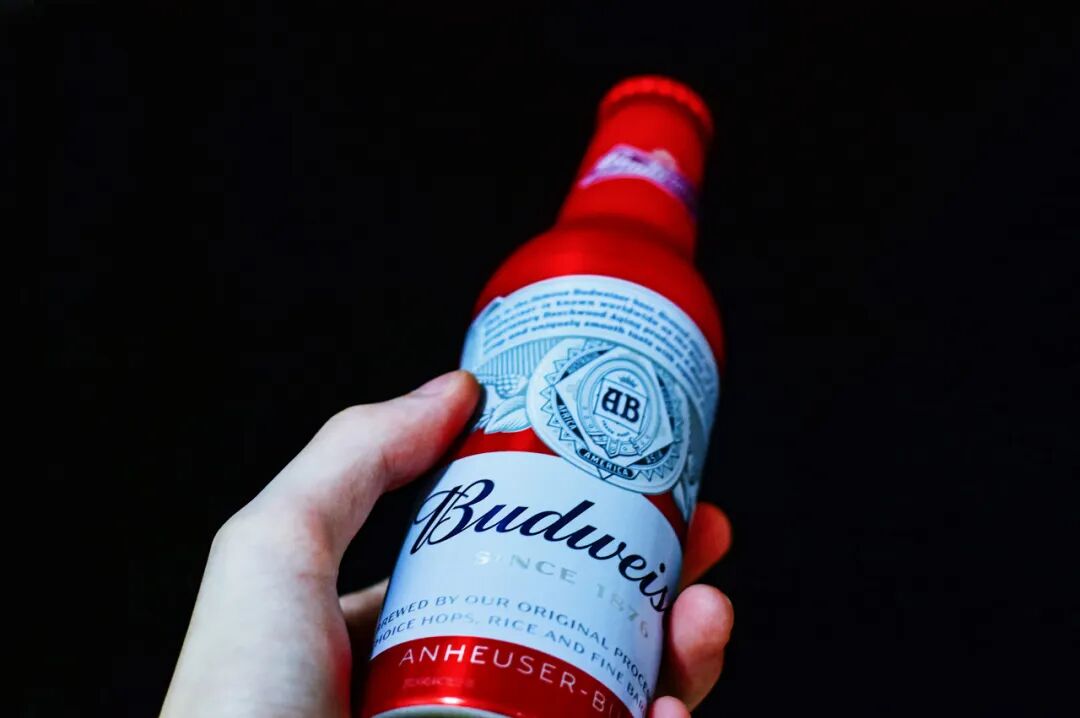
Chongqing Brewery, Carlsberg's core operating platform for its beer business in China, recorded total sales of 2.9952 million kiloliters in 2025, only 20,200 kiloliters more than the previous year.
Last year, Chongqing Brewery achieved operating revenue of 14.722 billion yuan, down 0.53% year on year, and non-recurring net profit reached 1.188 billion yuan, down 2.78% year on year. In Q1 2026, its operating revenue and attributable net profit decreased by 0.12% and 7.40% year on year respectively.
The root cause lies not in brands and products, but in channel transformation.
In the golden era of China's beer consumption, local beer brands focused on offline catering and KA channels. Foreign brands adopted a high-profile expansion strategy, leveraging their relative product advantages and brand equity to gain unimpeded access to high-end nightlife venues, and then penetrated downward based on this foundation.
Beer prices in nightlife venues are far higher than those in catering and KA channels. Therefore, for a long time, although foreign beer brands did not have an advantage in sales volume, their profitability far exceeded that of local brands. While the gross profit margin of local beer brands was generally only around 30%, the gross profit margin of leading foreign beer brands usually reached more than 50%.
However, now, for various reasons, the nightlife channel has shrunk sharply, the cash cow that foreign beer brands relied on for survival has withered overnight.
Consumption in the catering sector within traditional offline channels is sluggish, and the proportion of the entire on-premise consumption segment has dropped from 55% before 2020 to around 40% today; the connection efficiency of KA channels has declined, and the channels deeply cultivated by local brands are also facing the risk of blockage. Nevertheless, the rise of some new channels has led to the ebb and flow in the beer market.
Instant Retail, the New Solution for Beer
Constrained by production capacity distribution and sales radius, the beer market has formed an extremely stable fragmented market pattern offline.
People in Beijing only favor Yanjing Beer; Tsingtao Brewery (600600.SH) is the dominant choice in Shandong; Snow Beer holds sway in Liaoning, Anhui, Sichuan and Guizhou; AB InBev has quietly taken over Hubei and Jiangxi provinces; the entire southwest and northwest regions are Carlsberg's territory.
Against the backdrop of saturated production capacity and stable market in the beer industry, this ultra-stable structure can hardly see major changes.
However, this traditional market pattern, which is mainly based on offline distribution, can only maintain the basic market share of major giants, cannot bring new growth, and its traditional advantages will be eroded by new channel forms.
Apart from offline channels such as catering, KA and nightlife venues, are there any new beer channels with higher connection efficiency and closer to consumption scenarios?
In recent years, major beer manufacturers have been increasing the canning rate to support the circulation of beer in the e-commerce market. This measure has produced some effects, but not significant.
Adopting the e-commerce channel through higher canning rate has increased the packaging, warehousing and logistics costs of beer. Some beer varieties have extremely high requirements for freshness, which e-commerce cannot necessarily meet. Furthermore, beer consumption is more immediate in nature, which is fundamentally different from the stockpiling-style consumption of Baijiu and wine.
Now, the emergence of instant retail has almost found the optimal solution to these problems.
Major giants such as China Resources Snow Breweries and Tsingtao Brewery have directly cooperated with alcoholic instant retail platforms such as Meituan Waima, entering the market through brand or category customization, to quickly and widely distribute beer to new channels and reach consumers directly.
Meituan Flash Purchase, Waima Beer Delivery and other instant retail players, as well as vertical alcoholic beverage retail platforms, are all increasing investment to cultivate consumers' habits of instant alcoholic beverage consumption.
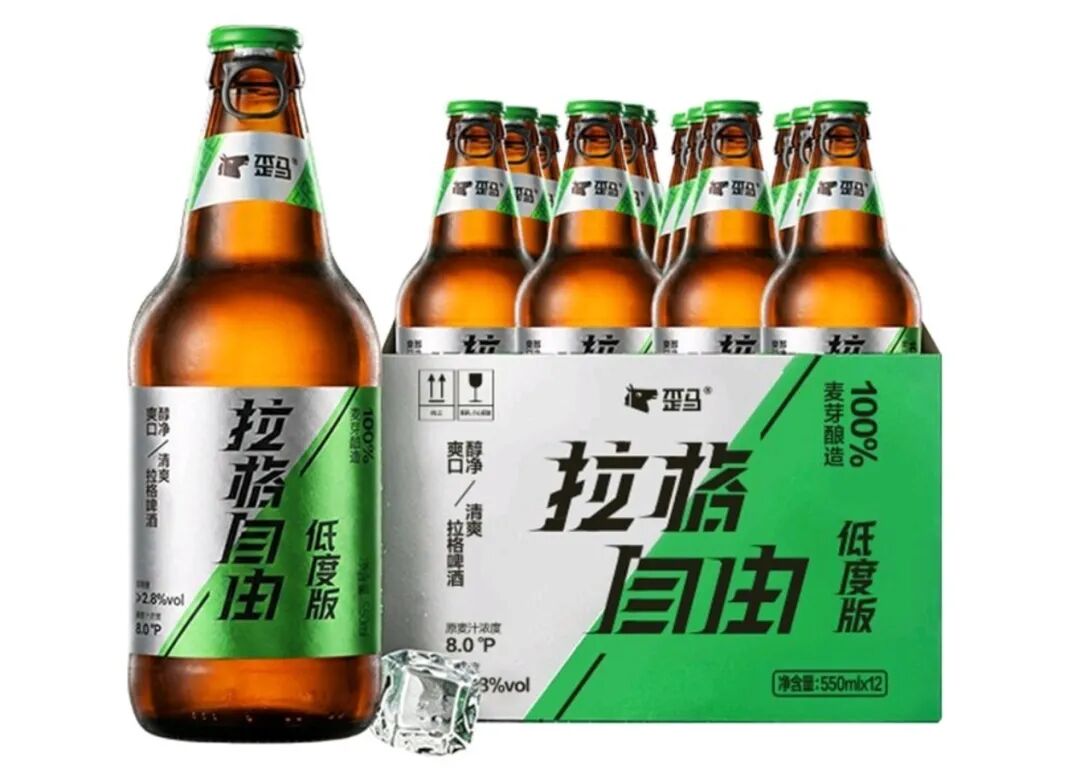
This new channel model strengthens the connection between beer and consumption scenarios, and even directly changes the beer consumption pattern.
In the past, people would order a few bottles of beer when eating at a restaurant, or buy some beer from a supermarket near their community to drink at home, and occasionally stock up on beer through e-commerce channels during promotion seasons.
But now, if you are going to have a dinner with friends in the evening, you can place an order directly on the instant retail platform before going out; if you are camping and having a barbecue in the park, you can also order beer on your mobile phone, and it will be delivered to you still ice-cold.
Scenario integration, service capabilities and cost considerations have made instant retail one of the most suitable new channels for beer; the alcoholic beverage sector, where beer belongs, has also become a key supported category for instant retail in recent years. Brands and platforms are working together, leading to rapid growth in the scale of instant beer retail.
Industry data shows that the sales scale of instant alcoholic beverage retail reached 50 billion yuan in 2025, with a year-on-year increase of about 40%; among which beer is the core category with the highest proportion.
It can be said that the counter-trend growth of the beer industry in the entire alcoholic beverage market under pressure in the past one or two years is closely related to its deep embrace of instant retail channels.
Selling Beer the Same Way as Milk Tea?
Apart from the traditional beer industry, new beer players are also trying to reconstruct the market operation logic with new models.
After the great success of Jinxing Beer, Mixue Bingcheng, which is also from Henan, combines Jinxing-style products with its own store system and launched Fulu Jia — selling beer the same way it sells milk tea.
With the support of Mixue Bingcheng, Fulu Jia has developed rapidly since last year. It only had more than 200 stores at the beginning of 2025, exceeded 1,000 stores in July of that year, and exceeded 2,000 stores in February this year. By the end of July, the number of stores reached more than 3,400, and Fulu Jia officially announced the launch of its Yunnan warehouse. So far, it has completed the layout of a cold chain network with 9 major warehouses and 8 transfer warehouses across the country.
As a new beer format targeting young people, most of the products sold in Fulu Jia are fruit-flavored craft beer, including passion fruit wheat beer, iced watermelon beer, as well as non-alcoholic drinks such as fresh pineapple beer sparkling beverage. The overall price is not high: 1 jin (0.5kg) cup of passion fruit wheat beer is 8.9 yuan; the basic Fulu draft beer is 5.9 yuan per jin.
In Fulu Jia stores, the price of a single cup for self-drinking is similar to that of a cup of milk tea or lemonade; many customers also buy beer in bulk, carrying 3 or 5 jin of beer to restaurant gatherings, so the number of takeout orders is relatively large.
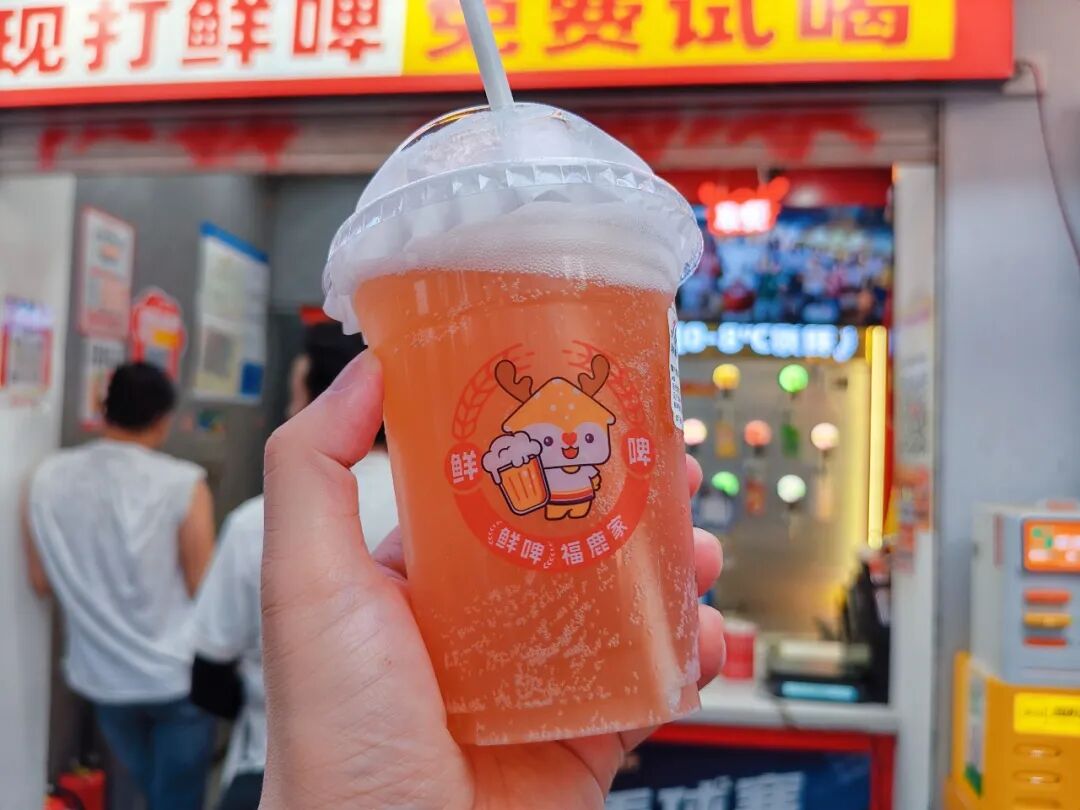
In terms of business model, Fulu Jia is exactly the same as Mixue Bingcheng.
The front-end franchised stores are only points where the brand connects with users. The difference is that Mixue Bingcheng sells tea drinks, Lucky Coffee sells coffee, while Fulu Jia provides alcoholic beverages. Ultimately, its profit still comes from the supply chain.
After Fulu Jia became a hit, many similar formats emerged in the industry. For example, Bantang Craft Beer essentially transforms beer stores into the form of milk tea shops and coffee shops, becoming a social scenario for young people.
In fact, various draft beer shop projects have long appeared in the beer industry, such as Youbulu, Taishan, etc. However, these formats are more like miniaturized beer pubs, while Fulu Jia is more like a milk tea shop that sells beer.
A fact easily hidden by the market boom is that draft beer shops have obvious time-based characteristics, and the peak passenger flow usually comes after 5 p.m. Compared with milk tea shops and coffee shops, their business hours are shorter, and the operating efficiency during peak hours is very limited.
In addition, affected by the overall acceptance of the category, its potential user scale is far less than that of milk tea and coffee; the draft beer supply chain also determines that its configurable SKUs are limited, and it has higher requirements for fast turnover, which easily locks its operating ceiling.
Selling beer the same way as selling milk tea is, after all, just a nice idea, and it is difficult to have a significant impact on the beer market for the time being.
This article is from WeChat Official Account "Banma Consumption" (ID: banmaxiaofei), written by Yang Wei, authorized for release by 36Kr.