Musk has drawn a "cutoff line", but cannot stop the Chinese version of SpaceX from breaking through against the trend.
Commercial aerospace is bidding farewell to the old narrative of "global procurement".
A few days ago, news broke that SpaceX has set up a special audit team to launch a full-chain compliance review of hundreds of core suppliers across the globe, requiring suppliers to meet strict production line traceability and compliance specifications.
The scope of inspection covers production equipment, systems and components, and is refined to general equipment such as workshop surveillance cameras and industrial routers; meanwhile, factory areas dedicated to SpaceX projects are required to meet specific staffing and origin traceability requirements, and those that fail to meet the standards will be removed from the supply chain system.
This adjustment, regarded by the industry as the regionalized reconstruction of the supply chain, is neither an isolated corporate decision nor a sudden move driven by Musk's personal style. It is a landmark event that the global pattern of technological competition extends to the aerospace sector, and also an inevitable product of the industrial attributes of commercial aerospace.
Since its birth, the aerospace track has been deeply bound to national strategies, and there has never been a real sense of "globalization freedom". When commercial aerospace enters the stage of large-scale mass production from niche exploration, the safety and autonomy of the supply chain are replacing simple cost efficiency and becoming the core variable that determines the industrial landscape.
We try to dissect this global aerospace supply chain transformation, as well as the countermeasures and opportunities for China's commercial aerospace, from three dimensions: the underlying logic of compliance, the evolution of industrial models, and local breakthrough paths.
The Dance of Compliance
Many people are accustomed to deducing SpaceX's supply chain choices with the logic of Apple's "Apple supply chain" and Tesla Shanghai Super Factory's "Tesla supply chain", believing that its adjustment is an "uneconomical" irrational decision.
This judgment ignores the fundamental differences in underlying logic among consumer electronics, new energy vehicles and commercial aerospace. The first two belong to the fully market-oriented civilian industry, where the top priority of the supply chain is cost and efficiency; in contrast, the underlying logic of commercial aerospace carries strong strategic attributes, and compliance and safety always come before cost.
Export control in the aerospace field is not new. Relevant institutional arrangements were established as early as more than ten years ago, and with the subsequent expansion of multilateral treaties, the cross-border circulation of core equipment and components has been strictly restricted, which has long been an established rule for industry operation.
The real change has taken place in the past five years. On the one hand, SpaceX's business structure has undergone a fundamental shift—extending from civilian communication services to strategic infrastructure. In 2026, SpaceX has successively obtained multiple government aerospace contracts involving the construction of space data networks and space-based monitoring systems, with a total contract value of billions of dollars. The higher the project level, the stricter the compliance requirements for the supply chain.
On the other hand, the policy orientation of supply chain localization in major aerospace countries continues to be strengthened. The multilateral export control system has been continuously updated, adding control items for commercial aerospace components, 3D printing equipment and special composite materials; NASA explicitly proposed a supply chain local substitution plan in its 2024 budget, and provides subsidies to commercial launch enterprises that use local components.
The impact of tightening control has been transmitted to the end of the industry.
Since 2023, many domestic commercial satellite enterprises have publicly reported that the import delivery cycle of core components such as aerospace-grade radiation-resistant FPGA chips, high-precision fiber optic gyroscopes, and spaceborne phased array T/R components has been extended from 12 weeks to more than 48 weeks, and strict end-user review is required, with exports of some models subject to strict restrictions.
A domestic commercial remote sensing satellite enterprise once estimated that the substitution and verification of core chips alone delayed the R&D cycle of its first satellite by nearly 6 months. Changes in the external environment in turn accelerated the process of independent and controllable domestic commercial aerospace supply chains.
Therefore, this industrial logic determines that the "Apple supply chain model" cannot be replicated in the aerospace track. Apple can place 90% of its production capacity in China, because the core of consumer electronics is cost and efficiency, and supply chain globalization is the optimal solution; Tesla can locate its super factory in Shanghai, because new energy vehicles are civilian industrial products, and the market and production capacity can drive each other.
But aerospace is different. Government orders are the foundation of leading enterprises in the industry, and compliance qualification is the admission ticket. For SpaceX, adjusting the supply chain layout to obtain the access qualification for high-level government orders is an extremely clear business account: the increase in short-term procurement costs is far less than the loss of losing large government orders.
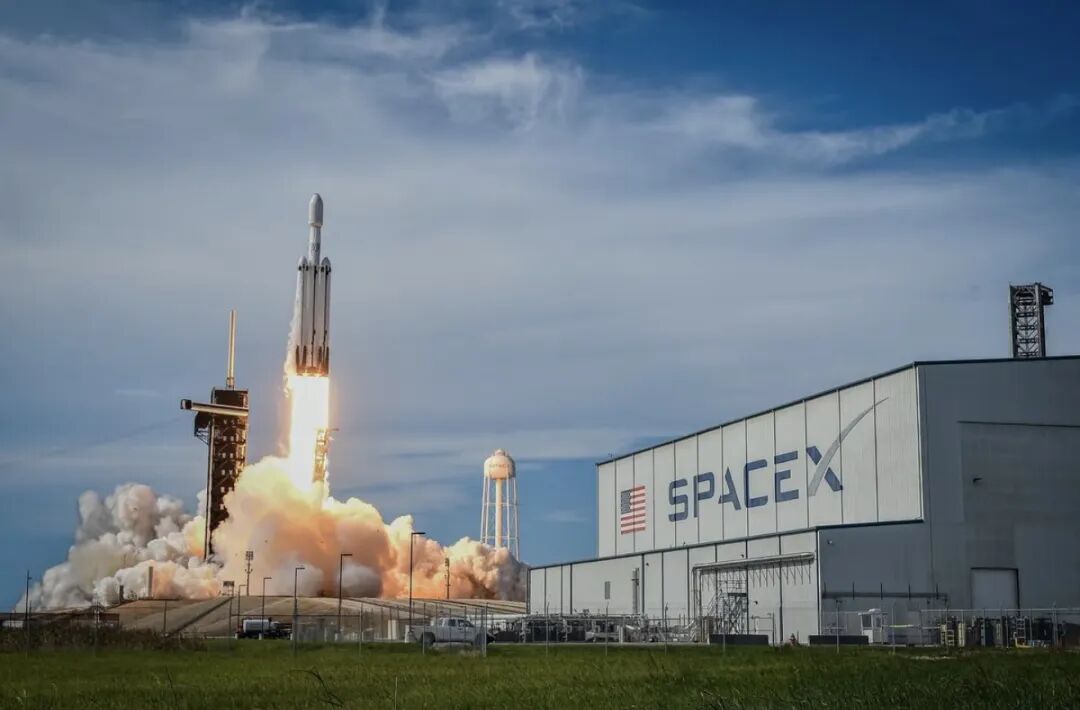
From a global perspective, regionalization of the supply chain has become a clear trend in the aerospace industry.
When the European Union launched the "IRIS²" low-orbit constellation program in 2023, it clearly put forward the goal of "aerospace sovereignty", requiring more than 70% of core components to be produced locally in Europe to reduce dependence on external supply chains; Japan and India are also simultaneously supporting local rocket and satellite supporting systems to find their own positions in the multi-polar landscape.
The originally relatively open global aerospace division of labor system is evolving towards regionalization and systematization, and the supply chains of different countries and regions are gradually forming their own industrial closed loops.
It is worth noting that the actual impact of this adjustment on Chinese supporting enterprises is relatively limited. Public industry data shows that the participation of Chinese manufacturers in SpaceX's core supply chain is inherently limited. Most of their previous participations are indirect supporting links such as special alloy materials, standard fasteners and industrial auxiliary equipment, accounting for less than 5% of SpaceX's total procurement amount.
The real signaling significance of the supply chain adjustment is that it marks that commercial aerospace has entered a new stage of regionalized collaboration, and market participants need to make their own strategic choices within different compliance frameworks.
Capabilities Form a Complete Industrial Chain
SpaceX's confidence in drastically adjusting its peripheral supply chain stems from its in-depth vertical integration system that has been polished for more than 20 years.
On the surface, this model seems to stem from Musk's personal traits of being strong-willed, highly controlling and distrustful of external suppliers. But from the perspective of industrial logic, vertical integration is an inevitable choice for commercial aerospace to move from "customized scientific research" to "industrialized mass production".
The traditional aerospace industry follows the "prime contractor + multi-level subcontracting" model. After prime contractors such as Boeing and Lockheed Martin obtain government cost-plus contracts, they subcontract engines, avionics, rocket body structures and other parts to first-tier suppliers, who then further split the tasks to hundreds of second- and third-tier supporting vendors.
The disadvantages of this model are very obvious. Each layer of subcontracting will superimpose profits and management costs, which ultimately pushes up the overall launch price; design iteration requires coordination of multi-level suppliers, with a long cycle and difficulty in rapid trial and error. Data shows that in traditional aerospace launches, the cost premium brought by supply chain subcontracting usually exceeds 300%, which is the core reason why ULA (United Launch Alliance) quotes hundreds of millions of dollars for a single rocket.
To solve this industry pain point, Musk found a solution. The biography *Elon Musk* once mentioned the "Idiot Index": calculate the ratio of the finished product price to the cost of basic raw materials. The higher the ratio, the greater the redundant cost in the supply chain, and the greater the space for self-developed substitution.
After being forced to raise the price arbitrarily by Russian rocket merchants during his trip to Moscow in 2002, Musk disassembled the rocket's raw material list on the return flight: aluminum alloy, titanium alloy, kerosene, liquid oxygen and so on. After calculation, he found that the raw material cost was only about 2% of the rocket's quotation. This huge difference convinced him that building rockets by himself is not only feasible, but the cost is only one-tenth of the industry's level.
More than 20 years have passed, this logic has been fully implemented at SpaceX and continuously iterated. At present, SpaceX's self-development rate of core rocket components exceeds 70%, and the full process of R&D and production is realized internally for products ranging from Merlin and Raptor engines, rocket body structures, flight control systems to the core payload of Starlink satellites.
Deep vertical integration brings three core commercial values, which are the key to building the competitive moat of commercial aerospace enterprises.
Controllable cost is an obvious benefit, because the cost of core components is greatly reduced after cutting the premium of multi-layer subcontracting. Taking rocket engines as an example, the procurement cost of a liquid oxygen kerosene engine under the traditional aerospace model exceeds 10 million US dollars, while the cost of SpaceX's self-developed Merlin engine is only one-fifth of that; through large-scale mass production and 3D printing process optimization, the unit cost of the Raptor engine has been reduced to less than 1 million US dollars.
The cost advantage is directly transformed into market competitiveness: the quotation for a single launch of Falcon 9 is about 62 million US dollars, which is only one-third of the quotation of ULA's rockets of the same level. With this advantage, SpaceX has won more than 70% of the global commercial launch market share.
Vertical integration also makes the project progress controllable. The competition of commercial aerospace is essentially the competition of iteration speed, and the scheduling and collaboration efficiency of external suppliers often hinders the R&D process. Under the full-link self-development mode, the design team directly connects to the production workshop, and feedback is given immediately when problems are found.
During the development of Starship, the engine iteration speed reached several versions per month, which relies on the complete internal production and test system; the launch and deployment rhythm of dozens of Starlink satellites per week is also inseparable from the production capacity elasticity brought by independent R&D and self-production.
In the long run, it brings technology controllability. Disruptive innovations such as rocket reuse and integrated rocket-satellite design cannot be completed by relying on traditional supply chain collaboration. Only by mastering all core technologies independently can we break through the design boundaries between rocket carrying capacity and satellite payload, and realize the two-way optimization of "carrying capacity matching satellites and satellites adapting to rockets".
The design of the second-generation Starlink satellites is directly aligned with the carrying capacity and fairing size of Starship, maximizing the carrying efficiency of a single launch. It can be seen that this systematic innovation capability is unattainable by the outsourcing model.
It should be pointed out that vertical integration does not mean "making everything by yourself", but a layered system of "self-development of core links and collaboration of mature links".
Take SpaceX as another example. Links with low technical thresholds and high standardization such as fasteners, basic structural parts and general industrial equipment follow the external procurement model, but the procurement scope is limited to local and allied manufacturers within the compliance system. Core self-development + upstream and downstream collaboration not only safeguards the core control of technology and cost, but also avoids the management burden caused by excessive heavy assets, which is the mainstream evolution direction of the current commercial aerospace industry.
Not only SpaceX, almost all other leading commercial aerospace enterprises are moving towards vertical integration. Blue Origin independently develops the BE-4 series of engines to build full-link capabilities covering rockets to engines; Relativity Space relies on 3D printing technology to realize integrated manufacturing of rocket body structures and engines; Arianespace in Europe is also promoting the autonomy and controllability of core components.
Similarly, Chinese commercial aerospace enterprises are also evolving along similar industrial logic, which is no longer an exclusive gameplay for overseas giants.
In the domestic liquid commercial rocket track, Tianbing Technology is a representative enterprise of the vertical integration strategy. For its core power product, the Tianhuo-12 liquid oxygen kerosene engine, more than 90% of the zero components of core single machines such as turbopumps, combustion chambers, nozzles and valves are manufactured through 3D printing based on independent R&D.
In order to open up the integrated link from R&D, testing to mass production and solve the industry pain points of limited traditional aerospace supporting production capacity and long delivery cycle, Tianbing Technology has invested in the construction of Asia's largest rocket intelligent manufacturing final assembly base in Zhangjiagang, which greatly improves the mass production capacity and efficiency of its Tianlong-3 large liquid launch vehicle.
Relying on the leading enterprise advantage, the mature high-end manufacturing industrial foundation of the Yangtze River Delta, and the agglomeration effect of rockets as the "chain leader", a "1-hour industrial circle" covering a hundred kilometers has been formed, and about 80% of the component supply demands of Tianbing Technology's "Tianlong" series rockets can be met within the region. This independent and controllable supply chain and manufacturing system is the key to significantly improving the R&D iteration and production capacity climbing efficiency of private commercial rockets.
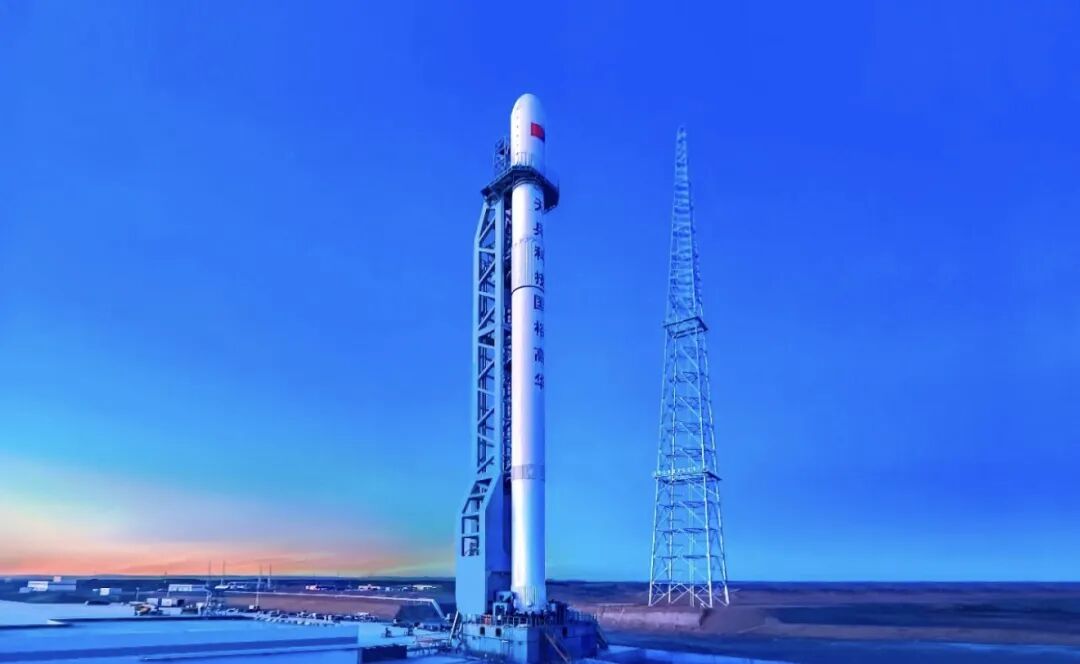
Taking Tianlong-3 as an example, the production and delivery cycle of the entire rocket has been compressed from the industry's common 12 months or more to 3-4 months; the non-recovery cost after large-scale mass production can already reach the same level as Falcon 9.
In addition, enterprises such as LandSpace and Galactic Energy are also laying out the vertical integration path of "core self-development + regional collaboration". It can be seen that leading rocket enterprises including Tianbing Technology have placed the construction of production and delivery systems for long-term satellite networking orders at the core position.
When commercial aerospace enters the stage of large-scale and industrialization, supply chain integration capability is the core competitiveness of enterprises, and the amount of supply chain initiative you master directly affects whether you can gain the upper hand in the competition of cost and efficiency.
Local Breakthrough
For China's commercial aerospace, the global trend of supply chain regionalization in the aerospace industry brings both challenges and opportunities.
The challenge is that the path of overseas supporting is gradually shrinking, and it is no longer realistic to quickly complete technology and market accumulation by integrating into the overseas supply chain system; the opportunity is that external pressure further accelerates the maturity and collaboration of the local supply chain, and the complete industrial system is precisely the core differentiated advantage of China's commercial aerospace.
China's aerospace industry has grown up in a complex external environment. After more than 60 years of development, China has built a complete aerospace industrial system covering raw materials, components, complete machine manufacturing and launch services, covering every link of the entire industrial chain. This independent industrial foundation is the confidence for the development of China's commercial aerospace. Nowadays, Chinese enterprises have defaulted to the local supporting route since their establishment, and there is no pain point of switching supply chains.
The explosive development of commercial aerospace in the past five years has activated the market-oriented vitality of the local supply chain. In the past, aerospace supporting was mainly concentrated in public research institutes, with limited production capacity and high cost; with the mass emergence of commercial rocket and commercial satellite enterprises, a large number of high-end manufacturing enterprises have entered the aerospace supporting field, bringing efficiency improvement and cost reduction.
The special metallurgy industry in Jiangsu, the precision machining capability in Zhejiang, the electronic component foundation in Shanghai, and the metal 3D printing industrial cluster in Suzhou make the Yangtze River Delta region the most complete commercial rocket supporting ecosystem in China, which can compress the component supporting radius to less than 100 kilometers.
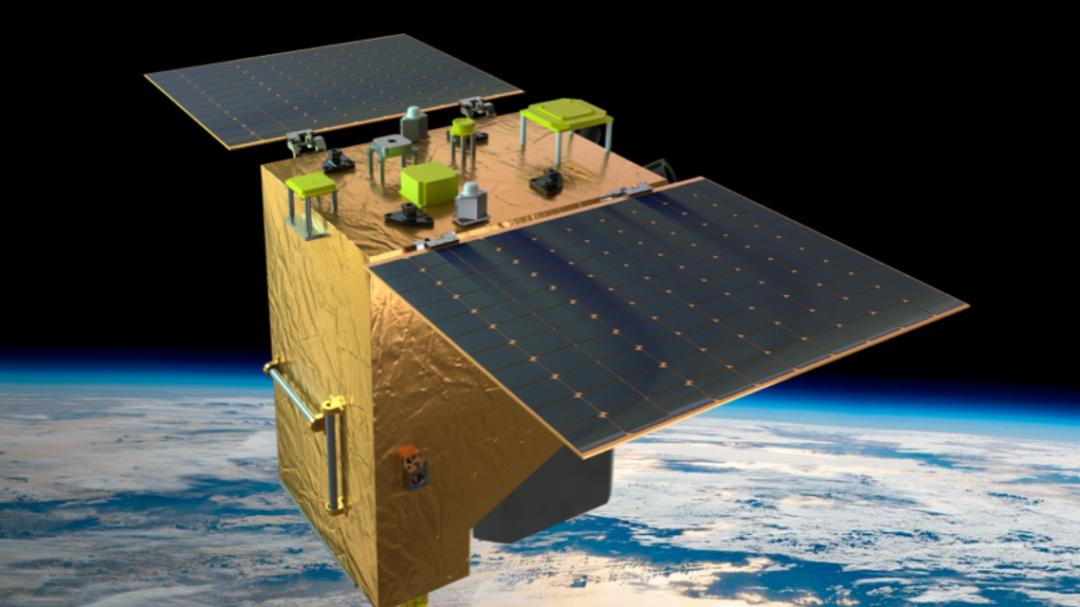
The localized synergy effect on the satellite manufacturing side is also significant. As a leading enterprise in China's commercial remote sensing track, Chang Guang Satellite relies on the large-scale construction demand of the Jilin-1 constellation to drive the maturity of the entire local satellite supply chain.
In the early stage of the project, nearly 40% of the core components of the Jilin-1 satellite, such as optical lenses, spaceborne processors and imaging sensors, still relied on imports. As the constellation moved from single-satellite verification to hundreds of satellites networking, Chang Guang Satellite cooperated with the Changchun Institute of Optics, Fine Mechanics and Physics of the Chinese Academy of Sciences and domestic semiconductor manufacturers to jointly tackle key technical problems, and gradually completed the domestic substitution of core components such as optical systems, spaceborne computers and memory chips.
The policy and industrial pulling effect on the demand side is also critical. In 2024, China SatNet launched the first batch of large-scale bidding for low-orbit