The old-fashioned folksy drinks that were popular back in our grandmothers' days have made a surprising comeback: a single bottle costs 6.9 yuan, yet it is priced at 45 yuan in physical retail stores.
From home-brewed batches to premium specialty stores, the old fermented beverage has been given a brand new narrative.
This summer, kombucha has suddenly become a ubiquitous sight.
The transparent bottles hold liquids in light yellow, orange-red, and purplish red, with flavors ranging from yuzu oolong, perilla grape, to wampee, ginger, coffee, rye and hops... It looks like a fruity sparkling water, but the first sip often brings a tangy taste, bubbly sensation and a subtle fermented aroma.
For people trying kombucha for the first time, it still requires some explanation.
It is not a type of tea, but a fermented drink made from tea, sugar and microbial cultures. The name "kombucha" may sound new to many, but older generations of consumers will quickly realize that it is none other than the "black tea fungus" they knew. Back in the early 1980s, many households used to "raise" this black tea fungus: adding the bacterial mother to black tea in a glass jar, then sealing it for fermentation for a period of time.
Decades later, the home-fermented drink from glass jars has got a brand new packaging, and returned to young people's beverage shelves with new consumer concepts such as "low sugar", "active flora" and "natural fermentation".
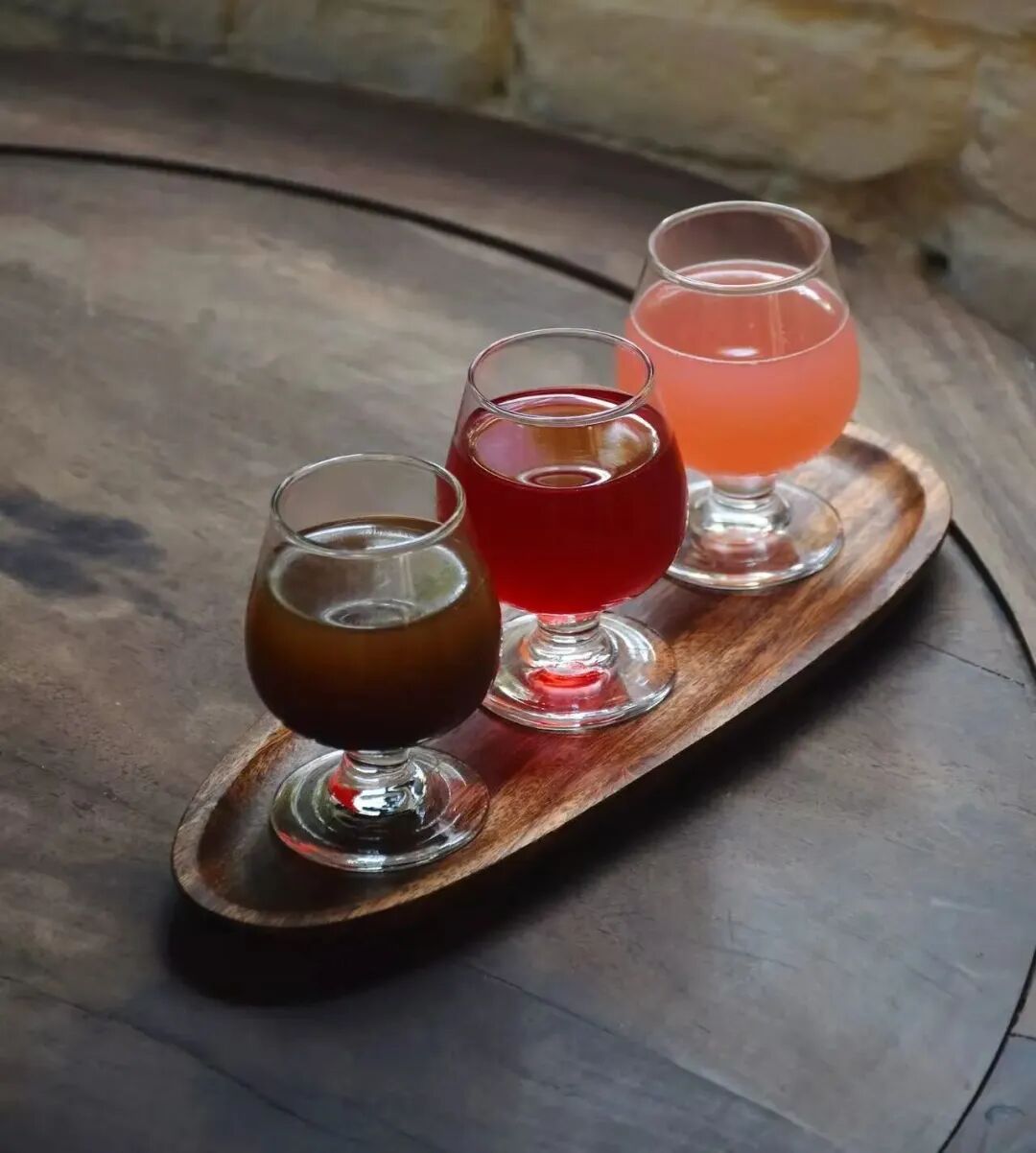
Since the start of this year, kombucha's presence has increased significantly. Retail channels such as Freshippo and Xiaoxiang Supermarket have launched their own private-label kombucha products. New tea brands including Heytea, Bawangchaji and Nayuki have also successively combined kombucha with fruits like orange-pomelo, lemon and wampee to create custom drinks that taste closer to fruit tea.
Kombucha is also increasingly common at weekend markets, premium coffee shops and light food restaurants. Vendors usually hand out a small sample cup first, then explain why it tastes sour, how it is fermented, whether it needs to be refrigerated, and whether it can truly be classified as a "healthy drink".
More people are willing to give it a try. But whether this wave of attention can be further converted into stable repeat purchases still remains to be verified by the market.
Young people buy kombucha mostly out of curiosity
Cong, a post-95s who has been drinking kombucha for nearly two years, told *Titan Business Review* that he bought it for the first time purely out of curiosity.
He had come across related content on social platforms before. Later when he saw kombucha on the shelf at Freshippo, he picked up a fruity flavor product just thinking "I've never tried it, let me have a taste". As for the health benefits related to wellness and fermentation, he only heard about them later, "I didn't think that much about it at the time".
For many consumers who are new to kombucha, the health concept may catch their eye for a second, but it is still curiosity, flavor and price that drive the first purchase.
Over the past few years, the beverage market has already paved the way for its popularity.
Young consumers are paying increasing attention to sugar content and calories. Sugar-free tea, sparkling water and low-sugar coffee have already cultivated a group of consumers looking for "low-burden drinks". Kombucha, which contains tea, natural bubbles and a certain sweet-sour taste, can easily be listed as an alternative to soda, juice and alcoholic beverages.
Eating fermented food with distinct flavors is also becoming a lifestyle trend.
Yogurt, kimchi, sourdough bread and craft beer all share a similar set of marketing keywords: natural, microbial flora, handcrafted, complex flavors. Kombucha can fit almost all of these keywords into one bottle of drink, which is why it has been labeled as "healthy soda" and "middle-class happy water".
The US non-profit medical institution Mayo Clinic defines kombucha as a beverage fermented from tea, sugar, bacteria and yeast. The fermented liquid contains acetic acid, B vitamins and a variety of organic acids. In the consumer market, these professional descriptions are usually simplified into a few easy-to-spread terms: live cultures, fermented, low burden.
However, the kombucha that Chinese consumers drink is already quite different from the popular products overseas.
Qiaoqiao is one of the partners of the kombucha brand "GUNPOWDER". The brand has opened two stores in Beijing and Guangzhou so far, and Qiaoqiao is based in Guangzhou, participating in store operation and product R&D. She told *Titan Business Review* that overseas kombucha is usually more intense, with high acidity, and some products taste close to apple cider vinegar, even with a "throat-burning" sensation. "Such a taste has too high a threshold for acceptance in the domestic market."
As a result, local brands have started to focus on fruits, floral notes, tea flavors and spices, trying to make the sourness and fermented taste milder. Kombucha has evolved from a fermented drink that people need time to get used to, to a product that is much closer to fruity sparkling tea.
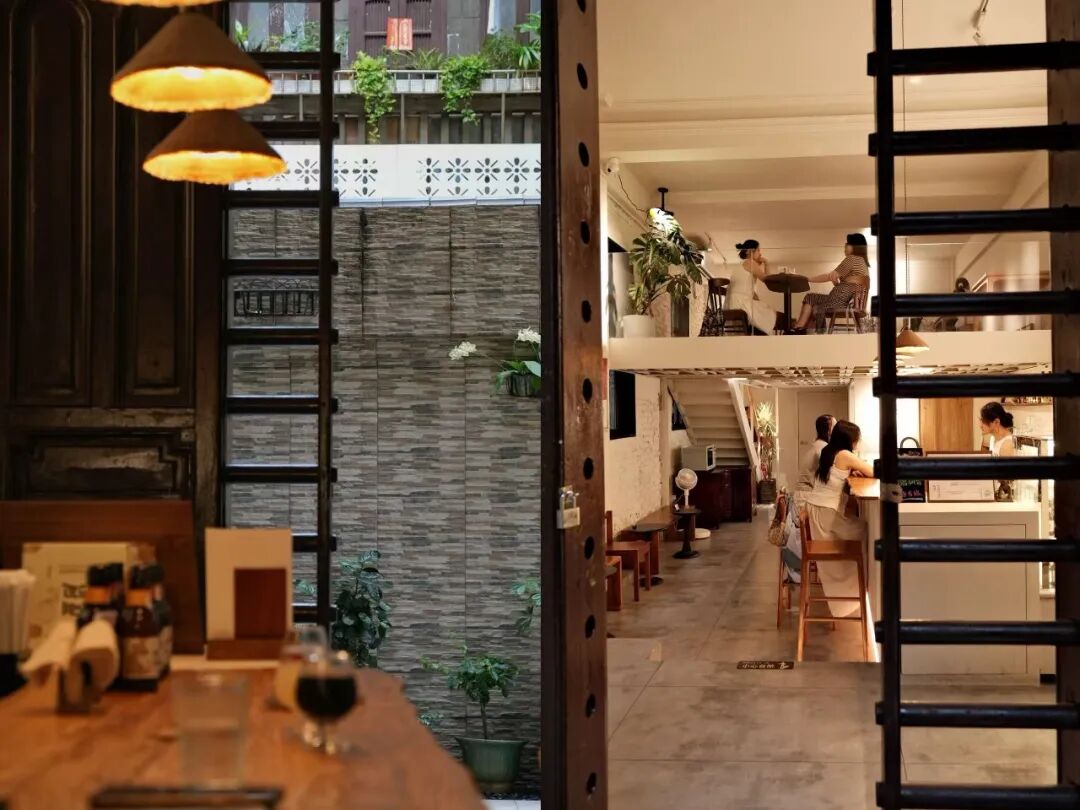
The store of GUNPOWDER
In GUNPOWDER's stores, fruity, original and floral flavors are more easily accepted by the public. Flavors like coffee, rye and hops also have their fans. Some customers will specifically wait for these niche flavors to come back on the menu, while most first-time visitors will start with products with prominent fruity notes and low acidity.
In 2019, GUNPOWDER started preparing for its stores, and later opened its first kombucha experience space in Beijing. Qiaoqiao recalled that very few people came specifically for kombucha in the early days, and most customers had never even heard of the name. The staff had to start by explaining the ingredients and fermentation process, then hand out a sample cup to customers. In the past one or two years, many customers already know exactly what they want to drink when they walk in.
For small brands without permanent physical stores, weekend markets are a direct channel to reach consumers. Customers can taste the product first, and vendors also have time to introduce the production method, storage conditions and brand background.
But not all consumers feel more reassured about handcrafted products.
Cong has also seen kombucha at offline markets, but he never bought it. He worried that fermented drinks made by individuals or small stalls might have risks of mixed bacteria and poor hygiene. In comparison, he prefers to buy from retail platforms like Freshippo, believing that large channels can at least provide a layer of food safety guarantee and brand endorsement.
6.9 yuan and 45 yuan represent two completely different kombucha business models
In retail channels, platforms like Freshippo have sold kombucha at 6.9 yuan per bottle, placing it in the price range of ordinary bottled beverages.
Cong once bought a 3-bottle combo at Freshippo for 19.9 yuan, and the price could drop to only 15 or 16 yuan for three bottles during promotions. He thinks this price is acceptable, and it is suitable to be drunk as a casual daily beverage.
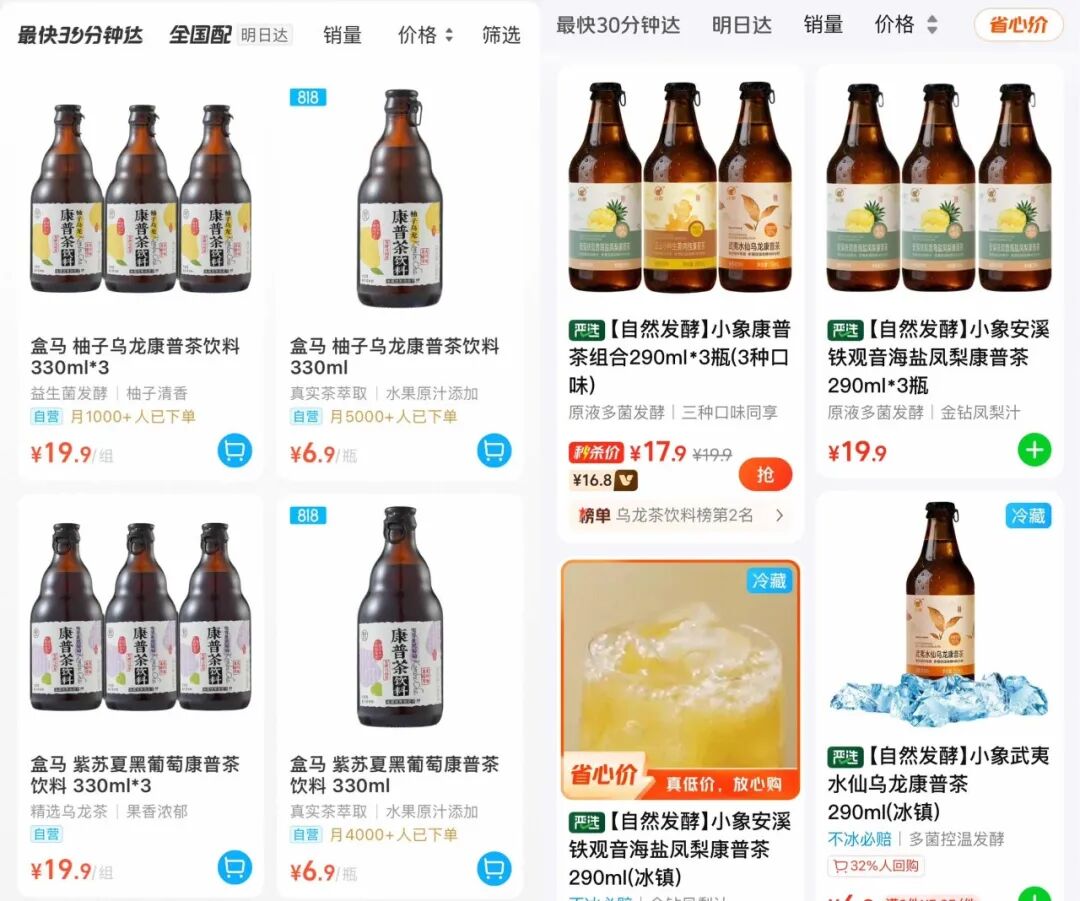
Kombucha products from Freshippo and Xiaoxiang Supermarket
A cup of kombucha at GUNPOWDER's store sells for 45 yuan, close to the price of a cup of craft beer.
First-time visitors can't help but wonder: why is this cup of drink worth 45 yuan?
Every GUNPOWDER store has an independent fermentation space. The staff will introduce the fermentation ingredients used, fermentation time and differences between different flavors to customers, and recommend products based on customers' preference for sourness and sweetness. This kind of interaction is very similar to the early days of specialty coffee shops. When consumers buy a cup of coffee, they will also listen to the barista introduce the origin of the beans, processing method and flavor notes.
The trouble with hand-brewed kombucha is that it keeps changing constantly.
According to Qiaoqiao, one batch of kombucha usually takes about a week to ferment, and the exact time depends on temperature, humidity and season. When the weather is hot in Guangzhou, some products can reach the ideal state in just four or five days; if the fermentation goes too far and the sweet-sour balance is broken, the whole batch may not be sold normally.
After fermentation is completed, the kombucha with live cultures will still change slowly even under refrigeration. Every day when the staff of GUNPOWDER come to work, they will taste all the products in the store to check the sweetness, sourness and bubbliness of the day. In this way, when customers say they "don't want it too sour" or "don't want it too sweet", the staff can make recommendations based on the product's status that day.
"It relies too much on people," Qiaoqiao said. The experience of the fermenter, the store environment, and even the temperature of the day can affect the final product. It is impossible to replicate stably in a few minutes like milk tea, which relies entirely on standardized ingredients and standard operating procedures.
This instability limits the expansion of store chains, but it also makes many regular customers develop a preference for specific fermenters and flavors.
GUNPOWDER launches new products every two to three months according to the season. For example, when wampee is in season in Guangzhou, the store will make sea salt wampee kombucha. New flavors need to be tested in small batches first, then gradually scaled up to formal fermentation barrels. High-quality tea leaves, seasonal fruits, fermentation space, refrigeration conditions and manual judgment are all ultimately reflected in the selling price.
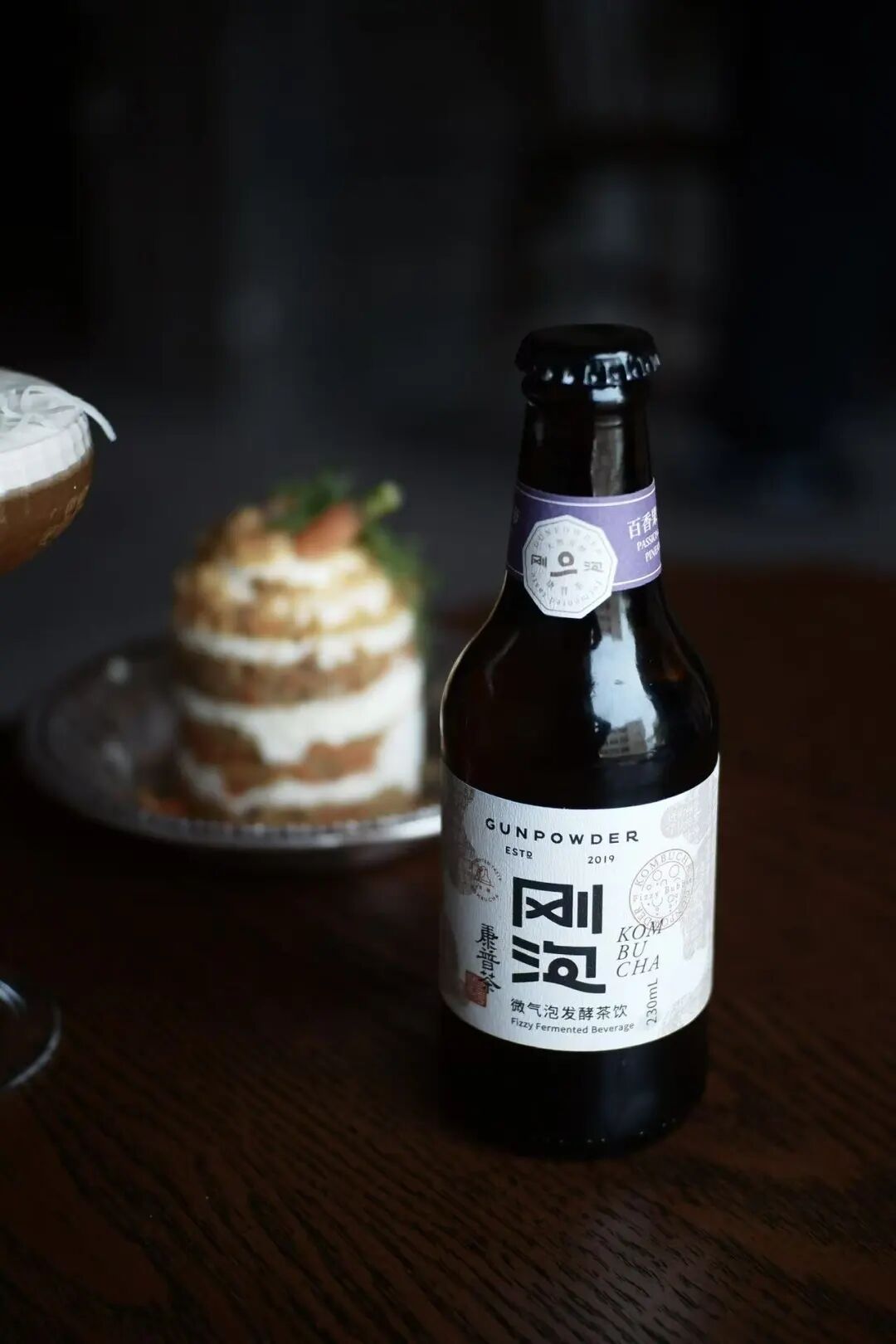
But the private-label bottled products sold in supermarkets do not need to provide all these services.
They are designed for longer shelf life, more stable taste, and larger-scale transportation and sales. Consumers do not need to listen to the staff's explanation, they can finish their first try by paying just a few yuan, and directly put a few bottles of the drink into their home refrigerator.
From this perspective, the 6.9-yuan bottled product and the 45-yuan in-store product share the same name, but their product form and operation mode are completely different. The former is closer to a mass-market beverage, relying on supply chain, channels and price; the latter is more like specialty coffee or craft beer, selling brewing techniques, flavor innovation, a healthy lifestyle, as well as the interaction and experience in the store.
Qiaoqiao does not reject the entry of Freshippo and new tea brands. For independent brands like GUNPOWDER, the launch of kombucha by large companies can reduce the time they spend explaining the product from scratch.
"If we were the only one doing this, we could never make this category big. Only when everyone works together can we drive the popularity of this product," she said.
What else is kombucha missing to turn first-time tries into repeat purchases?
Cong does not repurchase kombucha very often, and most of the time he buys it when the product is on discount. "There are so many beverage options now, and none of them are a must-drink."
If he sees kombucha online or in independent brand stores, he does not mind trying it, but price will still affect his decision. If a bottle sells for 30 to 40 yuan, he most likely will not buy it.
On the beverage shelf, kombucha has far too many competitors. Consumers can choose sugar-free tea, sparkling water, juice, coffee and milk tea, and they can also pick beer or low-alcohol drinks at parties. Kombucha does not have the refreshment demand of coffee, nor the high consumption frequency of bottled water.
Flavor also blocks a lot of potential consumers.
Sourness and fermented taste are the signature features of kombucha. After getting used to it, some people will like its non-cloying, slightly stimulating mouthfeel; but first-time drinkers may directly classify it as "bad-tasting".
New tea brands and supermarket brands usually add fruits, fruit juice, tea base and more prominent sweetness to make the product closer to the familiar fruit tea and sparkling drinks for consumers. While the entry threshold is lowered, the unique fermented flavor of kombucha may also be covered up.
Some products are made with pure kombucha as the main ingredient, some are blended with kombucha stock solution, and others are just drinks that taste similar to kombucha. They are all placed on the same shelf, and consumers may not be able to tell the difference.
Price is also an unavoidable issue.
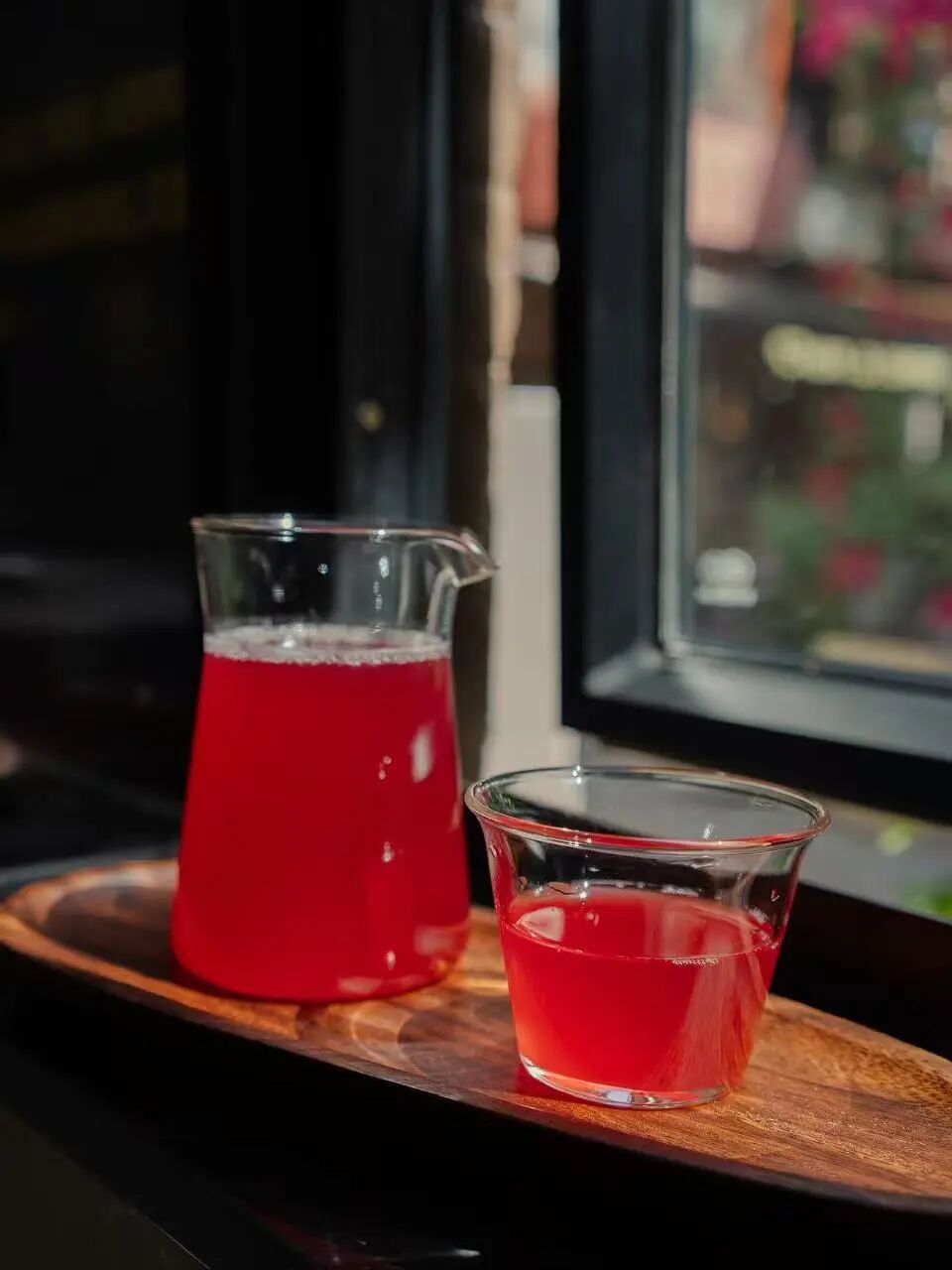
The high price of handcrafted brands comes from ingredients, fermentation time, labor and production loss, but consumers will not naturally accept a higher price just because a drink is difficult to make. As long as kombucha is still regarded as an ordinary bottle of drink, it will be compared in price with other products on the shelf.
Qiaoqiao also admits that if kombucha wants to enter more people's daily life, the price needs to come down. But after the price drops, the ingredients and craftsmanship can hardly remain completely unaffected. She tends to believe that kombucha will have different price tiers just like coffee. "Consumers can drink a 9.9-yuan Americano in the morning, and on weekends, they may walk into a specialty coffee shop and pay a higher price to try a single-origin coffee. Different prices meet different demands."
Apart from taste and price, consumers also care about whether the product is trustworthy.
Fermented, live culture-containing and low-sugar are the most common health labels of kombucha. But these terms cannot be directly equated with explicit effects such as weight loss and gastrointestinal regulation.
Sugar content is also easy to cause misunderstanding. Kombucha fermentation requires sugar, because sugar is the basic raw material for the microbial culture to ferment. Qiaoqiao said that GUNPOWDER will clearly mark on the menu that the fermentation ingredients contain sugar, and explain to consumers that sugar is inevitable as the food for the culture, but no extra sugar will be added after fermentation is completed. Each batch of products will also be tested for sugar content and sweet-sour balance.
There are also big differences between different brands. According to the labels on the products, *Titan Business Review* found that the yuzu oolong kombucha sold at Freshippo has a carbohydrate content of 8.7g per 100ml, the ginger cinnamon flavored kombucha from Xiaoxiang Supermarket has a sugar content of 11g per 100ml, and the BASAO Red Oolong Kombucha Sparkling Water has a sugar content of 4.6g per 100ml. It is almost impossible to judge the actual sugar content of a bottle of drink just by the word "kombucha".
As the category gets more and more popular, information such as product name,