Is Wall Street dissatisfied with Adidas' World Cup?
adidas' latest financial results reflect several shifts in the sports consumption market.
Riding on the lingering momentum of the World Cup, adidas stumbled in the capital market.
On July 30, adidas released its financial report, showing sustained growth momentum: in the second quarter of 2026, global revenue reached 6.7 billion euros, up 14% year-on-year at constant currency, hitting a new all-time high; revenue in the Greater China region reached 950 million euros, up 15% year-on-year, marking 13 consecutive quarters of growth.
Investors, however, gave a completely different response.
After the financial results were released, adidas' share price on the Frankfurt Stock Exchange plummeted by more than 18% at one point during the session, marking its largest single-day drop in nearly a decade. Calculated based on the closing price of the day, the company's market value evaporated by about 5.8 billion euros (equivalent to about 44 billion RMB), the largest single-day drop in six years. Although the share price rebounded in the following days, investment banks including Goldman Sachs and UBS successively lowered their target prices.
Even adidas CEO Bjørn Gulden was confused by this trend. He responded on the earnings call on the day the results were released, "I don't know where the misunderstanding is. This quarter's business is incredibly strong... It's a bit hard to understand that people don't think this is a good result."
A small sign reveals the whole picture: adidas, which has been advancing triumphantly on the road of recovery, has reached a stage that requires more rigorous scrutiny.
Two Sides of the World Cup
The direct cause of adidas' share price plunge is that profits fell short of analysts' expectations: in the second quarter, operating profit only rose 5% year-on-year to 574 million euros, and the operating margin dropped 0.7 percentage points to 8.5%.
This is the price paid for World Cup marketing.
The second quarter coincided with the 2026 FIFA World Cup USA-Mexico-Canada, and adidas' marketing expenses increased by 212 million euros year-on-year, higher than the previously disclosed 150 million euros; overall marketing expenditure rose 30% year-on-year.
The official explanation is that the World Cup was so successful that the company decided to invest more in the short term to pave the way for future opportunities.
adidas did obtain unparalleled brand exposure, but its profits were eroded, leading to revenue growth without corresponding profit growth.
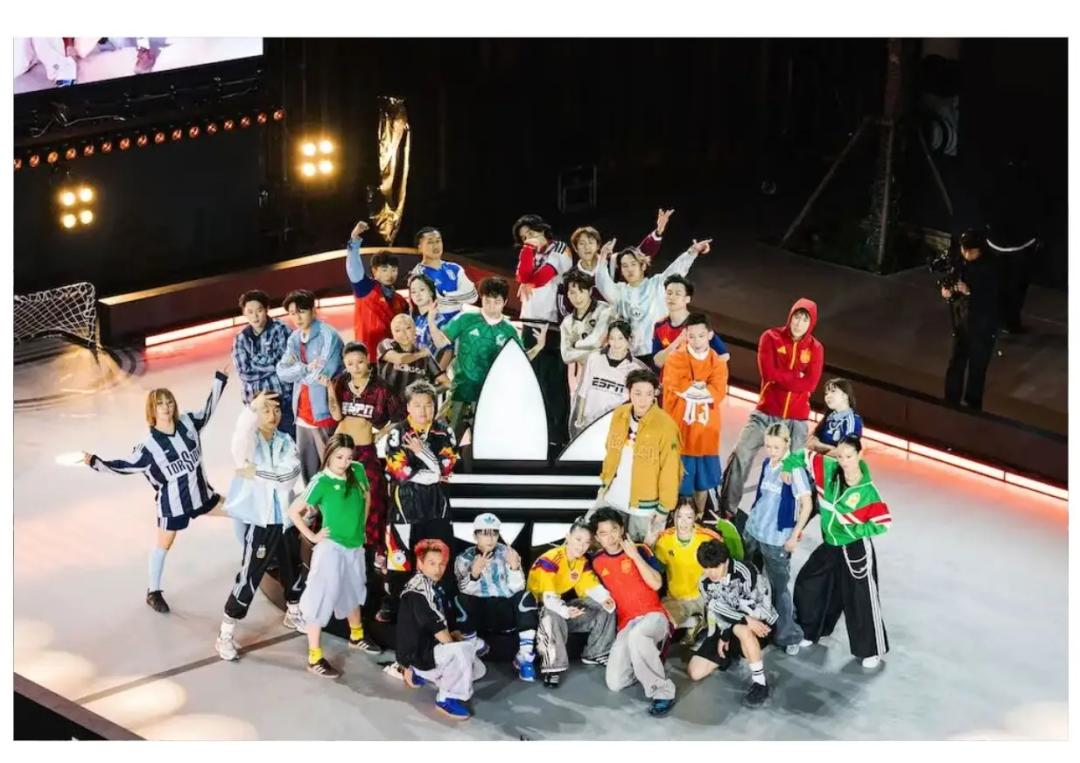
adidas' activities during the World Cup
The actual feedback from the capital market is misaligned with the company's decisions, and the high-profile, large-investment marketing strategies that giants are accustomed to are no longer as easily accepted by the market.
For adidas, the World Cup is a key battle and a strategic investment.
First, it is to fend off its old rival Nike.
Nike has refocused on professional sports in the past two years, and the World Cup is an important strategic node for it to strengthen its influence in the football market.
This World Cup marks the end of adidas' 70-year partnership with the German national football team — starting next year, the team will wear Nike's jerseys. adidas' response after its "home turf was invaded" was itself a highlight of the World Cup.
The results were good: in the first week of the World Cup, foot traffic to adidas' stores in the US, Nike's home market, surged 47%; two "adidas-sponsored teams" reached the final, and the head of Nike's football category admitted in a group memo after the match that the outcome was "not what we dreamed of".
In the second quarter, in the North American and Latin American markets where the World Cup was held, adidas' revenue increased by 17% and 28% respectively.
Secondly, among the 48 participating teams, adidas sponsored 14, ranking first, not only outnumbering Nike's 12, but also exceeding Puma's 11. Puma is about to be acquired by Anta, and the transaction is expected to be completed by the end of this year.
The World Cup has consolidated adidas' consumer mindshare as the "No.1 football brand", but it has not yet convinced investors to pay a higher valuation.
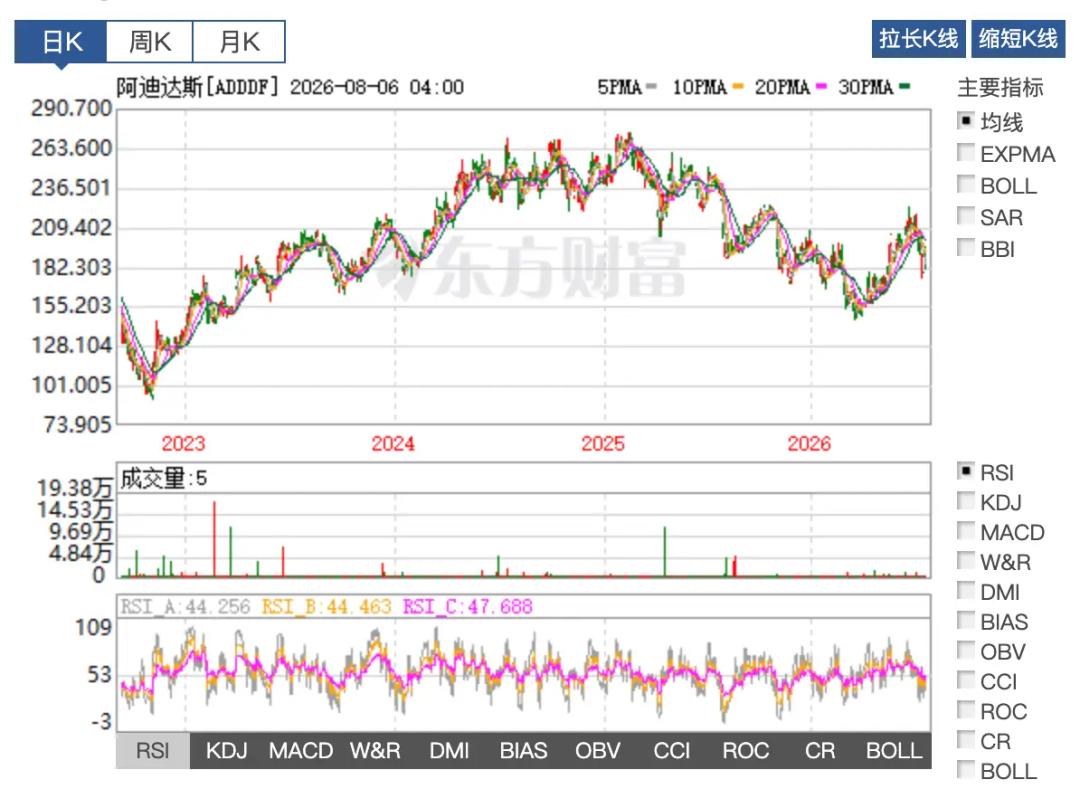
adidas' share price trend in recent years, Source: Eastmoney
According to data released by adidas, more than 17 million jerseys were sold during the World Cup, about four times the figure in the same period of 2022; total sales of World Cup-related merchandise are expected to reach 1.5 billion euros.
But this kind of revenue is pulsatile. With fragmented attention, no matter how loud the volume of a marketing event is, it cannot offset the increasingly short monetization cycle.
In the past, high investment in a major tournament could drive revenue growth for several quarters, but it has become increasingly difficult now. If a successful marketing campaign cannot be converted into healthy profit growth at the same time, its value will naturally be questioned.
Has the Inflection Point Arrived?
Gulden said that the over-investment in marketing is limited to the second quarter, and it will return to normal levels in the second half of the year, with the full-year marketing proportion expected to be around 12%. adidas also raised its full-year 2026 revenue guidance from "high single-digit growth" to 9%-10%.
Nevertheless, the company kept its full-year operating profit expectation of about 2.3 billion euros unchanged, still seeing revenue growth without profit growth.
Looking in more detail, according to the two quarterly financial reports that have been released, adidas' revenue in the first half of the year has increased by 14% at fixed exchange rates, which means the expected growth in the second half of the year is far lower than this figure, only 6% converted according to the guidance; in terms of operating profit, the first half of the year has reached 1.279 billion euros, and the growth rate is also expected to slow down in the second half of the year.
Gulden explained that the current revenue growth trend of the wholesale business is 6%-7%, and the direct-to-consumer business cannot be calculated in advance, so there may still be room for growth.
adidas' market guidance has always been relatively conservative. This may be an intentional move to lower external expectations, and also implies that profit is not its top priority at the moment.
But after three years on the road to recovery, for adidas at this stage, the market's focus has shifted from revenue growth to profitability and sustainability.
In addition, adidas has thrived in the sports fashion trend in the past two years, while the sports consumption market has become increasingly competitive. Some solutions to its challenges can also be seen from its financial report.
adidas' lifestyle-focused strategy is increasingly relying on the apparel category.
In the second quarter, adidas' apparel sales surged 35%, while the footwear business only grew by 1%.
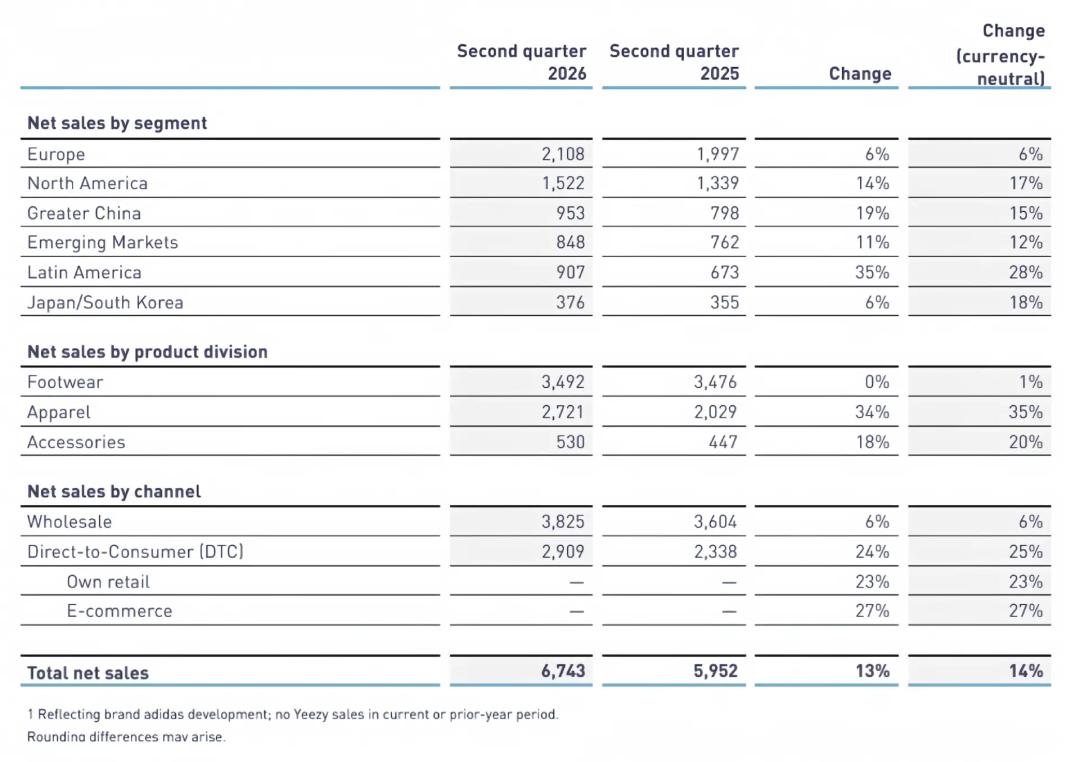
Source: adidas financial report
During the World Cup, adidas' investment in professional sports was largely converted into sales of lifestyle-style jerseys and apparel, such as Blokecore.
In adidas' previous internal reforms, whether it is localized innovation or flexible supply chain, the core of connecting with consumers lies in rapid interaction and fast product launch. The recent "City Trip" campaign is the ultimate embodiment of this model.
However, compared with footwear, apparel has higher requirements for supply chain response speed, and is more affected by fashion trends. Moreover, current fashion trends are changing faster and faster, and public opinion backlash often occurs in a flash, all of which will continue to test adidas' already successful strategy.
Another point worth noting is the fading of the thin-soled shoe trend. After all, in the second quarter, adidas' lifestyle business including the Terrace series such as Samba and Gazelle only grew by 2%.
The next growth point adidas is optimistic about is Stan Smith. This classic shoe originating from the tennis court is the best-selling item in adidas' history in terms of cumulative sales, but it has lost its appeal to consumers in the past two years due to over-distribution and excessive discounts.
Gulden specifically mentioned on the earnings call that Stan Smith will resume growth, "We have strong signals from fashion shows, consumer surveys and research that this direction is coming."
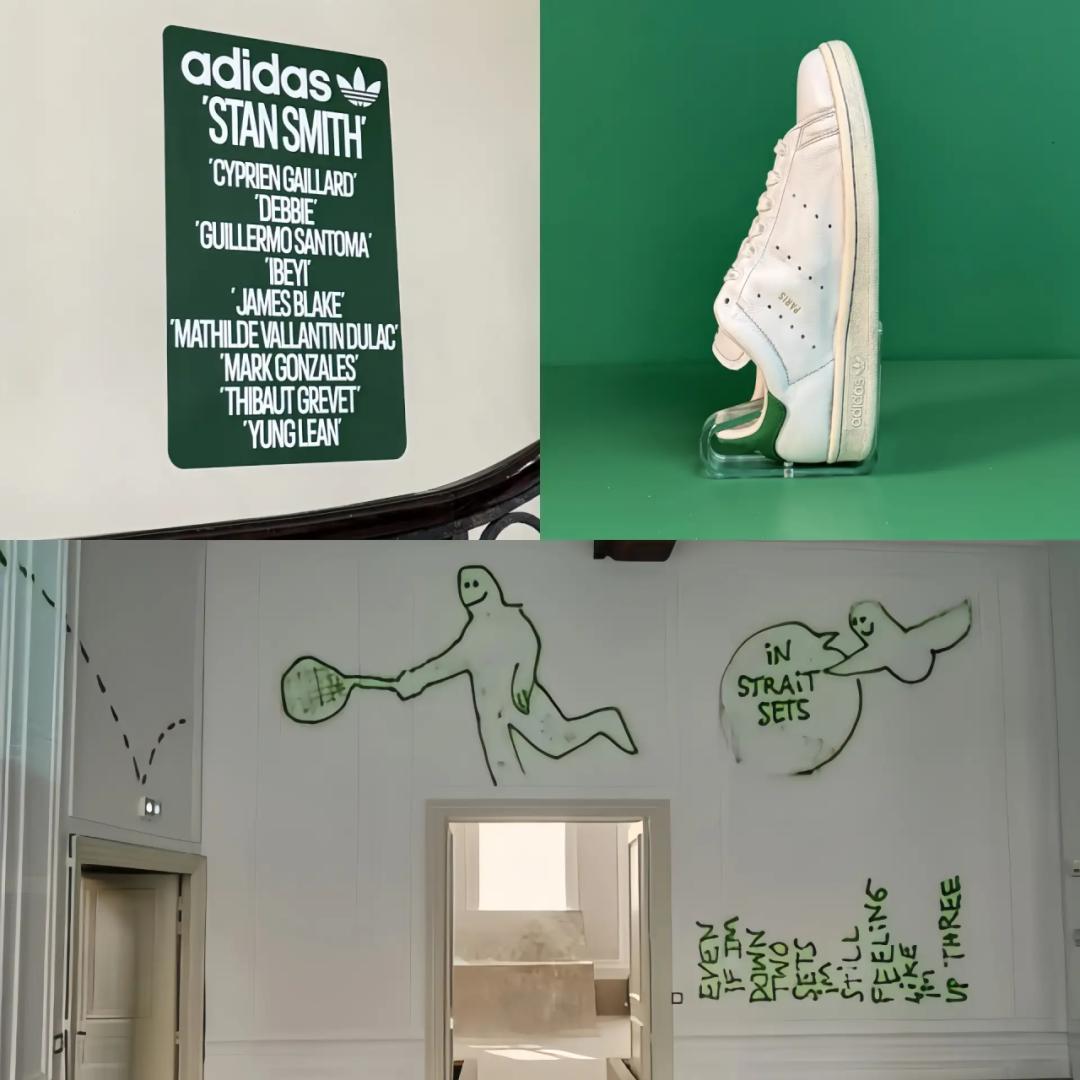
At this year's Paris Fashion Week, adidas created an exclusive space for Stan Smith
From this perspective, products more closely tied to professional sports are still the core of this round of sports fashion trend. Compared with betting on fleeting fashion trends, such products themselves have rich cultural assets, have clear priorities in product R&D and audience research, and have much higher certainty.
Among them, tennis shoes are on the rise. This track now not only gathers sports brands such as Puma, Nike, Asics and FILA, but also attracts luxury brands such as Gucci, Prada and Bottega Veneta to enter the market.
According to estimates by market research firm Mordor Intelligence, the global tennis shoe market size reached 3.31 billion US dollars in 2025, and is expected to reach 4.62 billion US dollars by 2031, with a compound annual growth rate of 6.01%.
However, the latest moves of Stan Smith, whether it is actively reducing product supply and gradually increasing volume, or collaborating with designers to strengthen the fashion label, have copied the strategy adidas used to build Samba.
Both Stan Smith and Samba are part of adidas' retro product matrix. adidas is one of the biggest beneficiaries of the retro trend. Once the trend passes, the situation may be completely different.
This article is from the WeChat Official Account "20 She" (ID: quancaijing_20she), written by Zhang Ya, authorized for release by 36Kr.