With OEM business accounting for 92% and the gross profit margin of its self-owned brands less than 4%, can the "Foxconn of the Two-Wheeler Industry" gain a firm foothold in the A-share market?
On August 6, 2026, Tianjin Fuji-ta Bicycle Industry Co., Ltd. (stock abbreviation: "Jin Fuji-ta", hereinafter referred to as "Fuji-ta") completed its IPO on the Main Board of the Shanghai Stock Exchange.
From the review and approval by the SSE Listing Committee on June 8, to the submission for registration on June 10, then to the approval of registration on June 25, and the launch of IPO subscription on July 24, Fuji-ta's IPO process advanced extremely rapidly. This bicycle OEM giant known as "the Foxconn of the two-wheeler industry" set its issue price at 17.46 yuan per share, corresponding to a financing scale of 720 million yuan, which is lower than the 773 million yuan fundraising demand stated in its prospectus.
As of press time, Fuji-ta's share price stands at 40 yuan per share, with a market capitalization of 16.5 billion yuan.
According to data from the China Bicycle Association, from 2022 to 2024, Fuji-ta's bicycle sales revenue ranked top three in China's bicycle industry for three consecutive years; its market share reached 7.62% in 2024, ranking second, with a scale exceeding that of a number of listed peers such as Jiuqi Co., Ltd., Shanghai Phoenix, and Zhonglu Co., Ltd.
However, a set of thought-provoking figures reveals the other side of this OEM giant: the OEM business has long accounted for more than 92% of its main business revenue, while both the revenue share and gross profit margin of its self-owned brands have declined, and the gross profit margin of self-owned brands dropped to 3.71% in 2025. The shared bicycle business contributes 12.27% of revenue, but only 2.78% of gross profit, with a gross profit margin of only 3% in 2025, which translates to a gross profit of merely 15 yuan for each shared bicycle manufactured.
In 2025, Fuji-ta's revenue exceeded the 5 billion yuan mark, a year-on-year increase of 3.70%, but its attributable net profit to shareholders decreased by 6.33% year on year. The scale has been pushed to the extreme, and revenue is still growing, but it has not brought corresponding profit growth. This is the most typical dilemma in China's manufacturing industry, and also the ultimate question Fuji-ta has to face when standing in front of the capital market: after 30 years of making bicycles, who on earth has it been working for?
The Unforeseen Trend That Came Knocking
In the winter of 2015, Chen Zhengjiang and Wang Geng came to Tianjin. They traveled from Beijing with an OEM order for 50,000 bicycles, hoping to give a new lease of life to the business they were founding in the "cradle of China's bicycle industry".
People involved at that time were not yet aware that this order would be the prelude to a "carnival".
At that time, Tianjin was the largest bicycle production and export base in China and even across the globe. Its output of bicycles and electric bicycles both accounted for half of the national total, gathering more than 1,000 complete vehicle and supporting enterprises. Meanwhile, China's bicycle industry had bid farewell to the multi-year expansion cycle, with both domestic and export sales declining slightly at the same time. Multiple pressures emerged, including shrinking domestic commuting demand, low-cost production capacity in Southeast Asia grabbing orders, and the weak premium capability of local self-owned brands. The industry generally entered the stage of destocking and capacity control.
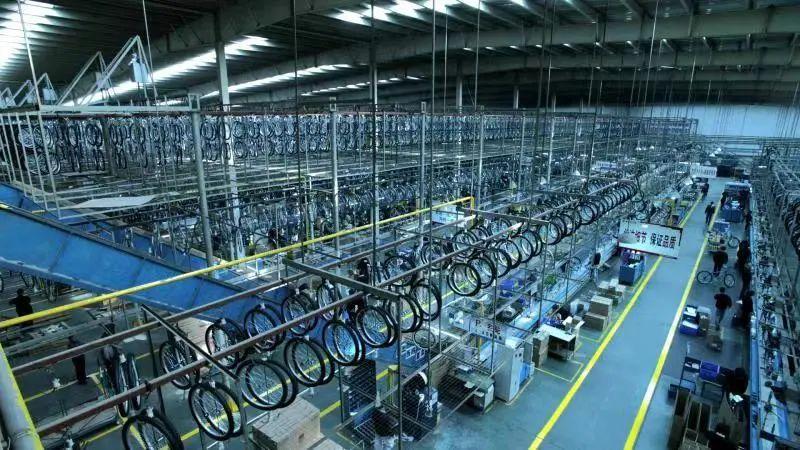
Image source: Fuji-ta official website
Faced with these two unexpected clients, Sun Hao, CEO of Tianjin Fuji-ta Group Leqi Technology Co., Ltd., fell into a long period of hesitation. For Fuji-ta, whose production capacity had just exceeded 10 million units in 2014, this order was not particularly large. What made him tangled was the people. In Sun Hao's words, they were "two very young green hands".
Back in 2015, ofo was indeed a team of "green hands": all its founding members were postgraduate students studying at Peking University, and its CEO Dai Wei was studying for a master's degree in economics. In May of that year, ofo completely abandoned the cycling tourism business in its early startup stage and fully shifted to shared bicycles. Wang Geng joined the team as the first employee at that time, and spent two hours negotiating to sign the first shared bicycle owner. Chen Zhengjiang was also one of the top five employees of ofo, and later took over as the legal representative after ofo fell into operational turmoil.
After nearly half a year of operation, ofo had cumulatively served 20,000 users at Peking University, and the sharing model began to take its next step — to deploy vehicles uniformly. That led to Chen Zhengjiang and Wang Geng's trip to Tianjin, and the birth of the iconic little yellow bike.
At the beginning, Fuji-ta and ofo had disputes over product quality standards: ofo required short-distance commuter bikes for relatively closed campus scenarios, which did not need particularly high quality; while Fuji-ta, with OEM experience for international top brands, believed that the product quality should be positioned at a higher level.
In fact, ofo first contacted Giant, but the two sides failed to reach a cooperation for similar reasons. Giant focused on the production of high-end bicycles and required a one-year development cycle, but ofo did not have that much time to wait.
Fuji-ta could not wait any longer either. The dividends of the Internet were pouring into thousands of industries, and the traditional manufacturing industry hoped to embrace the new era but did not know how to start. As early as 2009, when the public bicycle system led by the Wuhan municipal government was officially put into operation, Fuji-ta became its main supplier, and later also deeply participated in the Nanjing municipal public bicycle project. From 2009 to 2014, countless bicycles were sent from Fuji-ta's factories to the streets of cities, and slowly rusted under the neglect of citizens.
Sun Hao realized that the shared bicycle model described by the two young men was completely different from what he had come into contact with before, and it was a "trend as huge as the sea". Both sides made compromises, and the 50,000-unit order was quickly finalized; in 2016, Fuji-ta set up a new department and a dedicated workshop for the shared bicycle business, as the orders brought by the "green hands" multiplied 100 times; in 2017, ofo's order demand had reached the level of 10 million units, which was equal to Fuji-ta's total production capacity in 2014.
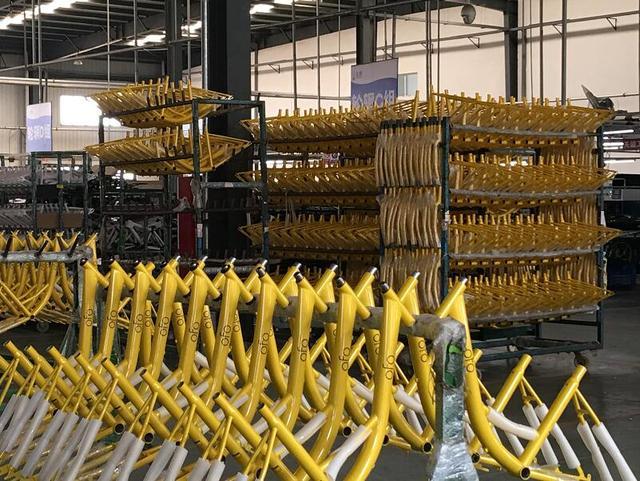
Image source: Tencent Finance
In 2017, Fuji-ta announced proudly that with the orders of little yellow bikes and riding on the trend of shared bicycles, its annual production and sales volume would exceed 20 million units, accounting for more than 20% of the global market share. Fuji-ta and ofo jointly built a shared bicycle R&D center, and also diverted part of the production capacity originally used for OEM for European and American brands to produce little yellow bikes.
During this prosperity that lasted for more than two years, hundreds of shared bicycle enterprises applied all colors recognizable to the human eye to their bikes, and threw them into every corner of cities.
Wangqingtuo Town, Wuqing District, Tianjin, is known to the outside world as "No. 1 Bicycle Town in China". In this small town with a permanent population of more than 40,000 people, 600 to 700 various bicycle complete vehicle and parts manufacturers are gathered. The town, which had been dim for many years, was illuminated by the shared bicycle trend. Bicycle factories ran around the clock, supplying ammunition for a veritable "street scrimmage", until the storm broke out and everything fell quiet again.
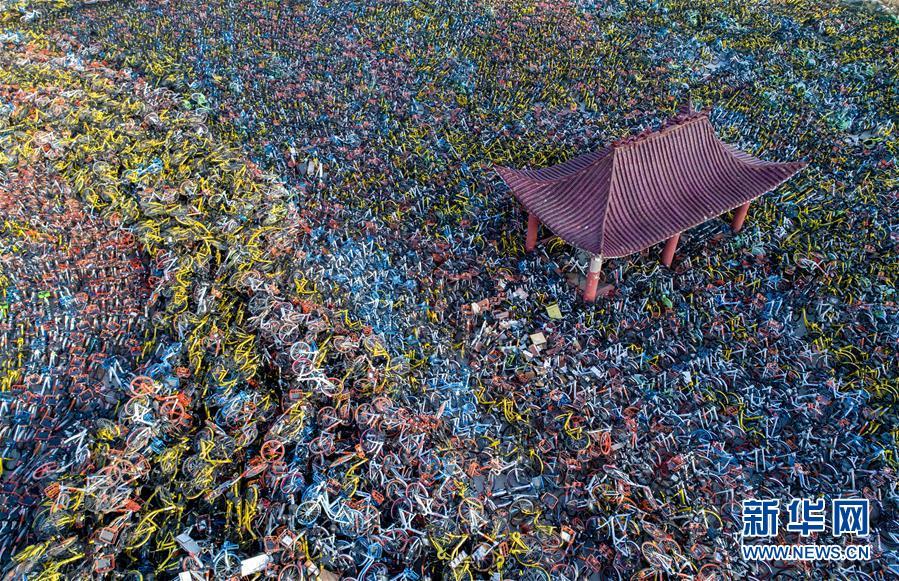
After the storm, it was neither the shared bicycle industry nor Fuji-ta that collapsed. Although ofo's arrears to Fuji-ta exceeded 200 million yuan, the story of shared bicycles did not end. Hello, Qingju, and Meituan took over the street market left by ofo and Mobike after their exit, and Fuji-ta is still the OEM giant that controls the production lines.
However, when the trend became the norm, the procurement scale of major clients is still considerable, but the profit margin of each vehicle has been compressed to the limit through rounds of bidding.
From Small Workshop to OEM Giant
Shared bicycles are the third trend that Tianjin's bicycle industry has experienced.
The first trend began in the early 1990s. As the reform and opening-up entered its second decade, the iron curtain of the planned economy was gradually torn apart. Tianjin, an industrial city that gave birth to the first fully localized bicycle "Pigeon" in the People's Republic of China, stood at a crossroads of fate. State-owned large factories such as Pigeon and Hongqi gradually declined due to rigid systems, but the supporting parts system, skilled workers and mature process flows accumulated over decades remained intact, waiting for someone to reactivate this set of industrial genes.
The second trend was the export dividend that came after China's accession to the WTO in 2001. The door to globalization swung open, and Tianjin's bicycles poured into the international market with their cost advantages and mature supply chain, with OEM orders pouring in like a tide. A number of enterprises completed the primitive accumulation of scale during this window period.
Three trends, three destinies. The first trend created entrepreneurs, the second expanded the OEM empire, and the third made the whole industry ride a roller coaster between carnival and bubble. As a witness of all three trends, Fuji-ta adjusted its operation strategies in the tides of the market.
In 1992, Xin Jiansheng and his partners jointly registered a small hardware processing enterprise, named Fuji-ta, which obtained the first private bicycle complete vehicle production license in Tianjin. On July 18 of the same year, in an inconspicuous factory building near the Liuhuo Bridge on Jintang Highway, a variable-speed bicycle marked with "FUSHIDA" rolled off the assembly line, which was the starting point of Fuji-ta.
After graduating from high school, Xin Jiansheng worked as a painter, a fitter, and a fleet captain in factories, and later worked as a salesperson for China Amity bicycle. He worked his way up in that crowded track, and thoroughly studied every screw of the bicycle.
Once an employee asked him face to face why the company was named Fuji-ta, and Xin Jiansheng's answer was very straightforward: "Fuji Film is very famous, right? We just added a character 'da' (meaning 'reach' or 'achieve') to it."
At that time, mountain variable-speed bicycles were popular in the domestic market, and the supply from state-owned manufacturers was insufficient. Relying on Tianjin's complete local supply chain of frames, tires and derailleur kits, Xin Jiansheng adopted the light-asset model of taking orders first and then purchasing parts to assemble complete bicycles, and wholesaled "Fuji-ta" variable-speed bicycles to hardware and cultural & sports merchants in towns across the country. He earned the company's first bucket of gold by flexible pricing and fast model updates.
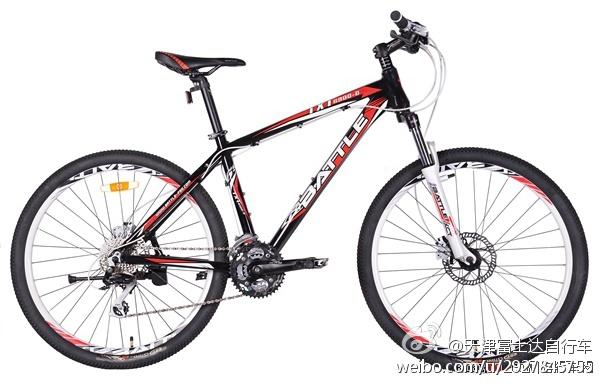
In 1994, Jin Hailong, the predecessor of Fuji-ta Group, was registered and established, realizing the leap from a simple workshop to a standardized complete bicycle factory, and officially launched its own civilian brand BATTLE. Fuji-ta variable-speed mountain bikes with the "BATTLE" logo sprayed on the body began to be sold across the national market.
Relying on the national dealer network built in the early years, Fuji-ta quickly seized the civilian bicycle market in tier-3 and tier-4 cities, and ranked among the top private bicycle manufacturers in China in the mid-1990s. It continued to expand its production base in Jinghai, Tianjin, expanded the assembly lines for welding, painting and final assembly, and simultaneously improved the self-production capability of supporting parts to reduce dependence on external procurement.
In 1998, Fuji-ta reached in-depth OEM cooperation with South Korea's Samchuly, officially entering the overseas OEM track and taking the first step towards globalization.
Different from the loose quality control of domestic self-owned brands, the strict quality inspection standards of overseas brands forced Fuji-ta to upgrade its production management and establish a standardized quality inspection process. This manufacturing system became its core competitiveness for later undertaking high-end orders from Europe and the United States.
In 2001, China joined the WTO, and the global bicycle production capacity accelerated its transfer to China. Fuji-ta took this opportunity to continuously expand its overseas clients, and gradually connected with small and medium-sized bicycle brands in Japan and Europe. Its export volume rose year by year, and its complete bicycle export volume exceeded 3.5 million units in 2005. The revenue share of OEM business continued to rise, and OEM manufacturing gradually became the core growth driver of the enterprise.
From 2002 to 2010, Fuji-ta entered a period of large-scale expansion. On the one hand, it continued to deeply cultivate the global OEM market, and successively obtained long-term orders from internationally renowned brands such as Decathlon, Scott, Cycleurope, and Specialized, forming an integrated OEM, JDM, and OEM OEM model; on the other hand, it increased investment in self-owned brand building, improved the national offline distribution channels, and simultaneously laid out the new category of electric bicycles, forming a parallel pattern of civilian bicycles and e-bikes.
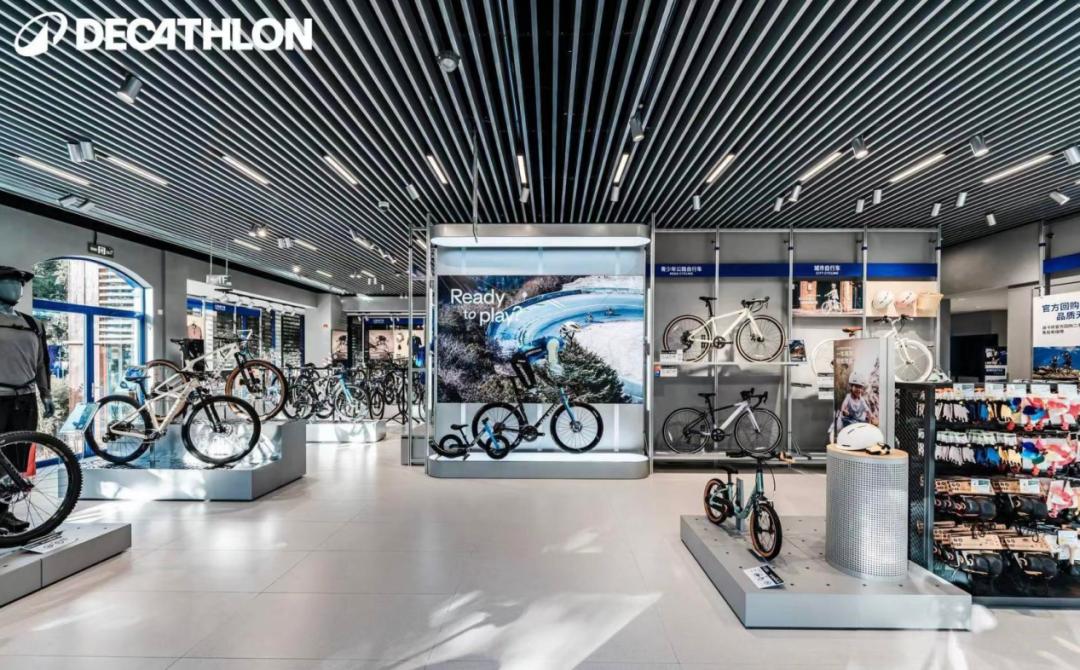
Image source: Decathlon
During this stage, the revenue share of OEM business continued to increase, the enterprise's business model was completely finalized, and it completed the full transformation from a local private complete bicycle factory to a global multi-brand OEM service provider, becoming the widely recognized "Foxconn of bicycle OEM" in the industry.
From 2010 to 2014, the domestic two-wheeler industry underwent structural changes, with trade barriers and cost fluctuation risks emerging in overseas markets, and the concept of shared travel sprouting in China. Fuji-ta also made fine-tuning at the tactical level. First, it optimized the global client structure, dispersed the dependence on a single region, and stabilized orders from high-end European and American brands to hedge against overseas policy risks; second, it continuously deployed standardized mass production complete bicycle assembly lines, and increased production capacity step by step.
In 2015, that 50,000-unit order brought structural changes to Fuji-ta's business, and domestic bicycle manufacturers simultaneously entered a dream era of super-large orders. In 2017, the China Bicycle Association established the Shared Bicycle Professional Committee, and Xin Jiansheng was elected as its chairman.
