Endowing robots with "spatial intuition", Ommo Technologies secures tens of millions of US dollars in Series A financing | 36Kr Exclusive
Text by Hu Xiangyun
Edited by Hai Ruojing
As AI begins to attempt to understand the physical world, a most fundamental question quietly emerges: how exactly do robots perceive their own position in space?
Vision tells it what it sees, encoders inform it of how many degrees the joints have rotated, and force and tactile senses tell it what it has touched. However, when a robotic arm grasps a soft object, its fingers occlude each other, or it enters a narrow cavity, all these sensing methods may fail. Because these "natural limitations under physical conditions" will cause the robot to lose perception of the position of its own end effector.
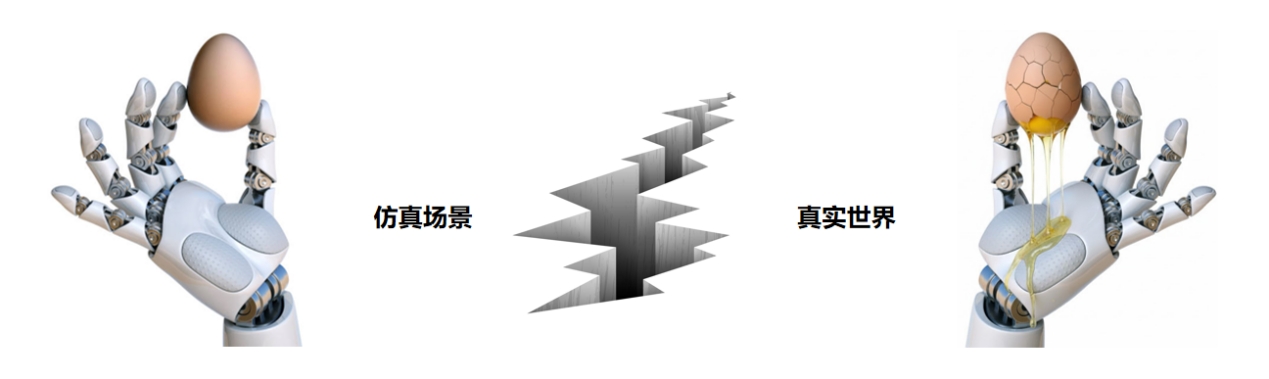
Image source:
This is exactly the problem that Ommo Technologies (hereinafter referred to as "Ommo"), a spatial intelligence technology company, is trying to solve. 36Kr learned that Ommo has recently completed a multi-million-dollar Series A financing round. This round of financing is co-led by Hong Kong VMS Group and a well-known fund, with participation from KJ Capital, and DS Capital acting as the long-term exclusive financial advisor.
In addition, the funds raised in this round will be used for technical iteration of the core product spatial positioning system and the construction of mass production system, to promote the cooperative implementation of the company's products in embodied intelligence, advanced manufacturing, medical and other scenarios.
Zheng Minjie, founder of Ommo, introduced that the starting point of his entrepreneurship originated from his exploration of 3D interaction technology during college, and he once developed an interactive e-book that enables digital interaction for physical books. After founding OMMO, the team also tried to continue this technical direction, but encountered a technical problem in product implementation, that is, "the existing mature positioning technologies are difficult to continuously capture unconstrained, high-precision and complete movements in space".
"We have investigated various mainstream and non-mainstream positioning technologies such as optics and millimeter-wave radar, but we believe that it is very difficult for them to achieve high-quality full-scenario interactive experience required for consumer-grade products. Take the mainstream optical positioning as an example, it cannot avoid the inherent physical defects. Once the line of sight is blocked by objects, the tracking will fail directly. For example, after the flexible endoscope used in minimally invasive surgery enters the human body, it is completely blocked, and the optical solution cannot complete the positioning." said Zheng Minjie.
After multiple rounds of demonstration, the Ommo team embarked on the route of self-developed underlying technology, and set strict standards: low hardware cost, support for large-scale mass production, and stable output of ultra-high 3D interaction accuracy. The permanent magnet magnetic positioning route thus became the final choice of Ommo.
In fact, magnetic positioning is an alternative solution adopted by the industry to solve the occlusion problem of optical positioning, and has been used for many years. However, traditional solutions rely on coils fed with alternating current to generate magnetic fields. Although they can "see through", they have prominent engineering defects, are vulnerable to interference from metals and surrounding electromagnetic equipment, and require huge coils for large-space deployment, making it difficult to lightweight and miniaturize the equipment.
Although permanent magnet positioning also belongs to the magnetic field tracking route, its magnetic field generation logic is different from traditional solutions. It mainly relies on the mechanical rotation of permanent magnets to generate characteristic magnetic fields. This difference brings two key advantages: first, it gets rid of the large coils and magnetic amplification structures necessary for traditional electromagnetism, so that the whole set of hardware can be made very compact; second, it solves the most difficult metal interference bottleneck of traditional electromagnetic positioning from the underlying magnetic field design.
"We mainly solve this problem from two levels. First, we adopt low-frequency quasi-static permanent magnet signals to weaken the eddy current effect generated by conductive metals and the secondary magnetic field interference it produces; second, we use high-complexity characteristic magnetic field coding to identify and correct environmental disturbances. To put it simply, traditional electromagnetic equipment usually relies on regular periodic signals and preset magnetic field models, and once the waveform is distorted, it will be completely at a loss; while the magnetic signal designed by Ommo contains exclusive features - similar to a "five-pointed star" or "special-shaped ellipse" with multiple identifiable points, even if it is interfered, only the local waveform is deformed, the core features are still retained, and supporting algorithms can identify the distortion in real time and complete error correction."
It is like building a small "indoor BeiDou" in the physical space. The host as the magnetic field emission source has a continuously rotating permanent magnet inside, and the micro magnetic sensors collect the magnetic field signal at their location in real time, and the algorithm solves the complete 6DoF position and attitude data. At present, the system can achieve sub-millimeter level accuracy within the specified working range. The smallest magnetic sensor is about 0.8 mm, which is smaller than the width of a grain of rice. It can be embedded in robot end effectors, wearable devices or medical devices, and is suitable for complex environments with narrow space, occlusion and continuous interaction.
It is introduced that around this underlying technology, Ommo has formed a full-stack team covering magnetic field modeling, spatial solution, sensors, precision machinery, electronic systems, production testing and quality management. Core members have work experience in technology companies such as Apple, Intel, Riot Games, TTI and Samsung, and many members have complete experience in continuous entrepreneurship and promoting products from prototype R&D to large-scale manufacturing.
Although permanent magnet positioning seems to be built on mature magnets and MEMS sensors, its commercialization still needs to solve multiple engineering problems simultaneously, such as complex magnetic signal generation, non-metallic precision machinery, sensor calibration, spatial solution, wireless synchronization and mass production consistency. Ommo has spent many years integrating these links into a complete system that can be repeatedly produced and verified by customers. This full-stack accumulation across machinery, electronics, algorithms and manufacturing also constitutes the company's long-term technical barrier.
"In addition, we took into account the problem of low-cost industrialization at the beginning of the design. Magnet materials have achieved large-scale mass production relying on the new energy vehicle industry chain, and sensor chips come from the mature consumer electronics supply chain." Zheng Minjie said.
Initially, Ommo's permanent magnet positioning technology was first implemented in the medical surgical navigation scenario. Zheng Minjie introduced that this is because "the operating room scenario is highly controlled and the fault tolerance rate is close to zero, and its strict standards are suitable for verifying the basic accuracy of the system". The company has established a quality system that meets ISO 13485 standards, and has carried out multi-year technical verification with the world's leading surgical navigation enterprises. Up to now, Ommo's cooperative customers cover more than 100 medical device enterprises at home and abroad, and a number of supporting navigation devices have entered the medical device declaration stage, covering subdivided scenarios such as neurosurgery, orthopedics/sports medicine, and stomatology.
Outside the medical scenario, the embodied intelligence track is the key market that Ommo is currently focusing on. Zheng Minjie noticed that in the past year, many customers in the embodied field have encountered technical bottlenecks in offline implementation because their equipment cannot complete high-precision flexible operations. For example, when the robot performs actions such as grasping, inserting, and screwing, the more precise the operation is, the more likely the tiny pose error will be amplified into slippage or failure after contact. "These customers took the initiative to find us, hoping to use high-precision sensors to make up for operation errors."
On the other hand, the entire embodied industry is facing the common pain point of "extreme scarcity of 3D physical operation data sets". Large language models can be trained relying on massive digital texts on the Internet, but the 3D physical operation data required for robot training has not been collected on a large scale.
For example, when a robotic arm picks up a water cup and drops it, is it because it did not grasp it tightly, grasped the wrong position, or the object deformed during the grasping process leading to operation failure? This requires multimodal information such as end effector pose data and tactile data to answer. At present, the industry has used videos, optical motion capture, IMUs, encoders and force tactile sensors to collect data, but in the process of mutual occlusion and continuous contact of fingers, it is still difficult to obtain continuous, absolute and high-precision 6DoF trajectories at low cost.
This is the new opportunity that Ommo sees. The accuracy and stability of Ommo's positioning system have been fully verified in the medical track, and can be migrated to the embodied field to build a data collection platform. At present, the company's first data collection glove is equipped with medical-grade permanent magnet sensors, which is used to collect the actual operation poses of human hands.
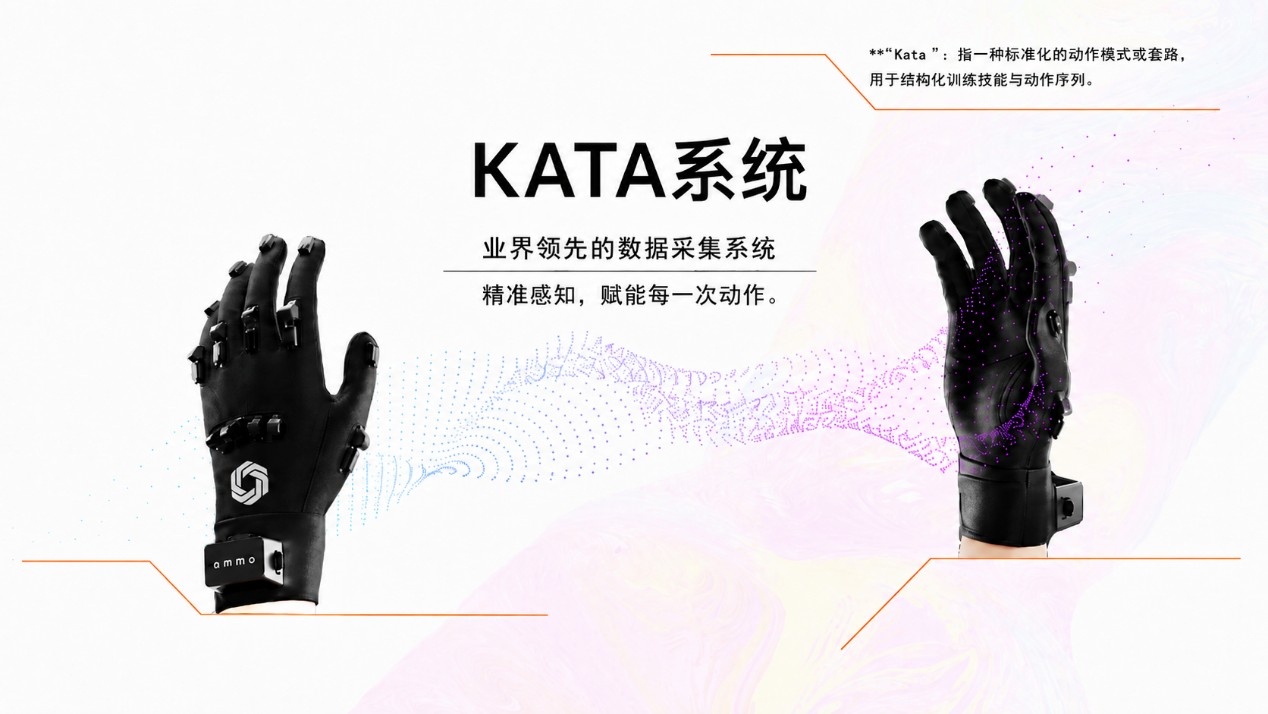
Image source:
Zheng Minjie admitted that the growth rate of this part of the market "is much faster than he imagined". Since the beginning of this year, the company has successively connected with a number of embodied customers and launched cooperation, and at the same time decided to accelerate the implementation process of the full product system.
In Zheng Minjie's view, spatial intelligence is "the underlying neural center of physical AI". Large language models are equivalent to the brain of robots, responsible for understanding instructions and outputting decisions; robotic arms and dexterous hands are the limbs of robots, completing physical operations. The permanent magnet positioning system created by Ommo is responsible for opening up the real-time feedback path between environmental perception and limb execution, "reproducing the innate 3D spatial perception ability of human beings".
"We hope that robots can truly have a stable 'spatial intuition', which may also be an indispensable underlying infrastructure for AI to truly enter the physical world from the digital world." Zheng Minjie said.
Views from Relevant Parties:
Wu Zhaowei, Partner of VMS, said that the requirements of accuracy, volume and environmental adaptability are often difficult to balance. Ommo's spatial perception system integrates all of them into the same solution, and has been tested in scenarios with extremely low fault tolerance such as surgical navigation. The calibration algorithms and data accumulated in many years of real scenarios form a deeper barrier than hardware. The occlusion, narrow space and continuous contact faced by the robot end effector in grasping, inserting and assembly are essentially the same problem. VMS looks forward to walking with Ommo for a long time and bringing this capability to a broader industry.
The KJ Capital team said that from the medical scenario pursuing stability and extreme precision to the continuously evolving and infinitely generalized embodied field, Ommo, with its own engineering and algorithm capabilities, has broken through the application boundary of technology and become the cornerstone of building physical AI. KJ Capital is optimistic about the development prospect of Ommo's technology platform, and looks forward to giving full play to the industrial resources in the life science and medical fields to support Ommo to move towards cutting-edge applications.
Huang Jun, Partner of DS Capital, said that as Ommo's long-term exclusive financial advisor, DS Capital has witnessed the company's complete process from original technology, product engineering to cross-scenario expansion. Ommo's scarcity comes from the originality of underlying technology, the verification capability in highly demanding scenarios, and the extension potential for the broader spatial intelligence market. We will continue to accompany the company forward, continuously connect industrial and capital resources, and firmly believe that Ommo will eventually become a spatial intelligence platform with long-term competitiveness.