After 10 years of long development and a hasty end spanning 4 years, a far broader window of opportunity has opened up after the "echelon utilization" of batteries was suspended.
According to China Energy Network, on July 30, the Ministry of Industry and Information Technology of the People's Republic of China released the *Announcement on Abolishing and Revising the Policy Standards Related to "Echelon Utilization" of New Energy Vehicle Spent Power Batteries and Regulating Relevant Industry Activities* (Announcement No. 20 of 2026, hereinafter referred to as "Announcement No. 20"), which abolishes the relevant provisions on the "echelon utilization" of spent power batteries.
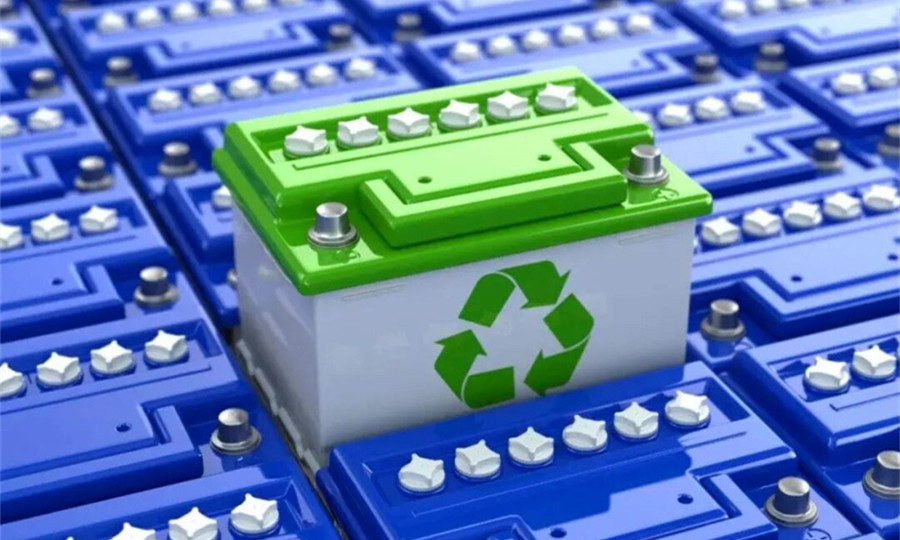
Announcement No. 20 clarifies that the administrative management of the "echelon utilization" enterprise list will no longer be carried out in the future, and all 100 "echelon utilization" enterprises that have been previously announced will be removed from the compliance list, including leading lithium battery players such as BYD (SZ: 002594), Huayou Cobalt (SH: 603799), Honeycomb Energy, and Gotion High-Tech (SZ: 002074).
There are many scenarios for the "echelon utilization" of power batteries, among which energy storage is one of the largest application scenarios. In 2012, the State Council first proposed in a policy document to "encourage the echelon utilization of power batteries". After that, it went through a long 10-year development period until the policy began to tighten in 2022. Now, an official document has completely abolished the "echelon utilization" of power batteries.
Then why was the "echelon utilization" of power batteries called off after 14 years of development? After the echelon batteries are banned, where will a large number of retired batteries go?
14-year Development History of "Echelon Utilization"
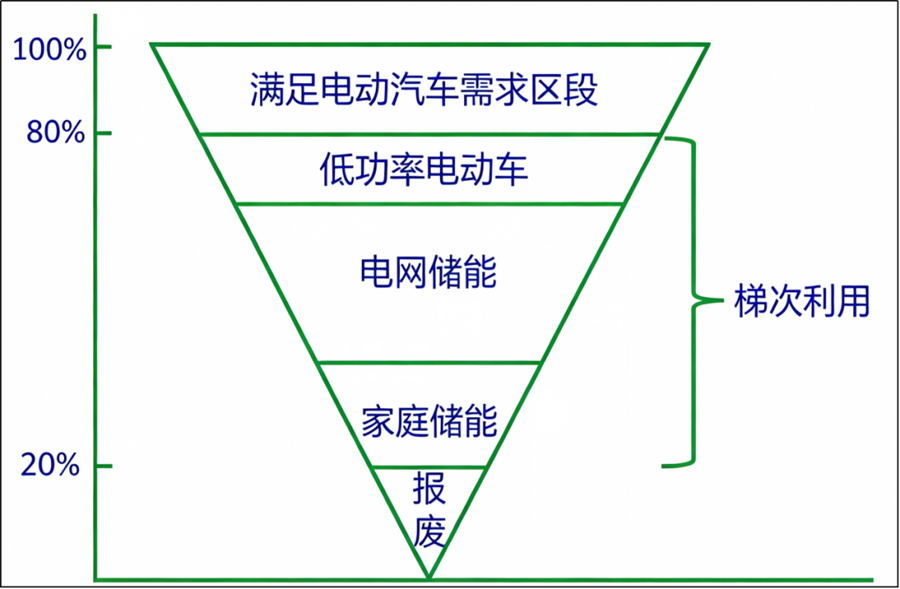
When power batteries of new energy vehicles are retired, they usually retain 70% to 80% of the remaining capacity. Therefore, the industry put forward a solution: after testing, screening and restructuring the retired batteries, they are transferred to scenarios with relatively low requirements for energy density and power for continued use, which is the so-called "echelon utilization".
Power battery "echelon utilization" covers many fields, such as low-speed electric vehicles, energy storage, communication base stations, etc. From the perspective of single cell capacity, power batteries and energy storage batteries have natural versatility. Later, whether it is 288Ah cells or 314Ah cells, they all follow the size and standards of power batteries. Therefore, energy storage is the most important scenario for the "echelon utilization" of power batteries.
In 2012, the State Council issued the *Energy Saving and New Energy Vehicle Industry Development Plan (2012-2020)*. The document clearly states that "we will formulate administrative measures for power battery recycling, establish a management system for echelon utilization and recycling of power batteries, clarify the responsibilities, rights and obligations of all relevant parties, guide power battery manufacturers to strengthen the recycling of spent batteries, and encourage the development of professional battery recycling enterprises."
After the release of this document, the energy storage industry entered a fast development track, and the "echelon utilization" of power batteries was quickly popularized in the energy storage industry.
In August 2019, BAK Battery and China Southern Power Grid Integrated Energy jointly built and put into operation a park "echelon utilization" energy storage power station project. This project is also the first landed energy storage project of full-pack battery "echelon utilization" in China, with a planned operation period of 15 years. Part of the energy storage system of this project uses ternary batteries retired from new energy vehicles, which come from BAK Battery's automotive customers.
In 2020, the world's largest grid-side energy storage power station — the 208MWh energy storage power station project in Kunshan, Jiangsu was completed and put into operation. It was also the largest large-scale power battery "echelon utilization" energy storage power station in China at that time.
In June 2022, the National Energy Administration issued the *25 Key Requirements for Preventing Accidents in Electric Power Production (2022 Edition) (Draft for Comments)*. It clearly stipulates that "medium and large-scale electrochemical energy storage power stations shall not use ternary lithium batteries or sodium-sulfur batteries, and are not suitable for using "echelon utilization" power batteries; when using "echelon utilization" power batteries, consistency screening and safety assessment combined with traceability data shall be carried out."
The release of this document marks the beginning of policy tightening, and the application of power battery "echelon utilization" in the energy storage field has entered a standardized stage.
However, unexpectedly, just 4 years after the standardization of power battery "echelon utilization", "echelon utilization" came to an end at the policy level.
The release of "Announcement No. 20" means that the application of power battery "echelon utilization" in large-scale energy storage power stations has completely ended. In the future, the term "echelon utilization" will probably be erased from large-scale energy storage power stations.
Energy Storage Abandons "Echelon Utilization"
The core root of the elimination of power battery "echelon utilization" by the energy storage industry lies in the problems of its own product attributes.
First of all, the requirements of energy storage power stations for cell quality, especially consistency, are getting higher and higher.
During the service period of new energy vehicles, the driving conditions, charging habits, charge-discharge rates and service life of each vehicle vary greatly. Even for cells from the same batch that are installed on vehicles, there are huge differences in internal aging degree, internal resistance and self-discharge rate after retirement. Once grouped and put into operation in the energy storage system, cells with severe aging will have unbalanced voltage drop and accelerated overheating attenuation, which will lead to rapid capacity drop of the whole cluster of batteries in mild cases, and easily induce thermal runaway and fire in severe cases.
Nowadays, the safety acceptance standards for grid-side and large-scale industrial and commercial energy storage power stations continue to upgrade. Both the owners and EPC contractors are unwilling to bear the safety compliance risks brought by echelon batteries. Therefore, a large number of large-scale energy storage projects directly exclude echelon batteries from the bidding list, and the narrow low-end market cannot support the operation of the huge echelon battery production capacity at all.
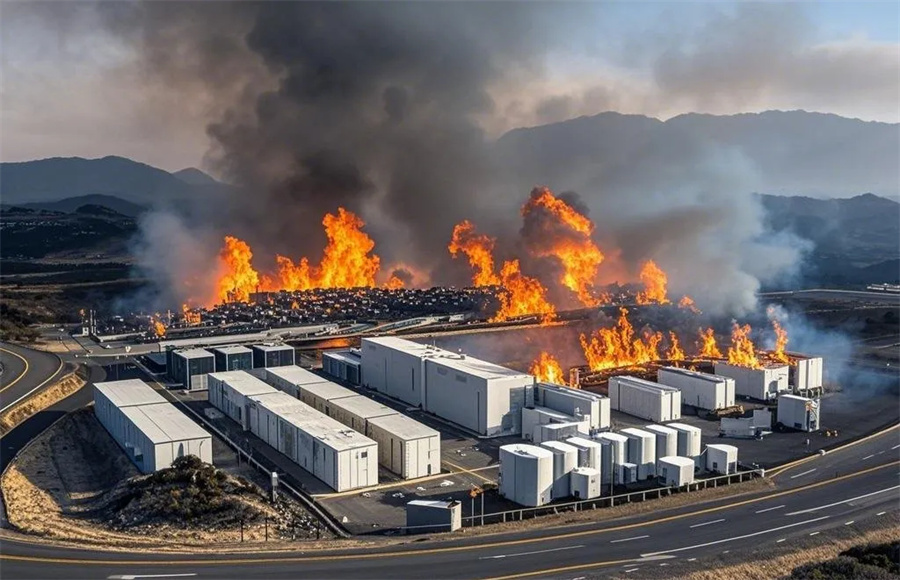
Fire in Energy Storage Power Station
Secondly, the price of lithium batteries has dropped rapidly, and the original price advantage of echelon batteries has been eliminated.
From 2020 to 2022, the price of lithium carbonate remained at a high level, and the procurement cost of retired echelon cells was at least 30% lower than that of brand-new cells, which had certain cost performance advantages.
However, in recent years, with the decline of lithium carbonate price, the increasing maturity of battery technology, and the continuous dilution of manufacturing cost by scale effect, the price of cells has been decreasing year by year. Now, after deducting the costs of disassembly, testing, sorting, PACK restructuring and traceability verification, the unit price of echelon batteries after landing has very little difference from that of brand-new energy storage cells, and the low-price advantage it once relied on no longer exists.
Finally, from the perspective of full life cycle economic calculation, the comprehensive cost performance of echelon batteries is not dominant.
At present, the owners' calculation of the revenue of energy storage projects tends to be based on the full life cycle of energy storage power stations. The full life cycle investigates the calendar life and cycle times of lithium batteries, while the retired echelon cells have a short calendar life, and most of the remaining effective cycle times are only 1/3 to 1/2 of that of brand-new energy storage batteries.
Echelon cells seem to have lower upfront investment costs, but in fact, the hidden costs of later battery replacement, operation and maintenance, and fault handling are very high. Brand-new cells have a higher upfront investment, but they can ensure the stable operation of the power station for ten years. When comprehensively diluted to the unit cost of each charge and discharge, the advantage of brand-new cells is obvious.
After the capital calculates the revenue model, investors naturally prefer to choose brand-new special batteries for energy storage with stronger stability and perfect quality assurance system, and the economic account of "echelon utilization" is completely unprofitable.
Echelon Utilization Closes, Recycling Opens a New Window
After the exit of "echelon utilization", where will the massive retired batteries go?
In fact, the original intention of "echelon utilization" is to tap the "residual" value of power batteries, and the most core assets of power batteries are high-value metal materials such as lithium, nickel, cobalt, manganese and copper. When the capacity utilization value loses economic efficiency, disassembly and recycling of metal raw materials becomes the most efficient recycling path.
China Energy Network noticed that in all previous documents on spent batteries, "echelon utilization" and "recycling utilization" are always mentioned side by side. With the end of "echelon utilization", "recycling utilization" will become the only utilization path. While closing the door of "echelon utilization" of lithium batteries, Announcement No. 20 opens a new window for "recycling utilization".
At the policy level, the state has also made clear provisions on the recycling and utilization of spent batteries.
On April 1 this year, the *Interim Measures for the Administration of Recycling and Comprehensive Utilization of Spent Power Batteries of New Energy Vehicles* issued by six departments including the Ministry of Industry and Information Technology officially came into effect. The document points out that "power battery enterprises shall bear the recycling responsibility for the new energy vehicle power batteries they produce or import and sell and use in China", and "new energy vehicle production enterprises shall bear the recycling responsibility for the new energy vehicle power batteries they install on vehicles and sell and use in China".
In addition, the document also clarifies that power battery enterprises and new energy vehicle production enterprises shall hand over the spent power batteries recycled by their own enterprises "to legally established enterprises engaged in the comprehensive utilization of spent power batteries for comprehensive utilization; those with comprehensive utilization conditions can also carry out comprehensive utilization by themselves."
The introduction of this document not only marks that the power battery recycling industry has entered the first year of compliance supervision, but also announces that the industry is about to return from scattered and extensive development to a formal industrialization model. Power battery enterprises and new energy vehicle production enterprises are pushed to the forefront of the recycling chain.
In the past, battery recycling faced many difficulties, such as small scale, "unregulated workshops" seizing the market, low profit, and immature technology. However, with the entry of a large number of large-scale enterprises after the introduction of the new regulations, the lithium battery recycling industry will enter a new era, and its scale will completely exceed that of "echelon utilization".
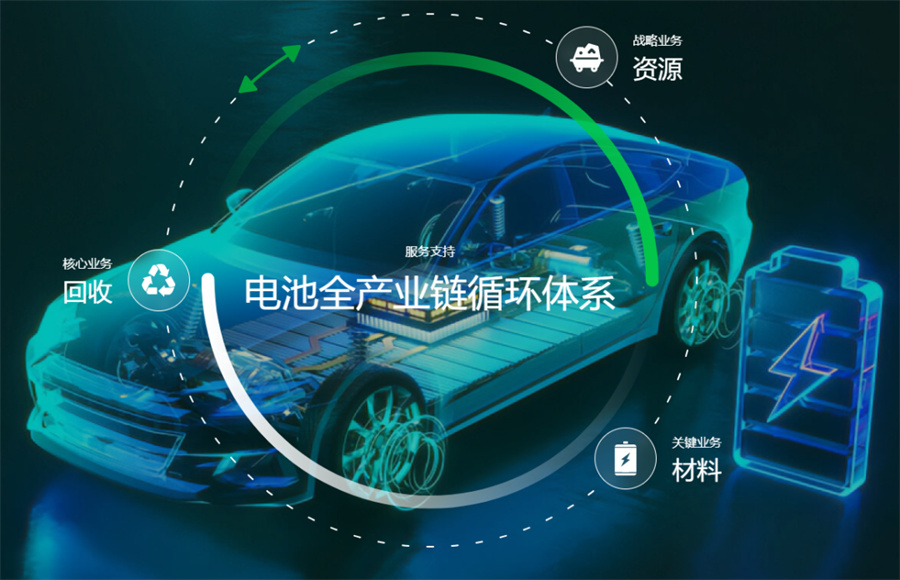
It is worth mentioning that leading battery enterprises have already seen the industry opportunities and taken the lead in seizing the industry dividends.
China Energy Network noticed that as early as January 2023, CATL (SZ: 300750) issued an announcement saying that its subsidiary Brunp intends to invest 23.8 billion yuan in Foshan to build a 500,000-ton spent battery material recycling project. Three and a half years later, this huge investment has paid off.
On the evening of July 24 this year, CATL (SZ: 300750) disclosed its 2026 semi-annual report. Among them, the "battery materials and recycling, mineral resources business" achieved operating revenue of 18.811 billion yuan, a year-on-year increase of 67.23%, which is the fastest growing business segment among the three main businesses (the other two are power battery business and energy storage system business); it is also the only segment among the three businesses that achieved an increase in gross profit margin — the gross profit margin reached 27.04%, a year-on-year increase of 5.81 percentage points.