What is the core of competition in the second half of the community retail industry?
The community retail track is booming
The competition intensity in the community retail track keeps rising, and the industry "crowdedness" has reached a new high.
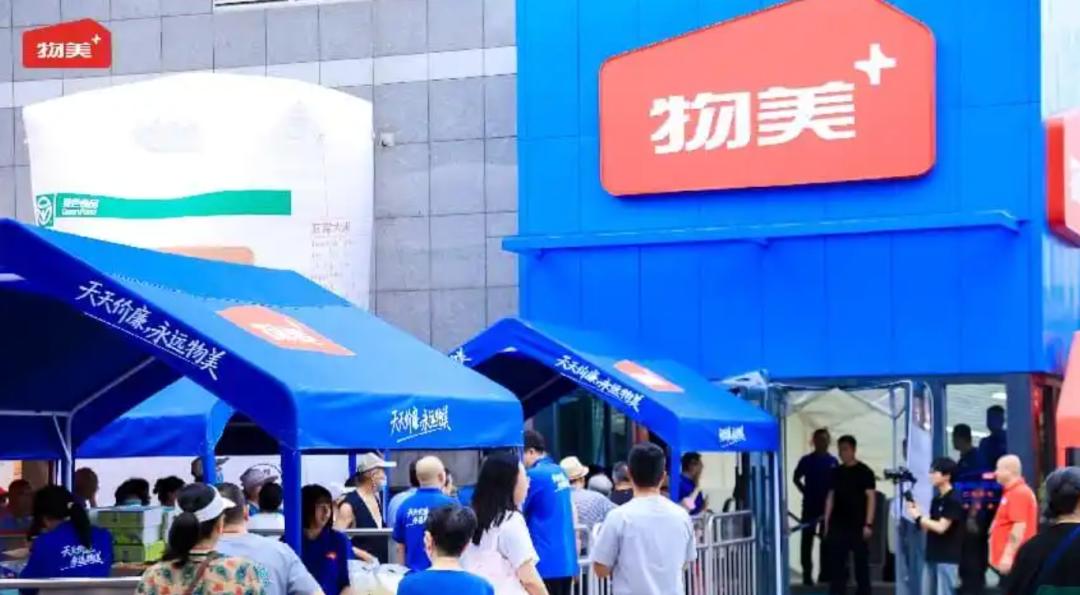
On July 24, Wumart's new retail format "Wumart+" officially opened for business in Madian, Beijing. On the same day, Chaohesuan NB under Freshippo opened six new stores simultaneously in Chengdu. Earlier, Walmart's first community store in Suzhou settled at Shin Kong Place in the Industrial Park. China Resources Vanguard and Tianhong Digital Technology opened their first community discount stores in Shenzhen on the same day.
The first half of 2026 has passed, leading retailers are all focusing on the "last mile" scenario, and the commercial game at residents' doorsteps is entering a climax. But what is the core of the next stage of competition?
Why are all players scrambling for the "business right at residents' doorsteps"?
The boom of community retail does not arise out of nowhere, but is driven by three forces: market structure, consumption habits and policy orientation.
First, there is a huge stock replacement space. According to the data from the "2025-2030 In-depth Research Report on China's Community Chain Industry" released by China Research and Development Industrial Institute, the market size will exceed 3.5 trillion yuan in 2025, with a compound annual growth rate of up to 15.3% during the period. We have observed that in some popular community business districts in first-tier cities, 3 to 7 community discount chain stores of different brands are located at the same time.
Second, there is a change in consumption logic. Amid the community retail trend, consumers have a strong demand for "quick shopping" and attach increasing importance to time and convenience. Consumers are increasingly relying on the efficient shopping experience of "immediate availability and one-stop quick purchase" provided by community stores, and prefer to meet their daily shopping needs in places close to home. Community discount stores are small in size but have concentrated products, and it takes less than ten minutes from entering the store to checking out — this kind of efficiency cannot be offered by large hypermarkets.
"You can buy what you need right after going downstairs, and the prices are low. Who would travel a long way to stock up on goods?" This is the true voice of consumers on social platforms. Community consumption is also shifting to the pursuit of "quality-price ratio". The Nielsen IQ report shows that the proportion of "cost-conscious" consumers has reached 39%. Community discount stores precisely meet the dual demands of "rational shrewdness" and "health and quality" — they not only provide an efficient "10-minute shopping circle", but also guarantee basic product quality.
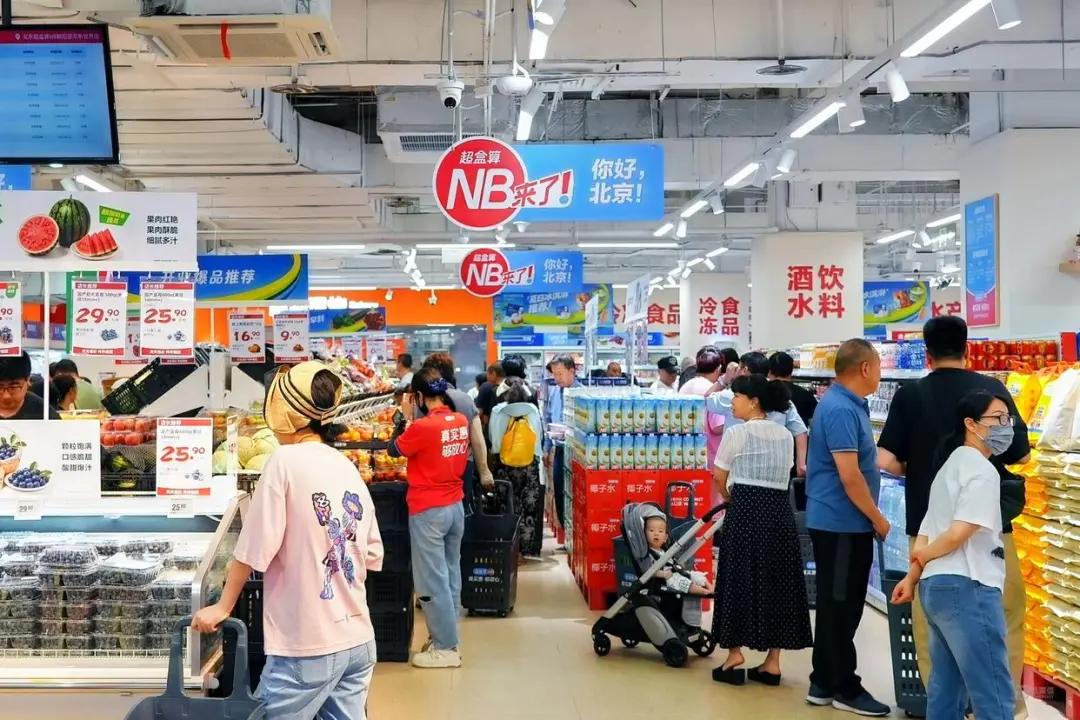
Third, there is strong policy support and the exit of old business formats. On July 29, the Ministry of Commerce issued the "Work Notice on Further Promoting the Construction of 15-Minute Convenient Life Circles in Urban Areas", clarifying the goal of building 10,000 convenient life circles across the country in 2026. The renovation of old residential communities and the improvement of supporting commercial facilities provide physical space and access convenience for community discount stores.
Community retail enters the stage of cut-throat competition
Driven by the market, retail players have also increased their investment or entered the track one after another. The current community retail track has moved from the model verification period to the accelerated stage of large-scale replication. As ALDI, Chaohesuan NB and other players speed up their expansion, all parties are launching a fierce positioning battle around the 500-meter radius of residential communities.
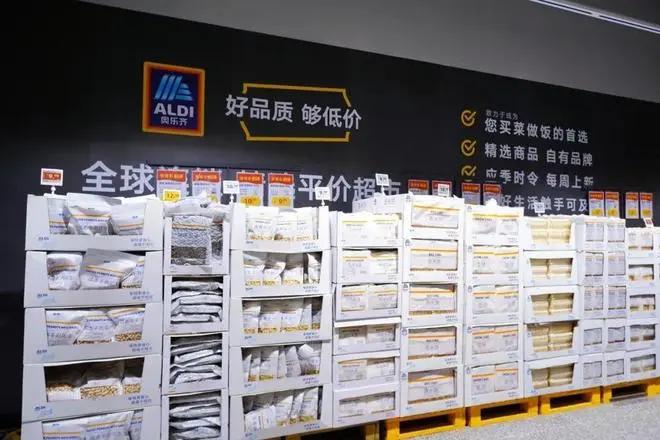
ALDI reached the milestone of 100 stores in March 2026. Its total annual sales in 2025 reached 4 billion yuan, doubling year on year, with the proportion of private brands exceeding 90%. It has expanded from Shanghai to the hinterland of the Yangtze River Delta, and successfully entered Nanjing, Zhenjiang and Yangzhou. Chen Jia, CEO of ALDI China, previously announced that more than 50 new stores will be added in 2026.
Freshippo's Chaohesuan NB is expanding the fastest. Its expansion speed increased significantly in 2026 — on May 15 alone, 11 new stores were opened simultaneously in Suqian of Jiangsu, Taizhou of Zhejiang and Hefei of Anhui. The number of operating stores across the country has increased from 409 at the beginning of the year to 550, with a target of 600 stores in 2026.
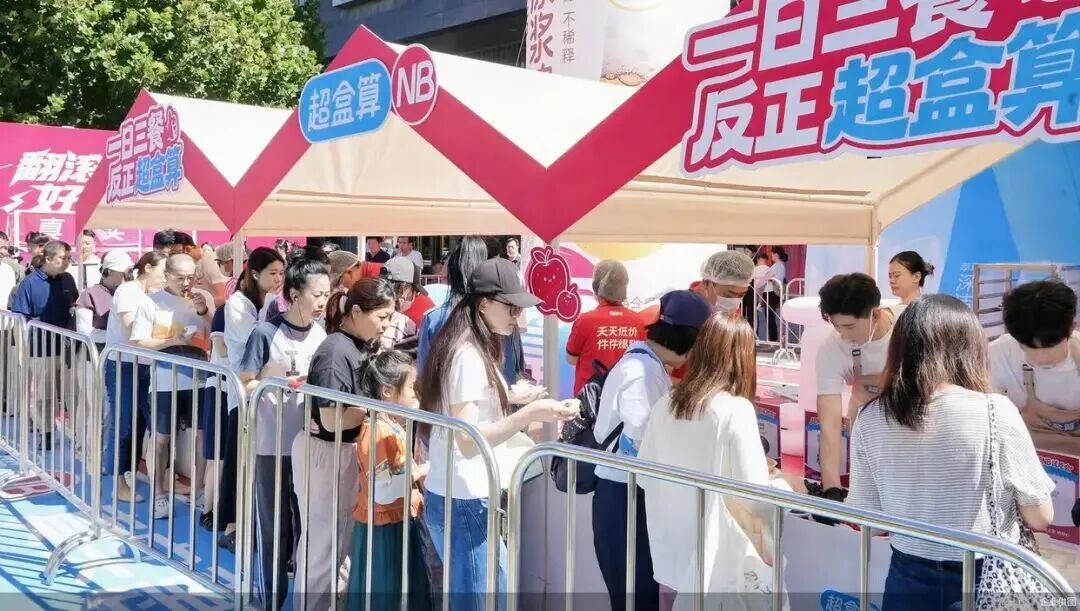
Traditional supermarkets are also accelerating their layout of community stores. Walmart's community stores are expanding rapidly in Shenzhen in 2026. As of May, 14 community stores have been opened in Shenzhen, and the company plans to open 150 stores in 2026. Now Walmart's community discount stores have expanded out of Shenzhen, with Suzhou selected as the first city outside Guangdong province to land, and 10 to 15 stores are planned to be opened in the first batch. Walmart has reduced its 10,000-square-meter large stores into "small but sophisticated" community stores, focusing on the "five meals a day" scenario.
Wumart has taken two development paths. One is the hard discount brand "Wumart Value" launched in July 2025, with a store area of 800 to 1000 square meters, SKU streamlined to around 1300, and more than 60% of the products are private brand goods. As of July 2026, Wumart Value has opened a number of stores in Beijing, Yinchuan and other cities. The other is "Wumart+" which opened on July 24, with an area of 2000 square meters, between Wumart Value and traditional hypermarkets, and the proportion of private brands exceeds 50%. It combines the two sets of strategies that Wumart has verified in the past two years, namely the cost control of hard discount and the experience upgrade of AI-optimized stores, into the same space.
Another type of entrant is cross-border players from the snack chain sector. Wanchen Group is testing the "Huishengjia Discount Supermarket" in the Shenzhen-Dongguan area; the "Life Stores" incubated by Three Squirrels have exceeded 35, radiating from its base in Anhui to Jiangsu. These players have mature supply chain networks and a large store base, and their cross-border layout in community discount supermarkets aims to shorten the link of traffic monetization to the minimum.
"Retail Business Review" observes that each player has different strategies based on their own advantages, but the core is basically the same: to seize the shopping carts of community residents with fewer SKUs, lower prices and closer distance. The outcome of this battle depends on "extreme quality-price ratio" and "sustainability".
What will the competition focus on in the second half of the community retail track?
As more and more players enter the track, the competition logic is also changing.
First, product strength and supply chain are the watershed. The core of community discount retail is not "low price", but "providing non-degraded products at lower cost". The key to achieving this is private brands.
For example, ALDI has a private brand proportion of over 90%, and has cut the prices of more than 300 products in total in 2025, which relies on its strong supply chain capability. The thickness of the supply chain determines how low the price can be and how stable the quality can be. It is not simply "removing intermediate links", but precise calculation of every link from the source to the shelf.
Second, extreme scenario insight and operational efficiency. The traditional "large and comprehensive" model is being replaced by the "refined and precise" model — precisely matching product portfolios according to the structure of surrounding residents. It not only solves the pain point of consumers "what to eat today", but also pushes inventory turnover to the extreme. Operational efficiency is also the core, for example, fresh products are delivered directly from the picking site to the shelves at the fastest speed. This refinement of operational granularity will be a sharp tool to deal with homogeneous competition.
Third, regional density will be the moat. The coverage of community discount retail is limited, with one store serving the surrounding 1 to 2 kilometers. To achieve higher benefits, it is necessary to rely on the density effect. For example, Chaohesuan NB opened 141 new stores only in the first half of 2026, with a target of 600 stores by the end of the year. The sinking market is another of its development paths — county-level regions such as Siyang County of Suqian, Pei County of Xuzhou and Tiantai County of Taizhou have been covered.
From the perspective of "Retail Business Review", in the competition of community discount retail, the ability to open stores rapidly in the short term is the admission ticket, product strength in the medium term is the watershed, and the system capability in the long term is the core barrier.
This article is from the WeChat official account "Retail Business Review" (ID: lssync), author: Retail Business Review, published by 36Kr with authorization.