Coca-Cola's record high and the underlying metaphor of the times
In a market shrouded by uncertainty, certainty itself has become the scarcest asset.
The scorching summer is in full swing, and owners of supermarkets and convenience stores are lamenting that sugary drinks and carbonated beverages are no longer selling well!
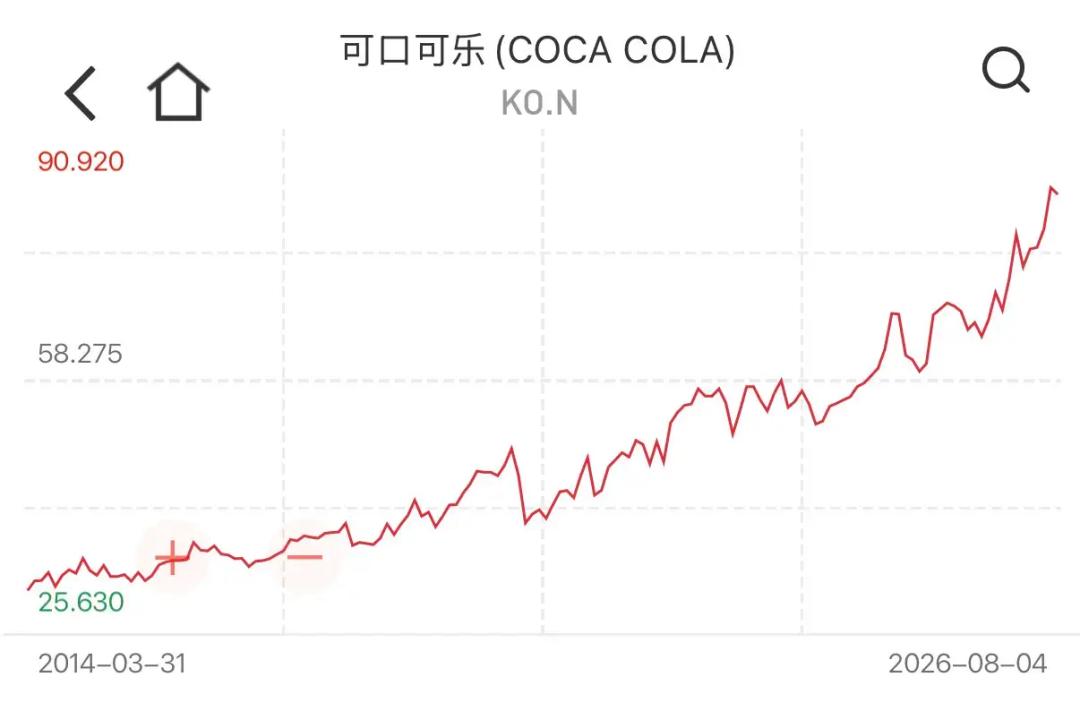
Meanwhile, Coca-Cola, listed on the New York Stock Exchange across the ocean, has hit an all-time high in market capitalization.
Especially on the day its earnings report was released, Coca-Cola's stock rose more than 7% in early trading, breaking through the $90 mark and hitting a record high. At the same time, AI assets collectively declined again: Samsung Electronics fell 13.4%, SK Hynix dropped 14.7%, and the Philadelphia Semiconductor Index then fell for two consecutive days by roughly 10%.
Many people once joked that carbon-based life no longer matters, that this is the era of silicon-based, and hot money is pouring frantically into AI. Now, why has such a completely opposite scenario emerged?
Coca-Cola Ushered in Its "Best Days" Once Again
Coca-Cola released its second-quarter earnings report at the end of July. As soon as the figures came out, the market was stirred up.
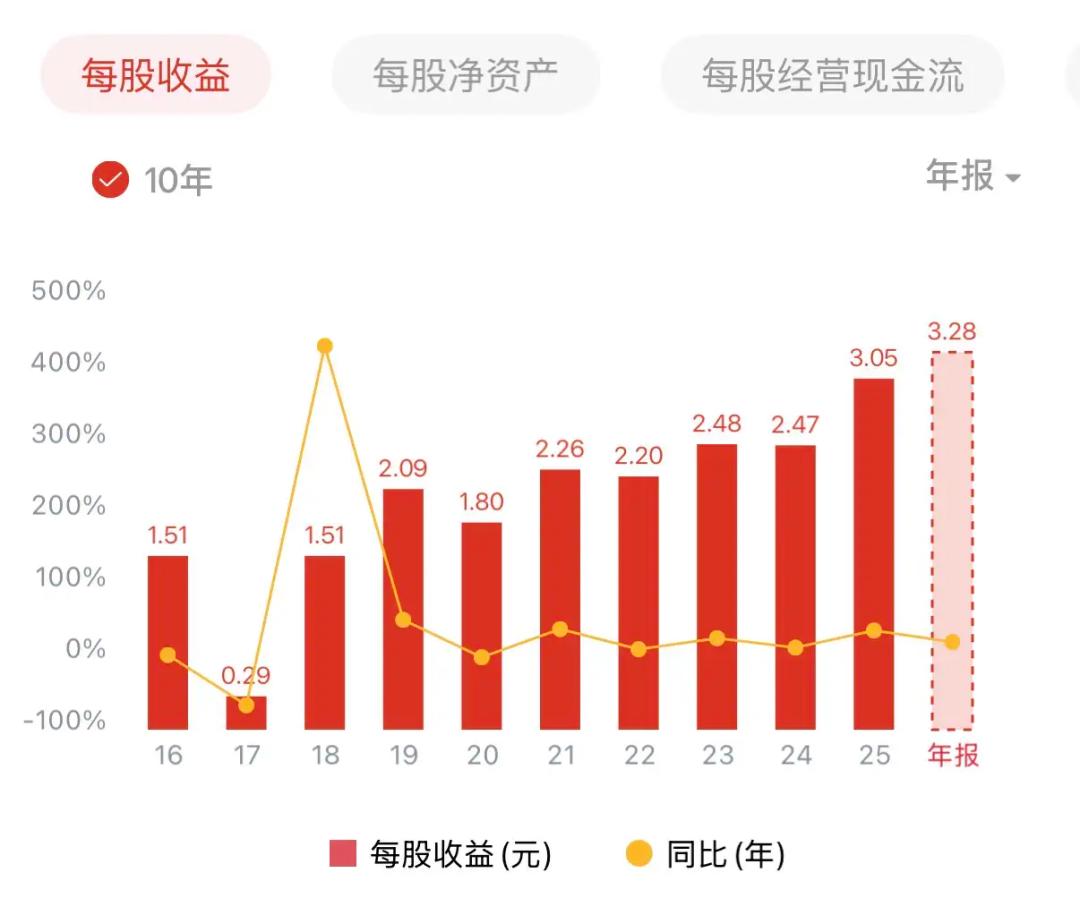
Both revenue and profits saw substantial growth across the board. Q2 revenue reached 13.38 billion US dollars, up 7% year on year; net profit hit 4.438 billion US dollars, up 17% year on year.
It should be noted that Coca-Cola mainly makes profits by selling concentrate and directly selling bottled beverages. In the earnings report, two core indicators measure the health of Coca-Cola's global business: "unit case volume" and "price/mix". The former measures how many products are sold, while the latter measures the revenue contribution brought by price increases and product structure upgrading.
These two indicators are usually mutually exclusive: price hikes curb sales volume, while price cuts boost sales. It is very difficult for a beverage company to achieve simultaneous growth in both volume and price.
But Coca-Cola made it: unit case volume increased by 5%, twice the market expectation of 2.47%; price/mix rose by 2%.
In other words, more people are buying Coca-Cola, and each bottle is sold at a higher price. The growth does not come from channel stuffing, but from the expansion of real market demand.
The operating margin also proves this point, rising from 34.1% in the same period last year to 34.9%. An analyst pointed out at the conference call that this is likely to be the highest operating margin level in Coca-Cola's history.
By product, sales of sparkling carbonated beverages increased by 4% (sales of the flagship brand Coca-Cola rose by 5%), global sales of juice, functional dairy and plant-based beverages increased by 2%, and global sales of water, sports drinks, coffee and tea beverages increased by 6%; among them, sugar-free cola performed the strongest, with sales surging by 16%.
By region, the markets of India, China, the United States and Brazil led the growth. Unit case volume in the Asia-Pacific region increased by 8%, the highest in the world, but the price/mix decreased by 9%, which traded lower prices for higher sales. Henrique Braun said at the conference call that consumer sentiment in the Chinese market remains cautious.
North America and Latin America showed completely opposite trends: the price/mix in North America increased by 4%, and operating profit rose by 12%; revenue in Latin America increased by 16%, and profits grew by 23%, the highest in the world.
This is the first full quarterly earnings report after new CEO Henrique Braun took office.
Henrique Braun took over on March 31. His predecessor James Quincey spent nine years transforming Coca-Cola from a carbonated beverage company into a full-category beverage giant. Braun continued this strategy and further deepened the development of vertical categories. The performance proves that the change of CEO does not affect the sales of soda at all.
Coca-Cola also raised its full-year performance guidance: the revenue growth rate was raised from 4%-5% to about 5%, and the comparable earnings per share growth rate was raised from 8%-9% to 9%-10%. Bank of America and Morgan Stanley subsequently adjusted the target price to 100 US dollars.
World Cup Marketing Campaign, a Big Victory
If you ask who reaped the biggest dividends from the World Cup, unlike Nike and Adidas who expressed regret in their post-event reviews, Coca-Cola can pat its chest proudly and say: It's me.
As an official sponsor with in-depth cooperation with FIFA, Coca-Cola has a number of exclusive rights and interests, including the exclusive title of the "FIFA World Cup Trophy" tour, and the exclusive right to sell non-alcoholic beverages in the stadiums.
In this largest-ever World Cup, Braun revealed that Coca-Cola achieved the highest beverage penetration rate in history, which is about 80%, meaning that almost every spectator in the average venue would consume a cup of beverage.
FIFA data shows that more than 4.6 million bottles of soft drinks or bottled water were consumed in the stadiums during the 39-day event.
The FIFA World Cup provided Coca-Cola with a unique opportunity to "launch a campaign on an unprecedented scale in more than 180 markets".
Outside the stadium, Coca-Cola customized 16 national team-themed limited-edition packages, cooperated with the football card manufacturer Panini to send more than 1 billion player stickers to over 40 markets. The entire marketing campaign collected more than 25 million first-party data records, which can be used to customize future marketing activities.
The FIFA World Cup Trophy Tour attracted about 700,000 football fans, and the experience activities covered more than 20 million retail stores, establishing close connections with consumers. Digital and social channels gained more than 9 billion views.

"Blind box" of football player stickers
To sum up, at the earnings report and analyst conference call, Coca-Cola's management talked at length about the success of its World Cup marketing campaign.
In particular, the Hydration Breaks that were complained about by fans almost became exclusive dividends for Coca-Cola. With this mandatory 3-minute break advertising spot in each half, Coca-Cola successfully guided consumers' attention to its healthier functional drinks.
Its sports drink Powerade, as the official FIFA sports drink, got the best advertising spot. Braun said, "When it's hydration break time, Powerade is right there."
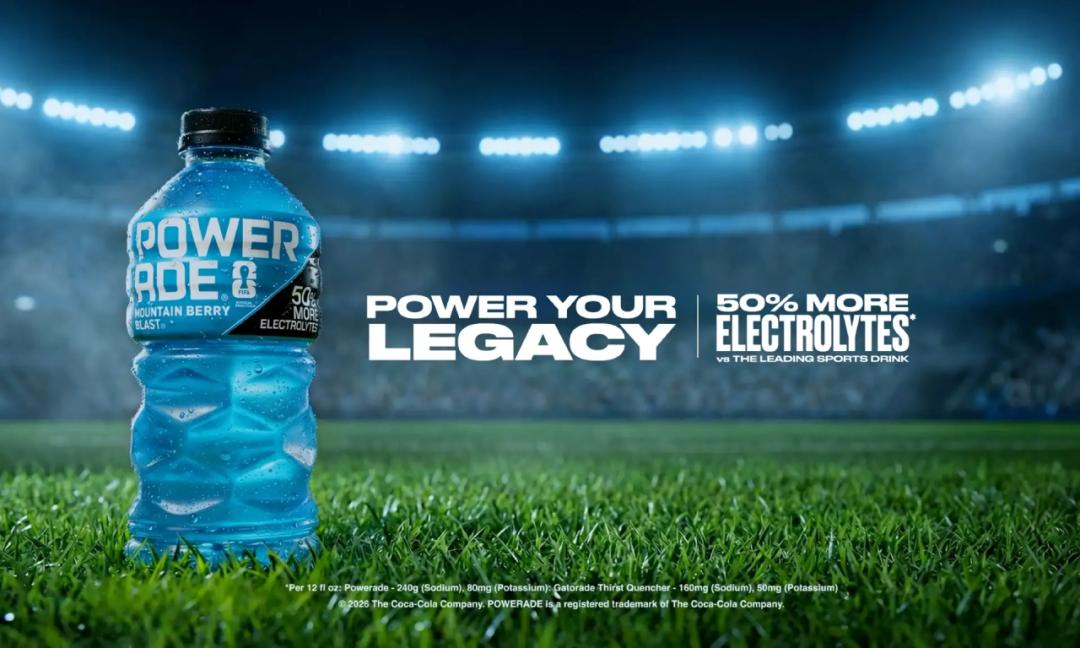
Powerade's sales surged by 8% in Q2, Diet Coke grew by 7%, and sales of sugar-free Coca-Cola skyrocketed by 16%. Coca-Cola's CFO John Murphy said, "Diet Coke is having its moment in the sun."
For Coca-Cola, the World Cup not only boosted sales, but also provided an opportunity to switch product lines and reshape the brand. This worldwide marketing campaign matches and promotes the strategic upgrading of its product lines: consolidating the basic market of classic carbonated beverages, and at the same time shifting to a matrix of "healthier, more functional" beverages.
In this regard, Coca-Cola is also actively innovating to capture more consumption scenarios.
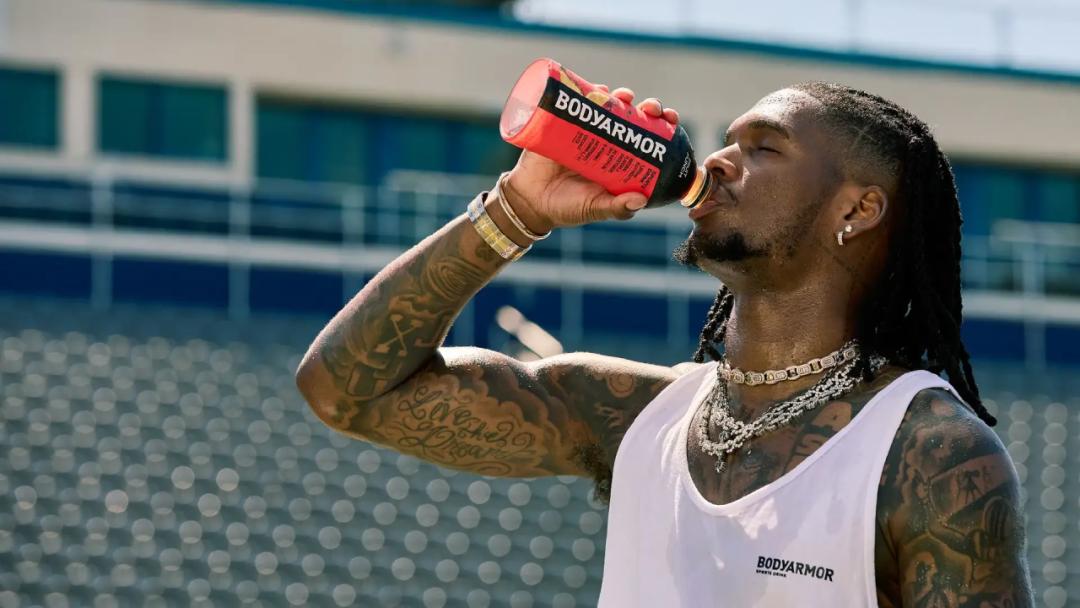
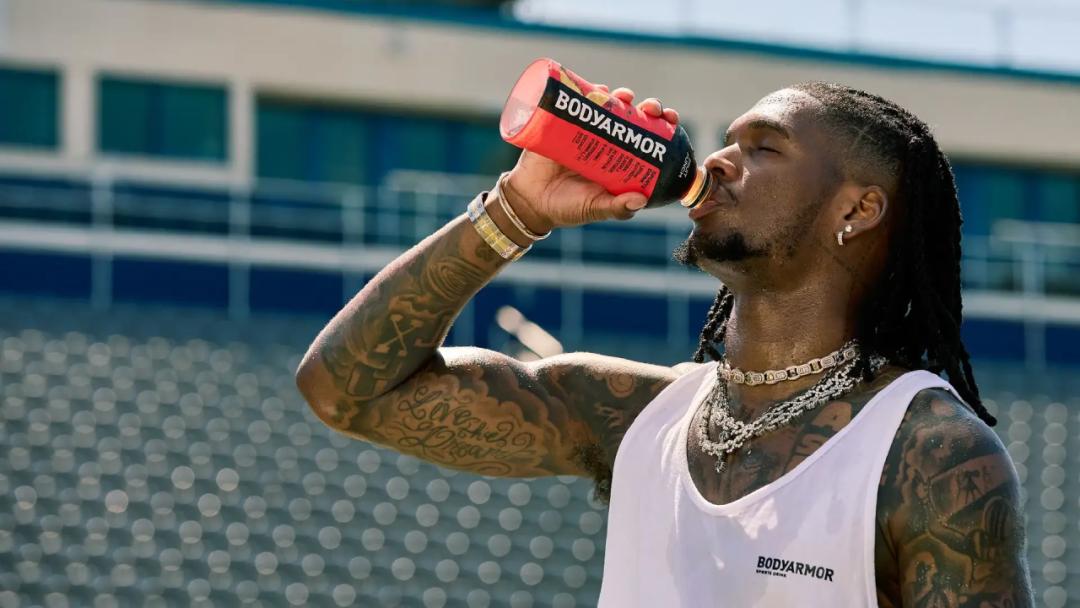
For example, after Coke Zero was upgraded to Zero Sugar, its sales in Europe are strong. It also plans to target the pre-sleep scenario at night with the positioning of a sugar-free and caffeine-free relaxing drink. The sparkling sports drink BODYARMOR FIT combines zero sugar, electrolytes and caffeine to support metabolism.
Compared with new consumer beverage brands, this pace of innovation is certainly not fast. But the historical lesson of the 1985 formula change fiasco tells us that the constant secret recipe of carbonation + sugar has a long life cycle, and the public just loves the unchanging taste of Coca-Cola.
Warren Buffett once had an insight that Coca-Cola is the kind of company that "a fool can run". As long as it holds the basic market of classic cola, it will not make mistakes, and innovation can proceed slowly.
The Anchor of Stability in Times of Crisis
As early as 1922, 66 years before Buffett discovered Coca-Cola, the villagers of the small town of Quincy in Florida bought Coca-Cola on the advice of banker Pat Munroe.
Munroe keenly noticed a phenomenon: even when people could barely afford to eat, they could still dig out their last 5 cents to buy a bottle of Coca-Cola.
Countless people went bankrupt in 1929, but 70% of the residents of the small agricultural town of Quincy became "Coca-Cola millionaires". Over the past 100 years, this story has repeated itself many times. Coca-Cola's sales are rarely hit by economic crises, and it usually outperforms the index even during stock market crashes.
In 2026, the same scenario played out again. The average price of gasoline in North America once soared, and consumers' expenditure on non-essential goods shrank significantly. However, Coca-Cola's organic sales in North America still grew by 7%. Behind this is its extremely strong "inflation-resistant pricing power".
On the cost side, Coca-Cola can pass on price pressure to downstream parties by raising prices, launching smaller packages, and promoting high-margin sugar-free products. On the consumer side, people will still buy Coca-Cola, which has become an affordable "luxury".
The differentiation of US consumer stocks confirms this point: by the end of July, the top gainers this year were Target (+51%), Coca-Cola (+27%), and Starbucks (+25%). The biggest losers were Nike (-31%) and Lowe's (-13%).
At the same time, the AI bubble suffered its biggest impact in July. The fundamentals of AI with shortage of computing power may not have changed, and investment plans are still being increased, but the AI narrative in the financial market has begun to doubt itself: when can the hundreds of billions of dollars in AI capital expenditure every year generate profits. Capital fled from the highly volatile AI sector and sought safe havens.
The CEO of UBS said frankly at the earnings conference at the end of July that the recent correction of the AI sector is a "healthy adjustment", and strongly advised clients to diversify their asset allocation and look at the broad market beyond AI.
Teams from Wall Street giants such as Citi and Morgan Stanley also clearly pointed out that the market volatility around AI computing power will continue in the future, and it is time for investors to rebalance their investment portfolios that are overly weighted towards high-valued tech stocks.
Coca-Cola has become the most typical safe haven. Coca-Cola's business model of "strong cash flow, low capital expenditure, high dividend payout" is the exact opposite of AI stocks. Coca-Cola has raised its dividend for 64 consecutive years. This year, the dividend per share is 2.12 US dollars, and the dividend yield is about 2.5% (more than double the average level of 1.1% of the S&P 500).
Buying Coca-Cola is equivalent to buying a risk-free US Treasury bond plus certain stock price growth returns.
While Coca-Cola broke through $90 at the end of July to reach a new all-time high, Berkshire Hathaway, which has not sold Coca-Cola for 38 years, also hit an eight-month high in its stock price.
In a market shrouded by uncertainty, certainty itself has become the scarcest asset.
This article is from the WeChat official account "20 She" (ID: quancaijing_20she), written by Jia Yang, and authorized for release by 36Kr.