Even the most authentic real-person variety shows have all gone AI, what else in the traditional entertainment space is left that cannot be AI-empowered?
Open the public performance stage of 12 Constellation Trainee Contest, you will see AI constellation trainees with distinct styles complete precise singing and dancing formations, with full coverage of camera movements, stage lighting and audience reaction shots.
The comment section is far more lively than the stage.
"The all-round ACE of Libra is locked in the center position", "Water signs get too little screen time, please allocate fairly", fans post cheering slogans, share self-made voting posters, and even unofficial data stations count the likes of each contestant's solo shot and the proportion of their screen time every day. Even the rights protection statements are written exactly the same as those in real-life idol fan circles.
Few people will deliberately emphasize that "they are AI". For the engaged audience, the sense of participation in voting, the expectation of following updates, and the anxiety about the ranking of idols are all real.
This is the most popular new content on the short video track in 2026.
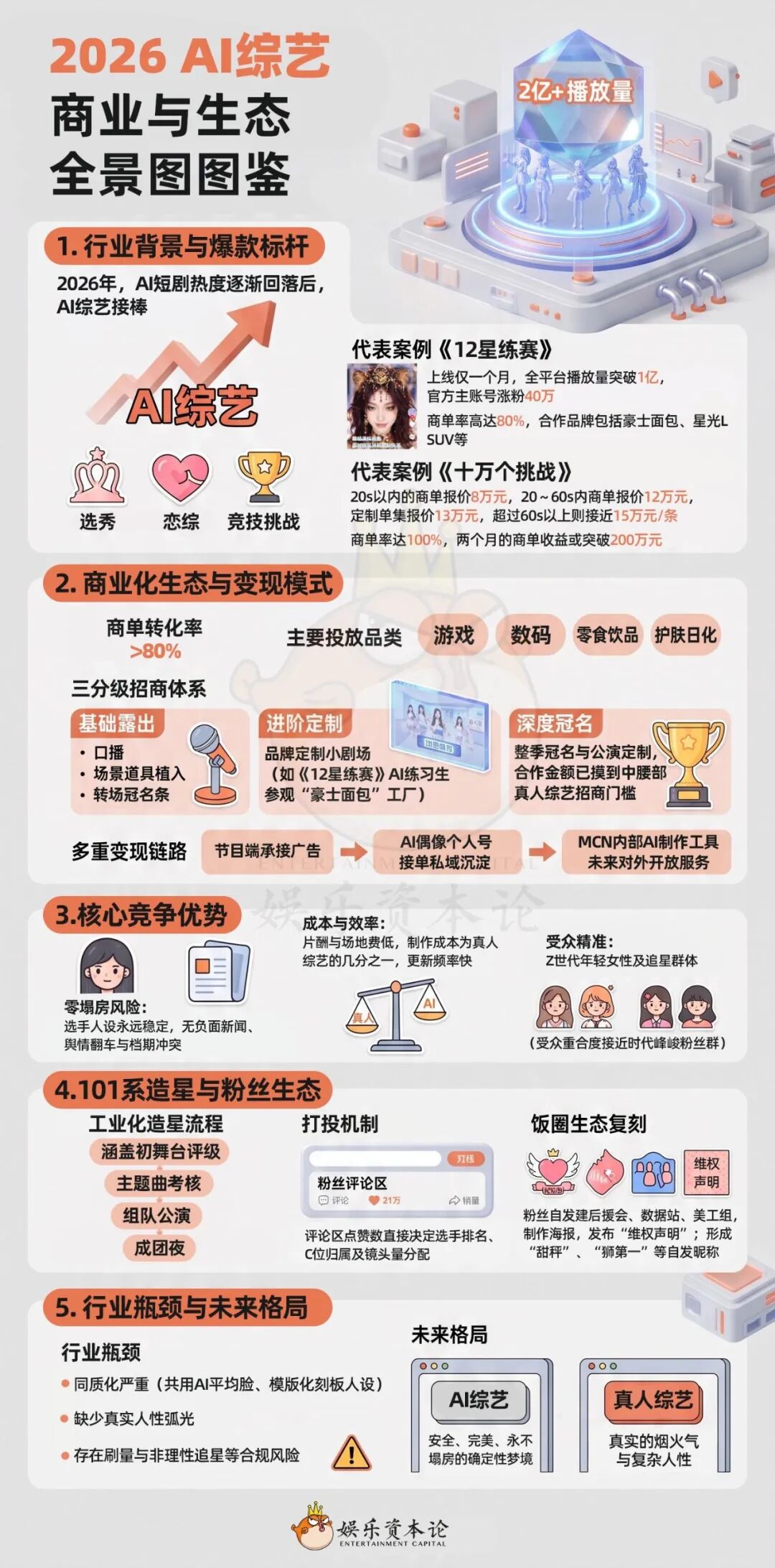
For 100,000 Challenges, a competitive variety show with slight "superpower elements", the quotation for a commercial order within 20 seconds reaches 80,000 yuan, the quotation for a 20-60 second commercial order reaches 120,000 yuan, the quotation for a customized single episode is 130,000 yuan, and the quotation for a video over 60 seconds is close to 150,000 yuan per piece.
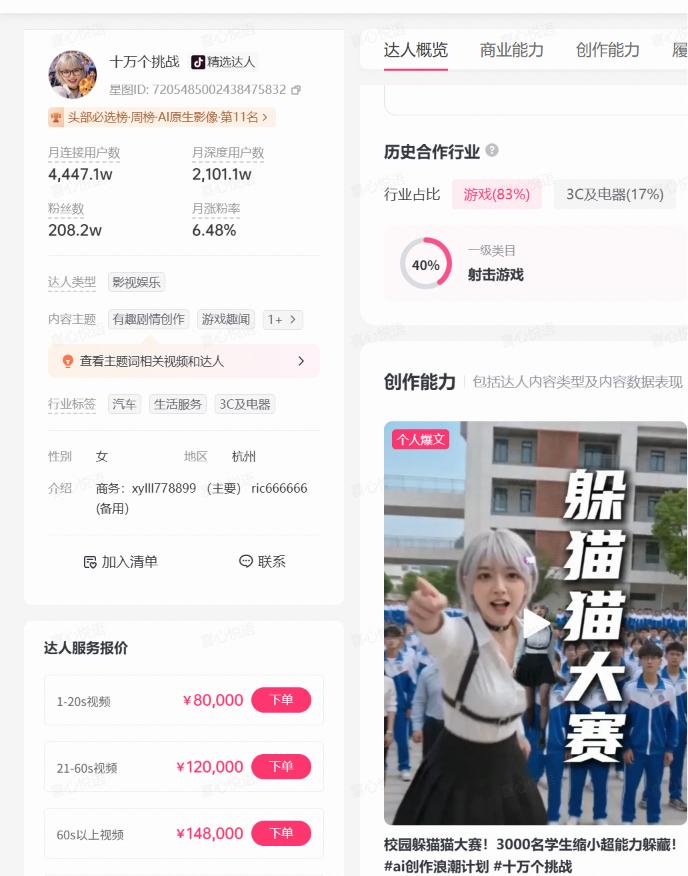
Since May 25, 100,000 Challenges has released a total of 17 videos, with a commercial order rate of 100%. Most of them are placements over 20 seconds and brand customized content. Based on this estimate, its commercial revenue in two months may exceed 2 million yuan.
Launched by Malt Media, 12 Constellation Trainee Contest has been online for only one month. Up to now, the topic playback volume has exceeded 200 million, the official main account has gained 400,000 new followers, and the signed commercial orders include brands such as Haoshi Bread and Starlight L SUV. The single dance content of the popular Libra contestant has received 110,000 likes, and the number of followers on its personal account has exceeded 110,000. What is more noteworthy is that all AI contestants have fan clubs, data stations, and art groups spontaneously established by netizens...
After the popularity of AI short dramas gradually cools down, AI variety shows have become the new hot spot. The three categories of talent shows, romance variety shows, and competitive challenge shows have taken shape rapidly. Leading MCNs such as Malt Media have taken the lead in running through the complete link from content production to commercial monetization.
From the curious "fun fruit content" to content imitating various variety show forms, and then to a self-contained fan ecosystem, AI variety shows have begun to combine the commercial gameplay of short videos, as well as the advertising presentation and content logic of real-person variety shows, forming the prototype of "variety show + idol operation" on the AI track.
To this end, Yule Ziben Lun (Entertainment Capital) talked with Malt Media, the leading MCN in the current AI variety show track, trying to explore: What exactly are AI variety shows selling? Will it impact real-person variety shows with solidified commercial gameplay and high costs?
Tomorrow, at the "Intelligently Create AI Artists, Reconstruct New Entertainment" AI Artist and Music Ecosystem Innovation Salon, Yule Ziben Lun will also conduct in-depth analysis with front-line industry practitioners: How AI artists are created, operated, and moved towards commercialization in new content.
Registration for the full-link salon event of AI artists and music is open. On the afternoon of August 6, 2026, at Lumicang, Beijing, Yule Ziben Lun will continue to hold the "Intelligently Create AI Artists, Reconstruct New Entertainment: AI Artist and Music Ecosystem Innovation Salon". Seats are limited, scan the code to sign up now~
# This article has interviewed one relevant person, who is also the 253rd interviewee interviewed by "Yule Ziben Lun" in 2026
From oral placement to full-season naming, MCNs bring variety commercial gameplay into short videos
AI variety shows are developing faster than the industry expected.
The monetization of most AI content is still in the extensive stage of "trading traffic for patch ads". However, hit AI variety shows have first come up with a set of commercial gameplay that "looks like variety show placements":
The settlement with customers still follows the Xingtu and commercial order model, and the commercial order price is calculated according to the exposure duration and the influencer's quotation; but its exposure method is no longer a simple single-episode placement. From placement, patch ads to program naming, the cooperation forms are more diverse than those of ordinary short videos.
Fatal Heartbeat and 12 Constellation Trainee Contest under Malt Media are the earliest projects that have realized AI variety commercialization. The project leader told Yule Ziben Lun that starting from the first season of the romance variety show, the team set clear commercial principles: only a few fixed forms of cooperation are open, "We do not allow customers to modify the core script of the content."
This hierarchical placement system, in the view of Yule Ziben Lun, is like a lightweight replica of real-person variety show investment promotion.
The most basic is conventional exposure cooperation, including contestant oral broadcast, scene prop placement, transition naming bar, which is light in form and low in presence, will not interrupt the plot rhythm, and is also the most common cooperation mode at present.
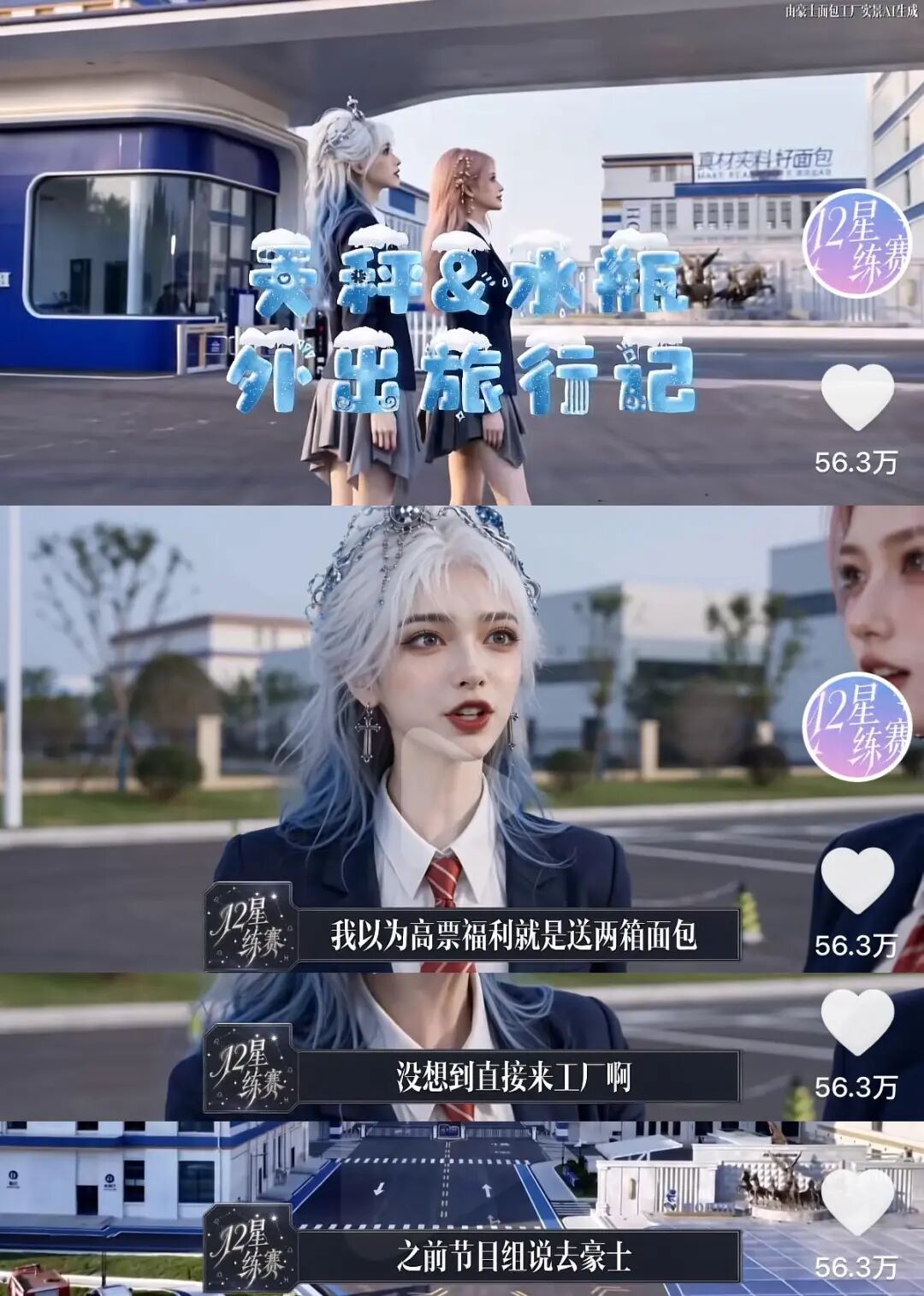
The advanced form is brand customized short dramas. The most typical case is the cooperation between 12 Constellation Trainee Contest and Haoshi Bread: the program team specially customized an independent plot, where AI trainees collectively "visit" the Haoshi Bread factory, and naturally bring out core selling points such as product technology and taste in the interactive scene.
This piece of content exists as an independent chapter, and immediately returns to the main talent show competition after playing, which not only gives the brand sufficient display space, but also minimizes the impact on the viewing experience, which is exactly the same as the brand customization link in real-person variety shows.
Malt Media said that more in-depth cooperation is currently in negotiation with multiple brands: many brands hope to achieve full-season naming and public performance customization. Leading talent show IPs have begun to undertake brand naming similar to real-person variety shows, where brands are bound to the whole season of programs, and obtain multiple rights such as stage background exposure, host's oral naming, and competition system theme linkage.
"When we first started this project, we didn't expect to make much money. Making the content a hit was the first priority." The project leader admitted that the current commercial performance exceeded the team's initial expectations.
In order to balance advertising and content, the normal single placement is controlled at 30 to 40 seconds. Even if customers require more exposure, the team will stick to the content bottom line and will not allow advertisements to take up too much space in the main content.
The extremely high commercial order conversion rate confirms the monetization potential of this track. At present, the commercial order penetration rate of leading AI variety shows generally reaches 80%. Games, digital products, snacks and beverages are the most concentrated categories of investment.
21 out of the 26 episodes of the competitive account 100,000 Challenges have brand cooperation. Since May 25, all its short videos have received commercial orders.
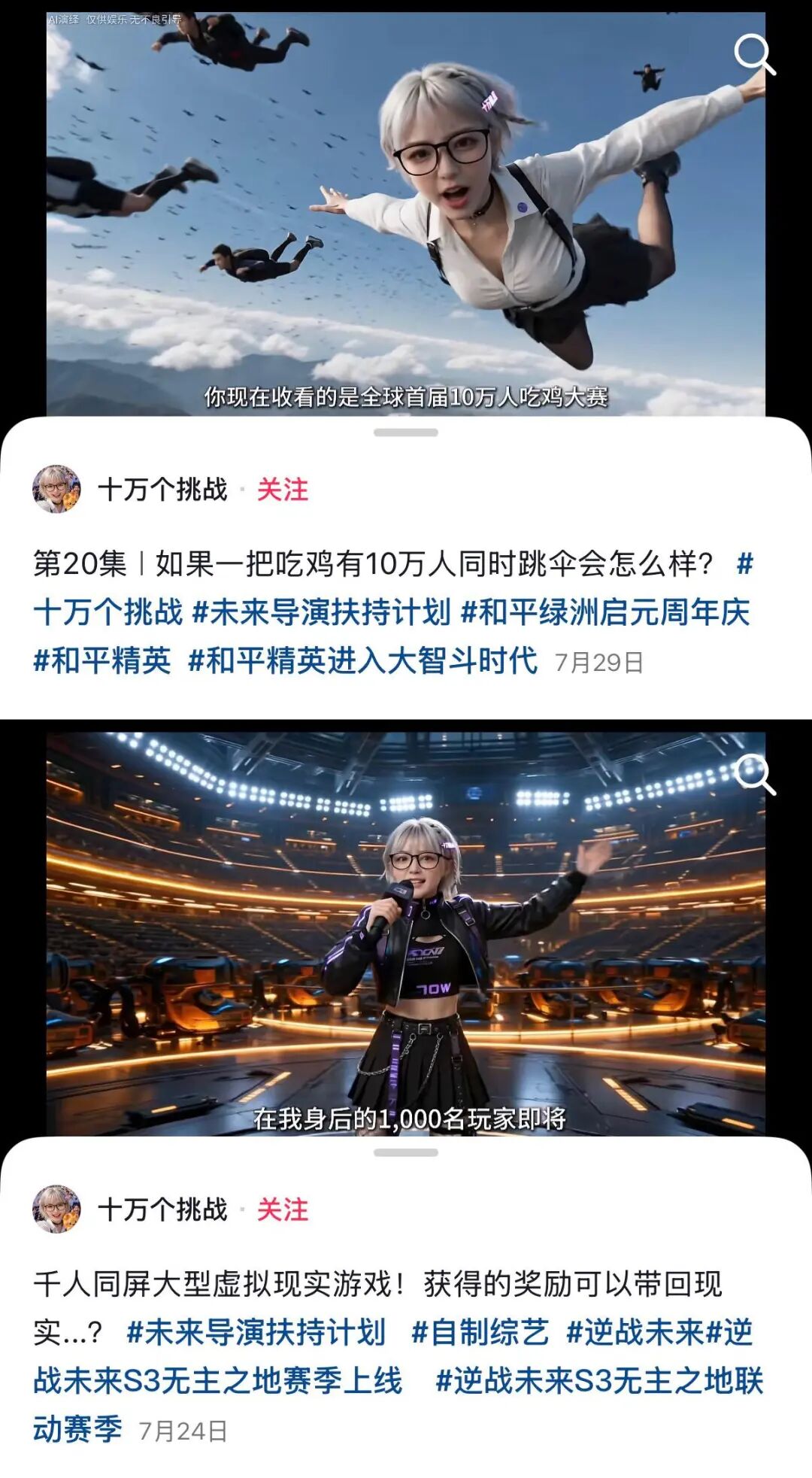
The price of this kind of commercial order is not low. According to market and customer needs, the quotation of 100,000 Challenges ranges from 80,000 yuan to 150,000 yuan. Most commercial orders are placements over 20 seconds or customized commercial orders. If estimated according to the quotation, its two-month commercial revenue may exceed 2 million yuan, which is enough to cover an industry sponsorship of a real-person variety show at present.
Take the recent The Fired Girl as an example, its protagonist "Fang Taozi" has a quotation of 168,000 yuan for 1-20 second videos, 208,000 yuan for 21-60 second videos, and 258,000 yuan for videos over 60 seconds.
The cost advantage is also significant. There is no need to pay high artist remuneration, no need to rent real scenes, and no need to form a huge offline filming team. The AI generation mode compresses the production cost to a fraction of that of real-person variety shows, while the update frequency can be faster.
More importantly, the audience is accurate. The core audience of AI variety shows is mainly young women of Generation Z and star-chasing groups, which highly overlaps with the target groups of most FMCG and beauty brands, leading to higher conversion efficiency of investment.
For MCNs, the value of AI variety shows is far more than the revenue of a single commercial order.
This is a business of "one-time production, multi-round monetization". The program side undertakes large brand budgets through placement and naming, and high-popularity individual contestants can also independently undertake commercial orders, converting the public domain traffic of the program into the private domain value of IP.
The longer-term layout is on the tool side. The AI production tools within Malt Media currently mainly serve its own content, and it plans to officially open to the public in the future. Extending from a content producer to a technical service provider, this AI variety show layout may become a new growth point for MCNs.
Talent show, voting for idols, personal account debut: The "cultivation-style" birth of AI idols
Before AI talent shows, virtual idols were either high-precision digital figures created with huge sums of money, or scattered images that became popular through secondary creation, and there was never a replicable popular breakout path. The AI talent show completely transfers the "101-style star-making" logic verified by the real-person entertainment market to the virtual world.
12 Constellation Trainee Contest follows the existing gameplay of traditional talent shows.
From the announcement of contestants, initial stage rating and grouping, to the theme song assessment, team public performance confrontation, and finally the final group formation night, every node follows the narrative rhythm of real-person talent shows, giving fans a full sense of cultivation.
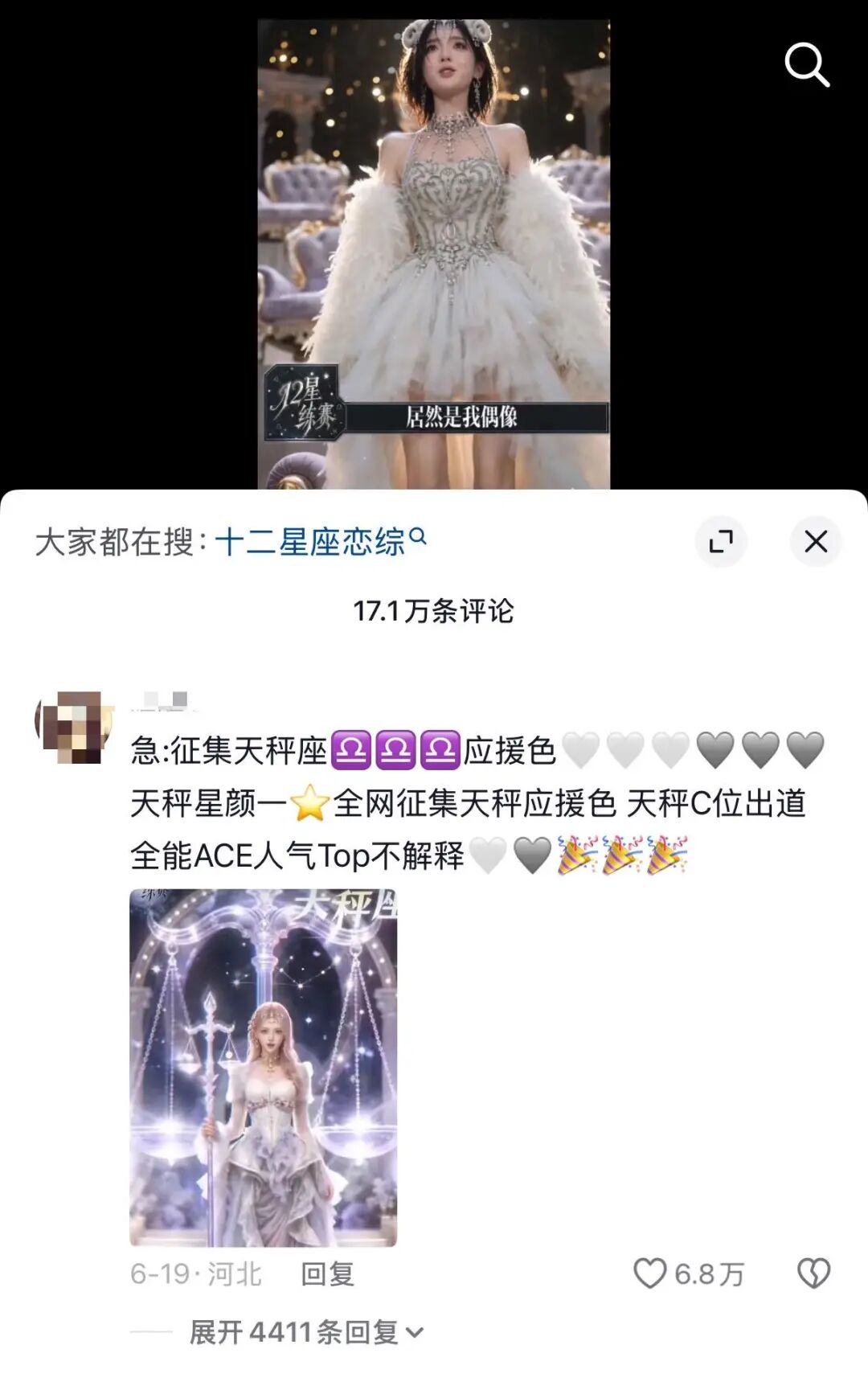
The core interactive mechanism imitates the fan voting system. The number of likes in the comment section directly determines the ranking of contestants, the center position of the next stage, and even the amount of screen time. The official will adjust the content allocation of the next episode according to the voting results of each round; the main character growth line is set in advance, but fans' votes decide who gets more close-ups and whose story line is arranged earlier.
"Just like real-person talent shows, the center position voted by fans will be given enough screen time, and the grouping and stage voted by fans will also be designed with special content to present." said the person in charge of the project team.
The program originally planned to end in 12 episodes, but due to content expansion and continuous fan feedback, it was finally extended to more than 20 episodes. Similar to the logic of real-person variety shows that are filmed while being broadcast, AI variety shows also dynamically adjust the content rhythm according to user feedback.
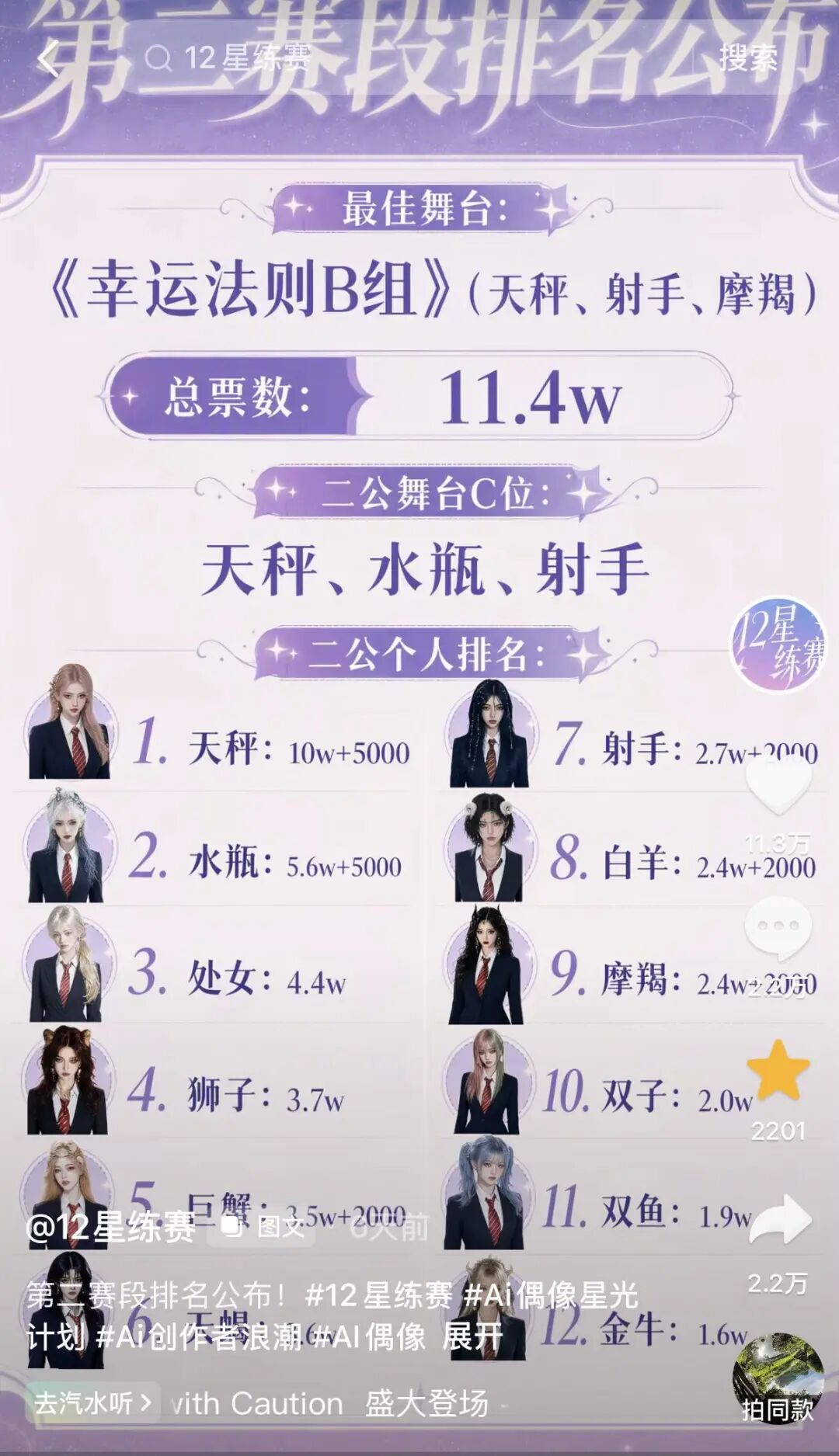
Persona setting is the first and most critical step in star-making.
12 constellations correspond to 12 differentiated personalities, which need to be balanced repeatedly in the image design stage: no one should be too prominent to overshadow others, and no one should be too featureless to be memorable. "The hardest part is to make everyone look good and conform to everyone's inherent impression of this constellation."
Similar to the persona logic of voice chat rooms, the personas of AI contestants also pay attention to being "broad and vague". They will not be given too specific identity backgrounds, only the core personality traits corresponding to the constellation are retained, and the rest of the space is left for fans to imagine and fill in by themselves.
This kind of blank space just provides the soil for the growth of fan circles.
Malt Media only officially operates the main account and 12 individual accounts for contestants. All fan clubs, data stations, and art groups are spontaneously established by fans. As soon as the pilot episode was launched, some fans set up data statistics accounts, updating the number of new followers, likes, and screen time proportion of each contestant every day, with more detailed statistical dimensions than the official ones.
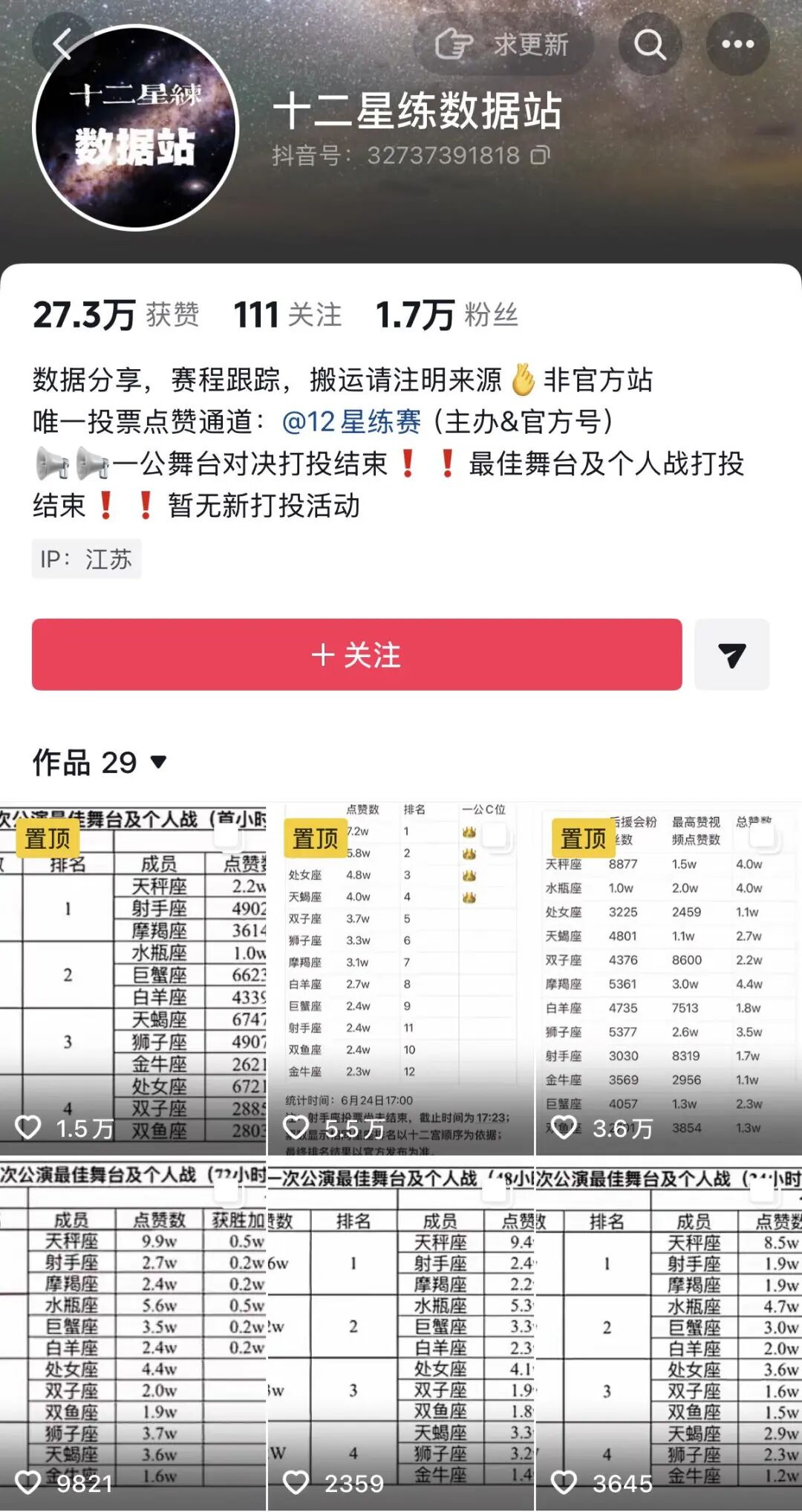
"The screen time they counted is different from that calculated by the director themselves, which is very serious." The project leader found it unexpected but reasonable. Fans' engagement far exceeded the team's expectations. All the gameplay in real-person fan circles, such as comment moderation, ticket exchange, and issuing rights protection statements for "their own idols", are perfectly replicated here.
The user profile also confirms this point. Judging from the comment section, the core audience of 12 Constellation Trainee Contest has a high overlap with the fans of talent shows and artists under Times Fengjun, which is essentially the same group of star-chasing people.
Data is the most intuitive proof. The most popular Libra has received more than 100,000 likes on a single voting content, the number of