The bulk snack retail industry has stepped into an era of refined and intensive development.
China's consumer market in 2026 is undergoing a profound structural transformation. According to data from the National Bureau of Statistics, the total retail sales of consumer goods in the first half of 2026 reached 24.8722 trillion yuan, representing a year-on-year increase of 1.3%.
The overall consumer market has entered a new normal of medium and low-speed growth. Meanwhile, the retail sales of consumer goods in rural areas increased by 2.5% year-on-year, 1.3 percentage points higher than that in urban areas, and the sinking market is becoming a key engine driving consumption growth.
In this round of consumption upgrading in the sinking market, the bulk snack industry is undoubtedly one of the most representative business formats.
According to the official announcement of Mingmang Mangmang, on July 21, 2026, the number of signed stores of Mingmang Mangmang exceeded 30,000, making it the fourth enterprise in China's retail industry to own more than 30,000 stores.
Looking back at its development track, Mingmang Mangmang was formed by the merger of Snacks Busy and Zhao Yiming at the end of 2023, with 6,585 stores at that time, achieving a nearly 5-fold growth in less than three years.
At the same time, financial report data shows that Wanchen Group (with its brand Haoxianglai) achieved revenue of 166.34 billion yuan in the first quarter of 2026, a year-on-year increase of 53.73%, and the net profit attributable to shareholders increased by 193.12% year-on-year.
The rapid expansion and profit release of the two oligarchs constitute the most eye-catching landscape of the current bulk snack industry.
However, does 30,000 stores mean that the industry is approaching the growth ceiling? How to resolve the same-store pressure brought by store densification? Is the path to profit margin improvement clear? "Zhuang Shuai Retail E-Commerce Channel" hopes to sort out the key to the future trend of the bulk snack industry starting from these questions.
Systematic Reconstruction of Supply Chain
First, look at the fundamental of the industry. According to data from CIC and the China Industry Research Institute, the market size of China's snacks and ready-to-drink soft drinks reached 2.5 trillion yuan in 2025, while the share of the bulk snack channel was only 8.7%.
In other words, even in this highly penetrated track, there is still broad space for channel substitution.
The research report of Huatai Securities conducted a comprehensive measurement based on three methods: channel penetration, volume-price split, and comparable business formats. The results show that the number of stores in the industry is expected to reach 90,000 to 109,000 by 2029, and the long-term space may exceed 120,000. At present, the total number of stores in the industry is about 60,000, which is still far from the ceiling. It is completely predictable that the two leading players will increase their stores from about 20,000 each to 40,000 to 50,000.
Then look at the industry competition pattern. In 2025, the combined GMV market share of Mingmang Mangmang and Wanchen Group exceeded 75%. In June 2026, Mingmang Mangmang and Wanchen Group simultaneously released an anti-involution initiative, marking the basic end of the price war era, and the industry has officially shifted from extensive expansion to refined in-depth operation.
For small and medium-sized brands, this means that incremental resources have been highly concentrated in the leading players, and the store expansion of small and medium-sized brands has basically stagnated.
Zhuang Shuai, founder of Bailian Consulting and expert in the retail e-commerce industry, believes that the formation of the duopoly pattern is not accidental. After all, snack categories have a high degree of standardization, fast turnover and low loss, and the scale effect can be maximized in this industry. The more stores there are, the larger the procurement scale, the lower the procurement cost, the more competitive the terminal price, and the more willing franchisees are to open stores. This is a self-reinforcing positive cycle.
The essence of bulk snack retail is not simply a snack category killer, but a systematic supply chain reconstruction carried out on mature categories from the profit model and operation model. It cuts off the multi-level distribution links, and compresses costs through large-scale procurement and digital management.
According to the calculation of Huatai Securities' research report, the terminal markup rate of the bulk snack channel is below 50%, which is much lower than the 60% to 90% level of traditional channels. As the number of industry stores increases from 60,000 to 100,000, the further expansion of procurement scale will release deeper cost space.
The Dilemma of Store Efficiency and the Way to Break Through
The same-store pressure brought by store densification is an unavoidable problem for any franchise chain business format. However, since the second half of 2025, the situation has been changing.
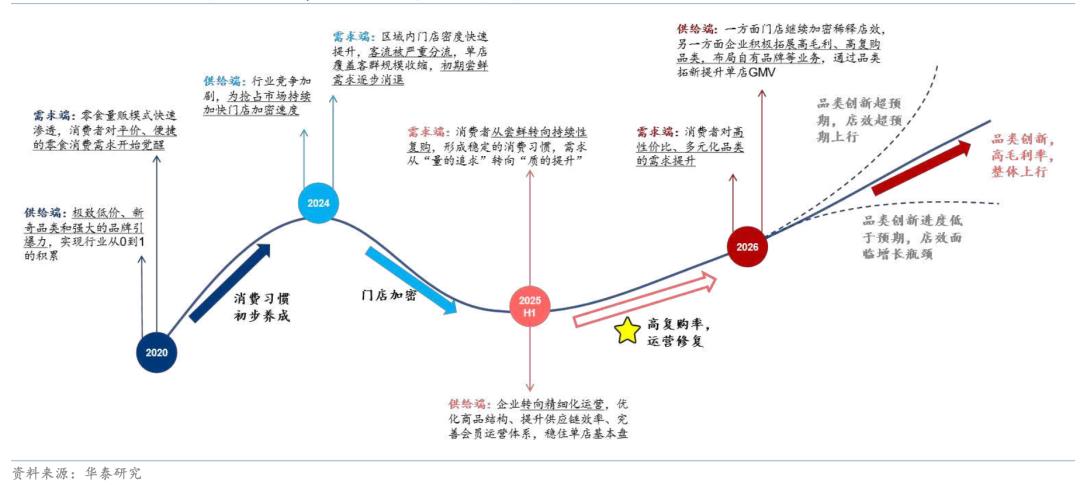
In 2025, the average daily order volume of Mingmang Mangmang's single store increased by 6.4% year-on-year to 481 orders; that of Wanchen Group increased by 4.3% year-on-year to 419 orders.
On the one hand, the store structure is being optimized.
Some non-high-quality stores opened during the subsidy war in 2024 accelerated relocation and clearance as the installment subsidies ended one after another in the second half of 2025, making the overall outlet layout more reasonable.
At the same time, the cultivation of consumption habits has also entered a harvest period. In newly laid out areas such as the north and southwest of China, store densification has not simply diluted passenger flow, but instead promoted the daily consumption of bulk snacks. Consumers have gradually shifted from initial trial purchase to stable repurchase.
This transformation from trial purchase to rigid demand is the core competitiveness of the bulk snack business format that distinguishes it from other retail formats.
On the other hand, category expansion. Since 2025, leading brands have begun to explore new categories such as trendy toys, short-shelf-life baked goods, and frozen products, promoting the evolution of stores in the direction of "snacks + N".
Wanchen Group fully upgraded its Haoxianglai brand to a snack paradise at the end of 2025, implementing the "snacks + N" strategy; Mingmang Mangmang systematically promotes hot food, including instant consumer products such as grilled sausages and egg tarts, as well as the construction of cold chain capabilities, aiming to increase the sales proportion of cold chain food from the current 5% to 6% to 10%.
The core logic of category expansion is to maintain the main line of happy consumption, and rely on the core customer groups of young people, women and students to drive the sales of new categories.
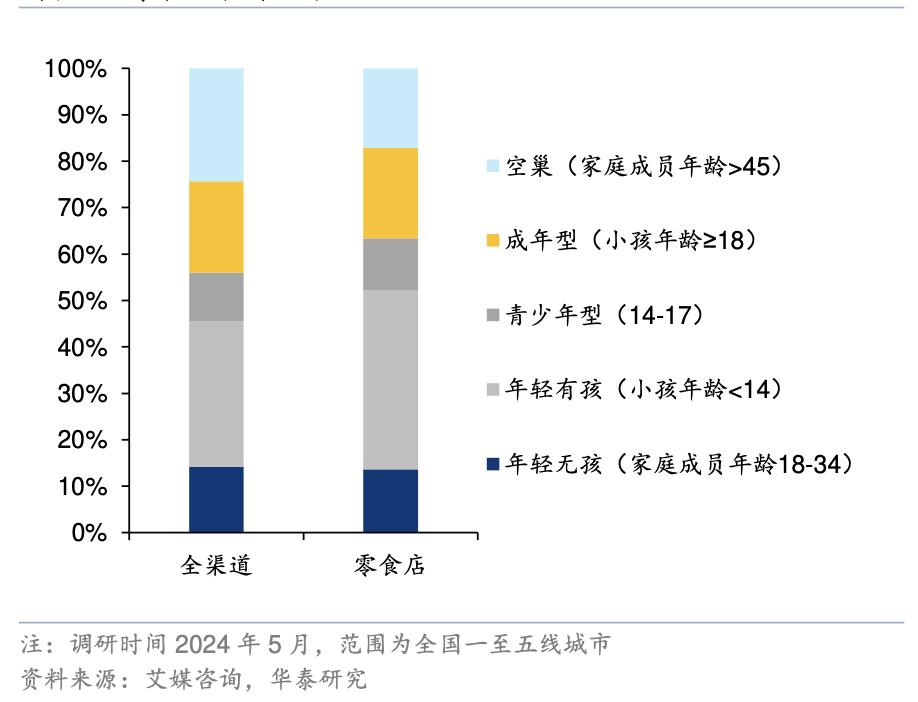
Expanding categories is not blindly adding SKUs, but accurately reusing existing passenger flow, taking the high-frequency low-margin snack base as the drainage grip to drive the joint purchase of new emotional products such as trendy toys, food toys and hot food.
This evolution, in essence, offsets the impact of diluted passenger flow by increasing customer unit price and store visit frequency under the background of store densification.
At the same time, the refined potential tapping at the operation end is also advancing simultaneously.
Mingmang Mangmang has increased investment in digital construction, built intelligent scheduling and AI store inspection systems, and implemented AI visual cash register scales; Wanchen Group has integrated scattered systems such as cash register, order placement, warehousing and finance to build a unified middle platform.
These seemingly trivial operation optimizations produce considerable efficiency improvements at the scale of 10,000 stores. The inventory turnover days of Mingmang Mangmang are only 12.6 days, and that of Wanchen Group is 18.0 days, which is far better than the level of about 50 days of traditional supermarkets.
Improving Profit Margins Through Upward and Internal Efforts
If store efficiency restoration is related to the short-term confidence of the industry, the path of profit margin improvement determines the long-term valuation ceiling of the industry.
At present, the net profit margin of leading bulk snack enterprises has touched the low single-digit range. According to the 2025 annual performance announcement of Mingmang Mangmang, the company's adjusted net profit margin is 4.1%. According to the prospectus and performance announcement of Wanchen Group, the net profit margin of its bulk snack business is 5.0%.
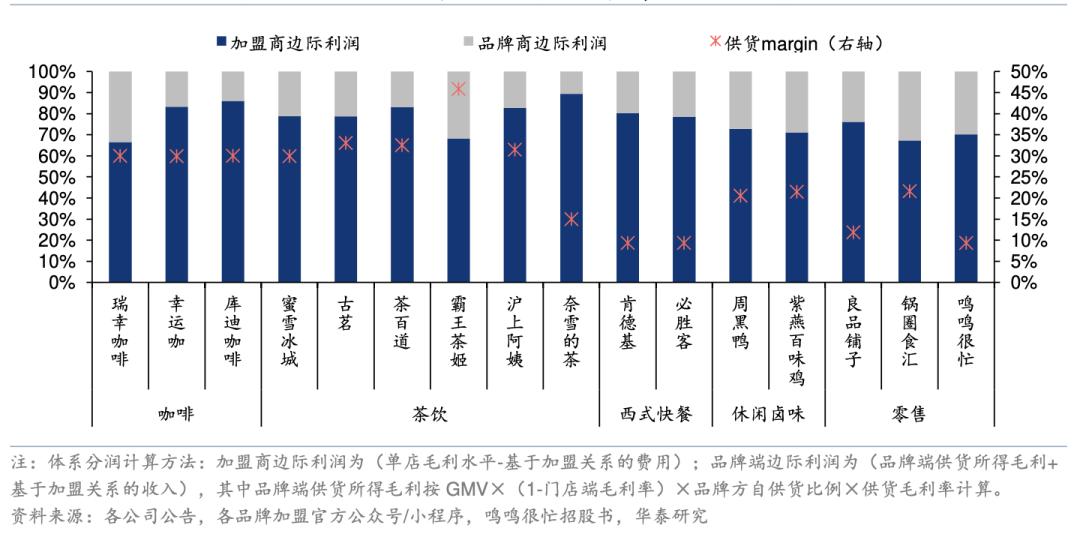
Compared with leading overseas discount retail players, there is still a gap in gross profit margin. Costco's gross profit margin in 2025 was about 12.8%, and Aldi's was between 22% and 24%, while according to Mingmang Mangmang's 2025 annual performance announcement, its gross profit margin was only 9.8%. The gap in between is exactly the space for future profit improvement.
In Zhuang Shuai's view, the profit margin improvement of bulk snack retail follows the two-wheel drive logic of upward efforts and internal efforts.
Upward efforts refer to the structural optimization of the supply chain side.
Different from the long account period and high credit sales model of traditional retail, bulk snack retail takes cash on delivery and short account period as the core procurement principle, which fundamentally eliminates the risk of upstream payment recovery and significantly improves the cash flow of suppliers.
This efficient payment collection mechanism, combined with the volume advantage brought by narrow categories with wide SKUs, makes upstream suppliers willing to accept lower markup rates. This is not simple exploitation, but because the channel side undertakes the risks of logistics, marketing and inventory, and the upstream obtains more certain orders and faster capital turnover.
The continuous release of scale effect is another key variable. By the end of 2025, Mingmang Mangmang has laid out 56 modern warehouses across the country to ensure that goods are distributed within 24 hours within a 300-kilometer radius.
With the continuous increase of regional store density, the optimization of warehouse-store ratio will bring higher full load rate of single vehicle and diluted transportation cost of single store. Combined with the reuse of intelligent logistics and cold chain capabilities, there is still considerable room for compression of back-office performance costs.
The increase in the proportion of private labels and customized products is another grip for gross profit margin expansion. As of September 2025, the proportion of customized SKUs under Mingmang Mangmang has reached 34%; multiple industry research reports estimate that Wanchen Group's private label sales accounted for 15% in the first three quarters of 2025, and the gross profit margin of private label/customized products is significantly higher than that of general products.
Domestic leading bulk snack players have just started on the road of private labels.
Internal efforts refer to the fine-tuning of the profit sharing structure and the mining of member value.
At present, the essence of the profit of the bulk snack channel is to earn the supply chain price difference, and the charge for franchisees is relatively restrained, mainly one-time franchise fee and extremely low technical service fee. However, with the continuous deepening of the headquarters' digital middle platform and refined empowerment, the headquarters has essentially undertaken part of the management costs that originally belonged to the stores.
Referring to the practices of mature chain business formats, chain hotels usually charge a management fee of 4% to 8% of the turnover, and leading players will also have the ability to increase profits by collecting stepped management fees in the future.
The upgrade of the membership system is another path, evolving from basic point redemption to paid membership system, referring to Costco's membership fee model to monetize high-quality traffic.
Domestic leading bulk snack players still have structural room for improvement in gross profit margin, and the upward profitability driven by scale effect will be the medium and long-term investment main line.
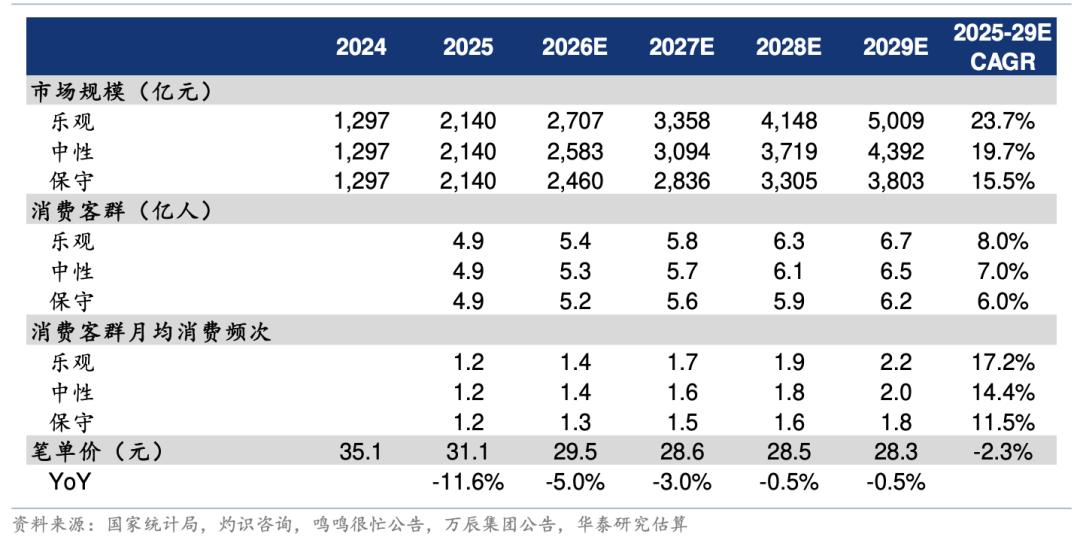
The core of the hard discount business format is to maintain the cost-effective mindset for a long time, and there is extremely limited space for direct price increase on the retail side.
The optimization of profit margin must be promoted simultaneously upward and internally, deepen supply chain integration upward, optimize profit sharing mechanism and operation efficiency internally, and tap profit space from the inside of the industrial chain, rather than simply pass the cost on to consumers.
Conclusion
The bulk snack industry is at a critical stage of upgrading. It is clear that from 60,000 stores to 100,000 stores, Mingmang Mangmang and Wanchen Group will continue to integrate the market with the three core advantages of scale, supply chain and operation.
The trend of store efficiency restoration is clear, and the path to profit margin improvement is becoming increasingly clear. However, this road is full of challenges, including the rise of instant retail, cross-border competition from hard discount supermarkets, and the diversion of new business formats such as fresh snacks, all of which are testing the depth of the moat of the bulk snack industry.
The advantage of bulk snack retail lies in the combination of cost-effectiveness, convenience and experience. How long this advantage can be maintained depends on whether the leading players can continuously maximize efficiency, expand category boundaries more widely, and polish the single-store model more finely.
In the era of stock competition, whoever has stronger internal strength can hold the position of industrial chain leader.
In the final analysis, the second half of the game is a competition of basic skills.
This article is from the WeChat official account "Zhuang Shuai Retail E-Commerce Channel", written by the Zhuang Shuai Research Team, and published with authorization by 36Kr.