Sales in Europe and the United States have halved, while China has achieved explosive growth against the trend, and the 50-yuan "little sweet drink" has become a runaway top hit among young people.
In daily life, Lily often teases herself as a "wine enthusiast", but she is not fond of Baijiu or beer, and prefers to pour a few glasses of "sweet wine" when the night is quiet, sipping it slowly by herself while watching TV series.
A few years ago, "sweet wine" was a very general term that covered all kinds of liqueurs, fruit wines and pre-mixed cocktails. In recent years, the most popular "king of sweet wine" has been clearly determined — Moscato.
It is a white wine brewed from Muscat grapes, with an alcohol content of about 5% and usually a slight fizz, featuring a sweet and refreshing flavor.
"Moscato has fruity aromatic sweetness, low alcohol content and affordable price, so most consumers can afford it and easily get used to its taste." Pi, a senior practitioner in the wine industry, introduced to Tianxia Wangshang. He said Moscato is the "evergreen" category in his store, and 30% to 40% of the top-selling product links are Moscato.
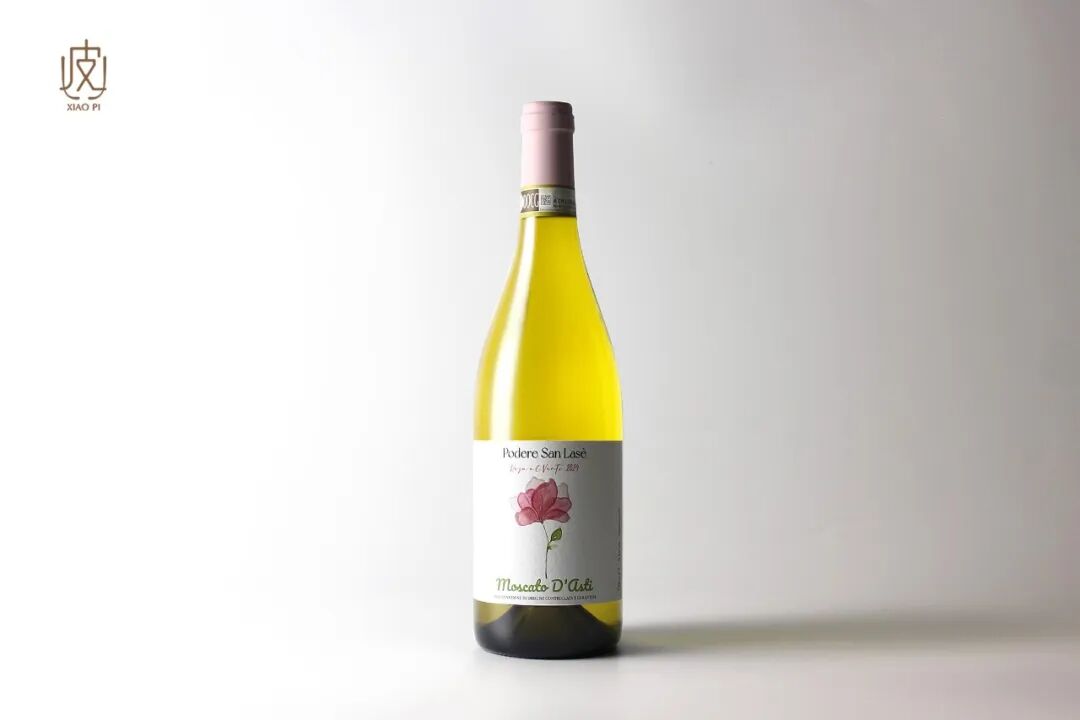
In the big family of wine, Moscato is regarded as an entry-level product, with an average price mostly ranging from 50 yuan to 200 yuan. The person in charge of the wine industry of Taobao & Tmall said that Moscato is the core wine category driving the growth of sweet wine, which achieved double-digit year-on-year growth in 2025.
On the consumer side, China, with its strong market vitality, has become an important growth pole for Moscato. Data shows that in 2025, the total sales volume of Moscato d'Asti (produced in Asti, Italy) was about 25 million bottles, of which the export volume to China surged by 100%, making it one of the very few wine categories that achieved rapid growth against the overall market trend.
As the representative of the "sweet wine" category, the boom driven by Moscato has further expanded the consumption landscape of the "slight intoxication economy". The entry of female consumers and the emergence of more drinking scenarios are injecting new momentum into the ancient wine industry.
The Victory of Entry-level Products
"'Sweet wine' is very similar to milk tea and fruit juice." That's Pi's assertion.
In the wine industry, Pi is a well-known professional with high reputation, who calls himself "the guardian of the wine glass" and has nearly 500,000 fans across all online platforms. He graduated from the University of Bordeaux in France and has been engaged in the wine industry since 2007. In 2018, Pi opened his own Taobao store "Wine Lover Pi", selecting wines from high-quality domestic wineries and selling them in the form of a collection store.
In 2022, his second store "Little Pi Wine" was launched, focusing on the sales of foreign wines. At present, the two stores are of similar scale, with a total annual sales of tens of millions of yuan on Tmall.
In the "Little Pi Wine" store, Moscato is one of the most outstanding sales champions.
Pi introduced that from 2014 to 2015, Moscato has stood out in the "sweet wine" concept. Since the opening of "Little Pi Wine", the sales of Moscato have almost grown in step with the store, with an annual growth rate of 100% to 200%. Among the top-selling product links, 30% to 40% are Moscato.
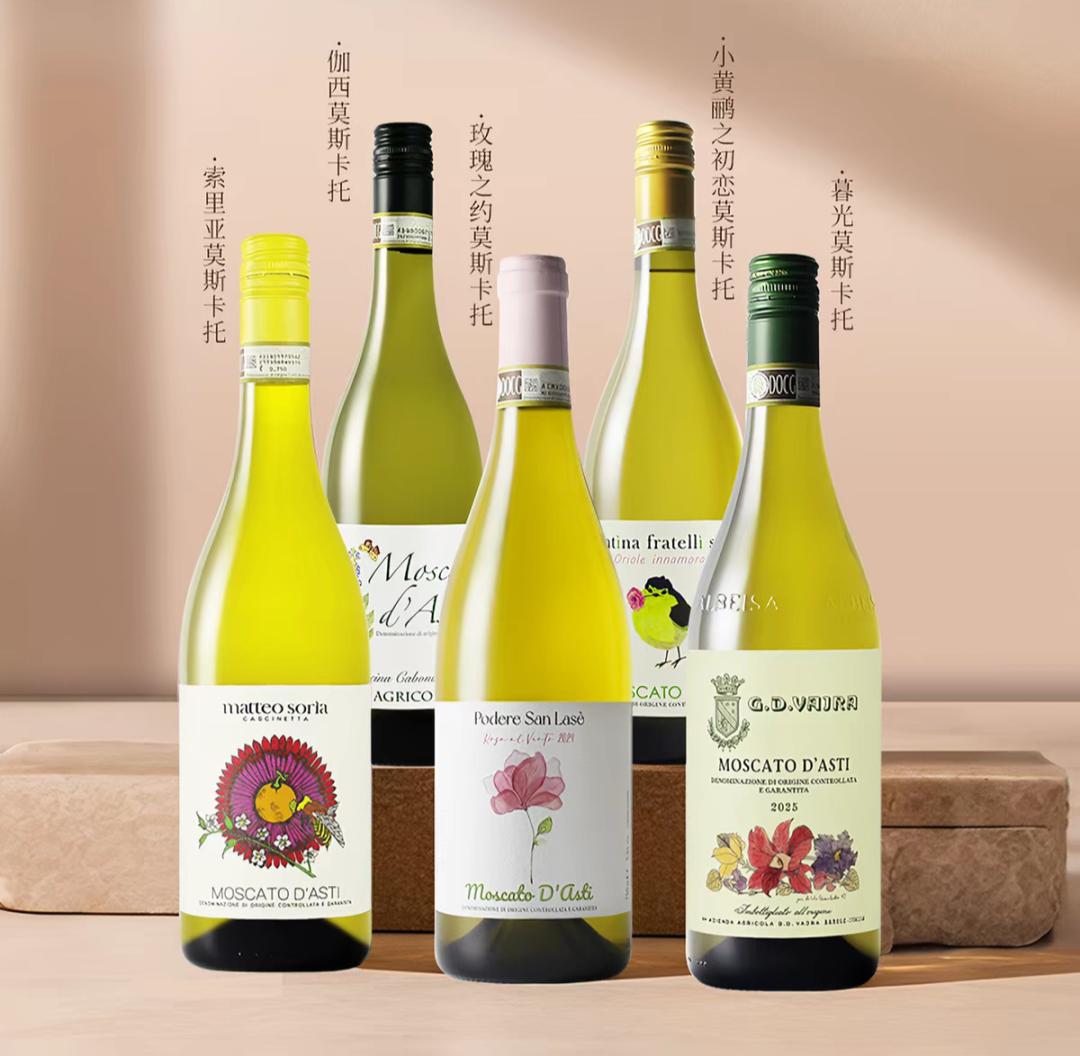
Moscato products on sale in the "Little Pi Wine" store
Flavor is of course the most direct reason. Pi said that Moscato is a type of sweet wine with rich fruity and floral aromas. Unlike the cream-like sweetness that easily makes people feel greasy, it has slight fizz and low alcohol content, which makes its taste acceptable to most people.
In addition, pricing is also an important factor. On Taobao and Tmall, the price of Moscato is mostly between 50 yuan and 200 yuan, with a low threshold for new consumers to try. "For about 100 yuan, you can basically get a very good bottle of wine," Pi said.
The low price is related to the brewing process, raw material type and industrial pattern.
In Europe, Moscato does not need to be aged in oak barrels, with a short production cycle. The Muscat grape also has loose survival requirements, which makes Moscato one of the most common entry-level wines in the local area. Consumers regard it as "a relaxed, casual, non-headache entry-level wine that you don't need to taste carefully".
At present, the main producing area of Moscato is Asti, Italy, where there are thousands of growers and hundreds of bottlers, including well-known wineries such as Vietti and Soria, with extremely fierce competition. In addition, France, Australia and other countries are also producing areas of Moscato.
Compared with the complex structure and mineral flavor of high-end wine, this kind of cheap and casual sweet wine, to a large extent, meets the Chinese consumers' demand for "simple slight intoxication".
The Increasingly Important Female Group
Traditional high-end wine is not popular among young Chinese consumers.
The dry red and dry white wines that the previous generation of consumers often drink are expensive, with high tasting thresholds, and their drinking scenarios are mostly limited to business banquets, bearing the imprint of "dining table culture". In addition, some counterfeit foreign brands have flowed into the market, leaving young people a negative impression of sour taste, low quality and high price.
This also creates an inherent short board for the development of the "sweet wine" category in China's wine industry: on the one hand, it takes 5 to 10 years for grapes to grow from planting to brewing, and once domestic wineries focus on dry wine, it is not easy for them to switch to new varieties. On the other hand, the scale of Chinese wineries is generally small, with a low degree of large-scale production, so the Moscato they produce is difficult to be competitive in price.

Up to now, dry wine is still the mainstream category in the wine industry. But beyond the existing market structure, sweet wine represented by Moscato is breaking through the market among new consumer groups and new scenarios.
Chang Xiaoyu, the person in charge of the wine industry of Taobao & Tmall, introduced that in 2025, the Moscato category achieved double-digit year-on-year growth on Tmall. This is attributed to the gene of young consumer groups on Tmall. On the other hand, brands are also paying more and more attention to the communication forms with consumers, catering to user preferences in product design, content interaction and other aspects to drive category growth.
Among them, the entry of female users is a major variable in China's wine industry.
According to Zhang Zeyuan, General Manager of the Wine Industry of Taotian Group, in 2025, there were about 25 million female wine consumers on the Taotian platform, accounting for 50% of the total. In the wine category, female consumption accounts for 58%. The female group is growing into the backbone of the wine market with absolute growth momentum.
Chang Xiaoyu also found that in the Moscato niche track, young female consumers contributed a large number of transactions. Pi's observation further confirms this point: in the "Little Pi Wine" store, 70% to 80% of Moscato's users are women, especially young women under 30 years old.
Lightweight drinking scenarios such as drinking at home and gathering with friends have greatly expanded the consumption boundary of wine. Some practitioners mentioned that the penetration of Moscato in low-tier cities is far higher than that of traditional wine, "Moscato users can be found in cities from tier 1 to tier 5".
The Future of Chinese Wine
In Europe, America and other regions, wine is more likely to be regarded as an "old-fashioned" drink.
Pi analyzed that this is because young people in Europe and America live with their parents, and are deeply influenced by the drinking habits of the previous generation, which leads to "intergenerational aversion". This is exactly the same as the situation that young Chinese people are not keen on Baijiu.
In China, the new generation of consumers usually leave their parents early and live independently, so they have the opportunity to quickly develop preferences for different alcoholic drinks — of course including the "sweet wine" that is low in price and easy to drink.
Data released by the Asti DOCG Consortium shows that in 2025, the global wine consumption was under overall pressure. The sales volume of the Asti producing area in Europe and the United States decreased by 14% and 50% respectively, but the import volume of Moscato d'Asti in the Chinese market surged by 100% against the trend, reaching 2 million bottles. Asia has jumped to become the third largest export region of Moscato d'Asti.

In addition, China's new generation of consumers has a distinct feature: de-branding.
For overseas consumers and the previous generation of Chinese consumers, brand is one of the leading factors determining purchase: Penfolds, Lafite, Yellow Tail, Casillero del Diablo... Big brands come with "social aura", which is more suitable for scenarios such as gifting and banquets.
However, after experiencing the popularization of the Internet and the fierce competition in categories such as milk tea and coffee, young Chinese consumers have quickly completed the "disenchantment" of brands, and turned to trust the actual quality of products. This has created the soil for the existence of buyer stores such as Little Pi Wine, Wine Heart Pie and Mermaid Dog, and also gives niche emerging brands more opportunities to stand out.
"Chinese users have the lowest loyalty to wine brands in the world," Pi said. "This is a good thing, which can make the development of wine more mature and diverse."
Compared with the mature supply of foreign wineries, the production of Moscato in China is still in its initial stage. At present, the Oriental Rosé wine under Great Wall, the semi-sweet white wine "Long Tail Cat" under Changyu, etc., although they are all brewed from Muscat grapes, are not the "Moscato" (sweet sparkling white wine) in the narrow sense.
From taste enlightenment and interest-driven consumption to consumption growth and industrial transformation, it is a slow and overall process. Although there are inevitably twists and turns in this process, most practitioners still believe that wine will definitely occupy a place in China's alcoholic beverage consumption, and a huge potential emerging market is opening up.
This article is from the WeChat official account "Tianxia Wangshang" (ID: txws_txws), written by Zhu Zhicong, and authorized for release by 36Kr.