Guide to Avoiding Pitfalls for Chinese Humanoid Robots Expanding into Overseas Markets
In the first five months of this year, China exported a total of 10.377 million robots of various types, with the total export value approaching 20 billion yuan. The covered markets span more than 150 countries and regions around the world, and various types of robots including humanoid robots have become a landmark growth highlight of the overall foreign trade in the first half of the year.
However, the strong growth momentum suddenly encountered a minor hiccup after entering the second half of the year:
In July, a video of a "out-of-control Chinese-made robot attacking people" suddenly went viral on overseas social media. Although the truth soon came to light and exposed the marketing trap behind the video, the natural asymmetry in the spread speed of "rumors" and "rumor refutations" still led to more discussions on robot safety on the Internet, which was implicitly intertwined with factors such as the differences in acceptance and understanding of high-end technological products under the social and cultural atmosphere of different regions.
By the end of July, the US Federal Communications Commission included non-US-produced advanced robotic equipment in its updated "Regulated List". Given that this update has an obvious categorization governance feature of "product category + origin", the media are inclined to interpret it as a targeted escalation of technology and domestic robot product regulations against China.
Social culture, policies and regulations, coupled with the already fierce commercial competition around the landing details in work scenarios, have made the overseas expansion journey of domestic robots start to hit "minefields".
The re-emerging myth in a complex environment: how to demonstrate the "safety" of robots
In July, a so-called video of a robot "out of control and attacking people" suddenly spread overseas. A robot first hit the person next to it with a neat side kick, and then smoothly showed a set of "Bruce Lee-style" fighting stances to other people on the other side.
For a while, there were many concerns and related discussions about the robot's "out of control" and "safety" in the comments.
Fortunately, the viral incident came and went quickly. Although the uploader did not actively clarify the truth of the video at first, the following robot enthusiasts and media quickly found out the trick of the video: the robot model in the video is Unitree G1 produced by Unitree Robotics, but the robot runs a proprietary operating system developed by the Polish company MERA Robotics. The video was not shot in China as the uploader claimed, but was filmed locally by an Indonesian planning team as part of the plan to make the robot a popular IP on Indonesian social media.
The coherent "martial arts movements" shown by the robot in the video rely on complex inverse kinematics codes. From the perspective of motion control principles, it is by no means something that an "out-of-control" robot can achieve. MERA Robotics later also confirmed that the robot was in a controlled state at that time.
Even though the "marketing + controlled" attribute of the video was confirmed, the original video still generated a huge amount of traffic and comments, gaining more than 120 million views in total.
In fact, for robots, a product full of high-tech sense and future symbolic meaning, attacking and harming humans in an uncontrolled state has always been a common theme in "anti-tech utopia" sci-fi movies — from the classic IP Terminator to *I, Robot* which depicts the "robot rebellion" in 2035, with the help of the strong cultural influence of Hollywood movies, the idea that "out-of-control robots are not safe" has been implanted in the minds of many people with the spread of pop culture.

(*I, Robot* released in 2004 is a classic movie of the "robot rebellion" theme)
If the slow development of robot technology in the early years and the rare appearance of robots in daily scenarios made this "sense of threat" mostly stay on the distant movie screens, then the substantial progress of AI technology and robot body technology in recent years, as well as the accelerated popularization of usage scenarios, seem to suddenly make this possibility a real one.
For example, under the controversial marketing video, a highly interactive and representative comment asked: "Why set up the 'classic kung fu' mode in the first place?"

The doubt about the robot "knowing kung fu" in the comments reveals a sense of unease
As a relatively unique cultural symbol of Chinese trend, kung fu is more or less recognized and loved at home and abroad; in the past two years, the rapidly developing domestic humanoid robot industry has taken "kung fu performance" as an entry point to show the strong motion ability of its products from time to time, and related videos have often become popular at home and abroad.
The slight difference is that domestic audiences have gradually got used to the "kung fu demonstration" of robots through large media events such as the Spring Festival Gala, and the convenience brought by the mobile Internet era also makes Chinese people more likely to trust the positive and controllable side of technology; while overseas audiences often view the motion performance of robots in a way of pursuing visual wonders, once there is a suspected robot injury incident, it will better fit their curious psychology and concerns about out-of-control technology.
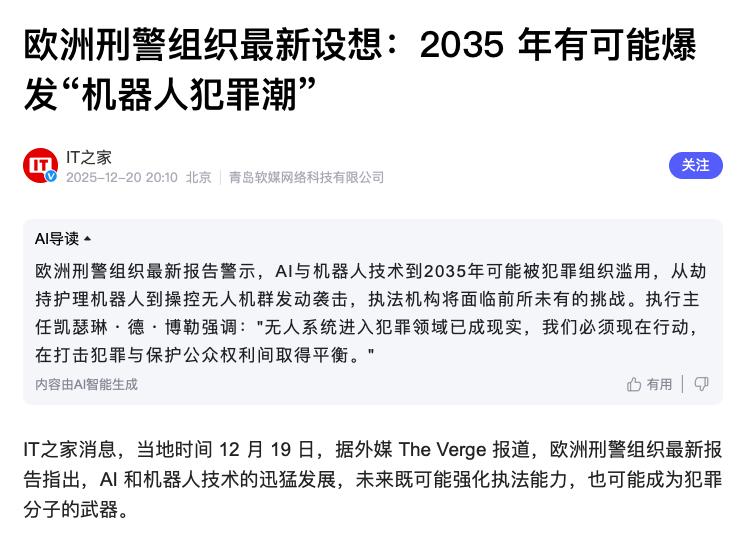
In particular, for Europeans who hold a "relatively conservative" attitude towards technological development, this concern has appeared in their public issues from time to time in recent years. At the end of December last year, Europol pointed out in a report that the rapid development of AI and robot technology may become a weapon exploited by criminals, which once caused a heated discussion.
In addition to the catastrophic imagination of out-of-control robots, the sense of insecurity towards robots in some social cultures also comes from the possible prospect that robots will replace some jobs.
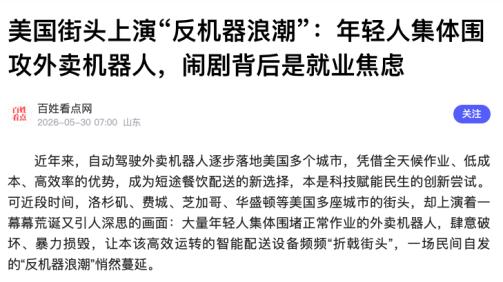
According to reports, from March to May this year alone, dozens of malicious damage incidents against food delivery robots have occurred in many places in the United States, and some local young people tried to use this extreme way to fight against the survival impact brought by technological progress.
Of course, these problems are not only targeted at Chinese robot brands, but because domestic robots currently have comprehensive advantages such as cost-effectiveness and gradually occupy a large share in the international market of some sub-categories, and the overseas expansion process of relevant domestic enterprises is still accelerating, their products have more and more opportunities to contact overseas people, so there will inevitably be a certain chance of encountering this kind of "human-robot contradiction problem" caused by social culture in the future.
So what is worth noting for domestic brands in terms of overseas landing marketing and other aspects?
First of all, communicate properly with the local team on marketing ideas and plans as much as possible. The domestic traffic operation methods may not be suitable for every overseas market. Under the social and cultural thinking that conforms to the local area, you can adjust and make trade-offs on what kind of marketing display scenarios to design, what aspects of the robot's capabilities to focus on, and even to what extent the performance is presented.
Secondly, for the communication of robot work scenarios, you can focus on the display of positions with large employment gaps, high risks, and unsuitable for human work, rather than simply choosing public scenario positions with a large number of onlookers.
Finally, provide appropriate guidance for users to use robots for marketing and other activities, you can gradually infiltrate with the help of entertainment industry scenarios, so that overseas users can gradually get used to the application and existence of robots in daily life, but avoid one-sided pursuit of curious effects. Once another "marketing oops" incident like the one at the beginning occurs, the brand side should clarify as soon as possible to avoid unnecessary negative emotions spreading on the Internet.
Overseas expansion strategies for other markets after the US ban
On July 28, the US Federal Communications Commission (FCC) officially included "advanced robotic equipment produced abroad" in its coverage list, which led to the fact that new model robots will not be able to obtain certification in the following period, and the jurisdiction is mainly for mobile robots rather than fixed robotic arms. This is a targeted regulatory escalation for China's rapidly rising humanoid robot and quadruped robot sectors.
From the perspective of long-term impact, many domestic robot brands that have already put old model products into the US market will face iteration crises because their subsequent products cannot enter the market, and eventually lose market share gradually; while many Chinese humanoid robot brands that have not yet entered the United States have basically been blocked out of this potential market.
The gradual closure of the US market will shift the overseas expansion path of domestic humanoid robots and other categories of products, and more efforts will be focused on developed countries such as Europe, Japan and South Korea, as well as emerging markets such as Southeast Asia and the Middle East.
For the former, Chinese robot brands must first avoid two major minefields: one is the technical access and standard certification threshold, and the other is the issue of privacy protection and data sovereignty.
As developed countries with mature markets and thus obvious awareness of local industry protection, a series of differentiated access and certification standards that are beneficial to local products are often set at the technical level, forming barriers that force foreign brands that want to enter to increase R&D costs.
As high-tech products based on data as their "nutrients", robots are bound to collect a large amount of data in their daily work. For example, in the European market, the collection, use and transmission of these data will be directly incorporated into the regulatory system composed of a number of laws such as the EU General Data Protection Regulation and the Digital Services Act. Coupled with the local emphasis on privacy and other issues, product brands entering the market must establish an adaptive response mechanism in terms of compliant data local storage and cross-border transmission, and build a local data collection and model optimization mechanism.
It is worth noting that even if they comply with local regulations, they still cannot completely avoid these developed countries targeting imported products in the name of anti-dumping and other purposes for the sake of protecting local industries.
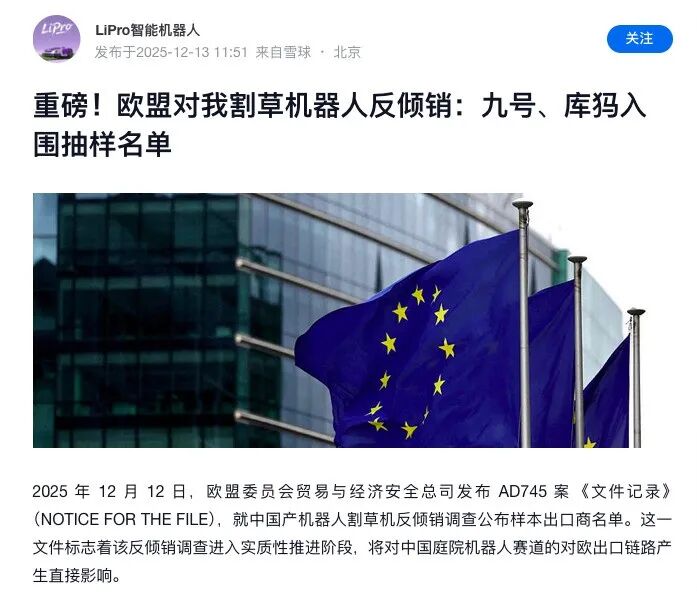
After the US FCC issued the ban, these developed markets may also follow up with similar security review mechanisms to varying degrees from their respective standpoints.
However, even if there are various barriers in these developed markets, the premium space brought by their high labor costs still attracts domestic robot brands that aim to expand overseas in the future. So carrying out compliant layout in different overseas markets in advance will become more and more important.
On the basis of compliance, domestic robot products can consider participating in the intelligent transformation process of local manufacturing industries in developed markets to lay a brand foundation. Or in markets with severe aging such as Japan, achieve benchmark landing in post care, cleaning and other positions with obvious labor gaps.
Then turn our attention to emerging markets such as Southeast Asia and the Middle East.
If the robot product market in developed countries is the incremental demand generated by the structural transformation of their industries, then emerging markets are more like fresh spaces that have not yet been fully developed.
These economies are either beginning to show a trend of automated replacement of manpower in dense manufacturing and agriculture, or have new work demands for infrastructure and other industries in some extreme environments (such as the Middle East), or their growing young middle class has put forward higher requirements for the cleaning of personal spaces. Moreover, these emerging markets have looser compliance requirements than developed countries, and there are no corresponding local market competitors, so they are more conducive to the entry of domestic brands.
But emerging markets are not without "minefields": these countries are often separated by differentiated cultural and even religious factors, and brand marketing communication must take all these factors into consideration.
The complexity of robot work scenarios, such as the relative lack of infrastructure, the hot/high temperature environment, etc., will affect the performance of products in actual work, so it puts forward tests for subsequent product maintenance and adaptation, requiring domestic robot brands to have a systematic response plan locally.
In the past few decades, "Made in China" has often been regarded overseas as a symbol of cost-effectiveness but insufficient premium due to the lack of brand effect. As a representative of "Intelligent Manufacturing in China" that has begun to enter overseas markets on a large scale in recent years, domestic robots need to take on the important task of attacking the high ground of "brand premium" from "cost-effectiveness", which requires more detailed brand communication strategies combined with local production and distribution systems to ensure that those "minefields" on the road of globalization are avoided.
Images are sourced from the internet, please contact 327508737@qq.com for objection or complaint to this manuscript
Disclaimer: The content related to listed companies involved in this article is the author's personal analysis and judgment based on the information publicly disclosed by listed companies in accordance with their legal obligations (including but not limited to interim announcements, regular reports and official interactive platforms, etc.), but the author does not guarantee the completeness and timeliness of the information; the information or opinions in the article do not constitute any investment or other business recommendations, and "Cai Guan Er Jie" will not bear any responsibility for any actions taken as a result of adopting this article.
Author's note: Personal views are for reference only
This article is from the WeChat official account "Cai Guan Er Jie", author: Er Jie, 36Kr is authorized to publish this release.