4.2 billion yuan, Gong Cha is reportedly on the verge of being put up for sale: widely known as the "godfather of the new-style tea drink industry", the brand is planned to be taken over by Bain Capital.
Gong Cha, known to the public as the "founding father of the new tea drink industry", is reported to welcome Bain Capital as its new controlling stakeholder.
Market sources revealed today that U.S. investment firm Bain Capital is set to acquire Taiwan, China-based tea chain brand Gong Cha, planning to purchase relevant shares from U.S. private equity firm TA Associates and other shareholders for a transaction value exceeding 635 million U.S. dollars (approximately 4.285 billion yuan). As of press time, no content related to this transaction has been released on the official websites of Gong Cha and Bain Capital.
Founded in 2006, this tea brand now operates more than 2,000 stores across about 30 countries and regions around the world. Although Gong Cha has disappeared from the Chinese mainland market, it has driven the development of China's ready-to-drink tea industry from small street-side shops to branded and chain-operated operations.
At present, Gong Cha is mostly seeking new growth space in overseas markets including South Korea, the United States and Japan. If Bain Capital successfully takes over the stake, it will also bring new room for imagination for Gong Cha's subsequent globalization strategy. Let's take a look at the details.
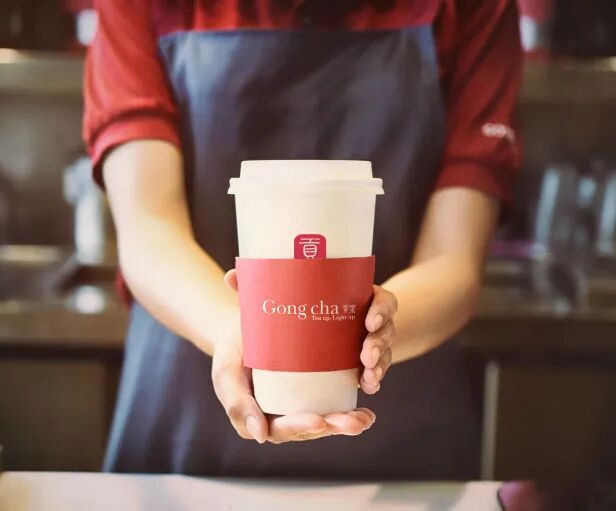
Rumors of Acquisition
According to today's market sources, Bain Capital and TA Associates have reached a final agreement, and the transaction is expected to be completed by the end of this year. Previously, multiple buyers including investment funds and catering enterprises had submitted acquisition proposals, but Bain Capital finally obtained the preemptive right of purchase.
The official website of Bain Capital shows that it was founded in 1984 and is one of the world's well-known private equity firms, investing in five key sectors: private equity, growth and venture capital, capital solutions, credit and capital markets, and real assets, with assets under management of about 225 billion U.S. dollars. Bain Capital's past catering acquisition cases include Domino's Pizza, Domino's Pizza Japan, and Dunkin', etc., giving it rich experience in investing in catering chain enterprises.
If the subsequent transaction goes smoothly, Gong Cha plans to leverage Bain Capital's experience in the catering sector and digital marketing capabilities to accelerate store expansion in the Japanese and South Korean markets. At present, Japan and South Korea are markets where Gong Cha has a strong consumer base. Meanwhile, it will further drive store growth in the U.S. market.
In fact, as early as March this year, market sources said that TA Associates was considering selling Gong Cha and had cooperated with JPMorgan Chase on the potential transaction. If the deal is closed, Gong Cha's valuation may reach about 2 billion U.S. dollars (approximately 14 billion yuan). However, the market source also noted that negotiations were still in the early stage and no decision had been made.
In May this year, another market source said that Gong Cha had attracted the attention of multiple acquirers including Bain Capital and General Atlantic, and TA Associates was reported to have hired JPMorgan Chase to handle the sale process, expecting to receive binding offers by mid-June. TA Associates expects the maximum valuation of this transaction to reach 2 billion U.S. dollars (approximately 14 billion yuan). Calculated based on the 2 billion U.S. dollar valuation, the corresponding valuation multiple is close to 30 times the core profit, but potential buyers tend to propose a lower valuation multiple. At that time, TA Associates did not respond to the request for comment, and Gong Cha, Bain Capital, General Atlantic and JPMorgan Chase all declined to comment on this matter.
In addition, it is worth noting that at the end of June this year, South Korean media reported that Bain Capital, MBK Partners and other institutions were making preliminary preparations to participate in the bidding for Gong Cha. The news also said that potential buyers prefer to acquire Gong Cha's Japanese business separately, because Gong Cha's overall performance growth in recent years is mainly driven by the Japanese market.
Gong Cha recorded revenue of about 217 million U.S. dollars in fiscal year 2025 (approximately 1.464 billion yuan), up 14% year on year; its EBITDA reached about 70 million U.S. dollars (approximately 472 million yuan). Citing the consolidated audit report of Gong Cha Korea last year, the above South Korean media reported that Gong Cha's Japanese business achieved revenue of 116.5 billion won (approximately 552 million yuan), a year-on-year increase of more than 53%; the net profit of its Japanese business reached 8.6 billion won (approximately 41 million yuan).
Enlightenment Role
Public information shows that Gong Cha was founded in 2006 in Taiwan, China, opening its first store in Kaohsiung, with its name meaning "high-quality tea for tribute". The core innovation of this tea chain in products is "cheese foam tea", which quickly became popular once launched, with classic hits such as Panda Cheese Foam Tea and Gray Three Brothers Tea.
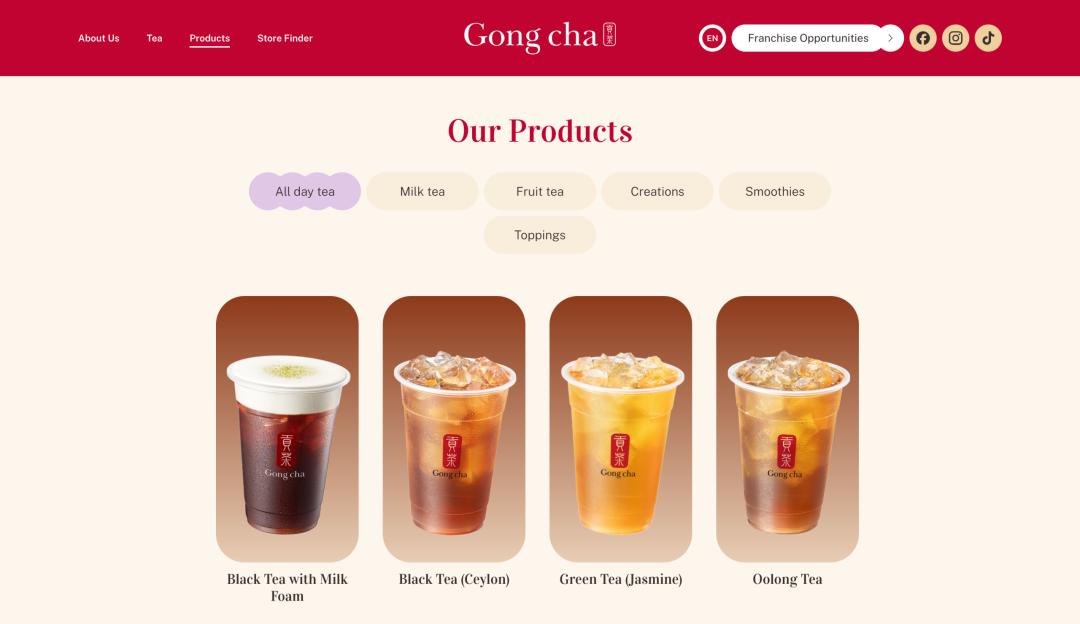
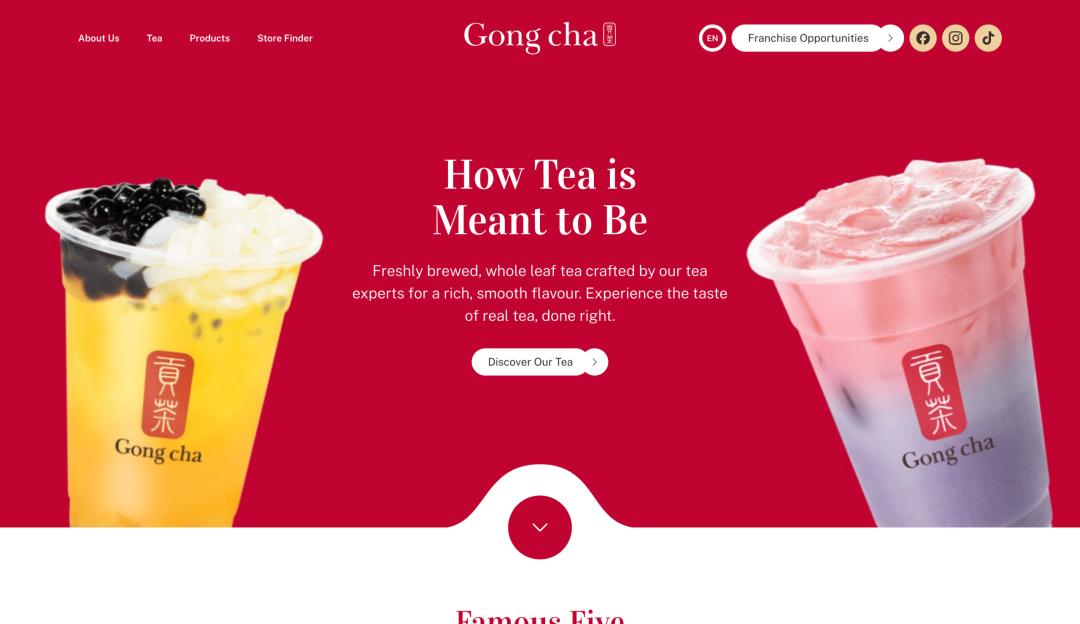
Nowadays, its signature products still include bubble tea series, cheese foam series, etc., while also having product lines of fruit tea, smoothies, pure tea and other categories. In terms of stores, Gong Cha operates more than 2,000 stores in about 30 countries and regions across Asia, North America, Europe and other regions, with markets with the largest number of stores including South Korea, the United States, Japan and Australia.
Tracing back to Gong Cha's process of accelerating global expansion: in 2009, Gong Cha opened its first store outside Taiwan in Hong Kong, and later expanded to markets including South Korea, Australia, Singapore and the United States. In 2010, Gong Cha entered the Chinese mainland market, and set up its brand and operation headquarters in Shanghai in 2016.

At that time, as the pioneer of the "cheese foam tea" category, this new tea brand faced huge development opportunities in the Chinese mainland and was in an excellent period for expansion. According to public reports, Gong Cha opened 750 stores in the Chinese mainland in 2017, while Heytea only had 100 stores and Nayuki had less than 50 stores back then.
However, the development of the story was far less smooth than expected. Gong Cha failed to enjoy the biggest dividend brought by the industry boom, but instead fell into a long "brand defense war". Since the term "Gong Cha" in historical context often refers to tea tributed to the imperial court, it is a generic name with inherent defects in trademark protection, which makes it impossible to form an effective competitive barrier.
According to public reports, brands such as "Yuhe Gong Cha", "Xiyu Gong Cha", "Zhizun Gong Cha" and "Baodao Gong Cha" emerged in the market one after another. These stores are highly similar to Gong Cha, making it difficult for consumers to distinguish. Around 2012, there were once thousands of stores operating under the name of "Gong Cha" across the country, but the vast majority of them were not official stores of the authentic brand.
While Gong Cha was mired in brand difficulties, Heytea, Nayuki and other brands emerged as rising stars in the new tea drink industry, leading a new round of industry innovation and upgrading. In November 2024, Gong Cha (Shanghai) Catering Management Co., Ltd., founded in 2012, was deregistered, marking the complete end of Gong Cha's operation in the Chinese mainland market.
Nowadays, the authentic Gong Cha has disappeared from the Chinese mainland market. Foodinc noticed that the brand operation entity "Gong Cha (Shanghai) Catering Management Co., Ltd." and its three invested enterprises have all been deregistered. According to the search results of Zhaomen Canyan, there are still many brands on the market with the words "Gong Cha" in their names, but they have nothing to do with the subject of this transaction.
Nevertheless, many insiders from the tea and catering industries analyzed to Foodinc today that Gong Cha played an important market enlightenment role in the development of ready-to-drink tea in the Chinese mainland, and promoted the tea drink industry to evolve from small shop businesses to branded and chain operations.
Specifically, first of all, Gong Cha played a role in early consumer education for milk tea. "Gong Cha is one of the early influential Taiwan, China-based tea brands in the Chinese mainland market. Around 2010, it promoted the popularization of product concepts such as bubble tea and cheese foam tea, cultivated consumers' awareness of milk tea and the habit of drinking milk tea," a person who has served many tea brands told Foodinc today.
Secondly, Gong Cha inspired the subsequent product innovation of tea brands. A person who serves many catering chain brands told Foodinc today that products launched by Gong Cha such as cheese foam tea, bubble tea and fruit tea were later upgraded by Chinese mainland tea brands which kept innovating in tea base, fresh milk, fruits, cheese, ingredients and other directions.
For example, Gong Cha's signature cheese foam tea played a key role in the Chinese mainland tea industry's upgrade from "powder brewed" products to the "real tea with real milk" era, and it also took the lead in promoting the drinking method of "tasting the cheese foam first before drinking the tea". The innovation from product to experience also paved the way for Heytea and Nayuki to rise to fame with their cheese foam tea. Nie Yunchen, founder of Heytea, once publicly stated that he was inspired by Taiwan's cheese foam tea when starting his business. In an exclusive interview released by *21st Century Business Review* in 2018, Nie Yunchen mentioned that he first tried cheese foam tea from Taiwan and found it very good.
Meanwhile, Gong Cha also promoted the chain and standardized development of the tea drink industry. "In the past, most tea shops relied on single-store operation, but Gong Cha's early expansion model, including its standardized product system, franchise model and store replication capabilities, showed the whole industry that large-scale expansion could be achieved through supply chain construction, training system and operation standards," said the above person who has served many tea brands. Later, although brands including Heytea, Nayuki, Mixue and Guming have differences in positioning and business models, they all further strengthened the development path of branding and chain operation.

Furthermore, "Gong Cha's overseas expansion experience provides some reference for Chinese mainland tea brands to go global", the above person who serves many catering chain brands said. Gong Cha entered many overseas markets for development at a relatively early stage, which proves that Asian tea culture has the potential to go global. However, going global is not simply replicating the number of stores, but requires capabilities in localized products, operation systems and brand building.
In addition, Gong Cha also prompted Chinese mainland tea brands to reflect. "For example, Gong Cha encountered challenges in supply chain and management capabilities during its expansion, which can provide some enlightenment for current Chinese mainland tea brands on how to maintain product quality, stable supply chain and franchisee management capabilities," said the above person who serves many catering chain brands.
Interestingly, before the deal was finalized, some analysts suggested that Chinese mainland tea companies such as Bawangchaji could consider this opportunity to accelerate their overseas expansion. However, Foodinc later learned from a local tea brand that it prefers to focus on endogenous growth.
This article is from the WeChat official account "Foodinc" (ID: foodinc), written by Wu Rong, and authorized for release by 36Kr.