The skyrocketing oil prices are crippling domestic airlines.
01
Recently, Xiao Zhao, a friend of mine working in the cost control team of the finance department at a large state-owned airline, came to Beijing.
The moment the coffee was served, he told me about a recent business analysis meeting at his company, saying that someone seriously proposed at the meeting whether the safety instruction cards in the cabin could be made even thinner.
Xiao Zhao said he thought he misheard it at first. After all, there is only one such card in front of each seat, and many passengers never reach out to touch it throughout the entire flight.
I was also torn between laughter and tears, and asked him how much money a single piece of paper could save.
Xiao Zhao picked up his coffee and shook his head, saying that the leadership had made it clear that while a single card is barely worth anything, hundreds of aircraft with hundreds of cards each, flying in the sky all year round, all that extra weight eventually burns extra fuel.
Illustration / Unrelated to this article
Speaking of which, this is just one of the casual details about the airline's cost reduction and efficiency improvement efforts that Xiao Zhao mentioned over coffee that day.
In our conversation, he mentioned that the company has resorted to every possible means to save fuel recently. For the new batch of business class seats to be replaced soon, apart from price and durability, the leadership kept asking repeatedly about the exact weight of the materials.
In addition, details that no one cared about in the past, such as the amount of drinking water loaded on the aircraft and the number of pages of in-flight magazines, are now all being reweighed.
Xiao Zhao smiled bitterly and said, with the current oil price, our airline has started to calculate costs in grams.
This anxiety is not hard to understand.
On July 15, the three major domestic airlines simultaneously released their first-half performance forecasts. Combined, their maximum loss for the half-year could reach 8.973 billion yuan. HSBC's full-year forecast for the three airlines puts their combined loss at around 16.8 billion yuan, while the market's unanimous expectation at the beginning of the year was still a profit of 1.3 billion yuan.
The gap between these two figures is none other than aviation fuel.
The ex-factory price of domestic aviation kerosene jumped from 5,622 yuan per ton to 9,802 yuan per ton in April, rising by 4,180 yuan in a single month. Although the price has fallen slightly since then, it still hovers at a high level.
While fuel prices remain high, airlines have cut fuel surcharges for three consecutive rounds. On August 5, the surcharge for routes over 800 kilometers will drop to 70 yuan, and the surcharge for routes under 800 kilometers will fall from 50 yuan to 40 yuan. No one can guarantee what the next price adjustment will bring.
To save fuel, airlines are quietly cutting costs, which naturally takes a toll on passenger experience.
After Air China and China Southern Airlines replaced the cabins of some narrow-body aircraft, passengers photographed the new business class seats, describing them as thin as a board, with a very upright backrest profile but very little padding, making it impossible to feel the softness of a large sofa when sitting down.
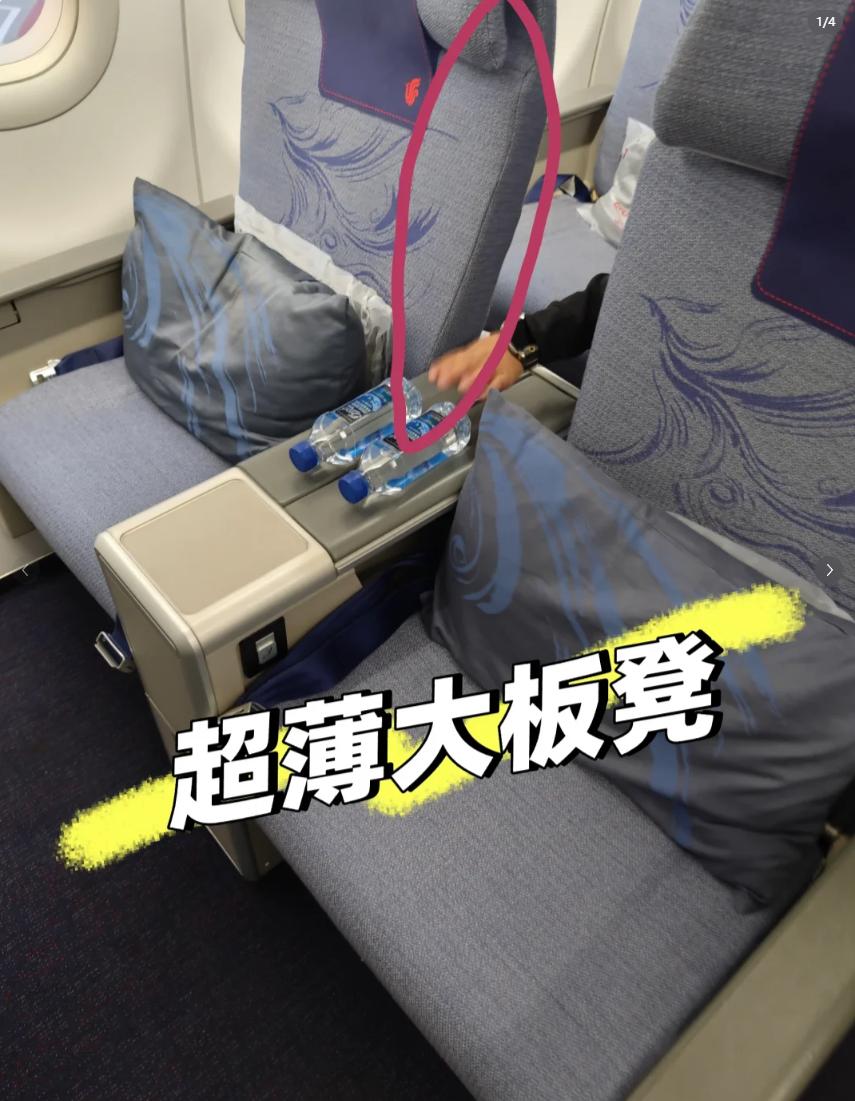
What is more interesting is that a few years ago, the wide and thick old business class seats were still complained about by frequent flyers as "dentist chairs" and "hard benches". When they gradually disappeared, many people began to miss the old soft saggy feeling, and complained that the current narrow-body aircraft business class is even worse than the second-class seat on high-speed rail.
Business class is disappointing, and economy class is also heavily criticized by netizens. Aircraft seat backrests are getting thinner and thinner, and cutting back on in-flight meals and services has become commonplace.
As a result, even if airlines emphasize that the new cabin materials are more environmentally friendly and the space utilization is reasonable when launching new cabins, passengers often only have three words in their minds after sitting in: uncomfortable and hard.
For most travelers, aviation fuel is just a number in the news. Only when the hard backrest presses against their waist will they truly feel that high-priced air tickets are becoming less and less worth the money.
02
While people like Xiao Zhao are calculating costs in grams, many European airlines have already added a buffer for themselves from the procurement end.
When the oil price was acceptable, they would lock in the aviation fuel cost for a period of time in advance, which is called fuel hedging in the industry.
Take Lufthansa Group as an example. About 80% of its aviation kerosene demand this year has been hedged through derivatives. Although the company still admits that high fuel prices bring huge pressure, at least most of its fuel consumption does not have to be fully exposed to market fluctuations.
Domestic airlines are also doing this, but their pace is much slower.
The maximum fuel hedging limit approved for China Eastern Airlines this year is 20% of the average estimated usage in the next three years, and the gap with Lufthansa is obvious at a glance.
A friend who used to work in airline finance told me that this is not only due to the shadow left by hedging losses in the early years, but also the realistic accountability pressure faced by state-owned enterprises.
If you do it right, the outside world tends to take it for granted. If you make a wrong bet and incur book losses, it will be very difficult for the person in charge to explain, and anyone who signs off on it may be questioned for a long time.
In 2008, Air China recorded a fair value loss of 7.472 billion yuan from its aviation fuel hedging, while China Southern Airlines avoided the loss by terminating the contract early. Domestic airlines have since remembered this expensive lesson.
What is more troublesome is that domestic airlines purchase aviation kerosene, and most of the highly liquid hedging tools in the market are linked to Brent crude oil or Shanghai crude oil. Even if you judge the general trend correctly, you may not be able to lock in the final price on the procurement order.
As a result, when oil prices suddenly soar, domestic airlines often can only passively accept the situation.
While fuel surcharges seem to be able to pass the pressure on to passengers, the actual process is far less smooth than expected.
According to the current linkage mechanism, airlines have to absorb at least 20% of the additional expenditure brought by price increases, and only the remaining part has the opportunity to be passed on through surcharges.
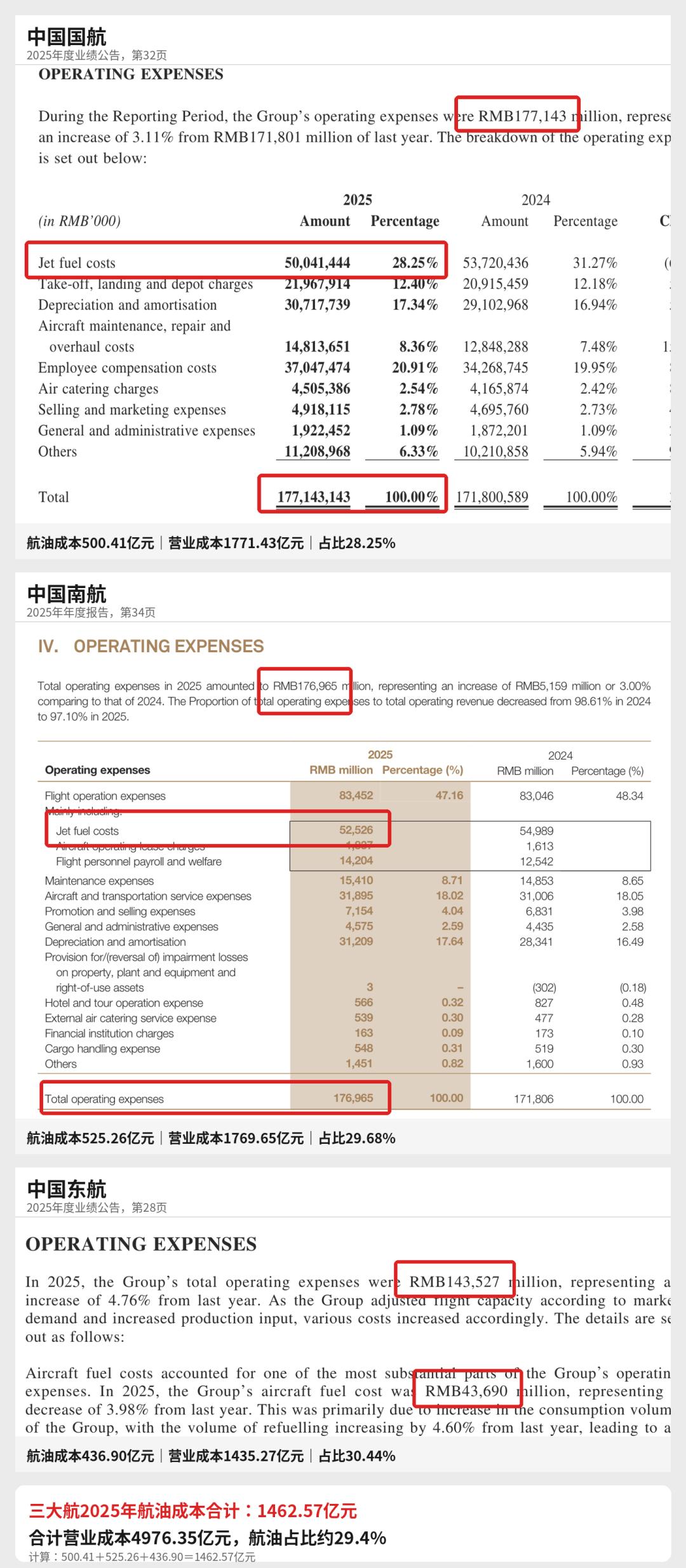
I later looked through the cost statements of the three major airlines last year. Air China, China Southern Airlines and China Eastern Airlines spent a total of about 146.2 billion yuan on fuel, accounting for almost one third of their operating costs.
TravelDaily infographic
Among them, China Southern Airlines' aviation fuel expenditure reached 52.526 billion yuan. If the fuel consumption remains unchanged, a 10% increase in procurement price will cost an extra about 5.2 billion yuan a year.
Many routes originally only make a small profit. A slight change in oil price will completely change the color of the entire income statement.
Older aircraft types are particularly disadvantaged. After a few more hours of flight, the cost gap will be quickly magnified. Even if the passenger load factor looks very good, after calculating the procurement cost, a full cabin of passengers may not bring much profit.
What is more tricky is that passengers do not care about the complicated cost formulas of airlines.
Many popular domestic routes highly overlap with high-speed rail lines. If the air ticket is slightly more expensive, passengers can easily switch to high-speed rail with one click on the ticket booking app. The recent rise in ticket prices has begun to suppress demand, and the shift of short-distance passengers to high-speed rail has become more obvious.
In order to retain passenger flow, airlines are naturally more willing to bet on trunk lines with relatively stable business demand such as Beijing-Shanghai, Beijing-Guangzhou and Shanghai-Shenzhen when arranging capacity.
However, when everyone crowds into these routes, the number of seats will soon increase again. The planes are full in the summer vacation, but no airline dares to pass on the skyrocketing fuel cost fully to air tickets.
Behind the three consecutive cuts in fuel surcharges recently, airlines would rather grit their teeth and bear the pressure than push passengers to high-speed rail.
The costs that cannot be passed on can only be recovered by cutting corners on seats, meals and services.
03
Airlines certainly hope that someone can take on the skyrocketing fuel costs, but consumers on the demand side do not have much spare money either.
In the first half of this year, the total retail sales of consumer goods nationwide only increased by 1.3%, compared with a growth rate of 5.0% in the same period last year. The market has not stopped, but consumers are obviously much more cautious when spending than before.
Behind the bustle of the tourism industry, similar changes are also hidden.
During the May Day holiday, the number of domestic tourist trips nationwide increased by 3.6% year on year, while the per capita consumption dropped from about 574 yuan last year to 571 yuan. While people are still traveling, the per-trip consumption value is slowly shrinking.
Hotel owners are worrying about where to get guests, and travel agencies receive a lot of inquiries, but customers will always ask for another price cut before placing an order.
For airlines, when both the consumption end and the cost side are under pressure, the only thing they can do in 2026 seems to be to control capacity.
In June this year, Air China's domestic passenger transport input decreased by 7.7% year on year, and the corresponding passenger turnover decreased by 6.7%, while the passenger load factor rose by 0.9 percentage points.
On the surface, each flight is more full, and some loss-making flights have been removed from the timetable.
Reducing a few flights may help the company's financial statements, but for employees, this will soon be reflected in the numbers on their pay slips.
Because the income of many cabin crew and pilots is linked to flight hours, overnight flights and company performance.
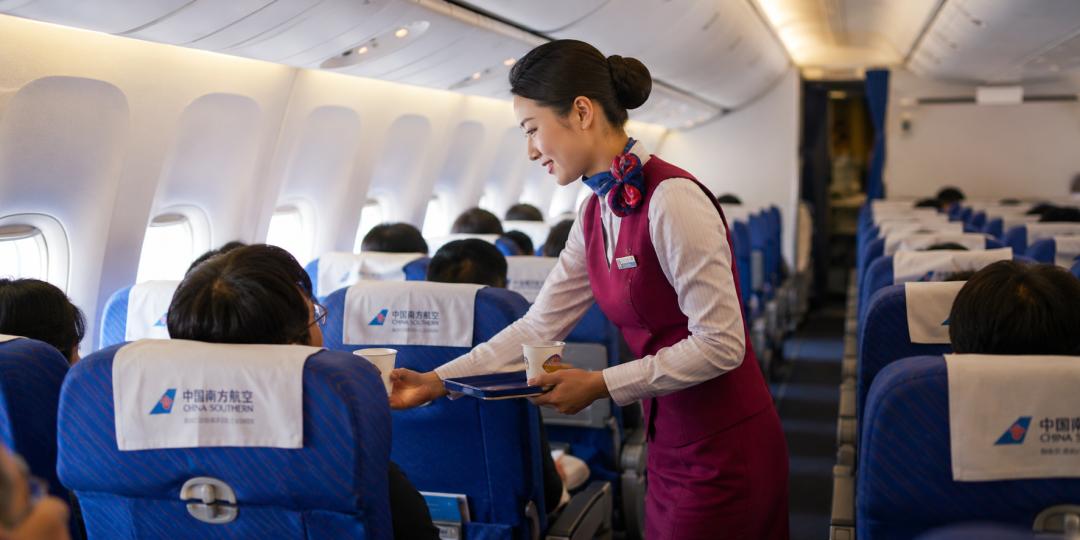
Calculated based on the average daily utilization rate of 9.11 hours for aircraft in the entire industry last year, if the daily flight time is reduced by 0.8 hours, the flight time that can be allocated to the crew will be reduced by nearly 9%.
A few days ago, a friend working at a private airline suddenly complained to me that he received nearly twice his usual salary during the summer vacation last year, but this year his performance pay is only 80% of the same period last year. He asked me if this would be the new normal and if the salary level could ever go back.
I did not know how to comfort him for a moment.
After all, large airlines still have route networks and financing capabilities to adjust, while small airlines have far less room to maneuver.
When the industry is struggling, the more common situation may be that low-yield routes gradually shrink, employee performance is quietly cut, and the waiting time for suppliers to receive payment gets longer and longer.
In fact, even if the situation in the Middle East eases, the fuel pressure will not disappear completely.
The EU requires that starting from 2025, the aviation fuel supplied at airports must be blended with at least 2% sustainable aviation fuel, and the proportion will be increased to 6% by 2030. The UK also starts with 2% and will raise the proportion to 10% four years later.
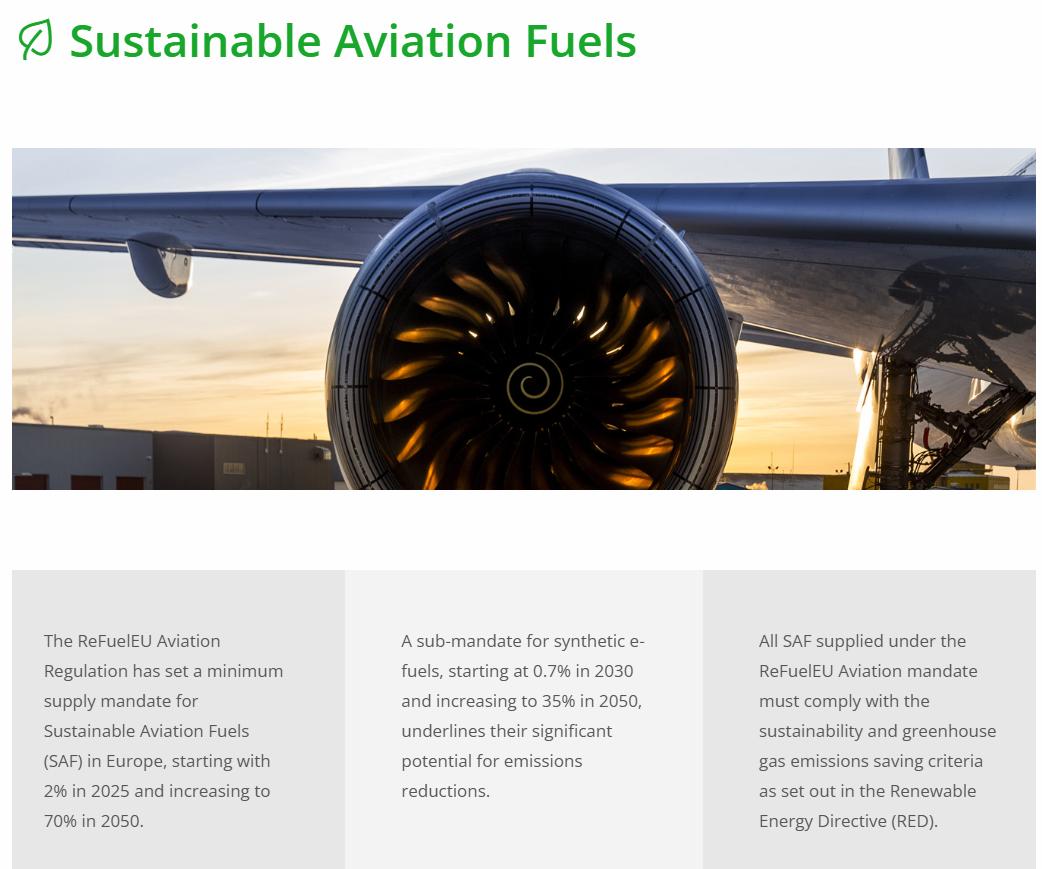
The Directorate-General for Mobility and Transport of the European Union has clearly stipulated the proportion of sustainable aviation fuel in the future
Chinese airlines flying to these regions will also have to pay for this part of the cost.
At present, the price of sustainable aviation fuel is usually 2 to 5 times that of traditional aviation kerosene. The International Air Transport Association even estimates that after adding relevant European compliance costs, the cost paid by some airlines has reached 5 times that of ordinary aviation fuel.
Geopolitical conflicts will eventually subside, but the trend of rising aviation fuel prices may become a long-term trend.
When the safety instruction card has been made so thin that it needs to be calculated by the gram, many civil aviation practitioners already have the answer in their minds about where the next round of cost pressure will fall.
This article is from the WeChat official account "TravelDaily", author: theodore Xishao, published with authorization from 36Kr.