Generating a net profit of 26 billion yuan from overseas customers in one year, why have Chinese buses witnessed explosive order surge in overseas markets?
Over the years, high-speed rail has been accessible in a growing number of cities across China, and some regions have even achieved "high-speed rail access in every county".
Self-driving travel is also becoming increasingly popular.
Correspondingly, intercity coaches seem to have fallen out of favor.
However, as the saying goes, the east may not shine, but the west will.
In recent years, Chinese coaches have seen explosive growth in overseas markets.
Data speaks for itself.
In the first half of 2026, China's total exports of large, medium and light passenger vehicles exceeded 41,000 units, representing a year-on-year increase of nearly 16%.
In June this year alone, exports of large passenger vehicles reached 4,327 units.
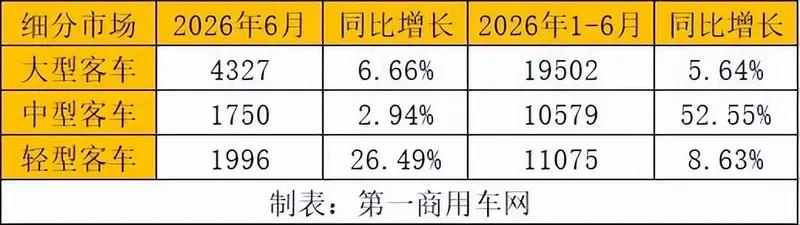
Looking at leading enterprises in the sector.
In June this year, Zhongtong Bus delivered 248 luxury tour coaches of various lengths including 9-meter and 12-meter models to customers in Saudi Arabia. At present, the total number of Zhongtong buses in service in Saudi Arabia has exceeded 16,000 units.
BYD has delivered more than 7,000 pure electric buses in the European market in total.
Last year, China exported over 78,000 domestic-made coaches (over 3.5 meters in length), with a total net profit exceeding 26 billion yuan.
Now, from Riyadh to London, to Sydney, and even the mountainous roads in Peru, Chinese-made coaches can be seen all over the world.
"Chinese coaches" are rewriting the global public transportation landscape with solid order volumes.
The "Global Strategy" of Chinese Coaches
If we turn back the clock more than 20 years ago, the situation was completely different.
Many domestic commercial vehicle enterprises traveled across the ocean to participate in European auto shows with great aspirations, only to find that the main exhibition halls were fully occupied by American, European and Japanese vehicles, and their proud products were arranged to be displayed in the basement.
Breaking through the ice requires a long and arduous process.
Around 2010, Chinese electric vehicle brands gradually gained recognition in overseas markets. BYD first won the first public tender project for electric buses in the Netherlands, followed by Yutong Bus securing an overseas order worth 1.49 billion yuan.
When China's new energy passenger vehicle technology was just starting and its prospects were beginning to emerge, it faced trade blockades from the United States and Europe, which intended to "strangle Chinese passenger vehicle technology in the cradle".
In 2013, Chinese automakers defeated local American companies and won an order for 10 all-electric public transit buses from the City of Long Beach, USA. But before they had time to celebrate, they faced frantic attacks from both the US government and the public.
The Los Angeles Department of Labor directly criticized that the cooperation violated the "US Labor Law".
Soon after, there were accusations of "serious quality problems", and even direct demands for "returning the products and refunding the payment".
However, these once-dismissed Chinese passenger vehicles have now defeated many established European, American and Japanese brands, and are running on roads all over the world.
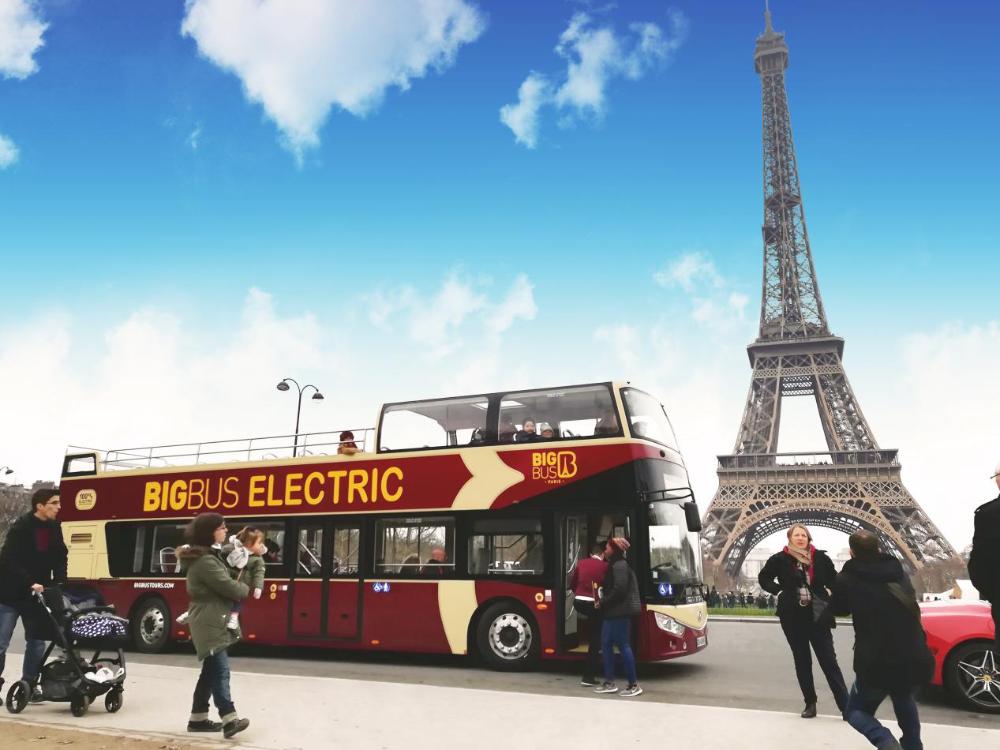
Pure electric double-decker buses on the streets of Paris
The turning point came in 2018, when Yutong of China participated in a public transit tender project in Denmark for the first time, and was publicly questioned that "Chinese brands have no market in Europe". Eventually, Yutong still won the project.
This is a landmark event for Chinese passenger vehicles entering the European market, after which the European market began to re-examine "Made in China".
Since then, Chinese passenger vehicles have expanded from point to area, rushing to the global market non-stop.
Around 2019, Yutong Bus successively entered European countries including Iceland, Denmark, Finland and France. By 2024, Yutong's total vehicle sales in Europe exceeded 8,000 units.
BYD also achieved successive victories by 2019, successively entering multiple European markets including the UK, Turin in Italy, and Oslo in Norway.
In the United States, BYD's electric bus market share even exceeds 50%!
In addition to Yutong and BYD, Zhongtong Bus signed a strategic-level cooperation agreement with Saudi Arabia, successfully opening up the Middle East market.
Golden Dragon Bus, which has been deeply rooted in Ethiopia for nearly ten years, has completed the construction of the first new energy passenger vehicle CKD assembly project in East African countries.
In just over a decade, China's new energy passenger vehicles have achieved technological breakthroughs in the European market, realized local assembly and production in Africa, secured massive orders of over 10,000 units in the Middle East, and conquered the most challenging US market.
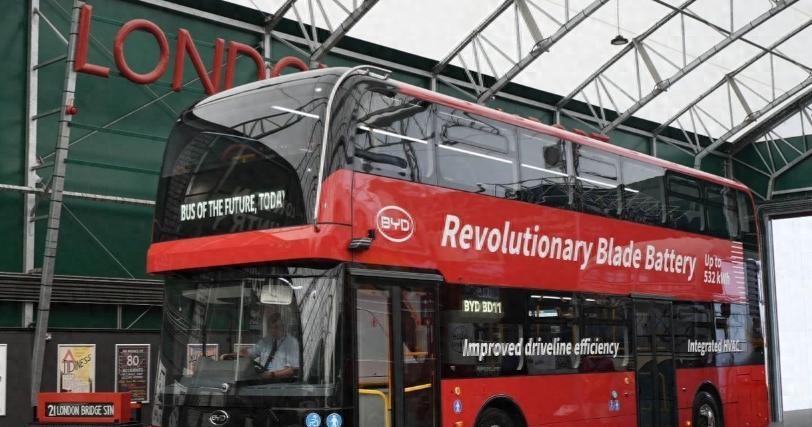
Breaking Through the Siege with Technology
When it comes to Made in China, most people will subconsciously think that its popularity overseas must rely on "price advantages" and "small profits but quick turnover".
This idea may make sense in the field of some fast-moving consumer goods, but it is completely unprofessional when it comes to passenger vehicles.
Public transit buses are not socks or towels that can be put into operation just because they are cheap.
Because commercial vehicles such as coaches are different from ordinary consumer goods, customers do not only value the price, but also focus on whether the vehicle can operate continuously, whether after-sales service is timely, and whether it can reduce the total cost of ownership.
Selling a vehicle is just the beginning. The subsequent parts supply, maintenance response, driver training and operation management are the key factors that determine whether customers will place new orders.
Mature markets such as Europe and the United States do not only value low prices, but the full-chain system capabilities of Chinese passenger vehicles in terms of safety, range, intelligence and after-sales support.
Although China's traditional fuel vehicle sector lagged behind Europe and the United States in the early stage, it is no exaggeration to say that China is now a global leader in the fields of electrification and intelligence.
While traditional European and American automakers are still hesitant about the transition to electrification and indulging in converting fuel vehicles to electric vehicles, Chinese automakers have been sprinting on the tracks of plug-in hybrid, pure electric, range-extended and even hydrogen fuel cell vehicles for many years. In particular, the three-electric system — battery, motor and electronic control — has already established global competitiveness.
For new energy electric vehicles, the battery is the "heart" that supplies power to the vehicle. Data from the International Energy Agency (IEA) shows that China is the world's major producer and exporter of lithium batteries, and its lithium battery shipment has ranked first in the world for many consecutive years.
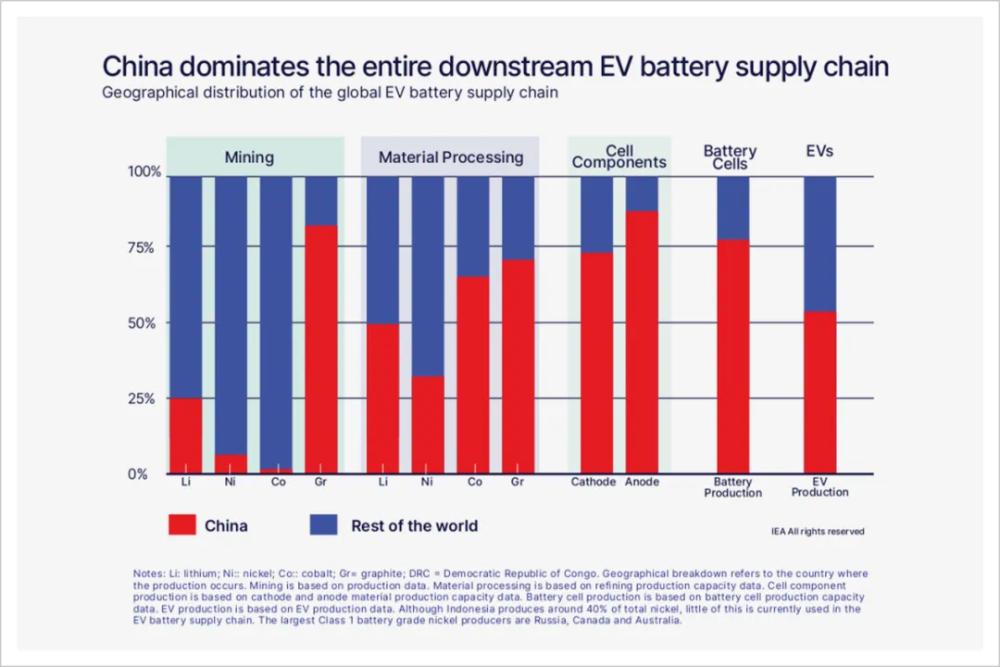
Source: IEA
Leading brands such as BYD and CATL not only have independent R&D technology for lithium batteries, but also have the capability of integrated upstream and downstream supply chains, which can maximize the guarantee of cost control and product delivery.
These leading achievements are all installed in Chinese new energy passenger vehicles from brands including Yutong, Zhongtong and BYD, which are sold far and wide across the world, and undergo on-site verification in different operation scenarios around the globe.
When overseas customers make purchases, what they buy is not just a vehicle, but a complete set of system capabilities, such as customized full-lifecycle services centered on the three-electric system, including remote diagnosis and OTA upgrades. In this regard, China's delivery capabilities far outperform its competitors.
Not to mention the advantages in areas such as battery life and safety performance.
This also well explains why many foreign customers came to test drive with prejudice at the beginning, but eventually became loyal customers of Chinese passenger vehicles. Only after experiencing the actual vehicles can they truly feel how strong the technology of Chinese passenger vehicles is.
Manufacture Exactly What Customers Need
Technology is critical, but it is also inseparable from the strong localized R&D capabilities of Chinese passenger vehicle manufacturers.
On the basis of reaching the world's advanced standards, they can better meet the localized needs of customers.
For example, 27 pure electric public transit buses sold by Yutong to Punjab Province in Pakistan were successfully delivered.
Since men and women in Pakistan must be separated on public transport, Chinese automakers directly customized the buses for Pakistan with four doors, creating two completely separate spaces for men and women after they get on board, completely solving this problem.
In addition, the local summer is hot and the climate is arid, which creates a high fire risk for the battery cells of electric buses.
The batch of pure electric buses delivered by Yutong Motors in March this year is equipped with the industry's first power battery nitrogen protection system, which can keep the power battery in an oxygen-free environment and effectively eliminate the fire risk of battery cells.
In Iceland, where about 11.5% of the total island area is covered by glaciers, Yutong Bus has developed a complete set of low-temperature solutions, which enable the buses to maintain high-speed operation even in extremely low temperature environments, so that passengers inside the vehicle will not feel the low temperature outside at all.
Saudi Arabia is known for its heavy sandstorms, hot and dry climate, where the maximum temperature in summer can often exceed 50°C, and the surface temperature can even reach 80°C.
A batch of buses provided by Xiamen Golden Dragon Bus to Saudi Arabia have been specially optimized in dustproof and heat insulation, as well as air conditioning cooling. After the bus is started, the temperature inside the vehicle can drop to a comfortable level for human body, ranging from 25°C to 30°C, within half an hour.
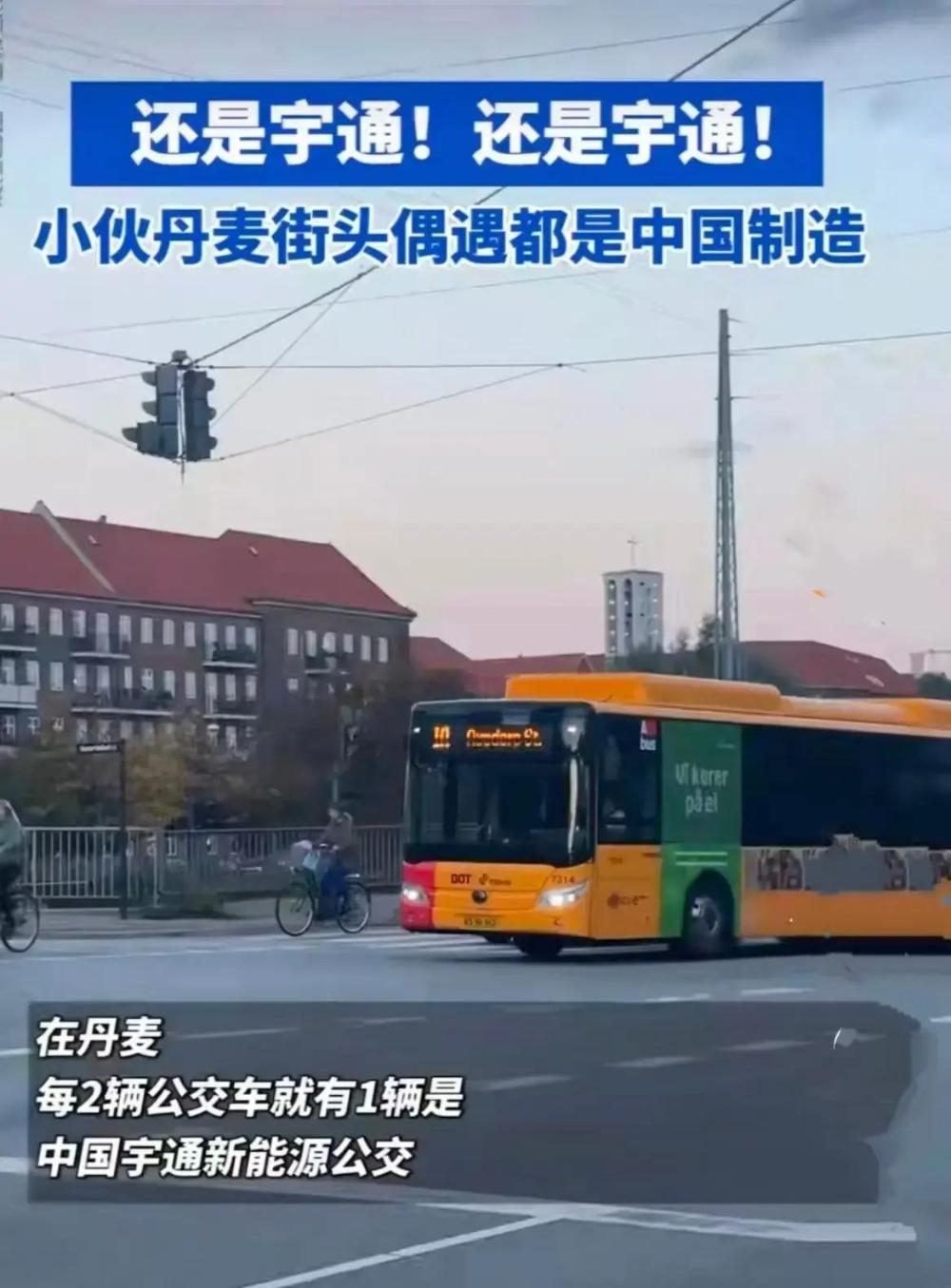
Another example: Europe started its modernization process early, with narrow urban roads and frequent stops and starts for parking, so Yutong U11DD electric double-decker public transit buses have been specially optimized for such scenarios.
Across the globe, it is obvious that only Chinese automakers have such a strong supply chain that can support the provision of exclusive personalized customization services for customers in various countries.
The Chinese electric buses you see around the world are not just vehicles, but also the business card of "Smart Manufacturing in China".
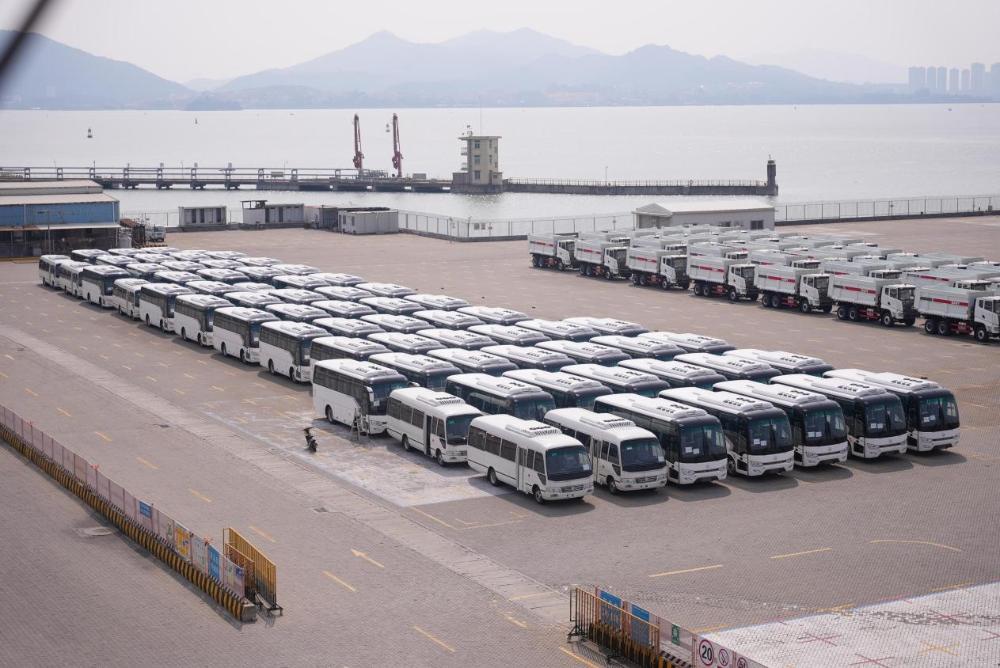
Buses waiting for export
Chinese Coaches Are Heading for the Global Market
The booming overseas sales of Chinese coaches are not only attributed to the outstanding performance of coach enterprises, but also supported by favorable policies.
The overseas development path of China's passenger vehicle industry has always been closely linked to the Belt and Road Initiative. It can be said that the government's policy support is an indispensable factor for the explosive growth of Chinese electric bus orders.
Relevant data shows that in 2023, the incremental customers of Chinese passenger vehicles mainly came from countries participating in the Belt and Road Initiative. Among them, the Asia-Pacific, Middle East and Commonwealth of Independent States regions accounted for as high as 67%, making the most prominent contribution.
For example, Saudi Arabia is one of the first countries to participate in and support the co-construction of the Belt and Road Initiative, and China and Saudi Arabia signed cooperation documents in 2022.
Saudi Arabia has always had strong demand for public transport vehicles.
According to public statistics, Yutong Bus has delivered a total of 285 ZK6126HG public transit buses to Saudi Arabia in two consecutive years from 2024 to 2025, helping to realize Saudi Arabia's Vision 2030.
The policy support of the Belt and Road Initiative has also greatly reduced the export cost of China's large passenger vehicles.
Chinese electric buses have won customers' trust after securing orders, relying on Chinese automakers' new energy technologies, customized strategies, policy support, as well as the down-to-earth work attitude and sincere dedication of the Chinese people.
Many people often ask: Where is the "moat" of Made in China?
After reading the story of Chinese coaches, the answer is actually very simple:
It is not achieved by undercutting prices, but by competing with solid technology and thoughtful services.
From being forced to display in the basement in the old days, to running on the streets of London and deep into the desert hinterland today; from being groundlessly accused of "poor quality", to winning massive orders of over 10,000 units in Saudi Arabia and occupying half of the US market.
The current explosive order volume of Chinese coaches is essentially the victory of the "Chinese Solution" in the global public transportation sector.
Behind the 26 billion yuan profit is the best proof that Made in China has achieved the leap from "cost-performance ratio" to "quality-performance ratio".
The world is getting to know China anew.
After all, the roads that wheels have rolled over are far more powerful than the words that come out of the mouth.
This article is from the WeChat Official Account "Zhengjieju" (ID: zhengjieclub), written by Zhengjieju, and published with authorization from 36Kr.