Can even AI celebrities do social selling now?
Three months ago, talking about public opinions on AI actors was almost equivalent to discussing an industry joke.
iQIYI was slammed to the top of hot search lists for building an AI artist library, while the AI artist launched by Yueke had no more than three-digit fans. Comments like "uncanny valley", "creepy to watch" and "don't pollute China's entertainment industry" were already considered mild remarks.
A consensus was reached in the film and television circle: the audience has a natural physiological rejection of "virtual figures", and this hurdle cannot be crossed.
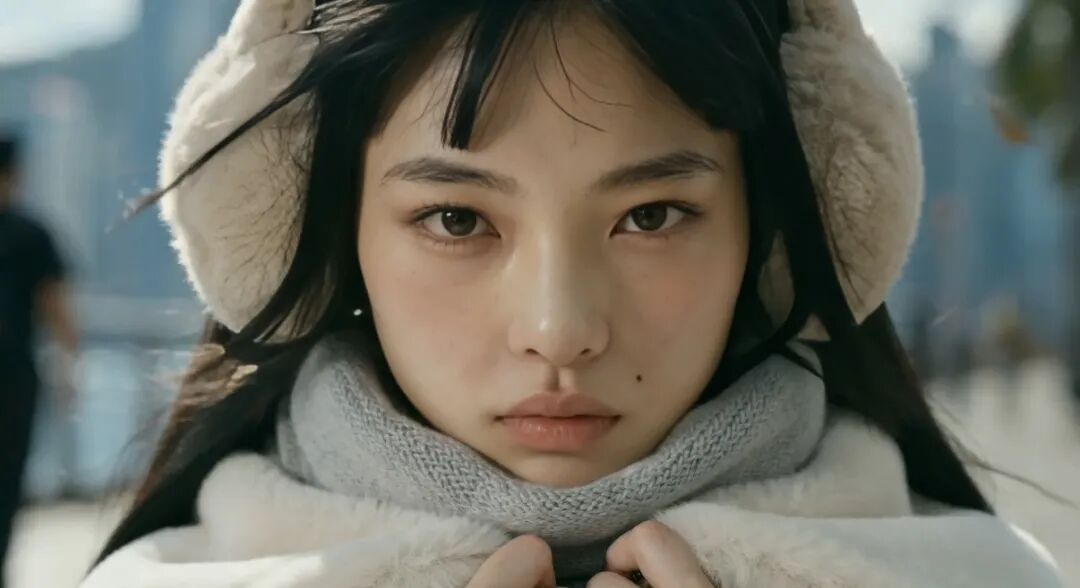
Fang Taozi
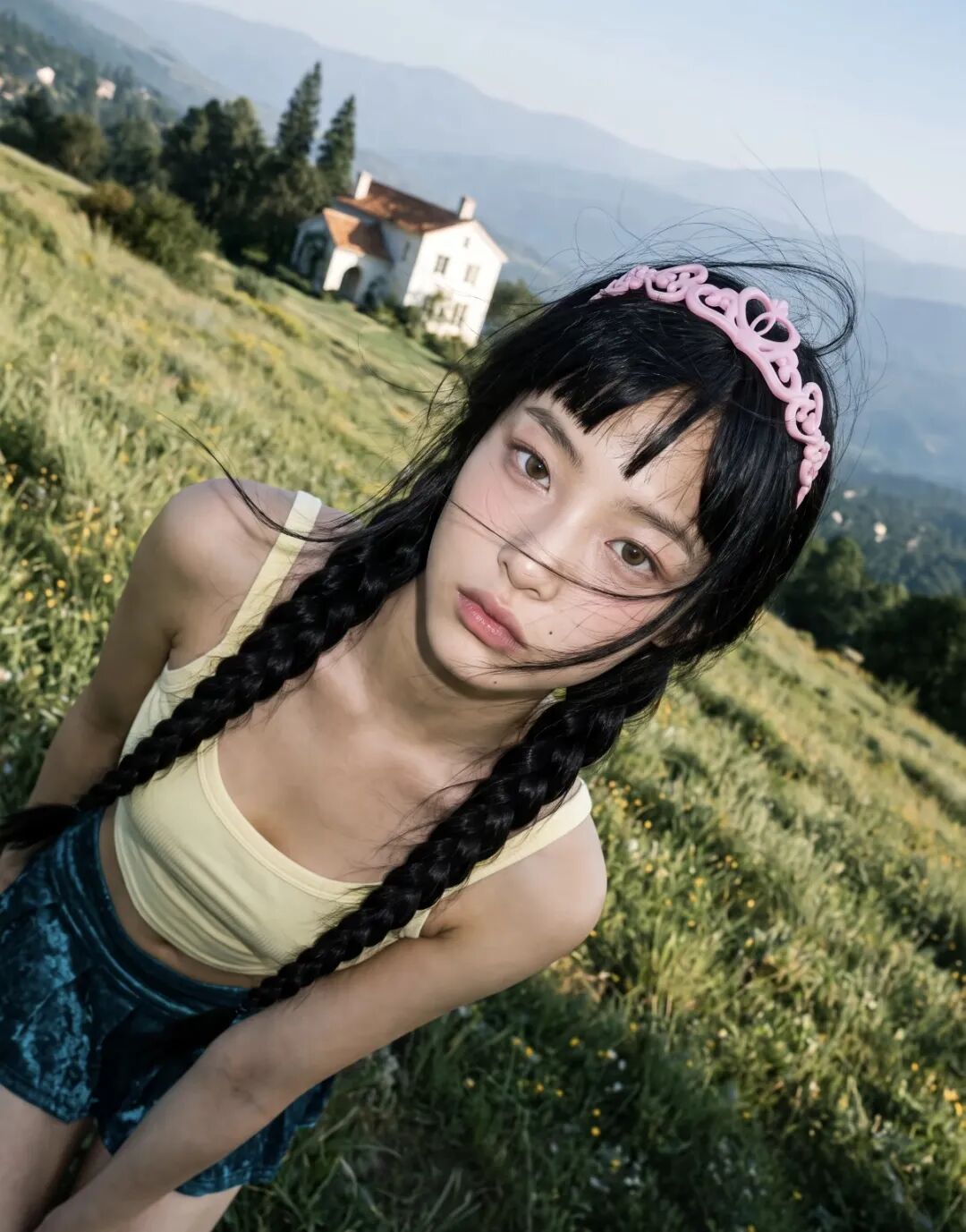
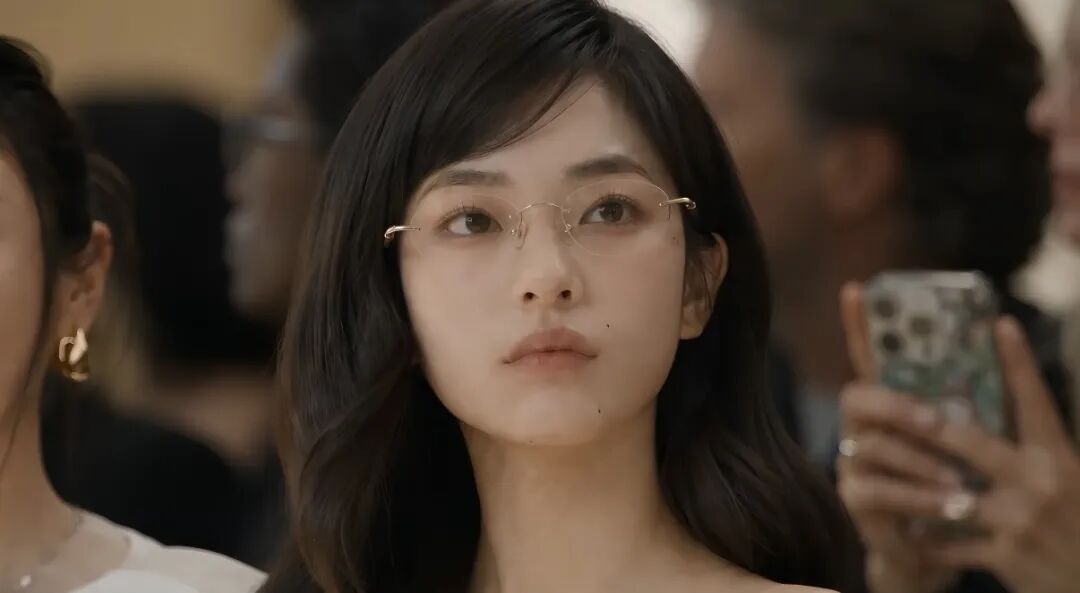
But today, three months later, the AI short drama The Laid-off Girl has achieved 220 million views, the leading actress Fang Taozi has nearly 400,000 fans, and the AI talent show Starlight 108 even arranged 108 AI girls to compete on the same stage, which rushed to the top of Weibo hot search list.
But the real blow that broke the consensus appeared in Fang Taozi's Vlog. A close-up shot of sunscreen spray appeared in the video, netizens zoomed in on the screenshot, and the number of discussions exceeded 10,000 overnight: Is AI starting to take commercial advertisements?
From physiological disgust to willingness to pay, AI stars have crossed this huge gap in less than a quarter.
Those few frames of the sunscreen spray may become the most important turning note of the film and television industry in 2026. When virtual characters have fan stickiness and a complete commercial chain, how wide is the moat left for real actors?
How did AI stars achieve a stunning comeback?
The wave of boycotts in April was not without reason.
Almost all the AI characters released at that time were trapped in the "uncanny valley": their skin textures looked like plastic models polished with ten layers of filters, their expression transitions were as stiff as meshing gears, and their eyes were so empty that people would instinctively swipe away from the screen.
What the audience saw was not the sincerity of technology, but the arrogance of capital. The platform wanted to turn actors into a string of infinitely replicable codes, which meant no need to pay salaries, no need to worry about gossip, and even no need to give attribution rights.
This gesture of erasing human beings from creation touched the most sensitive moral nerve of the film and television industry. Performance is never just the accurate restoration of lip shapes and movements. It is the rhythm of breathing, the transmission of emotions, and even the blending of souls, none of which could be seen in AI at that time.
But by July, the topic "Two AI actors are more popular than upcoming hit artists in China's entertainment industry" topped the first place of Weibo hot search list and dominated the list for more than 8 hours. The characters mentioned in the topic were exactly Fang Taozi and Zhou Yiheng in the AI short drama The Laid-off Girl.
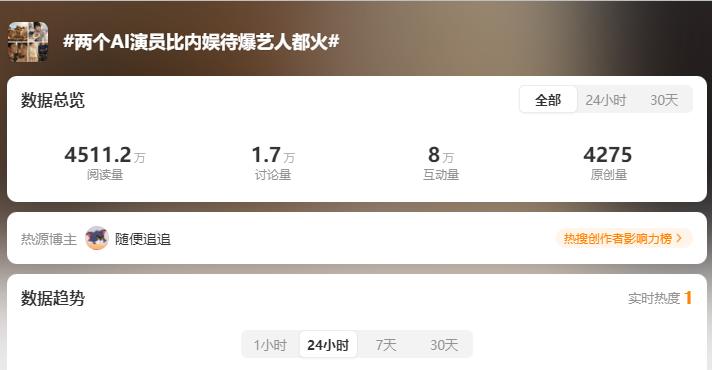
The plot tells the story of Fang Taozi, a small-town girl who chases her modeling dream in a big city. Director Feifeifei integrated her own modeling experience from the age of 20 to 27 into the script, presenting women's self-perseverance in the face of temptation during their growth.
Since the drama was launched, the number of views on a single platform has exceeded 220 million. Fang Taozi's personal account has 389,000 fans and more than 26.84 million likes, while Zhou Yiheng has more than 128,000 fans. The two accounts have been in operation for less than a month, with a total of more than 500,000 fans.
Why were the AI faces that were once criticized thoroughly suddenly accepted this time? Because the operation logic of AI stars has changed.
In the past, AI characters were just tools attached to the plot, but Fang Taozi and Zhou Yiheng are built as personal IPs completely following the model of real artists: the drama takes charge of story development, while the independent "artist" accounts provide long-term sense of companionship for the audience.
In the plot, Fang Taozi is a dream-chasing girl who ventures into a big city alone; outside the plot, she updates daily snippets of making homemade breakfast and playing tennis. The content that blends reality and fiction gives netizens a real sense of chasing stars.
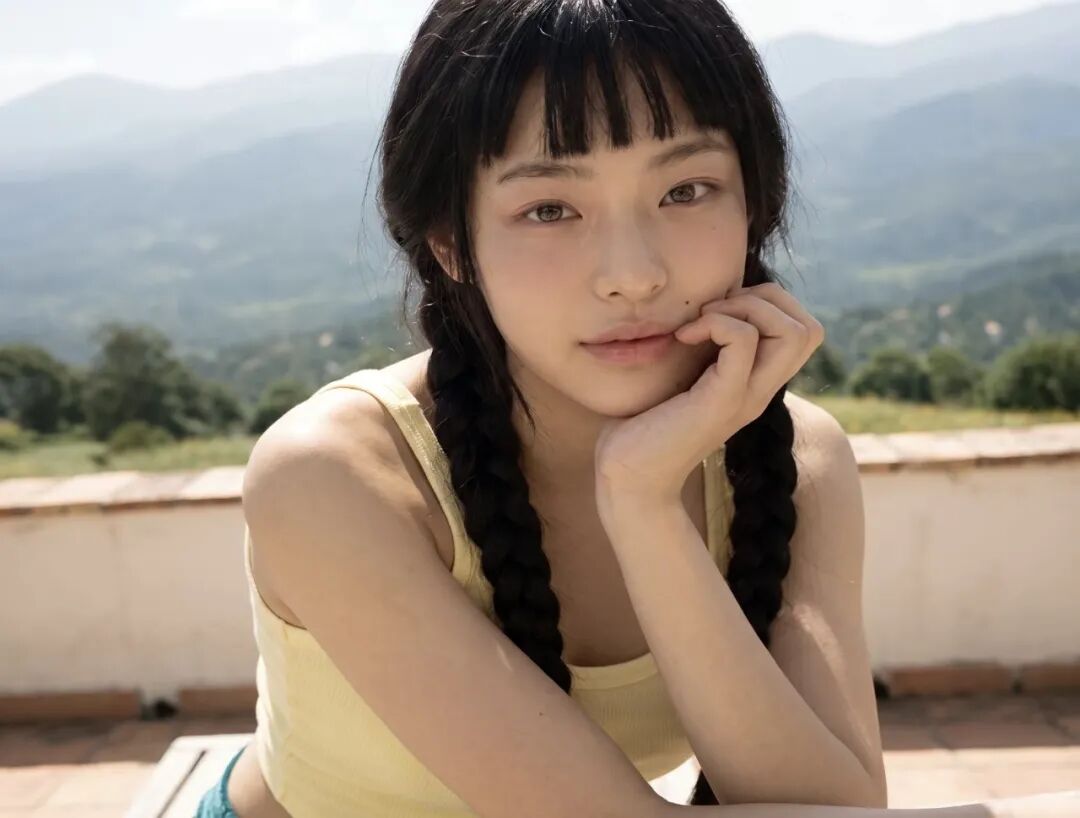
Another key point is the choice of theme. In the past, AI short dramas were almost monopolized by male-oriented pleasure dramas such as fantasy, counterattack and time travel, while The Laid-off Girl chose realistic themes. The protagonist being laid off, suppressed by the boss and refusing unspoken rules accurately hit the emotional pain points of contemporary young people. The audience's attention is attracted by the plot, so the unnaturalness of the AI face is accepted.
What shocks the industry even more is that a complete CP fan ecology has been formed around these two AI characters. The topic "Tao Zhi Yi Heng" has hit the hot search list, fans follow the plot, enjoy the interaction between the two characters, and urge the release of the second season. The efficiency of AI star-making makes the traditional film and television star-making system look like a product of the last century.
The audience did not suddenly accept AI. Instead, they are pushed forward in the situation where real content supply is exhausted and AI content is massively surrounding, and their consumption habits are changed imperceptibly.
Being visually appealing is just the first step
If being visually appealing is the key for Fang Taozi to open the audience's heart, then the ability to generate revenue is the real lever that leverages the entire industry.
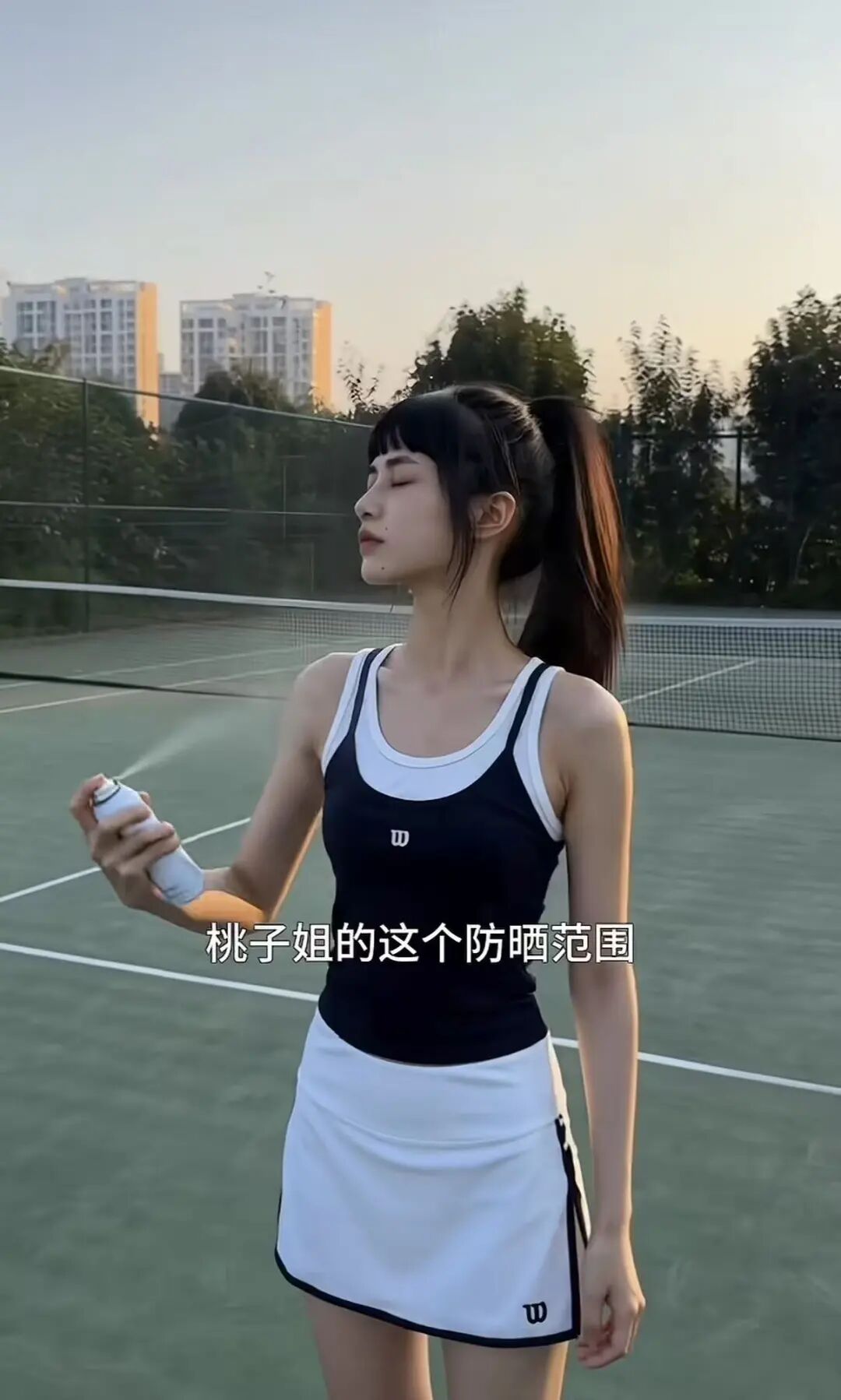
On July 23, Fang Taozi released a video with the caption "Morning archive from Taozi's world, I'm going to play tennis with Mimi today".
In the video, she uses sunscreen spray on the tennis court, with her expressions and movements no different from real people. The comment section is full of guesses that she is shooting an advertisement for sunscreen, and the topic of AI stars taking commercial cooperation has quickly sparked heated discussions.
The reason why it caused such a big shock is that it touches the core proposition of AI star commercialization — monetization.
If Fang Taozi is just a beautiful virtual character, the industry's interest in her will always stay at the level of content experiments. But when AI artists begin to have the ability to monetize, the nature of the matter has completely changed.
Not only Fang Taozi, the commercial value of AI artists is being quickly verified by the market.
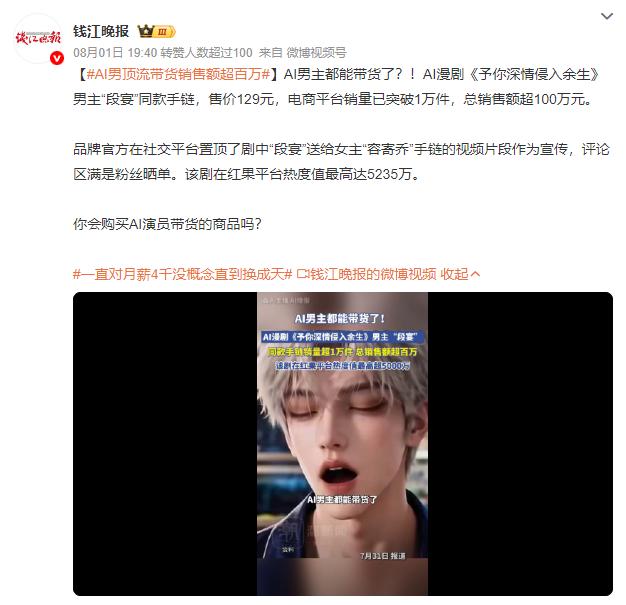
In the AI comic drama Your Deep Affection Invades the Rest of My Life, the bracelet made popular by the protagonists Duan Yan and Rong Jiqiao has sold more than 10,000 pieces, with sales exceeding one million yuan. The mid-roll implanted advertisements in AI romance variety shows cover categories from skin care lotion, foundation to whole-house smart home, with categories expanding continuously.
At the same time, veteran artists such as Joey Wong and Lawrence Ng have successively authorized their young faces to AI producers. There are few condemnations but many requests for content in the comment section.
But the legal boundary is still in a vague zone. According to the provisions of the Advertising Law, advertising spokespersons must personally use the products or accept the services, while AI actors do not have the status of civil subjects and cannot become advertising spokespersons in the legal sense at all.
That is to say, Fang Taozi cannot endorse sunscreen, and Duan Yan cannot endorse bracelets, because within the legal framework, virtual figures are not even considered human beings, let alone spokespersons.
However, brands and producers are obviously using a smarter way to bypass this barrier: it is not endorsement, but exposure; it is not recommendation, but implantation.
The sunscreen spray appears in the scene of the Vlog, the bracelet is worn on the virtual wrist, and the products are embedded in the gaps of daily narratives. This is no longer a traditional celebrity endorsement advertisement, but an in-depth integration of content as advertisement. As long as the audience is watching, the brand gets exposure, and as long as fans are following, there is space for monetization.
The birth path of AI traffic actors is no longer essentially different from that of real stars: gaining fans and becoming famous overnight through hit dramas, being signed and strongly supported by brokerage companies, and idols crossing borders to act. A complete AI artist industrial chain is taking shape, and every link from content production to fan operation and then to commercial monetization is silently eroding the territory that originally belonged to real people.
Is AI star-making a trend or a bubble?
Will the trend of AI star-making continue? The answer is almost certain, but its development is far more complex than the narrative of replacing real people.
In the first half of 2026, the market size of China's AI short drama market has exceeded 220 billion yuan, and it is almost no suspense to hit 400 billion yuan for the whole year, with more than 600 million users. About 128,000 micro short dramas were launched in the whole industry in the first quarter, and AI micro short dramas accounted for more than 95%.
In March alone, Douyin added nearly 50,000 new AI dramas and comic dramas in a single month, with an average of more than 1,300 dramas per day, while a real short drama of the same volume takes at least more than a month from project approval to launch.
At the same time, AI short dramas are moving from mobile vertical screens to large TV screens. In July, The Story of Taohuatan, the first full-process AIGC costume drama in China, landed on the prime time slot of Anhui Satellite TV in the evening. Dragon TV and Zhejiang TV also broadcast short dramas produced by AI through the whole process. AI film and television has entered the real scene of TV broadcast, platform distribution and public opinion evaluation from the laboratory of short videos.
The low production cost, low risk of public image collapse, and production capacity hundreds of times that of real-person dramas make AI dramas impossible to stop in the short term.
More importantly, the gameplay of AI star-making has run through a complete closed loop from content production to fan operation and then to commercial monetization. Once capital sees that money can be earned back, the possibility of withdrawal is extremely low.
When the production speed of the supply side differs by a hundred times and the cost differs by ten times, traditional film and television practitioners are no longer facing the multiple-choice question of whether to compete, but the survival question of how to survive under the overwhelming pressure.
But the continuation of the trend does not mean that real actors are about to lose their jobs. What is more likely to happen is a revaluation of the value of human beings. The boundary, value and evaluation system of the acting profession are being reconstructed by short dramas and AI.
The "living human" sense of real people is still irreplaceable. Audiences in the AI era are gradually accepting to coexist with new technologies, but they will also pay more attention to the authenticity and complexity of inner feelings. The exquisite technology cannot reproduce those imperfect but touching moments.
When AI can mass-produce standardized performances, real people who are not standardized have become luxury goods instead. The irreplaceability of real actors lies precisely in those imperfections that cannot be calculated by algorithms: the natural tension between actors, impromptu performances on the spot, and the real emotions that AI cannot achieve.
Therefore, what AI wants to eliminate are rigid, superficial, connotation-lacking performance routines and old and rough production modes, rather than the acting profession, let alone the entire performance industry.
The industry needs AI because it solves the pain points of public image collapse risk, cost problem and production capacity bottleneck. These objective factors make AI dramas impossible to stop in the short term, but what the audience needs is never the label of "AI" or "real person", but good content, no matter who creates it.
It may be too hasty to simply equate the popularity of AI stars with the doomsday of real actors. The real winner is not AI itself, but those creators who are good at using AI tools, respect creation rules and audience aesthetics.
The era of AI star-making has arrived, but the protagonist of the story will always be human beings.
This article is from the WeChat official account "Mou Yu", author: Mou Yu, published with authorization from 36Kr.