MacBook Air is quickly running out of stock, the wait-and-see crowd can't wait any longer.
Over the past six months or so, the most distressing issue when buying computers and mobile devices has always been "is it expensive?" —
AI has consumed a massive share of global memory and chip production capacity, leaving only a tiny fraction for consumer-grade products, which naturally drives price hikes.
Up until now, the problem has evolved into a more straightforward question: "Is it in stock?"

Source | The New York Times
A couple of days ago, Mark Gurman, Bloomberg's Apple expert, stated in his report:
If you order a MacBook Air from Apple's official website right now, the estimated delivery time has been pushed to the end of August or even September, far exceeding the usual one or two weeks of lead time in previous years.
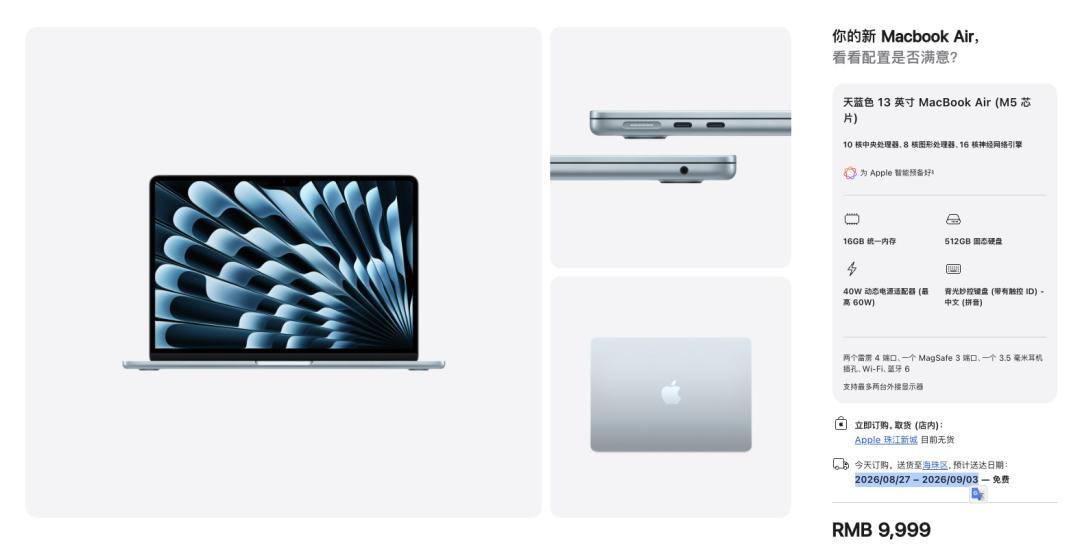
Retail channels outside Apple's official physical stores put it more bluntly: The supply shortage of MacBook Air this year is the most severe they have ever recalled.
Apple has even taken the unprecedented step of explicitly noting in its back-to-school campaign materials that "MacBook Air availability is subject to supply", deliberately directing consumers to the entry-level MacBook Pro:

Source | X @DylanMcD8
While the MacBook Air stock shortage is not unusual on its own, when combined with the significantly extended lead times, feedback from retail channels, and the shift in product recommendation priorities, the implication becomes clear —
If a trillion-dollar market cap company has to limit the supply of even its flagship product like the MacBook Air, it is obvious that this memory crisis has entered a new phase.
Not that you can't afford it, but that you can't get it
Price hikes used to be the most classic way to adjust supply and demand — when procurement costs rise, you just raise the selling price appropriately.
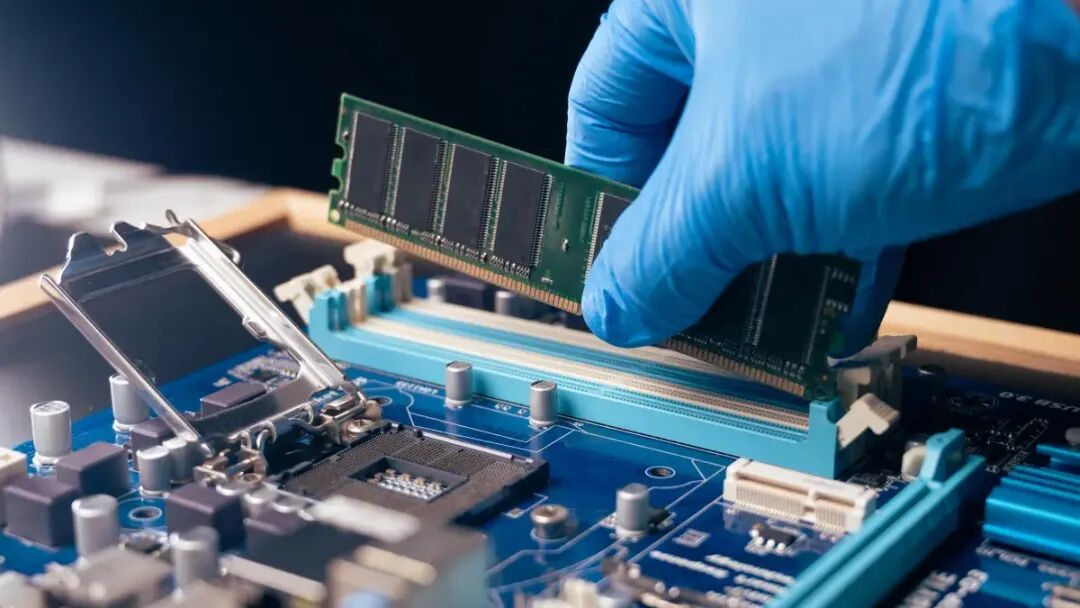
But the current problem is that even giants like Apple, Google, OpenAI and Amazon are willing to pay several times the usual price, the global memory supply chain cannot increase its production capacity in the short term.
To put it in the most straightforward terms, the global memory procurement market has shifted from "how much are you willing to pay" to "no matter how much you pay, there is no stock available".
Source | CNET
According to calculations by multiple media outlets and research institutions, in the current global commercial storage market, near-line HDD (mechanical hard drive) production capacity has been locked in until 2028-2029, and enterprise-level SSD (solid-state drive) capacity is locked in until 2026-2027.
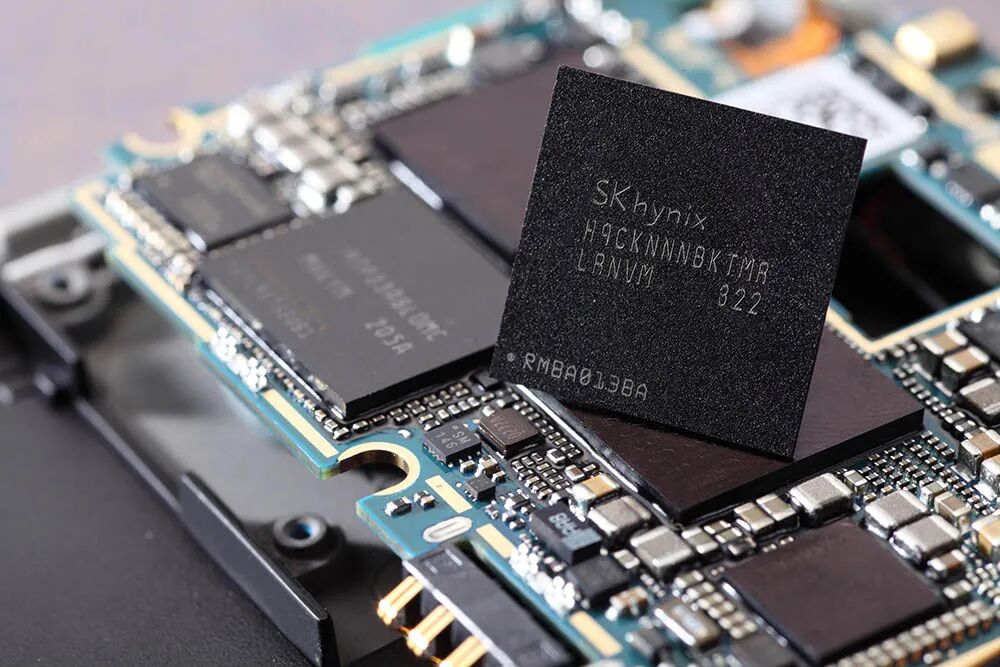
As for popular products such as HBM for computing centers, LPDDR and NAND for mobile phones, long-term orders can no longer be secured, and supply contracts can only be signed on a quarterly or even monthly basis.
Source | Wccftech
Even the competition among major buyers has shifted from "planned production capacity" to "newly added production capacity" in the coming years.
"Prices exist but no actual goods are available" does not mean that you cannot buy a single chip, but that manufacturers cannot obtain enough chips that meet their requirements at a reasonable cost and within a reasonable delivery cycle —
This problem does not have a huge impact on service providers such as OpenAI, but it is very difficult for companies whose main business is consumer electronics products like Apple.
In other words, for mobile phone memory and hard drive chips, in the past the highest bidder got the goods first, but now the highest bidder has to wait in line first.

Veteran products are making a comeback
This shift has become extremely obvious in the mobile phone industry this year.
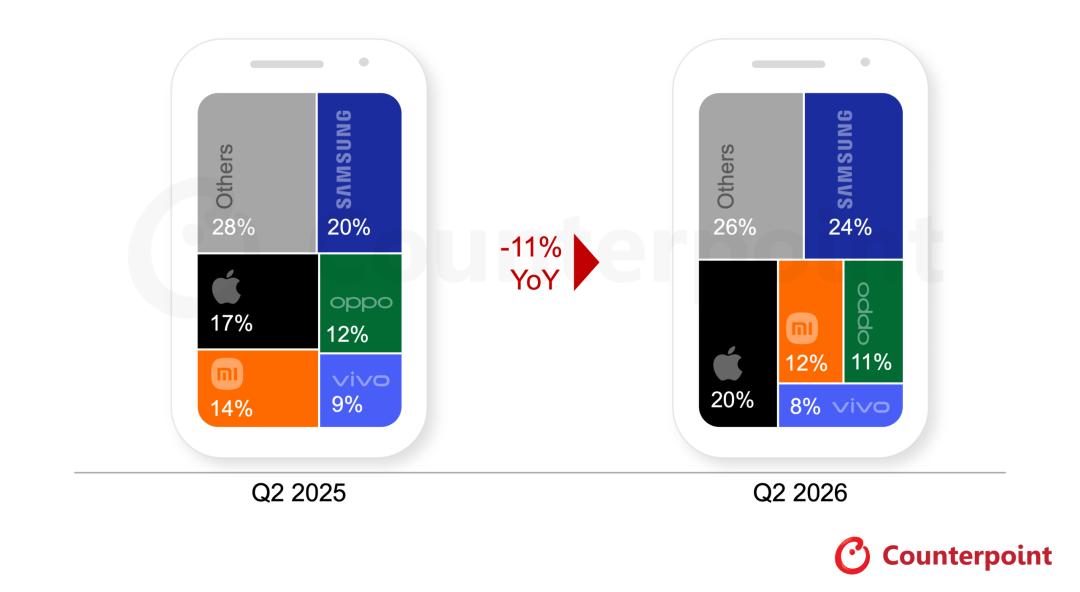
Statistics from Counterpoint show that global smartphone shipments in the second quarter of 2026 fell 11% year-on-year, hitting the lowest Q2 level since 2013:
Source | Counterpoint
The report specifically mentions that shortages of DRAM and NAND have forced manufacturers to raise prices repeatedly and cut allocations for low-profit models. Entering Q3, some mobile phone manufacturers have already launched the second or even third round of price adjustments.
At the same time, the computer industry, which is hit more directly, has responded in a more unexpected way —
Since new products are unaffordable and unavailable, it's time to bring the old veteran products back.
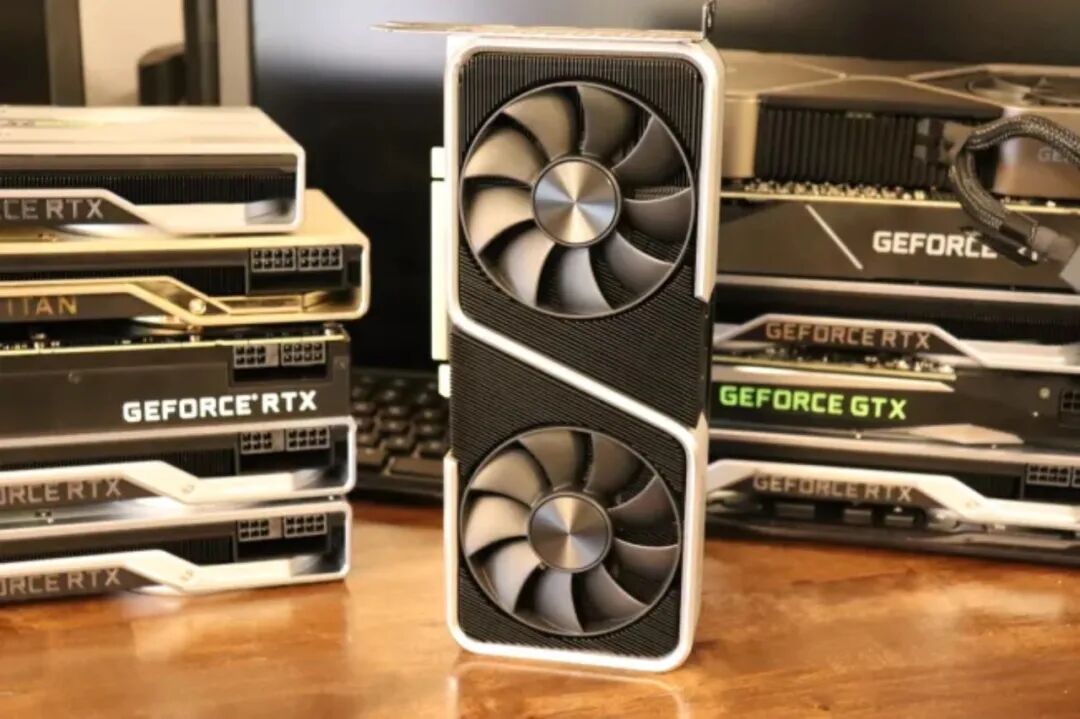
Source | Phoronix
The most typical example is that NVIDIA has restarted production of the RTX 3060, which was released five years ago; Intel and AMD have also successively launched new CPU platforms that are compatible with DDR4.
Intel has even explicitly stated that it "will continue to provide products that support older memory technologies".
Motherboard and memory manufacturers have fully retreated from the expensive and hard-to-obtain DDR5 platform, and started to expand their DDR4 product lines, forming a strange "moving backward" trend.

This is by no means a victory for budget hardware enthusiasts — the performance of old platforms is still acceptable, and the key is that they can avoid the skyrocketing prices of new-generation memory. What manufacturers are essentially selling is crisis insurance in the new supply chain landscape.
Even Microsoft, which has long been slow to respond to user demands, has stopped embedding Copilot everywhere in Windows 11, and has begun to research ways to reduce system memory usage and improve the user experience on 8GB devices.

The fact that even the operating system is now seriously considering how to make 8GB computers run properly is already very telling —
In the era of Andy and Bill's Law, software used to push users to upgrade their hardware, but now software is unexpectedly saving resources for hardware.
According to a separate Reuters report, on July 27, Changxin Technology was listed on the Sci-Tech Innovation Board, with an issue price of 8.66 yuan and a closing price of 49 yuan, representing an increase of about 466%, and its total market value is estimated at 3.28 trillion yuan.
Since the tradable shares of Changxin at the time of listing only accounted for about 7% of the enlarged total share capital, the huge market demand poured into the very small tradable share pool, making Changxin the top storage stock on China's A-share market right after its listing.
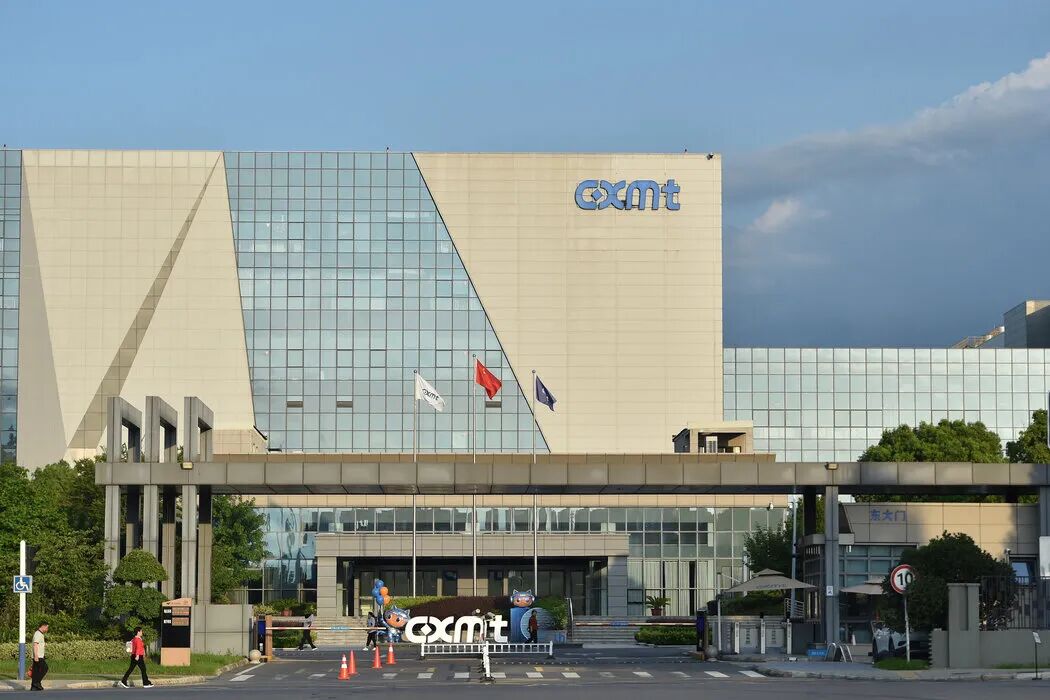
Source | Wall Street Journal
In the following few days, Samsung Electronics, SK Hynix, and even the entire South Korean stock market saw a noticeable decline.
Reuters believes: Doubts about AI investment returns, the global sell-off in tech stocks, and the rise of Chinese competitors have jointly caused the volatility, and Changxin's listing is only one of the catalysts for this extremely unstable fluctuation in the storage market.
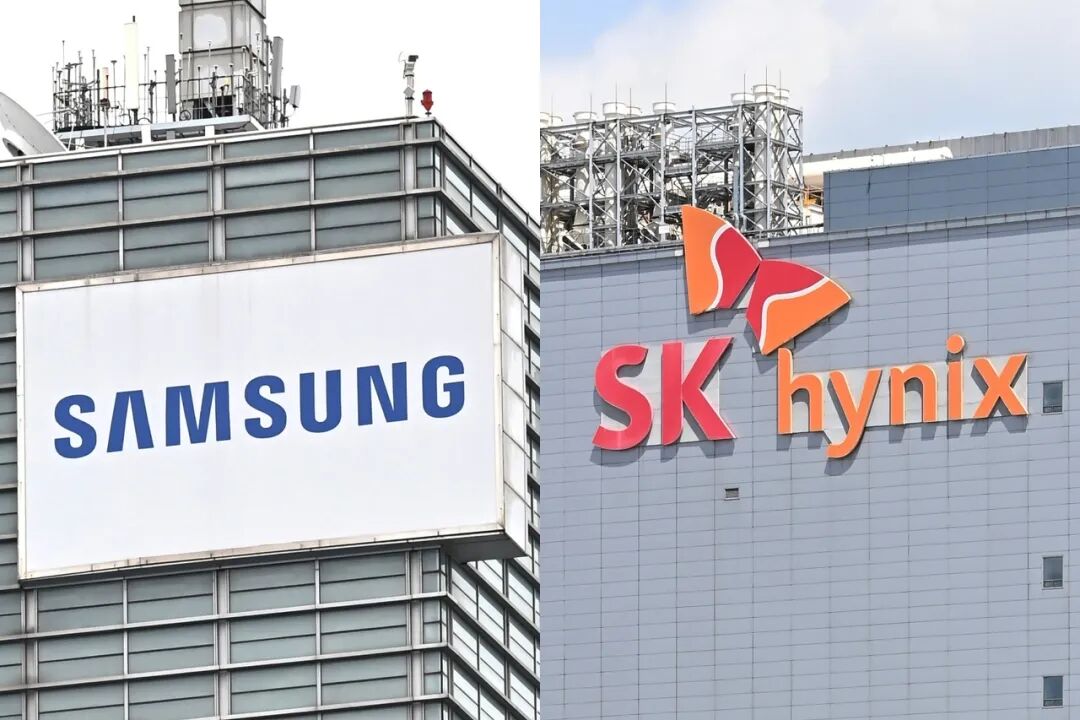
Source | The Korean Herald
However, the valuation frenzy after Changxin's listing does reveal the contradictory mindset of the capital market right now —
Everyone hopes that new players will increase supply and push down prices, but they can't help but price the new players based on the scenario of long-term supply shortage.
The saviors are indeed on the way, but wafer fabs cannot produce chips just by rising stock prices.
The "wait-for-the-best-deal" group really can't wait any longer
From computers and mobile phones to set-top boxes, game consoles and even in-vehicle infotainment systems, almost all modern electronic products cannot work without DRAM or NAND.
The production capacity directly or indirectly siphoned off by AI data centers from the upstream end will eventually be passed along the entire supply chain as higher selling prices, lower configurations, and longer delivery times, which will directly affect every individual consumer.
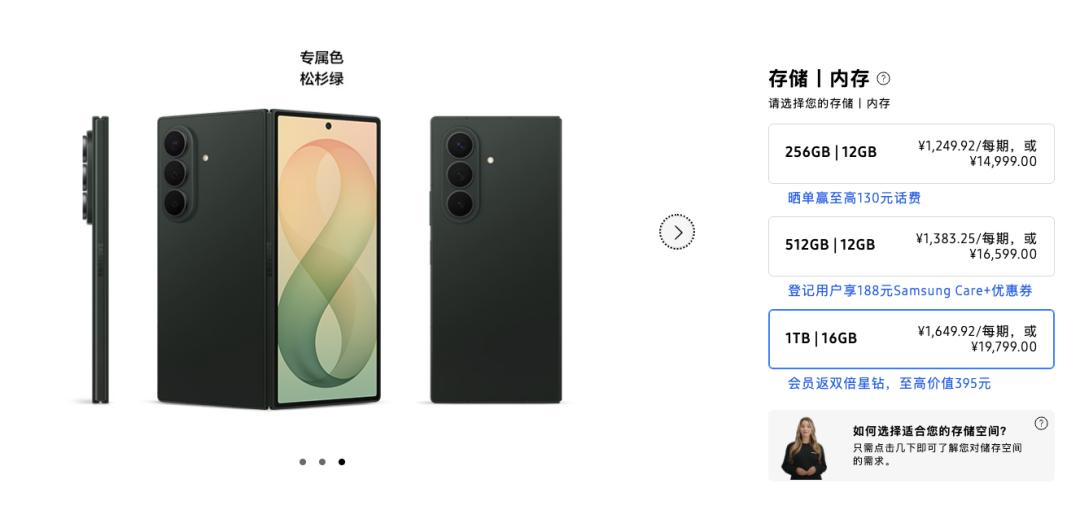
This crisis has evolved from a cost issue to an availability issue.
In fact, this scenario was already previewed 20 years ago. Today's AI and memory chip situation is almost a replica of the photovoltaic industry boom and polysilicon shortage back then:

Source | Future Publishing
Although the memory industry still has strong cyclicality, and mainstream institutions such as Omdia predict that memory prices may start to correct in 2027, and the industry's sales volume is expected to see a more obvious recovery until 2028.
But the problem is: the industry can wait, Apple can wait, but your back-to-school season, New Year holidays, and urgent needs cannot wait.

Source | Forbes
Although the current AI bubble will eventually calm down in the long run, not all purchase demands can be delayed until that distant future.
When the memory crisis shifts from "unaffordable" to "unobtainable", the strategy of the wait-for-the-best-deal group must also be adjusted —