A galaxy of stars come to the rescue of the summer movie season, will AI actors make the first breakthrough?
When long-form dramas blindly pursue fast pacing and instant gratification, their unique characteristics are lost instead.
Although this summer drama season has not yet ended, the audience's confusion has gradually found answers.
For example, after the 85s and 90s generations of actresses, who are the most reliable drama-leading actors in the Chinese entertainment industry? Stars including Meng Ziyi, Chen Duling, Ju Jingyi, Zhang Jingyi, Amy, Song Weilong, Hou Minghao and others all appear in this summer season, and the popularity and reputation of their related dramas will give an answer.
For example, whether AI actors can replace real human actors, the lukewarm performance of this summer drama season and the aggressive rise of AI entertainers can also provide more critical evidence.
And what kind of landscape will the entertainer market present in the future? The answer may be: top-traffic stars drive drama viewership, moderately famous entertainers appear on variety shows to be analyzed by the audience, mid-tier and lower-tier entertainers are replaced in batches, and after being replaced, they can even take the "cash-strapped" route to return to the peak of traffic.
The box office draw of actors has vanished in the 2026 summer drama season
The 2026 summer season for long-form dramas is a concentrated test field to verify the public appeal of new-generation actors.
With the advancement of cost reduction and efficiency improvement in China's entertainment industry, dark horse dramas and potential breakout stars are springing up. On the one hand, this shows that the past "traffic-oriented thinking" in drama production was indeed too one-sided, and the audience's love for long-form dramas essentially depends on the content itself, while dark horse dramas to some extent represent the new direction of content creation; on the other hand, traffic stars need to transform, and correspondingly, China's entertainment industry needs a group of new talents to take over the core content responsibilities and cultivate their own audience appeal.
For example, in the 2024 summer drama season, two dark horse dramas The Shadow of Moon and Fragrant Snow and The Past at the Border emerged. The former reached an average combined popularity of 60.02 million across cloud platforms during its hit run, heating up the revenge-themed costume drama genre; the latter earned a 7.9 rating on Douban, was nominated for the Magnolia Award at the 30th Shanghai Television Festival, and also made the new director Lao Suan famous overnight.
In the following year 2025, The Record of Ninefold Dark Indigo, When Wild Geese Return Home and The Record of Chaoxue successively became dark horse dramas. Artists including Meng Ziyi, Li Yunrui, Chen Duling and Ao Ruipeng all stood out, and platforms also intentionally promoted new talents, making artists such as Wang Yinglu, Zeng Shunxi, Wang Xingyue and He Yu appear on screen more and more frequently.
But in this year's summer season, the most popular works are still All Things Born and The Legend of Zanghai. The efforts of the script team and main creators cannot be ignored, and the appeal of Yang Mi and Xiao Zhan is also an undoubted key factor.
The 85s and 90s generations of actresses who have long been reliable drama leads have already proved their capabilities. If the script is strong enough, each of them can use their own public appeal to boost the popularity of the drama. This is true for Tang Yan's Blossoms Shanghai and Yang Mi's All Things Born. The 90s generation of actresses also completed their gorgeous transformation this year: Yang Zi won the Magnolia Award for Best Actress, and Dilraba Dilmurat also made her mark in the film industry with Kung Fu Soccer.
However, the new generation of traffic stars obviously still needs more works to prove their "ability to carry a drama". Because in this summer season, the new-generation actors who were highly expected have not yet produced a work with the potential to be a blockbuster, and even the dark horse dramas that used to create surprises in the summer season seem not to have appeared this year.
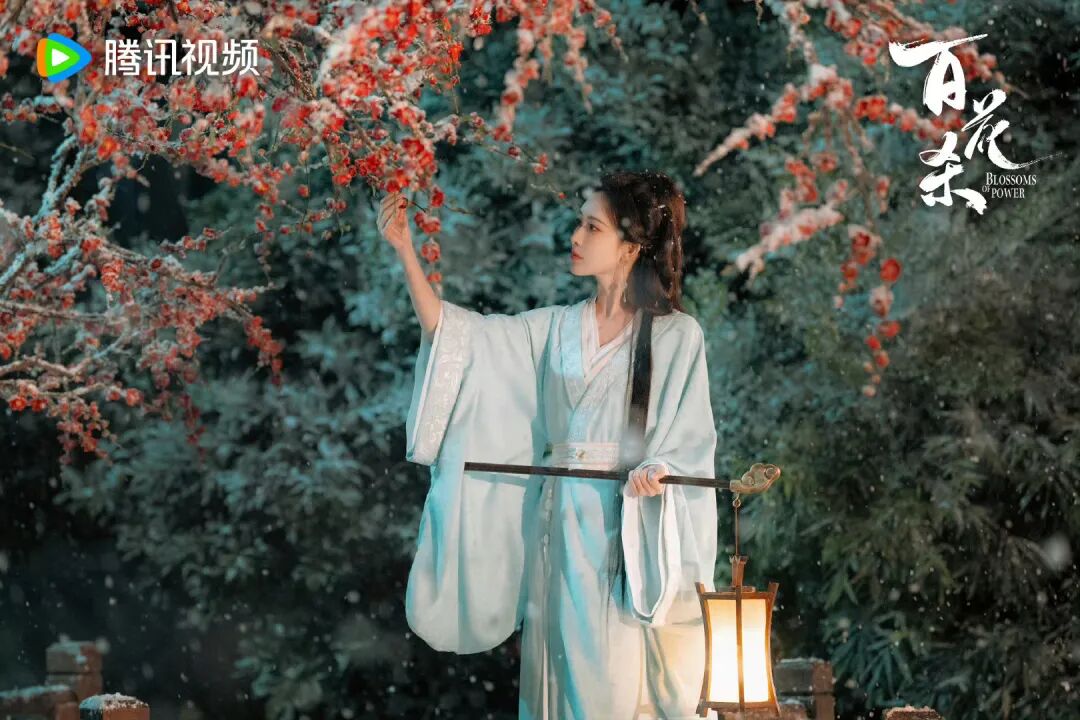
After the hit of The Record of Ninefold Dark Indigo, Meng Ziyi, who has representative works in both the drama and variety show tracks, has already become a highly sought-after talent for platforms, but the subsequent drama Blossom Kill only reached a maximum popularity of just over 28,000 on Tencent Video.
Meng Ziyi was also commented by some netizens as having "homogenized roles" due to her similar costume drama looks. After an actor has a hit drama, the audience's expectations will be further raised. Negative public opinion may come earlier than the peak of their career, which is also the only way for new-generation traffic actors to grow into reliable drama-leading actors.
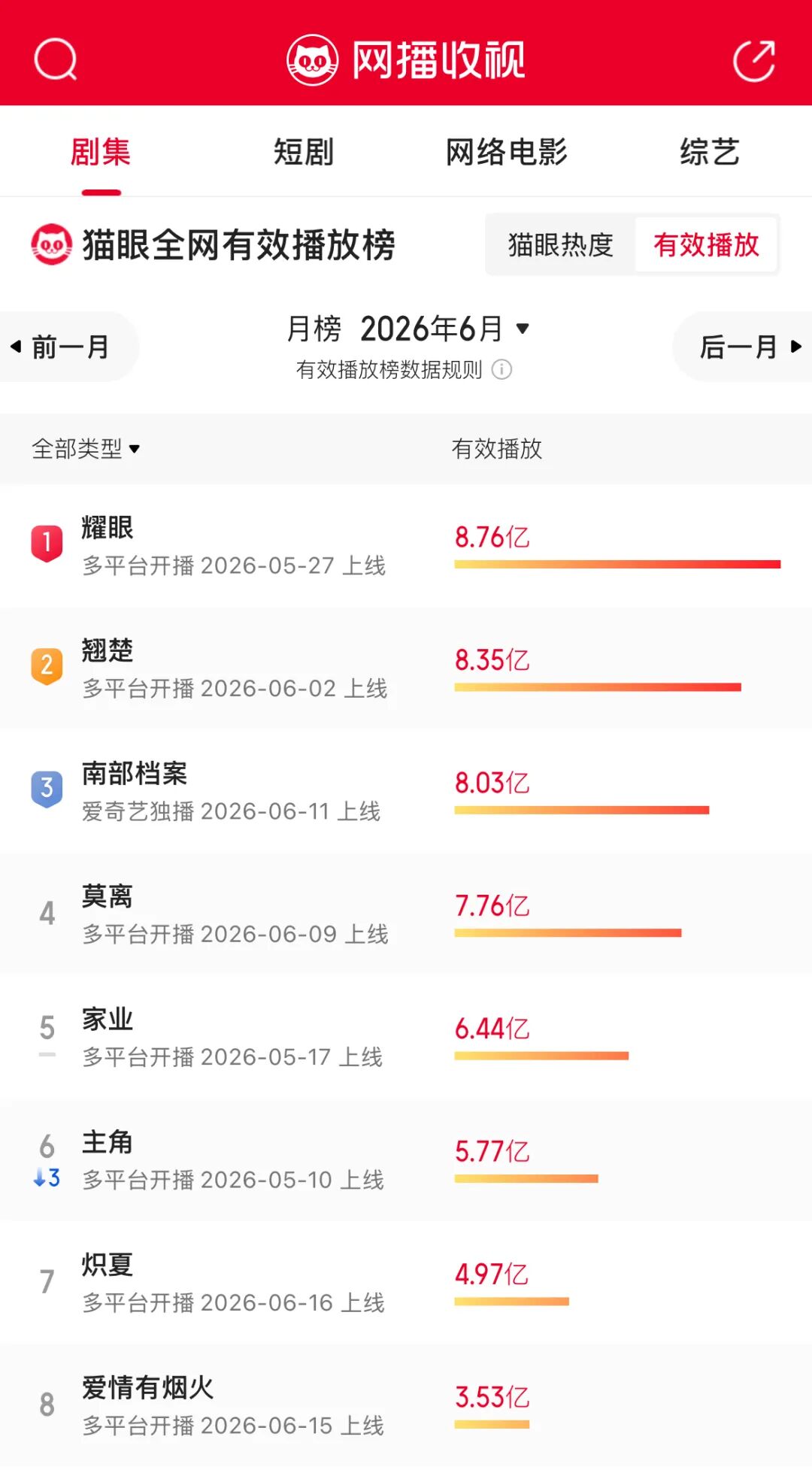
Chen Duling's drama Outstanding Talent achieved a popularity score exceeding 10,000 on Youku, but in the June effective play ranking of Maoyan Popularity List, the effective play volume of Outstanding Talent was 835 million, which was even lower than the 876 million effective play volume of Dazzling.
The work with the highest effective play volume from June to July is Wild Dog Bones, with Zhang Jingyi and Song Weilong jointly supporting 1.152 billion effective plays, but this data is not outstanding in the summer season. In May, the costume drama Beautiful Brocade of Good Times had an effective play volume of 1.282 billion, higher than that of Wild Dog Bones; the second-ranked Low-IQ Crime had an effective play volume of 1.122 billion, which was almost equal to that of Wild Dog Bones.
On the one hand, artists who used to be able to carry dramas have fallen into negative public opinion, such as Bai Lu and Yu Shuxin, which has affected the popularity and reputation of their dramas to a certain extent; on the other hand, the younger rising forces are still growing even with strong momentum, and are not yet able to support an entire drama season, such as Amy in Bone of the Sparrow and Zhou Keyu in Blazing Summer.
In this year's long-form drama summer season, not only the content is unremarkable, but also the "public appeal" of the actors. To put it more bluntly, the leading faces of long-form dramas are no longer attractive.
Why has the drama-leading ability of the new generation of traffic stars declined?
In the past, we always said that the fundamental reason why long-form dramas were not good enough was that the content was not exciting enough, but in this summer season, long-form dramas have even ceased to look like "long-form dramas": they are becoming short-drama oriented, rough in production, and even lose the value for discussion.
Outstanding Talent is famous for its "fast pace", but in the plot that is so fast that it makes people dizzy, the logic has also disappeared. On Douban, some people gave five stars for the heroine's performance, while others gave one star for the acting of the entire cast. Dubbing, lines, camera work and color tone have all become elements for netizens to complain, and finally the drama only got a 4.9 rating on Douban.
Looking at Blossom Kill, in its Douban reviews, "the most unaggrieved heroine in the world" has become the label of the lead character. But from Story of Yanxi Palace and The Shadow of Moon and Fragrant Snow to The Royal Harem Ballad, Wu Jinyan has already made three hits in China's entertainment industry with similar labels (writing these drama titles makes the text sound strangely dramatic). In this summer season, no one may care anymore about which of Blossom Kill and The Royal Harem Ballad really makes the audience feel the pleasure of instant gratification.
Not to mention that short dramas have already satisfied the audience's demand for instant pleasure, in the field of long-form dramas, revenge-themed strong-willed heroine dramas have been so numerous that the audience has become numb.
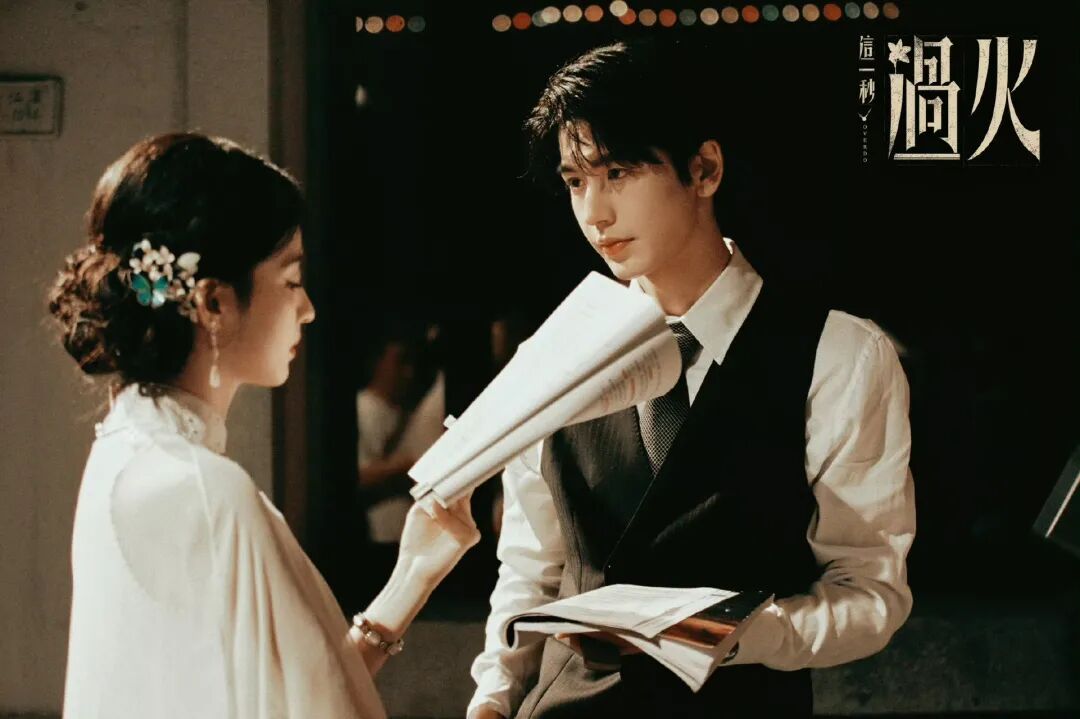
One of the few Republican-era dramas in this summer season, Overheat This Second, also did not get the expected popularity. When the drama was being filmed, the on-set candid photos of the hero and heroine made the audience exclaim about the perfect casting fit. But when the drama was released, everyone found that the shots in the official episodes were less atmospheric than the candid videos, and the famous airplane quarrel scene even became a laughing stock. Douban netizen @DjanGo commented sharply: "It does the opportunistic things of short dramas in the name of long-form dramas."
The production of long-form dramas requires a cycle. Maybe in the script meeting before filming started, those now-outdated routines were all the rage. But the audience has already moved forward several steps. When these works that followed the trend step by step were finally released, they found that the audience they wanted to please had already left, leaving the crew confused about their situation after the broadcast.
Before losing the audience, long-form dramas have lost their own characteristics first.
In the past, people thought that short dramas had dense plots and strong sense of instant gratification, which might be a solution for bloated long-form dramas, but not a long-term solution. This summer season shows that when long-form dramas all turn to short-drama style and blindly pursue fast pacing and instant gratification, their own unique characteristics are lost instead.
In the information flow of short video platforms, Xue Zhenzhu is making a strong comeback with The First Half of My Life. On the iQiyi hot search list (August 2), The First Half of My Life has ranked fifth. The forbidden romance trope, forced love and strong-willed heroine themes all lost to the "catching the mistress" plot this summer.
As a hit drama and classic character, the "strong comeback" of The First Half of My Life and Xue Zhenzhu indirectly proves the importance of the topic value of long-form dramas. The audience will continue to discuss classic themes and give more diverse interpretations in different eras.
In fact, in the Yunhe 2026 H1 national long-form drama cumulative effective play ranking, Story of Ming Lan and Empresses in the Palace still rank in the top 20. The audience's loyalty to long-form dramas is not low, and the short-drama transformation of long-form dramas is pushing the audience further and further away.
In contrast, current long-form dramas are falling into a situation of lacking topic value. That is to say, one of the reasons why the audience feels that long-form dramas are getting more and more boring is that the mediocre plots leave people no desire to discuss, and even fail to leave a deep impression after they finish watching the drama.
This problem is also very obvious in the current summer season. Whether it is the costume drama Blossom Kill or the modern romance drama Wild Dog Bones, the topics basically revolve around the two core contents of "shipping the couple" and "deep hatred and love", and it is difficult to have a topic that even passers-by are full of desire to discuss.
In this kind of content, the only two ways for new-generation actors to become popular may be to conquer the audience with "Jinjiang-style acting skills" or exchange traffic with "popular gesture dance", and obviously the latter is easier to achieve than the former.
Will AI actors replace real human actors?
On the one hand is the lukewarm performance of the long-form drama summer season, on the other hand is the evolution of AI dramas and the rising popularity of AI actors. More and more people can't help asking: In the long run, will AI actors really replace real human actors?
Three months ago, when AI actors first emerged, the actors' answer to this question was: No. At that time, AI short dramas once made the audience feel the uncanny valley effect, and the warmth of real human beings was indeed irreplaceable.
But now, AI realistic characters can not only look more like real humans, but also have stronger emotional acting abilities. While AI tools are evolving, real human actors are still indulging in trendy personas and filters. The gap between AI actors and real human actors will only get smaller and smaller.
On the other hand, AI actors are opening up their own markets, gaining more and more fans, and even realizing commercialization paths. Fang Taozi, the lead actress of The Laid-off Girl, not only has 400,000 fans on Douyin, but also can take on advertisement endorsements and send benefits to fans.
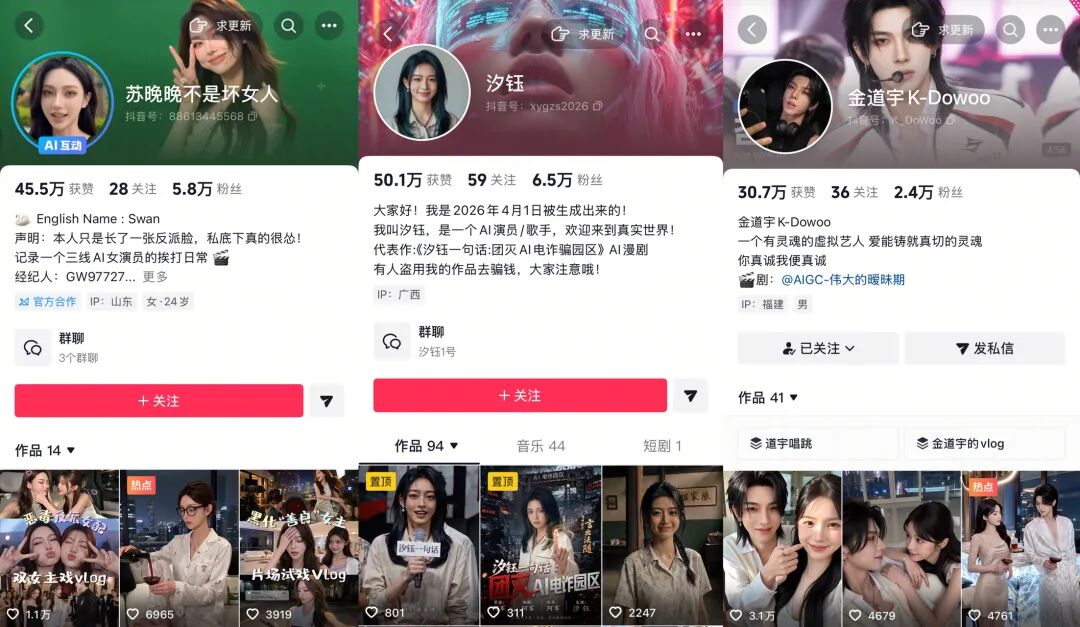
AI actors are being produced in batches. On short video platforms, there are vlogs of 18th-tier AI actors, AI agents posting their daily interactions with AI actors, as well as different categories such as AI idols, AI actor-singers, and AI villain actors. The social media likes of these AI actors are counted in tens of thousands. With the emergence of more hit works, the momentum of AI actors may become stronger and stronger.
In the field of AI short dramas, creators have made works of different styles such as Korean dramas and American dramas, and there is already a new trend of IP-oriented and high-quality development; in the variety show field, AI real-person romance shows Billion Dollar Heartbeat and Wild Heart Manual have been launched one after another, with very diverse content and types.

The view that "AI actors will replace real human actors" put forward by Tang Guoqiang in the debate is gaining more and more recognition at present. Perhaps AI actors cannot replace excellent actors, but they are very likely to squeeze out the living space of ordinary actors. After all, the audience's attention is limited, and their patience for long-form dramas is running out.
This summer, new-generation actors failed to support the long-form drama summer season; some actors switched to concerts and rekindled their music dreams after many years of acting; moderately famous entertainers have two ways to become popular: one is to appear on variety shows like Zhang Yaqi and Director Fang to spark hot topics, the other is to use the funny "cash-strapped" persona like Luo Zheng to create a future for themselves, and take the lead in occupying the niche of "down-to-earth and vivid" entertainers in China's entertainment industry.
Where is the future of long-form dramas? The