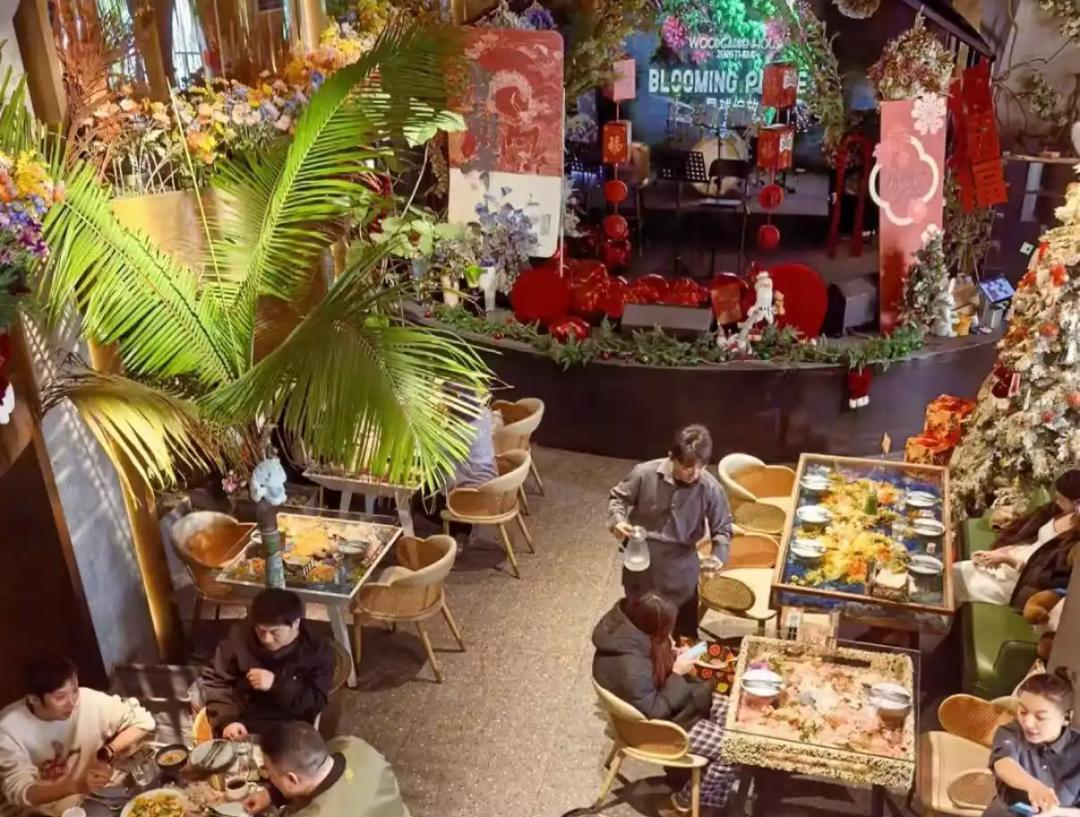
Pretty Meal has survived its operation in the shopping mall.
Behind the polished dining experience, there are excellent product development, high-quality services and a robust supply chain.
Young people living in Beijing have noticed that a growing number of "aesthetic dining spots" have popped up in shopping malls recently. The Boots has opened new stores in Sanlitun and Chaoyang Joy City, while diners have to queue for two hours at Oeat to get a table at Hopson One, and Korean restaurant NEED is even more notoriously hard to get into. The options for date nights have become far more abundant.
In fact, for commercial real estate, "aesthetic dining" has become a widely favored catering trend this year. These chained aesthetic dining brands that are packaged as non-standard products, just like the once red-hot Ba Wang Cha Ji, impose not only capital requirements on franchisees, but also require access to high-quality store locations as an entry ticket.
There are even industry rumors that many shopping malls are willing to subsidize a certain proportion of the decoration costs for these brands.
This is a stark contrast to the external views on aesthetic dining at the end of last year. "90% mortality rate within 3 years" and "average life cycle of only 8-12 months" seemed to have predetermined the fate of this category.
But in reality, making dining experiences visually appealing may only be the most basic requirement today.
Aesthetic dining is still expanding this year
Looking back at the industry's past evaluations of "aesthetic dining", you will find that most people held skeptical attitudes, and even categorized it as "check-in-style consumption". After all, consumers have witnessed the rapid rise and fall of too many internet-famous restaurants.
However, according to store opening data, aesthetic dining remains a mainstream trend this year, and these brands are performing very well in shopping malls.
The "2026 China Catering Franchise Industry Development Report" recently released by the China Cuisine Association in July mentioned that "aesthetic dining" and "rustic style" have formed common features in dish innovation, space creation and brand communication, and have become the current booming trend in the catering industry.
Among them, the total number of stores of brands including Wagas, Ameigo Yunnan-Guizhou-Sichuan Bistro (hereinafter referred to as Meiguo), and Shanhuanhuan Hotpot has all exceeded 150.
Their influence on social platforms is self-evident. According to the "2025 Development Report on 'Aesthetic Dining' in the Catering Industry" from the Hongcan Industry Research Institute, from January to November 2025, the number of video views for the "aesthetic dining" topic on Douyin exceeded 3.6 billion. The number of views for posts under the "aesthetic dining" topic on Xiaohongshu reached 620 million, with more than 3.08 million discussions.
Among these brands, the most representative group is the so-called "Wuhan Gang" — Wanshi Heyi, Dechuan, Ganqu Catering Incubation, Zhuozhi Fangjian and Fanjia, which have incubated multiple brands including NEED, Meiguo, Oeat, and The Boots.
In addition, new companies are constantly joining the track. Shanghai-based Langxing Dingsheng, and 7 Minutes Sweet which transformed into a brand incubation platform in recent years, have all incubated multiple catering brands on a large scale.
The feature of these companies is that they are no longer limited to specific categories, but have developed a set of standard processes for creating non-standard catering brands: responding to popular market trends, high topic popularity, high visual appeal, and precise site selection, to create restaurants that attract young consumers in batches for shopping malls. You can also understand them as the MCN institutions for catering brands, and these restaurants are the internet-famous brands they create.
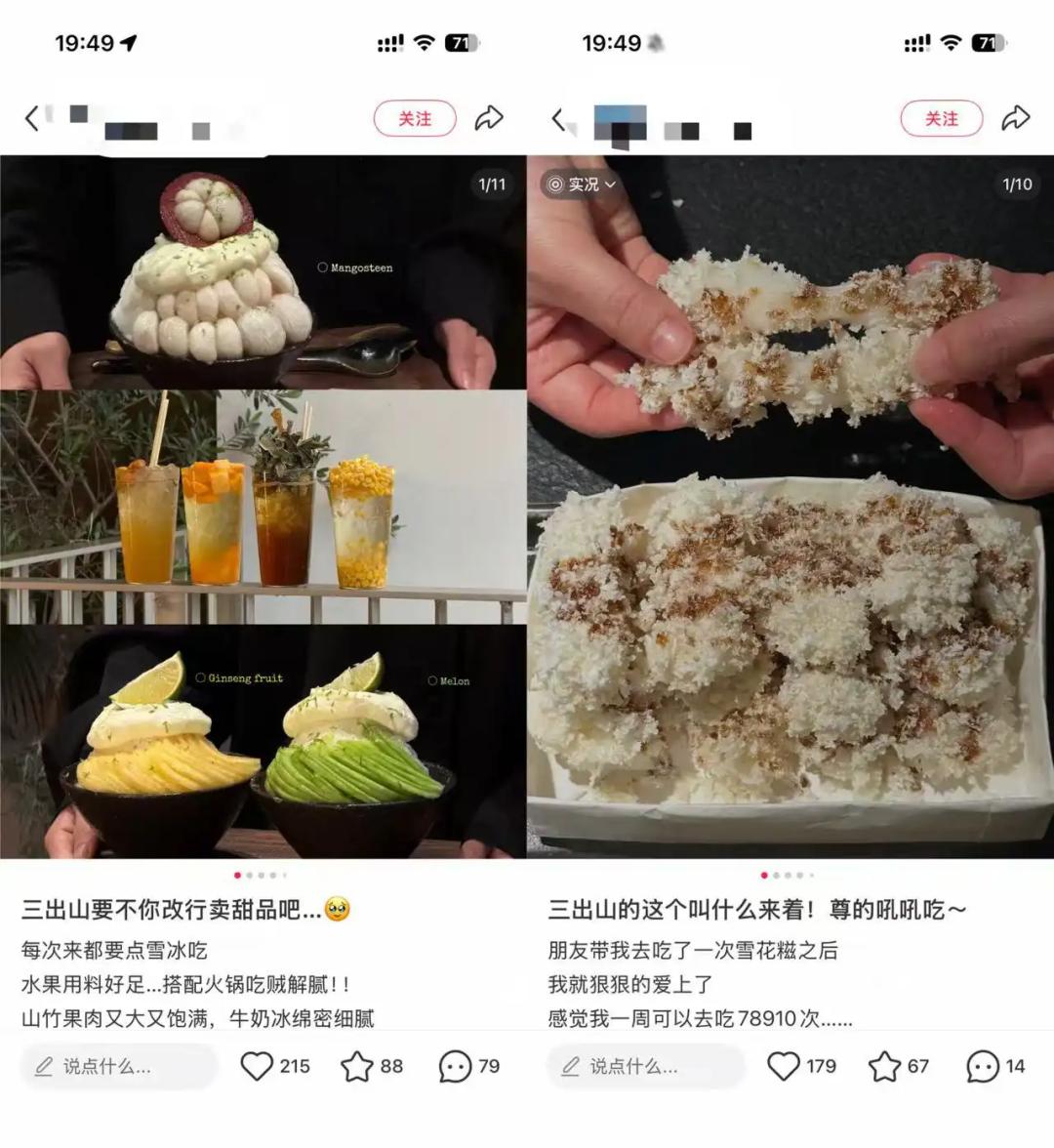
Most of them have innovative signature dishes, eye-catching plating, and a richer selection of appetizers, desserts and drinks to bring freshness to consumers. For example, for Sanshanchu Hotpot, the most recommended dishes by diners are actually snow ice, sweet crispy duck and winter melon tea.
For another example, the signature dishes of NEED are not common Korean dishes, but spicy stir-fried chicken with mozzarella cheese, corn prawn pizza, and fried chicken with caviar cheese sauce.
Moreover, the expansion of the new generation of aesthetic dining brands is dominated by a strong franchise model: the licensor conducts centralized management, and franchisees mainly provide capital and local store locations, acting more like financial investors. This model can ensure the brand style remains consistent, but the threshold lies in the need to build a deep trust relationship with franchisees.
However, for shopping malls, this is the most ideal model: it can not only provide non-standard catering experiences, but also guarantee quality, with multiple brands to choose from. In this way, when the popularity of a certain brand declines, these brand operators can renew their leases with new, trendier brands, and the shopping mall does not have to bear the risk of empty storefronts.
Aesthetic dining is not actually that expensive
Another non-negligible trend is that aesthetic dining is also striving to achieve cost-effectiveness.
After the reshuffle of the past two years, the latest breakout aesthetic dining brands, such as Guangzhou-originated Micang Canteen, Hangzhou-based Chunya, and Hakata Tianyi Tempura Steak Rice, have set their pricing at 30-70 yuan, which is called small-scale aesthetic dining, or "mini aesthetic dining".
The feature of these catering brands is that they compete for presentation at the front end, and compete for efficiency at the back end.
For example, Dou Xiaoqian, the founder of Hakata Tianyi Tempura Steak Rice, once introduced to Hongcan.com that his strategy is "to make fast food in a way that usually costs 700-800 yuan per capita". He chooses the least desirable locations in top-tier business districts, limits the staff to 12 people per shift, but sets the decoration standard in line with thousand-yellow Japanese restaurants, and lets tempura chefs fry the food in front of diners.
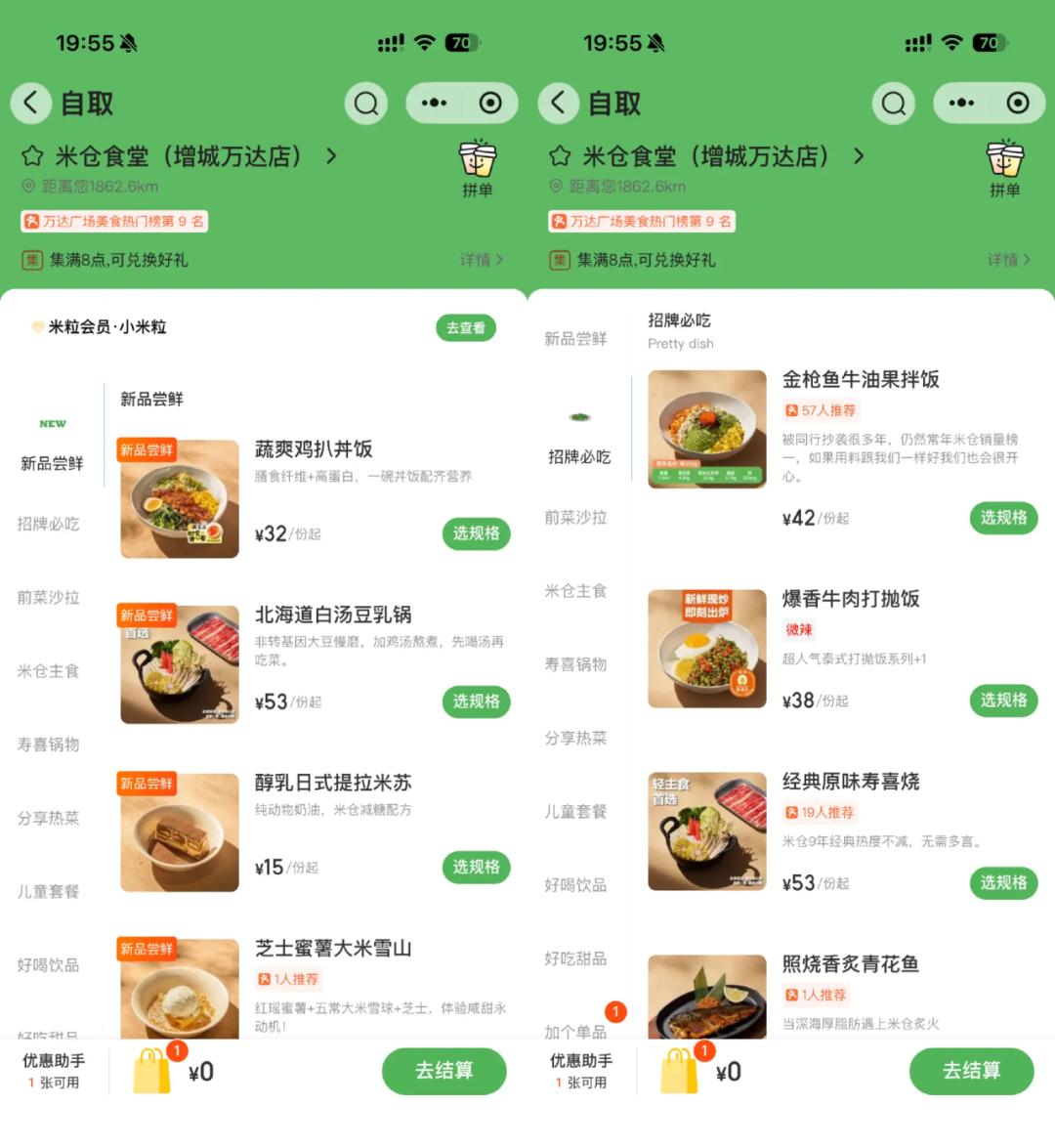
As for the Japanese-style small restaurant Micang Canteen, it learns from McDonald's and KFC in the back-end management, uses a large number of part-time employees, implements diversified employment and full-staff multi-post system, to maximize the per-person efficiency of each store. The total number of opened and signed stores of Micang Canteen is about 75, with a franchise ratio of about 60%, and the overall layout is still centered on the core shopping mall system.
Moreover, the operating cost of aesthetic dining is not as high as most people imagine.
Previously, the Huzhou franchisee of Meiguo once fell into a dispute with the shopping mall, and publicly disclosed his investment cost: for a 377-square-meter store, the decoration cost was 850,000 yuan (pure hard decoration), with 30 employees, and the total investment for opening the store was 4 million yuan. This case gave people the impression that opening an aesthetic dining restaurant is very expensive.
We also consulted Kily, a practitioner with many years of experience in commercial real estate investment promotion and the founder of the brand planning company Grabacoin. She said that generally speaking, the decoration standard for catering stores in core business districts is 3,000-5,000 yuan per square meter. To open a 200-square-meter store, with labor, rent and ingredient preparation included, about 1.5 million yuan is enough to get a store up and running.
Moreover, the importance of marketing is decreasing, and restaurants are increasingly reluctant to invest a large proportion of their costs in marketing: "In the past, you could stay popular for three to six months with marketing, but now you can only stay popular for about a month."
The R&D cost of aesthetic dining is also not as high as people think. "In the past, people might think that you must have a top chef or something, but in fact, as long as you have requirements for products and are willing to practice solidly in the kitchen, you can make it very well," Kily said. Many owners of current aesthetic dining brands are very young, and they are willing to make their dishes look good and taste great, otherwise they would not be satisfied with their own products.
Contrary to common experience, Kily, who has run her own restaurant before, pointed out that improving the quality of ingredients can bring a higher ROI, and diners can immediately taste the difference. "The quality of tripe purchased at 60 yuan per unit is immediately better than that of tripe purchased at 50 yuan per unit."
The relationship between shopping malls and catering has changed now
Why are catering brands willing to enter shopping malls? Because the stable foot traffic of shopping malls is the survival guarantee for catering brands, but the relationship between shopping malls and catering is being reconstructed now.
In addition to various impacts on offline shopping malls, another important reason is that more and more shopping malls have been built in the past two years, diluting the overall foot traffic. The "2025 China Physical Business Foot Traffic Orange Book" shows that 351 new shopping centers opened in China in 2025, and 107 closed. In many cities, 3-5 shopping malls compete within the same business district.
Among the cities Kily has inspected, the oversupply in some southern cities is particularly serious. "In some business districts, two shopping malls are squeezed together, with highly homogeneous positioning and almost identical promotional activities."
This makes both shopping malls and catering brands act cautiously when opening stores. For catering brands, opening a store in a shopping mall means an investment of hundreds of thousands or even millions of yuan, so they must prioritize high-quality shopping malls in core business districts.
"The difference between a high-quality shopping mall and an ordinary one may lie in whether the investment is 3 million yuan or 1 million yuan, but catering brands consider whether they can make money, not the rigid cost, because a 3 million yuan investment has a higher probability of making money," Kily said.
Shopping malls think the same way. For profitable catering brands, they are willing to provide part of the decoration subsidies to reduce their entry costs.
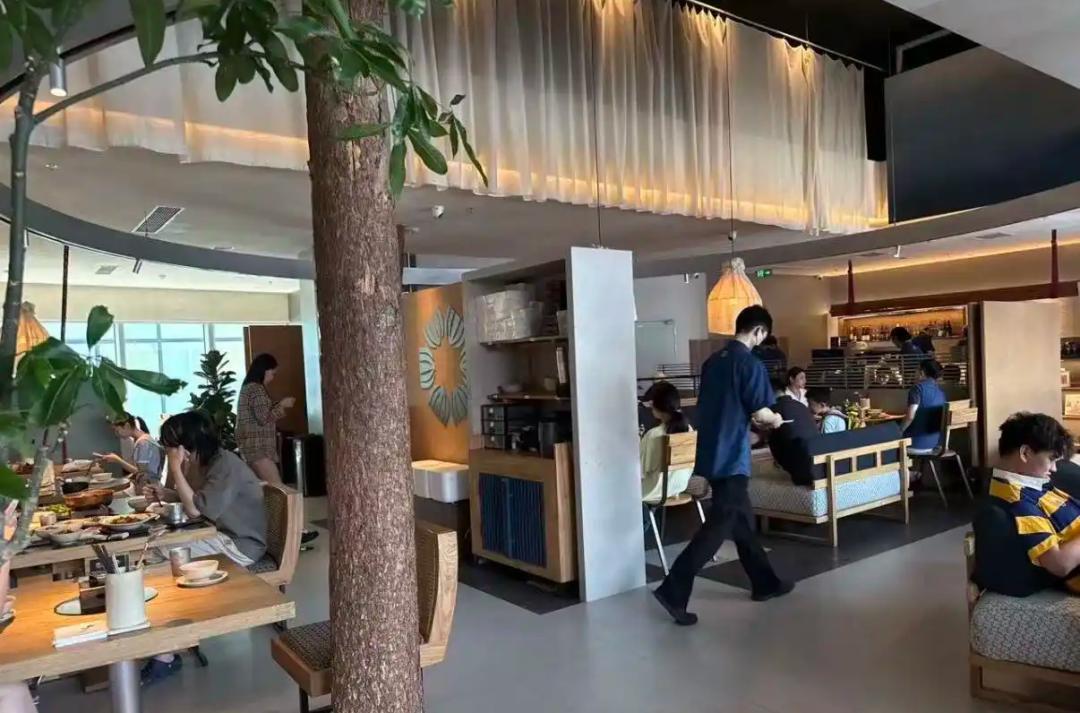
This market environment is the birth background of aesthetic dining.
Wuhan has more than 130 shopping centers, which is naturally a fertile ground for innovation of in-mall catering brands. The earliest popular aesthetic dining brands, including The Boots, Sanshanchu, NEED and so on, are mostly from several local catering management companies in Wuhan: Wanshi Heyi, Dechuan, Ganqu Catering Incubation, Zhuozhi Fangjian and Fanjia.
In Kily's view, aesthetic dining actually provides an upgrade direction for the catering industry.
"Overall, the catering industry has become more competitive," Kily said. Behind the polished dining experience, there are excellent product development, high-quality services and a robust supply chain.
The catering industry has reached a stage where upgrades are necessary
Aesthetic dining is not only about the food looking good, but also includes the overall atmosphere of the restaurant, and of course the food is the foundation.
In fact, it is relatively difficult to make Chinese food, especially stir-fried dishes, look aesthetically pleasing. Therefore, the first categories that became popular in the aesthetic dining trend are Western food and Bistro. Wang Fanghao, the founder of Deep Sea Enterprise Management Consulting Co., Ltd., believes that the "aesthetic" of Western food is, to a large extent, a static, compositional beauty... sauces can be drawn into lines, and ingredients can be stacked in layers.
After that, aesthetic dining expanded to local cuisines, such as Yunnan-Guizhou cuisine, Jiangxi cuisine, Guangxi cuisine and so on. Kily believes that in the future, aesthetic dining may be refined to specific cities or even counties, because the more vertical the positioning, the easier it is to build differentiation.
In her view, China's supply chain is already very mature. If all restaurants in the same city go to the same wholesale market, it will be impossible to create differentiation in raw materials.
However, chained local aesthetic dining brands can directly source raw materials from their origins. "Contrary to what many people think, as long as the scale is large enough, the cost of sourcing from origins will not increase much, and leading aesthetic dining brands now have this capability."
This is supported by China's strong logistics infrastructure. Many ingredients have short shelf lives, but the current cold chain and air transportation systems are sufficient to guarantee timeliness.
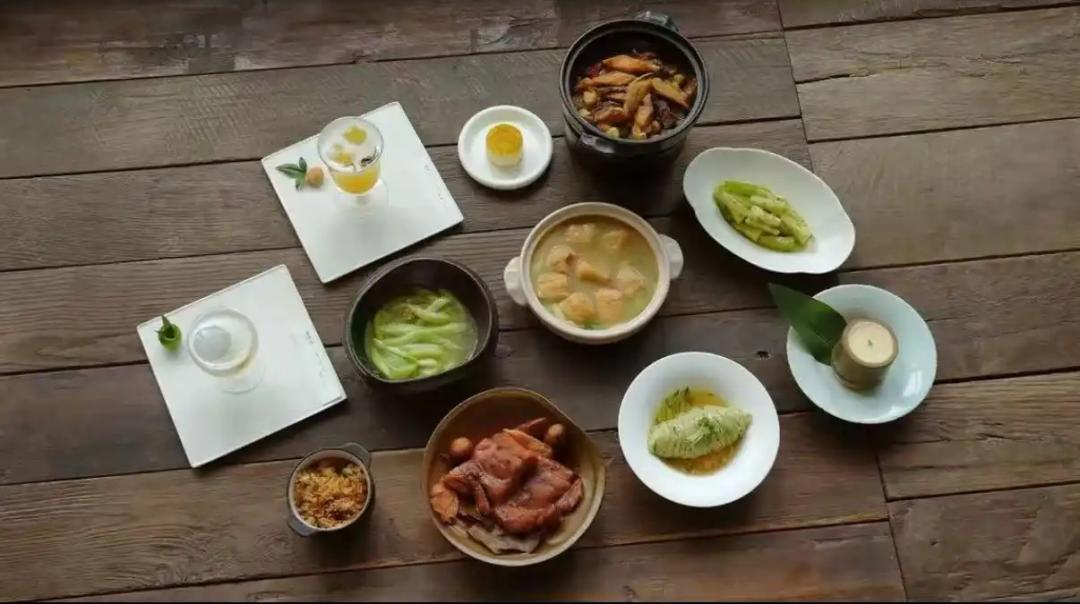
"Why can Xinrongji keep winning Michelin stars all the time? One of the reasons is that it has put a lot of effort into the supply chain to get the best quality raw materials on the market," Kily said.
Now the supply chain upgrade has spread to aesthetic dining brands with per capita spending of around 100 yuan. This has actually overturned some industry traditions. In the past, the common practice for chains was to build their own central kitchen and output supply chain services to franchisees.
In addition to sourcing fresh vegetables and other raw materials directly from origins, even common ingredients like tofu now need to be differentiated. "I heard a while ago that an aesthetic dining R&D team found a special type of tofu in Taizhou, and immediately went there to source it."
This year, in addition to local cuisines, Japanese food, Korean food, hot pot and almost all other categories are embracing the aesthetic dining trend. It can be said that aesthetic dining is upgrading the entire catering industry.
Kily said that the model for aesthetic dining brands to launch new brands is now very mature. They first conduct trial operations in Wuhan, Shanghai or Chengdu, and after gaining popularity, they expand to shopping malls across the country and then open up franchising opportunities.
Aesthetic dining must also become a well-rounded "hexagon warrior"
In the future, the aesthetic dining trend will definitely become more and more competitive, until all restaurants look visually appealing, and this will no longer be a differentiated feature. "It's just like how everyone dresses up when going out now. Once the trend is formed, there will be few people who don't dress up."
So, how can the catering industry create differentiation and make profits in the next stage?
Kily said that the catering industry now needs people with cross-industry experience. This is of course not a comprehensive view, but it is true that the industry now needs people who have the courage to break traditional industry rules to innovate.
Of course, the prerequisite is that the owner has high standards for their own business and products. Aesthetic dining is exactly such a breakthrough innovation. In terms of franchising, several leading core brands do not simply charge franchise fees, but learn from the ready-to-drink coffee chain model to deeply participate in operations, adopting a franchise fee plus profit-sharing model.
Now leading aesthetic dining brands have relatively high requirements for franchisees. "Capital is only one aspect. You also need to be able to access high-quality local store locations."