Suzuki bluntly calls it a "huge threat": BYD Sea Otter is a smash hit in Japan, are domestic Chinese K-Cars poised to stage a counterattack?
BYD has driven Japanese consumers crazy with just one single vehicle.
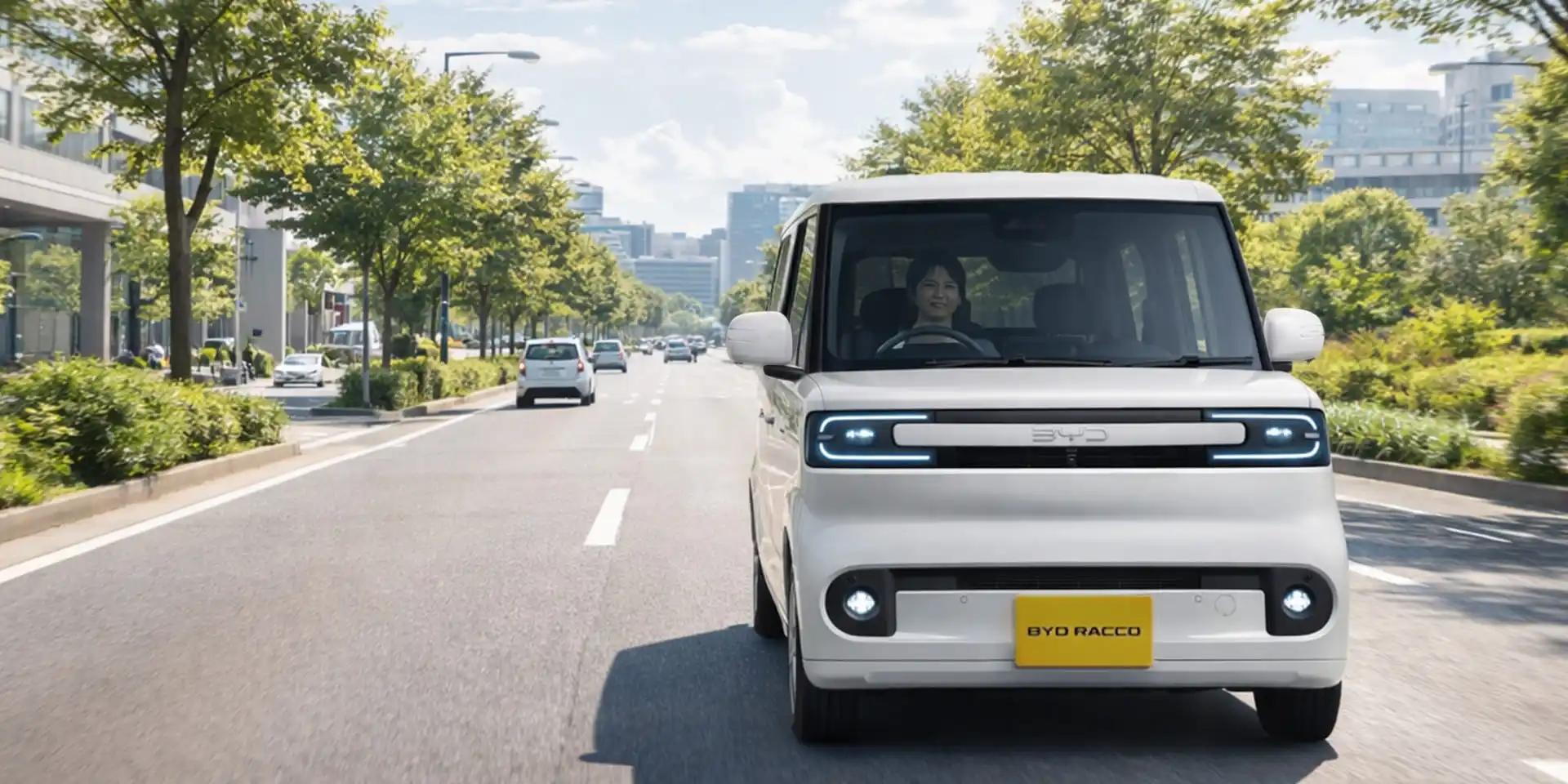
Recently, BYD launched RACCO, a pure electric K-Car model tailored for local consumers in the Japanese market. The model caused a huge stir in Japan as soon as it hit the market. According to a report by Nikkei Chinese Website on August 4, the number of orders for RACCO has exceeded 700 units.
Data from Japanese automotive sales industry organizations shows that RACCO recorded 125 registrations within 4 days of its launch. There are also claims that the number of locked orders for RACCO reached 5000 units in the first week of launch, completing half of BYD's annual target in Japan, but this figure has not been verified.
Suzuki, the automaker with the highest K-Car sales in Japan, its president Toshihiro Suzuki said bluntly that new competition is about to begin, and he believes BYD is a huge threat. Even Alice Hirose, the nationally beloved Japanese actress, has faced widespread criticism for endorsing BYD RACCO, which has impacted the position of local Japanese automakers.
Why exactly has this tiny BYD RACCO drawn so much attention from the Japanese public?
K-Car: The Lifeline of Japanese Automakers in the Domestic Market
Speaking of K-Car, many people may think of Hongguang MINIEV, which once ranked first in domestic new energy vehicle sales, as well as microcars such as BYD Seagull and Geely Starray. But none of these models actually meet the K-Car standards.
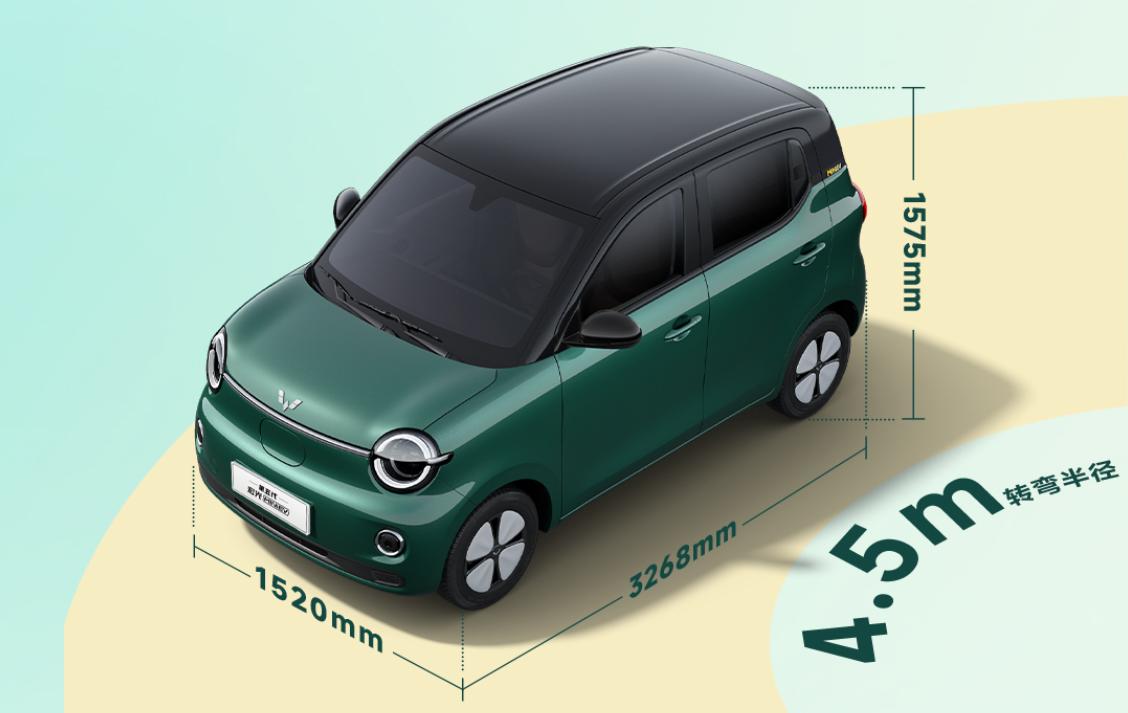
According to Japanese regulations, the length, width and height of a K-Car shall not exceed 3400/1480/2000mm respectively, the engine displacement shall not exceed 0.66L, and there is no displacement limit for pure electric vehicles.
Microcars including Hongguang MINIEV, BYD Seagull and Geely Starray all exceed the size limits in certain dimensions. For example, the 5th generation Hongguang MINIEV measures 3268/1520/1575mm in length, width and height respectively, with its width exceeding the K-Car limit, while both the length and width of Seagull and Starray exceed the standards.
(Source: SAIC-GM-Wuling)
In terms of user experience, the short and narrow K-Car is not suitable for multi-person travel, but Japan's unique situation has made K-Car a must-have choice for many consumers.
Japan has a land area of only 378,000 square kilometers. By the end of 2024, the number of passenger cars in possession reached as high as 62.321 million units. Together with other vehicles, the total car ownership is around 80 million units, with more than 0.6 cars per capita.
To ease traffic pressure, Japan requires consumers to provide proof of a dedicated parking space before purchasing any vehicle other than K-Cars. With the characteristics of easy parking and high traffic efficiency, K-Cars are very suitable for daily commuting. In addition, tax reduction policies lower their purchase cost, which has won wide recognition from Japanese consumers.
It can be said that K-Car is a special vehicle model born under Japan's traffic environment and policies, accounting for 35% to 40% of the country's new car sales. Suzuki ranks first in the K-Car segment with a 38.8% market share, followed by Toyota and Daihatsu in second and third place respectively.
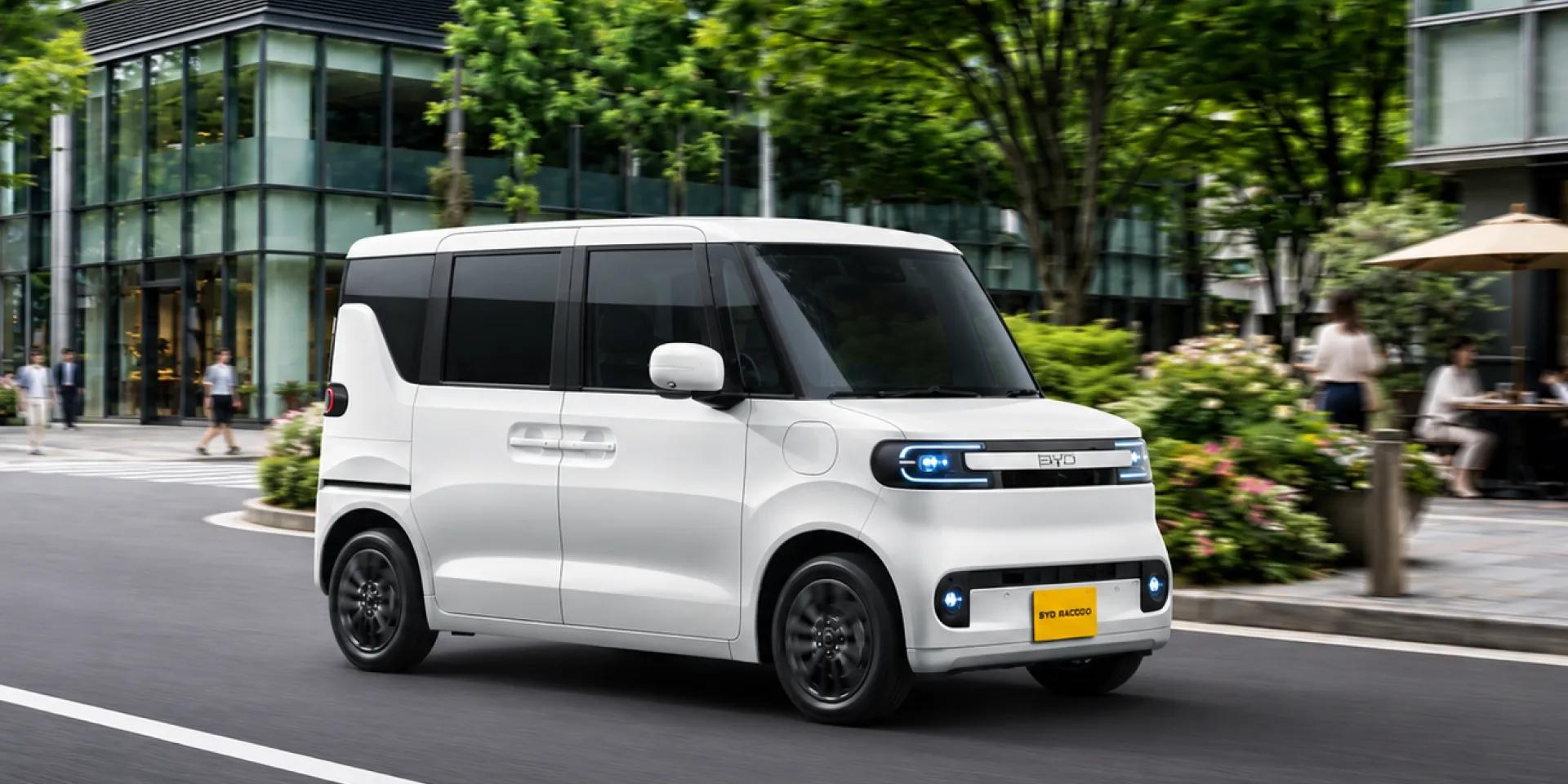
The main reason why BYD RACCO caused a huge stir in Japan lies in its rich configurations, ultra-long range and affordable price. RACCO is priced at 2.145 million yen to 2.497 million yen (about RMB 92,000 to 107,000) in Japan, and the starting price after local subsidies is only 1.995 million yen (about RMB 85,000).
(Source: BYD)
In China, consumers with a budget of around 100,000 yuan would definitely not take a fancy to a car like RACCO, but Japanese consumers have rarely had access to such high-quality affordable vehicles. The configurations equipped on RACCO, including sensor-operated sliding doors, NFC phone key, battery preheating, V2L external discharge, 10.1-inch central control screen, front seat heating, steering wheel heating and 320km range, are rarely seen in K-Cars of the same price range.
BYD RACCO has directly penetrated the core domestic market of Japanese automakers. Consumers are delighted, while industry practitioners are under enormous pressure, and even Toshihiro Suzuki, president of Suzuki Motor, is deeply worried about the threat posed by RACCO.
Overall, as a product developed by BYD specifically for the Japanese market, RACCO's functions perfectly fit the needs of local consumers, and even many Chinese consumers hope that this model can be sold in the Chinese market to cope with the growing traffic pressure.
Do Chinese Consumers Also Need K-Cars?
Guangzhou, where Dianchetong (ID: dianchetong233) is based, is one of the four first-tier cities in China, with a motor vehicle ownership of over 4 million units. Although this figure is far lower than that of Tokyo, Japan, the traffic congestion problem is already very serious, which is also the case in the other three first-tier cities: Beijing, Shanghai and Shenzhen.
To address traffic congestion, many first-tier and second-tier cities in China have implemented license plate lottery policies. However, in order to support the development of the new energy vehicle industry, these cities generally offer preferential treatment to new energy vehicles. At a time when the monthly penetration rate of new energy vehicles exceeds 60%, the lottery policy can hardly slow down the growth rate of motor vehicle ownership.
Learning from Japan's experience, using K-Cars for daily travel may be a good solution.
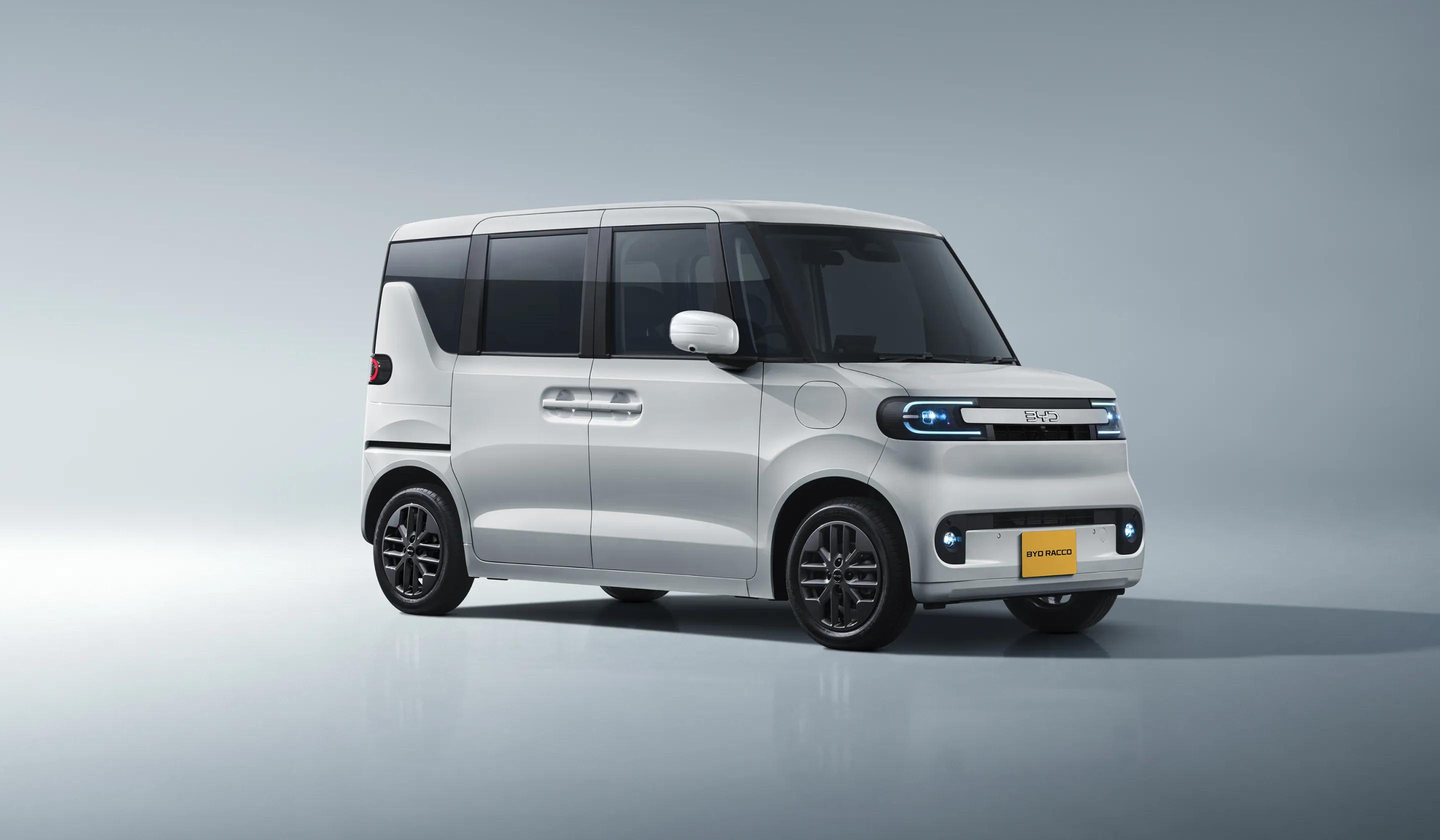
Although K-Cars are not suitable for family trips, in scenarios such as daily commuting to work, grocery shopping, and picking up children from school, the advantages brought by their small size, including high traffic efficiency, easy parking and low energy consumption, are unmatched by ordinary vehicle models.
(Source: BYD)
In addition, due to the excessive number of vehicles, parking spaces are extremely tight in first-tier and second-tier cities in China, and parking prices remain high. It is not uncommon for the monthly parking fee in urban areas to exceed 1000 yuan. K-Cars can even be parked sideways in electric bicycle parking spaces, which can effectively reduce vehicle usage costs.
Before the launch of RACCO, BYD had launched the Shark pickup truck for overseas markets. The model has completed the filing process with the Ministry of Industry and Information Technology, and is expected to be launched in the domestic market within this year. From overseas to domestic, market demand is the core factor that determines the flow of this model.
If Chinese consumers have demand for RACCO, it is believed that BYD will also introduce this model to the domestic market in the future. Of course, in the domestic market, the starting price of RACCO will definitely not be as low as 80,000 to 90,000 yuan, and it is expected to be in the same price range as Hongguang MINIEV.
However, it is still uncertain whether RACCO will become popular in China. China is a late-developing country with infrastructure level ahead of Japan, and the per capita car ownership in China is only 0.26 units. The traffic situation is much better than that of Japan, so the demand for K-Cars is not that urgent.
(Source: BYD)
China has a vast territory, and many people have the need for long-distance travel. K-Cars can only be purchased as the second car for a family. Even in first-tier cities like Guangzhou, many families do not have the budget to buy a second car.
The huge response of BYD RACCO in the Japanese market is essentially due to its perfect fit for the K-Car market environment in Japan. In Japan, supported by exclusive regulations, tax and fee reductions, and parking space policy exemptions, coupled with the reality of narrow urban roads, K-Cars have become the national-level commuting choice. With the advantages of configuration, range and price, RACCO has directly impacted the core market position of local automakers such as Suzuki. But this successful logic cannot be simply copied to China.
First-tier and second-tier cities in China are also facing the problems of traffic congestion and tight parking spaces. K-Cars are small in size, easy to park, and low in energy consumption, suitable for short-distance commuting and transfers. Theoretically, they have applicable usage scenarios.
However, China does not have special policy dividends corresponding to K-Cars. Most families only have one car, which needs to meet the needs of long-distance travel and carrying all family members. Microcars can hardly meet all vehicle usage demands, and many families do not have the budget to purchase a second commuting car either.
Referring to BYD's strategy of verifying the Shark pickup truck overseas before considering its domestic launch, whether RACCO will be introduced to China will ultimately depend on the actual local market demand.
RACCO's Popularity Is Just the Beginning of Chinese Automakers' Global Expansion
The explosive popularity of K-Car in Japan is essentially a rational compromise made by local consumers to adapt to the local traffic status and exclusive policies, and it is a unique automobile ecological product of the Japanese market. The outstanding performance of BYD RACCO is by no means an accidental success of a single model. It is a global proof of the hard power of China's new energy vehicles, bringing new opportunities and directions for the future development of the industry.
RACCO's successful breakthrough in the core market of Japanese automakers has completely broken the local monopoly pattern of Japan's K-Car market, fully proving that domestic new energy vehicles have top global competitiveness in technology, configuration, cost performance and localized R&D, paving the way for subsequent domestic brands such as Geely and Wuling to further explore the Japanese market and enter the high-end new energy track, and accumulating valuable localized operation reputation and market experience.
(Source: BYD)
From the perspective of the domestic market, it is not realistic to fully replicate the popularization model of Japanese K-Cars. However, as traffic congestion intensifies and parking resources become increasingly tight in first-tier and second-tier cities in China, the demand for high-quality short-distance urban commuting vehicles continues to rise.
In the future, a trend of localized high-quality micro commuting vehicles will most likely emerge in congested cities in China, which will not copy Japan's regulatory standards, but formulate corresponding standards in combination with the actual domestic road conditions to meet the demand for lightweight urban travel, and become an important supplement to traditional family vehicles.
Dianchetong (ID: dianchetong233) believes that the current new energy vehicles in China are generally too wide, and "becoming narrower" will be one of the mainstream trends of domestic high-quality micro commuting vehicles in the future.
BYD is expected to continue the mature strategy of "overseas verification and domestic reintroduction" adopted for the Shark pickup truck. The extremely high popularity and market reputation RACCO has gained in Japan has laid a solid foundation for its future entry into the domestic market.