The Lanzhou hand-pulled noodle shop downstairs from your home is going to change its name.
"Lanzhou Hand-pulled Noodles" can be found on every street and alley across China, but many people do not realize that this bowl of noodles actually has very little connection with the city of Lanzhou.
This name that has been misused for 40 years is finally going to be corrected now.
This June, 72 noodle shops in Tianjin collectively took down the "Lanzhou" signboard they had used for four decades, and replaced it with storefront signs reading "Qinghai Noodles".
The decades-long brand dispute over hand-pulled noodles between Qinghai and Lanzhou has now been brought to the public eye.
What kind of commercial game is hidden behind this brand competition?
What kind of changes will the national hand-pulled noodle industry usher in?
Controversy
In the realm of Chinese snacks, Lanzhou hand-pulled noodles is an unavoidable name. Together with Shaxian Snacks and Braised Chicken Rice, it is known as one of the three giants of Chinese national fast food.
The main group that built this huge market is not people from Lanzhou, but fellow villagers from Hualong and Jianzha areas in Haidong, Qinghai.
Over the past 40 years, they have opened noodle shops in more than 300 cities across the country, with over 30,000 stores and an annual revenue of over 24 billion yuan.
Why are most of the operators of Lanzhou hand-pulled noodles that spread all over the streets and alleys people from Qinghai?
The answer lies in the special geographical environment in eastern Qinghai.
Looking at the map, Hualong and Jianzha are located in the transition zone between the Loess Plateau and the Qinghai-Tibet Plateau in eastern Qinghai. The area is full of deep mountains and gullies, with barren land. The wheat yield per mu is only about 75 kilograms, less than 60% of that of Henan Province (126 kilograms) in the same period.
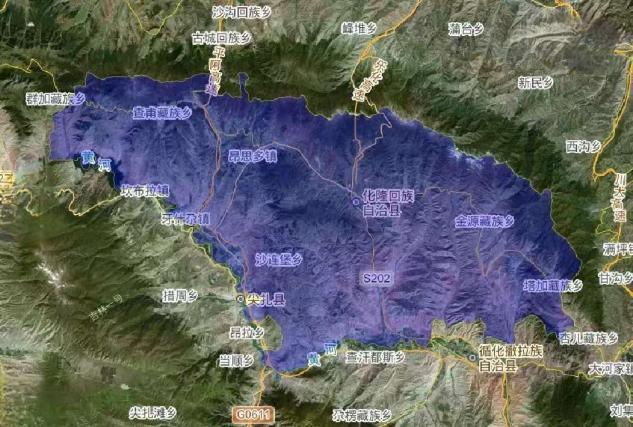
Topographic map of Hualong County Source: Jinshou
In 1986, Hualong was designated as a national-level poverty-stricken county, with the per capita annual cash income of farmers less than 300 yuan.
Farming could not make a living, and there was no foundation for industry at all, so people had to go out to seek opportunities elsewhere.
It was at this very moment that a bowl of noodles opened up another way to make a living.
In 1988, Ma Guifu, a native of Hualong, Qinghai, raised 5,000 yuan with his friends, took over a storefront near Xiamen Railway Station, and opened a halal hand-pulled noodle restaurant.
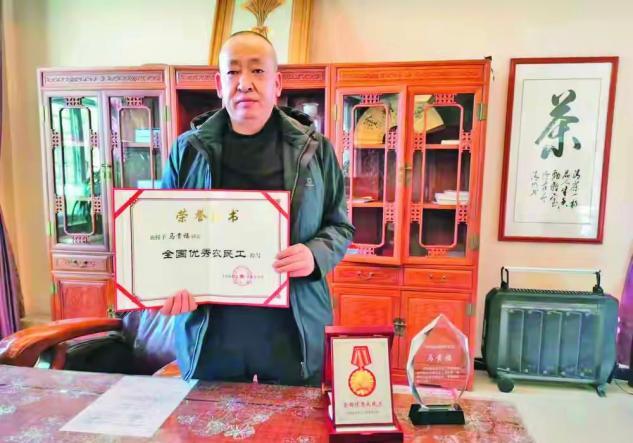
Ma Guifu, the first noodle shop owner who tried this new business model Source: Haidong Daily
He ran into a problem when naming his shop.
No one had ever heard of "Hualong Hand-pulled Noodles", while "Lanzhou Beef Noodles" was already as famous as Quanjude and Goubuli.
So he hung up the signboard of "Authentic Lanzhou Hand-pulled Noodles".
Unexpectedly, the noodle shop really helped Ma Guifu earn his first bucket of gold in life.
The news spread back to his hometown, causing quite a stir in the mountain valleys.
The villagers finally saw a viable way out, so relatives helped relatives, neighbors brought neighbors, and batches of Hualong people walked out of the mountains, replicating noodle shops across the country.
The local government also responded promptly, offering interest-free loans, skill training, and work permits for migrant workers...
This combined set of policies turned scattered individual entrepreneurship into an organized industry.
Today, about 110,000 people in Hualong are engaged in industries related to hand-pulled noodles.
The noodle economy has also changed the fate of this poverty-stricken county. In April 2020, Hualong officially lifted out of poverty.
The Hualong people made Lanzhou hand-pulled noodles a great success, but the people in Lanzhou were not happy about it.
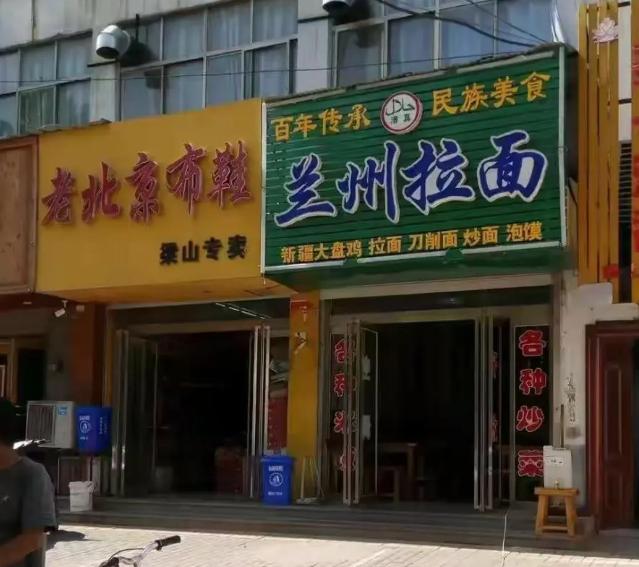
A common Lanzhou hand-pulled noodle restaurant on the streets of China
The Hualong people are very clear that their noodle business serves ordinary people, so the price must be kept affordable.
So they made some cost cuts: the beef slices in the noodles are so thin that there is a popular online joke saying "one cow can be passed down for three generations"; the soup base no longer uses complicated traditional boiling processes, and the rich flavor is directly modulated with seasonings; the noodles also abandoned the standard of 9 different noodle shapes in local Lanzhou, and were simplified to only two thickness options.
A bowl of noodles only costs a few yuan, filling and cheap, which is very popular among workers, so the business naturally grew bigger and bigger.
But in the eyes of Lanzhou locals, this bowl of noodles has completely deviated from the authentic standard.
Authentic Lanzhou beef noodles feature clear soup, white radish, bright red chili oil, green garlic sprouts and yellow noodles. The beef should be stewed until tender but not falling apart, and the soup should be simmered with cow leg bones for enough time.
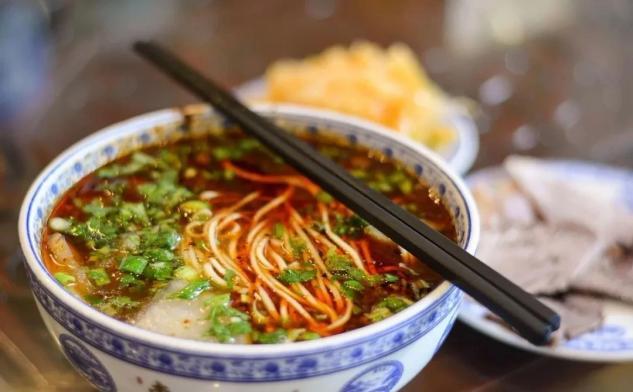
Authentic Lanzhou Beef Noodles Source: Lanzhou Culture and Tourism Bureau
In the eyes of local catering practitioners in Lanzhou, the "Lanzhou hand-pulled noodles" that spread all over the country, sold at low prices and with uneven tastes, are continuously damaging the reputation of authentic Lanzhou beef noodles.
The people of Lanzhou made up their mind to take back their own well-known trademark.
Confrontation
Different from the Qinghai government's idea of supporting the industry with funds, Lanzhou's core measure is to restore the authentic origin of the brand, with trademark registration as the breakthrough point.
The local government registered a graphic trademark featuring a bowl-shaped image of a noodle maker with the words "Lanzhou Beef Noodles", and at the same time promoted the model of "shop name plus trademark", such as "Ma Zilu · Lanzhou Beef Noodles" and "Dongfanggong · Lanzhou Beef Noodles", trying to build a brand cluster.
Lanzhou Beef Noodles Trademark Source: Lanzhou Culture and Tourism Bureau
In 2023, the "Regulations on the Development of Lanzhou Beef Noodles Industry" was also included in the legislative research plan. The intention is very clear: to legally separate authentic Lanzhou beef noodles from the generalized "hand-pulled noodles" on the market.
While Lanzhou is eager to draw a clear brand boundary, on the other side, Qinghai noodle merchants have also taken the initiative to remove the "Lanzhou" storefront signs they have used for many years.
Qinghai noodle industry grew and expanded relying on "Lanzhou hand-pulled noodles", so why do they take the initiative to give up this well-known trademark now?
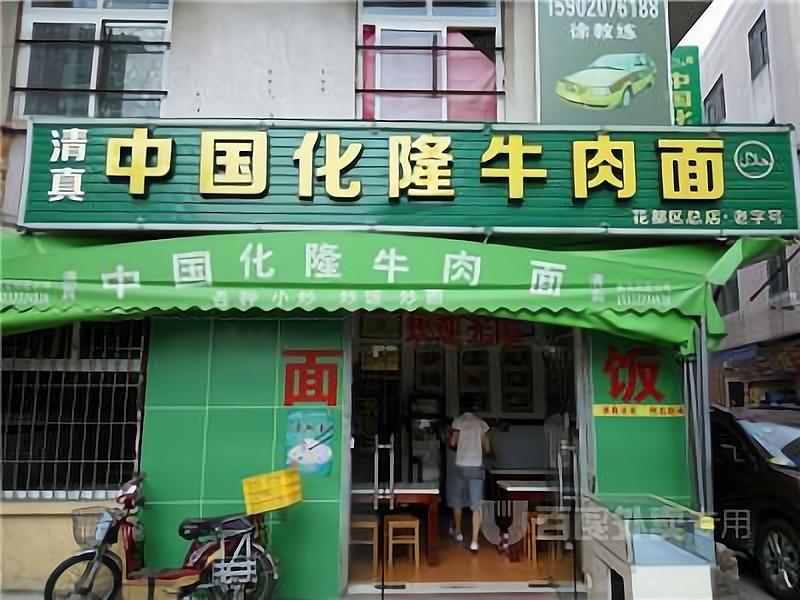
Hualong Beef Noodles
The root cause is that the borrowed brand never gives you the right of speech over the brand. No matter how big your business grows, you are essentially working for others.
Lanzhou has been promoting trademark registration and industry legislation in recent years. The fact that they do not restrict your business now does not mean they will not do so in the future. Once the industry standards are introduced, hundreds of thousands of Qinghai practitioners may be forced to rectify their operations at any time.
Since 2012, local Lanzhou noodle brands have started to expand out of Lanzhou to the whole country. Since then, the Lanzhou noodle industry and Qinghai noodle industry have inevitably faced direct competition.
There is an unwritten rule among Qinghai noodle shop owners to avoid stealing customers from fellow villagers: no second noodle shop is allowed to open within 500 meters, but Lanzhou noodle shop owners do not recognize this rule.
In 2015, the Lanzhou brand Dongfanggong opened a shop in Shenzhen, right across the road from two Qinghai noodle shops. Conflicts between the two sides lasted for a whole month, and similar confrontations have occurred repeatedly in Xi'an, Suzhou, Tianjin and Beijing.
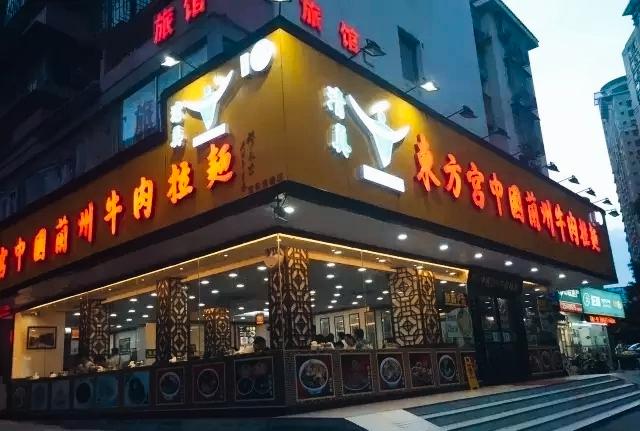
Dongfanggong Bao'an South Road Store in Shenzhen Source: Dongfanggong Lanzhou Beef Noodles
The rules established by Qinghai people over decades were completely shattered in front of Lanzhou brands, but what is more disturbing than street conflicts is the power of capital.
Around 2020, beef noodle brands such as Chen Xianggui, Ma Jiyong and Zhang Lala received financing.
Most of these brands originated in Shanghai, following a premium positioning: they are located in shopping malls, with exquisite decoration. The starting price for a bowl of noodles is 26-28 yuan, and the per capita consumption is around 40 yuan when paired with beef and snack sets.
In the same city, the Qinghai-run noodle shops on the street selling noodles for 12 yuan share the same four words "Lanzhou hand-pulled noodles" as the capital-backed brands in shopping malls that sell noodles for 30 to 40 yuan.
After customers finish eating the 30-40 yuan bowl of noodles, they will inevitably wonder when they see the 12-yuan noodle shop: "Is this one not authentic because it is so cheap?"
Qinghai people found themselves caught in a pincer attack: Lanzhou people suppressed them from the "authenticity" dimension, while capital brands outflanked them from the "premium" dimension.
The family-run shops that have survived for 40 years relying on small profits but quick turnover are being squeezed more and more tightly.
Since the borrowed brand will have to be returned sooner or later, building an independent brand has become an urgent priority.
In May 2023, the Hualong Noodle Brand Promotion Association was established, uniting scattered Hualong noodle shops across the country to promote the transformation of the industry from individual operation to branded development.
Jianzha County took even bigger steps.
This is the Tianjin pilot mentioned at the beginning of the article, where 72 noodle shops simultaneously removed the "Lanzhou" sign and replaced it with "Qinghai Noodles".
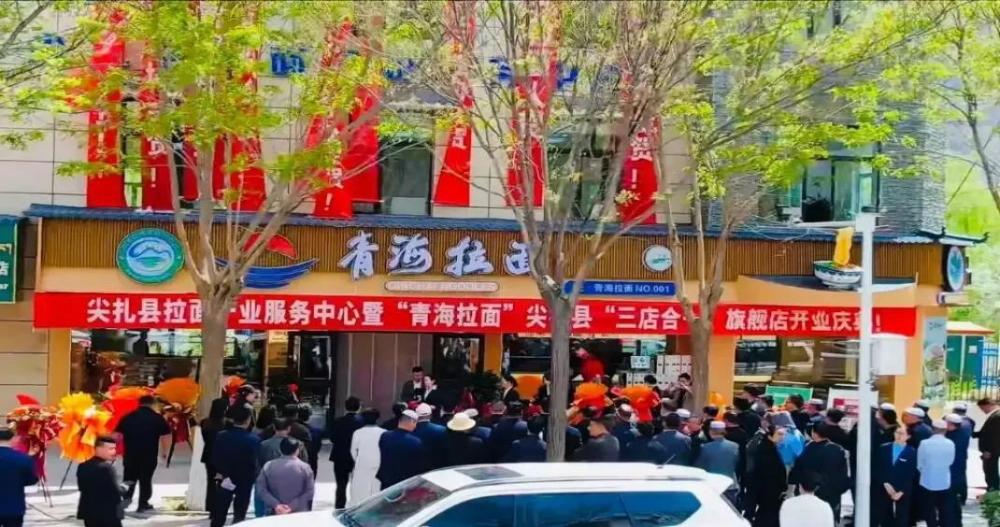
The "Three-in-One" flagship store of Qinghai Noodles in Jianzha County
The storefront sign is changed, and the business model is also upgraded.
It no longer only sells a bowl of noodles, but integrates three functions: "noodle sales + specialty exhibition + cultural tourism display". While customers finish their noodles, they can also take away Qinghai's yak jerky, highland barley biscuits and tourism brochures.
If customers place orders by scanning the QR code, the shop owner can also get a 10%-20% sales commission.
In addition to Tianjin, Jiangsu has opened a total of 98 "Qinghai Noodles" outlets, making it the province with the largest number of outlets under the "Four Entries" initiative (entering government agencies, universities, enterprises, and expressway service areas).
In addition, Shaoxing in Zhejiang, Shandong Expressway, Rongxiang in Wuxi and other regions are also promoting this transformation simultaneously.
40 years ago, Qinghai people went out with a pot on their back, borrowed other people's brand name to feed their whole family.
40 years later, they decided to take off the "Lanzhou" sign and hang up the "Qinghai Noodles" sign. This step is not easy, but it has to be taken eventually.
Transformation
The outside world may easily think that the name change is a temporary decision. In fact, Qinghai Province has been making layouts for this brand independence for a whole decade.
Over more than ten years, Qinghai has successively implemented trademark registration, special support policies and industry regulations, built a complete system covering supply chain, financial support and store upgrading, and promoted store transformation through flexible guidance.
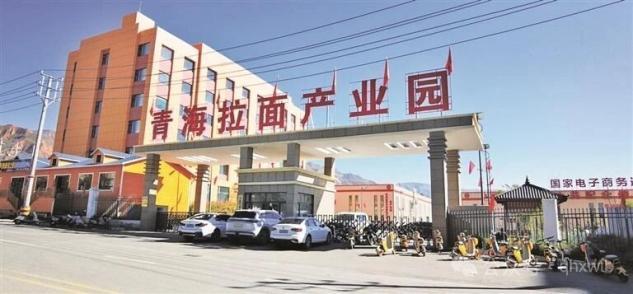
Qinghai Noodle Industrial Park in Hualong County Source: Qinghai News Broadcast
The layout is in place, and the pilot projects are launched, but the real test has just begun: will the 30,000 "Lanzhou hand-pulled noodle" shops run by Qinghai people across the