Unitree goes public, raising funds to strengthen its core intelligent technology capabilities.
On August 10, next Monday, Unitree Robotics will officially open its online subscription, followed by the highly anticipated official listing of Unitree.
From being accepted on March 20, passing the review of the Listing Committee on June 1, obtaining the approval of the China Securities Regulatory Commission in July, to the upcoming listing in August, Unitree completed the entire listing process in only five months.
According to the information disclosed in Unitree's prospectus:
Unitree plans to publicly issue no less than 40.4464 million shares, accounting for no less than 10% of the total share capital after issuance, with a planned fundraising of 4.202 billion yuan.
Compared with the 29.5 billion yuan listing fundraising amount of leading storage player Changxin Technology, as the absolute leader in the robotics field, Unitree's 4.2 billion yuan fundraising is not that large.
However, whether in the robotics field or the technology field, Unitree is a sufficiently unique company.
For one thing, it is not a startup that only relies on financing and technical demonstrations to maintain its valuation.
In 2025, Unitree achieved operating revenue of 1.699 billion yuan, with a gross profit margin of main business as high as 60.13%. At a time when most humanoid robot companies are still losing money and facing chaotic order and delivery calibers, Unitree has sold thousands of humanoid robots and generated real profits.
For another, half of the 4.2 billion yuan funds Unitree plans to raise from the capital market will be invested in the R&D of embodied intelligence models.
This also forms two completely different faces of Unitree.
01 Unitree, which did not believe in humanoid robots, sold 5000 units in three years
The most direct judgment on whether a robotics company has truly entered the commercialization stage is not whether the robot can do backflips, but whether there are customers willing to pay for it, and whether the company can achieve stable production, delivery and payment collection.
From this perspective, Unitree has already crossed this most difficult threshold in the industry.
In 2023, Unitree launched its first full-size humanoid robot H1. Since Unitree H1 was officially released at WRC 2023 in August that year, only 5 units were sold that year, with an average unit price of about 593,400 yuan.
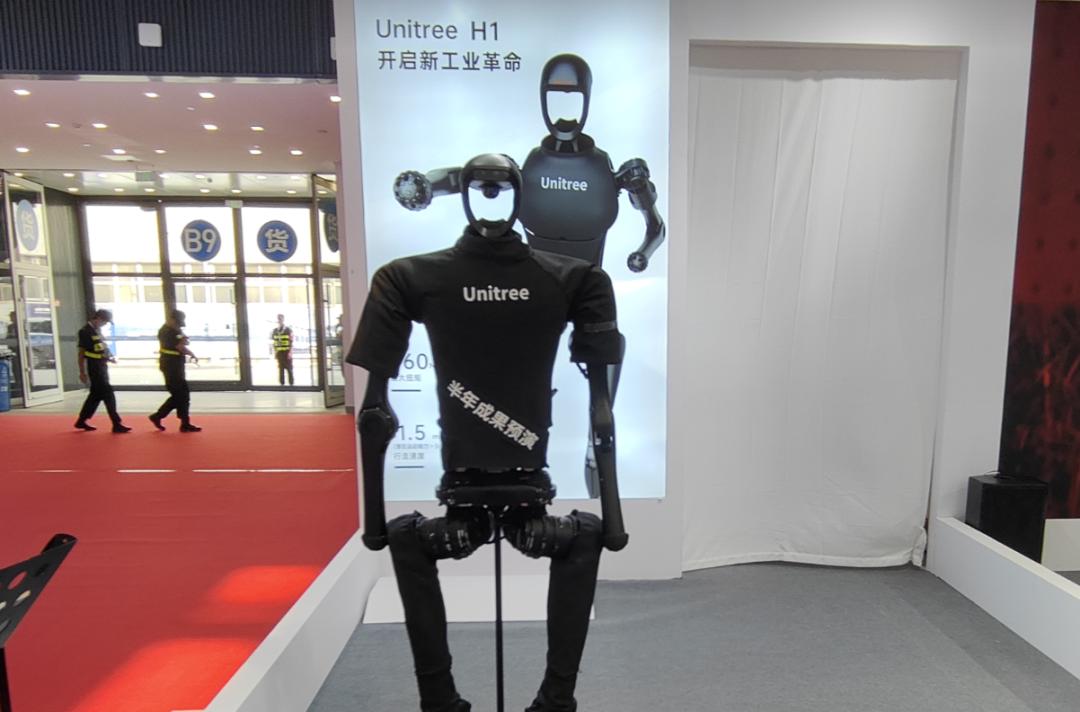
For Unitree, which had already shipped thousands of quadruped robots to the world every year at that time, these 5 sales volumes had no substantial impact on the company's revenue.
In fact, Wang Xingxing, founder of Unitree Robotics, has repeatedly stated in public that due to the poor software and AI capabilities of early humanoid robots, low practical value of bipedal form, and the inability to achieve a closed commercial loop, he was not optimistic about products like humanoid robots.
It was not until the advent of ChatGPT and the explosion of artificial intelligence technology based on the large model paradigm that Unitree seconded 3 full-time employees and spent 6 months developing the H1 humanoid robot in 2023.
The R&D of this humanoid robot also strengthened his belief in developing humanoid robots.
In 2024, Unitree developed the small humanoid robot G1, which is easier for mass production, secondary development and sales. Once this product was mass-produced, the sales volume of Unitree's humanoid robot product category began to take off, and the sales volume increased to 410 units that year.
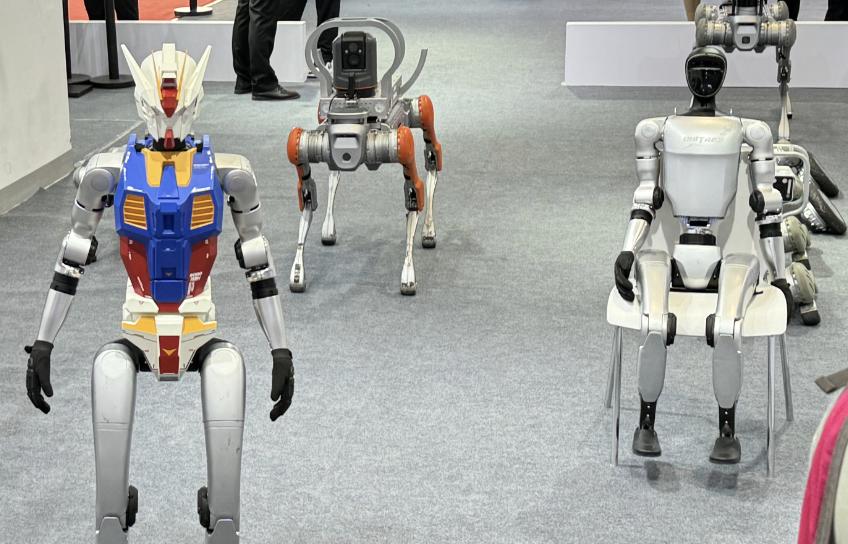
By the first three quarters of 2025, this figure had risen rapidly to 3551 units, and the average unit price had also dropped to 167,600 yuan.
According to the later disclosed data of Unitree, the actual number of humanoid robots sold and delivered in the whole year of 2025 exceeded 5500 units, with a total output of more than 6500 units.
After three years, the new category of humanoid robots has reconstructed Unitree's revenue structure.
A set of comparative data is as follows:
In 2023, humanoid robots only contributed about 2.97 million yuan in revenue, accounting for 1.88% of the main business revenue, while quadruped robots still accounted for 75.78%;
By the first three quarters of 2025, the revenue of humanoid robots reached 595 million yuan, accounting for 51.53%, surpassing quadruped robots for the first time.
In fact, the three years when humanoid robots reconstructed Unitree's revenue structure are also the golden three years for China's humanoid robot industry.
During these three years, Unitree completed its identity transition, quietly transforming from a quadruped robot company into a dominant player in the humanoid robot field.
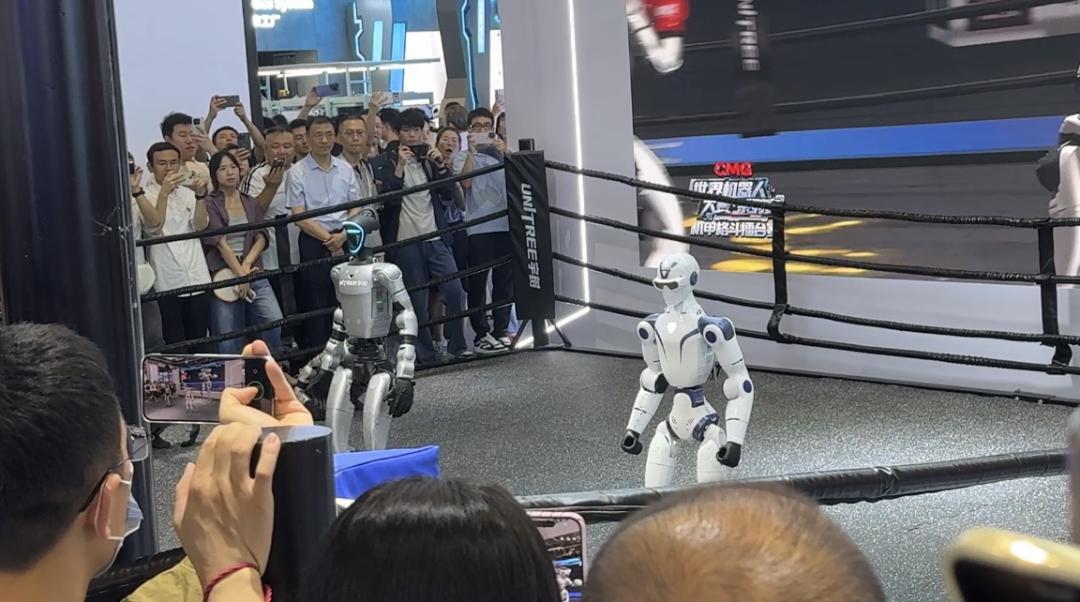
Another unique feature of Unitree is that its sales model is more like a traditional home appliance enterprise.
Different from many startup teams in the robotics field, Unitree's growth is not built on a small number of large project-based customers.
According to the data given in Unitree's listing prospectus:
In the first three quarters of 2025, the top five customers together accounted for 10.61% of the total revenue, the largest customer JD.com accounted for 3.54%, and other major customers were distributed in markets such as Asia and Europe.
No single customer can directly influence the revenue performance of this company.
This decentralized revenue structure shows that Unitree's robots already have relatively standardized sales capabilities. The company reaches scientific research, education, technology enterprises and developers through direct sales and distributors, and also sells consumer-grade quadruped robots through e-commerce platforms.
In fact, until the first three quarters of 2025, Unitree's offline sales still accounted for 86.5%.
At that time, with the collective awareness established by Unitree in the public field, channels such as online sales and e-commerce warehousing also began to improve.
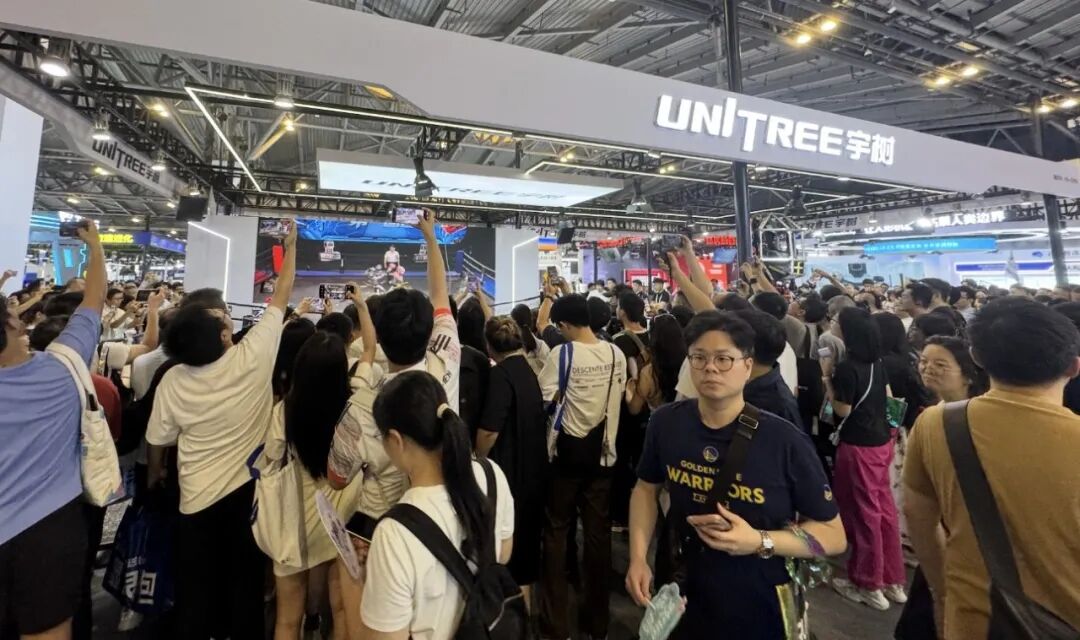
Another difference from most startups in the humanoid robot field is that Unitree is also a company with strong sales capabilities.
In the first three quarters of 2025, Unitree produced 3701 humanoid robots and sold 3551 units, with a production-sales rate of 95.95%, which means that most of the humanoid robots produced in the current period were sold out.
In contrast, the production-sales rate of quadruped robots dropped from nearly 100% before to 84.96%.
The official explanation given by Unitree is that after cooperating with JD Self-operated, some quadruped robots have been sent to JD's warehouse, but have not yet met the conditions for settlement and revenue recognition.
In this case, after introducing the Internet e-commerce model, how to do a good job in channel management has become a problem that Unitree needs to spend some time studying.
From the perspective of customer structure, Unitree's existing demand is still mainly distributed in scientific research and education, technology development, commercial consumption, performance and exhibition, and early industrial applications.
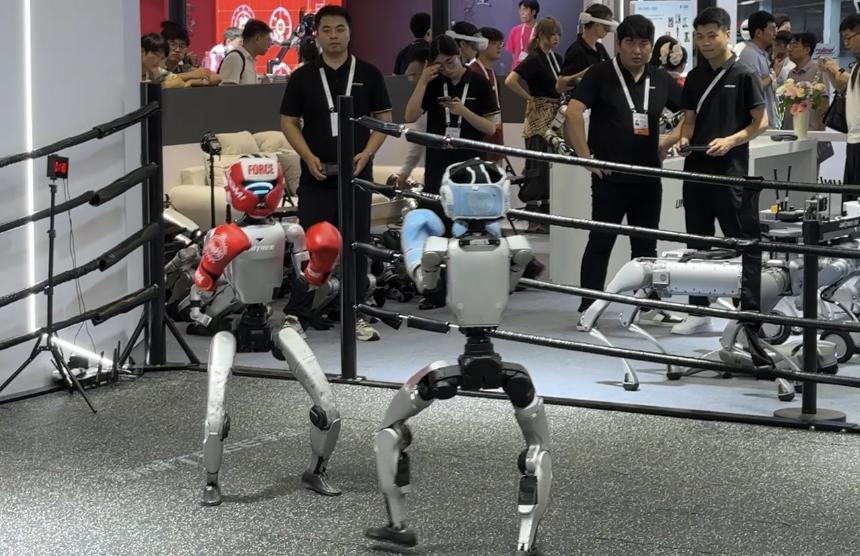
Scientific research institutions purchase robots for algorithm research, technology companies purchase robots for data collection, and commercial institutions purchase robots for tour guiding and performance. These are all real revenues, but they do not necessarily mean that robots can already enter factories to work and become direct productivity.
In Unitree's listing prospectus, we have not yet seen a benchmark customer in the automotive, electronics manufacturing or logistics industry with a high revenue share and continuous large-scale repurchase.
The advantage of this is that there is no dependence on a single customer, and the disadvantage is that in the early stage of the development of the humanoid robot industry, after well answering the question of "whether anyone will buy it", Unitree still needs to answer the closed-loop business question:
How to leap from "selling robots" to "making robots create productivity on a large scale".
02 With a gross profit margin exceeding 60%, why can Unitree make profits?
In 2025, the gross profit margin of Unitree's main business reached 60.13%.
This figure is not only higher than that of most hardware companies, but also very eye-catching in the humanoid robot industry which is still in the early stage of commercialization.
Unitree was able to make profits earlier than its peers, first of all, thanks to the technology reuse from quadruped robots to humanoid robots.
Unitree has been developing quadruped robots since 2016, and has accumulated many years of experience in motors, joint modules, reducers, drivers, batteries, heat dissipation and dynamic motion control.
Although the structure of humanoid robots is more complex, there are a lot of common points between their joints, actuators, motion control and production processes and quadruped robots.
This means that when Unitree enters the humanoid robot market, it does not need to rebuild a complete supply chain.
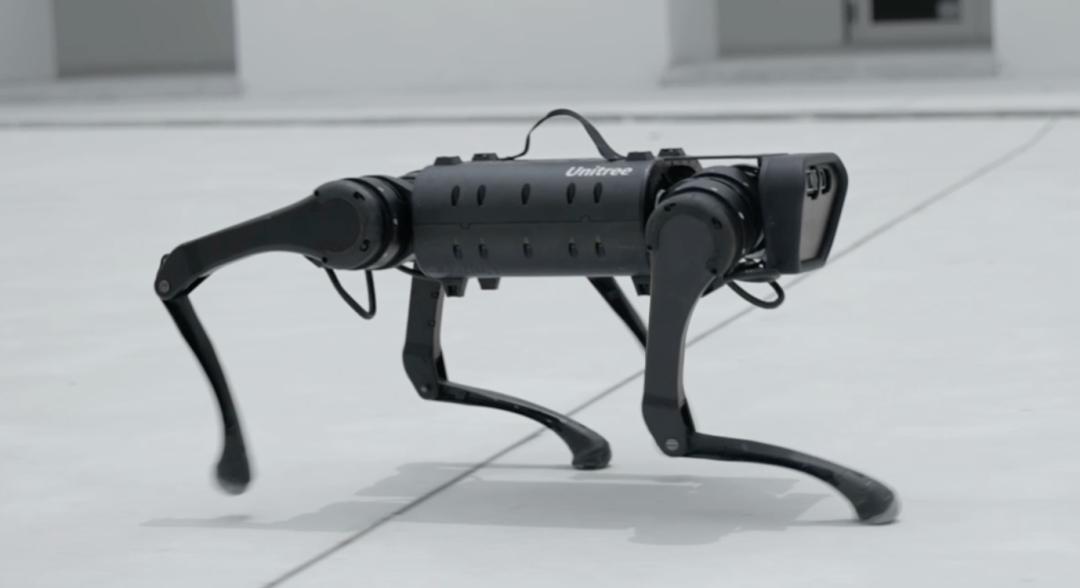
The mature joint, motor and control technologies can be migrated to products such as H1 and G1. Different models can also share some parts, software and algorithms, so that R&D costs and manufacturing costs can be shared by more products.
Secondly, which is also easy to be ignored by everyone, Unitree adopts a relatively restrained full-stack self-development model.
Unitree has repeatedly emphasized full-stack self-development in its prospectus, but this does not mean that every screw and every circuit board on the robot is produced internally by Unitree.
In fact, Unitree itself masters key links that determine product performance and cost, such as ontology design, core joints, motors, reducers and motion control, and at the same time outsources standardized processes such as PCB mounting, injection molding and surface treatment to external suppliers.
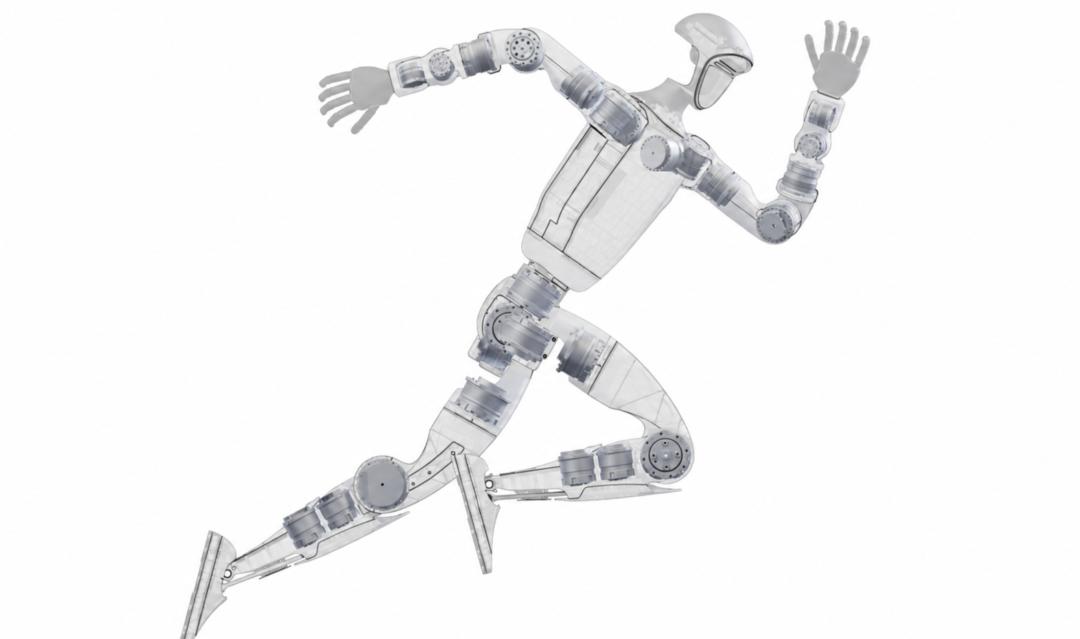
In the first three quarters of 2025, the total proportion of Unitree's procurement from the top five raw material suppliers was about 21.72%, and the largest supplier only accounted for 5%. The concentration of the supply chain is not high, and no core component supplier can affect the company's production.
This avoids the situation that when full-screen displays became the trend of the smartphone market, leading domestic mobile phone manufacturers had to queue up to visit Samsung and wait for Samsung's full-screen display production capacity.
This model of mastering core links internally and outsourcing general processes allows Unitree to avoid carrying too many fixed assets when expanding production, and at the same time use China's mature electronic and mechanical processing supply chain to reduce costs.
The scale effect further amplifies Unitree's advantages in the humanoid robot field.
From 2023 to the first three quarters of 2025, the unit cost of Unitree's humanoid robots dropped from 73,200 yuan to 62,200 yuan. In the first three quarters of 2025 alone, the unit labor cost decreased by 55.24%, and the unit manufacturing cost decreased by 38.84%.
When the output of humanoid robots increases from single digits to thousands of units, the fixed costs such as rent, equipment depreciation and production management are rapidly diluted, and Unitree's bargaining power over upstream suppliers will also be enhanced.
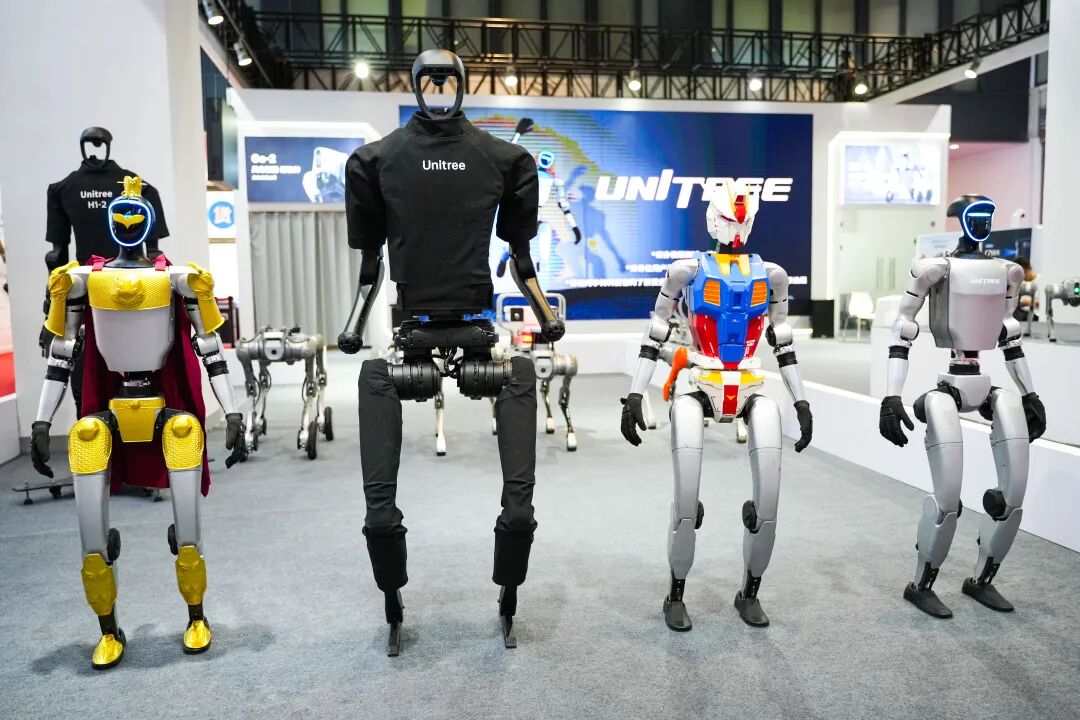
However, the high gross profit margin also hides the early industry dividend.
In 2023, Unitree only sold 5 units of H1. At that time, there were very few humanoid robots available for public purchase on the market. The average selling price and gross profit margin of the product reached 593,400 yuan and 87.67% respectively, which obviously does not have long-term representativeness.
With the lower-priced G1 becoming the main product, the gross profit margin of humanoid robots dropped to 68.44% in 2024, and further dropped to 62.91% in the first three quarters of 2025.
In the same period, G1 already accounted for 88.9% of the revenue from humanoid robots.
Unitree took the initiative to lower the price, aiming to obtain sales volume and market share with a lower threshold.
The good news is that the unit cost reduction rate of G1 was once faster than the price reduction rate, so the gross profit margin still remained at a high level;
The risk is that when humanoid robots are still in the early stage of development, how long this scale effect can continue is still a problem.