At the age of 68, the founder of BOE is making another IPO attempt: with a total loss of 4.9 billion yuan in three years, he is now fighting his way into the chip industry.
In 2019, 62-year-old Wang Dongsheng stepped down from BOE.
BOE, which he founded from scratch, has already become the absolute leading player in China's display panel industry. The public thought that the "Father of China's Semiconductor Display Industry" was about to retire, but he immediately dived into a brand new track — chips.
"We've almost finished the display business, you can also work on the chip business." This sentence from his friend ignited his passion for the second venture.
Five years later, on May 30, 2025, ESWIN Computing submitted its listing application to the Hong Kong Stock Exchange for the first time.
Half a year later, on January 30, 2026, the second listing application lapsed. On July 31, 2026, 68-year-old Wang Dongsheng, with ESWIN Computing, stood at the gate of the Hong Kong Stock Exchange for the third time.
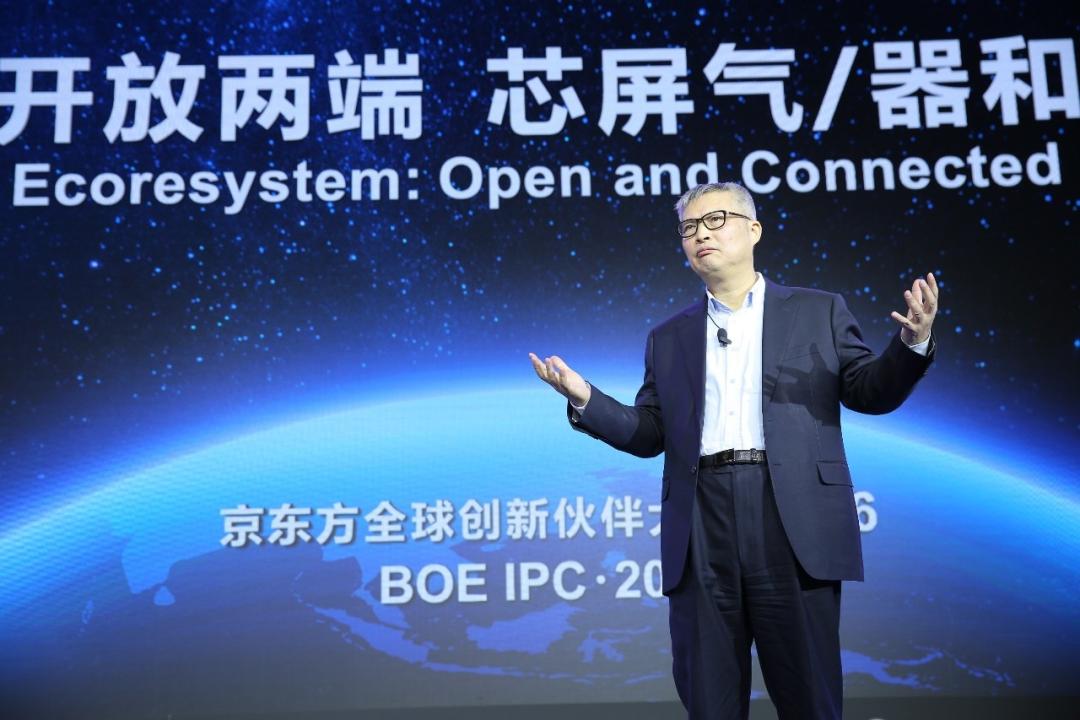
Wang Dongsheng delivering a speech at BOE Global Innovation Partner Conference Source: BOE
- 01 - The second venture of the "Father of China's Liquid Crystal Display"
In 1993, Wang Dongsheng led employees to raise 6.5 million yuan of seed funds on their own, carried out shareholding reform on Beijing Electronic Tube Factory which had suffered losses for seven consecutive years, and founded the predecessor of BOE. More than 20 years later, BOE became the display panel enterprise with the largest shipment volume in the world, completely solving the long-term shortage of display panels in China.
The 2018 ZTE incident stung the entire Chinese semiconductor industry. The upstream wafer capacity was in short supply, chip prices soared, and China's semiconductor industry suffered a heavy blow. Wang Dongsheng realized that the problem of "display" had been solved, but the problem of "chip" was far from being resolved.
In September 2019, Wang Dongsheng co-founded ESWIN Computing.
He quickly formed an "all-star team": invited Wang Bo, former Product Director of Intel, to serve as Vice Chairman, and He Ning, former Senior Staff Engineer of Qualcomm, to serve as CTO. The company focuses on two core application scenarios: smart terminals and embodied intelligence, and adopts the new-generation RISC-V computing architecture.
ESWIN Computing locked its breakthrough point on the RISC-V open-source architecture — a new track that may break the monopoly of ARM and x86. The open-source architecture requires no licensing fees, which can greatly reduce the cost of chip design; its modular feature is especially suitable for the fragmented scenario demands in the AIoT era. Against the background of intensifying China-US tech game, RISC-V has become a strategic channel for China to break through the blockade of chip architecture.
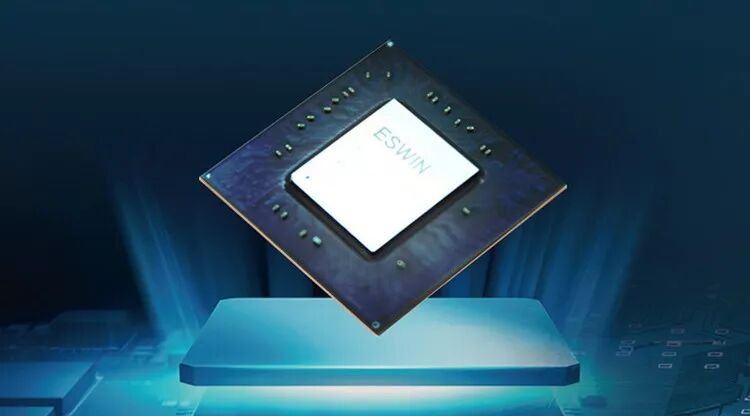
ESWIN Computing RISC-V chip products Source: ESWIN official website
- 02 - Revenue is rising, losses are narrowing, but it is still unprofitable
ESWIN Computing is a chip product provider based on RISC-V architecture, adopting the fabless business model, and outsourcing all chip manufacturing, packaging and testing to third parties.
Calculated by 2025 revenue, ESWIN Computing is the largest domestic human-computer interaction chip product provider for smart terminals in China, with a market share of 5.7%; meanwhile, it ranks third in China's domestic RISC-V main control chip product market, with a market share of 1.2%.
The financial data disclosed in the prospectus can show the development trajectory of this company in recent years.
Revenue is rising. It reached 1.752 billion yuan in 2023, 2.025 billion yuan in 2024, and 2.431 billion yuan in 2025, with a three-year compound annual growth rate of 19.4%. The revenue in the first quarter of 2026 was 494 million yuan, up 18.4% year on year.
Losses are narrowing. The net loss was 1.837 billion yuan in 2023, 1.547 billion yuan in 2024, and 1.516 billion yuan in 2025. The cumulative net loss for the three years reached 4.9 billion yuan. The net loss in the first quarter of 2026 was 375 million yuan.
Gross margin is improving. The gross margin was 15.4% in 2023, 18.0% in 2024, and 18.6% in 2025. It dropped to 14.8% in the first quarter of 2026, and the company explained that it was affected by seasonal factors in the first quarter.
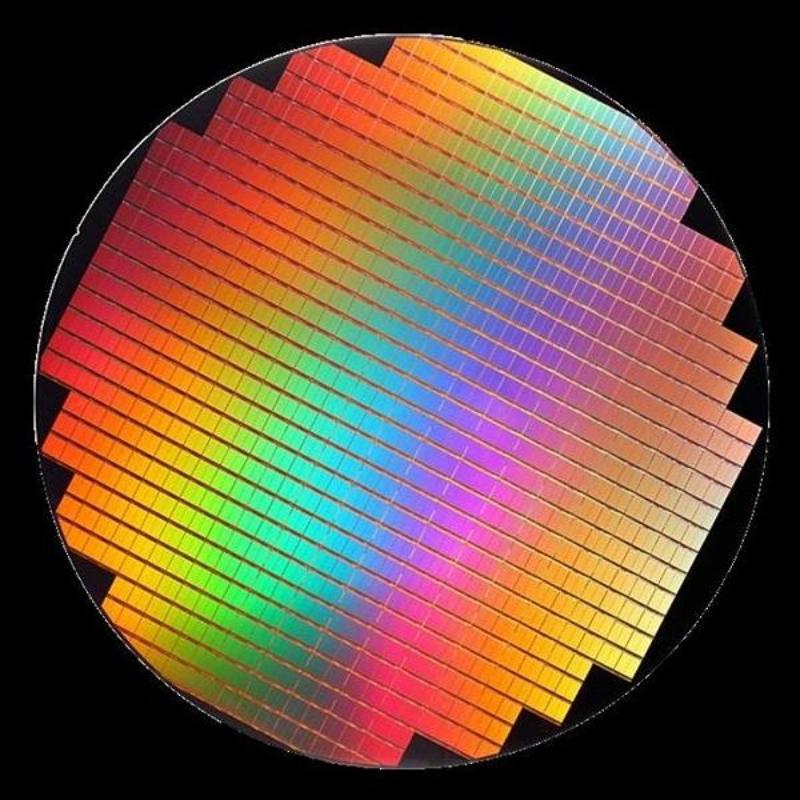
Semiconductor wafer Source: Encyclopedia
The root of losses lies in R&D. R&D expenditure was 1.445 billion yuan (accounting for 82.5% of revenue) in 2023, 1.337 billion yuan (accounting for 66.0% of revenue) in 2024, and 1.042 billion yuan (accounting for 42.8% of revenue) in 2025.
According to the prospectus data, the cumulative R&D investment from 2022 to 2024 exceeded 4.2 billion yuan. By the end of 2024, the R&D team had more than 1200 members, accounting for over 70% of the total employees. With such high-intensity investment, there is no possibility of profitability in the short term.
As of March 31, 2026, the company held cash and cash equivalents of about 1.3 billion yuan. At the current cash burn rate, how long this fund can last is a practical problem.
- 03 - Computing chip revenue surged 842 times, raising 9 billion yuan in 5 years
ESWIN Computing's products are divided into two major categories: smart terminal chips and interconnection & computing chips.
Smart terminal chips are the largest source of revenue at present. In 2025, the revenue of human-computer interaction chips reached 1.856 billion yuan, accounting for 76.3% of the total revenue, which is mainly applied to the screen display driving of televisions, monitors, laptops, mobile phones and watches.
But what really stands out is the computing chip business.
In 2025, the revenue of computing chips reached 320 million yuan, a surge of 842 times compared with 380,000 yuan in 2023. Its main products include automotive-grade RISC-V MCUs, AI SoCs, etc.
What does this growth rate mean? The company is extending its business scope from "display driving" to "computing processing". If the computing chip business can maintain this momentum, the company's valuation logic may shift from a "chip design company" to an "AI computing power chip company" — the valuation gap between the two concepts in the capital market may be more than an order of magnitude.
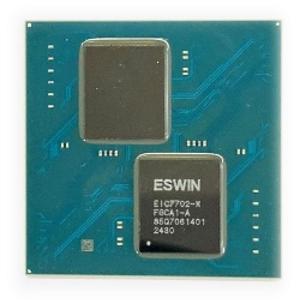
ESWIN Computing ESWIN chips and circuit boards Source: Sina Finance
In terms of financing, star shareholders are gathered. Since its establishment in 2019, ESWIN Computing has completed four rounds of financing, with total raised funds exceeding 9 billion yuan. The list of investors is very impressive: IDG Capital, Legend Capital, China Integrated Circuit Industry Investment Fund Phase II, China Internet Investment Fund, Gaorong Capital, Goldstone Investment and dozens of other institutions.
Before IPO, Wang Dongsheng indirectly controlled ESWIN Group via Yiming Technology (holding 52.4% shares of ESWIN Group), and then through ESWIN Group and employee stock ownership platform, he held 31.55% shares of the company in total, being the actual controller. According to market rumors, the company's valuation once reached about 35.3 billion yuan.
Its sister company ESWIN Materials has been listed on the Sci-Tech Innovation Board in October 2025, with an issue price of 8.62 yuan and raised funds of 4.636 billion yuan. The two ESWIN-affiliated companies, one on A-share market and the other on Hong Kong stock market, are building Wang Dongsheng's "chip empire".
On June 18, 2026, ESWIN Computing obtained the overseas issuance and listing filing notice from China Securities Regulatory Commission, allowing it to issue no more than 2.465 billion overseas-listed common shares.
But customer concentration is improving. The prospectus shows that the proportion of revenue from the largest customer has dropped from 75.0% in 2023 to 64.6% in 2025, and further dropped to 39.3% in the first quarter of 2026. The risk of customer concentration is easing, but the overall dependence is still relatively high.
- 04 - The golden age of RISC-V meets the semiconductor boom
The track where ESWIN Computing is located is experiencing explosive growth.
According to Frost & Sullivan data, the size of China's embodied intelligent chip market reached 129.7 billion yuan in 2025, and is expected to increase to 387.7 billion yuan in 2030; the penetration rate of RISC-V in China's embodied intelligent chip market will rise from 6.4% in 2024 to an estimated 28.2% in 2030.
At the global level, according to RISC-V International data, the shipment volume of RISC-V chips exceeded 10 billion in 2024, with China contributing over 50%.
In 2024, the penetration rate of RISC-V main control chip products in China's smart terminal chip market reached 1.3%, which is expected to reach 11.8% in 2029; the penetration rate in the embodied intelligent chip market reached 6.4%, which is expected to reach 19.1% in 2029.
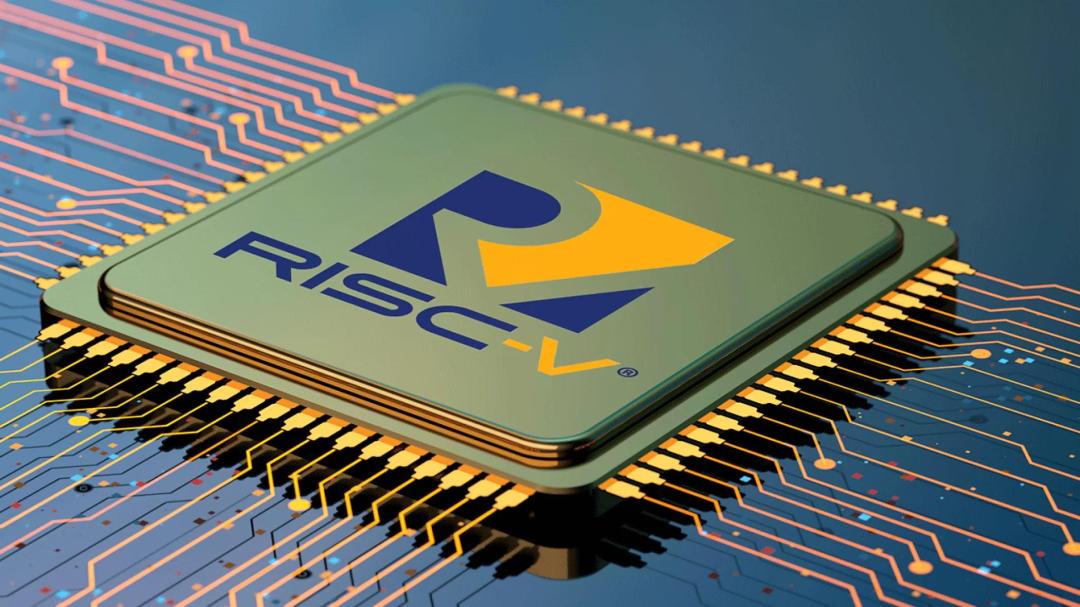
RISC-V chips Source: Internet
However, the promising prospect of the track does not mean that all players can survive until dawn. ESWIN Computing ranks fourth among China's RISC-V main control solution providers, with a market share of 1% (2024 data), behind HiSilicon of Huawei.
The window period has arrived. In the first half of 2026, the global semiconductor sector became the absolute main line of the capital market. According to UOB Kay Hian International research report, the A-share Shenwan Electronics sector rose by 86% in the first half of the year, and the US stock Philadelphia Semiconductor Index rose by more than 100%. The driving factors behind are the record high AI capital expenditure of cloud vendors, the explosive demand for inference-side computing power, and the accelerating pace of domestic substitution.
As an open-source architecture, RISC-V has advantages in cost and energy efficiency, and is accelerating its penetration into high-value AI scenarios. ESWIN is sprinting for listing at this time, aiming to complete financing by taking advantage of the high industry prosperity window. For ESWIN Computing, this window period may be fleeting.
ESWIN Computing's third listing application to the Hong Kong Stock Exchange reflects the persistence of a 68-year-old entrepreneur, as well as the obsession of a chip company to become the "first RISC-V stock".
Rising revenue, narrowing losses, exploding computing chip business, and expanding RISC-V track — all these are good news. But the cumulative loss of 4.9 billion yuan in three years, a market share of only 1%, and no profitability achieved so far — these are also facts.
Wang Dongsheng solved the problem of "display shortage" in China, and now he wants to solve the problem of "chip shortage". But the chip business burns more money, has a longer cycle and greater uncertainty than the display panel business.
The content of this article is for reference only, and does not constitute investment advice.
This article is from WeChat official account "Pencil News" (ID: pencilnews), written by Song Ge, edited by Zou Wei, authorized for release by 36Kr.