The beverage market has undergone a major shake-up. The once wildly popular "happy water" is now unwanted even when given away for free.
There used to be a joke in the industry: People don't fear hot weather, they fear soda out of stock.
On a sweltering summer day, a bottle of ice-cold soda will make you feel completely refreshed!
But this year, how long has it been since you last had your "happy water"?
"In such hot weather, carbonated drinks used to be top sellers in previous years, but this year, no one even wants them for free, let alone buying them!" A supermarket owner in Nanjing complained in a video.
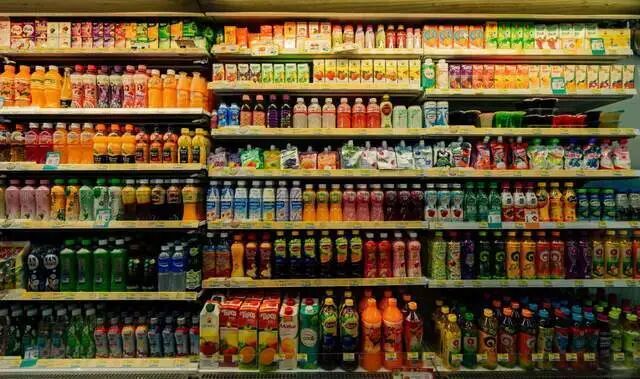
In the video, he pointed to the fully stocked drink wall and said helplessly, "I offered a free 3-yuan Fanta, but the customer turned around and picked a bottle of mineral water priced at just over 1 yuan."
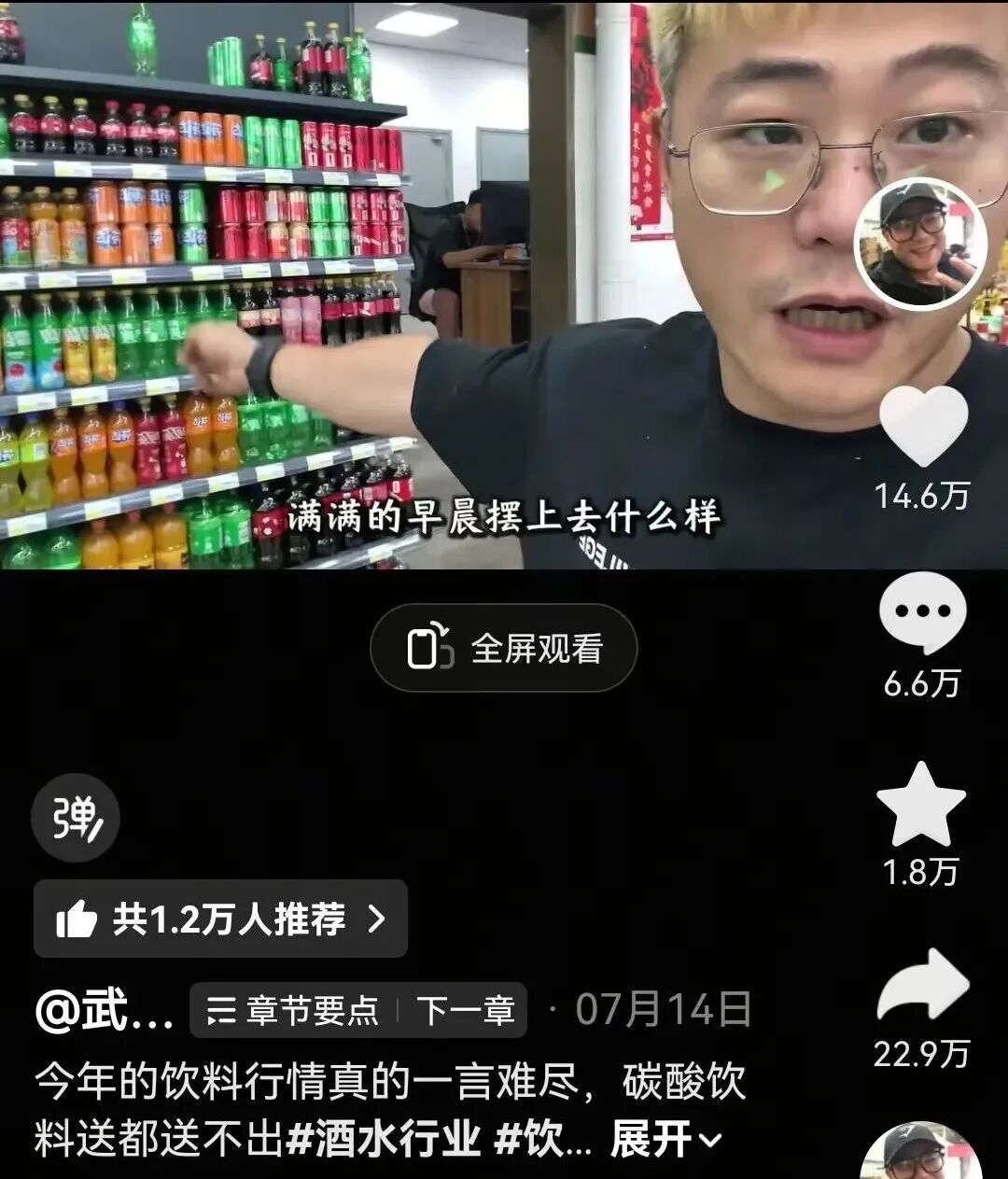
Staff from Jinan Hualian Supermarket also admitted: "Compared with previous years, the number of customers buying carbonated drinks has indeed decreased."
According to the survey results of "Ma Shang Ying":
In the second quarter of 2026, the sales revenue of the beverage category dropped by 11.8% year on year, among which the sales revenue of sugary carbonated drinks decreased by 12.23% year on year. The outbound volume from supermarket terminals has almost halved, and the inventory turnover of distributors has extended from 30 days to 70-90 days.
Why have carbonated drinks, which were once all the rage across the country, now reached the point where no one wants them even for free?
On the surface, this is a certain beverage falling out of favor, but behind it, the entire beverage track is undergoing earth-shaking consumption changes.
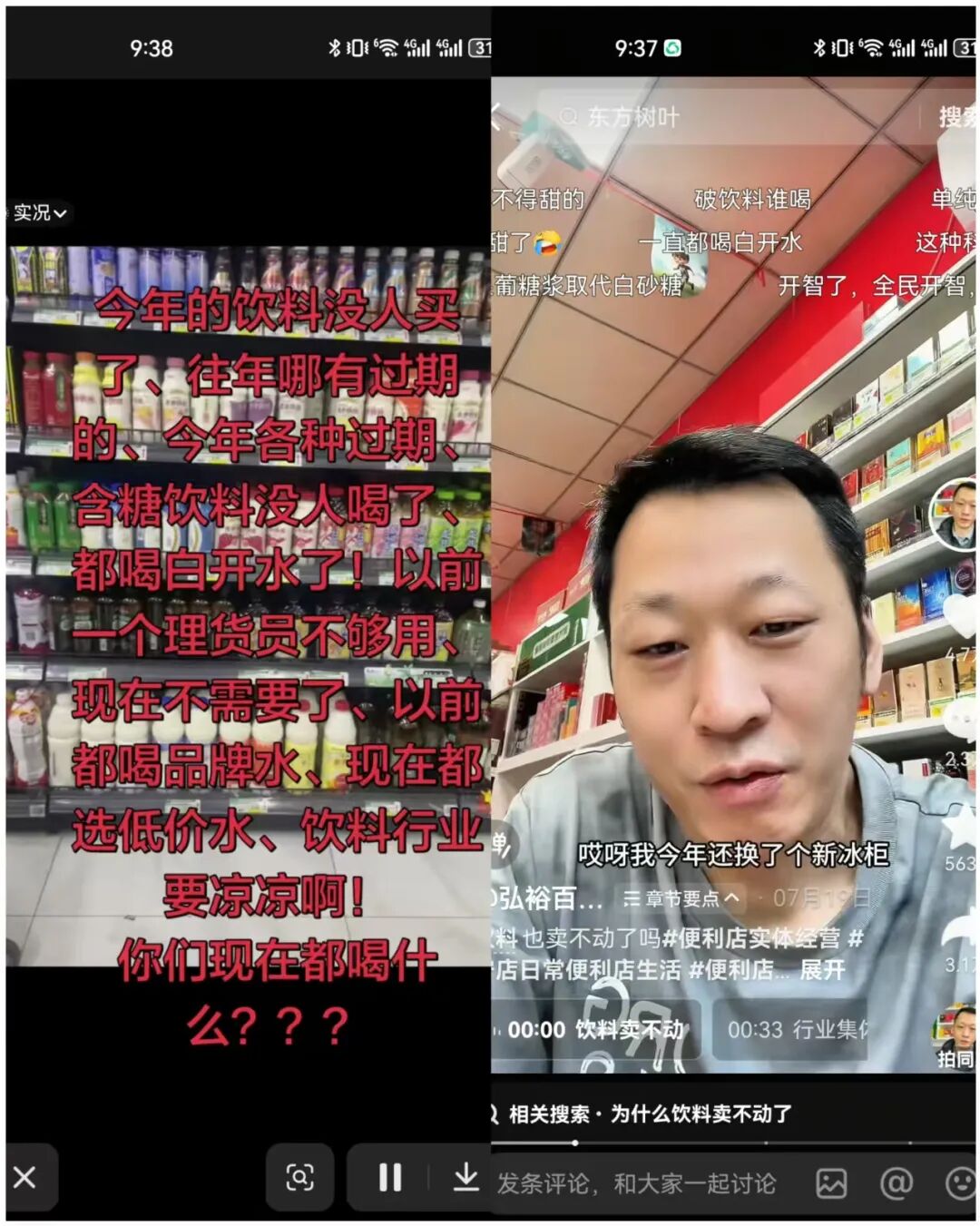
Why are sodas with emotional value selling worse and worse?
Nowadays, in the freezers of convenience stores on the streets of many cities, the C position no longer belongs to Coke or Sprite, but to sugar-free ready-to-drink teas such as Oriental Leaf and Suntory!
Speaking of Oriental Leaf, you may still remember that it was once rated online as "the worst-tasting beverage". Why has it now become one of the top-selling drinks?
The core reason is that the era of national sugar control has arrived, and consumers' attitudes have undergone a fundamental reversal.
And Oriental Leaf, which contains 0 sugar, 0 calories and is made of pure original tea leaves, just catches up with the trend of sugar-free products.
Statistics show that:
68% of consumers have the willingness to control sugar intake; 45.5% of consumers pay attention to the health and fat-reducing effects when buying sugar-free drinks.
China's sugar-free beverage market has surged from 1.66 billion yuan in 2014 to 22.74 billion yuan in 2025, increasing by more than ten times.
The growth rate of traditional sugary carbonated drinks has slowed down to 3.2%, while sugar-free carbonated drinks, with an annual growth rate of 28%, have become the core growth engine.
This is the awakening of the national health awareness!
People's focus is gradually shifting from "does it taste good" to "is it good for my health".
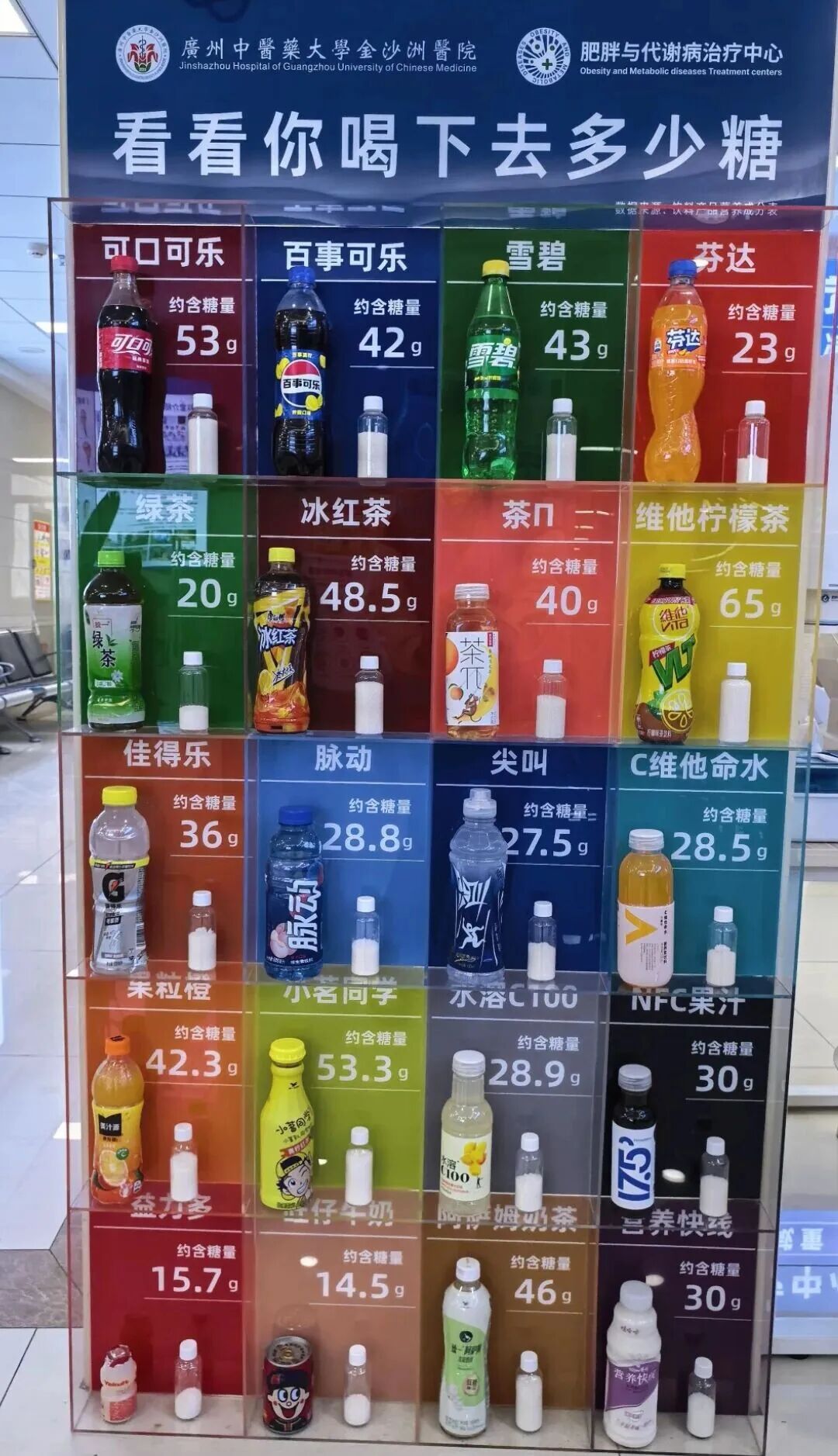
The World Health Organization also recommends that the maximum daily added sugar intake for adults is 25 grams. A 500ml ordinary Coke contains nearly 50 grams of sugar, and a single bottle exceeds the full-day standard.
At the same time, a large number of short video platforms are also constantly popularizing the hidden dangers brought by high-sugar diets.
For example:
Weight gain, skin aging, elevated uric acid, increased metabolic burden, these publicities have subtly changed everyone's choices.
Now there is a very popular term called "ingredient anxiety".
It refers to the phenomenon that when people choose beverages, many of them no longer only focus on taste and brand, but start to check the ingredient list and nutrition facts label.
As a result, in the refrigerators of more and more post-80s and post-90s generations, the position of carbonated drinks is being replaced by sugar-free tea, sparkling water and coconut water.
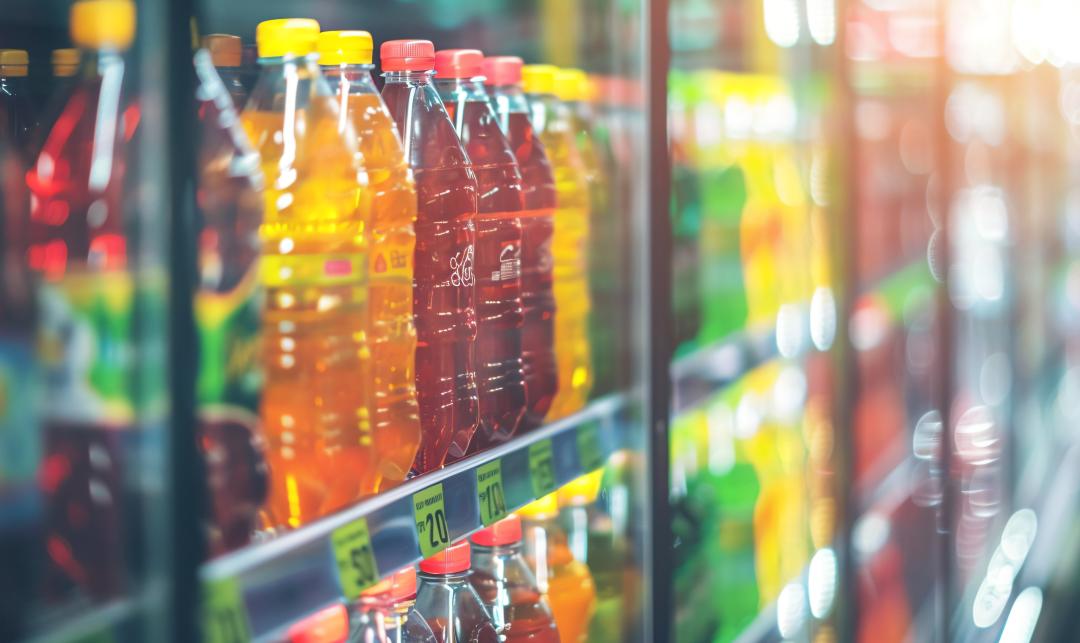
At the same time, the beverage market track is extremely involuted, countless new categories are frantically diverting customers, and substitutes for "happy water" are everywhere.
Ten years ago, the choices in the beverage market were very limited: bottled water, carbonated drinks and ordinary fruit juice formed a three-legged pattern.
Now the shelves are already full of diverse products. Sugar-free tea drinks, electrolyte water, ready-to-drink coffee, herbal drinks, freshly made milk tea and fruit juice are seizing the market in all directions.
For example, traditional bottled fruit juice.
The vast majority of cheap bottled fruit juices on the market are not pure fresh fruit pressed, but made by blending "water + white granulated sugar + fruit pulp + additives", with extremely low fresh fruit content but far excessive sugar content.
Consumers have long seen through the essence of this kind of "pseudo-fruit juice" and are no longer willing to pay for high-sugar sugar water.
What's more fatal is that the cost performance of substitutes completely crushes it.
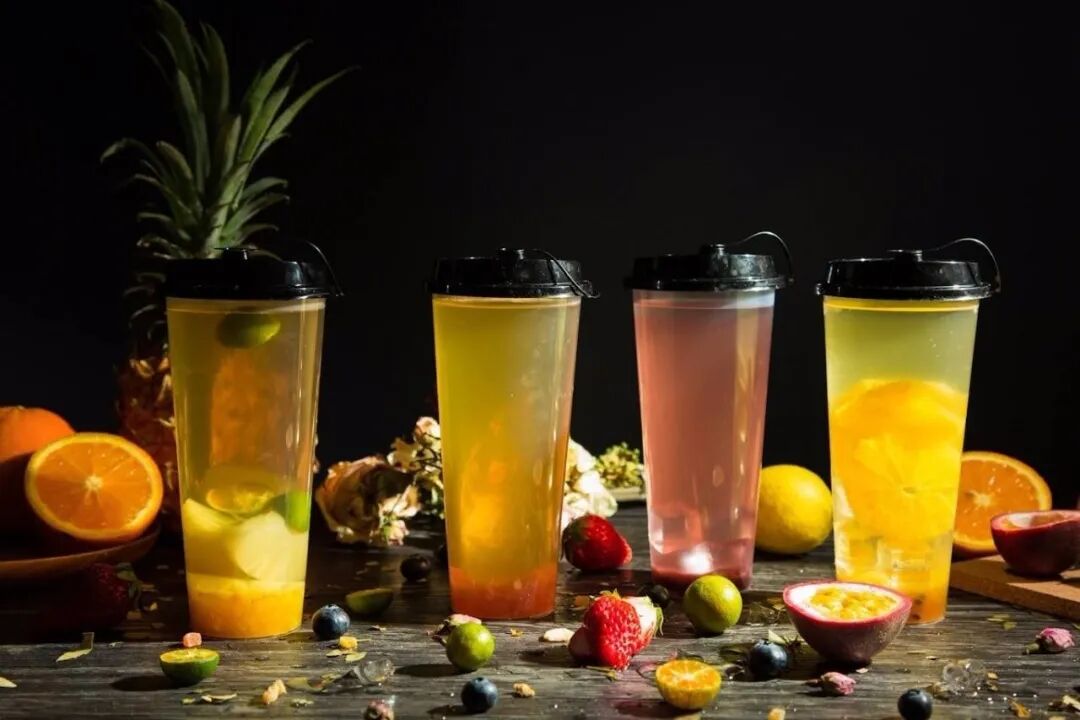
Nowadays, the price of cheap freshly made fresh fruit tea and homemade fresh squeezed juice on the street is close to that of bottled fruit juice, but they have higher fresh fruit content, fresher taste and adjustable sweetness.
According to the data, the decline rate of traditional bottled fruit juice has reached a new high of 14.84%, making it the category that consumers are fleeing from the fastest.
In addition, a set of data corresponding to the shrinking beverage retail is the expansion of milk tea shops and coffee shops.
According to the data from Jimu Can Yan:
In the past year, the number of newly opened milk tea shops has exceeded 60,000, and the total number of operating stores across the country has exceeded 370,000.
The growth rate of coffee shops is equally amazing. In the past year, more than 50,000 new coffee shops opened, and there are more than 220,000 operating coffee shops across the country at present.
The new tea drink track formed by them has become the hottest consumer market in the past two years, and the ensuing price war has also affected the ready-to-drink beverages in offline retail.
The road ahead for the "sugar control" revolution is still long
According to the data, in the second quarter of 2026, the sales of soda and fruit juice all weakened, while sugar-free ready-to-drink tea bucked the trend and grew by 16.1%.
This is a very positive transformation!
But we must also clearly realize that the road ahead for the "sugar control" revolution is still long.
The Consumer Council of Shenzhen conducted an evaluation on several new popular beverages this year, and the results showed that:
The mango fruit tea with the highest sugar content contains about 90g of sugar per cup, and a cup of bubble tea contains 55g of sugar — which is comparable to the sugar content of a bottle of Coke. Even the watermelon juice, the fruit tea with the lowest sugar content, has nearly 30g of sugar per cup.
There is no doubt that new tea drinks such as milk tea and fruit tea that young people like are also "severe disaster areas" of sugar.
Many consumers insist on zero-sugar and low-sugar in words, but they are easily compromised by taste, consumption scenarios and prices in actual consumption.
In addition, a large number of internet-famous beverages on the market are labeled as "light sugar" or "low sugar", which seemingly reduce the sugar content, but actually still contain a lot of added sugar.
Because for most beverage brands, the completely sugar-free and additive-free formula will greatly sacrifice the taste experience, and the cost of raw materials and R&D is higher, which will greatly reduce the profit margin.
You may have heard that using sugar substitutes such as erythritol and aspartame to replace sucrose avoids the controversy of high sugar, but cannot achieve real health benefits.
Such products can only cater to the sugar control trend for a short time, cannot fundamentally solve consumers' health anxiety, and make the entire sugar control track fall into the dilemma of homogeneous involution and false upgrading.
"If you really want to control sugar, you should drink fewer beverages with any flavor, and plain boiled water is the safest." As a comment puts it.
Conclusion
In general, the decline of carbonated drinks is never the decline of a single category, but the best proof that mass consumption is moving towards rationality and maturity.
Of course, we don't have to assert that carbonated drinks will disappear completely.
At barbecue stalls and night markets, there are still people who occasionally indulge in the refreshment of iced soda.
After all, it carries the youthful memories of a whole generation.
It just can no longer return to its golden age when it dominated the market alone, and has gradually evolved from a daily necessity to an occasional treat.
In the future, beverages that are sugar-free, natural, functional and of high experience will gradually take over the beverage market.
But the era of truly healthy beverages is still on a long evolutionary journey.
This article is from the WeChat official account "Xiaofang Talks About Workplace" (ID: XF-SZC), the author is Wang Xiaofang's team, and it is published with authorization from 36Kr.