CATL invested in the post-2000s generation of Harbin Institute of Technology
Here comes CATL again.
PE Daily has learned that RoboParty, a full-stack open-source bipedal humanoid robot startup, has successively completed nearly 500 million yuan in Angel++ round and Pre-A round financing, with the Pre-A round exclusively invested by CATL.
As far as we can recall, this is one of the rare cases where CATL made a direct investment as its group's strategic investment entity.
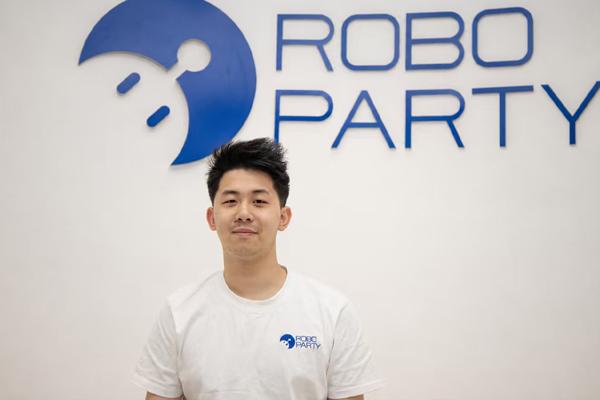
The founder is 22-year-old Huang Yi, a "genius boy" who almost meets all the expectations of VC firms: born in 2004, he was admitted to Harbin Institute of Technology, and in his freshman year, he independently developed the bipedal humanoid robot AlexBot in his dormitory. After being fully open-sourced, AlexBot was reproduced and applied by more than ten enterprises and universities.
In 2025, he graduated from undergraduate studies one year in advance, moved to Zhangjiang Robot Valley in Shanghai with a group of classmates, and started his RoboParty entrepreneurship. As the embodied intelligence wave swept the venture capital circle, the young Huang Yi soon came into the sight of VCs: 6 rounds of financing in 8 months, with the valuation increasing by more than 20 times.
"Go big or go home, we must go all in." At the end of July, we met this young team in Zhangjiang Robot Valley, Shanghai. The office has three floors, with disassembled joint modules scattered on the R&D desks, and a group of post-2000 engineers from top universities such as Harbin Institute of Technology, Yao Class of Tsinghua University, and Zhi Class of Peking University are working hard on technical breakthroughs. They have only one goal: to prove the universality of humanoid robots, "expand the whole industry pie", and truly promote robots into the real world.
From Harbin to Shanghai, A Post-2000 Team Builds Robots
"The happiest moment in entrepreneurship? Probably when I was tinkering with research alone, I managed to make a drone fly."
Huang Yi is full of energy when talking about robots. Born in 2004, he was admitted to the School of Future Technology of Harbin Institute of Technology in 2022. In his freshman year, he won awards in national college students' science and technology competitions with his land-air amphibious drone project. He and his roommates spent dozens of days independently developing the bipedal robot AlexBot and open-sourced it, which made him quite famous in his student days.
"We want to build the coolest robot in the world." Huang Yi's wish is so simple that it carries a touch of romance, even the logo and office decoration have to be "that cool shade of blue".
The site was initially set up in an 80-square-meter office in Harbin, with a team of only a dozen people. In February 2025, Huang Yi graduated from school in advance and founded RoboParty in Shanghai with several classmates from Harbin Institute of Technology, focusing on the R&D of full-stack open-source bipedal humanoid robots.
"We all share the same taste, and we all want to add fuel to the development of this industry." The team soon attracted technical talents from top universities at home and abroad such as the Yao Class of Tsinghua University, Zhi Class of Peking University, Zhejiang University, Carnegie Mellon University, and Stanford University. Most of them are post-2000s, and there are even many interns.
Huang Yi observed that embodied model companies lack robot bodies, but most of the existing body companies adopt closed systems, which are difficult to meet the needs of different model manufacturers. Is it possible to build a body platform that understands models and is sufficiently open and easy to use? This idea inspired the team.
RoboParty is positioned as an open-source full-stack embodied platform —— all technologies from the body to the modules are fully open, with independent R&D capabilities for complete machines, vertical integration and mass production capabilities, basic model capabilities and open ecological capabilities, connecting the body, models and developer ecosystem, and is becoming the most important infrastructure for embodied intelligence.
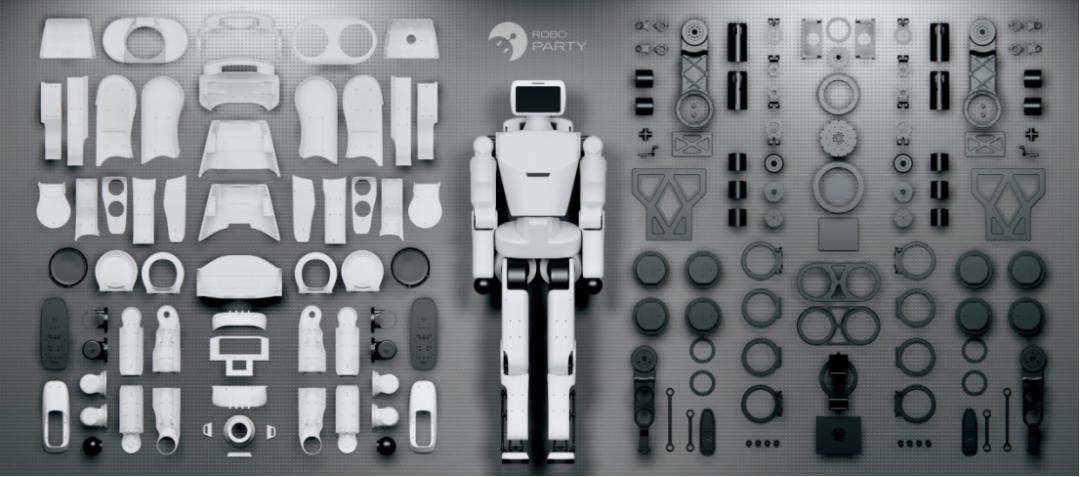
In January this year, RoboParty released RPO, a full-stack open-source bipedal humanoid robot project, which is an entry-level open-source platform for global developers from zero to one. At present, it has attracted nearly 10,000 attentions in the global developer community, obtained more than 2000 Stars on GitHub, and attracted nearly a thousand orders from developers, universities, scientific research institutions and model teams around the world. RP1 will be launched in the fourth quarter of this year, focusing on continuous development and deployment requirements in higher performance, higher reliability and more complex real scenarios.
These robots that can be disassembled, assembled and re-modified have become an excellent starting point for developers to practice, and many scientific research enthusiasts are attracted by them. In addition, robot model companies that need real machines for demos, and industrial end users who need co-design of bodies and software & hardware systems are all customers of RoboParty.
An open-source body alone is far from enough. In embodied R&D, problems such as where data comes from, how to process actions, whether the training framework is stable, and how to deploy strategies to real machines are cumbersome and time-consuming. RoboParty has launched a set of reusable, verifiable and continuously expandable R&D base —— Party OS, which precipitates the above underlying capabilities into a complete system, allowing developers to quickly turn ideas into results.
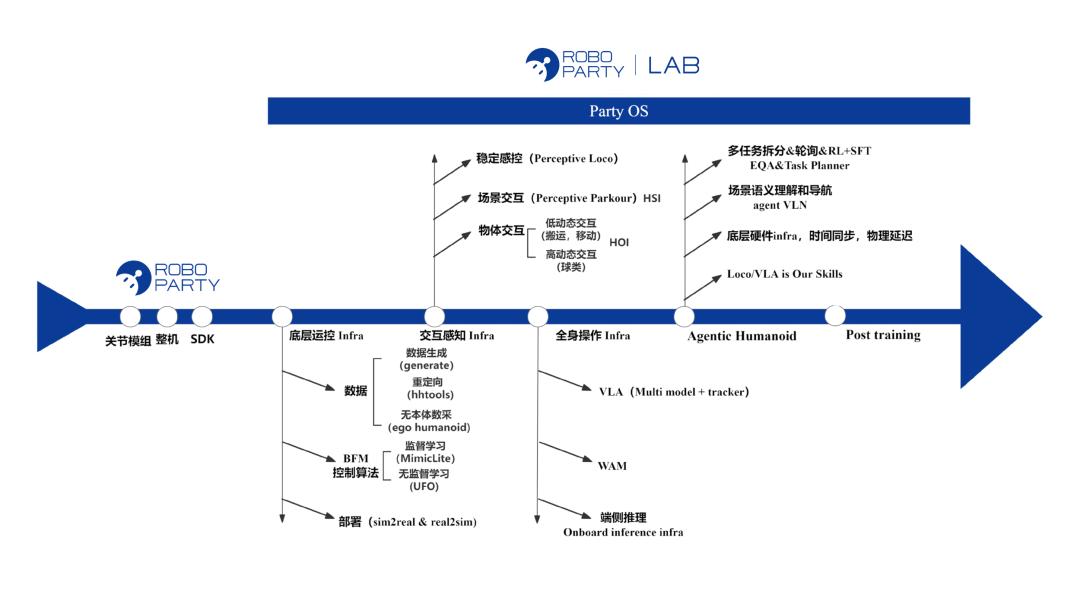
At present, RoboParty has open-sourced three core tools around Party OS, namely MimicLite, UFO and Human-to-Humanoid Tools, which are respectively oriented to key links such as general motion tracking, unsupervised reinforcement learning control and action retargeting, and have received enthusiastic responses in the open-source community.
The body brings customers, revenue and access to the real world, and Party OS accumulates data and physical interaction experience, forming a collaboratively evolving full-stack open-source embodied platform.
Six Rounds of Financing in One Year, CATL Joins In
Talking about Huang Yi, investors unanimously commented that he is restrained, pure, a technical geek, but has a clearer understanding of business beyond his peers.
At the age of 22, Huang Yi has an ultimate taste for products, and this taste also extends to his choice of investors.
Shortly after RoboParty was founded, Huang Yi and his team had spent millions of yuan on R&D, leaving very little capital on the account. "At that time, we were even reluctant to buy a graphic card." For the sake of survival, they started financing. Soon, a listed company came to them with very attractive conditions: it would invest money and lock in hundreds of overseas orders at the same time.
Unexpectedly, Huang Yi refused.
"Before the technology, production capacity and brand are mature, the pursuit of rapid volume expansion is only superficial success." Such orders can't bring real developers, and he can't overdraw the company at this stage just for a nice story. In his view, what RoboParty needed more at that time was to build the underlying ecosystem. Order quality is more important than order quantity, and product polishing is more urgent than financing stories.
Soon he met like-minded partners. In the summer of 2025, the multi-million dollar seed round led by Matrix Partners China, Mi Strategic Investment, Galaxy General and Lighthouse Founders' Fund was approved quickly. For a team that just came out of the dormitory, this investor lineup is strong enough. "If we didn't get that seed round, the company would most likely cease to exist." Looking back on the past, Huang Yi said with emotion.
After that, the financing pace gradually accelerated, and a new round was closed almost every more than a month. In addition to Matrix Partners China, Mi Strategic Investment and Galaxy General, well-known institutions including SenseTime Guoxiang Capital, Baidu Ventures, Meridian Capital, Pudong Venture Capital, Shanghai Future Industry Fund, ATC Capital, Sena Capital, Baichuan Capital, Shunwei Capital have joined in successively.
After completing key layouts such as open-source humanoid body R&D, developer ecosystem construction, complete machine engineering, mass production preparation and Humanoid Foundation Model R&D, RoboParty has welcomed a more iconic investor —— CATL.
In the embodied intelligence track, CATL's investment is often regarded as a vane. Quite rarely, this time when investing in RoboParty, CATL made a direct investment as its group's strategic investment entity, whose signal meaning is self-evident. To a certain extent, this is not just a financial investment, but also a part of the industrial chain collaboration.
The far-reaching value is that the open-source revolution of DeepSeek in the large model field has turned technology from the privilege of a few people into the infrastructure for all, and RoboParty is using the same way to reshape the technical base of humanoid robots. As Huang Yi repeatedly said: "If closed systems are a symbol of power, then open source is the faith of civilization."
What CATL bets on may be the "DeepSeek moment" of embodied intelligence. In the next step, the two sides will jointly explore more possibilities of humanoid robots in the upstream and downstream collaboration of the industrial chain, real manufacturing and complex operation scenarios.
So far, RoboParty has obtained one of the most "friendly" investments in the venture capital circle. It is reported that all the investment terms of the company do not include gambling or repurchase clauses. This is a rare trust: it is not only recognition of its product potential and real scenario value, but also means that its label is not limited to open source, but a full-stack platform with access to real manufacturing, energy, supply chain and complex operation scenarios.
At this moment, more and more investors are actively approaching RoboParty, and "the size of the term sheet for the next round is quite considerable".
The Post-Unitree Era
"Why after two years, there is no robot on the market that is better than Unitree G1?"
Huang Yi sighed frequently during the communication. In his view, many enterprises in the industry do not focus on a single route, and frequent route changes cause waste of resources —— "They start to promote mass production before verifying PMF, and start to promote landing before achieving commercialization."
This is why RoboParty prioritized polishing technical indicators and product performance from the very beginning. "The significance of hundreds of orders is far less than attracting 100 high-quality developers". With a unified and focused team, the only thing left is to move fast enough.
"Maintain SOTA" —— The goal Huang Yi set for the team is very simple. SOTA refers to the optimal indicator on the recognized benchmark. Behind this is the uninterrupted and rapid iteration of all levels including algorithms, data and engineering.
PE Daily learned a detail: RoboParty will regularly study the detailed performance of existing robots and list the existing pain points on the whiteboard. "Loud noise, slippery sole, no remote emergency stop" ... There are as many as 20 or 30 pain points at a time. Then targeted innovations are carried out one by one.
Even internal meetings are held based on communication theory —— the channel should match the load, documents are used to convey facts, face-to-face talks are used to convey emotions, and meetings are only used to resolve differences and make decisions that cannot be "transmitted asynchronously". Everything serves for high bandwidth and low latency of information exchange.
Looking back, in only half a year, RoboParty has formed systematic R&D capabilities covering core module motors, motion control algorithms, complete machine product definition, open-source system and supply chain implementation. The originally expected millions of yuan of investment scale has quickly grown to over 100 million yuan of financing, and the speed is so fast that Huang Yi himself did not expect it.
The latest development is that the company's self-developed behavior foundation model (BFM) Off-policy Tracker has reached SOTA level in core tasks such as whole-body motion tracking. The related open-source training system MimicLite uses only 8 RTX 4090 GPUs for about 4 hours of training, which exceeds the key indicators of SONIC, and reduces the training computing power requirement to about 1/500 of that of the traditional solution.
Only two weeks later, the team proposed a new framework INTACT based on the JEPA World Model solution, which directly converts state-conditioned motion intentions into action blocks, achieving a planning latency reduction of about 300 times. Even Turing Award winner LeCun personally praised this achievement.
Open source is the finishing touch for embodied technology to move towards a boom faster.
We can still take the communication system as an analogy: the hardware configuration and control algorithms of different robots vary greatly, which makes it difficult to reuse knowledge and experience, and the system signal-to-noise ratio is very low. Open-sourcing a set of models and toolchains is like providing channel coding and standardized protocols; the experience of developers flowing back to the community will establish a huge feedback loop, allowing the industry technology to converge in a shorter time.
"Working behind closed doors will only lead to homogeneous and inefficient competition." Huang Yi is not worried about losing technical barriers, and his attitude towards open source is quite optimistic —— there is almost no downside to expanding the industry pie, as long as the team keeps iterating, it can have a place in the final market.
Inside RoboParty, few people regard robot manufacturing as a job. They sit on the floor in the sample room and test room, talk freely in the pantry, and run dense programs on their computers. Maybe they just had the dream of creating something new like Nuwa creating human beings at first, but they gathered together because of their passion, forming the distinctive trait of the new generation of post-2000 entrepreneurs.
In this way, it also endows the era of open-source embodied intelligence with new possibilities.
This article is from the WeChat Official Account "PE Daily" (ID: pedaily2012), written by Yu Mengying and Zhou Jiali, authorized to release by 36Kr.