36Kr Exclusive | The eVTOL startup founded by COMAC team has secured hundreds of millions of yuan in new financing, and has entered the critical stage of airworthiness certification.
Author | Qiao Yujie
Editor | Yuan Silai
36Kr Hard Krypton has learned that Evert Aviation, a developer and manufacturer of electric vertical takeoff and landing (eVTOL) aircraft, recently closed a Series A+ financing of several hundred million yuan. This round of financing was invested by Uptown Capital, Puhua Capital and other institutions, with Deep Blue Capital acting as the exclusive financial advisor. Up to now, Evert Aviation has received capital support from multiple parties including national-level funds, listed companies and local state-owned assets.
Evert Aviation (hereinafter referred to as "Evert") was founded in 2022, positioned in the R&D and manufacturing of manned eVTOL aircraft. The company's core team comes from the COMAC system, including 4 senior researchers and many backbones of modified Y-8 series projects, with an average of more than 15 years of experience in the aviation industry. Founder Ren Wenguang has participated in the R&D of domestic aircraft models such as the Y-8 series, ARJ21 and C919, with nearly 20 years of experience in aircraft design and verification.
(Source: Enterprise)
Ren Wenguang said that different from some eVTOL enterprises that start with single-point technology, Evert's technical route follows the concept of full-life cycle system engineering for civil airliners, combines the characteristics of eVTOL, and establishes an efficient and professional product development path in accordance with the latest policies of the civil aviation authority. The team has complete forward design experience of manned aircraft, and can build a complete R&D process from requirement definition, overall scheme design to test and verification. At the same time, as a complex system engineering, aircraft has high requirements for quality system, engineering management and supply chain collaboration capabilities, and the system engineering experience accumulated during the COMAC period has also become an important foundation for its development of new aircraft models.
The power system is a key link in the eVTOL industrial chain. At present, there are few mature and optional aviation motor suppliers in the world, and some core components still rely on European and American manufacturers with long delivery cycles. Evert determined the route of self-developed electric propulsion system (EPS) from the early stage of its establishment, and formed a professional power system team, which took two years to complete the development of 2-ton eVTOL 800V high-voltage electric propulsion system.
According to Zhang Zhi, co-founder and chief designer of Evert, Evert is the first domestic 2-ton eVTOL complete aircraft enterprise that uses self-developed 800V high-voltage electric propulsion system to complete verification flight. At present, the company's power system has completed the iterative upgrade from L50C to L50D, further improving performance and stability.
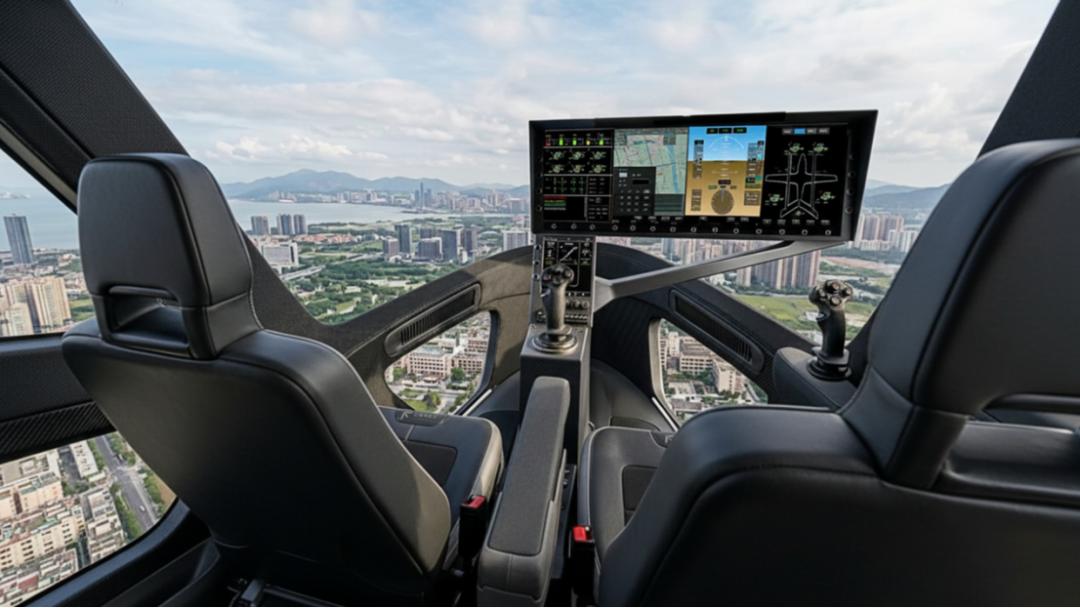
Focusing on complete aircraft development, Evert also cooperates with leading enterprises in the industrial chain at the same time. In terms of battery system, the company has reached a strategic cooperation with a well-known power battery company and become one of its first batch of partners in the low-altitude aircraft field; in terms of power system, in addition to independent R&D, the company cooperates with Inovance on high power density outer rotor integrated motor and electronic control; in terms of airframe manufacturing, the company cooperates with AVIC Tongfei Composite Materials Co., Ltd. under Aviation Industry Corporation of China, and becomes its first partner in the low-altitude field; in terms of flight control system, the company jointly develops with Shenzhen Frontier Intelligent Control to jointly promote the development of eVTOL flight control system; in terms of avionics system, the company cooperates with Aviage Smart Aviation to jointly promote the full-process solution of avionics kits.
(Source: Enterprise)
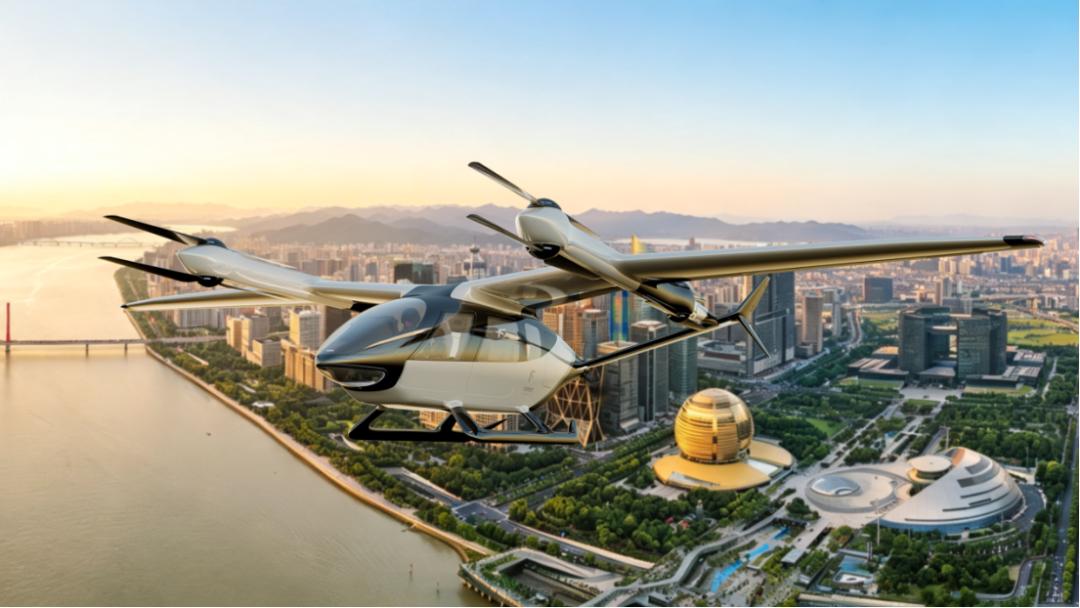
In terms of complete aircraft route selection, Evert adopts a compound wing configuration, the lift unit and the tail thrust unit operate independently, combining the multi-rotor vertical take-off and landing capability and the fixed-wing cruise capability, covering application scenarios such as logistics transportation, emergency medical treatment and urban shuttle service.
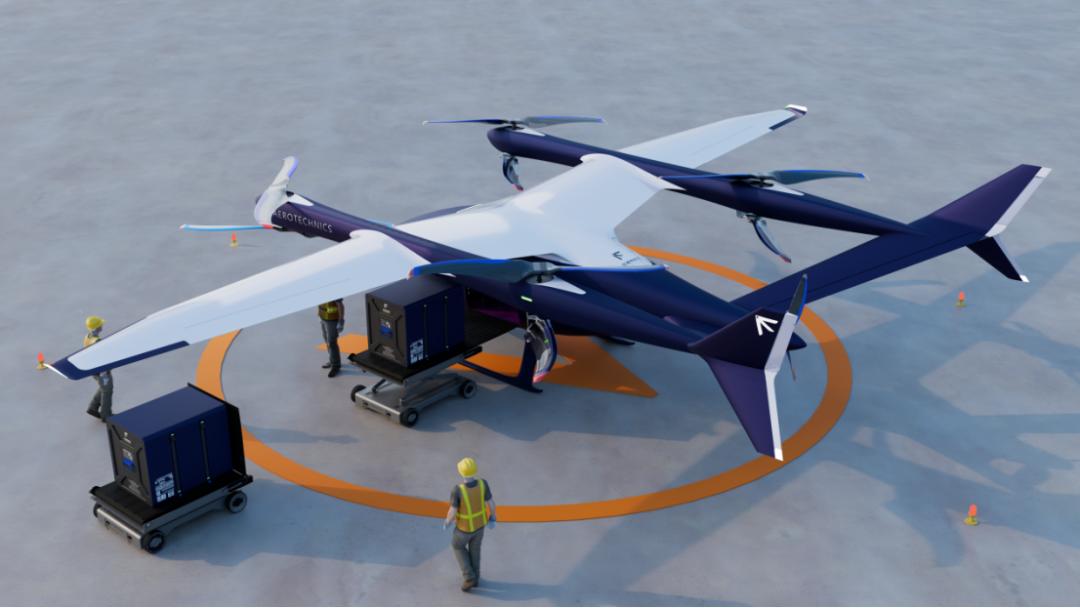
The company's core product is the ET9 series electric vertical takeoff and landing (eVTOL) aircraft, which takes low-altitude safety as the core principle and adopts the product strategy of "cargo first, passenger later". ET9 adopts a four-axis eight-propeller compound wing configuration, which is a five-person four-seat manned aircraft with a maximum takeoff weight of 2.4 tons, a maximum range of 240 kilometers, and a maximum speed of 240 km/h. In terms of structural design, ET9 adopts modular design, and the proportion of carbon fiber composite materials used exceeds 85% to reduce the weight of the whole aircraft. In terms of power layout, the independent eight sets of vertical take-off and landing units adopt a multi-redundancy design to improve flight stability and fault tolerance. The prototype was equipped with a self-developed power system on its first flight. Up to now, ET9 has completed more than 800 test flights in total, and the relevant data has been used for system verification, flight control algorithm optimization and structural lightweight improvement.
Zhang Zhi said that at present, Evert has basically completed the most critical transition flight stage in the eVTOL R&D process, and only a few domestic enterprises can complete the verification of this stage. In terms of airworthiness certification, Evert is carrying out compliance verification work and conducting substantive review on relevant airworthiness clauses. The company expects to make obvious progress in certification this year and plans to complete the airworthiness certification of its first model next year.
In terms of commercialization path, Evert adopts the strategy of "technology dimensionality reduction, scenario dimensionality improvement", that is, relying on the R&D capability of manned aircraft to build a high-level eVTOL platform, then cut into scenarios with clear demands such as inspection, freight and emergency response, accumulate operation data, and prepare for the future urban air traffic market.
(Source: Enterprise)
At present, the company deploys application scenarios such as logistics transportation, low-altitude inspection, cultural tourism sightseeing, and emergency rescue around products such as ET9 and ET3, and continuously promotes industrial cooperation. According to the introduction, since 2022, Evert has signed agreements with 19 strategic partners, and has obtained a total of 890 intended orders, covering multiple models such as the ET9 manned version, ET9 cargo version and ET3. The partners include general aviation operating companies, enterprises in medical emergency scenarios, and financial leasing institutions. Previously, Evert reached a strategic cooperation with Didi.
The following is an excerpt of the communication between Hard Krypton and Zhao Jiwei, co-founder of Evert:
Hard Krypton: What differentiated advantages does the self-developed power system bring to Evert?
Zhao Jiwei: The self-development of the electric propulsion system mainly brings three advantages. First, it can highly match the requirements of the whole aircraft. The whole aircraft and the power system are deeply coupled, and the power system and the rotor/propulsion propeller are optimized for the whole working condition to maximize the comprehensive performance of the aircraft. As the core component self-developed by the main engine factory, the power system can quickly respond to the iterative requirements of the whole aircraft's functions and performance, and realize the optimal matching between systems.
Secondly, it is conducive to the coordination of airworthiness certification. The power system involves many airworthiness clauses, accounting for an important proportion of the model airworthiness verification. Self-development can make the joint test and verification process of the power system and the whole aircraft more closely, and can share design data, failure analysis, original test reports, software and hardware traceability and other materials. After more than two years of iterative upgrade, the performance and stability of Evert's EPS have been verified, and it will also go through the independent airworthiness certification process later to create a standardized installed power system solution.
In addition, the self-developed power system can support the serialized development of future products and reduce the manufacturing cost of a single aircraft. With the increasing demand of different application scenarios, independently mastering the core power technology can avoid being restricted by the external supplier's product line, reduce the manufacturing cost of a single aircraft, and independently allocate the production capacity of production, manufacturing, testing and maintenance, which can also reduce the life cycle operation and maintenance cost.
Hard Krypton: The eVTOL industry may face reshuffling in the future. What is Evert's long-term competitive barrier?
Zhao Jiwei: First of all, our technical capabilities are very solid, which comes from the forward design and system engineering methods. Aircraft R&D is not simply a combination of parts and components, but to start from the requirements, and step by step ensure that the final product can meet the design objectives through scheme design, verification and testing.
Second, at the product level, we will cooperate with leading supply chain enterprises to jointly guarantee the performance and reliability of core components. Through our own complete aircraft design capabilities, combined with the coordination of upstream and downstream of the industrial chain, we will enhance the overall competitiveness of products.
Third, in terms of airworthiness certification, we are also rapidly and continuously promoting relevant work, and are expected to become one of the domestic eVTOL enterprises that complete airworthiness certification earlier, and quickly carry out demonstration operations in scenarios.
In addition, we are also very concerned about the cost challenges brought by future large-scale manufacturing. eVTOL will eventually enter the stage of commercial operation, and cost control will be a very critical factor. At present, the power system accounts for more than one third of the cost of the whole aircraft, and the self-developed power system can help us better control the cost. At the same time, the manufacturing cost of the airframe structure also accounts for a relatively high proportion. We have carried out tests such as carbon fiber automated laying and winding to improve manufacturing efficiency, further reduce mass production costs, and create highly cost-effective products with strong competitiveness.