After buying an AI smartphone, do you still have to pay an extra sum of money for the so-called "intelligence"? AG&I
Smartphones once swallowed countless devices with the "All in One" concept, but AI has begun to challenge their central position.
Intelligent Agent entities are granted higher permissions. Imagine the OS in the movie *Her*¹: under the new paradigm, mobile phones may evolve from containers for Apps to new carriers for "intelligent" agents.
This is not only a product evolution, but also a restructuring of interests involving manufacturers, platforms and users.
ifanr will continue to document the AI transformation of smartphones. This article is the second piece in the "AG&I" column, exploring the relationship between "AI phones" and us — Agents & I.
The new Siri AI and Apple Intelligence are not yet available to the public, but Apple has already put its charging plan on the agenda.
At the latest quarterly earnings call, Tim Cook mentioned that Apple is building a complete computing power cost solution to cope with the upcoming "AI boom". According to his judgment, user demand will rise rapidly after the new generation of AI functions are launched.
Following this line of thinking, Apple is very likely to add a paid AI function upgrade option to its existing iCloud+ system.
Wait, what did you say? Are you telling me that Siri has to be subscribed to become smarter? Does that make sense?
Don't panic first. Tim Cook didn't say that Siri will be charged per use, and the situation is far from as simple as "dumb for free, smart after paying".
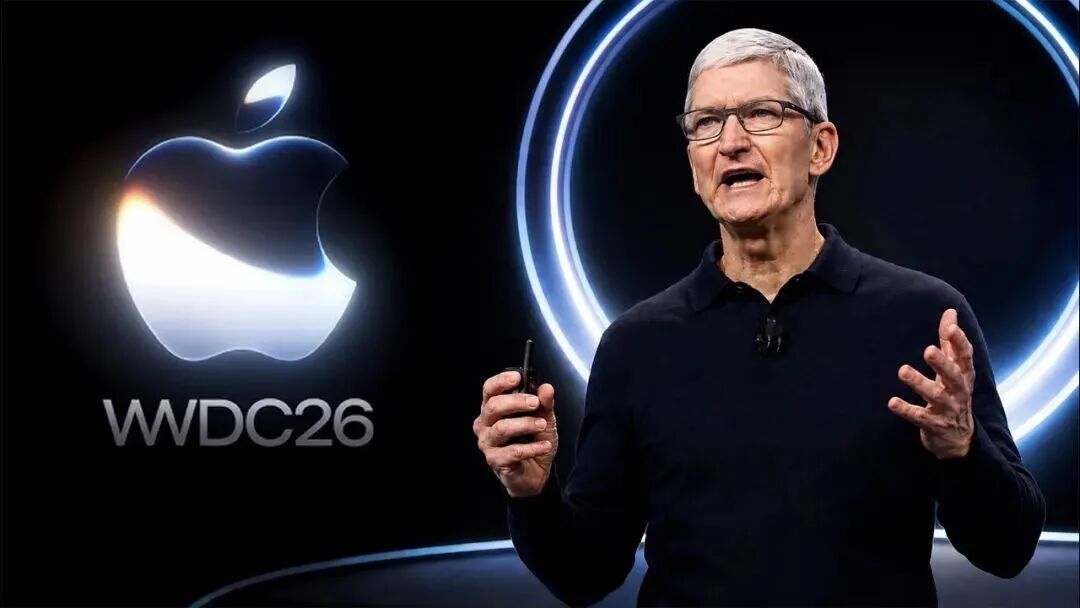
In fact, Apple made it clear back at WWDC 2026 that some Apple Intelligence functions that cannot be fully processed on the device side and rely on cloud large models may have a daily usage cap; and if you are a heavy user, you can subscribe to most iCloud+ plans to increase the cap.
The core logic is that every additional question a user asks and every additional image generated requires the server to do more work. What Apple has to face is not only whether users are willing to use AI, but also the rising cloud bill. By adding the option of paid quota increase, Apple is just keeping the door open for "upgrades required for heavy usage".
Don't blame Apple for doing this. In fact, not only Apple, Chinese mobile phone manufacturers have long been making the same calculation.
For example, the AI custom beauty function of the vivo X300 series has a usage limit, but the official Q&A has not mentioned paid packages or announced prices for the time being. OPPO has gone further: the on-device AI of Xiaobu Next is currently free during the internal test phase, while the advanced automated agent Xiaobu Claw directly adopts a paid model.

Photo|OPPO
From limiting usage counts to separating basic functions from advanced agents, it is obvious that domestic manufacturers are rolling out value-added charging for AI. The price list has not been fully released yet, but the charging behavior and motivation are obvious.
These cases are certainly not enough to prove that all mobile AI, or even "AI phones", will eventually be charged.
But money does not grow on trees. It is really difficult to provide long-term free and unlimited access to advanced functions that heavily rely on the cloud — unless manufacturers find a practical path model of "trading data/privacy for free access" in the AI era. Every time the model runs, server, storage and network resources continue to cost money. The more frequently users use it, the higher the cost manufacturers pay.
So we might as well speculate that in the future, mobile AI will most likely be divided into two tiers: basic capabilities are provided along with the mobile phone; more powerful models/functions, longer memory and more call times are charged separately.
However, this also makes some problems increasingly unavoidable:
"When AI has become the most important selling point at mobile phone launch events, is it a system function that comes with the hardware for free, or a cloud service that requires continued subscription fees after purchasing the phone?"
The memory crisis has already driven up the price of bare devices, but to make the most of these AI phones, how much extra cost do we as users have to pay?
In the future, you may not need to open an App first to get things done
Before the arrival of AI, it was really a great era…
In the PC era, users purchased a specific software version. With the subsequent rise of app stores and the "freemium" model, people got to use an App first, and then paid for in-app purchases or value-added functions. When the subscription system became popular, one-time purchase was replaced by monthly payment, and the usable life of the software depends on how long the subscription remains valid.
The moon is still the same moon, but payment methods have iterated in turn, from one-time purchase, subscription membership to in-app points. The business model has been changed again and again, but the underlying process for users to handle affairs has not changed much. People always need to first find a tool that meets their needs, spend time getting familiar with its interface logic, learn how to operate it, and finally rely on this tool to complete the tasks they want to handle step by step.
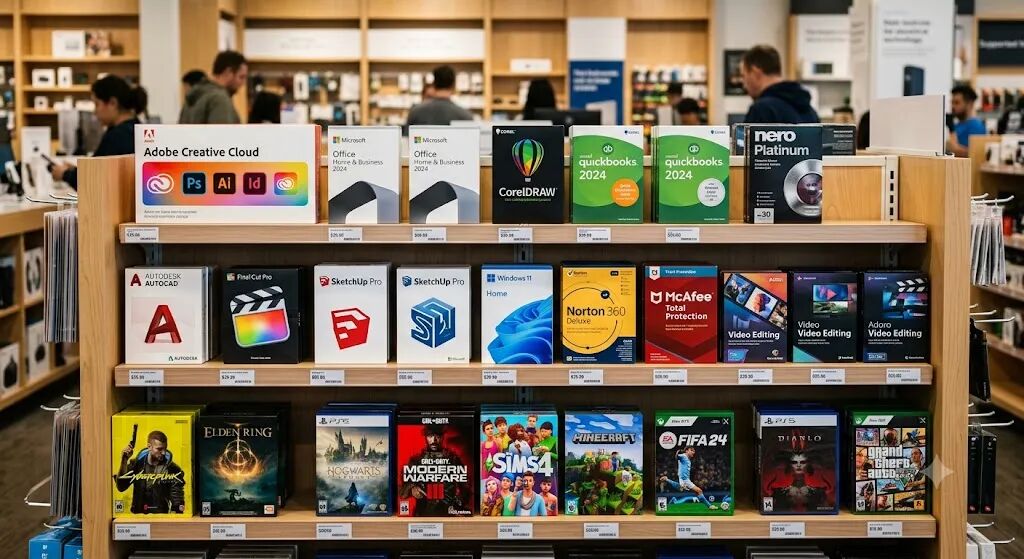
The app store is also built on this set of business logic: every finished software on the shelf has a relatively clear and stable functional boundary, and each performs its own duties. Users can clearly perceive their own needs, clearly know what kind of problems they want to solve, and clearly know to go to the "digital shelf" of the app store to accurately find the corresponding tool.
People are accustomed to purchasing external tools instead of making their own, which is an inevitable result under the constraints of objective conditions.
Software development itself has a high threshold. Ordinary users will not specifically develop an app just for low-frequency needs such as occasionally organizing photos or calculating travel budgets. In contrast, choosing mature ready-made tools and spending a small amount of time adapting to the operation is undoubtedly a more pragmatic choice.
Therefore, in the past few decades, App has almost always been the smallest and most complete sales unit of digital services. Developers package complete functions into independent applications, app stores act as distribution shelves to undertake traffic, and users confirm their right to choose through downloading, deciding whether to pay to unlock functions as needed. The whole set of business model has clear boundaries: functions, delivery and transactions all operate attached to a single App carrier.
Nowadays, Vibe Coding is lowering this threshold.

Countless Chinese and foreign model products allow you to easily describe your needs and generate simple applications. Some small tools that you used to search everywhere can now be temporarily made around personal needs: organizing a batch of files, making an event page, or calculating the shared expenses of a trip. Even many needs do not require a so-called "application" at all, and can be solved by generating code.
When it comes to AI Agent, the changes have taken a step further. It has begun to change the order in which users handle affairs.
In the past, people chose Apps first, and then split the tasks and assigned them to them; with Agent, people are only responsible for clarifying what they want, and how many Apps are called behind the scenes and how many models are switched gradually become the system's concern. As long as the flight ticket is not booked incorrectly, users probably won't specifically ask which five Apps just "had a meeting".
Of course, Apps still exist. Booking tickets still requires airlines and travel platforms, and image editing still needs to call specific image capabilities. But for users, these Apps may not necessarily appear in the form of individual icons, they are more like capability suppliers behind the Agent: called over when you need to book a hotel, and then dismissed after use.

This will bring a very practical change —
In the past, Apps competed for download volume, desktop position and the number of times users opened them; if AI becomes the new entry, they also have to fight to be selected by the system. Users may not know who the task is finally assigned to, but whoever controls the task entry has a greater chance of deciding where the needs are sent.
App Store will not lose its value of distribution, review and payment as a result. Developers still need to list their software, and the platform still needs to manage accounts, permissions and transactions. But when users shift from "looking for software" to "directly assigning tasks", the app store may no longer be the first stop for every transaction.
Apps are still on the shelf. But users are starting to bypass the shelf and go directly to the person who can get things for them.
The "IQ" of AI is starting to be clearly priced
As Apps gradually move behind AI, the position where the platform collects money has also moved one step forward.
In the past, users first selected a software in the app store, and then decided whether to download, make in-app purchases or subscribe. It is usually very clear who the money is paid to and what is bought. When it comes to AI, charging may occur before a certain App is called.
What users buy may not necessarily be a software with a name that can be called. It may be a smarter model, a higher daily quota, or the permission for the Agent to continuously complete complex tasks. As for which several Apps are called behind the task and which company's model is used, users may not be able to see it.
Photo|OpenAI
The most realistic reason for this set of changes is still cost.
After a mobile phone is sold, the costs of the processor, screen and camera have been settled. Cloud AI is different. Every time a user generates an image, summarizes a document, or lets the Agent perform several steps in a row, the server has to continue working. Storage, network, model updates and third-party authorizations will also incur costs accordingly.
The more users use the AI functions afterwards and the higher their stickiness, the harder it is to include this cost in the mobile phone price at one time — after all, you cannot estimate an average usage volume and then raise the price uniformly, which will only allow heavy users to take advantage, and make light users or even users who are disgusted with AI feel like they are being ripped off.
The smart approach is, like Apple and many domestic Android manufacturers, to first make the on-device AI capabilities reach a qualified level. The model has been installed on the device, and completing a summary or basic image editing locally does not require cloud access, so no cost will be incurred. Therefore, basic capabilities are more suitable for being provided together with the hardware for a long time; functions that rely on large cloud models and require continuous reasoning can be separately calculated for quotas and fees.
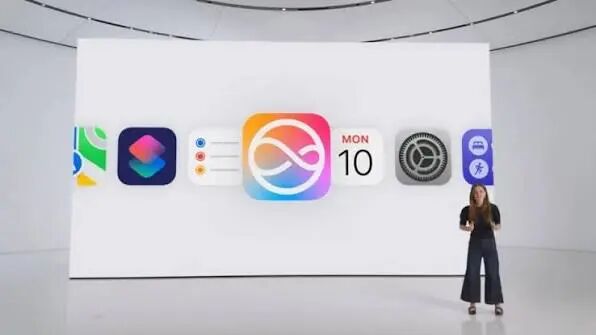
Photo|Apple
However, having cost does not mean that you must charge monthly. Some smart manufacturers can include this cost in the mobile phone price in advance, or set a free quota, and charge after exceeding it. They can also give a one-year membership with the phone, let users get used to these functions first, and then decide whether to renew after the free period ends.
What is really noteworthy is that mobile phone manufacturers already have the conditions to sell AI in layers. System-level AI, mobile phone accounts, cloud services and payment entrances are all in the hands of the platform. When users assign tasks to AI first, the platform can judge which level of model to use, how many times it can be called, and distinguish whether this capability belongs to a free function or membership right before the task is distributed to a specific App.
In the past, app stores were responsible for placing software and collecting money. When it comes to AI Agent, the system itself is not only the entry, but also begins to have the power to divide free and paid capabilities.
Several different practices have emerged in existing products.
Google has made Google AI Pro a limited-time purchase benefit for the Pixel 10 Pro series. Eligible users can get a 12-month free trial. They need to bind the payment method when claiming, and the deduction will continue if they do not cancel after the trial ends. This is equivalent to delivering the AI membership to users together with the mobile phone, except that the membership "expires" earlier than the mobile phone.
12 months of free access sounds like a great deal. From another perspective, it is just delaying the time to profit from users by one year.

Samsung hasn't fully figured out how to implement the payment model yet, so all functions are provided for free for the time being: its basic Galaxy AI functions continue to be free, enhanced AI and third-party AI are subject to different terms, and the possibility of charging is reserved. The mobile phone can be used all the time, but some of its more advanced AI capabilities do not have a clear long-term free commitment.
vivo and OPPO provide two other samples. vivo first sets a usage limit for some AI functions, making the quota a visible boundary; OPP