The state has spent 200 billion yuan in subsidies to help the public purchase vehicles, yet the auto market still posted a 20% decline in the first half of the year.
It is well known that car purchase subsidies have long been one of the key means to stimulate automobile consumption, and act as a bottom-support intervention when the auto market cools down. Over the past two years, the "national subsidy", with its advantages of wide coverage and strong support, has become the policy dividend that has drawn the highest attention and exerted the greatest influence inside and outside the industry.
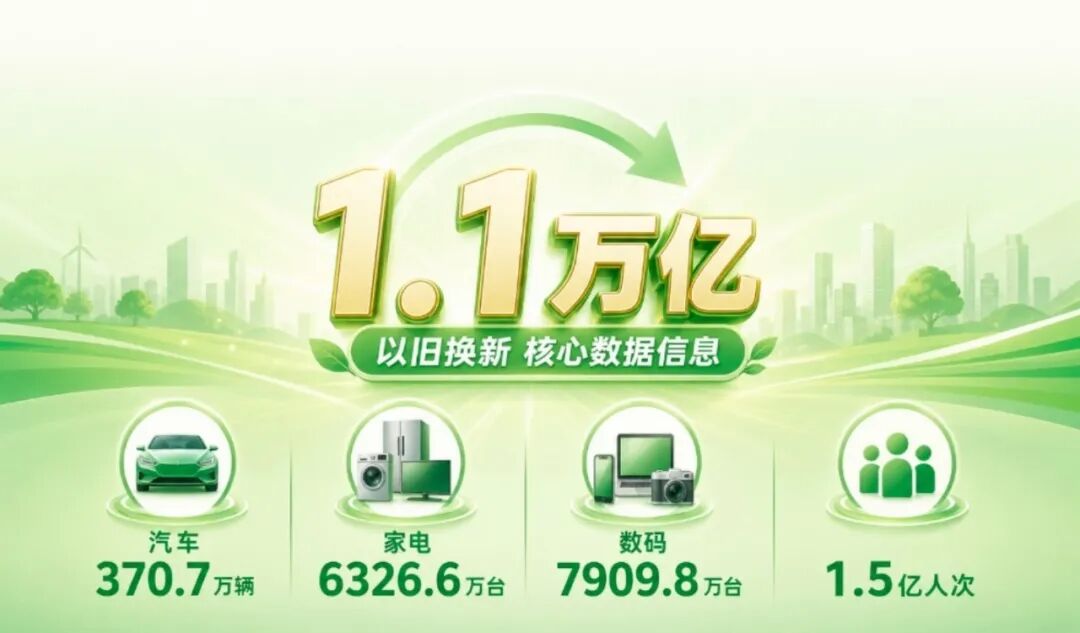
In the first half of 2026, the effect of this policy dividend was quite remarkable, driving 3.707 million units of sales under the car trade-in program. It not only directly boosted new car consumption, but also served as a core support to stabilize consumer confidence in the auto market and ease market anxiety.
However, behind the impressive data, the overall downward pressure on the auto market cannot be ignored, and the sense of a harsh industry winter has not dissipated due to subsidies.
In the first half of the year, the domestic passenger vehicle market continued to perform sluggishly, with cumulative retail sales of only 8.701 million units in the first six months, a year-on-year drop of 20.2%. The decline far exceeded the market expectation at the beginning of the year, putting performance pressure on many automakers in the first half.
On one hand, there is considerable sales volume driven by subsidies, on the other hand, there is a year-on-year decline of over 20%. Under this stark contrast, a question arises: would the situation of the auto market be even worse without the strong bottom support of car purchase subsidies?
This question has become a hot topic among industry practitioners, consumers and the media, reflecting the deep-seated predicament of the current auto market, making the whole industry full of concerns and rational thinking about the subsequent trend of the auto market, and the contradiction between the short-term effect of subsidies and the long-term development of the industry has become increasingly prominent.
Policy Efforts: National Subsidy Drives 3.707 Million Units of Sales
In the first half of 2026, the overall effect of the trade-in policy for consumer goods is remarkable. It not only benefits the automobile sector, but also covers multiple categories such as home appliances and digital products, driving the total sales of related goods by 1.1 trillion yuan, benefiting 150 million person-times, and effectively activating the vitality of the domestic consumer market.
Among them, the automobile sector is one of the key focus areas. The 3.707 million units of trade-in sales has not only become an important engine driving consumption growth, but also alleviated the downward pressure on the auto market to a certain extent.
It is particularly noteworthy that the new energy trend has become increasingly prominent driven by policies, and new energy vehicles are the main beneficiaries of subsidies. In June, new energy vehicles enjoying subsidies accounted for 65.4%, directly pushing the retail penetration rate of new energy vehicles in the second quarter to 62.4%, hitting a record high for the same period in history, which also confirms the role of policies in promoting the popularization of new energy vehicles.
The achievement is inseparable from the comprehensive upgrading and optimization of the 2026 national subsidy policy.
In 2025, the national subsidy for automobile trade-in has fully verified its value, with the total number of applications exceeding 11.5 million units for the whole year, directly driving new car sales of over 1.6 trillion yuan, successfully hedging multiple pressures such as industry price wars and consumer wait-and-see sentiment, laying a solid foundation for the policy to be strengthened in 2026.
Based on this, in 2026, the state continued to increase support for automobile consumption, launching the new trade-in subsidy policy with the strongest support and widest coverage in recent years, accurately leveraging the huge stock market of automobiles.
The highlights of the new policy are clear and in line with market demand: a unified national subsidy standard is implemented to avoid policy differences between regions.
Among them, scrapping an old car to buy a new energy vehicle can enjoy a subsidy of 12% of the new car's selling price, up to 20,000 yuan; replacing an old car to buy a new energy vehicle can enjoy an 8% subsidy, up to 15,000 yuan; the subsidy intensity for fuel vehicle replacement has also been increased simultaneously; the access age limit for old cars has been greatly relaxed, further expanding the groups benefiting from the policy; the entire subsidy application process has been digitalized, simplifying procedures and improving consumers' application experience.
The policy dividend was quickly implemented and delivered results. By the end of May 2026, the cumulative number of applications for national automobile trade-in subsidies exceeded 4.12 million. The performance in May alone was remarkable, with 1.23 million subsidy applications, a 13% month-on-month increase from April. This replacement demand directly drove new car sales of over 1.2 million units, becoming the core pillar supporting the steady growth of auto market sales in May.
By the end of June, the 3.707 million units of trade-in sales in the first half of the year was finally confirmed. However, even with such strong policy support, the auto market still declined by 20% in the first half of the year, and the sluggish terminal consumption status is still prominent. The concern that "the auto market will be worse without subsidies" has become more and more real, which also makes the industry have a more rational and comprehensive understanding of the actual utility of subsidies.
Subsidies Cannot Solve the Low-Profit Predicament
It is undeniable that national subsidies can effectively stimulate auto market consumption and drive sales growth in the short term, playing a role of "adding icing on the cake", but they are not the fundamental driving force to promote the long-term growth of the auto market, and cannot fundamentally solve the core predicament of the current industry.
At present, the core pain point of the automobile market lies in the excessively low overall profit margin of the industry. In the first half of 2026, the overall sales profit margin of the automobile industry is 3.8%, of which the average profit margin of the vehicle manufacturing link is only 1.5%, hitting a new low in nearly a decade. Even if some automakers achieve sales growth, it is difficult to convert it into real profits, falling into the awkward situation of "increasing revenue without increasing profit".
This problem is not unique to the Chinese market, but a common challenge faced by the global automobile industry.
According to the newly released 2026 Fortune Global 500 list, a total of 35 enterprises in the vehicles and auto parts sector are on the list, forming the five pillar industries of the list together with finance, energy, technology and healthcare. The number of listed enterprises and total revenue scale rank at the forefront of all industries, jointly accounting for 61% of the seats of all listed enterprises and contributing 66% of the total revenue of the list.
However, behind the huge revenue scale is the continuously sluggish profitability of the industry. The average sales return rate of the 35 global automakers is only 1.7%, far lower than the average level of other pillar industries.
Focusing on the Chinese market, the average return rate of 10 listed automobile-related enterprises is 3.1%, which seems higher than the global average, but the internal profit differentiation is extremely fierce, and the gap between leading enterprises and laggard enterprises is huge. If we exclude the two major profit pillars of CATL and Jardine Matheson, the average return rate of the remaining 8 vehicle manufacturing enterprises is only 1.5%, which shows the huge profit pressure.
Under low profits, automakers lack sufficient funds to invest in core technology R&D, product quality optimization and brand building, and can only fall into a vicious cycle of price wars and homogeneous competition, further intensifying the involution of the market and forming a vicious cycle.
At present, the 200 billion yuan "national subsidy" for 2026 has been fully distributed, and the policy dividend will continue to be released in the second half of the year, which is expected to continue to drive the growth of auto market sales and bring short-term boost to the industry. But whether the auto market can truly get out of the sluggish state and achieve long-term stable development does not lie in the subsidy itself, but in whether it can break the disorderly competition, ease the extreme involution, and fundamentally improve the profitability of the industry.
Only in this way can we break the current predicament, make the auto market get rid of its dependence on policy subsidies and achieve sustainable development, which is also the direction that the entire automobile industry needs to work together in the future.
This article is from the WeChat Official Account "Auto Public" (ID: iAUTO2010), written by Li Sijia, published with authorization from 36Kr.