LeBron James joins a team on a minimum salary, pushing the NBA to transition from the era of going all in on superstars into the "era of refined operation".
In today's NBA, the competition lies not only in the quality and number of star players, coaching proficiency and team financial strength, but also in the management's comprehensive operational capabilities covering salary arrangement, draft, trades and future planning.
As it is the World Cup year, LeBron James has decided to bring his talents to the Philadelphia 76ers. The lineup of James, Joel Embiid, Jalen Brown, Tyrese Maxey and Kelly Oubre Jr. makes countless fans look forward more to James' 24th season in the league.
Apart from the highly concerned "Decision 5", another shocking fact is that the contract James signed with the 76ers is only a two-year veteran minimum deal with an average annual salary of 4 million US dollars. To fight for his fifth championship, James is willing to take a pay cut of 48.75 million US dollars, a drop of more than 92%, which sets the record for the largest pay cut in NBA history.
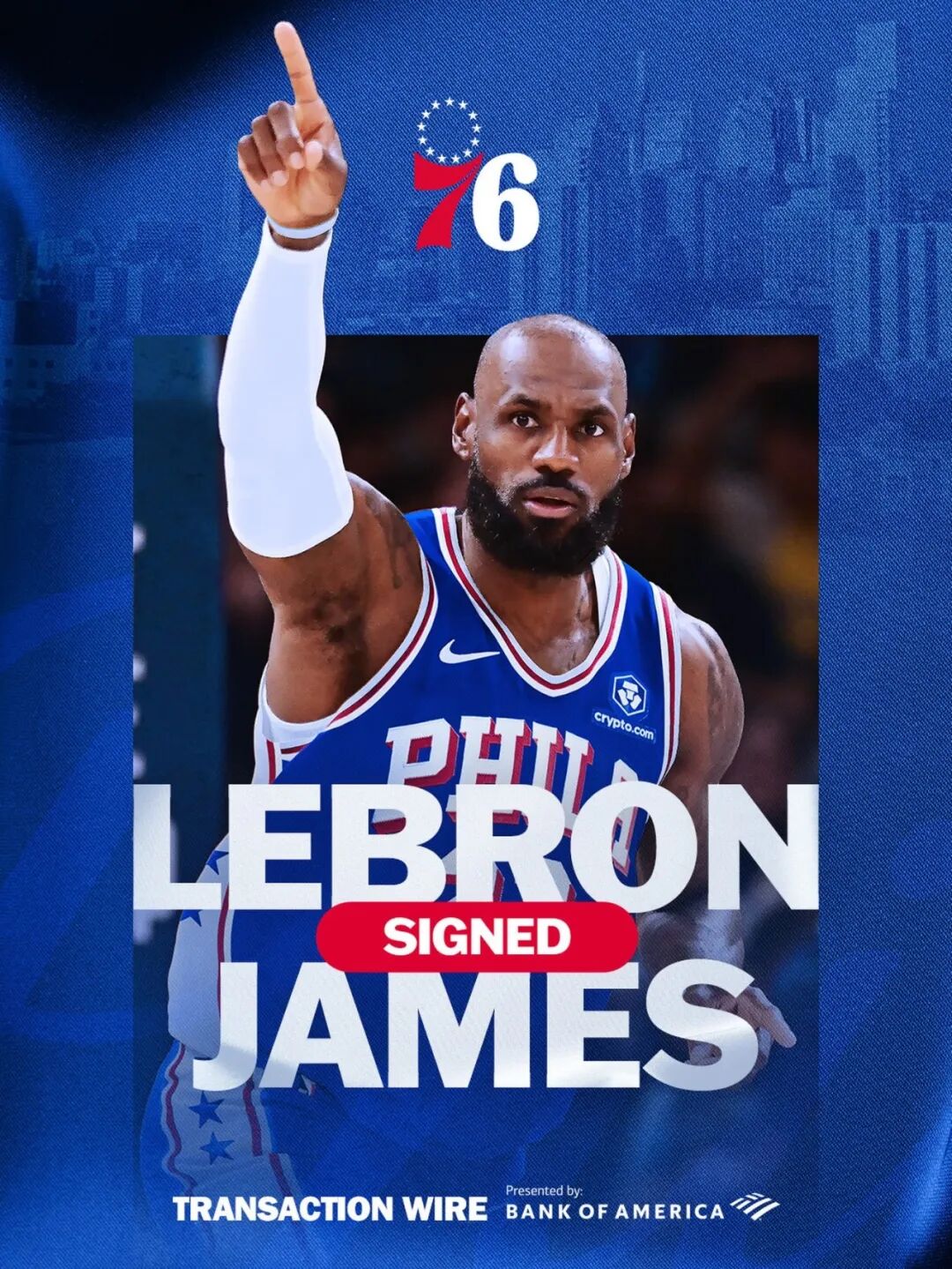
Image source: Philadelphia 76ers official social media
Judging from his stats of 21 points + 6 rebounds + 7 assists in the regular season and 23 points + 7 rebounds + 7 assists in the playoffs last season, James at an annual salary of 4 million US dollars is an absolute bargain. But it's not that the 76ers are unwilling to offer James a higher salary, but that they cannot afford it. Not only the 76ers, but also the Cavaliers and Heat, two popular suitors for James, are unable to provide James with an annual salary of more than 10 million US dollars due to limited salary cap space.
Since the NBA rolled out the strictest salary agreement in its history in 2023, the operational logic of NBA teams has undergone remarkable changes: the fault tolerance rate for team operations is decreasing, and now teams need to compete not only on who is better at spending money, but also on who is better at saving money.
No matter building a super team with multiple superstars, hoarding high-round picks through consecutive tanking, or cultivating homegrown superstars, these mainstream team-building modes seem unsustainable in the long run now.
In the past 8 years, 8 different teams have won the NBA championship, behind which there are a variety of totally different team operation modes. In today's NBA, the competition is not only about the quality and quantity of star players, coaching level and team financial strength, but also about the management's comprehensive operational capabilities in terms of salary, draft, trades and future planning. The league is entering a real "era of team operation".
Go All-in on Superstars
In the past 20 years, the most popular team-building mode in the NBA is undoubtedly building a super fleet with multiple superstars. From the Big Three of the Celtics to the Big Three of the Heat, then to the Big Four of the Warriors and the Big Three of the Nets... The "ALL IN" mode has proved again and again that as long as you gather multiple superstars, you can become a championship favorite and attract unprecedented attention.
Superstars bring huge benefits, but teams also need to pay huge prices for it, the most intuitive of which is paying huge luxury taxes. In addition, some teams have given up a large number of young players or draft picks, overdrawing their future only in exchange for superstars who can change the game and compete for the championship.
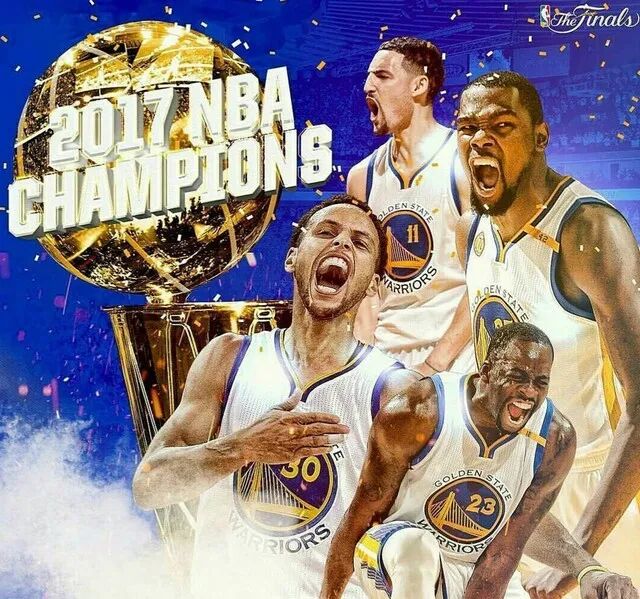
The Warriors' Big Four, Image source: NBA
However, after the strictest collective bargaining agreement in 2023 was implemented, this mode is gradually losing competitiveness. The main reason is that this version of the collective bargaining agreement introduces the second apron known as the "Dynasty Terminator".
In the past, even if a team needed to pay high luxury taxes, it could still use the mid-level exception to sign players or add immediate contributors from the buyout market. But now once a team crosses the second apron, these operational permissions will be greatly restricted: it cannot use the mid-level exception to sign players, nor can it sign players who enter the free market after being bought out. In addition, its first-round draft pick in the 7th year in the future will be frozen and cannot be traded. If a team exceeds the second apron for two out of three consecutive years, this first-round pick will automatically drop to the late first round.
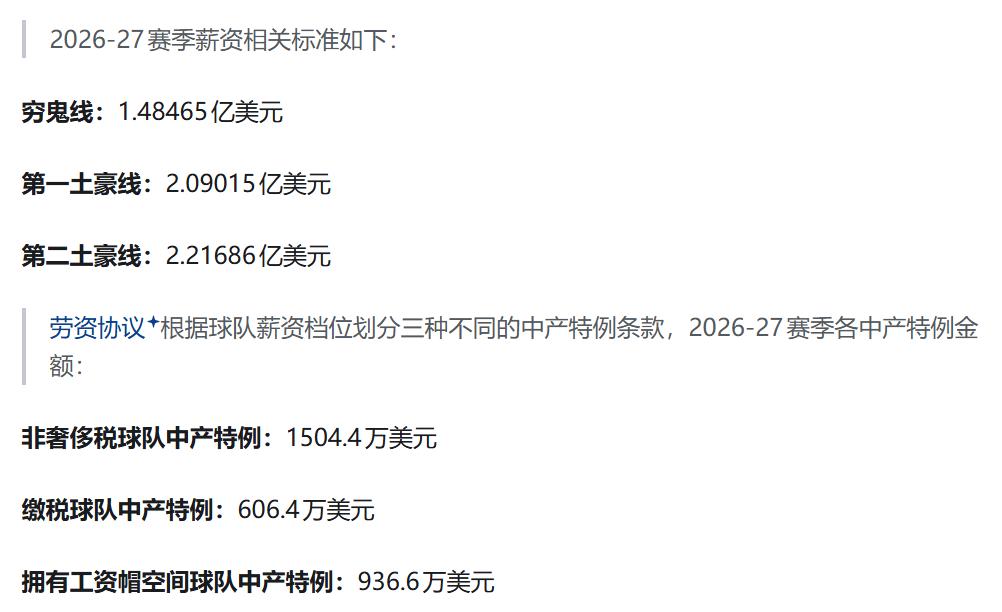
NBA salary standard for the 2026-27 season, Image source: the Internet
Under numerous restrictions, it is getting harder and harder to continue to "solve problems by throwing money". Therefore, people are seeing more and more "multi-superstar teams" or strong teams forced to disband, such as the Celtics led by the two Tatum and Brown, the Nuggets led by Nikola Jokic and Jamal Murray, the Suns led by Kevin Durant, Devin Booker and Bradley Beal. Even the Thunder, who enjoyed huge rookie dividends, had to send away players to ease salary pressure one year after winning the championship.
The experiences of many teams show that the most important thing to build a super team is not to get superstars, but to have the ability to build a complete, balanced and continuously competitive team around them after getting superstars.
A championship cannot be won by only five players. A shooter who can stretch the floor, a reliable rim-protecting center, a dependable perimeter defensive ace... These are all important championship-contending pieces besides superstars. But when most of the team's salary has been spent on going all-in on superstars, the team will hardly have enough space to sign high-quality "role players". The "ALL IN on superstars" mode that was once popular across the league has changed from a shortcut to the championship to a gamble with increasingly high risks.
Develop Homegrown Superstars
Since the path of going all-in on superstars through external trades and the free market is getting narrower, many teams have turned their attention internally, trying to build their own superstars through draft and careful cultivation. Looking at the current league, this team-building mode has no lack of successful precedents and models.
In the past few years, young players such as Luka Dončić, Anthony Edwards, Cade Cunningham and Victor Wembanyama have grown rapidly into team cores, even star players and league faces after entering the league. Victor Wembanyama even led the Spurs to the Finals in his third season in the league. These players have not only directly improved the team's record, but also brought huge commercial value. For small-market teams, this value even far exceeds the competitive level.
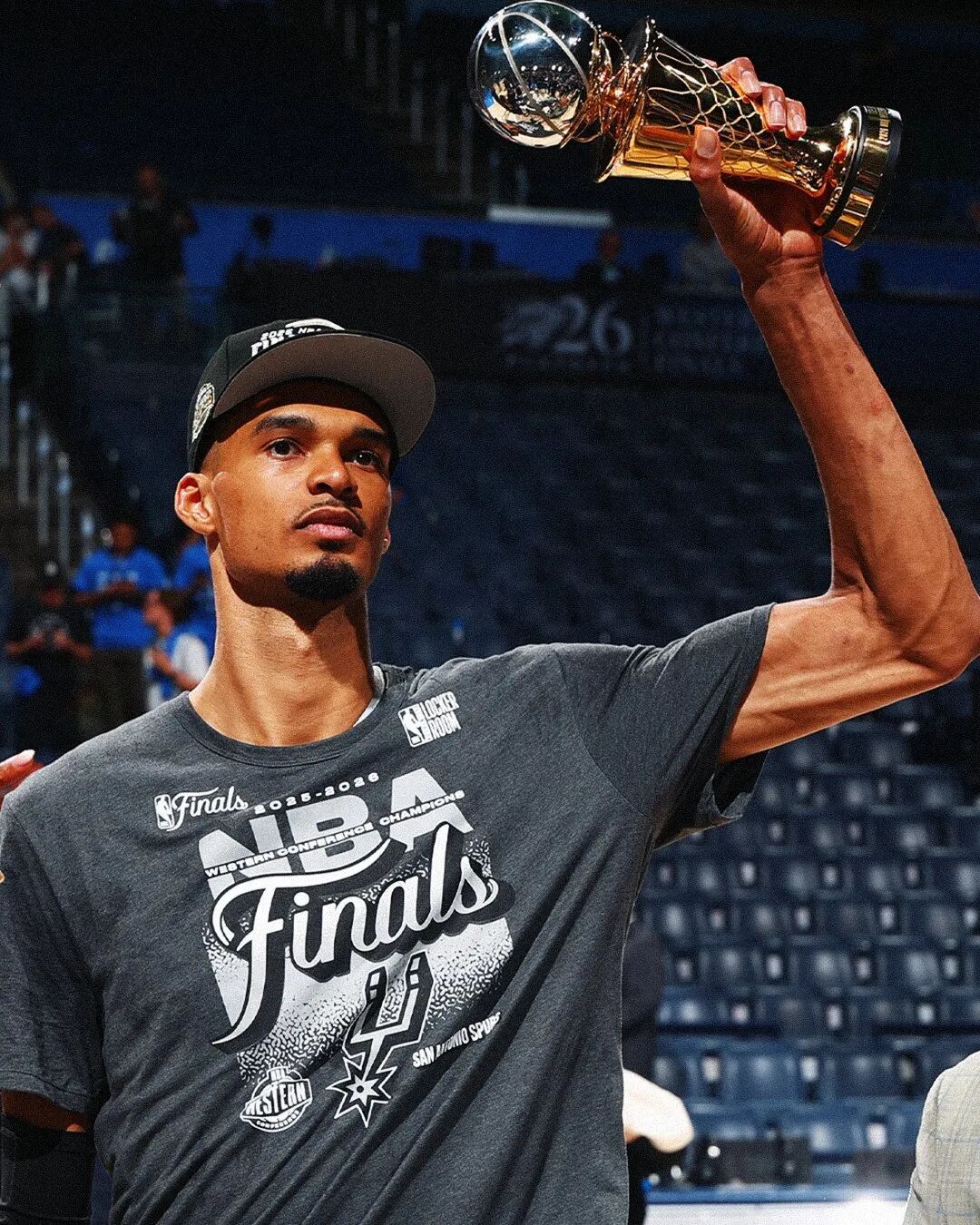
Image source: San Antonio Spurs official social media
New York and Los Angeles have natural market appeal, while cities such as Oklahoma City, Minneapolis and Detroit need their own superstars more. A homegrown star can become the sports card of the whole city, driving ticket sales, sponsorship cooperation, peripheral merchandise and media attention, enabling the team to have stable and continuously growing commercial value.
More importantly, rookie contracts mean huge "salary dividends". According to the current league system, a high-round rookie will execute a fixed-salary contract for several years after entering the league. If he can quickly grow into an All-Star or even a league face, the team can get the competitive contribution of a top player with a salary far lower than the market value.
These years are also the best window period for a team to reinforce its lineup and compete for the championship. However, the rookie contract is only a "dividend" after all, not the end. When the rookie contracts of these supernovas expire, they will most likely get a max contract renewal. And a contract worth hundreds of millions of dollars will have a huge impact on the team's salary structure.
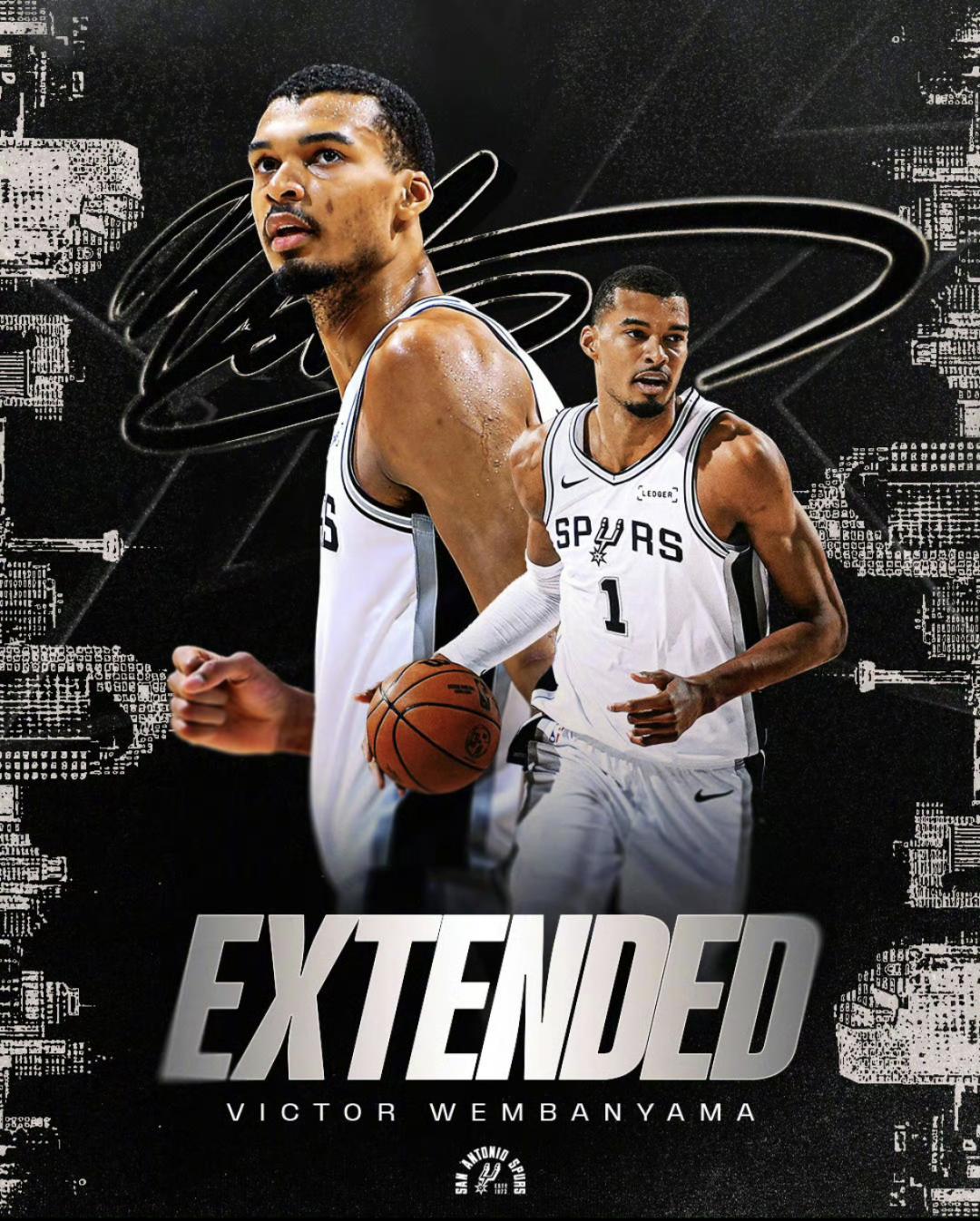
Victor Wembanyama renews his contract with the Spurs with a 5-year max deal, Image source: San Antonio Spurs official social media
At the same time, superstars will have increasingly higher requirements for the team's competitiveness. The team must deploy a better lineup around them to meet their championship-contending needs, and eventually embark on the team-building mode of "super team".
That is to say, cultivating superstars on your own does not completely solve the team's operation problems, but only wins a few years of more relaxed development time for the team. But for small-market teams, this is already very precious. Even if they have to let go of the superstars they cultivated themselves in the end, the rewards they get are already enough.
The Economics of Tanking
For teams that have not cultivated their own superstars and are unwilling to spend money, they can only "trust the process": hoard high-round picks through consecutive tanking. If the team has a sharp enough eye for draft, multiple high-level rookies and their rookie dividends will become an important foundation for the team to compete for the NBA championship.
For example, the Thunder, which has always had a good eye for draft, has selected many high-level rookies such as Jalen Williams and Chet Holmgren in recent years with multiple high-round picks obtained from the Paul George trade in previous years. Using the huge salary space under the rookie dividends, the Thunder traded for important role players such as Alex Caruso and Isaiah Hartenstein. Finally, led by Shai Gilgeous-Alexander, this group of young players stood out and lifted the Larry O'Brien Trophy.
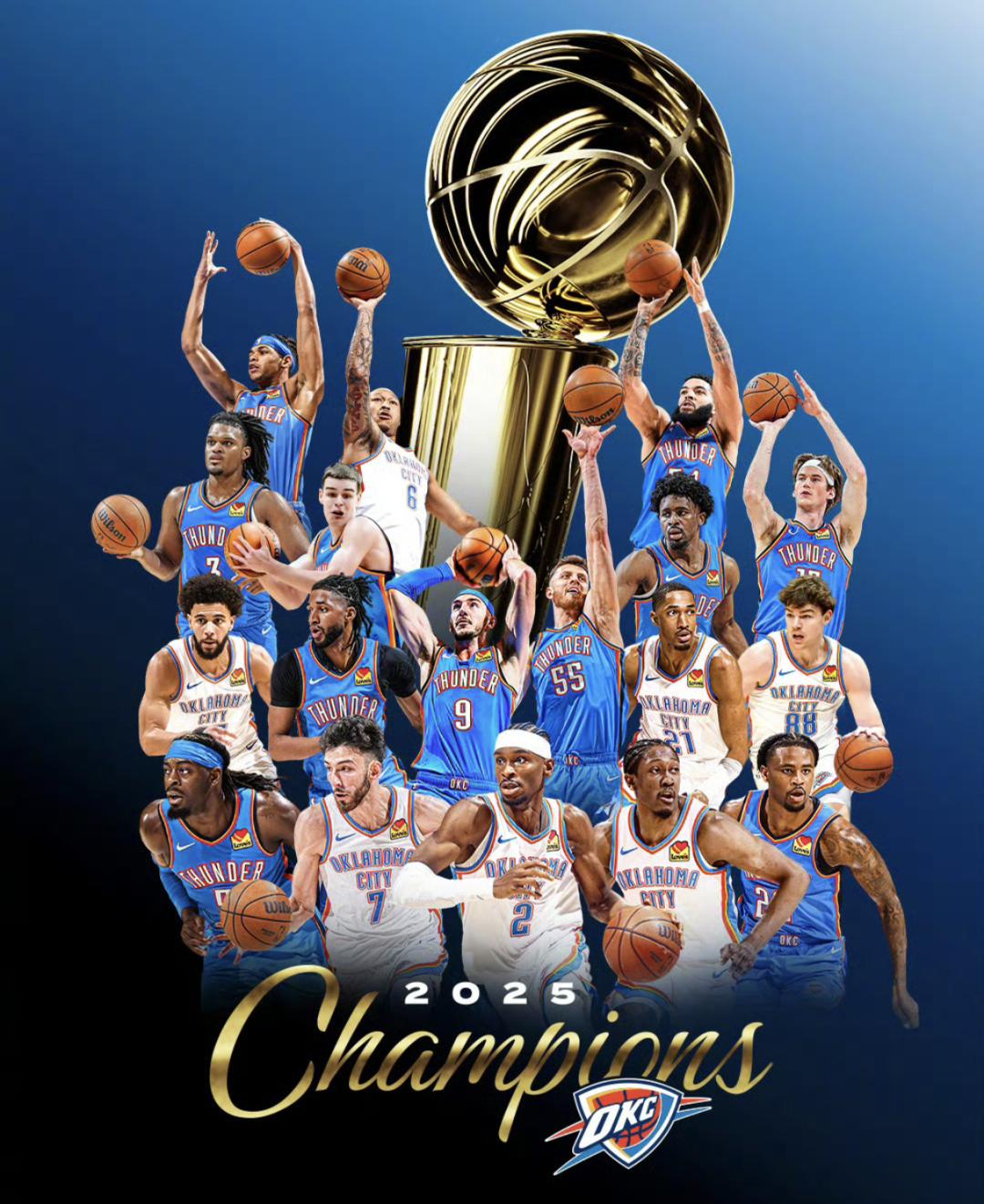
Image source: Oklahoma City Thunder official social media
But not all rookies are high-level, and not all teams have the same eye for draft as the Thunder. Michael Jordan, who was the owner of the Charlotte Hornets in the early years, had such a poor eye for draft that he indirectly led the team into a vicious cycle of "tanking - draft - insufficient rookie ability - tanking".
In addition, there was an important premise for the tanking mode to work in the past: the certainty of high-round picks. Under the old rules, the team with the worst record had a 25% chance of getting the No.1 pick, and the probability of getting a top-3 pick was close to 64%, so the return of tanking was quite stable and considerable.
However, in recent years, the NBA has been continuously tightening its anti-tanking policies. The new anti-tanking regulations introduced in 2026 are even known as the "strictest in history": the probability of the three teams with the worst record getting the No.1 pick is uniformly reduced to only 5.4% (lower than that of mid-tier lottery teams). And the new regulations also clearly stipulate that the same team cannot get the No.1 pick for two consecutive years, and cannot enter the top 5 of the draft for three consecutive years.
At the same time, the league has the right to fine "non-competitive lineups", that is, malicious tanking, with the maximum fine reaching tens of millions of US dollars. In severe cases, the team may even have its future draft picks confiscated. This series of combined policies will be officially implemented in 2027. By then, the cost-effectiveness of deliberately losing games and consecutive tanking will be completely destroyed.
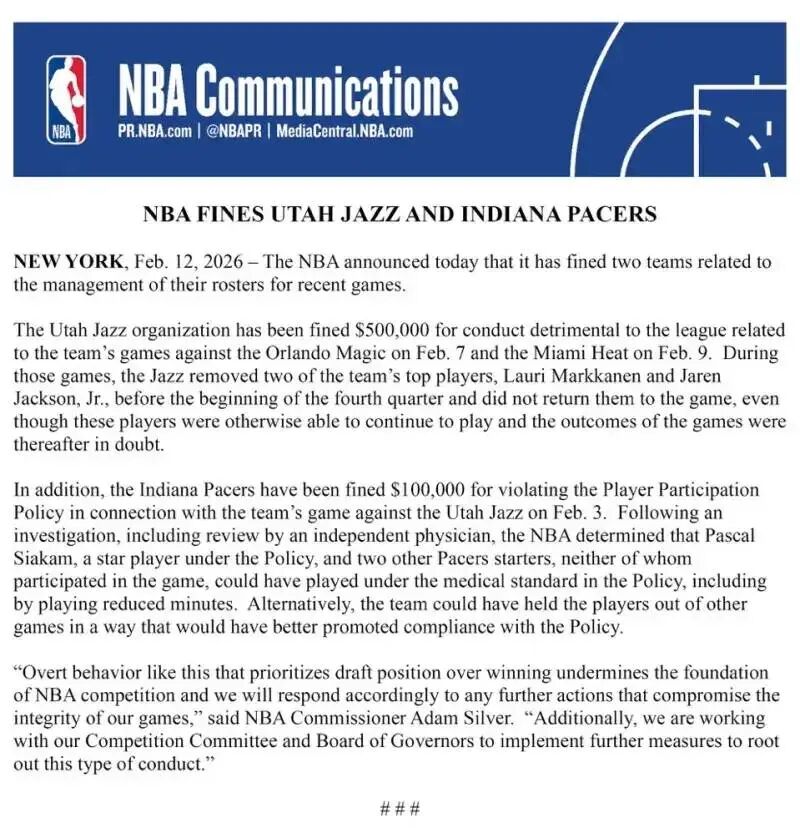
In the 2025-26 season, the Utah Jazz and Indiana Pacers were fined by the NBA for tanking, Image source: Reuters official social media
In the future, if a team wants to rebuild through tanking, it not only needs high-round draft picks, but also excellent scouts, unique draft vision, scientific training system, mature development planning and reasonable salary management. Tanking will become an increasingly sophisticated discipline.
To sum up, the NBA is becoming a competition about resource allocation. The importance of team general managers is no less than that of star players on the court and head coaches on the sidelines. If the draft determines the future and superstars determine the upper limit, then the general manager is the person who determines whether the team can operate normally and develop in a better direction.
A single contract renewal, trade or draft may ruin the team's efforts and even its future. An excellent general manager can use contract structure, salary planning, draft vision and trade strategies to continuously build a competitive lineup under limited resource conditions.
In an era when huge contracts are everywhere, in the game between talent and ambition, money and rules, from draft and trades to salary management, the operating logic of the league is changing. And these changes will continue to affect the competitive landscape of the NBA in the future.
This article is from the WeChat official account "Sports Big Business" (ID: sportsmoney), written by KK, and published with authorization by 36Kr.