From Lawrence Ng to Joey Wong, the business of AI portrait licensing is far from simple.
"The Shadow of the Beauty" returns.
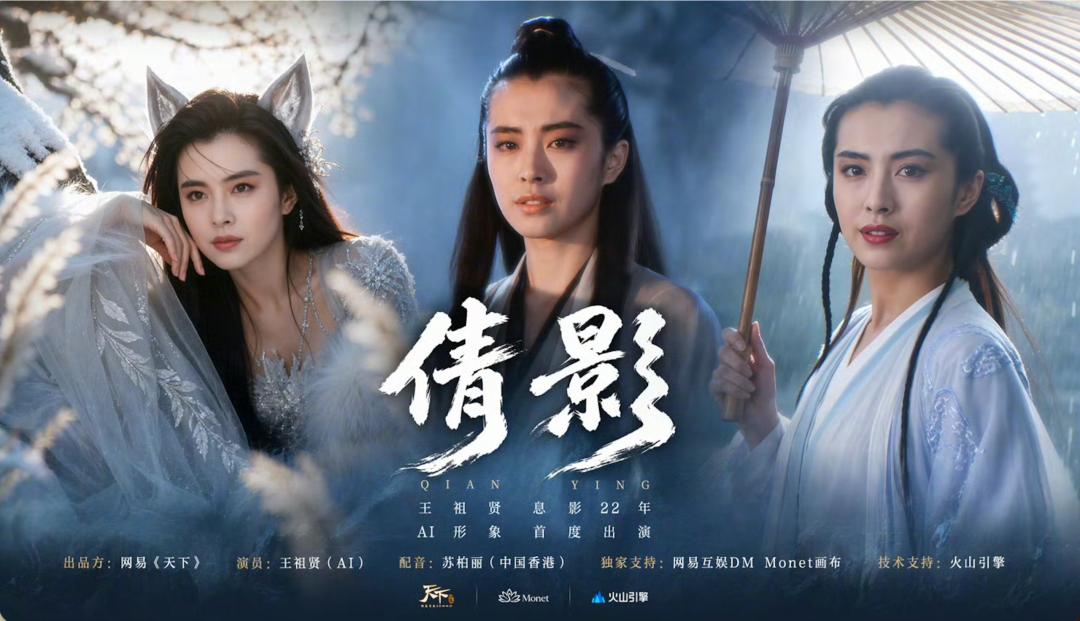
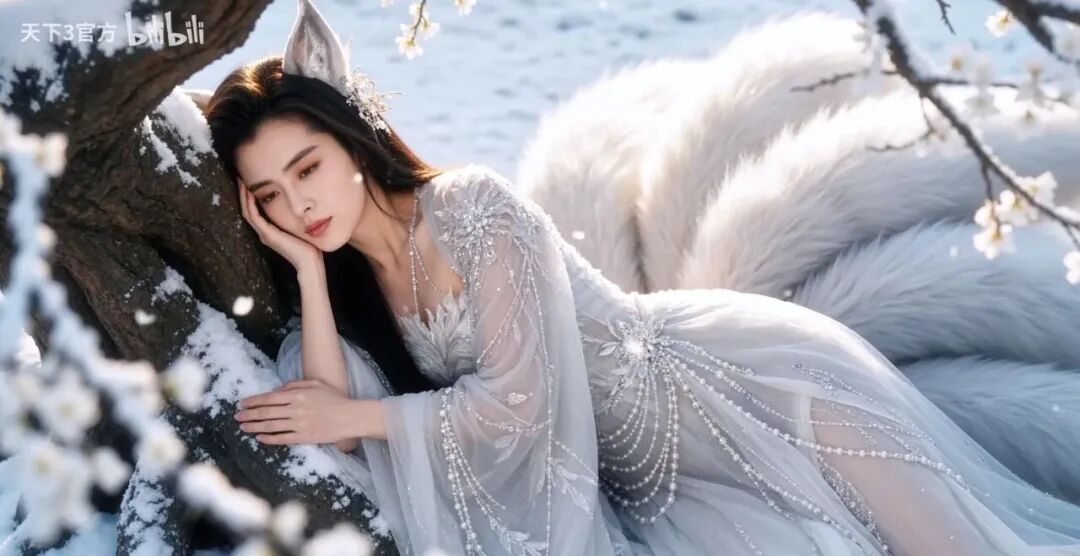
After 22 years of retirement from the acting industry, Joey Wong has authorized NetEase's game *Tianxia* to use her portrait rights from the peak period between her 20s and 30s, making a comeback to the screen in the form of an AI digital avatar. In the short advertising film titled *The Shadow of the Beauty*, classic roles such as Nie Xiaoqian and Bai Suzhen are brought back to life, breaking the fourth wall to interact with players from the perspective of the roles. At the end of the short film, Joey Wong transforms into a nine-tailed white fox, slowly uttering the line "Having walked through the mortal world, I am still myself", which exactly echoes the collective nostalgia of the audience for the golden age of Hong Kong films.
As of the latest update, the short film has received over 2.98 million views on Bilibili.
Actors used to reject AI stand-ins out of professional pride and identity recognition. But as AI short dramas impact the entire live-action film and television industry, this rejection attitude has begun to soften.
Veteran stars are the first in the industry to embrace "portrait authorization for AI". In addition to Joey Wong, Jackie Chan, You Benchang and Lawrence Ng have previously used different methods to create digital avatars via AI for works such as films and micro short dramas, while young actors remain cautious and keep a wait-and-see attitude.
This business is far more than a simple case of actors "selling their faces" and producers "selling nostalgia". When AI stand-ins become the second professional identity of actors, portrait rights are no longer a simple personal right, but also a kind of digital asset and commercial bargaining chip. Those who can use legal weapons to safeguard their rights and interests will take the initiative in the upcoming "AI stand-in" boom.
New gameplay of the nostalgia card
The decline of Hong Kong films and the aging of Hong Kong stars are the complex and melancholy feelings shared by the post-80s and post-90s generations.
Nostalgia is also a way to realize value. Veteran Hong Kong stars who have not retired from the entertainment circle remain active in variety shows, live streaming, ensemble films and online short dramas; only a few of them can get good scripts and continue to shine as actors. Audiences are happy to see veteran stars return to the screen, which is not only a nostalgia for their lost youth, but also a commemoration of the once golden age of film and television.
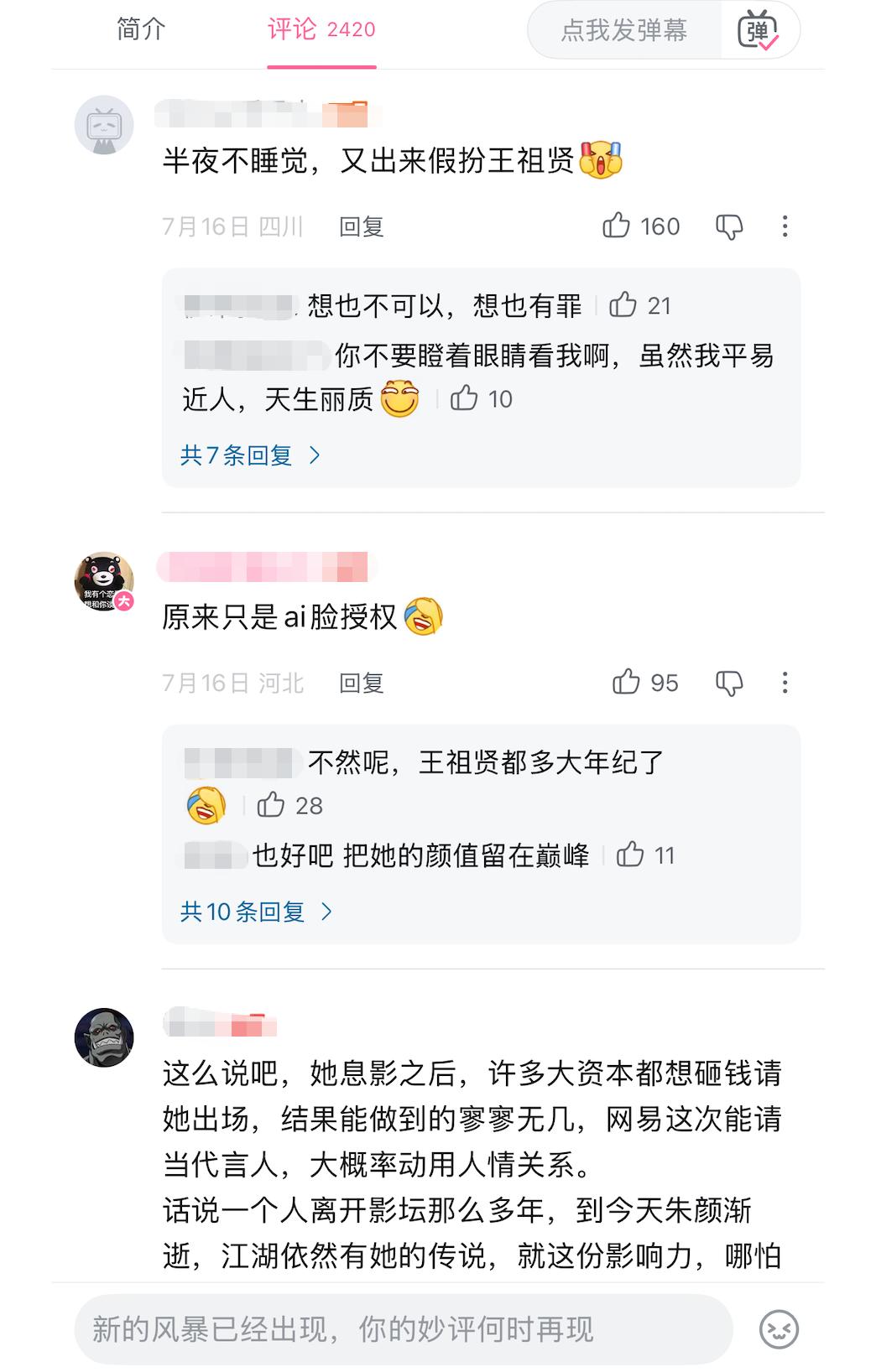
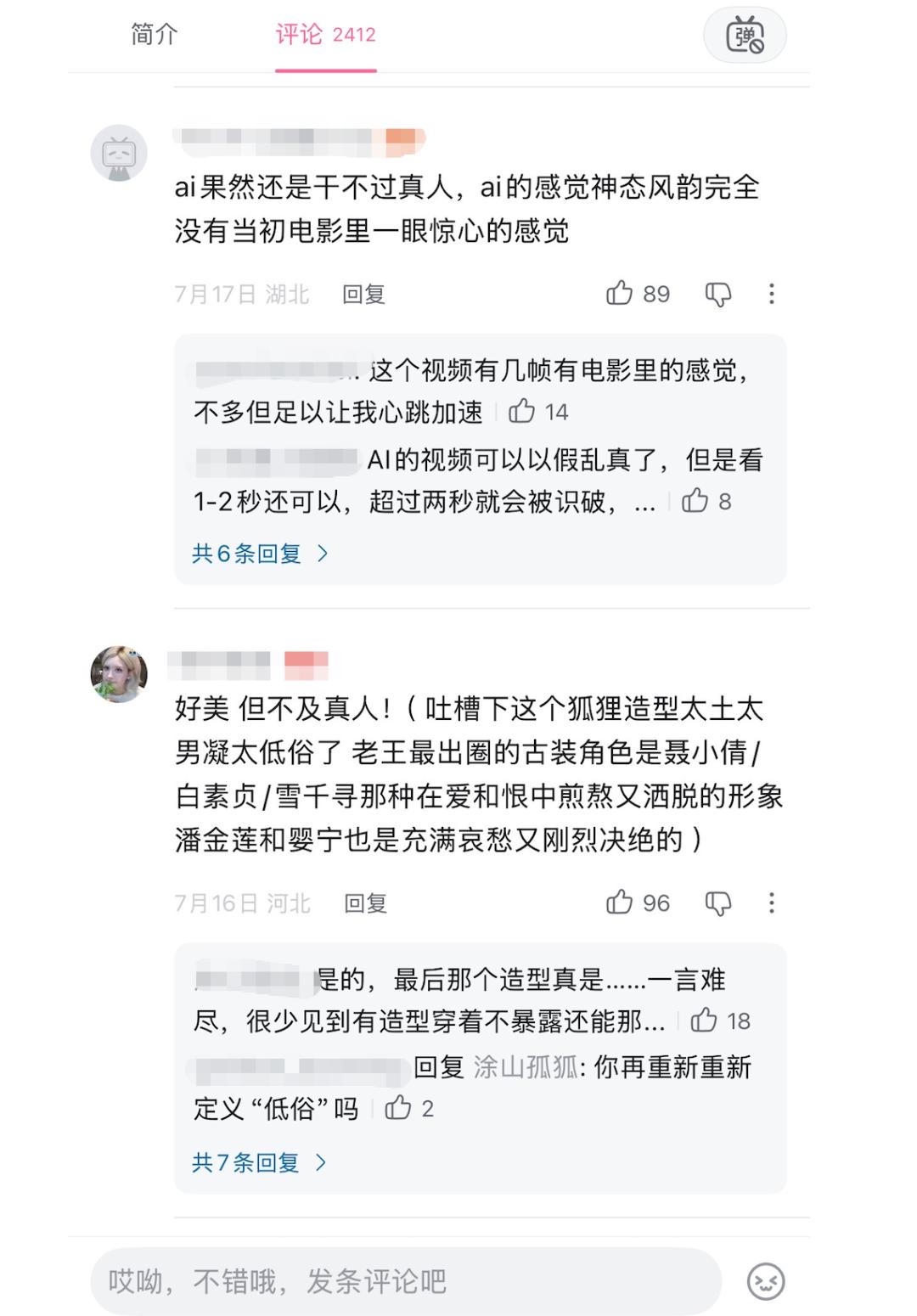
"Not sleeping at midnight, coming out to pretend to be Joey Wong again", "Even thinking about it is not allowed, it's a sin to even think about it". In the comment section of Joey Wong's short advertising film, fans left messages with her classic lines to commemorate her. One comment pointed out that authorizing portrait rights to AI will be a major trend in the future, and we will soon see all the top Hong Kong stars of the 1990s.
This trend has already begun.
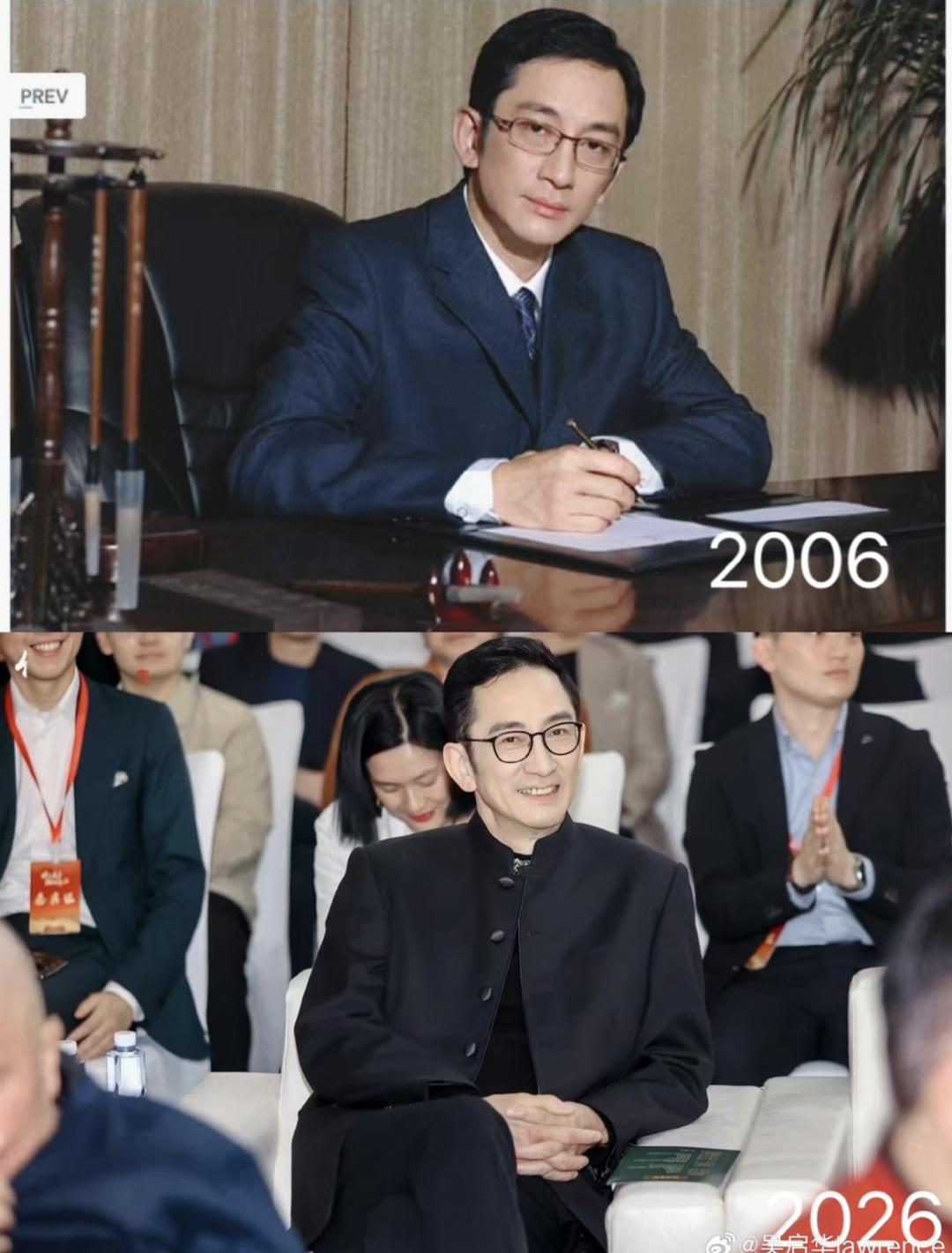
At the end of June this year, 62-year-old actor Lawrence Ng announced at a new drama promotion event that he had authorized his portrait rights from when he was 20 years old to an AI film and television production company, and would use AI technology to produce a film with the young version of Lawrence Ng as the male lead.
Lawrence Ng's representative roles include Fang Tangjing in *Hail the Judge*, Zhang Wuji in *The Heaven Sword and Dragon Saber*, and Ching Chi Mei in *Healing Hands*, etc. He is loved by the audience for his handsome appearance and ambiguous, upright-yet-sly temperament. He confessed that he is very satisfied with the finished film: he can not only play the male lead again with a young look, but also get a very good remuneration.
Earlier, the 2024 film *A Legend* used AI technology to restore Jackie Chan's appearance at the age of 27. Jackie Chan said at the premiere: "Suddenly I feel that this AI character is more handsome than I was at 27." Unfortunately, the AI technology at that time was not as mature as it is now, and the audience reflected that the AI facial expressions were stiff and out of place, leading to the film's final failure in both reputation and box office.
There are multiple factors behind actors' willingness to "sell their faces". Economically, they can get a considerable remuneration just by selling portrait rights, without having to spend time and energy on high-intensity shooting on the set, which can be called "making money while lying down". Psychologically, time and tide wait for no man: being able to return to their youthful appearance and career peak without paying the price Faust paid, why not do it?
Not only the young faces of the past can realize value, but the impressive middle-aged and elderly faces also have value.
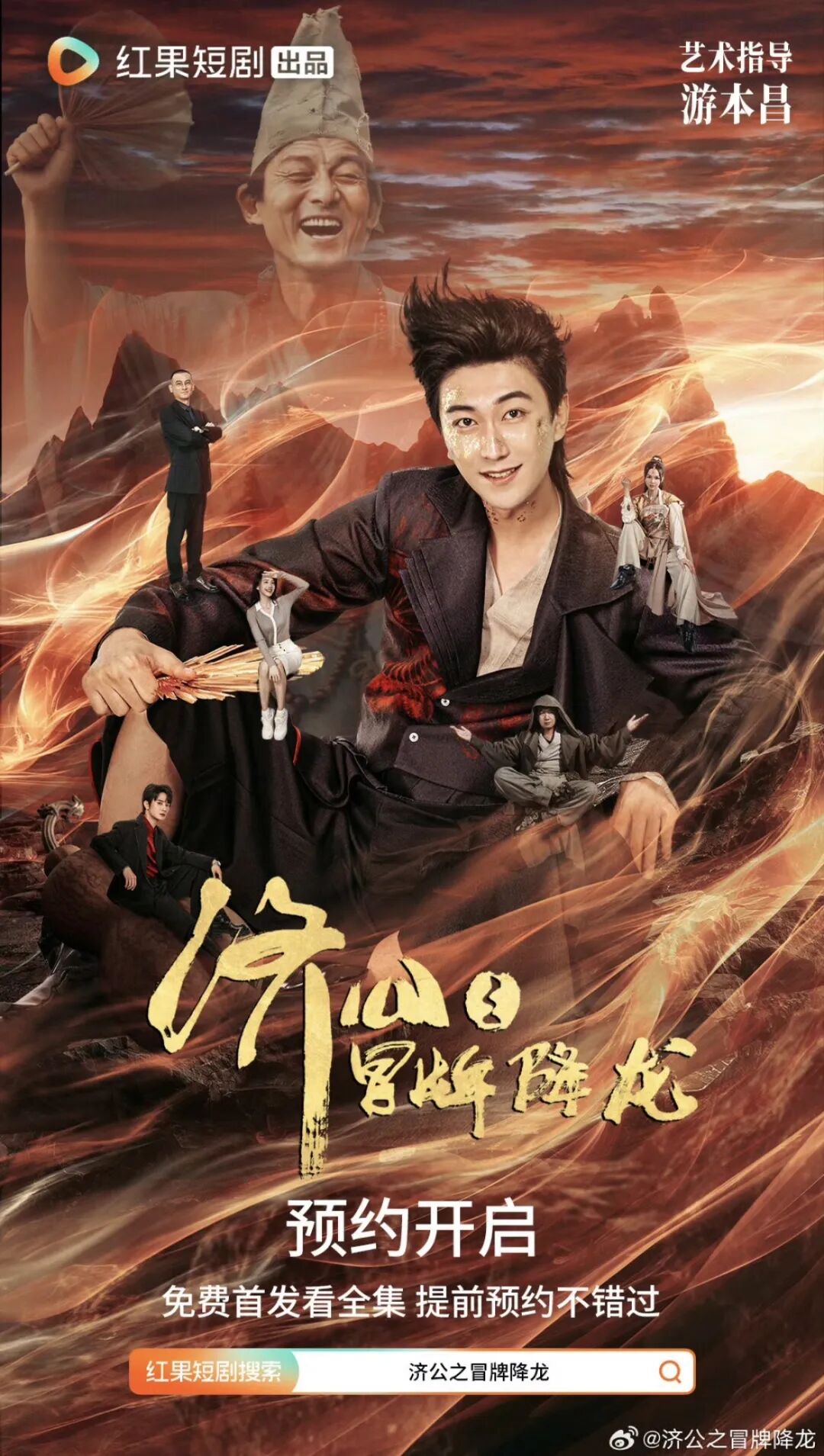
You Benchang was deeply loved by the audience for his role as Ji Gong in his early years, and gained attention again for his role as Uncle Ye in *Blossoms Shanghai* in recent years. In September last year, 92-year-old You Benchang cooperated with Hongguo Short Drama to launch the micro short drama *Ji Gong: The Fake Dragon Subduing Arhat*; the drama combined digital human technology to restore the Ji Gong image in the 1980s TV series. Up to now, the drama has reached 28.03 million popularity on Hongguo and 7.27 million views on Douyin.
While actors inevitably grow old off the screen, AI endows them with the ability to "be present forever" in their most perfect state, which is almost impossible to resist. While veteran actors regain the audience's attention, young actors who are currently in the rising period of their careers are secretly calculating with the contradictory mentality of "eager to be seen yet afraid of being replaced", adopting a wait-and-see attitude.
Young Faces VS Young Actors
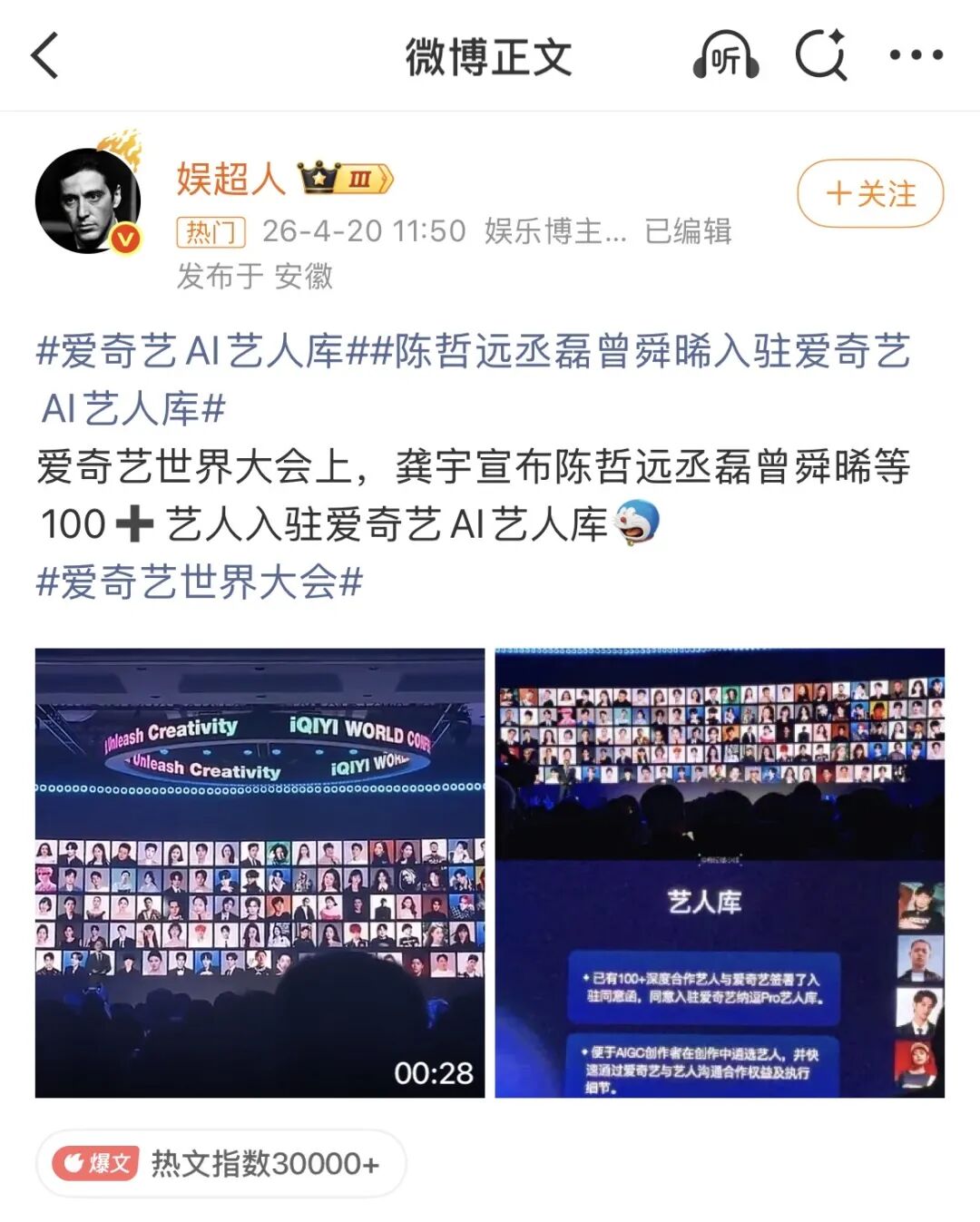
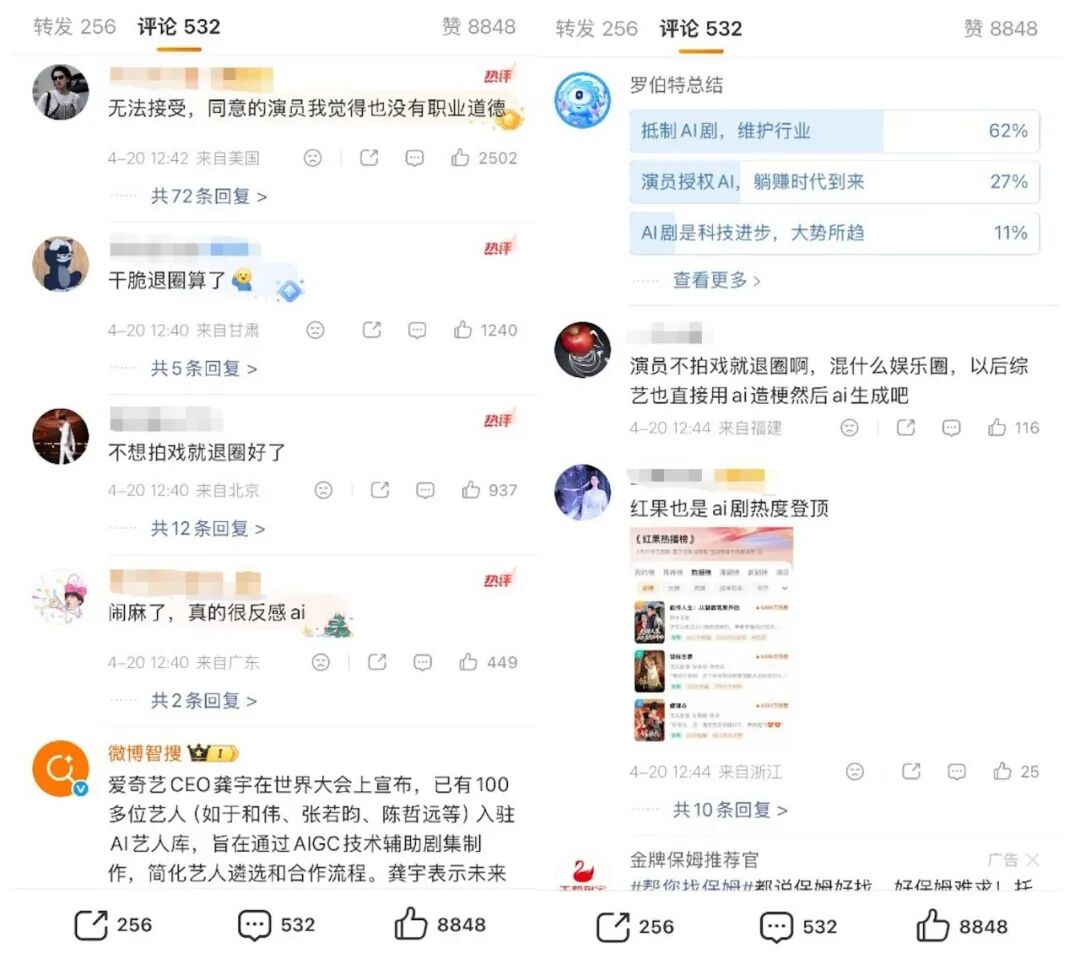
In April this year, iQIYI CEO Gong Yu's speech about the "AI Artist Library" once sparked heated discussions. Many artists and their studios, including Zhang Ruoyun, Yu Hewei, Wang Churan and Li Yitong, successively issued statements denying that they had signed any AI-related authorization. Under public pressure, iQIYI clarified that the entry of artists only means that they have the intention to cooperate in AI film and television projects, and whether to participate in the performance needs to be negotiated separately according to specific projects. Relevant media that previously released the information also issued a correction, confirming that the above-mentioned artists did not enter the library. The strong reaction from the audience and the rapid clarification from the actors made the public generally believe that young artists are completely rejecting AI stand-ins.
Now it seems that some voices outside the focus still have room for interpretation.
At that time, according to Liu Wenfeng, Senior Vice President of iQIYI, Ma Su, Cheng Taishen, Chen Zheyuan, Zeng Shunxi, Fang Zhuren, Jiang Long and others had already entered the artist library; after that, only Chen Zheyuan's side denied the authorization. Some media reported that lawyers in Beijing and Shanghai received relevant consultations from artists after the controversy, but all of them are still in a cautious wait-and-see state.
Lawyer Wang Xiaoqi from Beijing Haiqin Law Firm, who has long been engaged in film, television, entertainment and intellectual property fields, introduced to Guduo that although she has not come into contact with artists who consult on portrait authorization to generate independent AI stand-ins, in the cases she handled, there are situations where actors have to sign supplementary AI authorization clauses after finishing the live shooting. These portrait authorizations may be used for post-production AI production, accounting for a small proportion of the content of the whole drama; although the specific clips are not marked as AI-generated, actors have the right to know the purpose and scenarios of the AI-generated clips.
In other words, not all young artists reject AI authorization; at the same time, in the early communication with producers, young artists are psychologically prepared for "live-action shooting + AI collaborative generation", no longer treating it as an unexpected situation, but dealing with it as a regular process.
However, the polarization of the AI portrait rights market is obvious: actors who have retired or semi-retired have no worries about subsequent career development and take the initiative to embrace AI portrait authorization; active young actors are very cautious about AI stand-ins restricted by multiple factors such as company planning, fan reactions, and changes in commercial value.
On the issue of pricing, well-known actors can take the initiative in negotiations by virtue of their own influence and professional teams. For example, You Benchang is not only the art director of *Ji Gong: The Fake Dragon Subduing Arhat*, and the company controlled by his children is also the co-producer of the short drama. Therefore, this drama is a creation mode with deep involvement of You Benchang and related capitals, and the actor himself can realize full control over the content. However, ordinary actors, especially extras, are in an extremely difficult situation — they have no right to bargain over one-time packaged authorization and low-price "face selling".
Wang Xiaoqi analyzed that for current young artists, agreeing to authorize the production of an AI stand-in is actually a consumption of their reputation, honor and social value. "No matter how well the AI-generated image performs, it will not bring an increase in the value of the artist." Producers will definitely consider the popularity of actors when selecting them, but "AI images only consume the popularity of artists, not increase it."
From this perspective, The AI stand-in model is more suitable for artists who were once very famous and do not take acting as their main career at present, such as Joey Wong. "It can be considered that the previous popularity is an idle asset, which is left there no matter you use it or not." Compared with young actors, some sports stars may be more suitable for this model, allowing AI stand-ins to make guest appearances, "which is to expand the scope of their own value with AI, rather than cutting off the scope of their own value."
The ambivalent mentality of young artists is not difficult to understand, which can be summed up in one sentence: Since there is already an AI avatar, what do they need me for?
Cold legal thinking behind the fan carnival
The greatest significance of veteran stars' portrait authorization is not to satisfy the nostalgia dream of a single fan group, but to provide a reference for artists in the industry who have such plans. The breakout success of Joey Wong's case also allows ordinary audiences to form a preliminary understanding of the compliant authorization model.
Wang Xiaoqi previously introduced to Guduo that artists' portrait rights belong to their personal rights. To obtain the legal authorization of an artist's portrait, it is not only necessary to obtain the permission of the brokerage company that manages the portrait rights, but also the permission of the artist himself. For artists like Joey Wong who have retired from the industry and have no brokerage company, NetEase only needs to obtain her personal permission.
In the authorization for the game *Tianxia*, Joey Wong's portrait is only used in three scenarios: the short advertising film, digital NPCs and specific in-game costumes, and the short advertising film is also clearly marked as AI-generated. This authorization mode of "clear scope and specific scenarios" seems to provide a sample case.
However, Wang Xiaoqi introduced that portrait rights authorization should have been detailed and written, with clear provisions on the duration of use, scenarios, purposes and carriers in the contract, which is a standard operation established before the emergence of AI technology. What is different in AI-related authorization from the past is that it is necessary to clearly mark AI generation on the generated content, so that AI digital people can be clearly distinguished from real people.
After the release of *The Shadow of the Beauty*, while fans are happy to see the goddess "work" again, they also criticize that the AI-generated image still cannot match the temperament of the real person, especially the nine-tailed white fox shape at the end of the short film, which makes some female fans even feel a little "vulgar".
These criticisms also point to some problems: to what extent can AI-generated content be considered as defaming the prototype, can fan dissatisfaction be used as proof of infringement?
Wang Xiaoqi clarified two concepts in personal rights to Guduo: portrait right and reputation right. According to the relevant provisions of the Civil Code, the determination of portrait right infringement lies in the unauthorized use, production and publication of star portraits, while the determination of reputation right infringement lies in reducing the star's prestige and social evaluation by means of insult and slander.
In other words, even if fans think that Joey Wong's nine-tailed fox shape is a bit vulgar and does not conform to the real person's temperament, this is only a subjective aesthetic difference and does not constitute a legally recognized damage fact.
Some fans also worry that after the actor signs the authorization agreement, the technical risks are not completely controllable. For example, once the face data enters the model library, it may face the risk of data leakage and being used by unknown third parties in unknown scenarios. In particular, female artists are more likely to become victims of AI counterfeiting of inappropriate content.
Wang Xiaoqi believes that there are two actors in such cases: the authorized party who has obtained legal authorization and the illegal infringer. For the former, artists have the right to continuously review AI-generated content, and the agreement can also stipulate the retention and deletion of modeling data; for the latter, artists cannot completely prevent such behavior. "Technology development itself is neutral. Illegal elements can use AI to counterfeit bad things, and artists and brokerage companies can also use technology to safeguard their own rights and interests. For example