Perhaps PS6 is the last generation of game consoles...
When was the last time you sat down in front of your living room TV and played a game properly?
This is never a problem for die-hard console fans. But now, Sony has found that there are not enough die-hard console fans left.
This question has become a must-answer issue for the next-generation PlayStation.
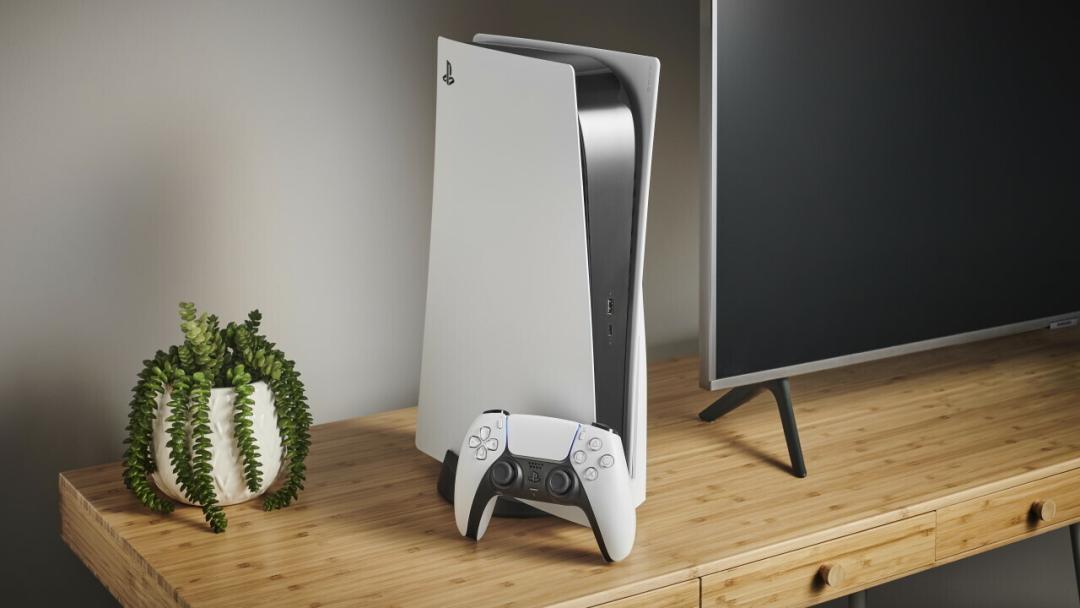
Sony stated at this year's business briefing that PlayStation has long been tied to the living room, and the next-generation platform will expand its usage scenarios, allowing players to play games naturally and continuously even outside the living room.
At its core, players' gaming time is moving away from the living room, and the next-generation consoles cannot be confined to the living room anymore.
While Sony is starting to explore the connection between gaming and other spaces, Microsoft next door is busy integrating Xbox into Windows and more cooperative devices; Nintendo, the current "king of handheld consoles", continues to move forward along the hybrid form of Switch.
The three manufacturers seem to take very different routes, but what they are competing for is actually all the gaming time of players scattered in the living room, bedroom, commute and in front of the computer desk.
The core proposition is: no matter how the form and gaming environment change, the most important games and players must stay in their own brand ecosystem.
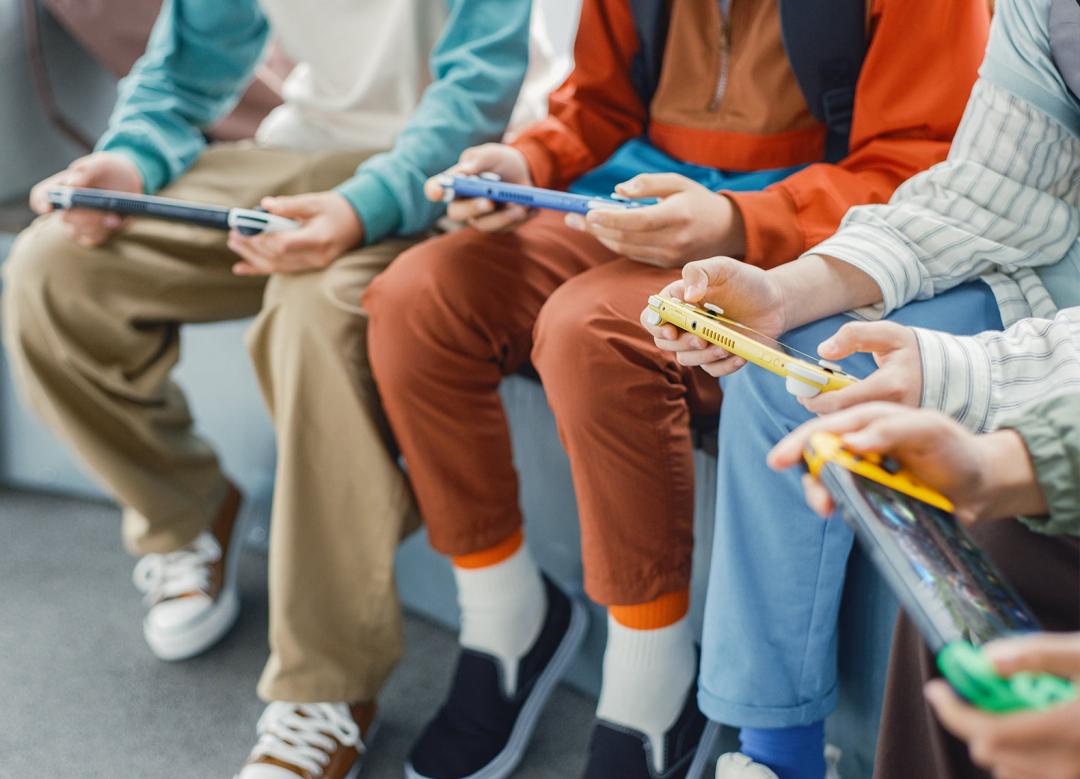
The New Form of PS6: Splitting into Two
Sony's next-generation console form may be split into two.
One PS6 will remain as a console next to the TV, with resolution, ray tracing and frame rate ensuring the experience of core players; the other one codenamed Project Canis, in handheld form, allows players to pick up and play anytime, anywhere.
Moreover, Project Canis is a truly independent console: it can run games locally without constant streaming to the PS6 at home — it will not follow the logic of Sony's cloud streaming handheld PS Portal.
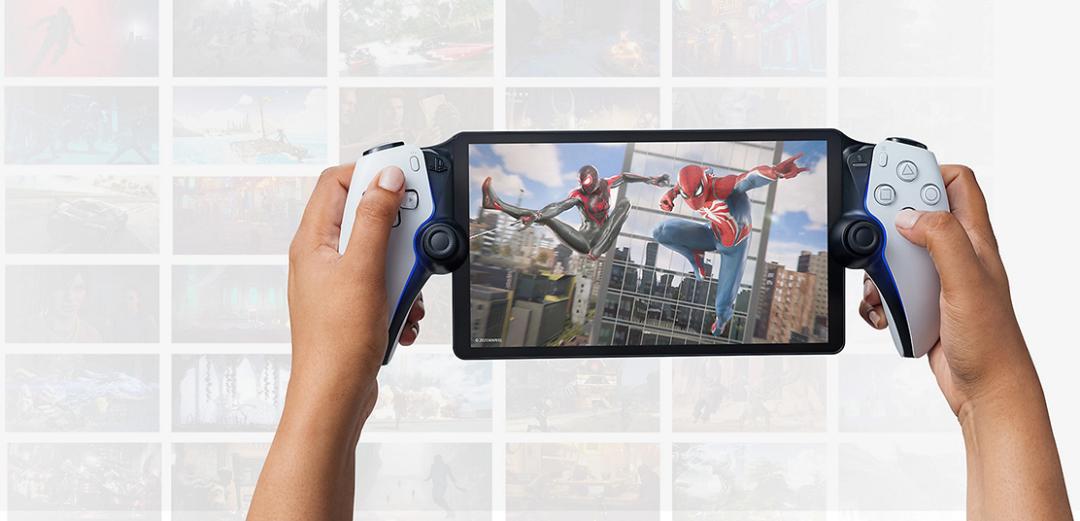
PS Portal
In terms of specific configurations, it is rumored that the processor of Project Canis adopts TSMC's 3nm process technology, the CPU is configured with 4 large cores and 2 small cores, the GPU has 16 RDNA 5 computing units, and it is equipped with up to 24GB of LPDDR5X video memory. Its raster rendering and ray tracing performance may surpass Microsoft's current Xbox Series S.
That being said, Project Canis defined as a "handheld" will never pursue extreme performance, but more of a trade-off between mobility and performance. Its true significance lies in allowing players to enjoy the complete PlayStation gaming ecosystem even when they leave the living room — instead of being lured away by Nintendo's Switch ecosystem...
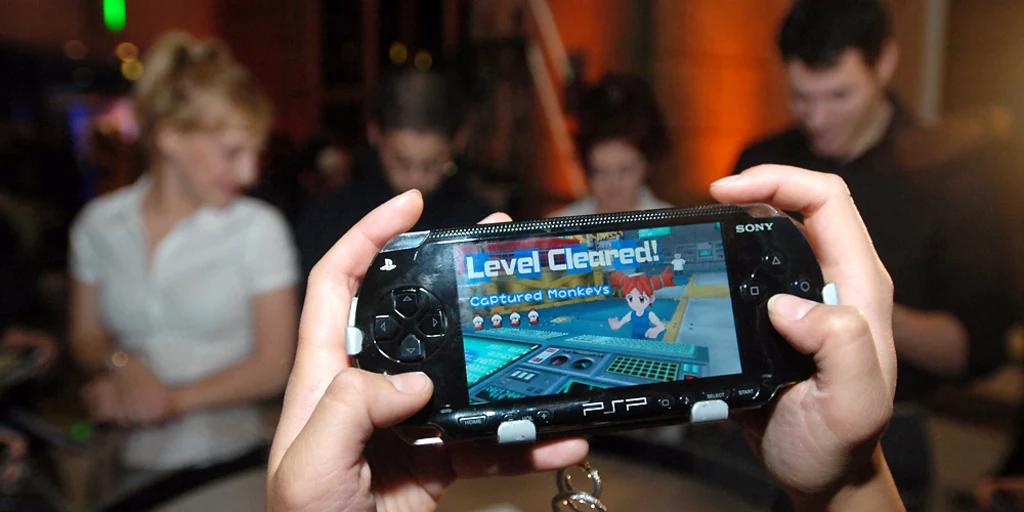
The reason why it is called "complete" is that both PSP and PS Vita in history have put game consoles into pockets, but they have their own gaming ecosystems that are different from core consoles.
In order to achieve a "complete" ecosystem on the mobile end, the later PS Portal went to the other extreme: leaving all the computing to the PS5 / cloud, and itself only has the streaming output capability.
At its core, neither PSP, Vita nor Portal can truly satisfy PlayStation's core players. Sony has to build a device that fully reproduces the core console experience but can be taken out of the house. That's why Project Canis came into being, which can play locally like a standard handheld, and fully enjoy the PS6 gaming ecosystem.
After talking so much, you may now understand why Sony Interactive Entertainment previously announced that new PlayStation games will no longer be released in physical discs, and new works will only be released as digital download versions in the future: games are tied to accounts, the "console + handheld" share one set of store accounts and one set of save system, and digital games are the most convenient choice.
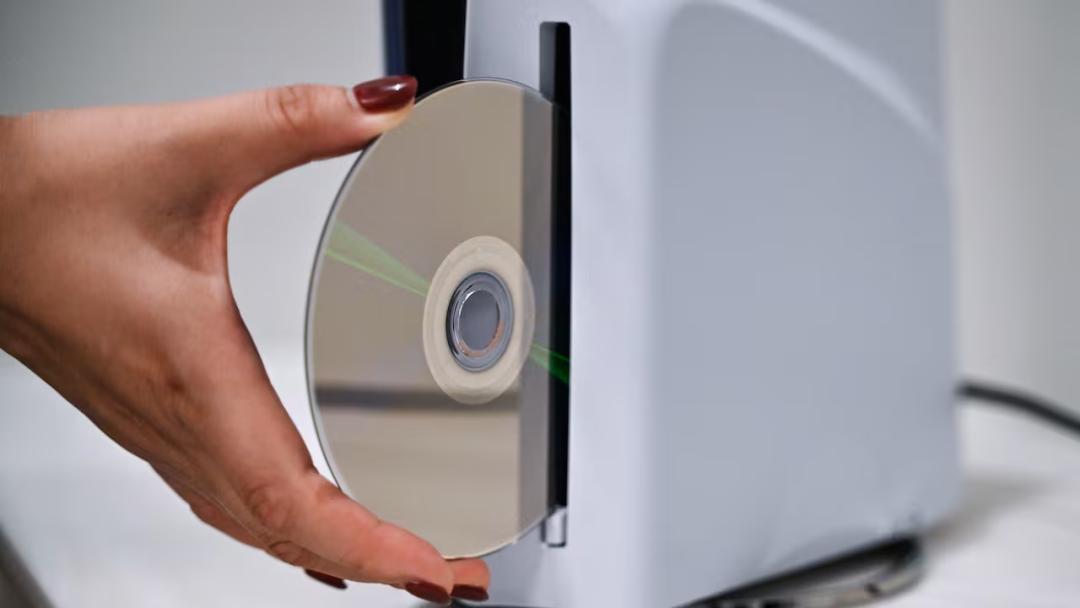
Of course, this new paradigm has created a huge power crisis for players, which is undeniable. To put it bluntly, the mechanism of online games means that you can only pray that the platform will not delist the games you love.
In the era of pure digital, no discs, we cannot truly "own" games, we can only buy the "right to use", which is uncertain.
But for players who don't care about these rights, the convenience of the new paradigm also exists — buy the game once, it can be downloaded on both devices, and you can play it anytime, anywhere.
However, after changing from physical discs to digital licenses, games also lose the possibility of resale, lending, and saving independently of accounts. Therefore, this dual-device route seems to expand the space where players can play games, but in fact it also tightens the space where games can circulate.
Xbox, the Newest Accessory of Windows
Microsoft has done a lot of very "open" things in the past few years: releasing traditional exclusive games such as Forza Horizon and Halo to other platforms; it has also cooperated with many manufacturers to customize handheld consoles under the Windows/Xbox brand system.
For a while, people thought that Xbox would fade out of the hardware war and focus on game production and distribution, subscription services and brand building.
That's not the case. Microsoft is actually building an Xbox system that spans consoles, PCs, handhelds and the cloud, and the next-generation game console is a key node.
Xbox has announced that the codename of its next-generation console is "Project Helix". According to the released information, the new console uses a custom AMD SoC, the underlying system runs Windows, can play Xbox console and PC games, and is compatible with four generations of Xbox game libraries. The developer Alpha hardware program of this device will be launched next year.
In terms of game exclusive arrangements, products including the new Gears of War are still permanently exclusive to Xbox, and works that have been confirmed to be released on multiple platforms will follow the original plan, retaining Microsoft's space to expand software sales.
But it is Windows that determines the direction of the next-generation Xbox.
Prior to this, the Xbox handheld products launched by Microsoft in cooperation with third-party manufacturers (such as ROG), although bearing the Xbox name, still have not pure enough actual gaming experience, such as bad experiences like key conflicts and system pop-ups.
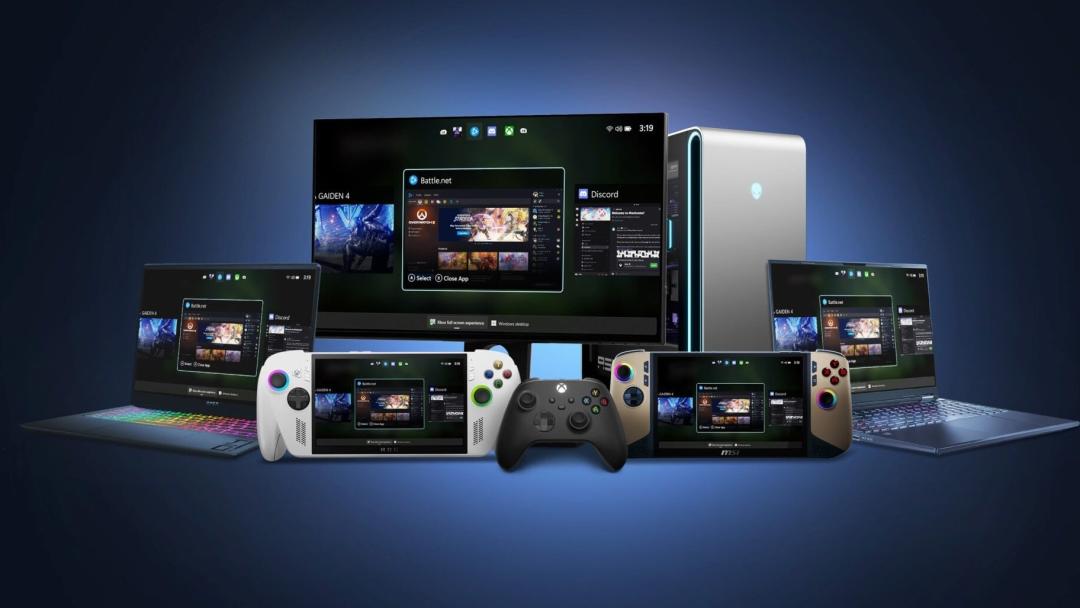
Since April this year, Xbox mode has been integrated into Windows 11 — press the controller button, the computer will switch to a controller-first full-screen interface, aggregate game libraries such as Xbox and Steam, and reduce background tasks at the same time.
Microsoft has also done a lot of performance optimization for Xbox mode, making Windows PC work more like a game console that you can play immediately after turning it on.
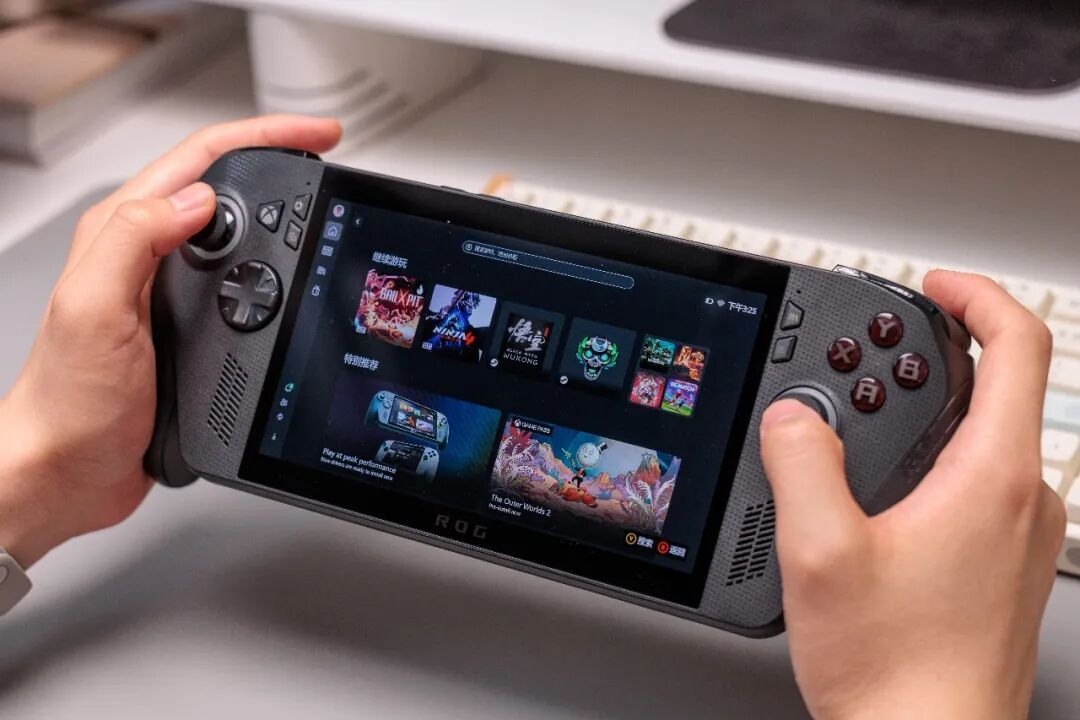
After this series of operations, Xbox's future route has also become clear. Project Helix is responsible for high-performance hardware in the living room; OEM manufacturers such as ROG will continue to make handhelds and gaming PCs, while ensuring that ordinary computers are also compatible with Xbox mode.
Users of any model can enjoy the complete Xbox gaming ecosystem through Windows. The slogan "Where there is Windows, there is Xbox" is no longer just an advertisement.
But this route has also encountered cost pressure.
As the cost of memory and storage used in consoles has risen by more than 2.5 times, and may double again by next year, Microsoft has officially raised the price of the existing Xbox Series X|S first.
Starting from August this year, the price of the 512GB model will increase by 100 US dollars, the 1TB model will increase by 150 US dollars, and the 2TB version will be discontinued.
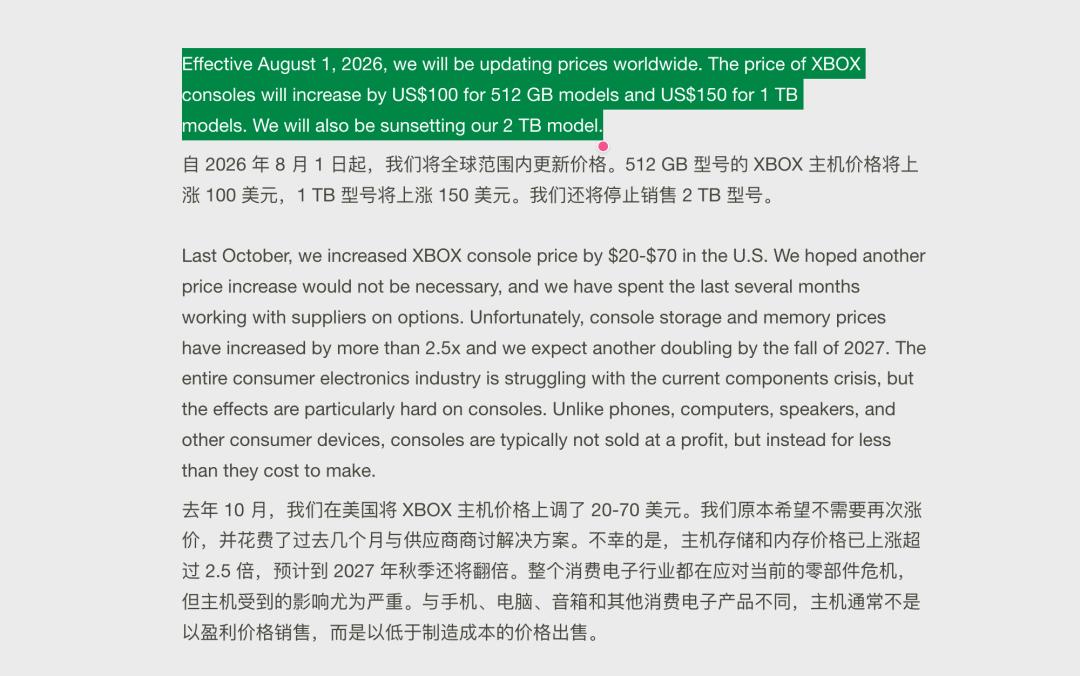
Microsoft awkwardly admitted that game consoles are usually sold below manufacturing cost, and profits need to be recovered through games and services. At present, the overall number of players and playing duration of the Xbox ecosystem are declining, and the growth of Game Pass and multi-platform business has not met expectations.
Microsoft gives Project Helix a core ecological position, and its existence defines the performance, compatibility and operation experience of the next-generation Xbox. But the problem is, to pursue high performance, and to be compatible with consoles, PCs and previous generations of Xbox games, its hardware cost will only be higher.
If Microsoft can no longer subsidize consoles as it used to, it is very likely to become an expensive living room gaming PC.
Nintendo's Dilemma: How to Convince 100 Million People to Switch to Switch 2
While Sony and Xbox are still arranging the positions of consoles, handhelds and PCs, Nintendo has covered both living room and mobile scenarios since the first generation of Switch.
Switch 2 was launched last June, and a total of 19.86 million units have been sold as of the end of March this year. This volume is not small, but in front of the 155 million units of the first-generation Switch, it is only the beginning of the "old user migration" project.
Nintendo's top priority now is clear, which is to make old users willing to replace their consoles.
Who makes the first-generation product so well that it creates a sweet trouble for the next generation.
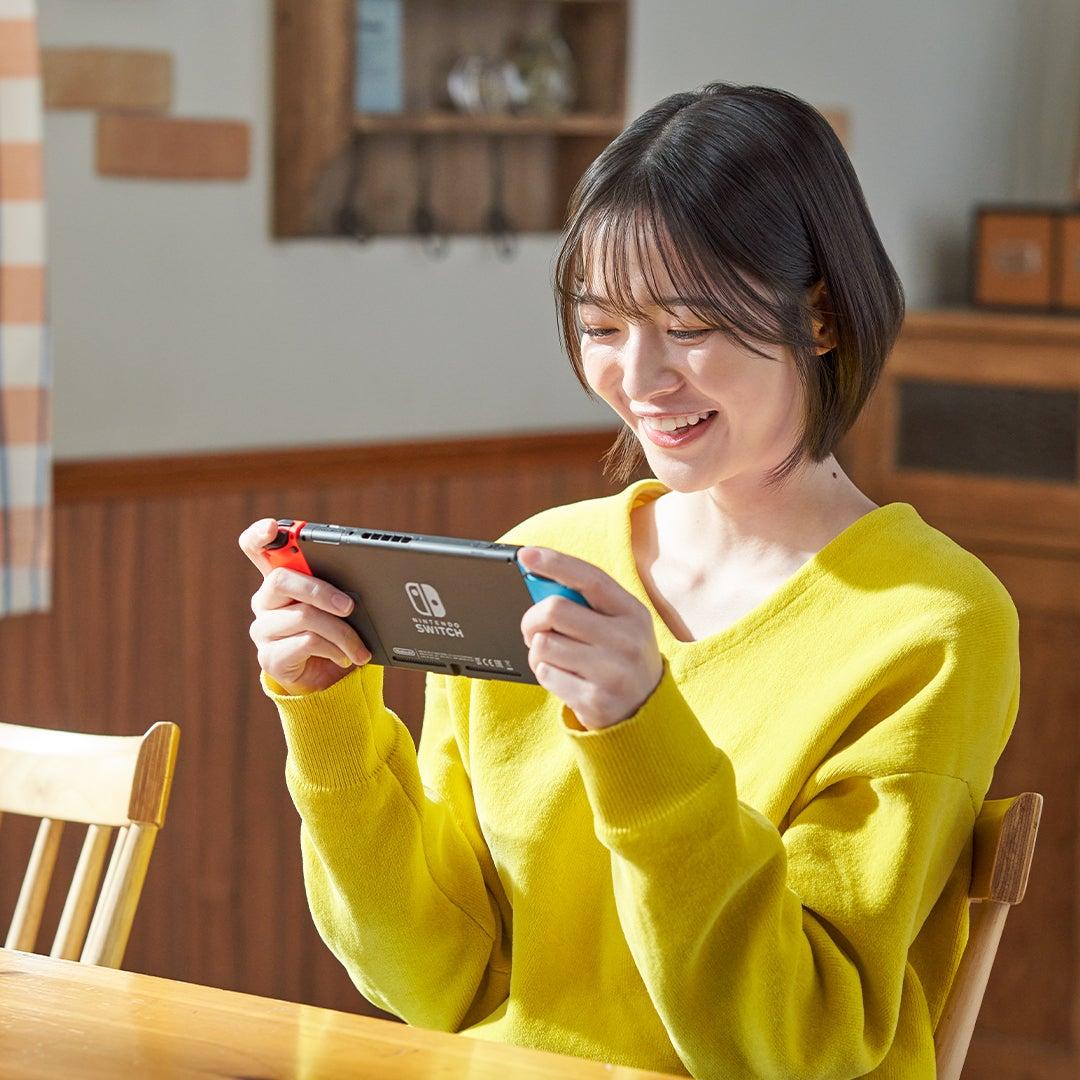
Switch 2 supports compatible Switch physical and digital games from the very beginning, so old players can migrate their account systems, saves and digital games almost painlessly (parental control settings will also be transferred together). At the same time, the Switch Online membership continues to be used, and some Joy-Con and Pro controllers can also continue to work.
Nintendo's console replacement plan is divided into several layers: paid upgrade packs for old games, free performance patches, and new exclusive works for Switch 2.
Among them, the new exclusive works for Switch 2 are the real source of the desire to replace the console.
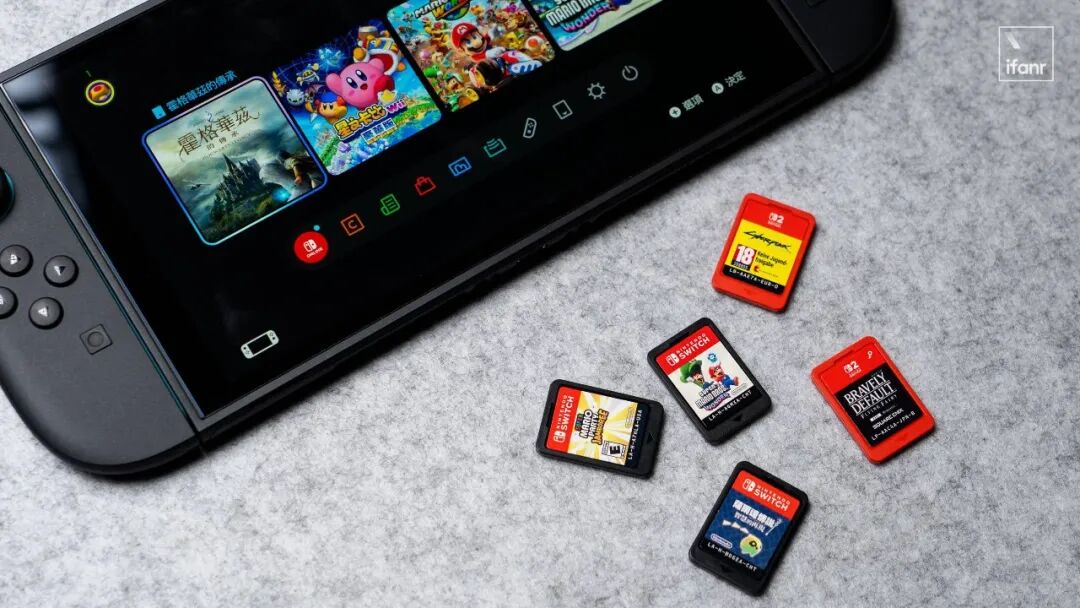
Interestingly, the boundary between physical and digital has also begun to blur on Switch, but Nintendo has not made a one-size-fits-all decision like Sony.
In Nintendo's 2026 fiscal year, digital sales accounted for 54.6% of the software sales of dedicated game platforms, the digital business has exceeded half, and physical cartridges still have a considerable scale. For Nintendo, cartridges are not only retail channels, but also carry the consumption habits of borrowing, collecting and reselling.
Therefore, Nintendo created a compromise solution called "Game-Key Card". The Game-Key Card usually does not store the complete game, players need to connect to the Internet to download after inserting it, but the card must be kept as a key when running.
From the perspective of manufacturers, this invention is very clever; for users, the Game-Key Card is a confusing and cunning behavior.
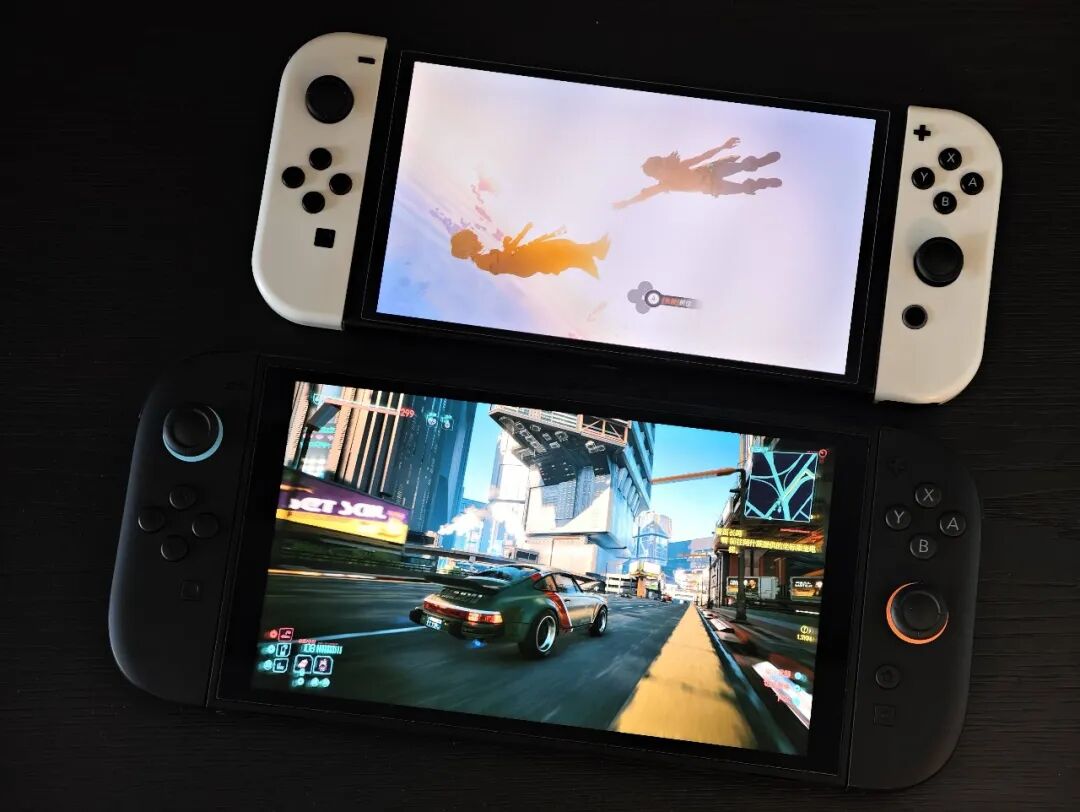
As for the rumored branch products of Switch 2 — OLED version and Lite version, Nintendo has not given a positive answer yet.
For the resourceful Nintendo that wants to make money from hardware but does not want to raise the hardware price, both branch versions are suitable to be left to the later stage of the product cycle, and when the sales of the standard version slow down, give the market another reason for the same-generation upgrade to replace the console.