AI-generated short dramas are replacing live-action shows without ever giving actors any heads-up | Exclusive Interview with Tan Fei
When AI can generate content at lower costs and faster speeds, the industry's entry threshold has also risen accordingly — the outstanding performers become even more capable, while those who cannot keep up with the industry rhythm face increasingly difficult situations. If actors do not cherish every performance opportunity, AI will replace them without any warning.
Against the industry backdrop of declining long-form drama production and continuously falling shooting start rates, short dramas, with their star-making speed calculated in weeks and explosive growth in the number of released titles, have become a new destination for countless actors, and have also made "no job is inherently inferior" the most pragmatic survival consensus in the film and television industry. We can see that graduates from professional performing arts schools, mid-tier actors, grassroots amateurs, and even veteran actors have all flocked to the short drama wave.
But this field is far from calm. The intervention of AI, like an undercurrent, is quietly changing the rules of the game. "It seems that 95% of all content now is AI-generated micro short dramas", this data mentioned by Tan Fei, a film and television producer, supervisor and planner, shows us that when AI can produce content at lower costs and faster speeds, the living space for real human actors is further squeezed. The boundary, value and evaluation system of the acting profession are also being reconstructed by short dramas and AI — the star-making logic has been iterated, performance standards continue to upgrade... All of these ultimately point to a core proposition: short dramas are at the peak of the trend, where should real human actors go from here?
In Tan Fei's view, "Short dramas are like a gust of wind, with extremely strong tendency to favor the new and discard the old". A hit work can create a "top-tier star", and this popularity is often as dazzling but short-lived as a meteor. The memorability and audience stickiness of short dramas are far less than those of traditional film and television works, and the speed at which new actors rise to fame and old actors fade out is unprecedented.
However, this industry reform is not meaningless at all. It precisely brings the acting profession back to its simple essence: the outstanding performers become even more excellent, while those who cannot keep up with the industry rhythm face increasingly difficult situations. The entry threshold for the industry has also risen accordingly — when the performance of a real human actor is not even as good as that of an AI actor, there is naturally no reason to cast the human actor.
If actors do not cherish every performance opportunity, AI will replace them without any warning. The following is the conversation between *New Weekly* and Tan Fei.
Short dramas are like a gust of wind,
with extremely strong tendency to favor the new and discard the old
*New Weekly*: Short dramas have developed at a breakneck pace up to now, becoming a new destination for a large number of actors. In your opinion, has this wave broadened the survival boundary of actors, or reshaped the original value system of the acting profession?
Tan Fei: It must have broadened the boundary. No job is inherently inferior, and there should be no distinction of superiority between performing in long dramas and short dramas. Nowadays, long-form dramas are on the wane, the shooting start rate has dropped sharply, and many actors actually have no way out. This is similar to football players: if you can't play in the Chinese Super League, it's okay to play in the Scottish Premiership. For actors, everyone is a human being first, and needs to make a living. I think we should consider this from a humanistic perspective.
Of course, the rise of short dramas is like a gust of wind, and now it has indeed reached a rather awkward stage — with the rise of AI, it seems that 95% of all content now is AI-generated micro short dramas, and a large number of real human actors are facing the situation of having no roles to play. Almost all the original mid-tier actors have no roles to take, not to mention the extras.
That's why we have been emphasizing fairness and efficiency recently: AI is ultimately supposed to assist humans. Because no technology should replace humans in the end, but help humans achieve value enhancement.
*New Weekly*: The star-making cycle of short dramas has been compressed to be calculated in weeks, and a hit work can create a "top star in short drama circle", but these actors can hardly enter the mainstream film and television circle. What do you think is the core difference between the star-making logic of short dramas and traditional film and television? Is the "fame" of short drama actors the same as the "fame" in the traditional sense?
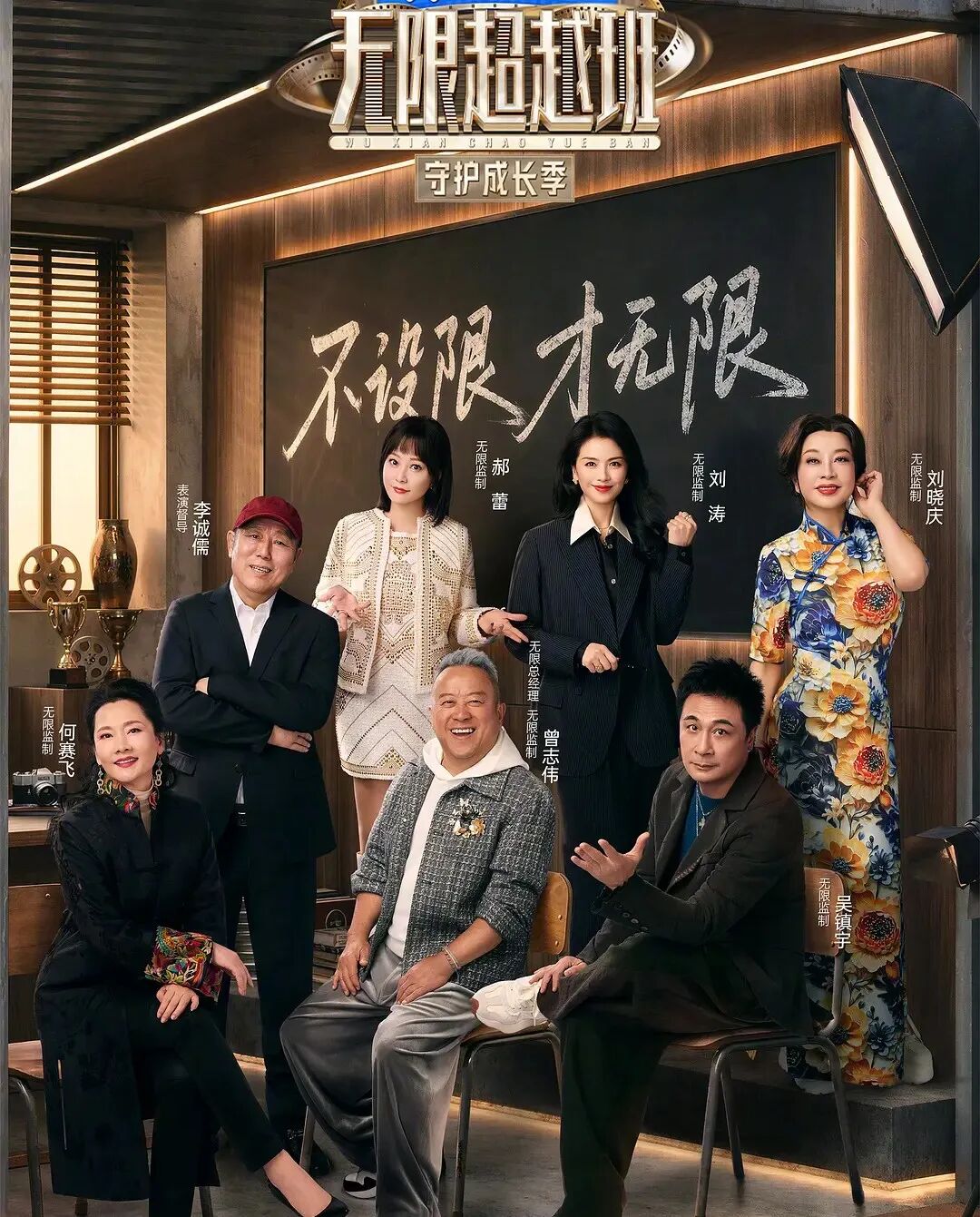
Poster of the variety show *Memories Beyond Horizon*
Tan Fei: The fame of short drama actors is like a meteor, coming and going quickly. You can pay attention to a variety show called *Memories Beyond Horizon*. Since last year, the show has arranged short drama actors and long drama actors to participate in film and television projects on the same stage. It can be seen that short drama actors perform quite professionally in highly explosive performances such as crying loudly and hysteria, after all, the performance of vertical-screen short dramas requires actors to amplify their emotions; but when it comes to performances that need to leave blank space, do not need too much force, or are continuous and systematic, they obviously have shortcomings.
Now more and more traditional film and television actors are entering the short drama field, which will gradually make the performance style of short dramas, which used to be extremely exaggerated and overly dramatic, tend to be "normal". At the same time, many long drama actors have begun to learn from some performance characteristics of short drama actors, such as showing rapid psychological changes and facial expression changes when the plot has an extreme twist. The two sides learn from each other's strong points to offset their own weaknesses.
But the fame of short drama actors is different from the fame in the traditional sense. Due to the fast update cycle, new actors will soon replace the old ones, and the audience will not always remember the face of a short drama actor. The memorability, retention and attention of short drama actors are not as high as those of traditional film and television actors, which doomed their relatively short career span.
Up to now, short drama actors have been updated for several rounds. This is related to the characteristics of short dramas — trends are always changing, what is popular this month may no longer be popular when you shoot new works next month. Just like the taste of Chengdu hot pot: this month people are still queuing up for certain flavors, and next month those flavors are completely ignored. Short dramas are like a gust of wind, with extremely strong tendency to favor the new and discard the old.
Do not confuse top-tier actors
with ordinary low-ranking actors
*New Weekly*: A large number of mid-tier actors in traditional film and television productions are quietly turning to short dramas now. Based on your observation of the industry, what is the real situation of this group of actors?
Tan Fei: In fact, some veteran actors also act in short dramas, like Liu Xiaoqing, who is more of a casual hobby in this field. But to some extent, this also reflects the awkward situation of the long drama market — there are not as many roles as before. Actors are just like craftsmen, they need to work, keep practicing all the time. If you don't film for a long time, you will get rusty and your state will go wrong, so filming short dramas is sometimes a kind of practice.
As for some actors who graduated from film academies, there are indeed fewer roles for them now, and many of them will put their main focus on short dramas or live streaming. Short dramas provide a new stage for actors, but after AI intervenes and even is abused, this stage begins to shrink. The society is also extremely unforgiving to actors, always confusing top-tier actors with ordinary low-ranking actors. Some actors evade taxes, and some actors do not sign with any agency, not even having social security. We still need to provide as many opportunities as possible for actors, which is the humanistic care that the industry should have.

Still from the short drama *Splendid Peace* starring Liu Xiaoqing
*New Weekly*: The production logic of short dramas itself pursues extreme efficiency and strong emotional output. Coupled with the fact that AI actors are gradually replacing real human actors, under this background, what are the irreplaceable traits of real human actors?
Tan Fei: Those that can be replaced are more easily replaced, and those that cannot be replaced still cannot be replaced. Some mid-tier actors and extras are facing great challenges. The industry also puts forward higher requirements for actors' performance ability. Now no one in the film crew dares to put on airs, no one dares to recite numbers instead of lines, because doing so will directly lead to being eliminated by the industry. If you still don't cherish every opportunity, AI will really replace you without any warning.
*New Weekly*: In the past, the core criterion for evaluating actors was acting skills and the depth of character shaping; for short dramas, the requirements are "grabbing attention in 3 seconds", "high density of emotional output" and so on. Do you think short dramas have rewritten the evaluation criteria for performance?
Tan Fei: Short drama performance is also performance, which should be essentially the same. But at the practical level, the carrier characteristics of vertical screens determine that the requirements for long dramas and short dramas are different: long dramas mostly present the environmental changes around the actors, such as the crowd behind, the flowing water beside, and the moving train; short dramas do not need these, the camera is aimed at the face, mostly medium close shots or close-ups, which have different requirements for actors' subtle facial expressions and extreme emotional twists.
The corresponding evaluation systems of the two are naturally different: the same performance style, which is normal in short dramas, will look too unnatural and too deliberate in long dramas.
I think a good long drama actor can perform well in short dramas, but a good short drama actor may not be able to perform well in long dramas. Long drama actors have corresponding skills and foundation, once the director clarifies the requirements, they can meet them; but if you let actors who are used to short drama performances express the sense of blank space and subtle psychological changes in long dramas, they may not be able to do it, because they are already used to externalizing emotions with facial muscles and body language.
So I still suggest that short drama actors, if they want to expand their professional stage, should do more professional training, and learn more from senior directors and performance teachers.
"You are even worse than AI,
why should I hire you?"
*New Weekly*: Has "acting skill" been redefined in the short drama era?
Tan Fei: It's not a redefinition, but an upgraded version. In the past, performance required actors to complete the perception of characters and environments within a specified approximate time limit; now actors need to make the audience leave a label-like cognition of the character's personality in a very short time. That is to say, now actors are required to have instant performance ability, while in the past, more emphasis was placed on actors' ability to leave blank space. Extreme performance is actually very difficult, which we could only see in Stephen Chow's movies in the past. Many short dramas will "copy" some elements of Stephen Chow's works, such as nonsensical humor or extreme exaggeration, which also tests actors' acting skills.
*New Weekly*: Young people who want to enter the industry today have two paths in front of them: one is the "slow path" of traditional film and television; the other is the "fast path" of short dramas, which has fast monetization but is easy to be labeled. From the perspective of an industry observer, what kind of suggestions would you prefer to give?
Tan Fei: Young people should try not to easily pursue the dream of being an actor, the opportunity cost is too high. Some people who are obsessed with the dream of being an actor when they are young are easy to deviate from the normal growth track, such as not loving learning and not mastering other skills, which is very scary. Because this era requires people to have real skills to make a living.
Wang Xiaohui, the actress who played Ye Shurou in *Love Letter to Grandma*, did not enter the entertainment industry, but returned to the toy factory to continue working as a designer. I really appreciate her attitude. People should not follow others' opinions, and you don't have to become an actor just because everyone thinks you should. You should follow your own heart. Even if she regrets later and wants to be an actor, I think it's okay, just follow your heart then. If you feel you are not ready yet, there is no need to rush into the industry.
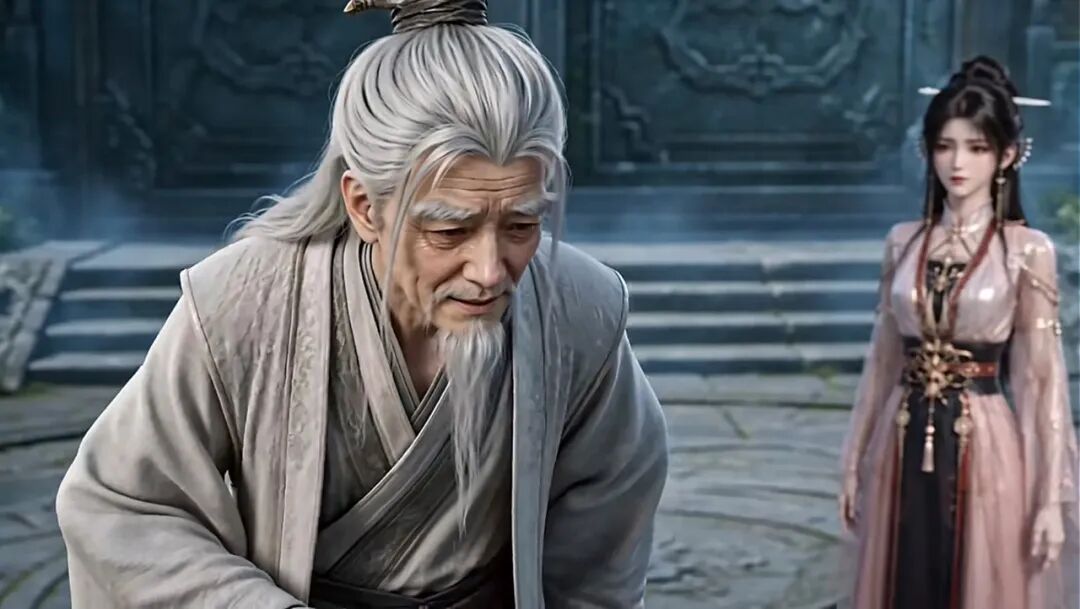
Still of AI-generated short drama on the micro short drama platform Hongguo Short Drama
*New Weekly*: If we extend the timeline to 10 years later, where do you predict the acting profession will eventually go? Will it complete its "evolution" in the game with short dramas and AI?
Tan Fei: The number of actors 10 years from now will definitely not be as large as it is now. A large number of actors will definitely change careers or suspend their acting dreams, but excellent actors will still emerge in endlessly.
From the perspective of counteraction, AI will also prompt actors to get rid of their original aura, no longer thinking that they can act recklessly just because they have fame and traffic, which is a kind of reminder and warning for them. Many actors will gradually have their own "avatars" through AI authorization.
Therefore, as the commercial value of many big-name actors gets higher and higher, some things that cannot be completed by themselves can be authorized to their AI images to complete — just like Sun Wukong blowing a hair and creating another self, which is also a good thing.
In the future, the industry will definitely be polarized: the outstanding performers will become even more excellent, while those who cannot keep up will face more difficult situations. The entry threshold for actors will also rise accordingly — you are even worse than AI, why should I hire you?
This article is from the WeChat Official Account "New Weekly" (ID: new-weekly), author: Luo Yu, authorized to republish by 36Kr.