Breaking! OpenAI's next-generation AI has cracked 10 Fields Medal-level problems.
OpenAI has more aces up its sleeve!
The internal model Astra that Sam Altman just demonstrated has made major breakthroughs in 10 challenging mathematical problems in one go!
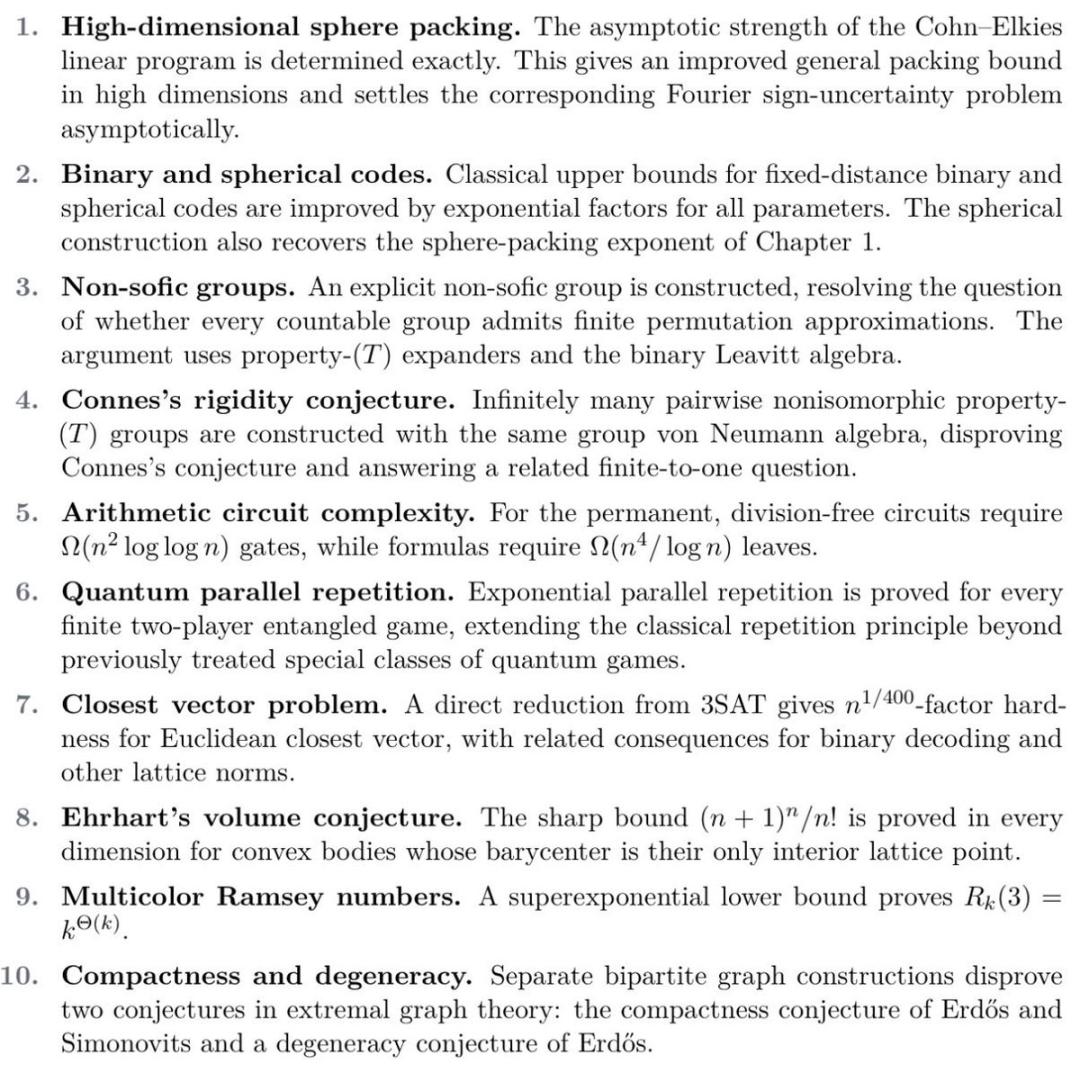
This 249-page PDF has caused an enormous sensation across the entire mathematics community.
Paper: https://cdn.openai.com/pdf/ten-proofs-oai.pdf
Proofs: https://openai.com/index/ten-advances-in-mathematics/
Open-source Lean proofs on Github: https://github.com/openai/ten-proofs
Alex Kontorovich, mathematician, Fellow of the American Mathematical Society, and Distinguished Professor at Rutgers University, could not hide his astonishment, leaving nothing but two exclamation marks.
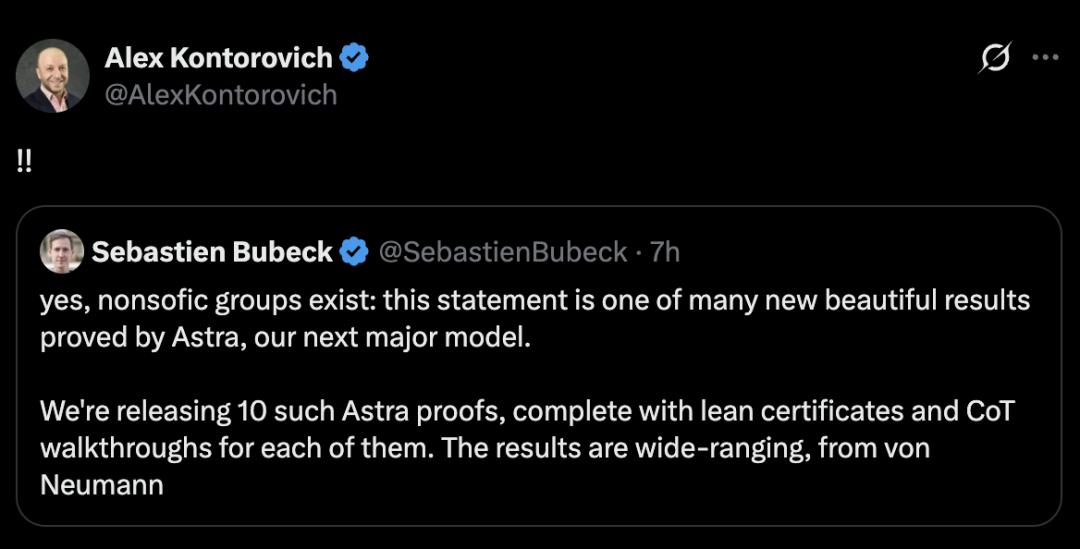
This is a watershed moment worthy of being recorded in history, both in the field of mathematics and on the journey toward AGI.
To put it bluntly: if these results stand the test of the entire academic community, this single release alone can be called the biggest single-day leap in the relevant fields in modern history!
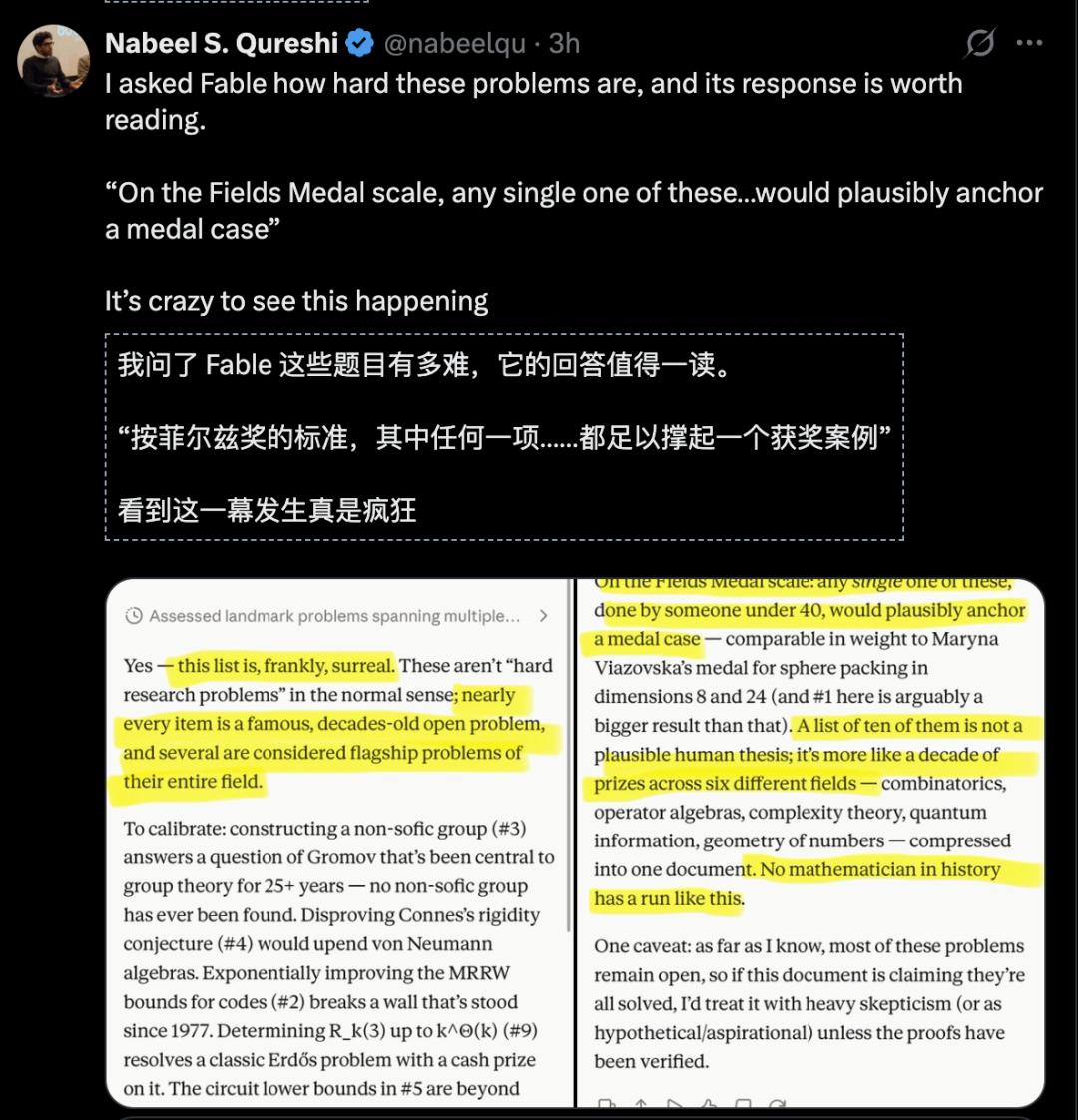
Claude Fable 5 even stated directly: "By the standards of the Fields Medal, any of these achievements is more than enough to win the award"!
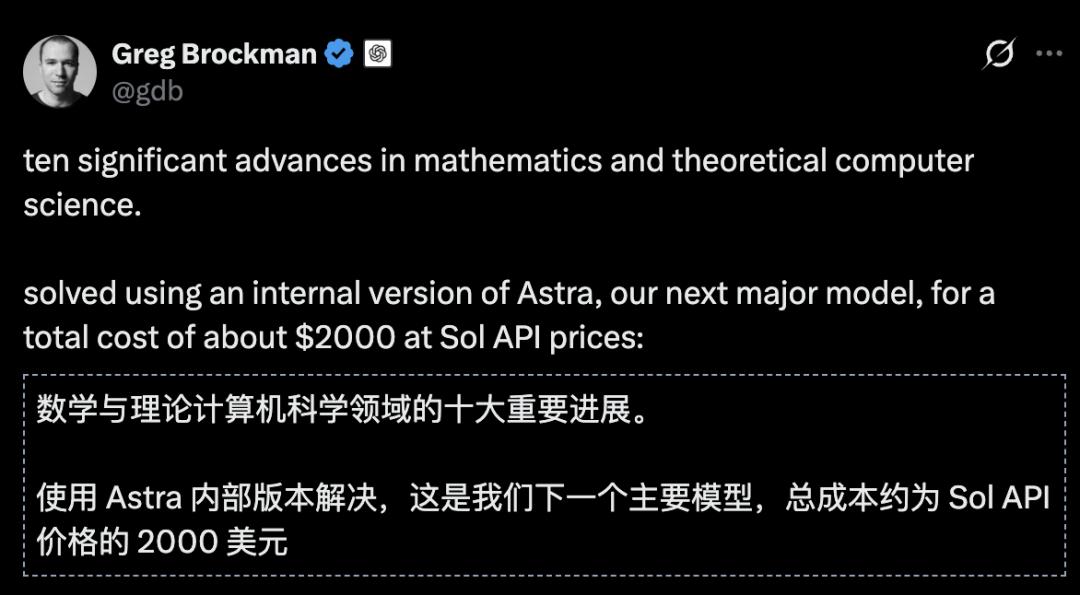
The most shocking thing is that OpenAI only spent 2000 US dollars to solve these ten major problems.
Earthquake in the Mathematics Community! A Moment to Be Recorded in AI History
In May, OpenAI announced the counterexample to the Erdős unit distance conjecture discovered by AI.
But it has now been confirmed that this result was solved by Astra, OpenAI's next-generation model, which is exactly the model Sam Altman is currently demonstrating to the US Congress.
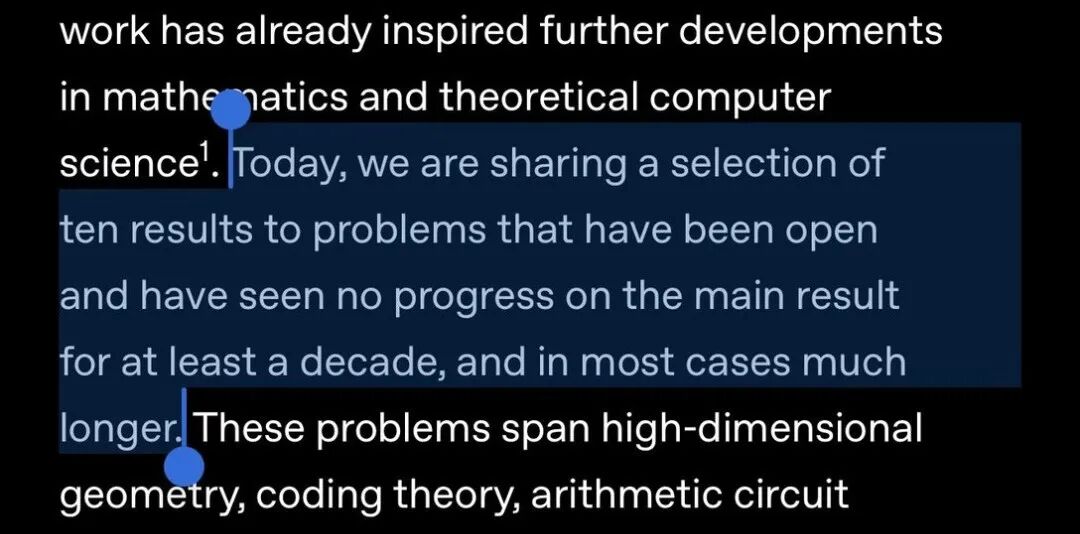
Now, OpenAI has shared the latest achievements of Astra on difficult problems that have seen no progress for at least ten years.
These problems cover a wide range of fields including high-dimensional geometry, coding theory, arithmetic circuit complexity, group theory, operator algebras, quantum complexity, lattice cryptography, and extremal combinatorics.
The news immediately blew up the entire mathematics circle!
Among these achievements, the most outstanding one may be Astra's resolution of the non-sofic group problem proposed by Gromov in 1999.
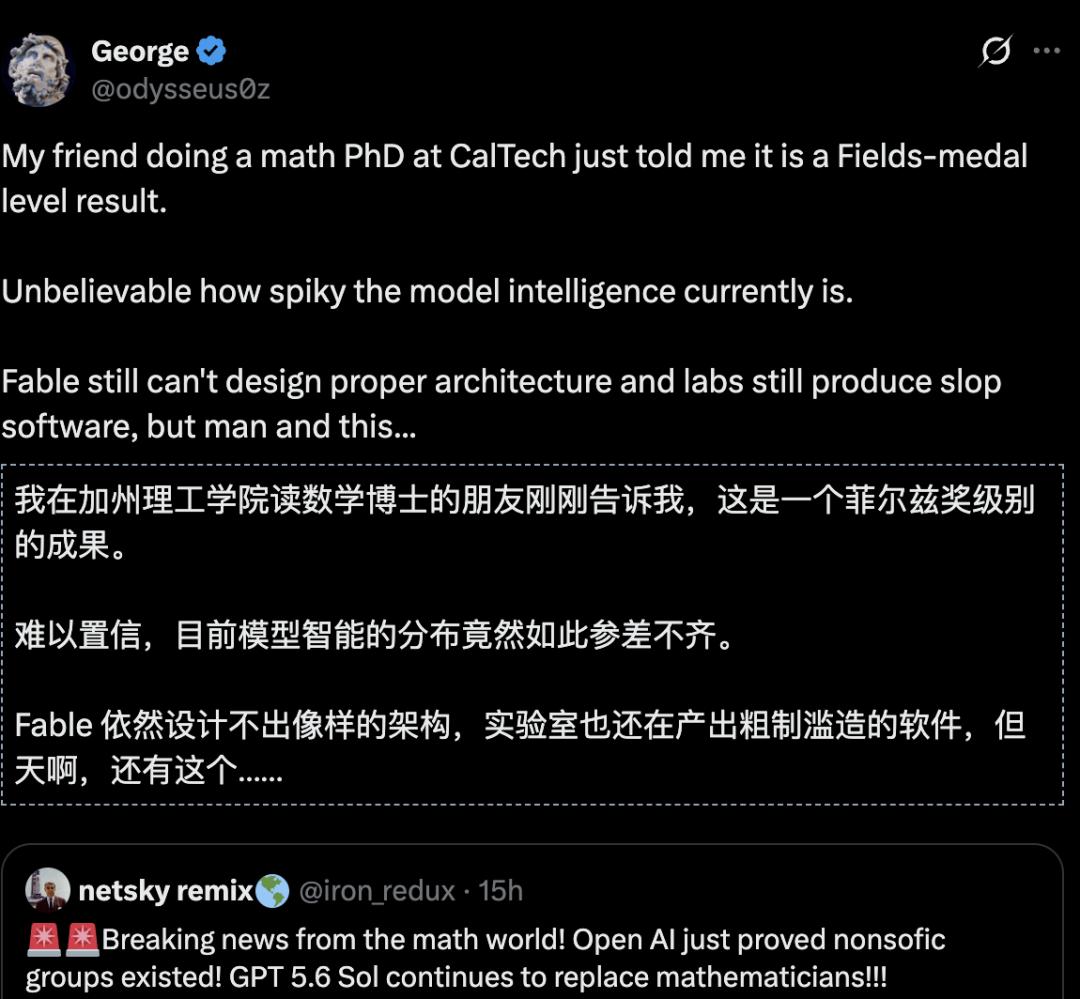
A mathematics PhD from Caltech, the alma mater of Qian Xuesen, said: "This is a Fields Medal-level achievement"!
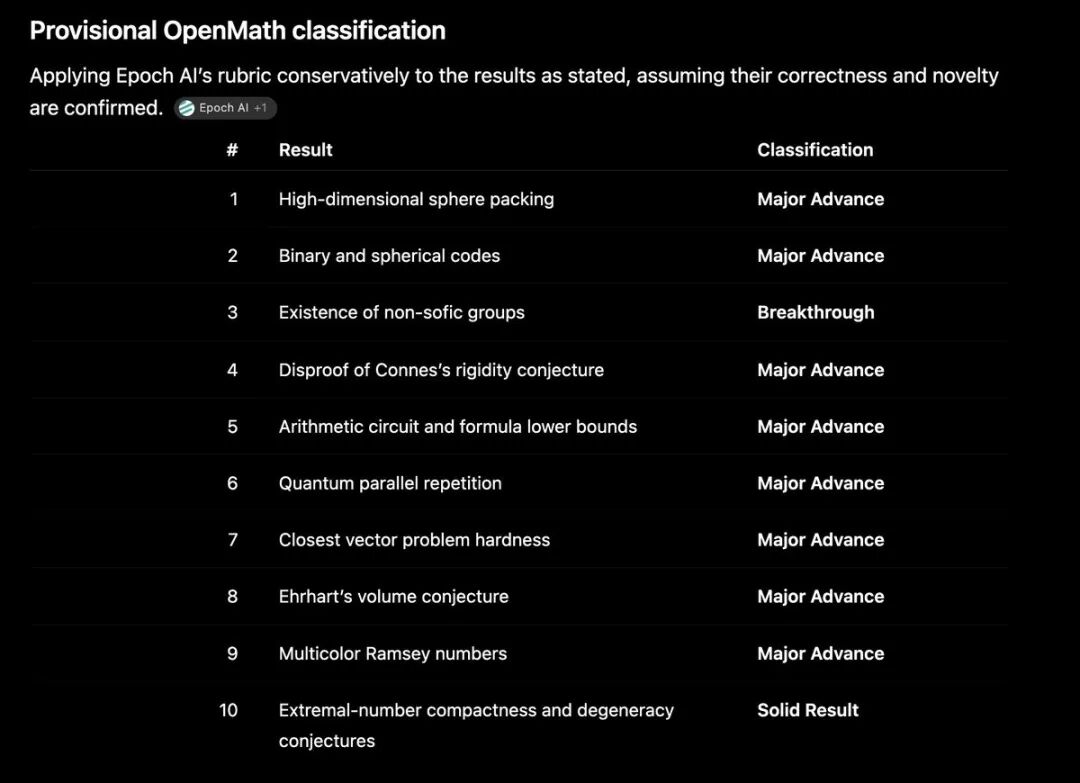
According to the OpenMath scoring criteria of Epoch AI, GPT-5.6 Sol Pro and Fable 5 Max believe that:
Most of the results will be highly recognized by peers and rated as "Major Advance".
Only the third achievement has the potential to break through the academic circle, and is expected to become one of the best mathematical achievements of the whole year, rated as "Breakthrough".
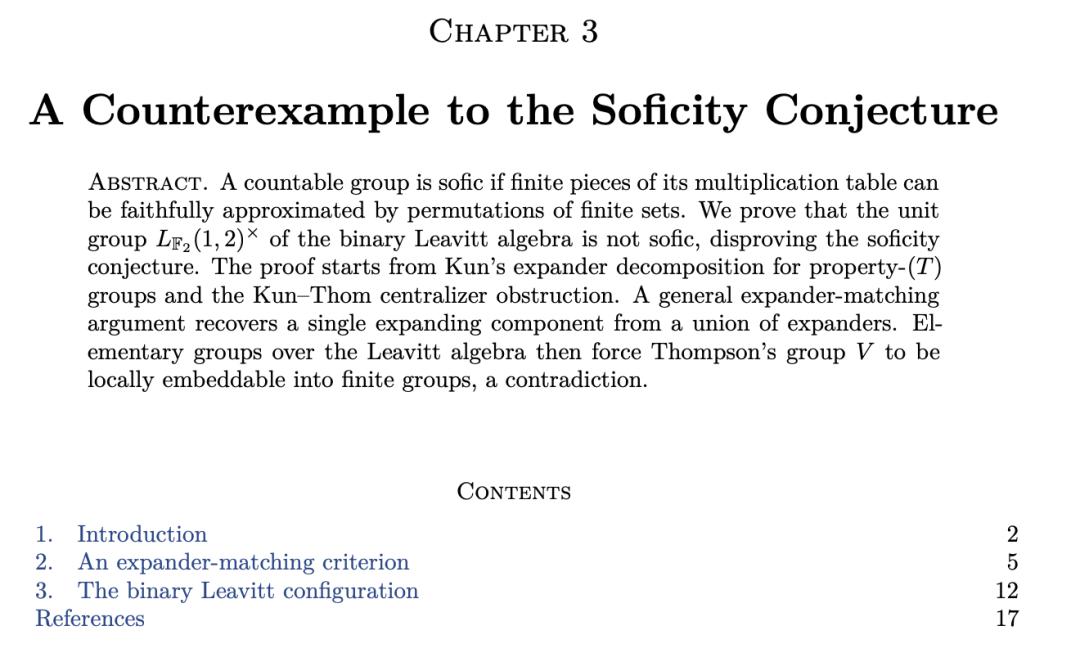
The third result is also a counterexample:
OpenAI Astra constructed an infinite finitely presented non-sofic group, negating the conjecture that "all countable groups are sofic".
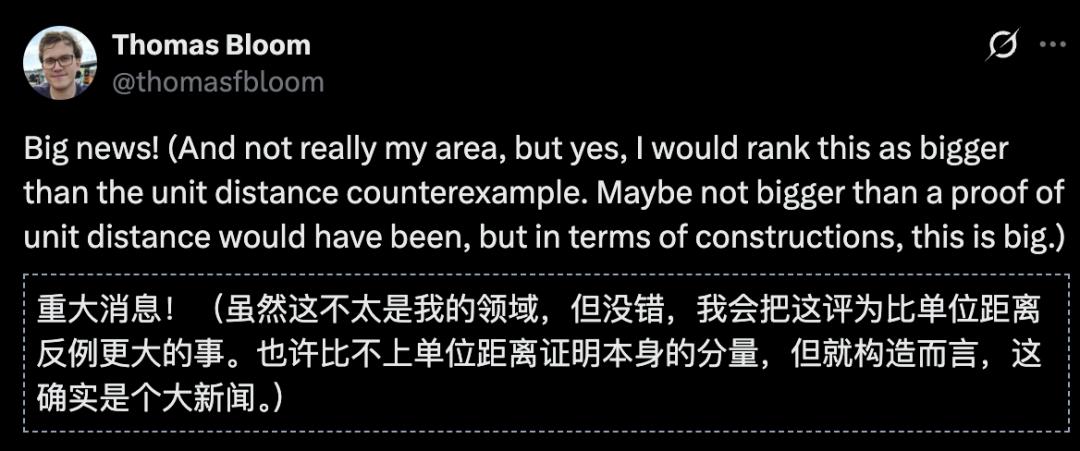
Thomas Bloom, Royal Society University Research Fellow and mathematician at the University of Manchester, said directly: This breakthrough is more important than OpenAI's previous disproof of the unit distance conjecture.
Moreover, the total cost of generating the proofs for these 10 breakthrough achievements is less than 2000 US dollars when calculated at the Sol API price, averaging 200 US dollars per achievement.
In other words, solving a scientifically valuable conjecture is roughly equivalent to the stipend a graduate student gets for a weekend of work.
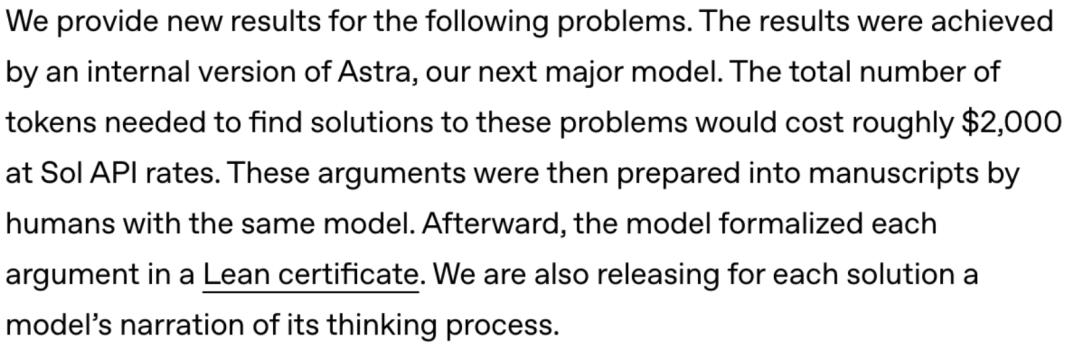
And all of this was just an unexpected "by-product" when evaluating an unreleased model.
Another point that many people may miss if they don't read carefully:
These 10 conjectures are the results carefully selected by OpenAI!
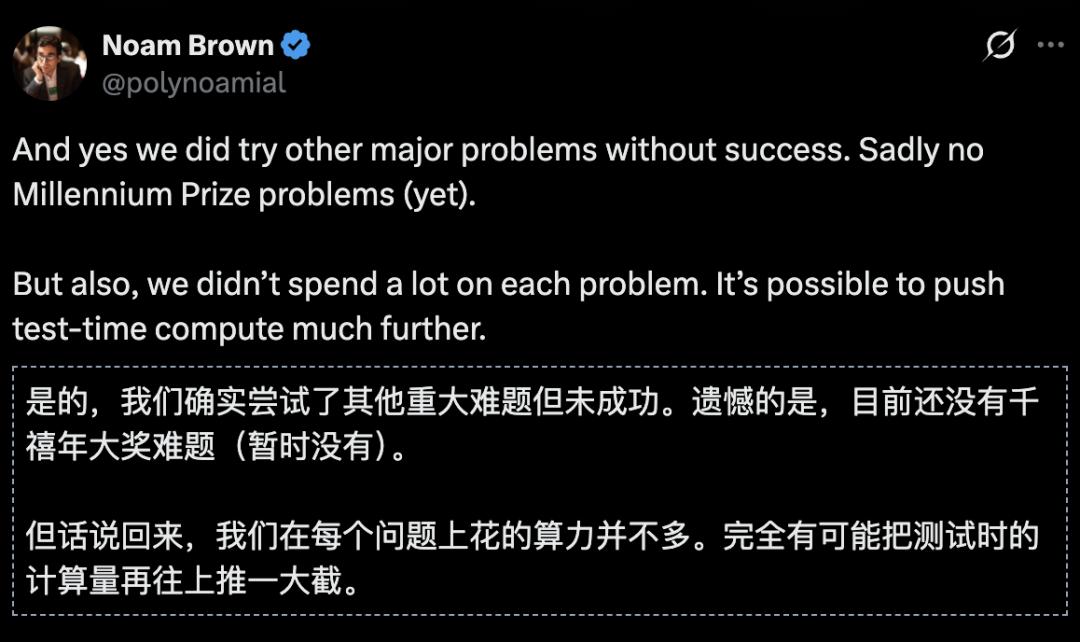
Noam Brown, the core creator of OpenAI's reasoning model, made a strong statement directly.
He said openly that OpenAI did try other difficult problems, and has not yet succeeded in solving a Millennium Prize Problem similar to the Riemann Hypothesis.
But more crucially, the compute used during testing is far from reaching its upper limit, and even million-dollar-level world-class difficult problems may be conquered.
It is both thought-provoking and saddening: Will mathematics still remain the glory of human intellect?

The 249-page PDF Is Absolutely Stunning
The reason why this 249-page paper shocked the mathematics community lies not in computational deduction, but in the fact that AI, like a mathematics master, completed dimension-reduction style proofs and disproofs in multiple fields including geometry, algebra, and group theory at the same time.
Achieving multiple hard-core breakthroughs in multiple different fields at one time is probably unmatched by anyone. This in itself is impressive. This time we will mainly introduce three major problems.
Breaking the Century-Old Obsession: Finding the First "Non-Sofic Group" in History
In 1999, Mikhail Gromov, a Russian mathematician and winner of the Abel Prize, known as the "Nobel Prize in Mathematics", proposed the concept of sofic groups.
Sofic comes from the Hebrew word for "finite".
Put simply, if an infinitely large complex group can be perfectly approximated and its local multiplication table simulated by finite permutations, then it is a sofic group.
You can think of it as "No matter how complex an infinite 3D model is, it can be perfectly rendered with a finite number of pixels (voxels)".
Then the question arises: Are all countable groups sofic groups?
This is not an obscure technical detail. The properties of sofic groups affect the entire mathematical landscape including sofic entropy theory, ergodic theory of dynamical systems, and operator algebras. If the answer to this question is "No", it means that there exists a group that cannot be fundamentally approximated by finite structures — the entire theoretical framework will have to be re-examined.
Over the past 27 years, countless top mathematicians have tried to construct counterexamples, but none succeeded.
The answer given by Astra is: to construct an infinite finitely presented non-sofic group.
OpenAI Astra directly pulled a ready-made structure from the mathematical codebase: "the unit group of the binary Leavitt algebra", and then presented an impeccable proof: this group can never be approximated by finite permutations!
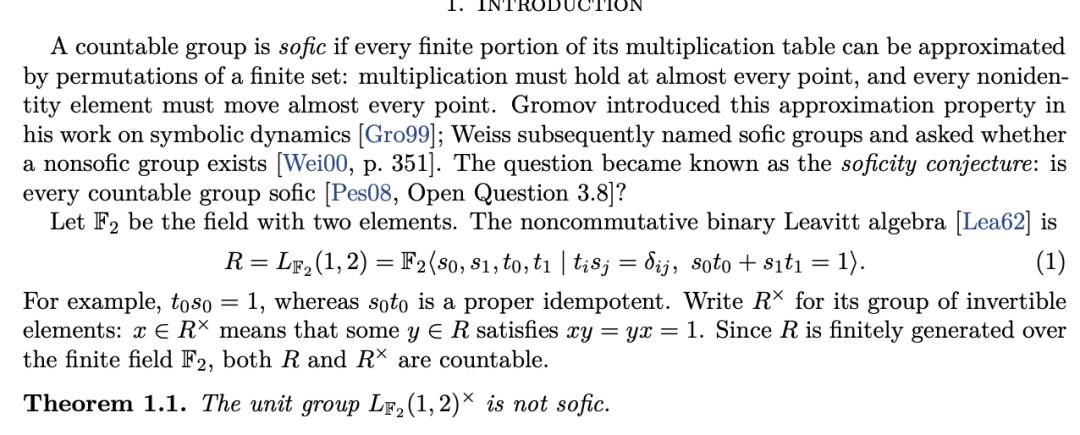
To prove this, the AI adopted an extremely bold approach: it combined the Kun-Thom expander graph theory with the famous "Thompson's group V", and forcibly derived a logical contradiction.
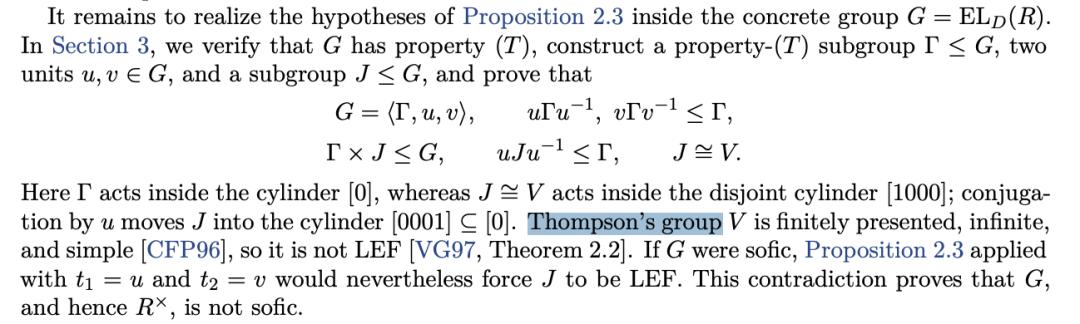
This is like humans are still searching everywhere for substances that cannot be pixelated, while the AI directly points to a high-dimensional Rubik's cube on the table and says: "Stop looking, it is right here, I will prove it to you."
Complete construction. Full argument. Detailed explanation.
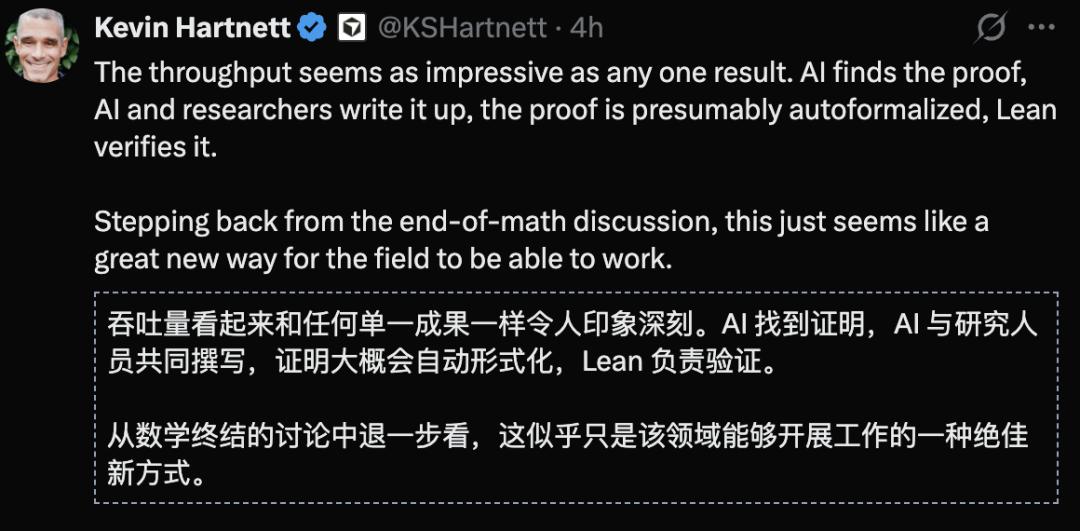
More crucially: it has been formally verified with Lean 4, and is attached with a machine-independently verifiable certificate.
This is the watershed. The Lean 4 certificate means that every reasoning step has undergone formal verification by the machine, leaving no room for passing off as correct just by "feeling right".