Caught off guard, the market suffered a sudden sharp plunge in July. The latest research and judgment shows that the technology sector remains the core driving force of the A-share market, and the Hong Kong stock market is ushering in a valuation recovery.
Chinese and foreign institutional investors: Technology remains the core driving force of the A-share market, the Hong Kong stock market is seeing a valuation recovery, and AI-related sectors continue to be widely favored globally
For the 39th issue of *Global Vision* of China Fund News, we sincerely invite the following guests to discuss the meeting of the Political Bureau of the CPC Central Committee, the Federal Reserve's interest rate meeting and future asset allocation strategies:

Zhao Wenli, Chief Economist of CCB International
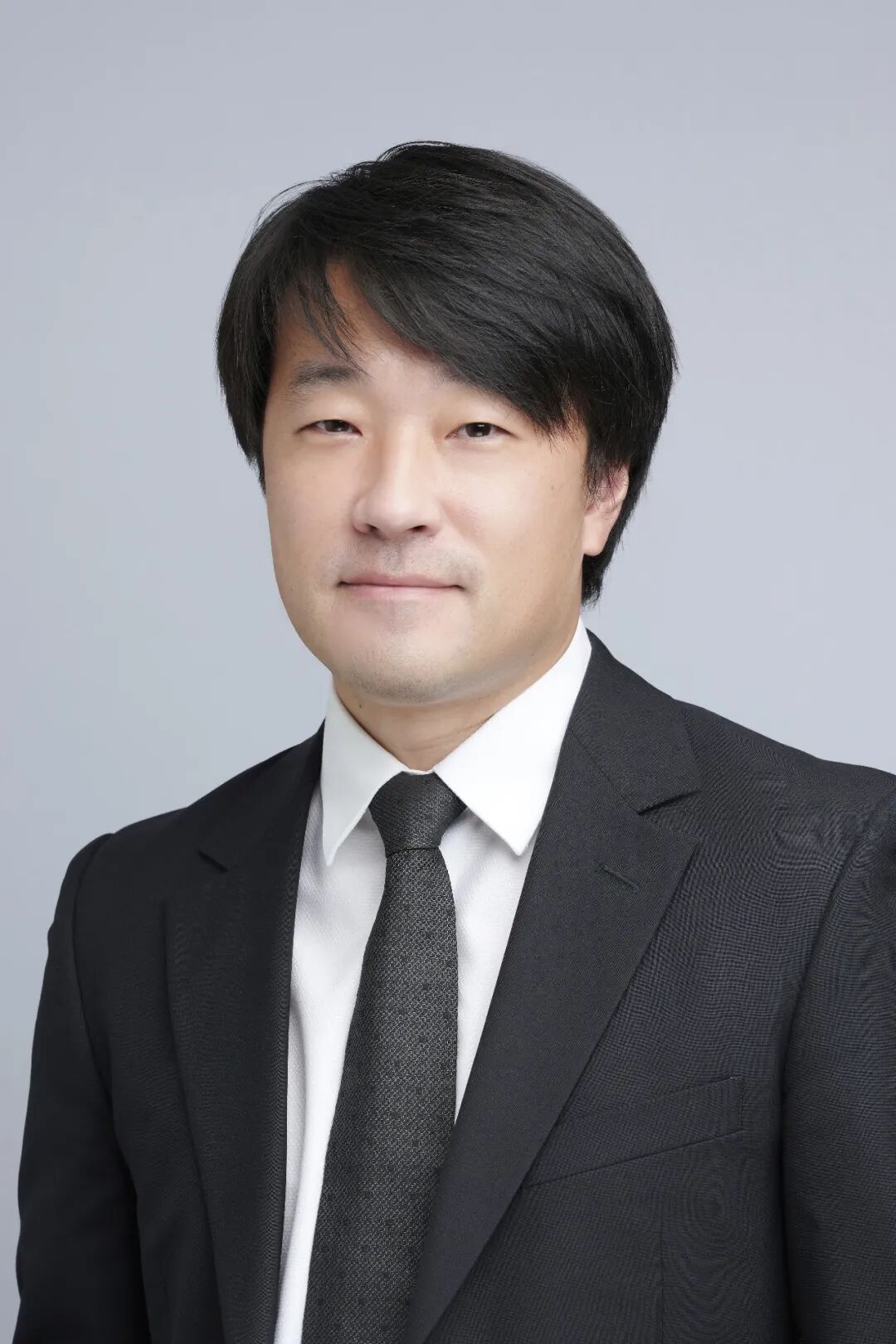
Wang Yi, CIO of CSOP Asset Management

Song Jin, Chief A-Share Strategist of Nomura Orient International Securities

Cheng Yaman, Head of Research Department and Chief Macro Strategist of China Galaxy International

Li Huiqi, Macro Strategist of UBS Wealth Management Investment Director Office
The Political Bureau meeting sent more positive policy signals, and fiscal expenditure will be accelerated to deliver tangible outcomes as soon as possible
China Fund News: What important messages did the Political Bureau of the CPC Central Committee meeting held on July 30 convey? What is your forecast for China's macroeconomic policies?
Zhao Wenli: The meeting sent more positive policy signals, shifting from "making full and effective use of" to "stepping up efforts to improve efficiency", emphasizing the intensification of counter-cyclical adjustment and the planning of incremental policies. In the second half of the year, fiscal policies will be front-loaded, expenditure and bond usage will be accelerated, key projects will be promoted to deliver tangible outcomes, and efforts will be focused on supporting service consumption, private investment and real estate market stability.
Monetary policy will remain moderately loose, focusing on structural tools and maintaining ample liquidity in the short term; if the economy weakens further, interest rate cuts and RRR cuts are still optional tools. The overall policy mix features front-loaded fiscal policies supported by monetary policies, with the focus not on strong stimulus, but on targeted support for weak demand segments. If downward pressure persists, stable expectations still rely on the delivery of practical policies.
Wang Yi: The meeting fully affirmed that the economy withstood pressure and moved forward in the first half of the year, while requiring high attention to the difficulties and challenges in economic operation; policies will focus on accelerating the implementation of existing policies to deliver results, and accelerating fiscal expenditure to form tangible workloads as soon as possible is the clearest priority in the second half of the year; the economic data in the third quarter will serve as an important window to judge the intensity of incremental policies.
Li Huiqi: The Political Bureau meeting emphasized accelerating the implementation of existing policies, focusing on speeding up fiscal expenditure and government bond issuance rather than launching a new round of stimulus, and there is no intention of large-scale stimulus in the short term. Funds will continue to support the construction of "two major priorities", "two new areas" and "six key infrastructure networks", to strengthen the high-tech manufacturing industry and AI supply chain. Monetary policy will remain moderately loose, and the People's Bank of China is expected to maintain ample liquidity through RRR cuts, open market operations and targeted credit. Overall, the pattern of strong supply and weak demand continues, but export resilience and accelerated fiscal spending are expected to support a moderate recovery in the second half of the year. If economic momentum weakens further, there is still room for policy easing in the future.
Technology remains the core driving force of the A-share market, and the Hong Kong stock market ushers in a valuation recovery
China Fund News: Which sectors in the A-share and Hong Kong stock markets are worthy of focused investment attention?
Zhao Wenli: Instead of chasing broad thematic rallies, I pay more attention to whether the demand is real, whether the valuation is reasonable, and whether earnings can be realized.
Overall, the A-share market is more suitable for seeking opportunities around technological manufacturing, industrial upgrading and policy support; the Hong Kong stock market can pay more attention to internet platforms, innovative drugs, finance and high-dividend assets.
Wang Yi: We will focus on key enterprises integrated into the global AI industrial chain, technology and application enterprises that pursue independent development and domestic substitution, globally competitive enterprises that expand overseas, and enterprises with abundant cash flow that attach importance to shareholder returns.
Cheng Yaman: The concentrated sell-off of AI assets provides a layout window for high-quality enterprises with core technical barriers and long-term competitive advantages, and positions can be appropriately increased as panic eases. Leading internet companies in the Hong Kong stock market have reached a "double bottom" in sentiment and valuation, with negative factors fully digested. Upward catalysts include the opening of the To C Agent ecosystem, the acceleration of cloud business driven by AI reasoning, and the synergy dividend of cutting-edge models. The interim report season is expected to verify the profit inflection point, driving valuations to return to a reasonable central level.
Portfolio construction should follow the "complementary software and hardware" principle: Hong Kong stock platforms have abundant net cash and large repurchase space, forming a safety cushion; the decline in hardware costs improves computing power acquisition efficiency, accelerates infrastructure expansion, and forms a positive cycle with traffic monetization on the Agent end.
Song Jin: The industrial trends driving technology stocks in the past two years remain unchanged. After the rapid de-densification of market congestion in July, the main technology track has been in the bottom range, and it is recommended to reallocate positions after the market stabilizes. Given that the structural market more reflects fundamental differentiation, technology stocks are expected to continue to outperform the consumer and domestic demand sectors based on earnings expectations.
Investors should appropriately maintain the defensiveness of their portfolios to cope with capital fluctuations after the narrative loosens. In the medium and long term, China's asset scale and policy advantages are expected to bring strategic excess returns, and technology remains the core driving force for earnings improvement in the A-share market. In a low interest rate environment, the attractiveness of dividend stocks has increased, and their low-volatility feature helps enhance portfolio defensiveness.
Li Huiqi: We remain bullish on the Hong Kong stock market, where improved fundamentals, policy support and the long-term potential of AI are expected to drive valuation recovery. The technology sector is attractive, and we are also optimistic about sectors benefiting from innovation and energy transition such as healthcare, power equipment and industrial materials.
High-dividend A-share assets also have allocation value. Against the backdrop of rising external uncertainty and low bond yields, the features of low volatility and stable cash flow, as well as the continuous migration of household savings to the stock market, jointly support their performance.
Divergence within the Federal Reserve intensifies, and high interest rates may be maintained for longer
China Fund News: What important messages did the Federal Reserve's July interest rate meeting convey? What is your forecast for its future monetary policy path?
Zhao Wenli: Divergence intensified at the Federal Reserve's July interest rate meeting, with three dissenting votes cast for the first time, and a 25 basis point interest rate hike was finally passed by a majority vote. The Federal Reserve remains confident in the economy, but believes that inflation is higher than the 2% target, and energy supply shocks may push up inflation again.
Fed Chair Walsh emphasized that 2% is an inflation target that must be achieved, and a single month of moderate inflation is not enough to change the judgment. Continuous broad improvement over several months is needed to confirm the trend. At the same time, US Treasury yields have risen significantly in the past six weeks, and financial conditions have tightened on their own, so there is no rush to raise interest rates.
My baseline judgment is that interest rates may remain unchanged at the next one or two meetings, and the Jackson Hole meeting in August will be an important observation window. The recent rise in oil prices may gradually transmit to core inflation, and there is still a risk of interest rate hikes from November to December; if the economy and inflation cool down simultaneously, interest rates may remain unchanged. The threshold for interest rate cuts within the year has risen significantly, and it is more likely that "high interest rates will be maintained for longer" in the coming period, while keeping the hawkish option of raising interest rates at any time.
Wang Yi: An influential hawkish camp has taken shape within the Federal Reserve. Walsh conveyed two signals: the 2% inflation target is a hard constraint; the Federal Reserve will reduce forward guidance and allow the market to price more independently based on economic data. Recently, long-term nominal interest rates and real interest rates have risen significantly, and the bond market has completed part of the financial condition tightening in advance.
In the baseline scenario, interest rates will remain unchanged for the rest of the year. In the short term, the situation in the Middle East and the accelerated demand of the AI industrial chain still have the possibility of pushing up energy prices, but the impact of the weakening labor market in the medium term may gradually emerge, increasing the probability of interest rate cuts.
Li Huiqi: We believe that the policy rate is expected to remain unchanged until the end of the year, as commodity inflation may fall further with the fading of tariff impacts, pushing core PCE to continue to decline in the second half of the year.
China Fund News: The situation in the Middle East has spilled over from direct confrontation between the US and Iran to the Red Sea. How will this affect the global economy and financial markets?
Zhao Wenli: After the situation in the Middle East spills over to the Red Sea, the market is not only facing the problem of oil prices, but energy supply, shipping costs and global inflation may be impacted at the same time. If the energy shock further pushes up inflation, major global central banks will find it more difficult to cut interest rates, and may even be forced to maintain more tightening policies.
In the baseline scenario, I do not believe that the Strait of Hormuz and the Bab el-Mandeb Strait will be completely closed for a long time. The global economy will face certain stagflationary pressure, but it will not necessarily evolve into a full-scale supply crisis.
In terms of the market, assets in the energy production, oil services, national defense and some resource sectors may benefit relatively, while growth enterprises sensitive to interest rates may face greater pressure. It should be noted that medium and long-term US Treasuries can no longer simply play the role of safe-haven assets as in traditional geopolitical conflicts, because rising oil prices may push up inflation, real interest rates and term premiums.
Wang Yi: The Red Sea serves as an alternative channel when the Strait of Hormuz is blocked. When the two channels are under pressure at the same time, the probability of shortages of crude oil, special gases and other commodities increases significantly, impacting the AI industrial chain and global inflation. But the shock may also bring changes to military alliances and the war situation, creating opportunities amid crises.
The financial market's sensitivity to the Middle East war situation has been greatly reduced at present, but it is very sensitive to technology and inflation data.
AI-related sectors are still widely favored, and investment portfolios need to be diversified
China Fund News: Which regions and sectors around the world are you optimistic about at present?
Zhao Wenli: In the US stock market, we are relatively optimistic about technology platforms that can realize AI revenue, data center infrastructure, energy, some financial and healthcare sectors.
In the Asian market, we are relatively optimistic about the structural opportunities in mainland China and Hong Kong. Policies continue to support AI, advanced manufacturing, service consumption, platform economy and capital market reform, and the market valuations in these fields are relatively more attractive.
The Japanese market is more suitable for selecting companies in the fields of industrial automation, precision manufacturing and improved cash flow.
Europe as a whole faces the problems of energy costs and weak growth, and the attractiveness of broad allocation is relatively limited, but there are still structural opportunities in national defense, power grids, energy security and some financial assets.
In terms of asset classes, short-duration US Treasuries and money market instruments can still provide relatively attractive returns, gold is suitable as a long-term hedge against geopolitical and fiscal risks, long-duration bonds need to guard against the re-rise of inflation and term premiums, and the resource and energy sectors present structural opportunities.
Li Huiqi: This round of market rally is supported by fundamentals, and AI infrastructure investment remains the key driving force, but attention should be paid to the narrative gradually shifting from semiconductors to productivity-enhancing fields such as energy and applications. The rally has spread globally, and sectors such as finance and healthcare in the US have outperformed the technology sector recently.
Overall, the global economy still has upward room, but diversification and flexibility should be maintained: in the US, we are optimistic about the industrial, healthcare, financial and non-essential consumption sectors; Asia has strong earnings, and opportunities are expanding from AI hardware to cyclical sectors, while we are also bullish on India and Japan; the eurozone's earnings are accelerating, presenting structural investment positives.
In terms of bonds, high-quality high-yield bonds and emerging market credit bonds are attractive, and yields may decline after inflation eases. Commodities and alternative assets help diversify risks and enhance portfolio resilience.
Wang Yi: At present, the global market presents two main lines of technology and macroeconomics. The Asian AI technology industrial chain and resource sector are still our key focus, and the defensive dividend sector also has strong allocation value.
This article is from the WeChat official account "China Fund News" (ID: chinafundnews), author: Guo Wenjun, published with authorization from 36Kr.