Unmanned Delivery Vehicle Series Observation 2: The Truth of Momenta's Unmanned Delivery Vehicles: A New Story for Stock Prices?
From 2025 to 2026, the autonomous delivery track has ushered in a period of intensive market entry. Enterprises including Wuling Motors, ZhuoYu Technology, Atuo, Dongfeng Motor, Changan Automobile and others have successively made relevant layouts. The competition on the track has evolved from a small number of players to multi-party contest. Amid the bustling market, who will stand out from the competition? Who will fall behind in the reshuffle? This series will track and observe the related developments.
A few days ago, a piece of news caused a huge stir in the technology and logistics circles: Momenta, which was listed only on July 8, 2026, has quietly entered the autonomous delivery vehicle track.
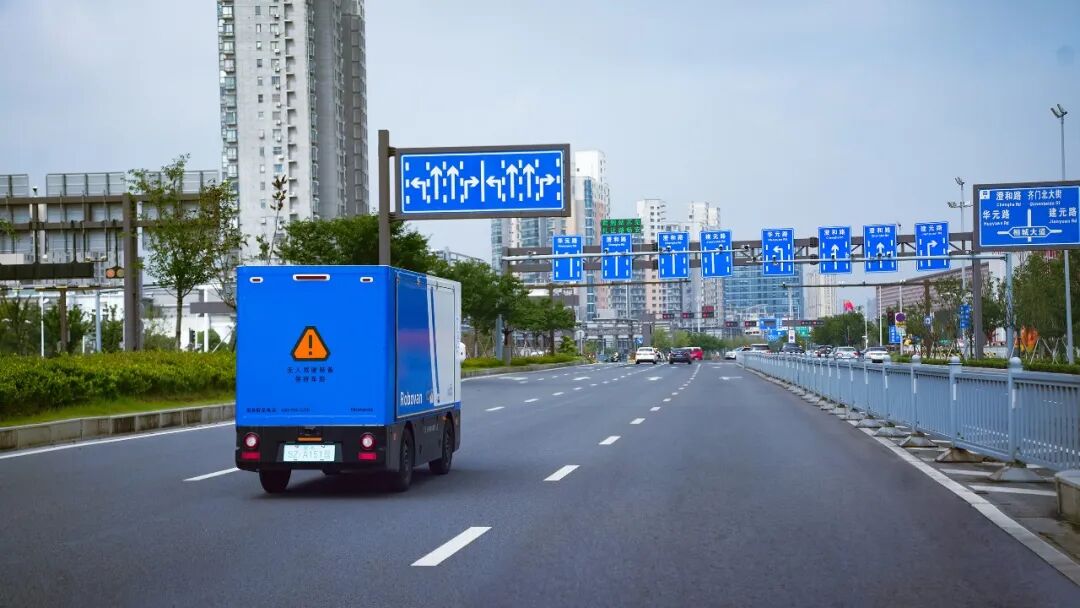
According to public information online, an alleged Momenta employee shared photos of autonomous delivery vehicles driving in industrial parks and on public roads on WeChat Moments. At the same time, some media broke the news that Robovan autonomous delivery vehicles have been put into actual operation in scenarios such as JD Logistics parks, and the related business has been advancing for more than four months.
These suspense were officially unveiled on July 27, 2026. On this day, Momenta released an announcement, stating that Momenta's Robovan business has been implemented in Xiangcheng, Suzhou. At present, Momenta Robovan has achieved rapid advancement in scenarios including express delivery and night delivery.
This move, though reasonable as expected, came faster than previously anticipated.
I. On the Surface: Sufficiently Large Market and Solid Technical Strength
Why does Momenta choose to enter the autonomous delivery vehicle sector?
Some people say the market is large enough.
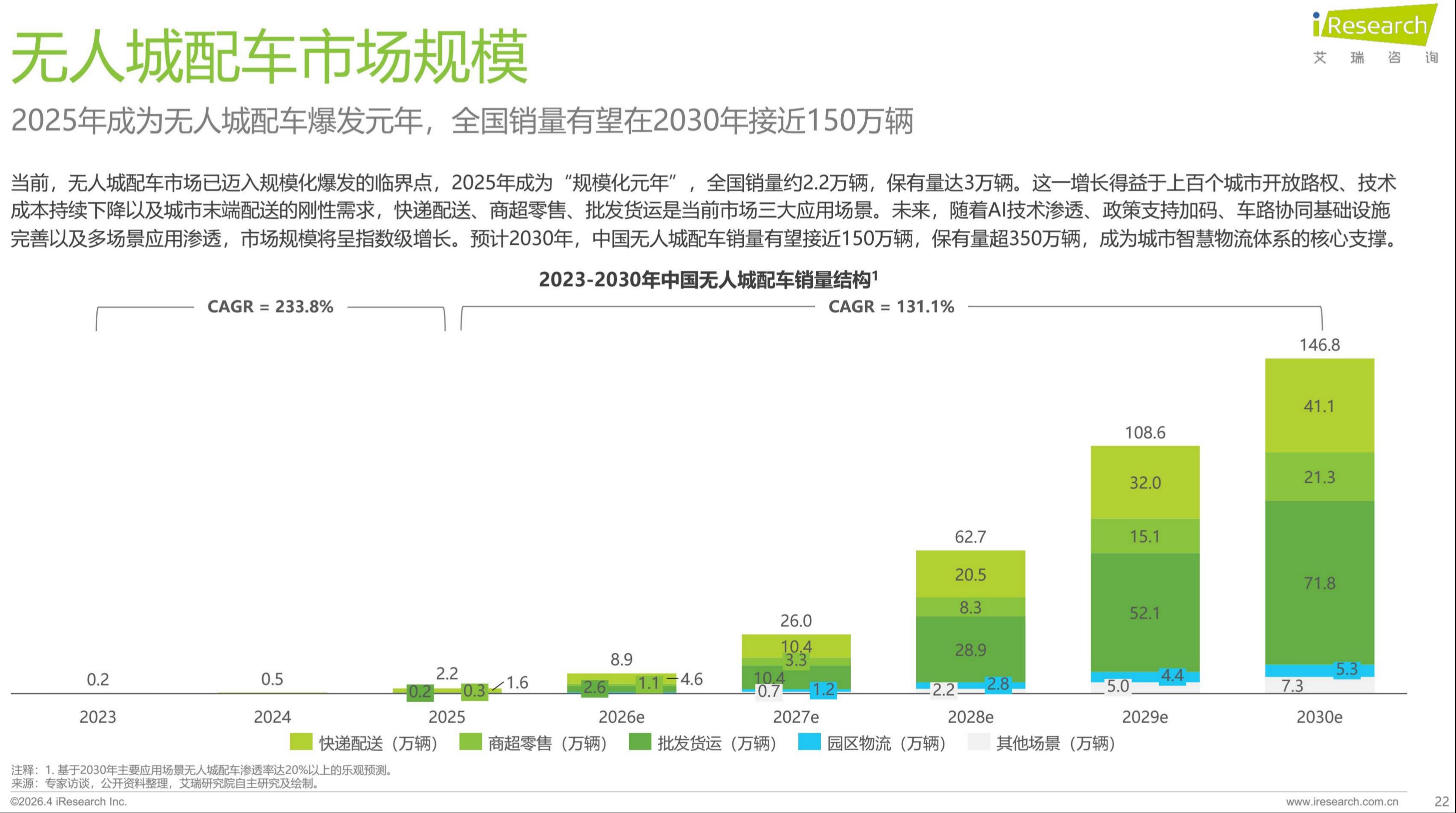
iResearch, a third-party research institution, pointed out in the 2025 White Paper on China's Autonomous Urban Delivery Vehicle Industry that 2025 is the first breakout year for autonomous urban delivery vehicles. It is estimated that by 2030, the sales volume of autonomous urban delivery vehicles in China is expected to approach 1.5 million units, with the total ownership exceeding 3.5 million units (the national sales volume in 2025 is 22,000 units, and the total ownership reaches 30,000 units), which will become the core support of the urban smart logistics system.
Other people say Momenta has sufficient technical confidence.
Different from startup companies, Momenta, as a provider of intelligent driving solutions, has accumulated technical foundations such as autonomous driving algorithms and perception models in the passenger vehicle sector. These technologies are essentially a set of general, transferable "autonomous driving brain", which can support its transition from the passenger vehicle sector to the autonomous delivery vehicle sector.
Momenta follows a data-driven route, realizing algorithm iteration through massive real data collected from mass-produced vehicles instead of relying on high-definition maps. This technical path highly fits the demands of autonomous delivery vehicles: the delivery scenarios have complex routes, variable environments and require frequent human-computer interactions, which perfectly aligns with the current development direction of mapless technology in the autonomous delivery vehicle field.
From this perspective, Momenta's entry into the autonomous delivery vehicle sector is not a cross-sector move for survival, but an inevitable extension under the conditions of sufficient market demand and mature technical support.
The logic is smooth, but the actual market situation is not optimistic.
First of all, the current autonomous delivery vehicle track is already quite crowded: the two leading players, Neolithic and Jiushi, occupy more than half of the market share. Large platforms such as Meituan, JD Logistics and SF Express achieve self-sufficiency through independent R&D, equity investment and other methods, and various new forces continue to pour in, leading to extremely fierce competition. It is not easy to grab a share of the market.
Secondly, there is the ambiguous attitude shown in this announcement. After going through the full text, the described vision is very exciting, but the implementation details are almost completely blank.
II. At the Deep Level: Unclear Core Content
Although the autonomous delivery vehicle track shares the same underlying technology with passenger vehicles, they are very different in terms of operation modes.
Passenger vehicles pursue safe travel from point A to point B, while autonomous delivery vehicles aim to achieve precise "last-mile" delivery. In this process, two fundamental issues need to be clarified: road rights and business models.
Road right is the first life-and-death line for the survival of autonomous delivery vehicles. Different from passenger vehicles which have clear regulatory provisions, the road right issue of autonomous delivery vehicles is still under fragmented management mode of "one policy for one city". For every autonomous delivery vehicle enterprise, obtaining road right is never a permanent pass, but a protracted war of communication and coordination with relevant local authorities.
In response to this situation, different autonomous delivery vehicle enterprises have adopted different measures: Jiushi chooses to "empower customers to apply for road rights independently" and supports a matching road right recycling policy; Neolithic chooses to take full charge of the whole road right application process.
This high-profile Momenta has made no statement at all on this road right issue that determines its survival.
After talking about road rights, let's look at the business model, which is the key factor that determines whether autonomous delivery vehicles can make profits after being put into operation.
So the question is, four months later, has Momenta explored a suitable monetization path for itself? Is it selling vehicles like the earlier autonomous delivery vehicle enterprises, or selling services like its current peers?
Momenta has not given a clear answer, only briefly mentioning that it has "achieved rapid advancement in scenarios such as express delivery and night delivery". As for where it has expanded its business, who it has cooperated with, and what results it has achieved, no detailed information has been provided.
In plain terms: the scenarios and progress are confirmed, but the specific customers and profit models cannot be disclosed for the time being.
This response is somewhat in line with the attitude of "enclose the land first, and figure out how to cultivate it later", which shows a sense of "getting something for nothing".
This makes people can't help but wonder: Is Momenta making a serious business layout, or is it just taking actions to stabilize its stock price in this special period?
III. The Physical AI Label Needs to Be Fulfilled
This suspicion is not completely groundless.
On July 8, 2026, Momenta was listed on the Hong Kong Stock Exchange, and redefined itself to the public: it is no longer an intelligent driving company, but a "builder of physical AI foundational models". Since then, the "first stock of physical AI" has been born.
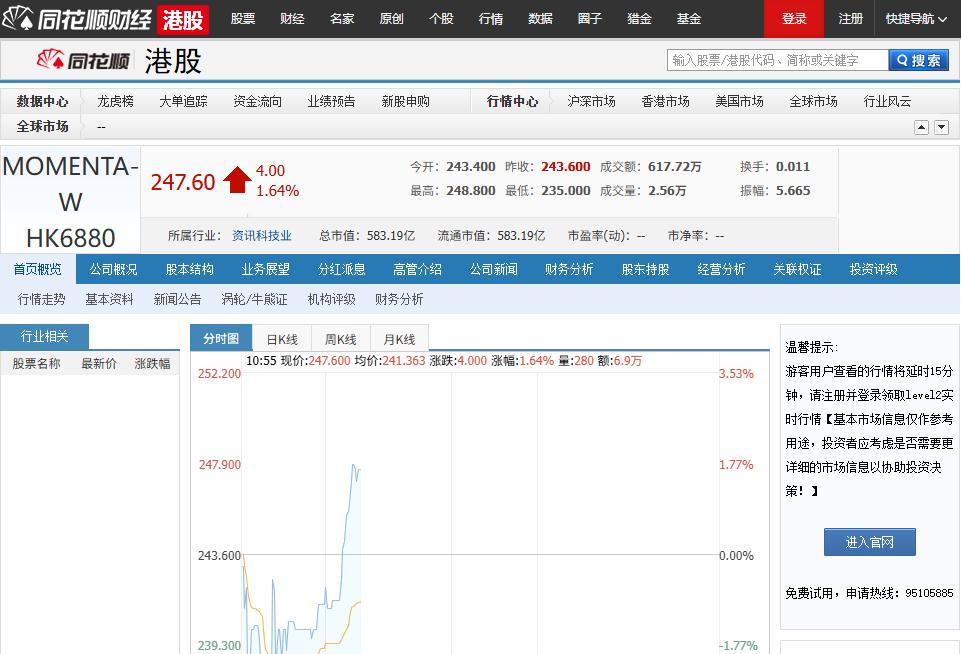
The listing price was HK$295.6 per share. The market was very hot on the first trading day, the stock price rose by more than 6% at opening, and the total market value exceeded HK$70 billion.
After the bustle of the first day, the market quickly returned to calm, and the stock price kept going downward ever since. It not only gave up all the previous gains, but also fell below the issue price. Recently, the downward trend continues, and the stock price has fallen below the threshold of HK$250 per share. From the peak moment to falling below the issue price, this post-listing journey took less than a month.
Industry insiders said that this situation stems from the fact that Momenta's business layout cannot support the narrative weight of the "first stock of physical AI". Momenta has clarified a two-pronged development strategy in its strategic planning: one line of business is the mass production business, which is basically Momenta's only source of revenue; the other line of business, the Scalable Robo (including Robovan, Robotruck and Robotaxi) that carries the "physical AI" vision, is basically in a state of zero revenue.
This imbalance of "grand concept but skinny reality" cannot justify Momenta's "physical AI" label.
At this anxious moment, a new story of new business is needed to stabilize the stock price, because the capital market needs new stories, stories that conform to the label the company has claimed to the public. The autonomous delivery vehicle business is exactly the protagonist pushed onto the stage at this moment.
However, the new protagonist has appeared, but the script is full of blanks — is the story not finished yet, or is the company not going to write the following content at all?
If it is the former, there is still room for turnaround; if it is the latter, the situation is a foregone conclusion. Four months is enough to see the general direction, but not the final outcome. Whether Momenta's autonomous delivery vehicle project will become a commercial demonstration model or just reduce to another empty story in the capital market — we can only wait and see for the final result.