One Bird, Two Elephants, Three Mice: Chinese Capital is at the helm of the grand era of the outdoor industry.
After Arc'teryx was acquired by Anta, another century-old European outdoor brand has come under Chinese capital's wing.
On July 30, CPE Yuanfeng, a Chinese asset management institution, announced that it has signed a share purchase agreement with European private equity firm Jacobs Capital to fully acquire the Swiss outdoor brand MAMMUT. Although the transaction amount has not yet been disclosed, media estimates put its valuation at between 500 million and 600 million euros.
This means that the three most representative brands in the global professional outdoor sector, known as "one bird, two mammoths and three mice", now have deeper connections with the Chinese market and Chinese enterprises: Anta Group stands behind Arc'teryx, Mammut has welcomed Chinese private capital, and Klättermusen has been deeply cultivating the Chinese market by establishing a joint venture with Sanfo Outdoor.
For a brand with a 164-year history that has long represented the spirit of European professional outdoor sports, why does it need a new capital partner? And what does Chinese capital hope to gain from Mammut?
The "talent scout" behind Mixue and Pop Mart takes over Mammut
CPE Yuanfeng, which is taking over Mammut this time, is a major investment institution that has continuously increased its layout in the consumer sector in recent years. Its predecessor originated from CITIC Industrial Fund, and over the past 18 years, it has mainly carried out equity investment in sectors such as technology and industry, consumer healthcare, and infrastructure, gradually forming a model that combines growth investment and holding investment.
Different from traditional financial investment institutions that focus more on short-term capital exit, CPE Yuanfeng's investment logic in the consumer sector in recent years places more emphasis on enhancing the long-term value of enterprises through capital input and industrial operation. In its past investment cases, the firm has participated in the business development of Burger King China, and its consumer investment portfolio includes Burger King China, Mixue, Pop Mart, Laofeng Gold, Beauty Farm and other enterprises, covering multiple tracks such as mass consumption, high-end consumption and life services.
These investment experiences also form the foundation for CPE Yuanfeng's entry into the outdoor industry this time. In recent years, CPE Yuanfeng has also been continuously strengthening its global investment capabilities. However, the acquisition of Mammut does not mean that the brand will be completely reshaped. According to the information disclosed by both parties, after the transaction is completed, Mammut will continue to retain its headquarters in Lenzburg, Switzerland, its core R&D system and the existing management team, and the brand CEO Heiko Schäfer and the core team will continue to be responsible for global business operations.
This arrangement conforms to the basic law of development of professional outdoor brands.
Different from mass consumer brands, the biggest asset of professional outdoor brands often comes from their long-accumulated technical capabilities and user trust. Whether it is climbing equipment, avalanche safety equipment or alpine sports products, the professional attributes of the brand are an important basis for consumers to make choices. Therefore, CPE Yuanfeng is more likely to focus on improving business efficiency in the follow-up, including strengthening product adaptation for the Asian market, optimizing the global channel layout, improving supply chain efficiency and enhancing consumer operations, rather than changing Mammut's original professional positioning.
"The mammoth is galloping": increasing layout in trail running and urban outdoor
Before this equity change, Mammut had already completed a round of transformation promoted by Jacobs Capital.
After the restructuring in 2021, the brand carried out upgrades around digital construction, operation mode optimization and market positioning adjustment, gradually solving the problem of slow growth pace that has long plagued old European outdoor enterprises. After five years of adjustment, Mammut has achieved improvements in revenue scale, market structure and brand operation.
Overseas channels have been improved simultaneously, and the global layout has been continuously implemented. From 2025 to 2026, the brand successively reached cooperation with distributors in North America, Eastern Europe, Southeast Asia, South Africa and other regions to improve the layout of emerging markets, and its products are now sold in 51 countries and regions around the world.
The Chinese market has become one of the regions with the fastest growth.
According to Luxe.CO, Mammut China entered strategic restructuring from 2021 to 2023, achieving continuous growth for three consecutive years, with a growth rate of 85% in 2023 and a growth rate climbing to 97% in 2024.
This growth mainly comes from two directions.
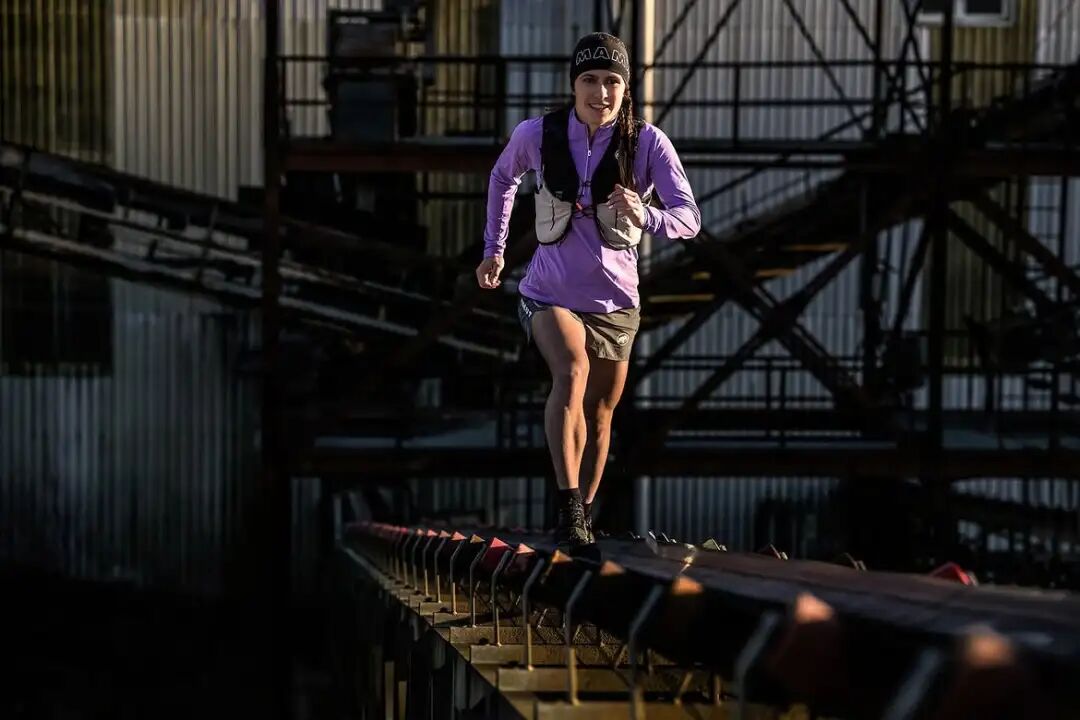
On the one hand, Mammut has started to make up for its previously relatively weak footwear category, and find new growth space through trail running.
When Mammut officially started to deeply cultivate the Chinese market in 2013, its core focus was on professional mountaineering and heavy hiking. At that time, the domestic trail running sport was still in the niche development stage, and the brand did not plan an independent trail running product line. With the rise of domestic trail running consumption boom, the brand began to systematically layout this sub-track, and launched the complete Aenergy Trail trail running apparel series in 2023. In March 2026, relying on the Xiamen Trail Race by UTMB® event scenario, Mammut globally launched its new Aenergy Trail trail running shoes, officially making up for the short board of footwear and improving the brand's professional product matrix in the field of lightweight trail running.
On the other hand, Mammut is also promoting the extension of professional outdoor products to urban consumption scenarios.
As the outdoor lifestyle enters the mass market, the scenarios where consumers buy outdoor products have expanded from professional mountaineering and skiing to urban commuting, travel and daily wear. Mammut has begun to lower the consumption threshold of professional outdoor equipment through product version adjustment, younger design and lifestyle marketing.
The channel side is also in the expansion stage.
In 2026, Mammut will speed up the opening of stores in China, setting up stores in Hangzhou Tower, Baoding Xiantianxia, Taiyuan Wangfujing, Luoyang David World, Nanjing Xinbai, Chengdu MixC and Lanzhou MixC. At present, Mammut has opened a total of 73 stores in Chinese mainland (including outlet stores), of which only more than ten are directly-operated stores, mainly distributed in Shanghai, Beijing, Shenzhen and other places, and the rest are all brand-authorized stores. According to the data, Mammut had 61 stores in China in 2024.
From the perspective of regional distribution, offline channels cover 20 provinces, municipalities directly under the Central Government and autonomous regions across the country, with a relatively uniform distribution in the north and the south.
At present, Mammut is mainly operating six sub-sectors in China: hiking, trail running, rock climbing, urban outdoor, mountaineering, and Eiger Extreme. Similar to many outdoor brands, Mammut organizes activities such as hiking, via ferrata, trail running, skiing, and polar expeditions through its "Mountain Guide" community to maintain close contact with brand users.
The era of "Chinese operators" for global outdoor brands is coming
In recent years, the attractiveness of the Chinese market to high-end overseas outdoor brands has been continuously increasing.
On the one hand, China has become one of the fastest-growing outdoor consumer markets in the world. With the rapid popularization of camping, hiking, trail running, skiing and other sports, consumers' demand for professional equipment and outdoor lifestyle is constantly rising. On the other hand, the experience accumulated by Chinese enterprises in retail channels, e-commerce operation, consumer insight and supply chain management has also become an important resource for overseas brands to enter the Asian market.
This makes the Chinese market no longer just a sales market for overseas outdoor brands, but gradually becomes an important test field for global brand operation.
Correspondingly, high-end outdoor is also becoming a new consumer asset that Chinese capital pays attention to. Compared with building a new brand from scratch, acquiring mature brands with long history, technical accumulation and global popularity has become an important way for capital to enter this track.
In this process, the role of Chinese capital is also changing. In the past, Chinese enterprises mostly played the role of agent, retailer and channel partner for overseas sports brands; today, more and more capital has begun to directly participate in the ownership and operation of global brand assets.
A consortium formed by Anta together with Tencent, GL Ventures and other investors completed the acquisition of Amer Sports; Youngor Group established a joint venture with the Norwegian high-end outdoor brand Helly Hansen to be responsible for the brand's operation in Chinese mainland; Li-Ning-linked capital participated in the development of the Swedish high-end outdoor brand Haglöfs through a joint venture; domestic sports retail enterprise Topsports has continued to expand its professional outdoor brand matrix, including obtaining the operation right of the Norwegian high-end outdoor brand Norrøna in the Chinese market, all of which show the "localization of global high-end outdoor brands in China".
In the future, as Chinese capital continues to deeply cultivate high-quality overseas outdoor assets and polish its localized operation capabilities, more outdoor brands will radiate new vitality relying on the Chinese market. The domestic outdoor industry will also break the inherent development boundary in the integration and collision of Chinese and foreign technologies, resources and concepts, and continue to rewrite the competition pattern of the global outdoor industry.
This article is from the WeChat Official Account "Sports Big Business" (ID: sportsmoney), written by Ma Lianhong, and authorized for release by 36Kr.