"Alexander Wang" Latest Interview: Now Is a Civilization-Level Super Opportunity
On the stage of YC Startup School 2026, Alexander Wang, founder of Scale AI and head of Meta AI, shared his full journey from a teenager in New Mexico to founding Scale at the age of 19, and then taking charge of Meta's Superintelligence Lab. He used his personal experience to tell thousands of entrepreneurs in the audience what a true contrarian belief is, what systems thinking is, and why now is a civilization-level entrepreneurial opportunity.
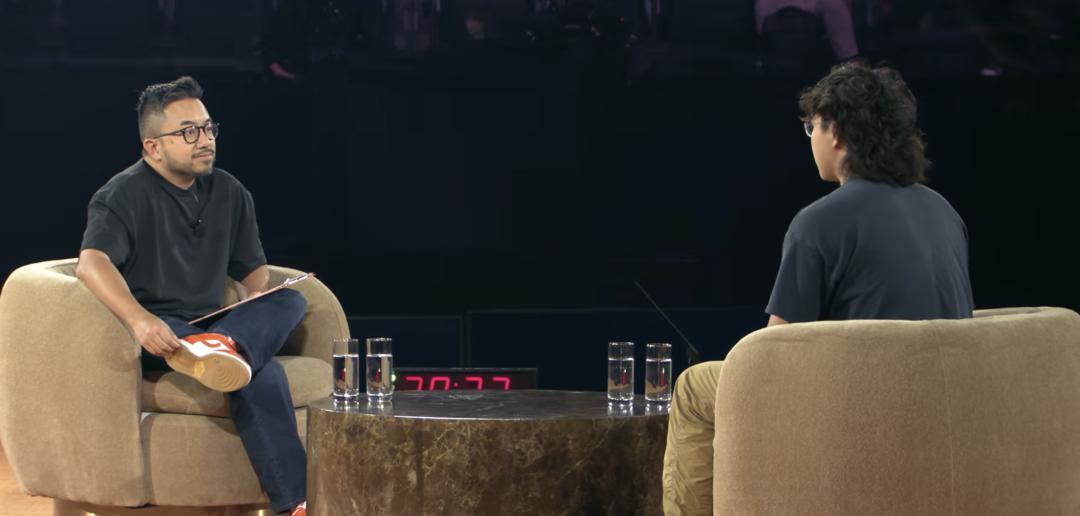
The following is the full text of his speech:
I. From New Mexico to Silicon Valley: An Uncertain Path
Alexander grew up in Los Alamos, New Mexico — the place where Oppenheimer later became famous. "But it's really the middle of nowhere."
He participated in math competitions and computer science competitions from an early age, but "I wanted to do something truly great, but I wasn't sure exactly how to get there or which path to take."
He had a friend who was extremely passionate about programming and landed an internship at Palantir in Silicon Valley after graduating from high school. "He had a huge influence on me." After graduating from high school, Alexander went to Silicon Valley and worked at Quora for a year — that was his gap year.
"During the period when I was 17 to 19 years old, I felt like I was constantly changing. What I exactly wanted to do kept shifting, because I learned so much from the people around me, it was like drinking from a fire hose."
He summed up two important pieces of advice:
"First, working in a company is really valuable. From the outside, you have no idea how a company operates, what it's really like to build things, what iteration looks like, or how a group of people make decisions."
"Second, going to MIT to study is really important. It gave me a lot of opportunities to explore what's interesting."
It was at MIT that he began training his first model, playing with the then newly released TensorFlow, and eventually came up with the idea for Scale. A year later, he applied to YC. "Getting into YC at that time felt like a miracle."
II. When You're Told "This Won't Work", That's Exactly What You Need to Hear
Alexander's YC story had a key turning point.
"Our initial idea was to build an AI agent to help people access healthcare. This idea will definitely come true eventually, but the timing was not right then."
The team spent a month or two on this direction, until YC partner Jared Friedman pulled them aside and said, "Guys, I don't know if this is going to work."
"That was exactly the sentence we needed to hear."
They went back to square one, rethought where the opportunities were, and then came up with Scale. The idea at the time was simple: training AI models requires three things — computing, code, and data. The first two can be obtained by pressing a button online, but there is no effective way to get data.
"This seems so obvious, this must be the future."
But interestingly, for the first several years of Scale, data was still very "unsexy". Every time we went to raise funds, even though the data was great and the revenue was high, VCs were always skeptical: "I don't know if this is a good business, can it last?"
"It's funny that none of the investors had trained a model, so they really didn't understand. And those investors who rejected us at the time and were very pessimistic about the potential of AI are now writing articles saying how critical data is and that it's one of the biggest business opportunities in the AI field."
III. Contrarian Belief: You Can't Go With the Flow
Alexander emphasized the most core ability of entrepreneurs: developing a set of beliefs that no one else agrees with.
"I think if you look at all the most successful companies in the world, they started long before their core ideas became popular. They worked in obscurity for many years until that idea or that field became a consensus."
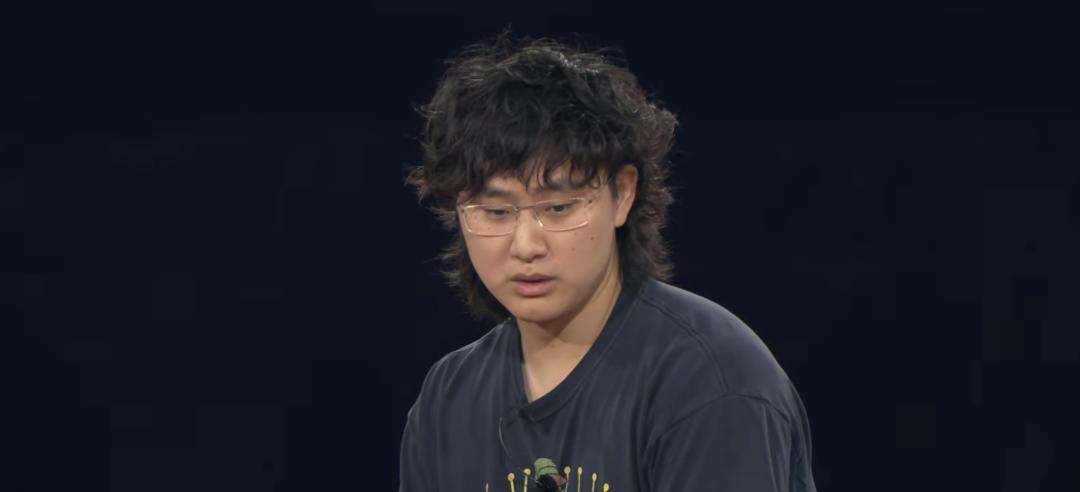
"The only way you can succeed is to identify these truths about the world many years earlier than others. You can't make business decisions based on what everyone around you says. If you follow the crowd too much, you will be completely confused and end up achieving nothing."
"You have to develop your own compass, to judge for yourself what the future will look like — because other people will only confuse you."
IV. From Scale to Meta: This Is a Civilization-Level Opportunity
Nowadays, Alexander runs both Scale AI (the company he founded) and Meta's Superintelligence Lab (which he joined a year ago). When asked "what it's like to start a company now", his answer is very impactful:
"I think this is a once-in-a-civilization opportunity — to be a visionary with ambition and foresight, to shape the face of the future world by building amazing things."
His logic is: the bottleneck is no longer the progress of the AI model itself. "If the models don't improve at all from today, there will still be decades of economic transformation and disruption of the way the world works."
Regarding his experience at Meta in the past year, he frankly admitted: "Llama 4 did not follow the development trajectory that Meta needed. After I joined, we did a zero-based reconstruction, and built a complete cutting-edge lab from scratch."
Within nine months, they released Mu Spark 1.1, and then spent another two months releasing Mu Image and more versions.
He shared several key insights:
First, talent density is extremely important. "Talent density compounds on itself — the more top talents you have, the more the best talents will want to join you."
Second, cutting-edge AI work is scientific research. "We are exploring what we can do with these models, how to push them forward, and what boundaries they can reach. This requires a completely different mindset and operation model from internet products."
Third, the core of the system is being able to keep pace with exponential growth. "We need to treat the lab like an organism — one that can grow along with all the exponential growth in the ecosystem."
V. Personal Superintelligence: Expanding Everyone's Autonomy
Alexander elaborated on Meta's vision for superintelligence — an idea that originally came from an internal memo from Mark Zuckerberg a year ago:
"We believe that billions of people around the world will have a superintelligence that adapts to them and is tailored for them — it will allow them to achieve their goals, understand their context, and ultimately become an amplifier of their autonomy."
He specifically emphasized a concept: "We often think about autonomy expansion — how to help people accomplish things they never dared to think of before. If everything becomes easy, what will everyone in the world do?"
At the ecosystem level, they don't believe in the totalizing vision of "AI taking over the world". "We believe this will empower a very broad ecosystem. There are 200 million enterprises on the Meta platform, and we think this number should grow to billions with the explosion of creativity and the use of AI tools."
"Eventually this will be a vibrant ecosystem — business agents working in synergy with personal agents, fully super-driven by AI."
VI. About Open Source: Making It Affordable for Everyone
Alexander mentioned a key cost advantage: "Mu Spark 1.1 is comparable in performance to Opus, but 8 times cheaper."
"I don't believe in a world where these models are so expensive that only the richest developers and companies can get access to them. It's important to make this technology available to everyone, so that they can use it to build anything they want."
He believes that the best AI products have not yet been developed. "Every wave in the AI ecosystem is ten times larger than the previous one. The first wave was self-driving cars, then LLMs and chatbots, then coding agents — each wave is ten times larger than the previous one. We are right on this steep curve."
VII. Systems Thinking Will Never Be Obsolete
When asked "what young people should learn in the AI era", Alexander gave a straightforward answer:
"Systematic and rigorous thinking is still extremely important. The abstraction layers are changing — before we wrote code, now it's about how to coordinate agents, then how to make a million agents work together, then how to make a trillion agents work together."
"The way the system is organized is changing, but systems thinking itself will never be outdated. So I think it's wrong to completely abandon low-level technical capabilities — you need systems thinking, and you also need to be able to operate."
He mentioned an interesting thing: "The enrollment number for Stanford's computer science major has actually dropped by double-digit percentages, because people are worried that AI will replace programming. I think this is a little crazy — you still need those skills to create good agents."
VIII. To My 18-Year-Old Self: Cultivate Your Inner Compass
Finally, Alexander was asked "If you could send a telegram to your 18-year-old self, what would you say?"
"It boils down to this: develop your own inner compass about how the future will unfold, and have strong beliefs in it. Because you will be flooded with noise, people will give you all kinds of nonsense, and it will be very chaotic and very difficult. Especially when you are young and inexperienced, it will be very hard to have real faith in what you believe."
"But this is the most important thing."
"Also try to identify what that exponent is in the world — the exponent with the steepest and longest-lasting curve. Decades ago it was Moore's Law, now it's the progress of AI, but there will be more such steep curves in the future."
"The starting points of these curves may be boring, or even seem not that interesting. When I started doing Scale, we were building cat detectors in YouTube videos — it was hard to explain that that would be the most important technology of our time. But it was on that incredible exponential curve."
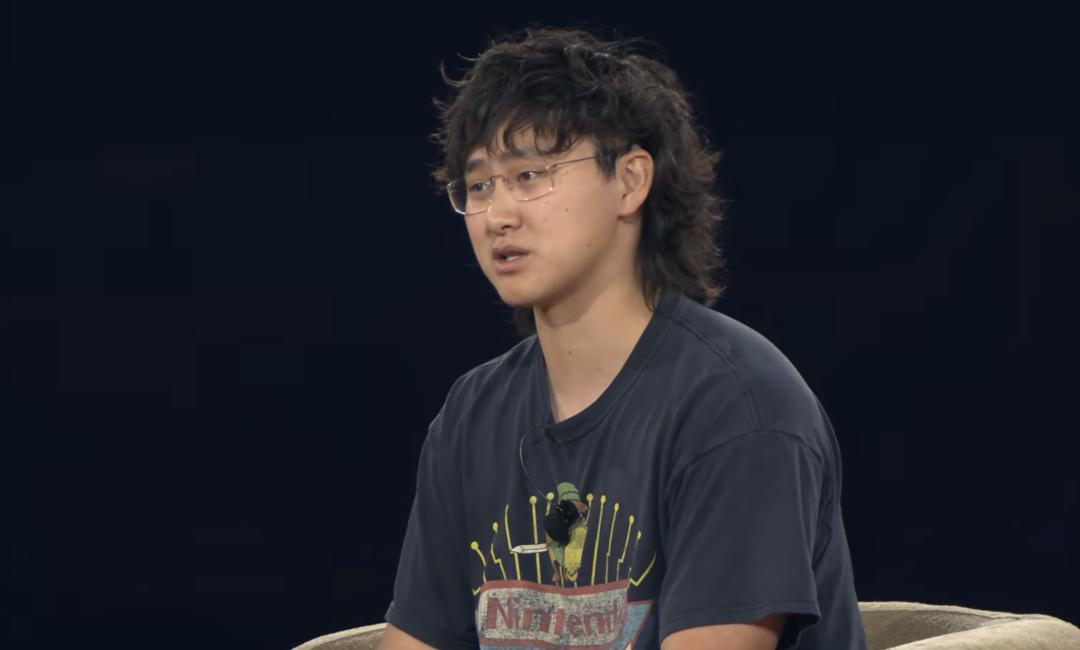
On the YC stage, Alexander Wang told a story about belief — not about talent or luck, but about persisting for ten years when everyone thought "data is unsexy", about moving forward even after being rejected by VCs, and about the exponential curve from identifying cats to building a "digital divinity". For the entrepreneurs in the audience, his message is clear: find that curve, build your belief, and then — don't get drowned out by the noise.
This article is from the WeChat Official Account "Postwave Evolution Planet", author: Mark, published with authorization from 36Kr.