Exploring the globalization of China's supply chain and the overseas expansion of Chinese brands from the perspectives of CRRC, BYD, DJI and Lingtian
Against the backdrop of deglobalization waves and the restructuring of the geopolitical landscape, the global expansion journey of Chinese manufacturing is stepping into an unprecedented deep-water zone.
On one hand, century-old giants in Europe and the United States have built high walls in the high-end market with patent barriers and certification systems; on the other hand, thousands of enterprises are crowded in the low-end and mid-end tracks, with homogenized price wars continuously eroding profit margins. Coupled with the layered trade blockades brought by tariff increases, green barriers and geopolitical conflicts, the traditional Chinese manufacturing model is struggling to move forward under multiple pressures.
Leading in scale but thin in profits, strong in production capacity but silent in brand building, has become a common growth bottleneck for countless Chinese enterprises going global.
Against such an industry background, a core proposition is increasingly worth discussing: Can the vast number of specialized, refined, differential and innovative small and medium-sized enterprises that are deeply rooted in vertical fields break out of the homogenized involution predicament and embark on a new quality productivity upgrading path from product export to brand global expansion under the dual squeeze of giant monopolies and trade barriers?
Where on earth is the way for Chinese manufacturing to break through the predicament?
As a review expert for specialized, refined, differential and innovative enterprises of the Ministry of Industry and Information Technology and an expert committee member of Xinhua News Agency's Brand Project, Shi Zhangqiang, founder of Jinkun Brand, believes that from consumer electronics to new energy vehicles and then to high-end equipment manufacturing, a number of leading Chinese enterprises have already given the answer through practice: Taking China's complete supply chain system as the core, through focused deep cultivation, full-chain independent R&D and quality foundation building, it is completely possible to break through the monopoly of giants and trade barriers and realize the leap from product export to brand global expansion.
How can Chinese enterprises break through the predicament of global expansion under triple shackles?
At the moment when the deglobalization wave is surging, the path of Chinese enterprises going global is being surrounded by triple shackles: First, the high wall of technical standards built by European and American giants after a century of operation, with the right to speak in the high-end market firmly held by a small number of enterprises; second, the homogenized involution of thousands of peers crowded in the low-end and mid-end tracks, where price wars have consumed profits and also exhausted the confidence in R&D and upgrading; third, the layered trade blockades of increased tariffs, green barriers and geopolitical conflicts, making the traditional model of single production location and low-price high-volume sales already extremely fragile.
Under the interweaving of triple pressures, Chinese enterprises are experiencing unprecedented growing pains. Their scale has long been among the top in the world, but the improvement of profits is very slow; their advantages in production capacity and supply chain are prominent, but they have not been transformed into advantages in brands and standards...
1. High wall of technical standards built by European and American electrical giants
Since the Industrial Revolution originated in Europe and the United States, leading enterprises have been leading the way, accumulating profound technical patent reserves and firmly controlling the right to formulate standards in the global electrical industry. Chinese enterprises started late and had weak industrial foundations, and have long been in a passive position of technology following and standard adaptation...
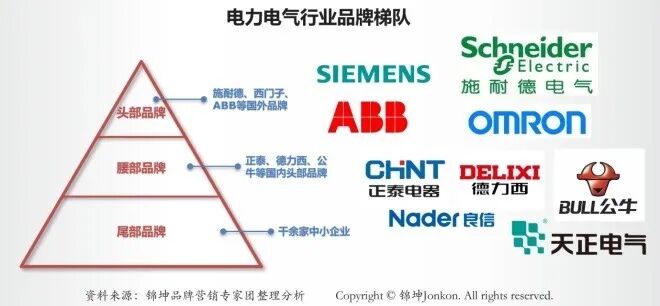
l European and American giants control technical standards and monopolize the high-end electrical market
In the global electrical field, the international standards formulated by the International Electrotechnical Commission (IEC), the UL standards issued by Underwriters Laboratories, and the National Electrical Code (NEC) of the United States are the core access thresholds to enter the global mainstream market. In the technical committees and drafting working groups of these standard systems, European and American enterprises such as Siemens, Schneider Electric and ABB occupy the vast majority of seats. The technical paths, parameter settings and test methods of the standards are mostly designed along the technical framework of the giants.
Relying on a century of technical accumulation and dominant power over standards, European and American giants have long occupied the global high-end electrical market. For example, foreign brands such as Siemens, Schneider Electric and ABB have far higher market share and comprehensive gross profit margin than domestic brands. High profits in turn support higher R&D investment, forming a positive cycle, constantly raising the industry's technical ceiling, and continuously raising the threshold for latecomers to catch up.
l Domestic brands follow technical routes and find it difficult to break through high-end barriers
After decades of development, leading domestic electrical brands have ranked among the top in the world in terms of scale, but they have never broken through the ceiling of the high-end market. Leading domestic enterprises such as Chint, Bull and Delixi occupy a dominant position in the civil low-voltage electrical appliances and mid-end power distribution markets, with channel coverage and production capacity ranking first in the world, but their presence in the global high-end market has always been weak.
The core crux is that domestic brands have long adopted follow-up R&D, with product design and technical parameters all aligned with European and American standards, and have always optimized within the framework delineated by giants, never mastering the dominant power of standard formulation.
This positioning as a follower determines that it is difficult for domestic brands to enter the core supply chain of global high-end customers, and they can only compete on cost and channels in the mass civil market. Even if they achieve a revenue scale of tens of billions, they still stay at the cognitive level of cost-effective brands and cannot compete on the same stage with century-old European and American brands. Being unable to enter the high-end market and being trapped in endless involution in the low-end and mid-end markets has become a common predicament for most leading domestic electrical brands.
l Small and medium-sized enterprises have weak technologies and are deeply trapped in the involution cycle
Even leading brands find it difficult to break through the predicament, and the large number of small and medium-sized enterprises are even more trapped in involution. The domestic electrical industrial belt represented by Liushi, Wenzhou, gathers thousands of low-voltage electrical OEM/ODM enterprises, the vast majority of which survive on the OEM/ODM model, with no independent core technology and no independent brands or channels.
Industry surveys show that the average gross profit margin of small and medium-sized enterprises in the domestic low-voltage electrical appliance segment is even less than half of that of foreign giants. Meager profits are not enough to support long-term, high-risk cutting-edge R&D; insufficient R&D investment leads to products always remaining at the homogenized level, and enterprises can only grab orders at low prices. This forms a vicious circle, which is also the growth trap that countless Chinese manufacturing enterprises cannot escape.
2. Traditional manufacturing is deeply trapped in the homogenized involution predicament
If technological monopoly is the external growth ceiling, then homogenized involution is the endogenous development predicament of China's manufacturing industry.
When technological breakthroughs are difficult to achieve in the short term, the vast majority of enterprises crowd into the same track, competing on cost, production capacity and price, and finally falling into a war of attrition with no winners.
l Traditional manufactured products are homogenized, and price war competition is intensifying
The chronic problem of homogenized competition has been vividly reflected in the home appliance industry. Leading home appliance brands such as Haier, Midea and Changhong have highly converged product functions, appearance parameters and technical routes in mainstream categories such as air conditioners, refrigerators and televisions. Every promotion season, they launch successive price wars, and the overall gross profit margin of the industry is continuously reduced. In many categories, in the end, what enterprises compete for is not technology and brand, but supply chain cost control capability, and profits are compressed to the extreme.
This logic of involution is also deeply imprinted in many industries in China. Due to the convergence of core technologies and homologous supply chains, the products of various enterprises are mostly the same: there is almost no essential difference in materials, parameters, structures and functions, let alone irreplaceable core selling points. When customers make purchases, after comparing different options, the only dimension left is price; on the enterprise side, in order to compete for orders, they can only continuously compress profit margins, even taking orders at a loss to maintain production capacity.
l Insufficient depth of supply chain, core materials and components are subject to external control
Behind homogenized involution is the homogenization of supply chain capabilities. The supply chains of most domestic manufacturing enterprises stay at the shallow level of procurement and assembly, with upstream core materials and high-end components highly dependent on imports. Without the ability to extend deep into the industrial chain, they naturally cannot build differentiated barriers.
Taking the core materials of electrical products as an example, high-end BMC bulk molding compounds, special high-conductivity copper materials, high-precision flame-retardant engineering plastics, as well as precision molds, high-end testing chips and other core components, are largely dependent on overseas imports. Domestic enterprises have no ability to break through to the upstream material end, so they can only purchase homogenized raw materials in the same supply chain system, use similar processes to produce similar products, and finally fall into homogenized competition.
l Insufficient R&D investment, unable to support brand premium and high-end breakthrough
The root cause of the supply chain's failure to upgrade is the long-term insufficient R&D investment. For a large number of small and medium-sized manufacturing enterprises, survival is the top priority, and R&D is the investment with the highest cost and the slowest return. Industry data shows that the average R&D investment of small and medium-sized enterprises in the domestic low-voltage electrical appliance industry accounts for less than 2% of revenue, while the R&D investment ratio of foreign giants such as Siemens and Schneider Electric is generally above 6%, and the absolute scale differs by dozens of times.
The gap in R&D investment has directly widened the technology generation gap. In the long run, enterprises can only be trapped forever in the price war in the low-end and mid-end markets, unable to move up to the higher level of brand global expansion. The essence of homogenized involution is the homogenization of supply chain capabilities. When all enterprises compete at the same supply chain level, in the end, it can only be a war of attrition with no winners.
3. Trade blockade risks faced by single supply chain global expansion
Apart from involution and technological monopoly, Chinese enterprises going global also have to face an increasingly severe external trade environment.
Under the deglobalization wave, tariff barriers, green barriers and geopolitical risks are superimposed layer upon layer, and the traditional single supply chain model of "produced in China, sold globally" is becoming more and more fragile.
The old path of relying on cost advantages to capture the market is being completely blocked by layer upon layer of blockades.
l US tariff increases continuously narrow the profit of the low-price foreign trade model
The first blockade is direct tariff barriers, which directly eat up the profit margin of the low-price model. Since the Sino-US trade dispute, the United States has long imposed additional tariffs on Chinese products exported to the United States, especially for key categories such as new energy vehicles, semiconductors and batteries, with some tax rates even raised to 50%-100%. This is almost a fatal blow to foreign trade enterprises that rely on low prices and large sales volumes. Originally, the core competitiveness of Chinese enterprises was their manufacturing cost advantage. After the additional tariffs are imposed, the CIF price of products rises directly, and the price advantage disappears completely.
Many small and medium-sized foreign trade enterprises that rely on the US market are in a dilemma: if they bear the tariffs themselves, the profits of the orders will be zero or even loss-making; if they raise prices for customers, the orders will be immediately taken away by Southeast Asian manufacturers such as those in Vietnam and Thailand. The era when Chinese enterprises relied on cost advantages to capture the market is gone forever. Without reconstructing the supply chain and increasing product added value, the simple low-price competition model will eventually be completely eliminated by trade barriers.
l The EU Carbon Border Adjustment Mechanism is implemented, and domestic supply chain compliance costs rise
The second blockade is the rapidly upgrading green compliance barriers, which are becoming a new threshold for global expansion. The EU Carbon Border Adjustment Mechanism (CBAM) has officially launched its transition period, with coverage gradually expanding from steel, aluminum and cement to mechanical and electrical and electrical products. This means that Chinese industrial products exported to the EU need to pay carbon taxes for the carbon emissions in the production process, and the higher the carbon emission intensity, the more carbon taxes they need to pay.
For most domestic manufacturing enterprises, their carbon emission control capabilities in the production link are weak, their energy structure is dominated by thermal power, and their carbon emissions per unit of output value are much higher than those of local European enterprises. Once the carbon tax is fully implemented, the export costs of domestic enterprises will further rise, and the original price advantage will be further weakened.
In addition to the carbon tax, the EU's RoHS environmental protection directive, REACH chemical regulations and other compliance requirements are also continuously upgrading. Certification costs and testing costs are rising year by year, and the compliance pressure on small and medium-sized enterprises is increasing day by day. Green compliance is becoming another insurmountable access threshold after technical standards. Enterprises without green supply chain capabilities will not even get the ticket to enter the European and American markets in the future.
l Geopolitical fluctuations intensify, and single production location layout has high risks
The third blockade is the frequent occurrence of geopolitical and black swan events, which completely expose the risks of a single supply chain. In recent years, black swan events such as recurring epidemics, geopolitical conflicts, and sharp rises in shipping prices have occurred one after another, fully demonstrating the predicament of enterprises that place all their production capacity in China and rely on Europe and the United States for orders.
During the 2020 epidemic, domestic factories stopped production on a large scale, and overseas orders could not be delivered on time, causing many long-term cooperative customers to directly switch to Southeast Asian suppliers; after the Russia-Ukraine conflict broke out in 2022, European energy prices skyrocketed and logistics channels were blocked, leading to large fluctuations in the delivery cycle and costs of exports to Europe...
For enterprises with concentrated production capacity and a single market, every black swan event is a life-and-death test. If the supply chain is too concentrated and the market is too single, the risk resistance capability will be extremely poor, and even a little external fluctuation may bring a devastating blow to the enterprise. The profound changes in the trade environment are forcing Chinese enterprises to reconstruct their global expansion models. The old path of single production location and low-price high-volume sales is no longer viable. To gain a firm foothold in the global market for a long time, it is necessary to build a global supply chain network to disperse risks, get close to the market, and break through the layer upon layer of trade blockades. A number of pioneering enterprises have long relied on the systematic advantages of China's supply chain to blaze a new path for brand global expansion.
China's supply chain is the core confidence for the global brand expansion of DJI, BYD and CRRC
Under the triple shackles, Chinese manufacturing does not only have the options of involution and retreat.
For a long time, the outside world's perception of China's supply chain has mostly stayed at the label of low-cost, large-scale OEM, ignoring its deep value that supports technological innovation, brand upgrading and global expansion.
From DJI in the consumer electronics field, to BYD in the new energy vehicle track, and then to CRRC in the high-end equipment industry, leading enterprises in different tracks have long achieved global breakthroughs relying on China's supply chain system.
Their rise paths share highly consistent underlying logic, and also provide a reference growth paradigm for the vast number of small and medium-sized enterprises.
1. DJI: Polishing extreme supply chain advantages in segmented tracks
For small and medium-sized enterprises with limited resources, the most common pitfall is blind diversification.
Following the trend to enter any hot track, seemingly spreading out in all directions but actually lacking expertise everywhere, and finally falling into homogenized competition in every track.
DJI's rise in the civil drone track is a typical model of focused deep cultivation.
l Focus on the drone track and integrate the supporting domestic electronic industrial chain
When DJI was founded, the consumer electronics industry was in the dividend period of the smartphone boom, and countless enterprises flocked to make mobile phones and tablets in pursuit of short-term scale growth. However, DJI did not follow the trend to enter the popular tracks, but anchored the very niche civil drone track at that time, and invested all its resources in this field.
Relying on the mature electronic industrial chain supporting system in the Pearl River Delta of China, DJI quickly connects with the world's most complete electronic supply chain resources gathered in Shenzhen and surrounding areas, covering from brushless motors, lithium batteries, gimbal structural parts to main control chips, camera modules and precision plastic parts. DJI does