South Korean Stock Market: A Collective Bet of the Desperate
"There is a growing belief that social mobility can no longer be achieved through traditional paths — only through speculative assets. After witnessing people getting rich overnight in the cryptocurrency space, investors are now flocking to stocks like SK Hynix, viewing them as a better option to accumulate wealth rapidly."
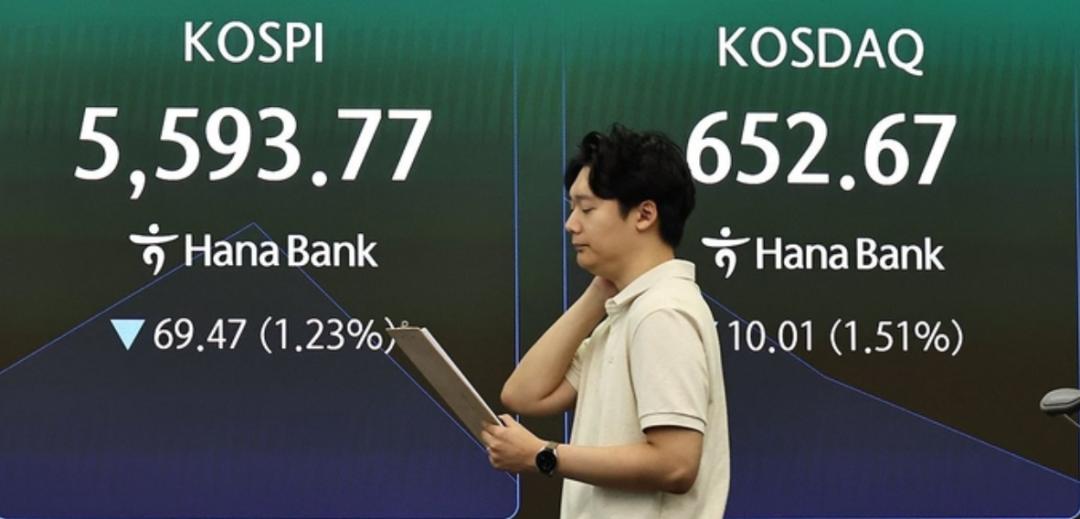
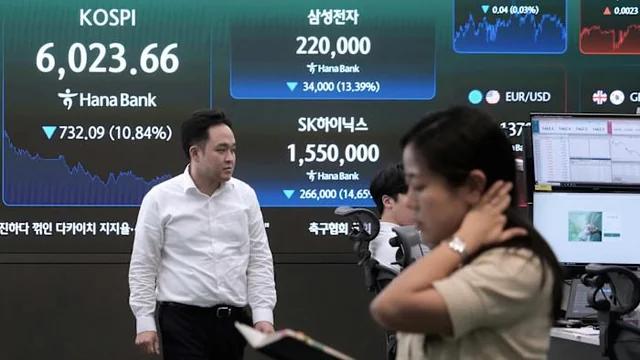
On July 30, 2026, the Korea Composite Stock Price Index (KOSPI) closed at 5593.56 points. It has only been 41 days since it hit the all-time high of 9385.59 points set on June 19.
Source: Internet
41 days, a 40% drop.
During these 41 days, 1.2 million retail accounts received margin call notices, and 340,000 accounts were forced to liquidate. A 39-year-old office worker put 80 million won, the down payment for his wedding house, into the stock market, with a floating loss of nearly a quarter, forcing his wedding to be postponed. The total surrender amount of the three major life insurance companies reached 4.9 trillion won, and the elderly redeemed their pension annuities to invest in the stock market, only to see their account value cut in half.
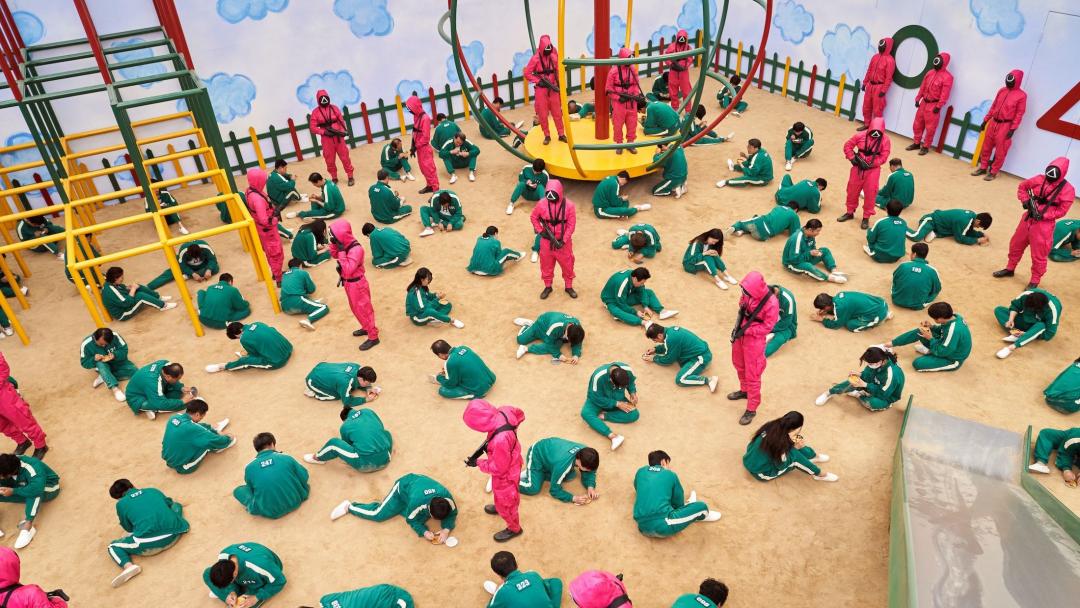
If we zoom out, we can see a clear causal chain: policy endorsement → leverage deregulation → mass FOMO (fear of missing out) → buying at high levels → capital harvesting. This is not just market volatility, but an inevitable "Squid Game" — except that the rule-makers are not in the game, and many participants do not even know what the rules are.
01 Policy Ignition: When the President Becomes the "Chief Stock Pusher"
The policy driving force behind this round of South Korea's market rally is arguably the most aggressive "national endorsement" in the global capital market in recent years.
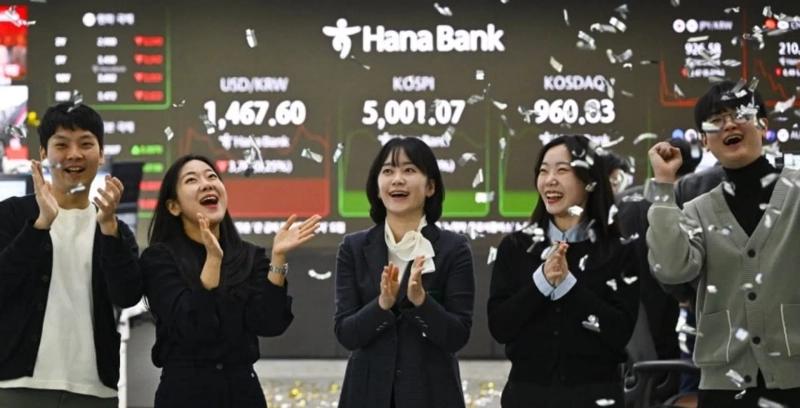
In April 2025, Lee Jae-myung took office as President of South Korea. At that time, the KOSPI was hovering at 2284 points, mired in the "Korea Discount" dilemma. During his campaign, Lee Jae-myung put forward an ambitious goal: "KOSPI 5000 points". This goal was already radical, but the subsequent trend proved that it was just a starting point.
After taking office, Lee Jae-myung promoted a series of capital market reforms: revising the Commercial Act, reforming dividend tax, and requiring listed companies to mandatorily cancel treasury stocks. The direction of these reforms is correct, but when the president personally sets the tone for the stock market, what the market hears is not "reform", but "guarantee".

Source: Internet
What is more controversial is the deregulation of leverage tools.
On April 28, 2026, South Korea revised the Enforcement Decree of the Capital Markets Act, raising the maximum single stock position limit for ETFs from 30% to 100%, and removing the mandatory requirement that ETFs must invest in at least 10 different stocks. This means that an ETF can bet 100% on a single stock.
The direct consequence of this institutional breakthrough is that 2x leveraged ETFs linked to Samsung Electronics and SK Hynix were quickly launched. Earlier, our chief also wrote about information related to funds linked to the 2x SK Hynix ETF, and I heard more than a few friends buying related products in May and June.
However, the head of South Korea's Financial Supervisory Service later admitted: "I regret not stopping the launch of leveraged ETFs in May." But it was too late for regrets — the launch of leveraged ETFs was equivalent to pouring a bucket of gasoline on the already overheated stock market.

Source: Internet
What is more ironic is the short selling ban policy. In November 2023, the South Korean government fully banned short selling on the grounds of cracking down on illegal shorting. The original intention of the short selling ban was to "protect retail investors", but in practice, it distorted the price discovery mechanism — when the market can only go long unilaterally, the bubble loses its most important countervailing force.
In early June, when the market had already shown sharp fluctuations, Lee Jae-myung publicly stated again: "Stock market volatility is inevitable, and the South Korean stock market is still undervalued." For retail investors, this sentence is no different from "keep buying".
The original intention of the policy may be good, but there are still flaws in the design logic. When the policy implementation mode becomes president's tone-setting, leverage deregulation, short selling ban and verbal endorsement, it is no longer a "reform", but a national speculative mobilization endorsed by national credit.
02 FOMO as Combustion Accelerator: When "Not Investing in Stocks" Becomes a Shame
If policy is the igniter, then social psychology is the combustion accelerator. The collective entry of South Korean retail investors is not rational asset allocation, but an outburst of anxiety deeply rooted in the social structure.
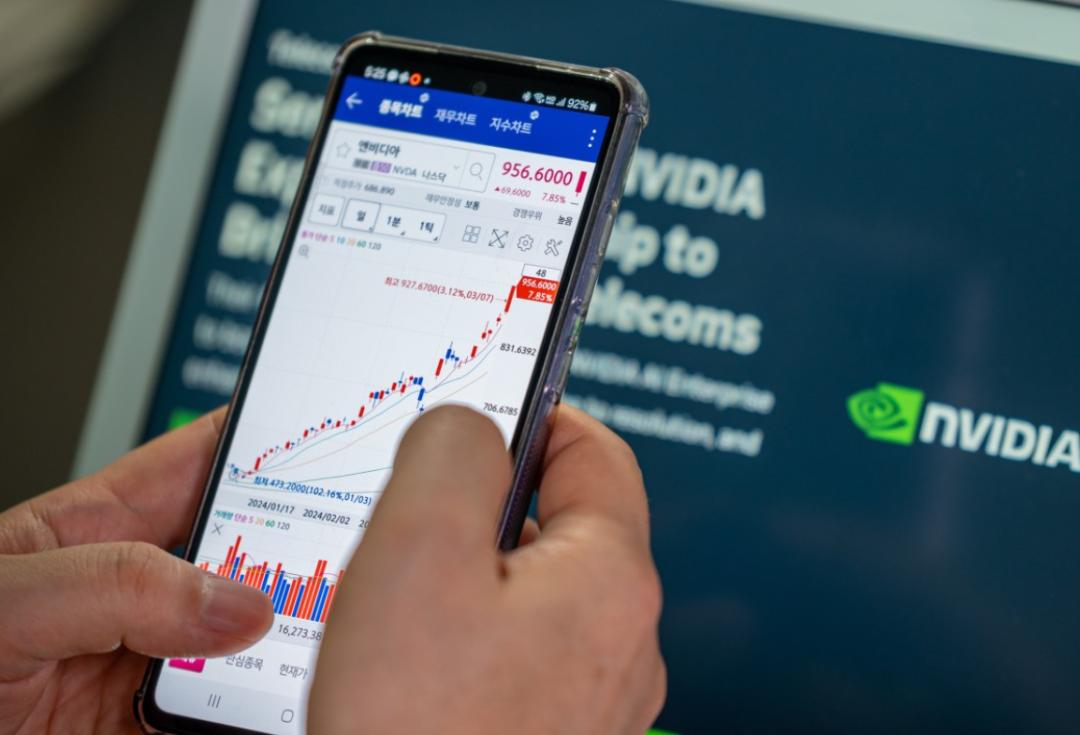
There is a term in South Korea called "lightning poor" (벼락거지), which specifically refers to people who do not invest in stocks. The birth of this term says it all: in the most frenzied period of the stock market, not investing in stocks is not prudence, but a "shame" — you have missed the era, you will be left behind by your peers, and you will become the "only one who does not make money".
Source: Internet
The root of this psychology is the deep-seated anxiety of class solidification in South Korean society. South Korea has a more famous concept — "the spoon class theory". According to their parents' assets, young people are divided into gold spoons, silver spoons, copper spoons and mud spoons. The top 5% of the rich own 83% of the country's real estate, and it has long been a luxury for young people to buy a house. Jaewon Choi, an economics professor at Seoul National University, pointed out sharply: "There is a growing belief that social mobility can no longer be achieved through traditional paths — only through speculative assets can it be achieved."
The get-rich-quick myth of cryptocurrency has already staged a rehearsal. After retail investors witnessed people getting rich overnight in the crypto space, the stock market — especially AI chip stocks — is regarded as a "more formal and safer" channel to get rich quickly. SK Hynix and Samsung Electronics are not just stocks, they are "elevators for class ascent".
The data reveals the madness of this anxiety: South Korea has 104 million active stock accounts, with 2 accounts per capita; in 2026, retail investors injected about 37.7 trillion won into the local stock market; the margin balance reached a record high of 36.3 trillion won, up 32% from the end of December last year; in the first quarter, the number of new accounts opened by people under 18 surged nearly 10 times year-on-year; the total surrender amount of the three major life insurance companies reached 4.9 trillion won, and the elderly redeemed their pension annuities to invest in the stock market.
Source: Internet
Is this still investment? This is a collective bet of the desperate. When the social upward channel is blocked, the stock market becomes the last straw. And government policies — from presidential endorsement to leverage deregulation — just give them a longer lever.
The most ironic scene took place on June 23 — the day when the market plunged and triggered the circuit breaker, retail investors net bought 5.9 billion U.S. dollars against the trend, hitting a record high. This is typical blindly buying at high levels — in the interweaving of fear and greed, retail investors chose the latter, while capital chose the former.
03 Capital Harvesting: When Two Stocks Kidnap a Country
In addition to policy and social psychology, there is another problem: the structure of the stock market.
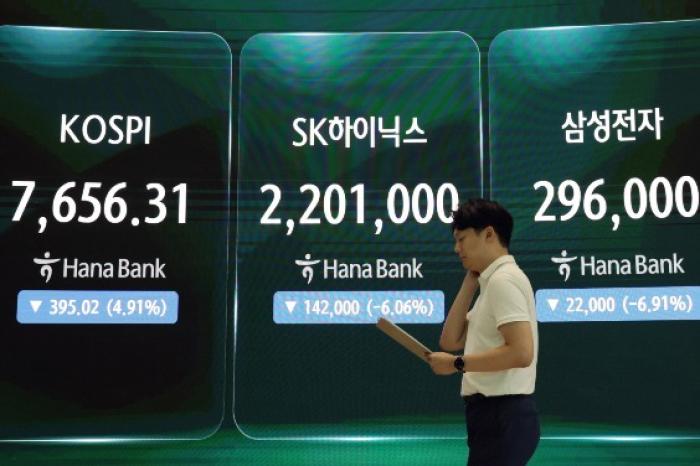
The fatal flaw of the South Korean stock market is its extreme oligopoly structure. The combined weight of Samsung Electronics and SK Hynix in the KOSPI has soared from 22% to 57%-60%. Of the index's doubling in the first half of the year, 70% was contributed by these two companies. If these two targets are excluded, the actual decline of the 9.99% plunge on June 23 would be less than 1.5%.
Source: Internet
This means that the South Korean stock market is essentially kidnapped by an "ETF of two stocks". When the AI chip industry is booming, the whole nation revels; when AI capital expenditure slows down, the whole market collapses. And the slowdown in AI capital expenditure was precisely triggered by an external news — Meta's plan to launch cloud infrastructure business, which triggered market concerns about the slowdown in AI infrastructure demand.
A strategic adjustment by a U.S. company can wipe out trillions of won from the South Korean stock market. This is not a market, this is a hostage.
In this structure, retail investors are at the end of the information chain from the very beginning. When institutional investors sense the trend in advance and foreign capital quietly reduces their positions at high levels, retail investors' "bottom fishing" is nothing more than providing liquidity for capital to exit.
In the July plunge, 1.2 million retail accounts received margin call notices, and 340,000 accounts were forced to liquidate. The total size of forced liquidation reached 2.3 trillion won. 65% of retail investors suffered losses, and 20% of accounts saw their assets almost cut in half.
Behind these numbers are specific lives: that 39-year-old office worker who put the down payment for his wedding house into the stock market, and now his wedding has to be postponed; those elderly people who redeemed their pension annuities, hoping that the stock market would supplement their retirement income, but now their principal has shrunk; those parents who opened accounts for their children, hoping to use stocks instead of lucky money, but now it has turned into a "risk education".
Source: Internet
Capital harvesting is ruthless and efficient. When leveraged ETFs attract retail investors to take over at high levels, when short selling ban makes the bubble expand to the limit, when policy endorsement makes retail investors believe that "this time is different" — capital completes its best move: selling the chips to the people who believe in the story the most at high levels.
04 Squid Game: Who Makes the Rules?
Comparing the South Korean stock market to *Squid Game* may not be entirely appropriate, but the metaphor is looming at this moment.
In this drama, 456 debt-ridden ordinary people are lured to participate in a life-and-death game, and the winner can get 45.6 billion won. They are told that "opportunities are equal" — everyone follows the same rules and starts from the same point. But what they don't know is that the game designers have already calculated the probability of every step, and the rich people watching the game bet and laugh in the VIP box.
Source: Internet
The stock market certainly will not physically eliminate investors, nor does it have to make everyone lose money, but the roles in the stock market are more and more like the plot arrangement.
Policy makers are like the "organizers" of the game — they set the rules (leveraged ETFs, short selling ban, presidential endorsement), attract participants to enter, and hope to boost the value of the whole game. Their original intention may be good, but they underestimated the greed of human nature and overestimated the risk awareness of retail investors.
Institutional investors and foreign capital are like "VIP viewers and VIP players" of the game — they have information advantages, hedging tools, and can allocate assets globally. When retail investors take over at high levels, they are quietly reducing their positions; when retail investors panic and cut their losses in the plunge, they are absorbing chips at low levels.

Source: Internet
Retail investors are the "contestants" of the game — they are driven by FOMO, lured by