The world's first gene therapy suitable for 2-year-old children, which intervenes in early childhood hematological diseases from the root cause.
Recently, Vertex Pharmaceuticals announced that the U.S. FDA has officially approved the supplemental indication expansion of its in-house gene therapy Casgevy (generic name exagamglogene autotemcel), extending the minimum eligible age to patients aged 2 years and older with sickle cell disease (SCD) who experience recurrent vaso-occlusive crises (VOC), as well as patients with transfusion-dependent beta-thalassemia (TDT).
This indication expansion application was included in the FDA Director's Council of National Priority Voucher (CNPV) pilot program, taking only 53 days from the submission of materials to final approval. Prior to this, Casgevy had already obtained three qualifications: Orphan Drug designation, Regenerative Medicine Advanced Therapy (RMAT) designation, and Fast Track designation.
This approval not only makes Casgevy the world's first gene therapy eligible for SCD children as young as 2 years old, but also extends the clinical application of CRISPR/Cas9 gene editing therapy to the group of young children with major inherited hematological diseases, providing a new treatment option targeting the root cause of the disease for young pediatric patients.
Long-term Lack of Early Intervention Options for Young Pediatric Patients
Both sickle cell disease and transfusion-dependent beta-thalassemia are rare inherited hematological diseases caused by beta-globin gene defects. They have distinct pathogenesis and clinical manifestations, but both can cause persistent organ damage and significantly shorten the survival period of patients.
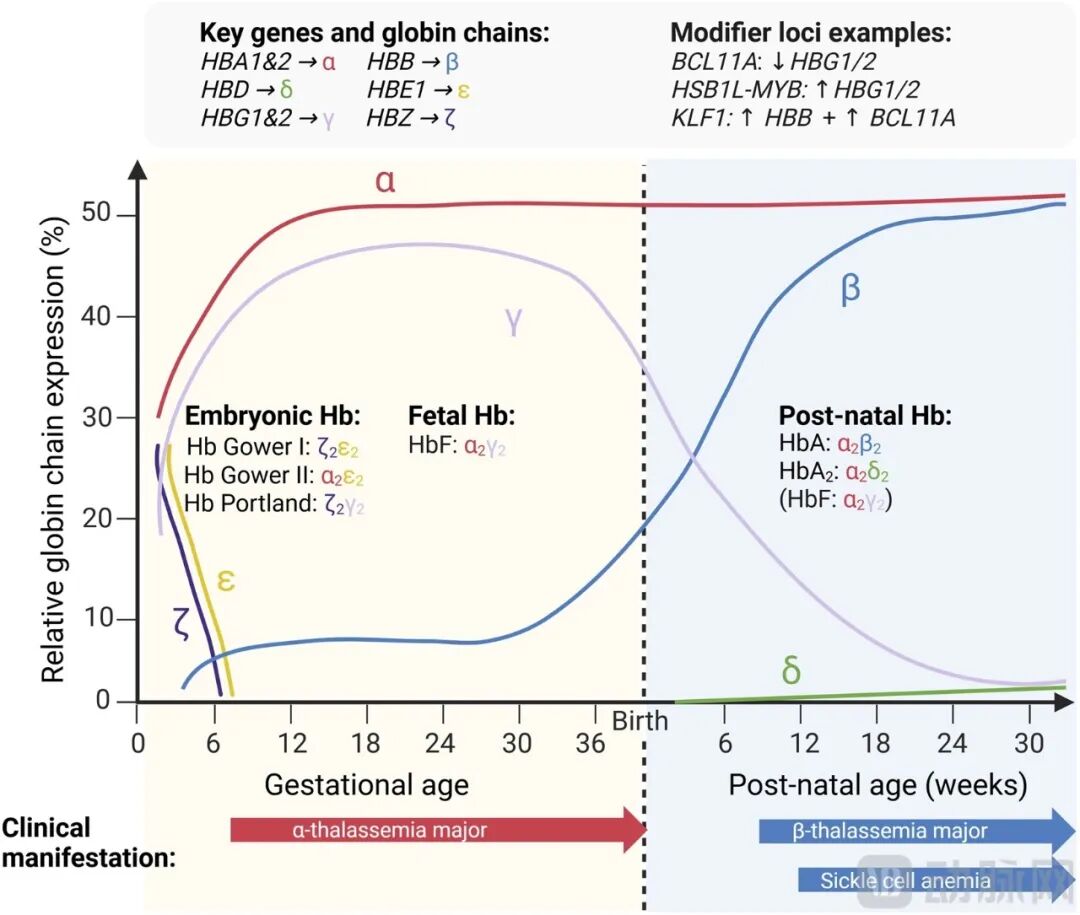
Temporal expression pattern of globin chains from human embryo to postnatal stage and onset window of hemoglobinopathies [1]
Sickle cell disease is caused by a single point mutation in the beta-globin gene. After deoxygenation, abnormal hemoglobin polymerizes, red blood cells twist into a sickle shape, repeatedly block microvessels, and trigger periodic severe pain and vaso-occlusive crises.
Transfusion-dependent beta-thalassemia is caused by beta-globin synthesis defects, the body cannot synthesize sufficient normal hemoglobin, and pediatric patients need regular lifelong blood transfusions from early childhood to maintain oxygen supply.
Both diseases progress gradually: persistent vascular obstruction and severe chronic anemia will gradually damage multiple organs including the heart, lungs, kidneys and brain. Iron overload caused by long-term blood transfusions will also continuously erode the liver and endocrine system, severely hindering children's growth and puberty development.
Epidemiological statistics in the United States show that the median age of death for sickle cell disease patients with frequent crises is only 45 years old, and conservative symptomatic treatment cannot reverse the long-term survival damage caused by the disease.
For a long time, the curative treatment methods for the two diseases in clinical practice are very limited. Conventional supportive treatment can only relieve pain and correct anemia, but cannot block the continuous progression of organ damage. Although allogeneic hematopoietic stem cell transplantation used to be a scheme with curative potential, it is restricted by scarce matched donors, the risk of transplant rejection and severe infection. High-intensity myeloablative conditioning is also not suitable for young children, and the proportion of pediatric patients who can successfully receive transplantation and achieve cure is extremely low.
The existing treatment system has obvious shortcomings. Gene editing therapy has become the core R&D path to correct gene defects from the root. However, before the approval of Casgevy's indication expansion, all similar gene therapies marketed worldwide were only approved for adolescents aged 12 and above and adults. Children aged 2-11 are in the critical window period of organ development, which is the best time for early intervention to avoid irreversible organ damage. Previously, there was no treatment option suitable for this age group that can repair the disease-causing gene in one go, which is also the core clinical basis for the FDA to approve Casgevy to lower the eligible age.
Targeting BCL11A to Restart Fetal Hemoglobin Production
Casgevy is an ex vivo gene editing therapy based on CRISPR/Cas9. The core process is to extract the patient's own hematopoietic stem cells, modify them through gene technology in the laboratory, and then transfuse the repaired living cells back into the patient's body. Its strategy can be regarded as a precise regulatory operation on the patient's own hematopoietic stem cells.
Specifically, the CRISPR/Cas9 system adopts a non-viral delivery method, targets the red blood cell-specific enhancer region of the BCL11A gene, and makes a double-strand break there.
The protein encoded by the BCL11A gene was originally the "brake" for fetal hemoglobin expression — after birth, BCL11A is continuously expressed, the synthesis of fetal hemoglobin is inhibited, and adult hemoglobin is produced instead. The break caused by Casgevy is equivalent to releasing the brake, and red blood cells will restart the synthesis of fetal hemoglobin.
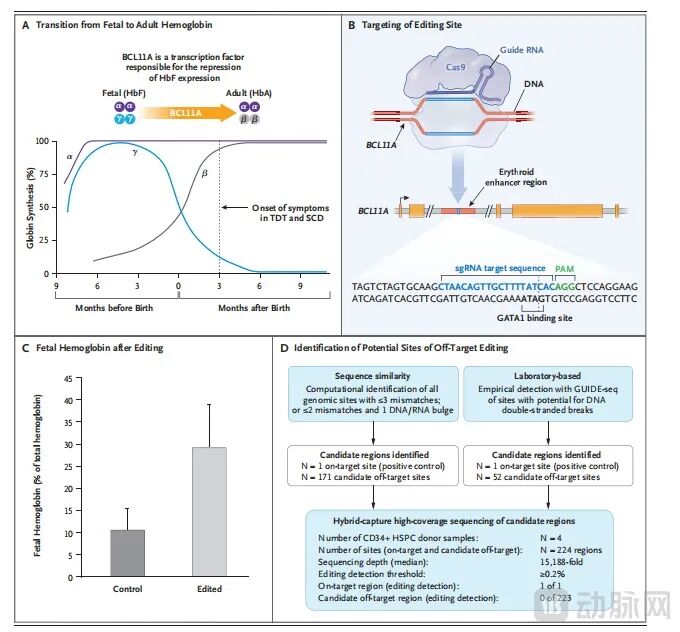
Mechanism of BCL11A editing to reactivate fetal hemoglobin [2]
Why bypass adult hemoglobin and turn to fetal hemoglobin? This is actually a clever biological design by Vertex Pharmaceuticals.
As mentioned earlier, the pathogenesis of sickle cell disease and transfusion-dependent beta-thalassemia are both related to beta-globin, but fetal hemoglobin does not contain beta-globin — it is composed of alpha-globin and gamma-globin, and is naturally not affected by these two mutations.
Therefore, the strategy adopted by Casgevy makes use of the hemoglobin compensation mechanism in the early stage of human development, and uses the fetal version to complete the oxygen transport function, thus bypassing the identical yet distinct molecular defects of the two diseases.
From the regulatory perspective, compared with gene addition therapies in the same track that use lentiviral vectors, the gene editing path of Casgevy performs better in long-term safety prediction: lentiviral vector therapies need to randomly insert exogenous functional genes into the host genome, and this integration behavior has hidden dangers, including the risk of carcinogenesis induced by insertional mutagenesis, and the uncertainty brought by the continuous expression of exogenous genes. The editing process of Casgevy does not introduce any exogenous gene sequence, the DNA repair after editing is completed by the cell's own homologous recombination or non-homologous end joining mechanism, the action site is fixed, and the genome perturbation range is naturally controllable.
From the perspective of treatment path design, Casgevy uses the patient's own hematopoietic stem cells for ex vivo editing and then reinfusion, no exogenous donor is required throughout the whole process, which in principle avoids the risks of graft rejection and graft-versus-host disease (GVHD) that are common in allogeneic transplantation, and the incidence of severe immune-related complications after surgery is lower. For young pediatric patients, the impact of these two types of complications is often more threatening than the disease itself.
Multi-cohort Data Support the Lowering of Eligible Age Indications
The core evidence supporting the approval of this indication expansion comes from the CLIMB series of clinical studies, covering two populations aged 12-35 and 5-11 years old. There is no separate trial enrollment for children aged 2-4 years old. The regulatory agency referred to the trial data of people over 5 years old and approved the use in this age group through data extrapolation.
For the transfusion-dependent beta-thalassemia population, in the 12-35 year old cohort, 32 out of 35 subjects who completed at least 16 months of follow-up achieved 12 consecutive months of no blood transfusion (i.e., transfusion independence), accounting for about 91.4%; in the 5-11 year old pediatric cohort, 8 out of 9 evaluable pediatric patients achieved 12 months of transfusion independence, with an effective rate of nearly 89%, and the median transfusion-free duration reached 20.1 months. The benefit trend of the two populations is highly consistent.
From the perspective of long-term indicators, follow-up data shows that the total hemoglobin and fetal hemoglobin levels in the subjects increased significantly and remained stable for a long time, and the oxygen-carrying capacity of red blood cells is good, which fundamentally reduces transfusion dependence.
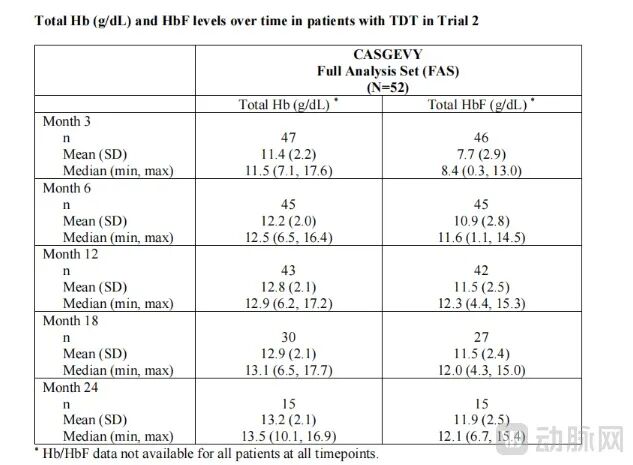
Total hemoglobin (g/dL) and HbF levels over time in TDT patients after treatment (Source: Casgevy Prescribing Information)
Trials for young sickle cell disease patients also showed stable benefits: all evaluable subjects aged 5-11 years reached the primary endpoint, with no severe vaso-occlusive crises occurring for 12 consecutive months within 24 months after infusion, greatly reducing the life burden caused by repeated severe pain and hospitalization.
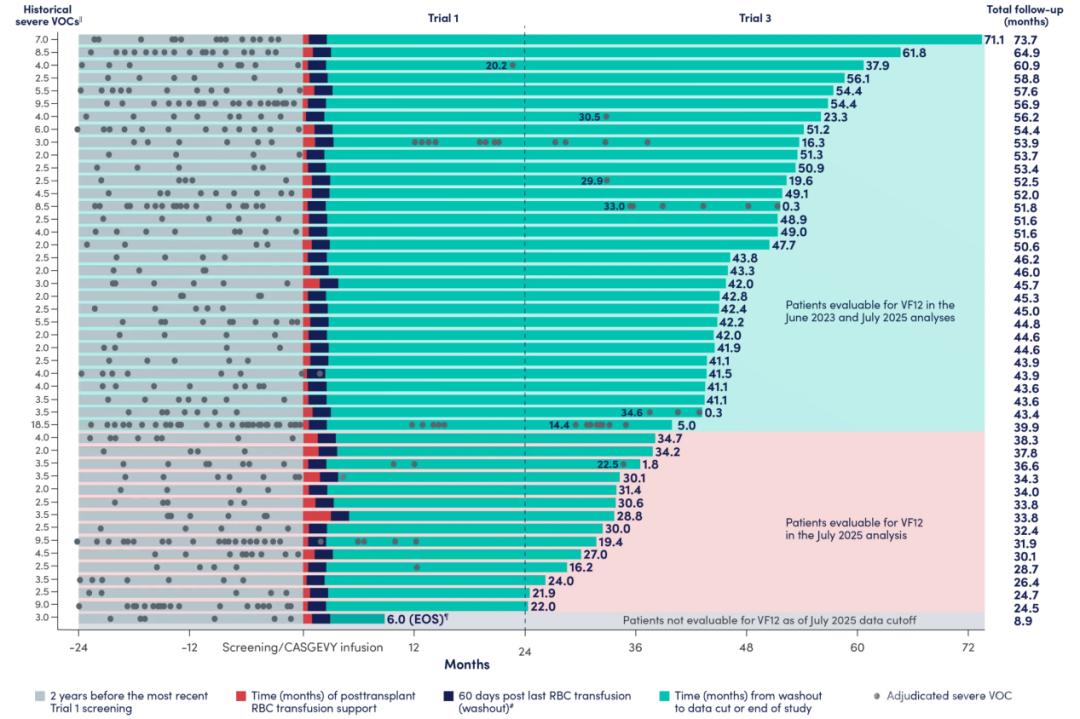
Swimmer plot of long-term follow-up for sickle cell disease patients (Source: Casgevy official website)
In terms of safety, the types of adverse reactions across all age groups are similar, and most of the symptoms come from pre-operative myeloablative chemotherapy, mainly including mucositis, febrile neutropenia, and decreased appetite. No special adverse reactions that only occur in children were found. No rejection or graft-versus-host disease, which are common in allogeneic transplantation, occurred throughout the trial, and the overall risk is controllable.
From Individual Case to System: Extension of Industrial Significance
The significance of Casgevy's approved age lowering is not only the label expansion of a single product.
At the clinical level, it provides the first approved gene therapy scheme for early etiological intervention of young children with rare hematological diseases. At present, Vertex Pharmaceuticals has established a network of more than 75 Authorized Treatment Centers (ATCs) in the United States, and pediatric-adapted diagnosis and treatment capabilities are also being gradually implemented in this network, promoting the accessibility of pediatric gene therapy to expand from a few centers to a wider clinical network.
At the industrial level, the progressive development model of "full verification in core age group → corroboration in young child cohort → data extrapolation for younger population" reduces the development threshold and investment risk of rare disease indications for young children, which can motivate more enterprises to expand indications for pediatric rare diseases, and drive more pediatric gene therapies from the laboratory to clinical practice. At the same time, the platform design of a single target covering two indications also provides a solution to the high-cost development dilemma of rare diseases, and improves the input-output density of gene editing tools.
At the long-term verification level, all patients treated with Casgevy are invited to participate in the CLIMB-131 long-term follow-up study, with a planned follow-up period of up to 15 years. These data will further verify the long-term benefits of early intervention on growth, development and organ protection, and continuously consolidate the long-term value of one-time gene therapy.
However, as a high-priced gene therapy with one-time administration, payment and accessibility are still the common challenges faced by global rare disease gene therapies. How to make these therapies move from "regulatory accessibility" to "patient accessibility" is the next unsolved proposition.
But at least, the 2-year-old threshold has been crossed — for those families with newly diagnosed pediatric patients, this window of opportunity opens earlier than ever before.
* References
[1]Galan, A., Martínez, L., & Ruiz, J. (2026). Globin gene regulation in hemoglobinopathies: Developmental switching and therapeutic reactivation. Frontiers in Genetics, 17, 1810737.
[2]Frangoul H, Altshuler D, Cappellini MD, et al. CRISPR-Cas9 Gene Editing for Sickle Cell Disease and β-Thalassemia[J]. New England Journal of Medicine, 2021, 384(3): 252-260.
This article is from the WeChat official account "VentureBeat" (ID: vcbeat), written by Yu Miaoxin, authorized for release by 36Kr.