The first AI World Cup has left three core legacies.
Since Lenovo became the first technology partner in FIFA's history in October 2024, the "first AI World Cup" has been the core theme of the marketing promotion for the 2026 FIFA World Cup in the United States, Canada and Mexico.
This tournament dares to call itself the "first AI World Cup" — while AI applications in the sports sector are not new, this marks the first large-scale deployment of AI across multiple core systems of a World Cup, including TV broadcasting, referee decision-making, match analysis, event operation and management, etc. Previous tournaments only applied AI in partial solutions, never reaching such scale and depth of implementation.
After nearly 20 months of preparation, the 39-day "Football + AI" grand test of the US-Canada-Mexico World Cup has demonstrated to the world through experiences visible to TV audiences and broadcasters, perceptible to participating players, and personally experienced by referees that the "first AI World Cup" is not a marketing gimmick of FIFA and its sponsors, but a real and objective result brought by a series of tangible technological innovations and progress.
Compared with macro indicators such as 6.8 million on-site spectators and expected revenue of 15 billion US dollars, these technological innovations that lead the world's number one sport into the AI era in an all-round way are the key footnotes that better define the historical coordinates of this World Cup, and also a rich legacy left to subsequent events.
An AI Innovation Show Penetrating the Full Fabric of the World Cup
The most intuitive impression that the AI World Cup leaves on audiences is undoubtedly the upgrade of TV broadcasting technology.
One highlight is the introduction of the "Referee View" footage. The referee view is not a new concept, but previous applications generally suffered from frame jitter problems, which greatly impaired the viewing experience. At this World Cup, the footage output from the referee view is not only more stable, but also features lower latency.
This is exactly the credit of AI. To be precise, it is equipped with Lenovo's AI image stabilization algorithm, which optimizes the high-speed dynamic footage captured by the referee's wearable action camera in real time, ultimately reducing frame jitter by an average of 50% and a maximum of 70%.
Li Bin, head of the Referee View AI Video Enhancement System for Lenovo's FIFA project, revealed in interviews with media including Lanxiong Sports that since referees often run more than 10,000 meters throughout the match and perform actions such as sudden stops and turns, the camera mounted on the referee's headset has been limited to 17 grams. It is no longer feasible to improve hardware (such as embedding stabilization devices into the camera), so image stabilization can only be achieved through AI solutions.
Li Bin's team organically integrated the two most common stabilization algorithms in the frequency domain and time domain, giving full play to the former's strength in handling shake and the latter's advantage in retaining details. They then split the 30-frames-per-second footage frame by frame, compared each frame with the footage of the previous 2 seconds, and performed cropping, prediction and repair, finally achieving the ideal stabilization effect while ensuring that the image cropping area is less than 11% — the industry average ranges from 30% to 50%, and the latency is controlled at 2 to 3 seconds (the industry usual level is 6 to 15 seconds).
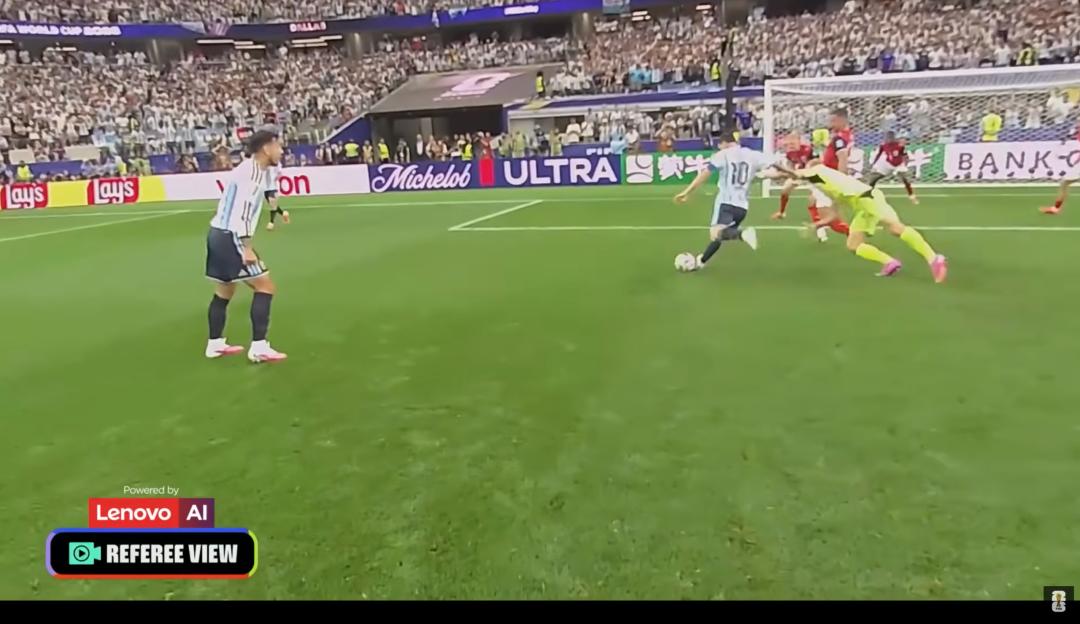
Messi's goal against Austria captured from the referee view.
This innovation not only brings a new viewing perspective to the World Cup, enriches the narrative dimensions of sports live broadcasts, but also improves the transparency of tournament refereeing decisions and enhances fans' sense of interactive participation. According to data provided by Lenovo, the relevant footage from the "Referee View" camera has generated more than 20 billion exposures in total. Meanwhile, third-party global fan survey data commissioned by Lenovo shows that 87% of fans believe that technological upgrades have significantly improved their viewing experience of this World Cup, and 84% of fans stated that the close-up on-pitch footage brings an immersive viewing experience as if they were present at the stadium.
Another highlight is directly related to the upgrade of the referee decision-making system (VAR, semi-automatic offside technology). The underlying technological innovations behind this are the chip-embedded football provided by Adidas and the 3D Digital Avatars provided by Chinese enterprise Lenovo.
In TV broadcasting, 3D Digital Avatars appear more frequently than chip technology and contribute more to the improvement of the TV viewing experience. At the same time, compared with the generic and identical virtual player images in the past, 3D Digital Avatars are more realistic and have higher accuracy. Applied in the playback and display of semi-automatic offside recognition technology, 3D Digital Avatars not only provide on-site referees with complete decision-making references, but also help audiences intuitively understand the logic of offside judgments.
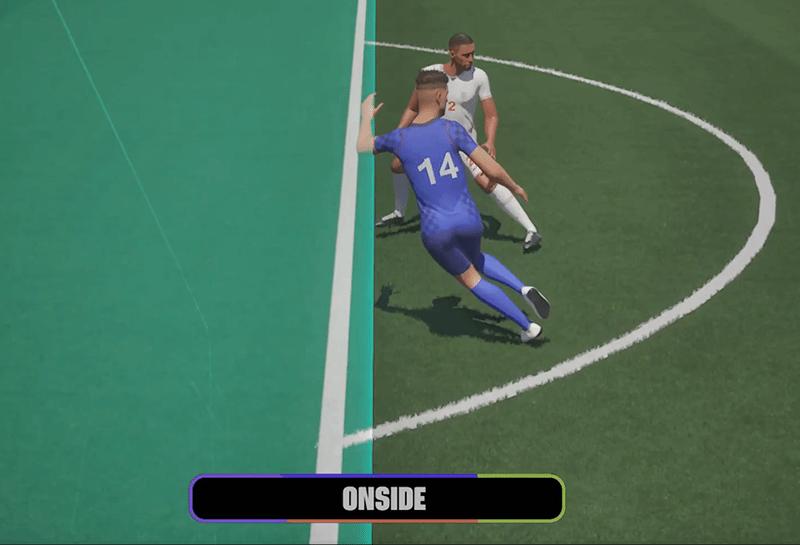
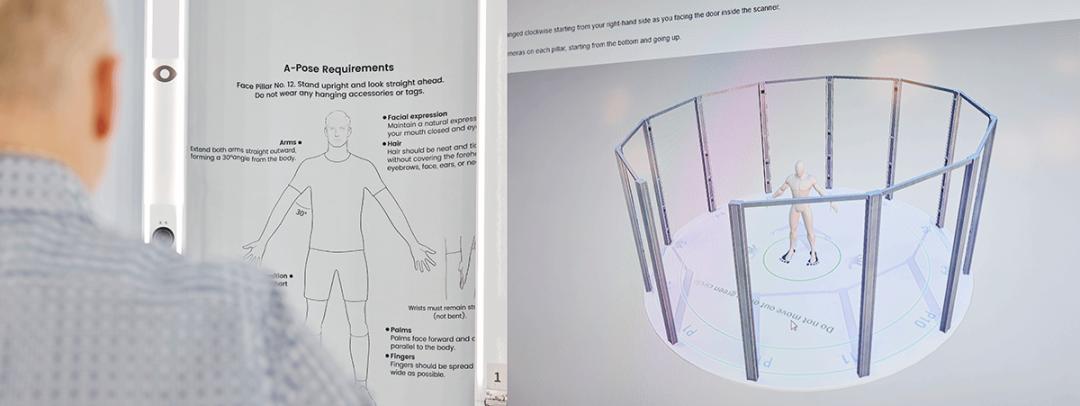
Zhang Xiaoyan, Director of Technology Strategy and Innovation at Lenovo SSG (Solutions & Services Group) and head of the 3D Digital Avatars project, introduced to media including Lanxiong Sports that before the tournament, Lenovo used scanners to shoot 36 photos with parameters and AI algorithms for 1263 players, and then used 3D reconstruction technologies such as Gaussian modeling to generate a data pipeline from these photos, finally forming a unique image for each player.
The third core system of AI application in this World Cup is the technical and tactical analysis system. This is where FIFA AI Pro (also known as Football AI Pro), one of the biggest innovations of this tournament, comes into play.
FIFA AI Pro can be understood as the football version of ChatGPT. Built on Lenovo’s AI Factory and enterprise-level AI capabilities, it can efficiently retrieve massive amounts of data by coordinating a series of AI agents, and accurately output the required information in a few seconds, helping coaches, players and analysts conduct match analysis, tactical deduction and personalized decision-making.
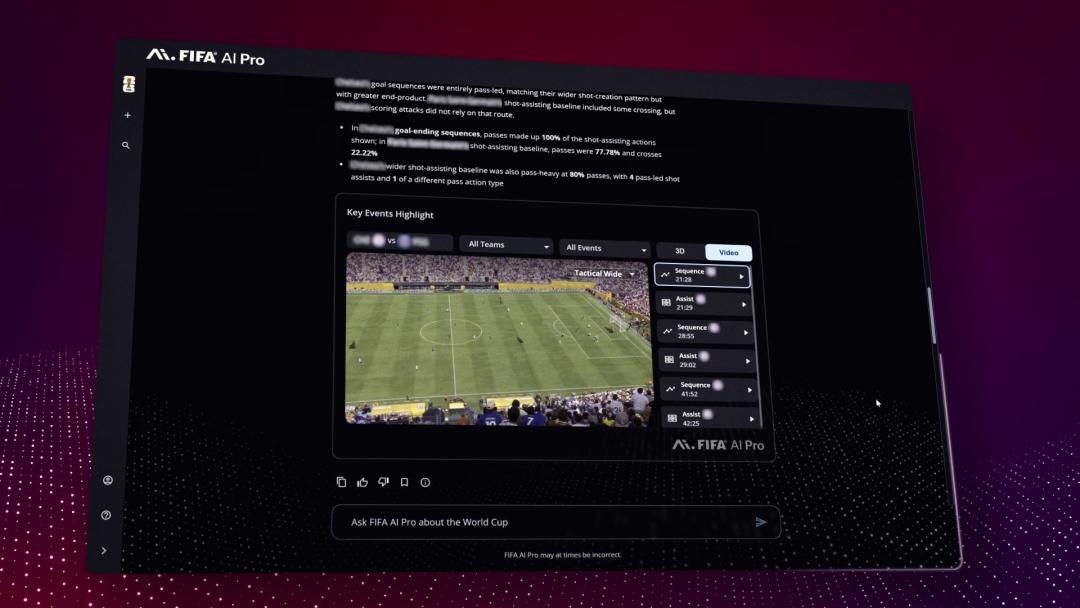
During this tournament, FIFA AI Pro opened FIFA's official match data and professional analysis tools to all participating teams, supporting 16 languages, accessing millions of match data entries, and parsing more than 2000 match indicators, enabling teams with limited financial resources to access high-quality data resources and obtain more professional technical and tactical analysis capabilities.
In a conversation with media including Lanxiong Sports, Gong Haoning, AI Solution Delivery Manager for Emerging Vertical Sectors at Lenovo SSG, revealed that after a team lost a game by a large margin in the first round, its analysts had nearly 20 rounds of conversations with FIFA AI Pro, covering everything from the team's own formation to the opponent's passing performance, the positioning and defensive performance of the team's defenders, and the areas for improvement.
Gong Haoning added that a team analyst told him that his typical day is to observe the on-pitch performance of his team and the opponent on the sideline first, write a summary after the match, then open FIFA AI Pro in the evening to query data, and after summarizing the information, hold a meeting with the head coach the next morning to discuss tactics.
Data shows that all 48 participating teams enabled the system during the tournament, and more than 300 users performed thousands of queries.
In addition, large-scale AI applications are also concentrated in multiple systems behind the scenes involved in event operation and management.
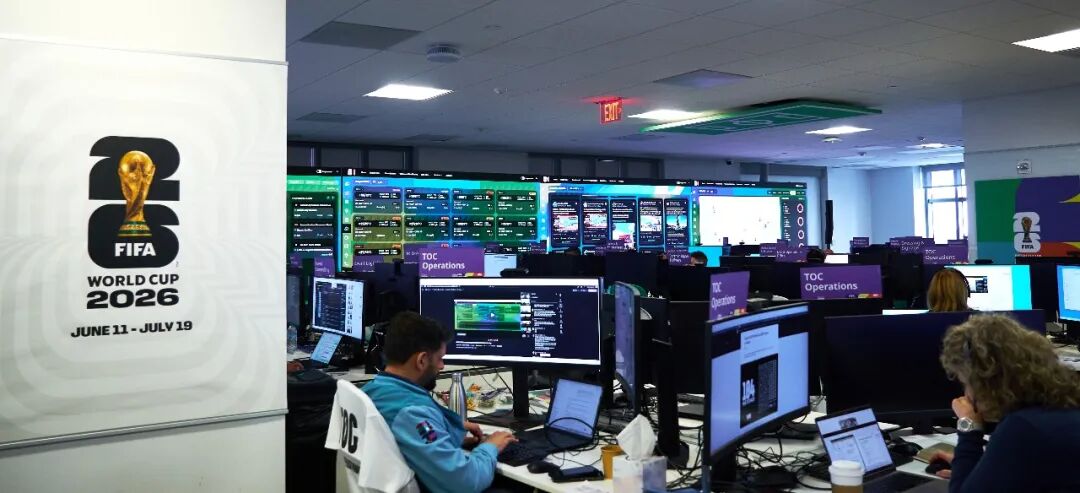
FIFA has set up more than 645 operation sites for this tournament, including 16 stadiums, the headquarters of 48 teams, the International Broadcast Centre, the Tournament Operations Centre, airports, hospitals, hotels, etc. Empowered by Lenovo's AI hybrid infrastructure, FIFA is able to uniformly collect 600 data streams from more than 40 event business sectors including security, logistics and travel, communications, team services, and venue operations into a shared system, and present them in real time, up-to-date and without delay on the large screen at the Tournament Operations Centre (TOC) in Miami. For example, on July 17 local time, when Lanxiong Sports visited the TOC on site, one of the signals on the screen was exactly the press conference before the third-place World Cup match between England and France.
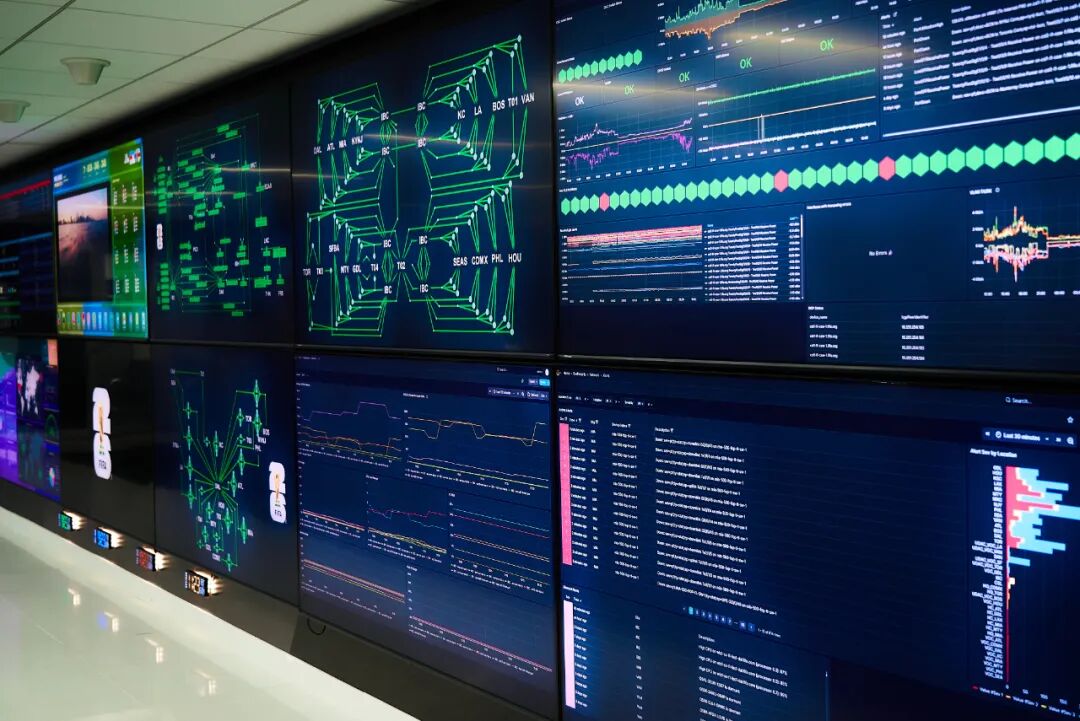
The large screen inside the TOC aggregates data from FIFA's 40 business sectors, including security, logistics and travel, communications, team services, venue operations, etc.
Although the event draws global attention, with massive high-density data and strict real-time requirements — according to FIFA staff on site, about 13 trillion PB of data passed through the entire network, and no failures are allowed. The tournament environment can be described as high-pressure, but with the help of this intelligent command platform called "Cockpit" by FIFA, the staff of the World Cup Organizing Committee can predict risks in advance, quickly handle unexpected problems, and thus realize efficient collaborative scheduling of the entire event operation and management.
In the end, the entire operation platform lived up to expectations and withstood the test, proving that Lenovo, as a technology partner, has the hard power to deliver business-critical AI operation platforms in high-real-time, high-reliability practical scenarios.
From TV broadcasting and referee decision-making to match analysis and event operation management, the in-depth application of AI in all core systems of the US-Canada-Mexico World Cup has led FIFA, which has always been known for its conservatism, to the forefront of innovation, and also injected new vitality into the ancient World Cup event that is about to celebrate its centenary.
A Reusable Set of Event Technology Service Experience
Having delivered the most complex and operationally challenging football tournament ever with AI, the technical team of this World Cup has naturally summed up a set of reusable experience.
First, technological innovation and application are endless. What matters is to proceed step by step, iterate continuously, and keep exploring forward.
None of the AI applications in this World Cup emerged out of nowhere.
Take the referee view footage as an example. As mentioned earlier, the referee view footage was already used in the FIFA Club World Cup in 2025 and received positive feedback. Based on that foundation, empowered by Lenovo's AI, the referee view footage was able to meet billions of global audiences on the larger stage of the World Cup with a better viewing experience.
Tracing further back, the research and development of video image stabilization technology began with Lenovo's cooperation with F1. In F1, the fastest sport on earth, Lenovo's technology was used to improve the content captured by cameras installed on racing cars. When the light changes during the driving of the racing car, Lenovo, as the technology provider of F1, needed to manually adjust the color, contrast and brightness. Based on its own underlying AI capabilities and F1 event broadcasting experience, Lenovo developed a real-time image stabilization and enhancement system.
Another example is the 3D Digital Avatars. At the 2025 FIFA Intercontinental Cup, FIFA tested this technology. At that time, players from Brazil's Flamengo and Egypt's Pyramids FC were scanned before the match. The test was a success, laying the foundation for the full application in this World Cup.
Even the multi-agent collaboration capability behind FIFA AI Pro did not emerge overnight. Its origin lies in the smart manufacturing and supply chain management practices of Lenovo's more than 30 factories around the world.
Second, maintain flexibility and redundancy.
In fact, under the calm surface of the operation and management of this World Cup, there are undercurrents surging. On the large display screen of the TOC cockpit, there is a data source that summarizes the data logged into various FIFA platforms and monitors the network security status. According to reports from *Computer Weekly*, FIFA stated that by the first week of July, its event systems faced as many as 300 million to 500 million cyber attacks per day (the total number at that time was higher than the 11 billion attacks of the entire 2022 Qatar World Cup).
At the TOC site, when Lanxiong Sports asked: "Did any accidents occur at the TOC during the World Cup, and how were the problems solved?", a FIFA staff member admitted that the optical fiber located in the United States was interrupted during the tournament, but due to the existence of backup lines and the quick repair completed by the Verizon team, the TV broadcasting service was not affected in the end.
The FIFA staff emphasized that the key point is that they have established a redundancy backup mechanism in terms of personnel, equipment and services. For broadcasting services, they used approximately 100,000 miles of optical fiber to build a fully redundant broadcast distribution network spanning the United States, Canada and Mexico.
Third, maintain an open mindset and prioritize problem-solving.
The TOC gathered more than 40 functional departments of FIFA, as well as staff from Lenovo, the telecommunications operator and sponsor Verizon, the governments of the United States, Canada and Mexico, and the Federal Bureau of Investigation. Although they have different backgrounds and serve different parties, these staff members acted in a coordinated manner and maintained an open mindset, especially when encountering problems.
Myles Spittle, head of Lenovo's Digital Work Solutions team (responsible for the infrastructure technology of Lenovo's World Cup project), gave an example to Lanxiong Sports and other media that although the Lenovo staff stationed at the stadium are employed and paid by him, they need to report to the FIFA venue technical manager at the event site.
For another example, the reason why the TOC gathers staff from all parties is to facilitate collaboration. In actual work, when event operations encounter problems, Lenovo will provide assistance; when Lenovo encounters problems, FIFA and its other partners will also provide assistance. "I like the way it works here. It is not like traditional companies where everyone blames each other (once a problem occurs) and tries to figure out why the problem happened. Yes, we will also try to find out the cause of the problem afterwards, but everyone's top priority is to solve the problem," said Myles Spittle.
Therefore, proceeding step by step, maintaining redundancy, and keeping an open mindset are the key codes of conduct to ensure the smooth delivery of such a complex project.
Of course, these three experiences are only summarized by Lanxiong Sports from an external perspective. Every practitioner involved in the event must have their own gains. For example, Myles Spittle, in his capacity as the person in charge of the project's infrastructure technology, gave the answer that they have withstood the test on the highest-level stage, proving that they have the ability to deploy 25,000 devices to various stadiums across three countries within an extremely short construction period, meet various different security requirements, and ensure that the devices are ready to use immediately without any additional installation operations. "If we can do this for FIFA, we are fully capable of deploying equipment in an ordinary office building."
A Classic Sports Marketing Case
The World Cup is the top stage for sports sponsorship marketing. As a grand technological innovation show comes to