Rare in a decade: the Federal Reserve dropped a "hawkish bomb" in the wee hours, sending the Dow Jones Industrial Average crashing 1,153 points.
On Wednesday, July 29 Eastern Time, the Federal Reserve announced after the FOMC monetary policy meeting that the target range of the federal funds rate will remain unchanged at 3.50% to 3.75%.
So far, after three consecutive meetings of interest rate cuts by the end of last year, the FOMC has kept policy unchanged at all five monetary policy meetings since entering 2026.
The Federal Reserve's decision to keep interest rates unchanged was in line with expectations, but the degree of rift with three dissenting votes far exceeded market estimates. Hammack of the Cleveland Fed, Kashkari of the Minneapolis Fed, and Logan of the Dallas Fed formally cast dissenting votes, all advocating a 25 basis point rate hike.
Nick Timiraos, a journalist known as the "New Fed News Agency", commented that this is the first time since 2016 that three voting members have cast dissenting votes with the same stance on policy adjustments.
Bob Michele, Chief Investment Officer of JPMorgan Asset Management, and Jim Bianco, President of Bianco Research, both pointed out that dissenting votes are the core signal for interpreting policy trends, suggesting that upward pressure on interest rates persists.
Waller repeatedly emphasized at the press conference that the Fed "will not hesitate to act" to curb inflation, saying "we have some important decisions to make ahead of us". What makes the bond market more uneasy is his stance of "no forward guidance", which means the market must judge the interest rate path from the data on its own.
The market has been hit by the triple impact of the re-ignition of the Iran conflict, the Fed's hawkish hold, and the questioning of the AI boom. Brent crude oil once surged 8% back to $90, and the 30-year U.S. Treasury yield soared to the highest level since June 2007, the Dow Jones Industrial Average plummeted 1153 points, down 2.19%, marking the largest single-day point drop in nearly 15 months, the S&P 500 fell 1.52% to close at 7316.16, and the Nasdaq fell 1.74% to close at 24442.94.
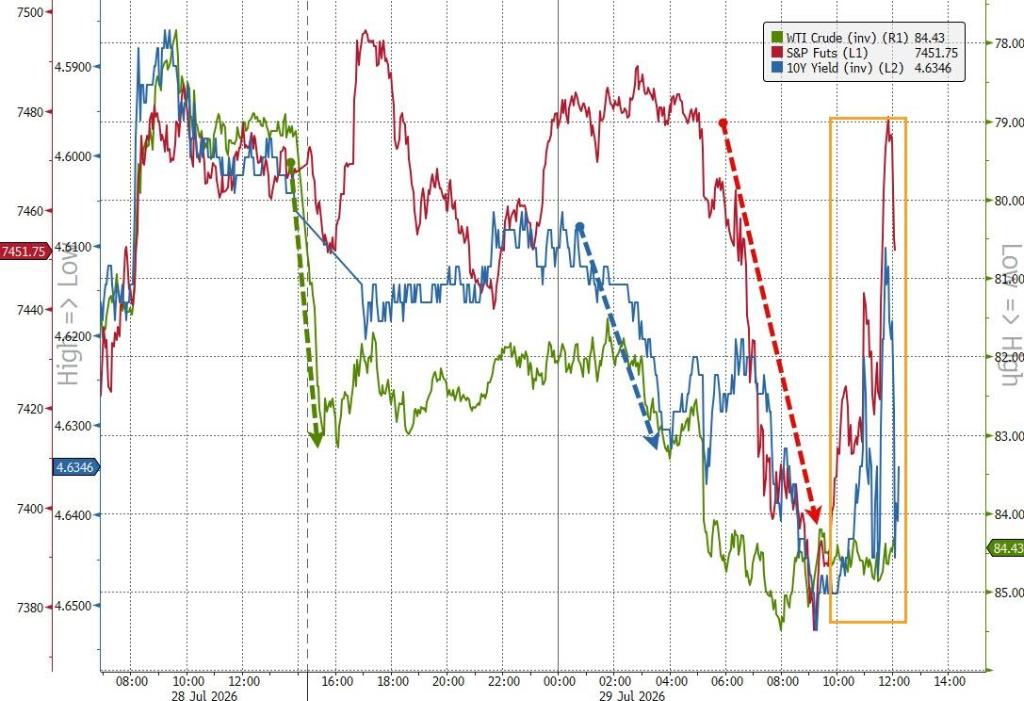
The U.S. dollar dived 0.62%, gold rose 0.87%, and once stood at $4100 during the session.
The most hawkish divergence in a decade? The Federal Reserve keeps interest rates unchanged, emphasizes its commitment to fighting inflation, but three voting members support a rate hike
The Federal Reserve announced on July 29 that it will keep the federal funds rate unchanged at 3.50% to 3.75%, marking the fifth consecutive hold since 2026.
This Fed decision was in line with the expectations of most market participants. By the close of trading this Tuesday, CME Group data showed that the futures market expected the probability of no rate hike this week to be close to 70%, the probability of a 25 basis point rate hike slightly exceeded 30%, the probability of keeping interest rates unchanged at the next September meeting was less than 24%, and by December, the probability of keeping interest rates unchanged was less than 9%, while the probability of at least two 25 basis point rate hikes was about 58%.
The resolution statement released this time almost follows the wording of the previous meeting statement in June.
As at the last meeting, this statement continues to emphasize that the Federal Reserve is committed to achieving price stability. This statement reiterates again that the Middle East conflict has led to high economic uncertainty, inflation remains high, partly due to rising energy prices, the economy is expanding steadily, and the unemployment rate has remained largely unchanged.
This statement copies the evaluation of inflation from the previous statement: "Inflation remains elevated relative to the Committee's 2 percent target, reflecting in part supply shocks that have pushed up prices in specific sectors such as energy."
Compared with the last statement, there is only one major change in this statement: the voting results show that among the 12 members who have the right to vote at FOMC meetings this year, nine voted to keep interest rates unchanged, and three opposed the decision. They are respectively Beth Hammack, President of the Cleveland Fed, Neel Kashkari, President of the Minneapolis Fed, and Lorie K. Logan, President of the Dallas Fed. The statement shows that all three supported a 25 basis point rate hike at this meeting.
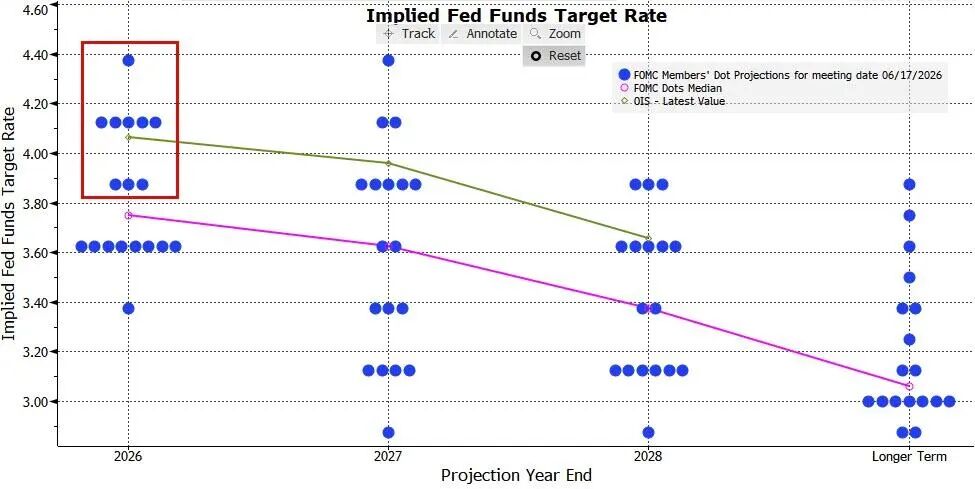
This means that a quarter of this year's FOMC voting members tend to take rate hike actions right now. The dot plot released after the last meeting showed that among the 18 Fed policymakers who provided interest rate forecasts, a total of nine expected at least one 25 basis point rate hike this year, of which six expected at least two such hikes.
Nick Timiraos, a journalist known as the "New Fed News Agency", commented that this is the first time since 2016 that three voting members have cast dissenting votes with the same stance on policy adjustments.
Timiraos wrote that this divergence highlights that two months after Waller took over as chairman, the Federal Reserve is facing growing pressure to take action against inflation that has been above the target for five consecutive years.
Timiraos pointed out before the resolution was released that if one or two members vote against pausing rate hikes at this meeting, it will clearly indicate that hawkish pressure within the FOMC is building. Previous Fed chairs could appease potential dissenters by adding hawkish or dovish wording to statements, or hinting that action is more likely at the next meeting. But Waller has explicitly stated that he will abandon these tools, so he may not have enough means to keep the divergence under wraps.
The text in black below is the same part as the June 2026 FOMC meeting statement, the text in red is the new addition in July 2026, and the blue text in parentheses is the wording of the June statement that has been deleted:
The Federal Open Market Committee approved the following statement with a 9-to-3 (12-to-0) vote:
The Committee decided to maintain the target range for the federal funds rate at 3.5% to 3.75% to support the Fed's dual mandate. The Committee will continue to implement (reaffirm) the policy of maintaining ample reserves in the banking system.
Although uncertainty remains high (partly due to the conflict in the Middle East), economic activity is expanding at a solid pace. Productivity growth and capital investment are strong. Employment growth is keeping pace with the size of the labor force, and the unemployment rate has remained largely unchanged.
Inflation remains high relative to the Committee's 2 percent target, partly due to supply shocks that have pushed up prices in specific sectors (including the energy sector). The Committee is committed to achieving price stability.
The members who voted against this monetary policy action are Beth M. Hammack, Neel Kashkari, and Lorie K. Logan, all three of whom favored raising the target range for the federal funds rate by 25 basis points at this meeting.
Interest rates remain unchanged, but Waller says "this is not a pause", the 2% inflation target will not be shaken
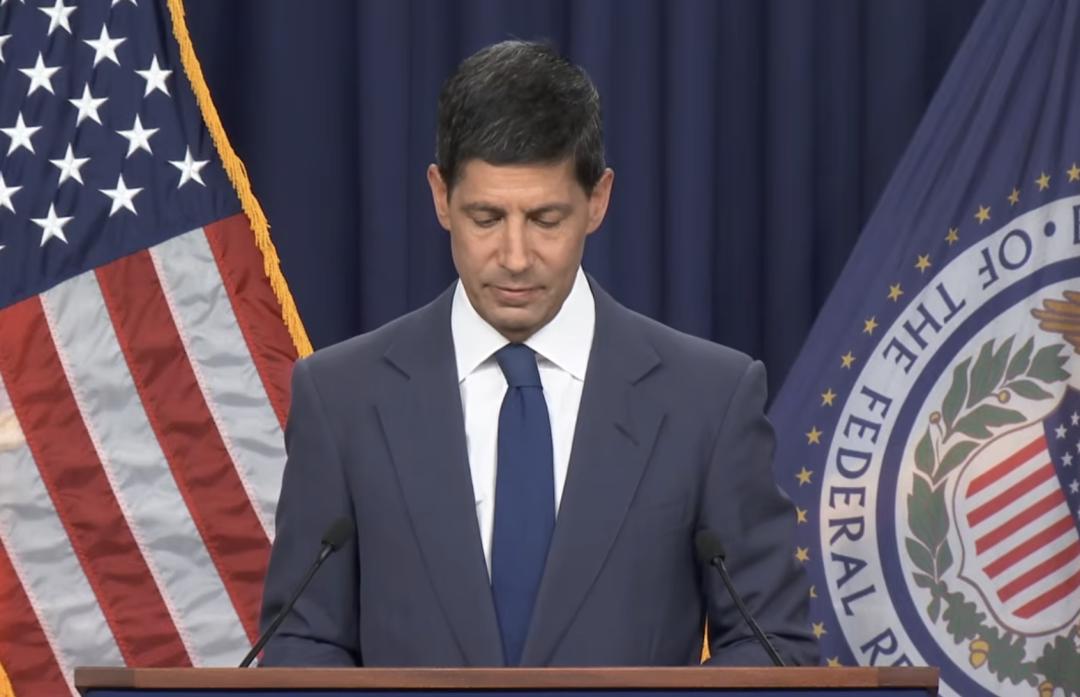
Waller regards the rise in market interest rates as a signal that financial conditions are tightening, while reaffirming that there is "no room for flexibility" in the 2% inflation target, and announcing a substantial exit from forward guidance, calling on Wall Street to get rid of its dependence on central bank statements and "capture real economic signals".
Fed Chair Waller said that the U.S. economy still shows resilience under recent shocks, the growth trend is positive, employment growth is roughly synchronized with labor force growth, and the unemployment rate has not changed much; but inflation is "still too high" relative to the 2% policy target.
On the interest rate path that the market is most concerned about, Waller did not release clear forward guidance. He emphasized that the Fed is intentionally reducing its preset and intervention in the market, hoping to obtain more "direct, unfiltered" information from prices such as bonds and exchange rates.
At the same time, he repeatedly reiterated that if inflation remains high over the forecast horizon, raising interest rates "will likely be part of the solution".
Waller also specifically mentioned that AI-related investment is driving up high-tech capital expenditure, but its ultimate impact on productivity, supply capacity and inflation is difficult to accurately judge. This means that whether improvements in investment and productivity can ease price pressures remains a key variable in the Fed's subsequent policy assessment.
1) Inflation bottom line: There is no "soft target", 2% is the only red line
Against the backdrop of high inflation for more than five years, the market once speculated that the Federal Reserve might silently tolerate inflation above 2%. Waller completely shattered this illusion at the meeting, showing a tough attitude towards defeating inflation.
Waller clearly pointed out:
"There is no soft inflation target, no soft implicit target — that is impossible during the tenure of this committee. There is only one target, and that is 2%. None of my FOMC colleagues have any illusions about this."
He admitted that the period of patience and impatience experienced by the United States has lasted for "63 months (inflation above target)", and the Federal Reserve deeply understands that this situation cannot be cured in nine weeks or only by a single month of moderate price decline.
Faced with the question of what to do if inflation does not fall, Waller gave a direct reply:
"If inflation is too high and does not fall, the best remedy is to raise interest rates."
2) External relations and independence: Stay focused and free from interference
At the press conference, Waller repeatedly emphasized that the Federal Reserve will not deviate from its responsibilities due to market or external environmental pressures. He said:
"The Federal Reserve will not waver. Our credibility depends on fulfilling our duties and delivering on our responsibilities."
When talking about the complex environment facing the economy in recent years, Waller listed supply chain tensions caused by the pandemic, military conflicts, energy supply disruptions, tariff adjustments, and the surge in AI investment as important external shocks affecting the economy in recent years.
He said the Fed will not ignore these changes, but is studying whether these shocks will spread further and affect the broader price system.
However, he emphasized that the Fed focuses on the transmission of these events to inflation and the economy, not the events themselves, and its responsibility is always to make policy judgments around price stability and full employment.
3) AI capital expenditure becomes a key economic variable: the growth rate in the past four quarters is close to 20%
In terms of macroeconomic hotspots, Waller focused on the real impact of the AI boom on the real economy and prices, which is extremely rare in previous Fed meetings.
Waller disclosed a set of core data:
"In the category of high-tech equipment and software related to artificial intelligence, the latest data shows that the four-quarter growth rate is close to 20%."
Waller pointed out that the corporate capital expenditure boom is already pushing up the prices of "memory and logic chips and related artificial intelligence infrastructure". The Federal Reserve is trying to judge whether such price increases are only industry-specific relative price changes, or will spread to broader inflation areas.
"We take these shocks seriously. The Federal Reserve is studying to what extent the impact of these shocks is expanding, and how much impact it has on prices that are far from being directly affected."
In terms of supply and demand, Waller believes that the Federal Reserve has a relatively reasonable understanding of aggregate demand, but there is still great uncertainty about the structural changes brought about by aggregate supply, productivity and AI investment.
"We are inferring aggregate supply. We are making judgments about productivity. In a sense, there is a race between supply and demand, and the surge in corporate capital expenditures around artificial intelligence makes this calculation more difficult to judge."
He also warned that the AI investment boom will not automatically reduce the difficulty of the Fed's policy. On the one hand, productivity improvement and supply expansion may help ease inflationary pressures; on the other hand, the construction of AI infrastructure itself may also push up some upstream prices.
4) Changes in policy communication: Downplay forward guidance, require the market to "follow the data"
Waller reiterated again that the Federal Reserve is significantly reducing or even exiting the "forward guidance" that has been commonly used in the past decade, and will no longer try to fine-tune market expectations through dot plots or verbal appeasement.
Waller pointed out that in the past 42 days (between the two meetings), both nominal and real yields on the Treasury yield curve have risen sharply, with the increase even ranking in the top decile of the past two decades. He attributed this to the Fed's "stepping back":
"Market participants are learning to follow the ball, not the referee, and market prices will continue to react in the direction and to the extent they deem appropriate. In my view, this is a positive change."
Faced with reporters' concerns about whether the Federal Reserve will lose control of the narrative, Waller appeared "not too worried". He said bluntly:
"We are trying to stay out of it... What we are interested in is the reaction of financial markets."
He believes that in non-crisis mode, the Federal Reserve should not tie its own hands, but observe the direct, unfiltered reaction of the market to developments.
5) Interest rates remain unchanged, but Waller says "this is not a pause"
Regarding the decision to keep interest rates unchanged this time, Waller refused to define it as a "pause". In his view, if the policy stance is only understood as whether the federal funds rate changes, one may ignore the adjustments that have already occurred in the financial market. He said:
"I would not describe our action today as something like a pause. I would describe our action as a rigorous review of the economic situation."
Waller said that in the past 42 days, that is, between the two FOMC meetings, both nominal and real interest rates on the entire U.S. Treasury yield curve have risen significantly, and the relevant changes are roughly in the "top decile" of the past two decades.
"Financial market prices did not pause during this intermeeting period, both nominal and real interest rates rose."
As for the implication of the current rise in market interest rates, Waller did not directly equate it with the need for the Fed to raise interest rates, but said that the signals transmitted by the bond market are somewhat consistent with the performance of the real economy.
"Economic output is robust, capital expenditure and productivity are strong, and the labor market is robust and stable. The bond market, the Treasury market, also seems to be expressing the same thing. Even if to a certain extent we haven't done much in 42 days, the market has done quite a lot."